Jason Meaux

816 posts

Jason Meaux

Jason Meaux

@JasonMeaux

Robotics, Writing about SSMs https://t.co/VJbUbcubHN, Hosting the PyTorch ATX meetup in Austin https://t.co/I6VSSl161S

Austin, TX Katılım Haziran 2022
1.1K Takip Edilen436 Takipçiler
Jason Meaux retweetledi
Ruxandra Teslo 🧬
Ruxandra Teslo 🧬@RuxandraTeslo·
The story about bureaucracy almost stopping a man from treating his dog’s cancer with an mRNA vaccine went viral. The problem transfers to humans: we’ve made these clinical trials unnecessarily hard, denying hope to patients. New article on this. writingruxandrabio.com/p/the-bureaucr… Excerpts: "A story about Paul Conyngham, an AI entrepreneur from Sydney who treated his dog Rosie’s cancer with a personalized mRNA vaccine, has been circulating on X since yesterday. What makes the story inspiring is the initiative the owner showed: he used AI to teach himself about how a personalized vaccine could work, designed much of the process himself and approached top researchers to take it forward. Whether the treatment itself was fully curative and how much of an improvement it is over state-of-the art is not the main focus of this essay. Others have already debated that question at length, and I recommend following their discussions. What interests me instead is the bureaucratic absurdity the dog’s owner encountered while trying to pursue the treatment. He described the long and frustrating process required simply to test the drug in his dog: “The red tape was actually harder than the vaccine creation, and I was trying to get an Australian ethics approval and run a dog trial on Rosie. It took me three months, putting two hours aside every single night, just typing the 100 page document.” Even in a small and urgent case, where the owner was fully willing to fund the treatment himself, the effort was slowed by layers of procedure. Of course, this kind of red tape is not confined to Australia, nor to veterinary medicine. In fact, in the US, the red tape is even worse, at least for in-human trials. In a previous post, I recommended the Australian model for early stage In the United States, GitLab co-founder Sid Sijbrandij found himself in a similar position after the relapse of his osteosarcoma. When the ordinary doors of medicine closed, he entered what he called “founder mode on his cancer.” Like many entrepreneurs confronted with a difficult problem, he began trying to build his own path forward by self-funding his exploration of experimental therapies. Even then, he ran into the same maze of regulatory and institutional barriers that not only delayed him, but also unnecessarily raised the price of his experimental therapies. These are obstacles that only someone with extraordinary resources could hope to navigate, often by assembling an entire team to deal with them and navigate the opacity. In the end, Sijbrandij prevailed: he has been relapse free since 2025, after doctors had told me he was at the end of his options. Around the same time, writer Jake Seliger faced a similar situation while battling advanced throat cancer. Like Sid Sijbrandij, he was willing to try anything that might help. The difference was that Seliger was not a billionaire. He could not hire a team to navigate the system on his behalf, and he struggled even to enroll in the clinical trials that might have offered him a chance. A system originally conceived to safeguard patients has gradually produced a strange and troubling outcome: the mere chance of survival is effectively reserved for the very few who possess the means to assemble an army of experts capable of navigating its labyrinthine procedures. What makes these stories particularly frustrating is that we already know clinical trials — especially small, early-stage ones like the ones Sijbrandij enrolled in for himself— can be conducted far more cheaply and with far less bureaucracy than is currently required. Ironically, the original article cites Australia as a bad example, yet clinical trials there are conducted 2.5–3× cheaper and faster than in the U.S., at least for human trials, without any increase in safety events—a genuine free lunch. Removing unnecessary barriers has long been important. That is why I co-founded the Clinical Trial Abundance initiative in 2024, a policy effort aimed at increasing both the number and efficiency of in-human drug trials and have consistently argued about the importance of making this crucial but often neglected part of the drug discovery process more efficient. Since then, the issue has only become more urgent with the rise of AI. One of the central promises of the AI revolution is that it will accelerate medical progress. Organizations such as the OpenAI Foundation list curing disease as a core goal, and researchers like Dario Amodei of Anthropic have argued that AI could dramatically speed up biomedical innovation. But, as I have written before in response to an interview between Dario and Dwarkesh Patel, AI will not automatically accelerate a key bottleneck in making these dreams a reality: clinical trials. Conyngham’s observation that navigating the red tape to start a trial for his dog took longer than designing the drug itself only underscores the point. Clinical trials themselves vary widely. At one end are small, bespoke trials involving one or a few patients testing highly experimental therapies—like the treatment in the Australian dog story or the experimental therapy Sijbrandij pursued. At the other end are large-scale trials involving thousands of participants, designed to confirm earlier findings and support regulatory approval. Different types of trials require different reforms. In this essay, I will focus on the former: small, exploratory trials, which will be called early-stage small n trials for the purpose of this essay. These are often the fastest way to test promising ideas in humans and learn from them. They represent our best chance at a meaningful “right-to-try,” form the top of the funnel that generates proof-of-concept evidence, and may be the only viable path for personalized medicine and treatments for ultra-rare diseases. Understanding why these trials have been made unnecessarily difficult—and how we might change that—is essential if medical innovation is to keep pace with our growing ability to design new therapies. When the story first circulated on X, many people interpreted it as evidence that a cure already exists but simply hasn’t been used due to bureaucracy. That isn’t quite true, as I explained. The type of mRNA vaccine that the owner pursued looks promising, but he did not know a priori whether it worked or not, as it had not been tested before. So it was not a cure, but “a chance at a cure”. I hesitate to call it an “experimental treatment”, since this term evokes fears of potential safety issues while we generally can predict safety quite well now. The inaccuracy of whether this was a cure or not, however, does not make the story of the bureaucratic red tape that Conyngham encountered any less infuriating. More and more promising treatments are accumulating in the pipeline, fueled by an explosion of new therapeutic modalities, ranging from mRNA to better peptides and more recently, by AI. Yet we are not taking full advantage of them. To better understand these points, it is helpful to briefly outline the clinical development process—the sequence of in-human trials through which a promising scientific idea is gradually translated into a therapy. Drug development is often described as a funnel: many ideas enter at the top, but only a few become approved treatments. Early human studies, known as Phase I trials, sit at the entrance of this process. They involve small numbers of patients and are designed to quickly test whether a new therapy is safe and shows early signs of effectiveness. If the results look promising, the therapy moves to larger and more complex studies, including Phase III trials that enroll large numbers of patients to confirm whether the treatment truly works. Most people gain access to new therapies only after these large randomized trials are completed. On average, moving from a promising idea to Phase III results takes seven to ten years and costs roughly $1.2 billion. Accelerated approval pathways in areas such as cancer or rare diseases can shorten this timeline by relying on surrogate endpoints, but the process remains slow. As a result, many discoveries that make headlines today will take close to a decade before they become treatments that patients can widely access. Part of this delay is unavoidable. Observing how a drug affects the human body simply takes time. But much of it is not. Layers of unnecessary bureaucracy, regulatory opacity, and rising trial costs add years to the process without clearly improving patient safety, which is why I started Clinical Trial Abundance. Allowing a higher volume of small-n early stage trials, the focus of this essay, is a rare “win-win” for both public health and scientific progress. For patients, it transforms a terminal diagnosis from a closed door into a “chance at a cure,” providing legal, supervised access to cutting-edge medicine that currently sits idle in labs. For researchers and society, it unclogs the drug discovery funnel; by lowering the barrier to entry for new ideas, we ensure that the next generation of mRNA, peptide and AI-driven therapies are tested in humans years sooner, ultimately accelerating the arrival of universal cures for everyone. Next, I will explain why making it easier to run these early stage trials matters. First, from a patient perspective, they often provide the closest practical equivalent to a right-to-try. In theory, right-to-try laws allow patients with serious illnesses to access treatments that have not yet been confirmed in large randomized Phase III trials. In practice, these pathways rarely function as intended. Pharmaceutical companies are often reluctant to provide experimental drugs outside formal trials, and treatments typically must have already passed Phase I testing. As a result, very few patients gain access through these mechanisms. Early-stage trials offer a more workable alternative. They allow experimental therapies to be tested in structured clinical environments—often in academic settings or academia–industry collaborations—where patients can be monitored and meaningful data can be collected. Second, early-stage small-n trials are essential for personalized medicine and the treatment of ultra-rare diseases. Many emerging therapies—such as personalized cancer vaccines, gene therapies, and other individualized interventions—do not fit easily into the traditional model of large randomized trials involving thousands of participants. By their nature, these treatments target very small patient populations and often require flexible, adaptive clinical designs. From a societal perspective, these trials play a crucial learning role. As I argued in my earlier essay Clinic-in-the-Loop, early-stage trials are not simply regulatory checkpoints on the path to approval. They are part of the discovery process itself, creating a feedback loop between laboratory hypotheses and human biology. Later-stage studies, particularly Phase III trials, are designed mainly for validation: they test whether a treatment works under defined conditions and produce the evidence needed for approval. Early-stage trials, by contrast, are oriented toward learning. Conducted with small patient groups and often using exploratory designs, they allow researchers to observe how a therapy behaves in the human body and how the disease responds. In this way, they close the gap between theory and real-world biology. In the Clinic-in-the-Loop essay, I explain how these trials were crucial to the discovery of Kymriah, the first curative cell therapy for blood cancer."
English
18
86
379
89.7K
Jason Meaux retweetledi
Rue Mohr🇨🇦
Rue Mohr🇨🇦@RueNahcMohr·
52 robots in 52 weeks. ok, well, I'm still printing pipe extensions but I think I can call this bot done for now, later I will do a bot for classifying and one for isolating screws. This highlighted a need for some inter-process co-ordinations systems.
English
3
3
27
1.2K
Jason Meaux retweetledi
Denver Rayburn
Denver Rayburn@DenverRayburn·
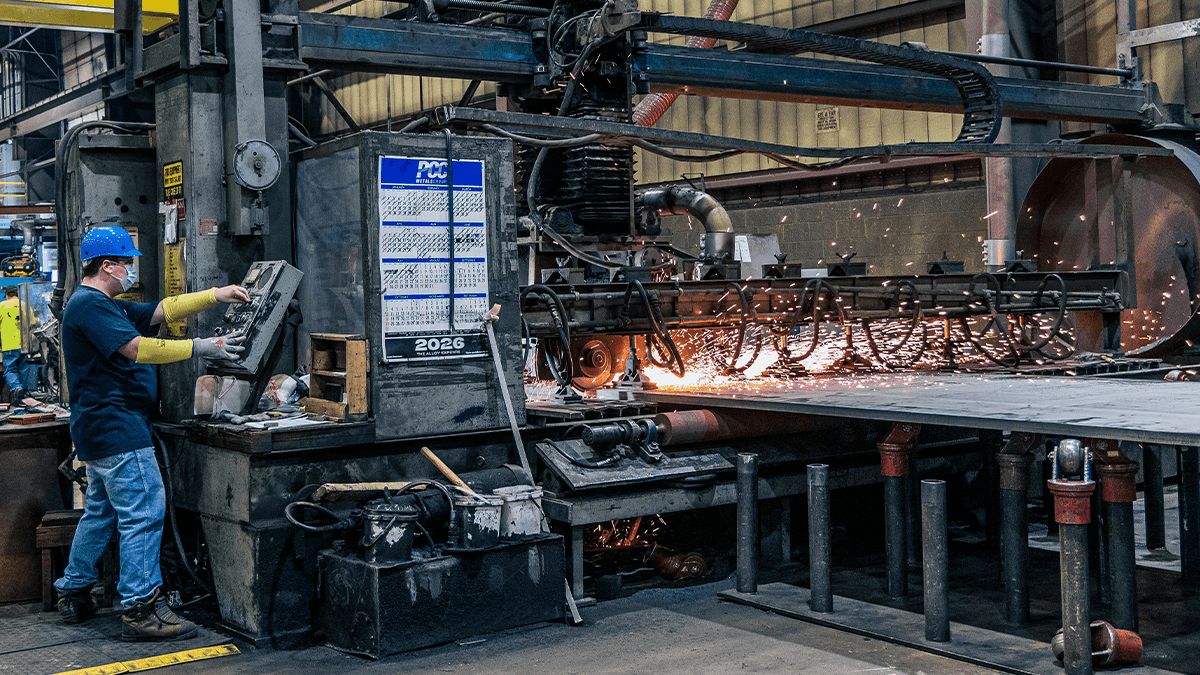
1/ American manufacturers pay 3x more to finance equipment than their global competitors. It has nothing to do with pricing or tariffs, it's a regulatory accident from 2008 that no one has bothered to fix until now:
Denver Rayburn tweet media
English
68
426
2.6K
200.7K
Jason Meaux retweetledi
Kyle Vedder
Kyle Vedder@KyleVedder·
my first PI project: we added memory! this is a step function capabilities unlock: 15 minute long multi-step tasks in novel environments, controlled by text prompting having run many of the evals, I legit think this is the GPT 2 moment for robotics
Physical Intelligence@physical_int

We’ve developed a memory system for our models that provides both short-term visual memory and long-term semantic memory. Our approach allows us to train robots to perform long and complex tasks, like cleaning up a kitchen or preparing a grilled cheese sandwich from scratch 👇

English
37
58
631
66.6K
Jason Meaux retweetledi
Jiafei Duan
Jiafei Duan@DJiafei·
Instead of asking a VLM to output progress, it reads the model’s internal belief directly from token logits. No in-context learning. No fine-tuning. No reward training. 📈 We introduce: TOPReward, a zero-shot reward modeling approach for robotics using token probabilities from pretrained video VLMs. The simplest way of doing reward modelling for robotics! Project: topreward.github.io/webpage/ 🧵👇
English
12
65
362
105.8K
Jason Meaux retweetledi
David Moodie
David Moodie@DavidMoodie_·
Foundry Lab’s in Austin, Texas. We’ve been building. Aerospace. Defense. Advanced Hardware - stay tuned. Announcement coming soon.
David Moodie tweet media
English
14
10
206
9K
Connor Kapoor
Connor Kapoor@connorkapoor·
Decided to ship my car from CA -> TX, threw an AirTag in there just to keep an eye on it. Truck driver had a favorite kind of rest stop for sure.
Connor Kapoor tweet mediaConnor Kapoor tweet media
English
114
428
68.9K
3.8M
Jason Meaux retweetledi
Saar Huberman
Saar Huberman@HubermanSaar·
SemanticMoments - Semantic motion similarity How do you find videos with similar motion? It’s harder than it sounds. Models like VideoMAE and V-JEPA encode motion, but their embeddings are dominated by appearance. So how do we build a compact embedding for motion similarity? Joint work with @kfir99 @OPatashnik @BenaimSagie @MokadyRon
GIF
English
8
29
180
26.2K
Jason Meaux retweetledi
Apptronik
Apptronik@Apptronik·
Today, we’re excited to announce that we’ve raised more than $935M in Series A funding with a $520M Series A-X extension round, bringing our total capital raised to nearly $1B. This milestone is a powerful vote of confidence in our mission: building AI-powered humanoid robots designed to work alongside humans. With this new funding, we’ll be able to: - Ramp production of #Apollo - Expand global commercial and pilot deployments - Build next-generation facilities for robot training and data collection - Accelerate real-world impact across manufacturing, logistics, and beyond We’re proud to be backed by an incredible group of repeat and new investors, including @BCapitalGroup, @Google, @MercedesBenz, @ATT Ventures, @JohnDeere, QIA, and more. The future of embodied #AI is happening now, and Apollo is just the beginning. - Read the full announcement: apptronik.com/news-collectio… - Explore open roles: apptronik.com/careers
English
47
94
739
245.3K
Jason Meaux retweetledi
Sholto Douglas
Sholto Douglas@_sholtodouglas·
Default case right now is a software only singularity, we need to scale robots and automated labs dramatically in 28/29, or the physical world will fall far behind the digital one - and the US won’t be competitive unless we put in the investment now (fab, solar panel, actuator supply chains).
TBPN@tbpn

Anthropic's @_sholtodouglas describes the concept of a software-only singularity: "It's one where the models are far better at digital tasks than they are at physical ones. And so we see rapid change in the digital world with models, and relatively little change in the physical world. So information and software changes dramatically, and this ends up having some pretty weird effects." "It means that maybe like the drivers of what have been the last couple decades of progress in the economy turn around." "And I think we'll see that flow on into the physical world but at a delay. So you get much better at doing chip design. You get much better at training AI models. AI models get a lot faster. Chips get a lot better. The general economy gets a lot more efficient because the sort of information and message parsing that is much of the rest of the economy ends up becoming much more efficient." "But at the same time you don't yet have robots providing limitless physical abundance. Science probably progresses really fast up to the degree that you need interaction with labs or larger particle colliders or something like this. And then you go, 'Okay well I need to build the robots.'"

English
81
87
1.2K
310.4K
Jason Meaux retweetledi
Anthropic
Anthropic@AnthropicAI·
On December 8, the Perseverance rover safely trundled across the surface of Mars. This was the first AI-planned drive on another planet. And it was planned by Claude.
English
297
873
8K
1.6M
Jason Meaux
Jason Meaux@JasonMeaux·
Nice! Maybe this kind of system could also take off for robots. Something like Reddit/Twitter for learning and skill acquisition. The threads could be indexed by embodiment types, planning/nav/manipulation policy types, and model checkpoints. Embodied agent systems search for posts about their various manipulation challenges (“how to make an espresso on the new Nespresso T5000 machine”), with the hopes of finding or contributing their own instructions/data/models/sim_envs/reward_funcs/evals to solve the task. Assuming the necessary privacy and safety guardrails were in place (easier said than done), a distributed learning system driven by agents might help remove some of the human bottlenecks on learning. If it was built in a more open way not solely dedicated to skill acquisition, you could imagine things getting quite strange like the moltbook phenomenon, morphing into a network of embodied agents talking with each other about the ups and downs of their day, something resembling a social life.
English
0
1
1
47
Jason Meaux retweetledi
Garrett Scott 🕳
Garrett Scott 🕳@thegarrettscott·
WE DID IT! The first portal and robots on the Austin @pipedream_labs Network go live in February! We'll be around all day, so ask a question here and we'll respond with a video! Here's a quick thread about what we delivered & where we're going next:
English
92
71
809
325.1K
Jason Meaux retweetledi
Canon Reeves
Canon Reeves@ReevesCanon·
We've built a first of its kind grocery store in Austin. Introducing Goods➡️
Canon Reeves tweet media
English
472
299
5.8K
1.4M
Jason Meaux retweetledi
Moo Jin Kim
Moo Jin Kim@moo_jin_kim·
We release Cosmos Policy 💫: a state-of-the-art robot policy built on a video diffusion model backbone. - policy + world model + value function — in 1 model - no architectural changes to the base video model - SOTA in LIBERO (98.5%), RoboCasa (67.1%), & ALOHA tasks (93.6%) 🧵👇
English
17
110
869
145.6K