

Leo Adberg
34 posts

@LeoAdberg @NotYetBankrupt damn its fully automated, i trade by myself 24/7 haha
how do u come with ideas to create your automated trades?
English

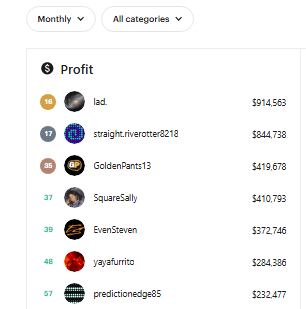
I miss the Kalshi leaderboard having a lot more public profiles at the top in the pre-sports era. People are too embarrassed by how much money they're making. These numbers in the monthly were also unthinkable a year and a half ago
English
@Karoshi247 @NotYetBankrupt sports, it's fully automated running 24/7, counting distinct strategies doesn't really apply here, the lad account is just me but I work with others to develop strats
English
@LeoAdberg @NotYetBankrupt what do u usually trade?
how many hours per day do you trade?
do you have how many strategies?
do u trade with other people together or by yourself?
English
@Kalshi I'd love a market along the lines of "Will X watts of H100-or-better compute be deployed in space before 2029"
Would happily put $$$ on NO for large X
x.com/patrick_oshag/…
Patrick OShaughnessy@patrick_oshag
In our last conversation, Gavin said data centers in space will be the most important thing in 3-4 years. He explains that means "racks in space" and thinks orbital compute will solve the watts shortage: "When people hear data centers in space, they picture a Pentagon-sized building in space. That's not what it is. A Blackwell rack weighs 3,000 pounds. It's eight feet high. Four feet deep. Three feet wide. It's racks in space. It has these solar wings that are probably 500 feet long on each side. You keep it in a Sun-synchronous orbit, so those solar panels are always in the sun. And then because it's in an exactly Sun-synchronous orbit, the radiator, which extends behind it for hundreds of feet is in the shade. You link these racks using lasers traveling through vacuum which are already on every Starlink. SpaceX operates the world's largest satellite fleet, which is 98 or 99% of all satellites in orbit. Every Starlink, they're cooling it today. I think Starlink V3 is going to operate at 20 kilowatts. A Blackwell rack is only 100 kilowatts. And people talk a lot about density. Well, if you're connecting the racks with lasers through vacuum, you can make the rack bigger physically. In space, there's all sorts of things that SpaceX can do. They also now operate the largest data center on Earth. I've spent a lot of time at Starbase over the years, and I've talked to a lot of SpaceX engineers. It is the most talented group of engineers on planet Earth, and they're very confident they have solved this."
English
@WDChokepoint @patrick_oshag Starlink's inter-satellite bandwidth is orders of magnitude is still orders of magnitude behind a single NVLink Switch
English

@patrick_oshag The lasers are already on every Starlink — the connectivity problem is solved. What scales with the racks is the optical inter-satellite link supply chain. SpaceX’s S-1 this morning confirms orbital compute satellites starting 2028. Further along than most realize.
English

In our last conversation, Gavin said data centers in space will be the most important thing in 3-4 years.
He explains that means "racks in space" and thinks orbital compute will solve the watts shortage:
"When people hear data centers in space, they picture a Pentagon-sized building in space. That's not what it is.
A Blackwell rack weighs 3,000 pounds. It's eight feet high. Four feet deep. Three feet wide.
It's racks in space. It has these solar wings that are probably 500 feet long on each side.
You keep it in a Sun-synchronous orbit, so those solar panels are always in the sun.
And then because it's in an exactly Sun-synchronous orbit, the radiator, which extends behind it for hundreds of feet is in the shade.
You link these racks using lasers traveling through vacuum which are already on every Starlink.
SpaceX operates the world's largest satellite fleet, which is 98 or 99% of all satellites in orbit. Every Starlink, they're cooling it today.
I think Starlink V3 is going to operate at 20 kilowatts. A Blackwell rack is only 100 kilowatts.
And people talk a lot about density. Well, if you're connecting the racks with lasers through vacuum, you can make the rack bigger physically.
In space, there's all sorts of things that SpaceX can do. They also now operate the largest data center on Earth.
I've spent a lot of time at Starbase over the years, and I've talked to a lot of SpaceX engineers.
It is the most talented group of engineers on planet Earth, and they're very confident they have solved this."
Patrick OShaughnessy@patrick_oshag
This is my sixth conversation with @GavinSBaker. As always with Gavin, the conversation covers a lot of ground, but we spend the most time on watts and wafers. We discuss: - Why the wafer shortage may prevent an AI bubble - Data centers in space (reframed) - Elon's Terafab and the new chip companies challenging Nvidia - Usage-based pricing - The disaggregation of GPUs - DRAM, frontier tokens, and open source Enjoy! Timestamps: 0:00 Intro 7:55 Anthropic and OpenAI Valuations 12:58 Watts, Wafers, and Infrastructure 14:39 Orbital Compute and Data Centers in Space 22:49 Avoiding the AI Bubble 28:26 Terafab and the Future of US Manufacturing 32:16 Returns to the Frontier 37:23 Continual Learning 42:03 New Chip Companies 48:52 Extending GPU Lifespans and Private Credit 51:22 The Application Layer 57:32 The Token Path and Open-Source Dynamics 1:01:37 Cybersecurity 1:05:46 Diversity Breakdown 1:11:59 Assessing the Big Tech Players in AI 1:19:02 Geopolitics, Personal Safety, and the AI Horizon
English
@GuardAmerican @arram @Scott_Wiener @MHurabiell "I oppose the ownership of single family homes by private equity groups and corporations"
This reduces liquidity in the housing market, reduces incentives to build new housing, and flat out is a fake scapegoat for rising housing costs. This candidate is not actually pro housing.
English

@arram @Scott_Wiener Marie @MHurabiell is pro housing.
She is a centrist, so promotes sound policies without all the extremism Scott Wiener bring.
votemarie.com/policy

English

Zoning adds $300 - 500k to the price of a home in cities with good jobs. High-speed rail takes 30 years to build. New drugs cost $2B. We pay 5-10x what peer countries do for the same infrastructure.
People call this "regulation." It isn't, exactly. It's stranger and worse. 🧵
English
@_sholtodouglas Claude is unusable for some tasks that should be trivially automatable if I don't let it run arbitrary python one-liners. Even when explicitly forbidden in a CLAUDE.md it will try to, get blocked by a permission prompt, I reject it, immediately tries again, repeat indefinitely :/
English

When do you reach for other models instead of Claude? What can we do better? Hit me with all of your frustrations. dms open.
If you can give me detail (e.g. specifics/transcipts) - it'll help a lot in finding out exactly what we need to do to improve the next model
English
How can $500 be "Best Value" when the value (tokens) per dollar is identical? I've never seen a similarly labeled bulk purchase option *not* come with any extra product

English

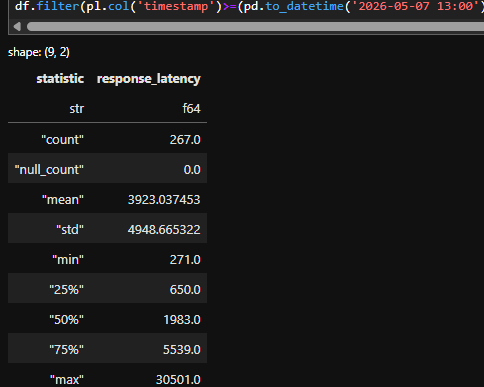

If ghostfill issues drove you away from Polymarket, whether up/down markets or any markets I completely understand. But please give it another shot. It’s now working better than ever, and if there’s anything in the UI that could make your experience even better, we want to hear it. We’re building the best defi prediction product user-first, one improvement at a time.
Josh@devjoshstevens
The release everyone was waiting for is now live. Ghost fills dropped from a peak of 30% to 0.17% with the rollout, and will continue trending toward 0% throughout the day. We know this issue was hurting everyone's experience and we're truly sorry for that but it should now be night and day. This was a significant core protocol change and we're incredibly proud of the whole team for executing it. We'll keep improving our systems, step by step, until we're the best exchange in the world.
English
Leo Adberg@LeoAdberg
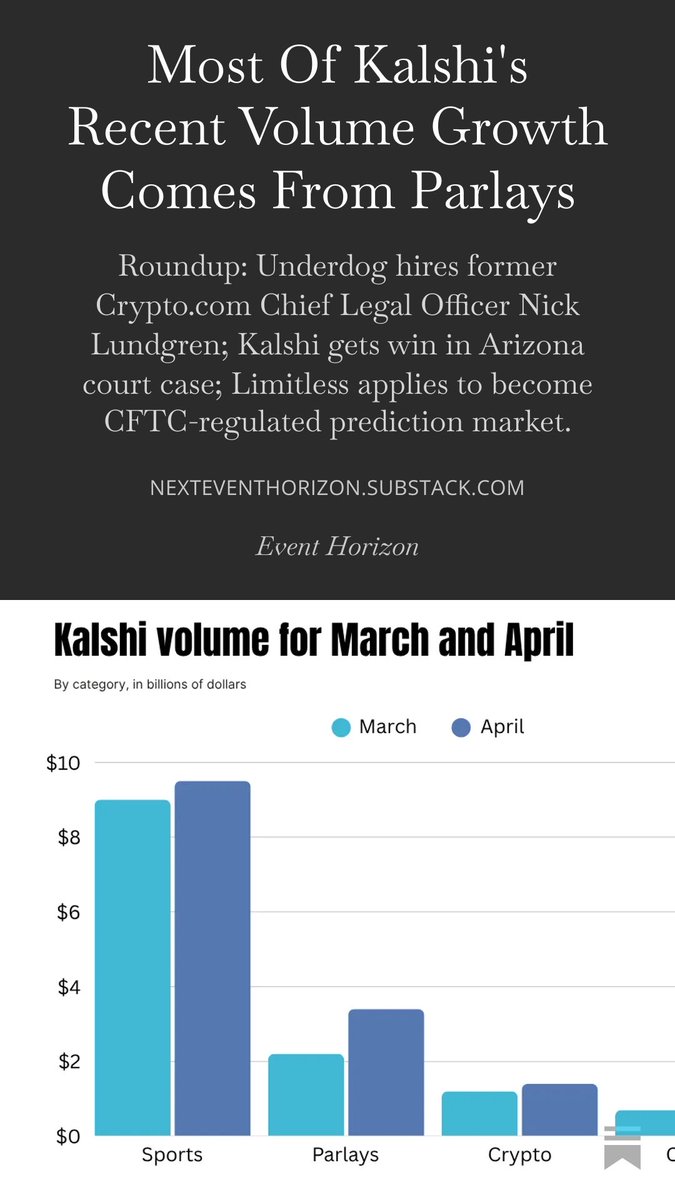
Dustin does mention this effect but doesn't say how strong it is: here is some data showing that what users put down is less than a tenth of the reported volume. MMs giving better prices can contribute to increased volume even when users don't put more in. x.com/DustinGouker/s…
QME

Wrote this this morning before we learned that Flutter is making markets on a prediction market other than its own…
English
Dustin does mention this effect but doesn't say how strong it is: here is some data showing that what users put down is less than a tenth of the reported volume. MMs giving better prices can contribute to increased volume even when users don't put more in.
x.com/DustinGouker/s…

Dustin Gouker@DustinGouker
Wrote this this morning before we learned that Flutter is making markets on a prediction market other than its own…
English
@DataJuggler007 @wordgrammer Literally every datacenter ever already has to - what would lead you to believe they don't?
English

@wordgrammer Data Centers should have to pay all the electricity and water in an area they move into. We don't need them.
English

If Anthropic was a cult, and I’m not saying they are. They should declare all datacenters as sacred places. And then sue for religious discrimination when local cities try to cancel datacenter construction
English
@Rishibets And to clarify further: the combo was sold to you by another user who knows that points and rebounds for a single player are highly correlated and priced it accordingly, but that correlation goes out the window if he doesn't play in the game and will settle irrespective of it.
English
@Rishibets Combos settle to the product of all legs multiplied together - in this case it's 13c x 23c = 3c. The legs were settled to those values as the last fair prices before Robinson was known to be injured.


English
@henrylhtsang fusing N hbm-bound kernels (which most are) together - even when they were previously in a coda graph - can be N times faster
English

so how much perf gain does megakernel give, if the baseline already uses cuda graphs
English
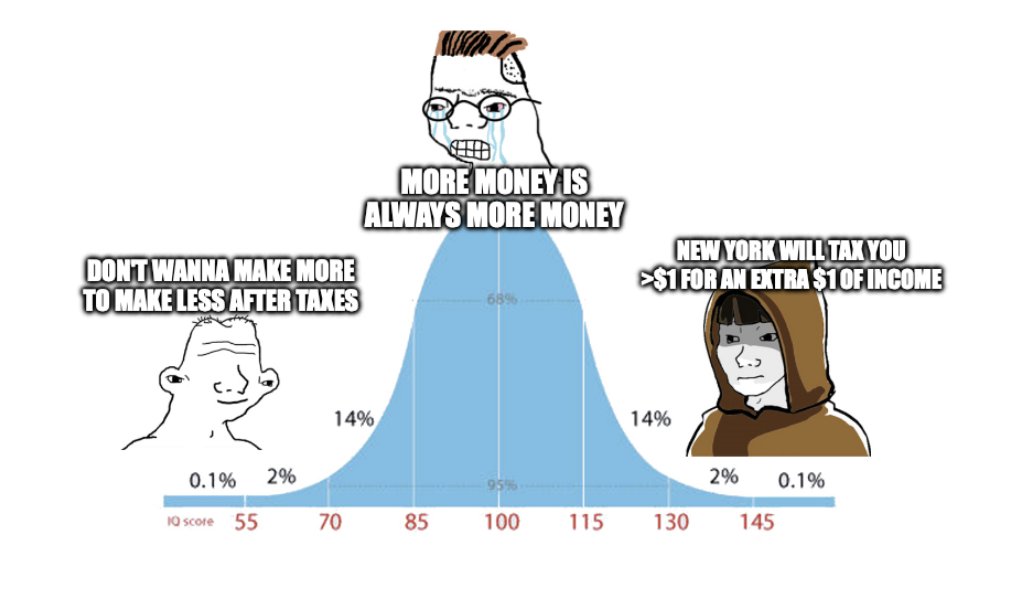
@dead_baseball "Tax table benefit recapture" is a thing in NY btw, leading to marginal tax rates >100%
English

So when I originally posted "there's no way she took $1 short of a million for tax reasons because that's not how tax brackets work" some people responded "maybe that's still her reason and she's just dumb."
I brushed those comments aside because... no way.
Then this comes out.
Austin Franklin@austinfrankln
Stop offering Kelsey Plum $1 😂
English
@0xgingergirl Hyperliquid is building infra (HIP-4) that will surely surpass Polymarket's - up to its frontend ecosystem to actually arrange markets and engage customers though
English


@LeoAdberg @ethanrkho I think maybe you need to zoom out a bit. Are things being done in a new and better way? Sure. Is it a new idea? Not even close.
English

"I haven't seen a real new idea in trading in at least 15 years."
Tom Costello (@tcoste110) ran money at Tudor, Moore Capital, and Caxton. Built one of the first NLP-driven equity systems in 2003.
20 years managing capital, never had a down year.
"Comparing what a retail trader does to what a quantitative hedge fund does is like comparing driving a bus on the New Jersey Turnpike to winning a Formula One race."
We cover:
- His hot take: no genuinely new trading idea in 15 years — only better people doing the same things faster
- Why everyone in quant finance is a genius — and why that makes you ordinary, not special
- Crypto is "super smart guys cosplaying at finance" — built for retail, which is exactly why it's the easiest money in finance right now
- Why AGI won't beat the hedge fund industry — all the readily-capturable alpha is already captured
- The status trap: why the path that made Paul Tudor Jones a billionaire won't work for the kid trying to copy it in 2026
- His friend the investment banker who'd quit it all to run a 10-employee ambulance supply company worth $150M
- Why excitement is "wildly overbid" in finance — and why wanting an exciting trading job is itself a disqualifier
- The most honest end of the financial industry — and why the media has it exactly backwards
Thanks so much to Tom for coming on Odds on Open!
Highlights:
00:00 Intro
01:18 Building institutional credibility for early-stage managers
03:01 The Pareto distribution of hedge fund returns
04:25 Applying the Unified Field Theory of Finance to fair value
08:14 Trading against human incentives in a deterministic market
13:54 Why allocators don’t steal alpha from prospective PMs
25:16 Evaluating career edge in quantitative finance for 2026
30:48 Paul Tudor Jones and the art of game selection
33:42 Analyzing the economic viability of starting a new fund
35:16 Identifying common retail pitfalls: Mean reversion and arbitrage
38:55 Why there hasn't been a new trading idea in 15 years
50:33 Managing tail risk: Physics vs. deterministic financial distributions
59:10 Career pathing for PMs after a fund blow-up
1:07:53 SBF and FTX: Credibility vs. the "Founder-Genius" archetype
1:13:44 Establishing proof-of-concept through audited multi-year returns
English
@tcoste110 @ethanrkho The claim that there haven't been any new ideas in the past 15 years is pretty false, so I think if you did have insider access to the top teams at JS/HRT/XTX you wouldn't have made that claim
English
@LeoAdberg @ethanrkho I've been working in the top tier of the hedge fund industry for 35 years. What do you imagine my friends do? Where do you think they do it? I think if anything you'd be surprised by how much acccess I still have rather than me being surprised.
English