Sabitlenmiş Tweet

Important roadmap update ! $eth #ethereum #cryptocurrecy
vitalik.eth@VitalikButerin
Updated roadmap diagram!
English
Luka.eth 🛡️
9.3K posts
@LukaWeb3
Helping navigate crypto and sharing tips, tricks, and news. 🦇🔊 Proud owner of @yatreda
Updated roadmap diagram!

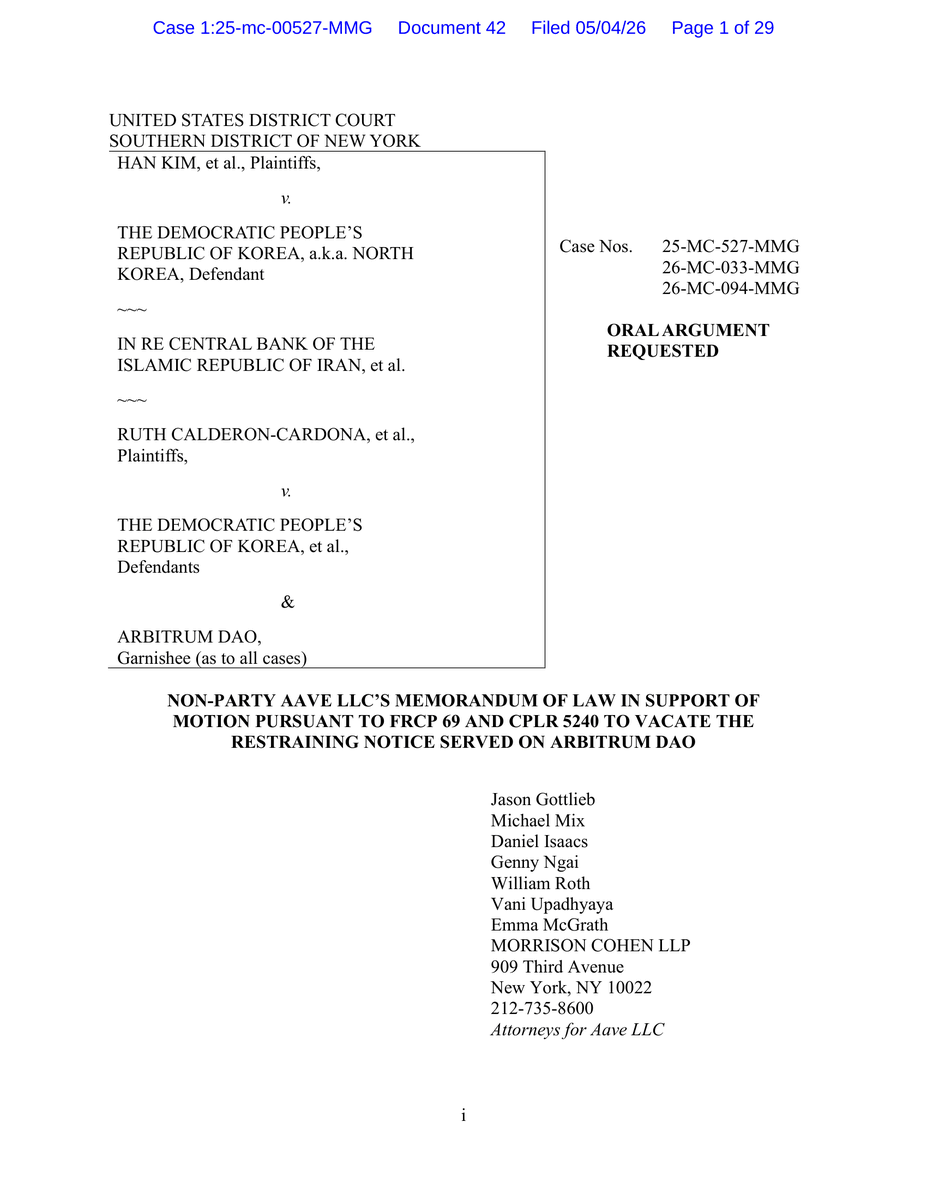
I know a lot of people are going to dive into the weeds on every last detail of this. As they should. So, I’m just going to remind everyone that these sorts of things are really fucking difficult. The “real” world doesnt do a great job of handling them either. In fact, the real world often does a horrifically shitty, extractive, slow job. Even for relatively straightforward cases, it can take years for victims to recover any funds. Once there are multiple entities and impacted individuals involved, you can easily be looking at a decade+. During that decade, multiple teams of lawyer and accountants will charge top dollar to untangle the mess. They have little at stake in the outcome. Their job is just to untangle. So they do. This path isn’t required. It’s chosen by the involved parties bc it’s risky to do things. But there is always risk. It’s risky to NOT do things, too. As someone who’s worked with victims going thru civil and criminal forfeiture. As well as being involved in a number of more informal situations. And watching Gox…QuadrigaCX…FTX… It is very rare to get a great outcome from a shitty situation. In the end, most folks are just happy to be done and be able to move on. Even if that means accepting a 12% recovery. I encourage everyone to keep this the back of their minds when discussing. It’s easy to shit on any proposal by comparing it to some perfect fantasy you dream up. But that is a fantasy. It’s an impossible state. It can never happen. You should still push towards this ideal outcome. It’s how you are able to get the best outcome in the end. But never forget that, at any given point, the most likely outcome is far worse than the one you are railing against and calling shit. 💖

🚨NEW: Joint statement from @SenThomTillis and @Sen_Alsobrooks on the stablecoin yield compromise amid pushback from banking trades, signaling the deal is likely final. "…we respectfully agree to disagree."














After months in rooms at the WH and Senate, this much is clear: a lot of the public debate overstated the risks and ignored the substance. This outcome preserves activity-based rewards tied to real participation on crypto platforms and networks, which is what the bank lobby said they wanted. We've long believed that this issue did not warrant legislative changes. But whatever-- we’re focused on getting a bill done and are satisifed that this language should not be the basis of any objection. Onward.

Last week, Ethereum core contributors gathered in Svalbard for the Soldøgn interop: a week long event focused on hardening Glamsterdam implementations to scale Ethereum securely ☀️ Read the full recap, including their candidate post-fork gas limit, below:


The final rewards text in the CLARITY Act is now public. We’ve been clear throughout this process: much of this debate was based on imagined risks, not real evidence, nor was it based on a real understanding of how crypto actually works. Nevertheless, the crypto industry showed up to engage. Through months of meetings, the @WhiteHouse, @USTreasury, @BankingGOP, @SenThomTillis and @Sen_Alsobrooks finally arrived at a compromise. In the end, the banks were able to get more restrictions on rewards, but we protected what matters – the ability for Americans to earn rewards, based on real usage of crypto platforms and networks. We also ensured the US can be at the forefront of the financial system – which in this competitive geopolitical era is paramount. That’s important for innovation, consumers and America's national security. Now that this issue is behind us, it’s time to focus on the broader bill. While this debate has been underway, lots of progress has been made on other areas like token classification, defi, and tokenization. We’re excited to review the full, final text, and for the bill to move forward. It’s time to get CLARITY done.