Melissa Bime

2.5K posts

Melissa Bime banner
Melissa Bime

Melissa Bime

@Melissabime

Building modern clinical research infrastructure with Digital patient Twins @infiuss Talking about healthcare stuff→ https://t.co/DuwV4GBFov

San Francisco Katılım Mart 2025
137 Takip Edilen161 Takipçiler
Melissa Bime
Melissa Bime@Melissabime·
the whole sweet spot rests on one self-reported number. one sleep question, answered once on intake. people routinely misjudge their own sleep by half an hour or more against a sensor, so the curve sits on a soft input. the part that gets me: about 100,000 of these same UK Biobank participants wore a wrist accelerometer for a week. measured sleep was right there. the headline still came from the questionnaire.
English

0
0
0
28
The Washington Post
The Washington Post@washingtonpost·
Too little sleep can be harmful for health in the long run, but a sweeping study suggests that too much sleep also may not be ideal. This new research has identified a sleep “sweet spot”: wapo.st/4x0J4NJ
English
16
15
32
21.7K
Melissa Bime
Melissa Bime@Melissabime·
Thousands of people took a drug to protect their heart. Years later, far fewer of them had died of lung cancer, and no one in the trial had set out to prevent it. The drug quieted a slow kind of inflammation, the same low fire that, left alone, feeds tumors too small for any scan to catch. Among those on the highest dose, lung cancer deaths fell by more than three quarters. For years the body had been growing the cancer in silence. The drug reached it before anyone could see it. The honest catch came later. When the same drug was given to people whose lung cancer had already surfaced, it barely moved anything. The quiet window had closed. And it probably did not stop cancer from nothing. It most likely slowed cancers that were already there, waiting. This is what intercepting lung cancer really means. You find the people at high risk, and you reach the disease during the years it stays silent, before there is anything on a scan to point to. The people who feel perfectly healthy are often exactly where it has already begun.
nature@Nature

Globally, lung cancer kills more people than breast, prostate and blood cancers combined, but now researchers think that they might have developed a pill that prevents it. go.nature.com/4dOdx8P

English
0
0
2
70
Melissa Bime
Melissa Bime@Melissabime·
the canakinumab evidence here never came from a lung cancer trial. it fell out of CANTOS, a cardiovascular study in 10,000 post-heart-attack patients. the high dose cut new lung cancer cases by 67% and lung cancer deaths by 77%. nobody designed the trial to find that. it showed up in the safety analysis. so Novartis ran three dedicated oncology trials to confirm it. CANOPY-1, 2, and A. all three missed their primary endpoint. but those tested the drug in people who already had lung cancer. the original signal was about stopping it from forming. that exact question, prevention in high-risk patients before invasive disease, is the one nobody has run head-on.
English
0
0
1
33
Yannick Buccella MD
Yannick Buccella MD@YannickBuccella·
Lung cancer still causes the most cancer related deaths around the globe. So better screening and early prevention methods are key. This approach presented by nature might be revolutionary. It works in 3 steps: 1. Identify people at high risk like heavy smokers or small suspicious lung nodules, not accessible for biopsy. The idea is: if you know who is high risk, you can intervene before invasive cancer appears. 2. Cancer doesn’t happen overnight. Before a full blown cancer appears, cells accumulate mutations and changes to the immune system. This can be potentially tracked via blood tests, which detect these early mutations. Plus we can follow up the changes in the lungs via low dose CT scans. 3. Early intervention. If or when we observe that there is a worrying change in these cells, we intervene. This might be possible in various ways like interrupting the chronic inflammation caused by smoking via e.g. aspirin (already used in preventing a relapse in selected colorectal cancer cases), metformin (actually a diabetes drug) or classic advanced anti inflammatory drugs like canakinumab. However, the ideal scenario would be to tailor this step in a personalized way, like using the above mentioned mutations for targeting via existing specific cancer drugs (albeit mostly with never smokers) or tailoring a vaccine fitted to the patient’s immune system defects leading to the cancer in the first place, which is is already under investigation. After yesterday’s story about the blood test being officially recommended in colorectal cancer screening programs, we see more and more personalized ways of personalized medicine in early cancer screening and prevention. Which is very much needed and exciting at the same time!
nature@Nature

Globally, lung cancer kills more people than breast, prostate and blood cancers combined, but now researchers think that they might have developed a pill that prevents it. go.nature.com/4dOdx8P

English
3
6
42
8.9K
Melissa Bime
Melissa Bime@Melissabime·
the advice is right. the people most likely to die in a heatwave are often already on a medication that turns down their ability to sweat. anticholinergics and several common antidepressants and antipsychotics block the nerve signal to the sweat glands, so the body's main cooling system barely runs. add diuretics pushing fluid out faster than it gets replaced, and beta blockers blunting the heart-rate and skin-blood-flow response used to shed heat, and the same hot afternoon becomes a different physiological event for two people standing next to each other. after the 2003 European heatwave, psychiatric and anticholinergic drug use kept turning up as a risk factor for who died, even after accounting for age. heat vulnerability is closer to a pharmacology question than a hydration one for a real slice of the population.
English
0
0
0
23
World Health Organization (WHO)
If you're experiencing unusually hot days and nights, here's how you can cool off and stay hydrated.
English
26
26
60
14.6K
Melissa Bime
Melissa Bime@Melissabime·
the day-4 bump is real, and there's a specific study behind it. a 2000 paper in the american journal of clinical nutrition fasted 11 people for 4 days and resting energy expenditure went up around 10%. basically the 2000 to 2200 jump Fung is describing. the driver was norepinephrine, the stress hormone that revs your heart rate and metabolism. growth hormone climbs too, but it is not what moved the calorie number on that timescale. the part that does not transfer: it reverses. push past a week, or lose real weight over months, and resting metabolism drops and stays down. the biggest loser contestants were still burning several hundred calories a day below predicted six years out. so the 4-day physiology checks out. using it to explain long-term diet failure is where it breaks, because the long-term data runs the other way.
English
0
0
3
171
Camus
Camus@newstart_2024·
What happens when you don’t eat for 4 days? You’d think your metabolism would crash, but science says the opposite. Dr. Jason Fung on Diary of a CEO: Day 0 — burning 2,000 calories. Day 4 of pure fasting — burning 2,200. Your basal metabolic rate goes up. Insulin drops, sympathetic nervous system fires up, growth hormone surges. Your body doesn’t slow down, it activates. Hungry wolf mode, not sleepy lion. Study after study shows calorie restriction and constant grazing lower your metabolic rate (exactly why so many diets fail). Fasting flips the switch the other way — your body pulls stored energy while staying revved. This is first-year medical physiology that got buried under decades of bad advice. It explains why millions stay stuck despite “eating less.” Have you ever experienced higher energy during a longer fast, or does this still blow your mind?
English
15
45
298
38.7K
Melissa Bime
Melissa Bime@Melissabime·
the study is real and those numbers are straight from it. the issue is what they rest on. it pooled 1.8M people but only about 72,000 vegetarians and vegans. the multiple myeloma and kidney numbers come from a small slice of that, so the real range around 31% and 28% is wide. the first author said this directly. the 23% vegan number in the graphic is not from this study. here vegans had a higher risk of bowel cancer, not a lower overall risk. and "vegetarian" is not one diet. it runs from beans and lentils to white bread and chips. averaging those together is most of why the result is protective for a few cancers, null for most, and higher for one.
English
0
0
0
38
Shining Science
Shining Science@ShiningScience·
Does this change your view on eating meat — evidence shows vegetarian diets *significantly* slash the risk of cancer. Including a staggering 31% drop in multiple myeloma. The largest-ever study of its kind, involving over 1.8 million participants across three continents, has found that vegetarian diets are linked to a significantly lower risk of five specific cancer types. Conducted by researchers at Oxford Population Health, the study revealed that those who avoid meat have a 31% lower risk of multiple myeloma, a 28% lower risk of kidney cancer, and a 21% lower risk of pancreatic cancer. Additionally, the data showed a 12% reduction in prostate cancer risk and a 9% decrease in breast cancer risk compared to regular meat eaters, highlighting the potential protective benefits of a plant-forward lifestyle for millions of people. Despite these protective benefits, the findings suggest that a meat-free diet is not a universal shield, as there were no significant risk differences for 12 other cancers, including lung and stomach. Surprisingly, the data indicated that vegans might face a higher risk of colorectal cancer, and vegetarians showed an increased risk of a specific type of esophageal cancer, potentially due to lower intakes of certain animal-based nutrients. Health experts emphasize that while limiting red meat to under 18 ounces per week and avoiding processed meats like bacon and deli slices is crucial, the ultimate goal should be building balanced meals centered around whole grains, beans, and vegetables. With an estimated 8 to 10 million vegetarians already in the United States, this study provides the most robust evidence to date for how these dietary choices impact both long-term health and the economic burden placed on the health care industry. source: Perez-Cornago, A., et al. (2026). The largest ever study of non-meat diets and cancer risk. British Journal of Cancer.
Shining Science tweet media
English
16
11
32
2.7K
Melissa Bime
Melissa Bime@Melissabime·
the one-in-five number is averaging two different patients. bepirovirsen cleared surface antigen far better in people who started with lower HBsAg, under 1000 IU/mL. higher baseline, weaker response. so the functional cure rate is really a curve, not a single number, and where a patient sits on it is mostly set before the first dose. worth holding next to the comparison. standard of care alone gets roughly 1% to functional cure. against that floor, 19% is a real shift even before you stratify. the open question is whether baseline surface antigen ends up being the enrollment biomarker or just a footnote in the label.
English
0
0
0
104
The Wall Street Journal
Drug candidate bepirovirsen helped nearly a fifth of patients in two late-stage clinical trials achieve a functional cure, the company said. on.wsj.com/4x0wdeu
English
6
5
21
22.1K
Melissa Bime
Melissa Bime@Melissabime·
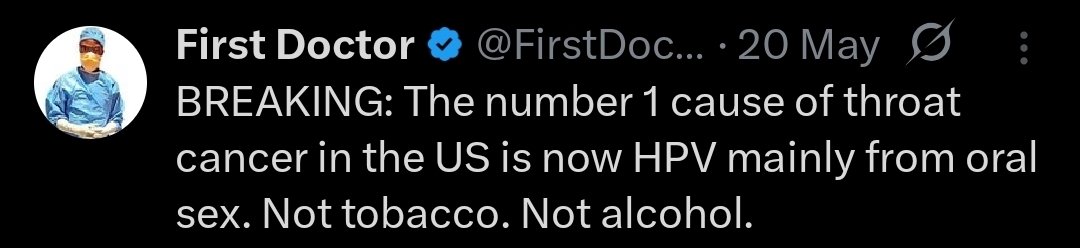
the throat cancer part is right. hpv16 is behind about 70% of these cancers now and it passed cervical years ago. but there's no fda-approved test for hpv in the throat. the test most people picture is the cervical one, and a positive there says almost nothing about your tonsils. most oral hpv clears on its own inside two years. the cancers come from hpv16 persisting quietly for 20 to 30 years, which is why they mostly show up in men in their 60s and get caught late. a positive screen in a healthy 29 year old woman is close to the least predictive result you can get. the signal is persistence over decades. one test tells you almost nothing.
English
0
0
0
275
First Doctor
First Doctor@FirstDoctor·
Olivia went for HPV test last week after seeing my post. She tested positive. She was 29, healthy, and went to the gym twice a week...
First Doctor tweet media
English
12
12
59
8.6K
Melissa Bime
Melissa Bime@Melissabime·
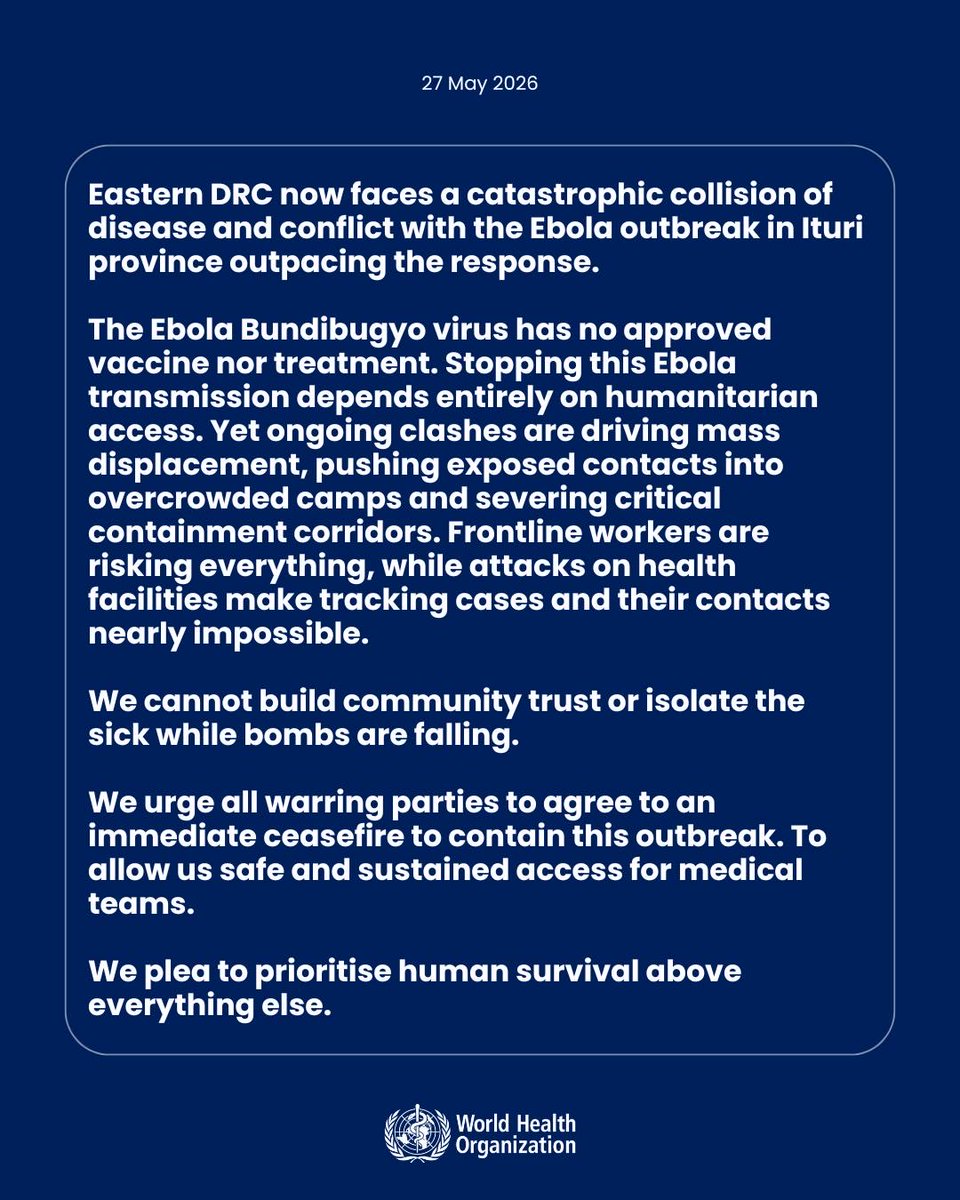
the no-vaccine-no-treatment line on Bundibugyo is true, and the diagnostic infrastructure was Zaire-monoculture too. the first samples from Mongbwalu in May came back negative. the PCR assays in the field only detected Zaire ebolavirus. it took 9 days to confirm Bundibugyo, and by then suspected cases were in the hundreds. Ervebo is licensed only for Zaire. Inmazeb and Ebanga are also Zaire-only. the 2022 Sudan outbreak in Uganda exposed the same gap. Sabin's ChAd3-Sudan doses arrived 79 days after that outbreak was declared, when only 6 contacts were still in the 21-day follow-up window. humanitarian access in Ituri is the only lever this week. the portfolio gap has been visible since Bundibugyo was first identified in 2007.
English
0
0
1
152
Tedros Adhanom Ghebreyesus
Eastern #DRC now faces a catastrophic collision of disease and conflict with the #Ebola outbreak in Ituri province outpacing the response. The Ebola Bundibugyo virus has no approved vaccine nor treatment. Stopping this Ebola transmission depends entirely on humanitarian access. Yet ongoing clashes are driving mass displacement, pushing exposed contacts into overcrowded camps and severing critical containment corridors. Frontline workers are risking everything, while attacks on health facilities make tracking cases and their contacts nearly impossible. We cannot build community trust or isolate the sick while bombs are falling. We urge all warring parties to agree to an immediate ceasefire to contain this outbreak. To allow us safe and sustained access for medical teams. We plea to prioritise human survival above everything else.
Tedros Adhanom Ghebreyesus tweet media
English
109
434
675
72.5K
Melissa Bime
Melissa Bime@Melissabime·
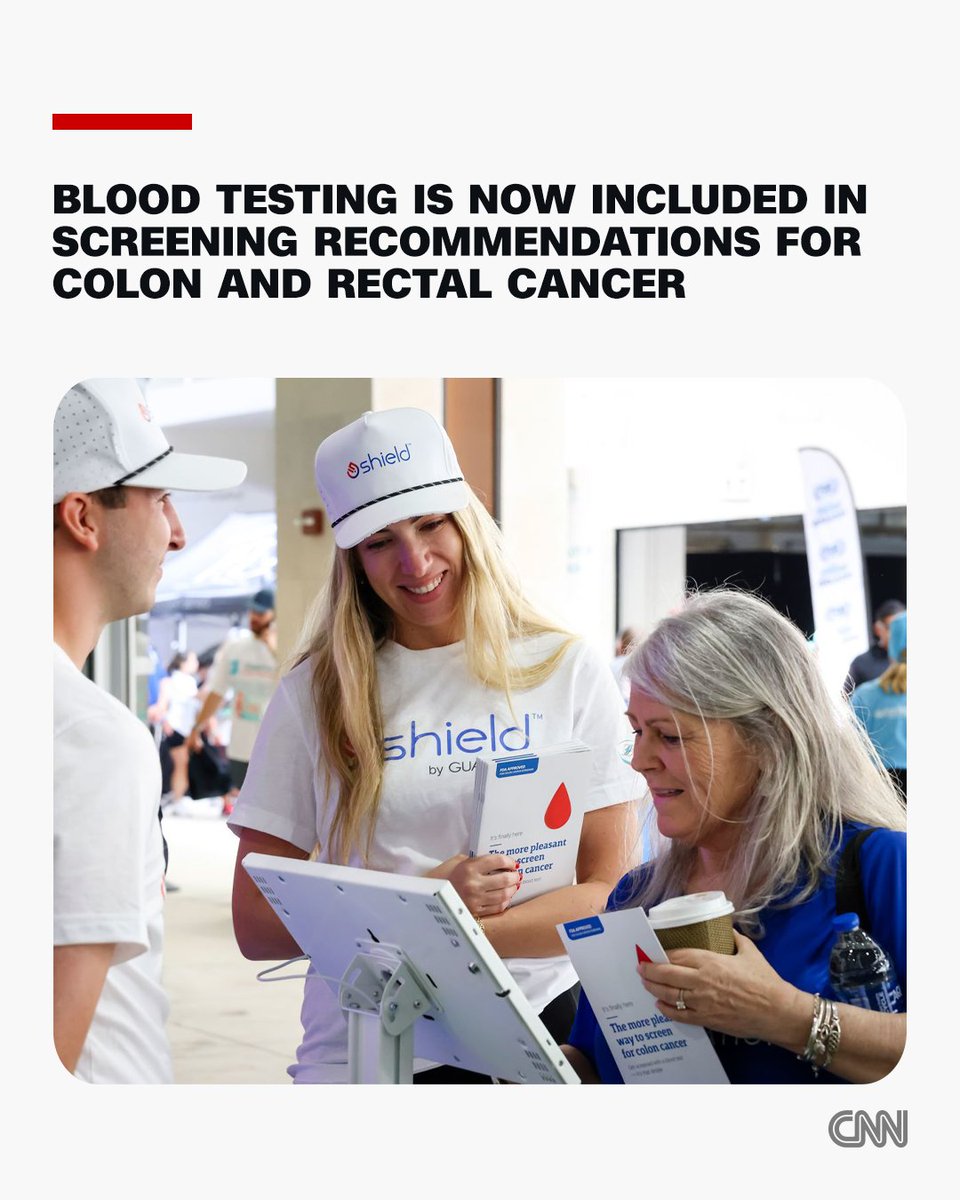
Shield catches cancers. the polyps that become cancers, the advanced adenomas, are mostly missed. the ECLIPSE trial that got it approved showed 83% sensitivity for colorectal cancer and around 13% for advanced adenomas. the stool DNA test catches roughly 43% of those polyps. colonoscopy removes them in the same procedure. the win here is compliance. roughly 1 in 3 eligible adults skip every option that exists right now, and a blood draw at a primary care visit beats prep night and stool collection. catching fewer precancerous polyps is still a population-level gain if it pulls non-screeners into the funnel.
English
1
0
2
318
CNN
CNN@CNN·
The American Cancer Society is adding some new testing options to its screening guideline for colorectal cancers – and for the first time, that includes a blood test. cnn.it/4u3xCOC
CNN tweet media
English
61
58
168
152.8K
Melissa Bime
Melissa Bime@Melissabime·
evidence-based medicine is population-level science. the patient in clinic is an n of 1. that gap is where influencers move in. a trial that says 70% of patients respond does not tell the specific person in clinic what will happen to them. influencers speak directly to the individual. most clinicians cannot, because the visit is 12 minutes and individual-level data does not yet exist for most conditions. misinformation is partly a vacuum problem. the vacuum gets filled by whoever shows up.
English
0
0
0
13
The Economist
The Economist@TheEconomist·
Our podcast on science and technology. In the first of two episodes on health misinformation, Deborah Cohen, doctor and author, tells us how the internet is hijacking health care economist.com/podcasts/2026/…
English
4
3
11
14.6K
Melissa Bime
Melissa Bime@Melissabime·
the framing that current osteoporosis drugs only slow bone loss is wrong. teriparatide has been growing new bone since 2002. abaloparatide since 2017. romosozumab since 2019. all three are anabolic. they build bone. romosozumab was tested specifically in japanese postmenopausal women in the FRAME trial. bone density gains were consistent with the global cohort. an oral version would be a real delivery shift since the current anabolics are all injectables. that is what would be new here if the japanese pill pans out.
English
0
1
3
342
Next Science
Next Science@NextScience·
🚨 A Tiny Pill Could Change Bone Health Forever Scientists in Japan have developed an experimental pill that may rebuild weak bones and help reverse osteoporosis. Unlike traditional treatments that only slow bone loss, this new breakthrough could help the body create stronger bone tissue again. Early studies show improved bone strength and reduced fracture risk, giving hope to millions affected by fragile bones and aging-related weakness. Could the future of stronger bones really fit inside one small pill? Source: Kyodo News. Japanese researchers develop experimental osteoporosis pill that may rebuild bone tissue.
Next Science tweet media
English
10
178
602
19.2K
Melissa Bime
Melissa Bime@Melissabime·
interception is the right framing. the harder operational problem is the safety math in prevention. the IMPRINT-Lung trial at MD Anderson is testing pembrolizumab in people with high-risk lung nodules. pembrolizumab causes serious immune-related side effects in roughly 10 to 15% of treated patients. that is an acceptable trade-off when you have stage IV cancer. very different math when you have a lung nodule that may never become cancer.
English
0
0
14
3.8K
nature
nature@Nature·
Globally, lung cancer kills more people than breast, prostate and blood cancers combined, but now researchers think that they might have developed a pill that prevents it. go.nature.com/4dOdx8P
English
4
141
503
105.3K
Melissa Bime
Melissa Bime@Melissabime·
the paper is real. it is a nanoparticle vaccine called NICER from NUS and the chinese academy of sciences. it targets cancer stem cells, the small residual population that drives recurrence after a tumor is surgically removed. in mouse models of breast cancer and melanoma it reduced relapse and lung metastasis. the effect was strongest when paired with immunotherapy drugs already approved for those cancers. the mechanism is an add-on treatment after surgery, aimed at the cells most likely to grow back. that is a meaningful preclinical result. the headline claim of a vaccine that prevents every type of cancer overstates what the animal models actually showed. mouse-to-human translation in oncology is the part where most of these stories quietly disappear.
English
1
1
25
1.7K
All day Astronomy
All day Astronomy@forallcurious·
🚨: Singapore researchers invent Universal Cancer Vaccine believed to halt all cancer types entirely
All day Astronomy tweet mediaAll day Astronomy tweet media
English
106
712
4.4K
131.3K
Melissa Bime
Melissa Bime@Melissabime·
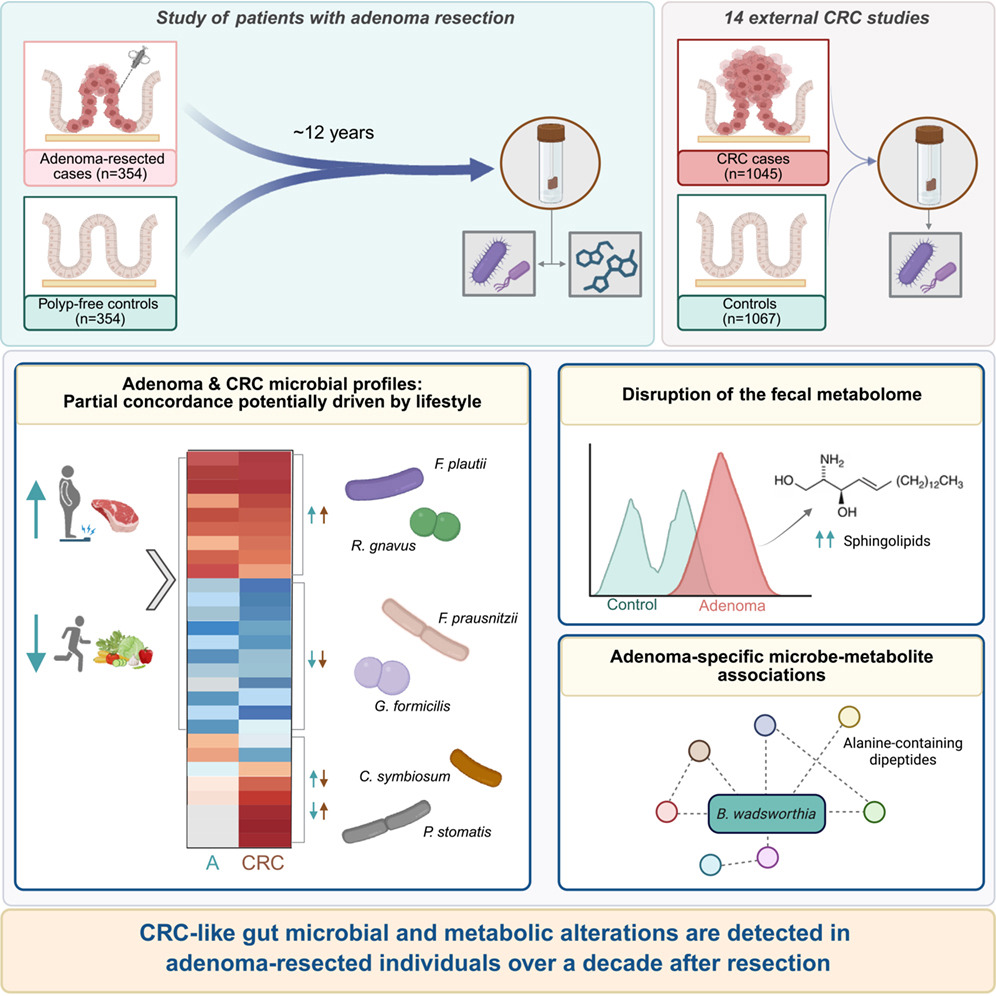
high BMI and red meat predict the same gut bug shifts that adenoma and CRC patients share. the figure literally puts the lifestyle arrow on top of the heatmap. the microbiome may be persistent at 12 years because the diet that built it is persistent. the polyp is gone. the dietary pattern is often not. if that is the case, the stool signature is tracking diet inertia. the clinical use shifts toward behavioral surveillance. the trial that would settle this needs paired pre and post-resection sampling plus a behavioral arm. n=354 is enough for what they did here. it is not enough to separate biology from breakfast.
English
0
0
0
58
Eric Topol
Eric Topol@EricTopol·
The gut microbiome and colon cancer. Sustained changes (+metabolites) many years after an adenomatous polyp is removed. cell.com/cell-host-micr…
Eric Topol tweet media
English
6
36
130
12.5K
Melissa Bime
Melissa Bime@Melissabime·
the 63% sudden cardiac death number is real and the denominator is small. KIHD enrolled 2,315 Finnish men in the 1980s. only 201 of them were in the 4-7x/week group. 10 sudden cardiac deaths happened in that group across 20 years. clean dose-response gradient, and observational data in a culturally very specific cohort. the 4-7x group looked different from the 1x group on income, exercise, social engagement, and depression scores at baseline. healthy-user bias usually shrinks effect sizes when you randomize, even when the dose-response holds in observational data. the trial behind the exercise + sauna claim is Lee 2022. n=47 over 8 weeks. real signal on top of exercise alone: +2.7 ml/kg/min VO2 max and -8 mmHg systolic BP. clinically meaningful. the sauna was 65°C though, well below the Finnish 80-100°C range, and the trial is not powered for mortality. heat does something cardiovascular. the size of the mortality effect is still open.
English
0
0
0
89
FoundMyFitness Clips
FoundMyFitness Clips@fmfclips·
Outside of exercise and nutrition, deliberate heat exposure is perhaps the most powerful longevity intervention In Finnish observational studies, sauna use 4–7x/week was linked to: • 63% lower risk of sudden cardiac death • 50% lower cardiovascular mortality • 40% lower all-cause mortality • 66% lower risk of dementia The mechanism overlaps with exercise: heat stress raises heart rate, improves vascular function, and mimics some effects of moderate-intensity cardio And when sauna is added after aerobic exercise, studies show greater improvements in VO2 max, blood pressure, and lipids than exercise alone
English
19
46
537
111.1K
Melissa Bime
Melissa Bime@Melissabime·
the strain matters here. this is Bundibugyo, not Zaire. Ervebo and the two approved antibody treatments (Inmazeb, Ebanga) were all built for Zaire ebolavirus. they do not cross-protect against Bundibugyo. a decade of countermeasure investment went to Zaire because Zaire drove the West Africa 2014 and DRC 2018-20 outbreaks. Bundibugyo had two prior outbreaks and stayed in the candidate pipeline. the toolkit is strain-mismatched for the outbreak we are actually watching.
English
0
0
0
66
Melissa Bime
Melissa Bime@Melissabime·
the matched-participants anecdote is the cleanest indictment of the variable-stripping problem I have read in months. when you control on age, IQ, SES, depression, and genetics to make a cohort comparable, you have erased what determines drug response. CYP2C19 metabolism (the liver enzyme that processes a huge share of common drugs), HLA variants that drive immune reactions to specific molecules, the patient's actual drug-interaction profile. the clean p-value describes a population that does not exist. the garden version replaces the population study with the individual model. one patient, full biology, simulated forward.
English
0
0
0
10
STAT
STAT@statnews·
"It’s the end of science as we know it, and I feel fine. Let’s stop mourning the end of the ivory tower and start celebrating what comes next." trib.al/GM0IO7u
English
1
0
1
1.1K
Melissa Bime
Melissa Bime@Melissabime·
A woman is awake at 3:47 a.m. for the fourth time this week. Her phone tells her cortisol did it. She has tried the eight-step protocol three nights in a row, and she is still awake. Cortisol is real. It is the hormone the adrenal glands release in the dark hours to begin waking the body up. In some people, that release is sharp and early. In others, it is flat. In a smaller group, the whole rhythm has slid by hours. The "3 to 4 a.m. cortisol curve" everyone is talking about is an average. It belongs to no one in particular. Stanford's own glucose work, from Michael Snyder's lab, sorted people into three distinct response patterns from the same standardized meal. Sleep is no different. The cause that wakes her at 3:47 may be cortisol. It may be a glucose drop below her personal floor. The most underdiagnosed cause in adults over 40 is brief breathing pauses no one has measured, and none of the eight steps name them. Continuous tracking over a few weeks tells her which one is hers. A universal list, however well-meaning, cannot.
Matthew LaBosco@matthew_labosco

High cortisol is the real reason you wake up at 3-4 AM. It also shaves 5 years off your life — tanks testosterone, locks belly fat, literally shrinks your brain. If I wanted to fix it without medication, here are 8 things I'd do every day: 1. No food 3 hours before bed.

English
0
0
1
329
Melissa Bime
Melissa Bime@Melissabime·
snyder's own lab built its reputation on showing how individual this is. his 2018 glucotypes paper sorted people into three distinct glucose response patterns from the same standardized meal. cortisol behaves the same way. some people surge sharply at 3 am. others stay flat. a smaller group has the phase shifted by hours. 3-4 am wakings have several drivers beyond cortisol. glycemic dipping past a personal threshold is one. undiagnosed sleep apnea is probably the single most missed cause of recurring 3 am wakings in adults over 40. continuous tracking over a few weeks tells you which signal is yours. a universal 8-step protocol cannot.
English
0
0
6
5.9K
Matthew LaBosco
Matthew LaBosco@matthew_labosco·
High cortisol is the real reason you wake up at 3-4 AM. It also shaves 5 years off your life — tanks testosterone, locks belly fat, literally shrinks your brain. If I wanted to fix it without medication, here are 8 things I'd do every day: 1. No food 3 hours before bed.
English
303
1.8K
13.5K
6.1M