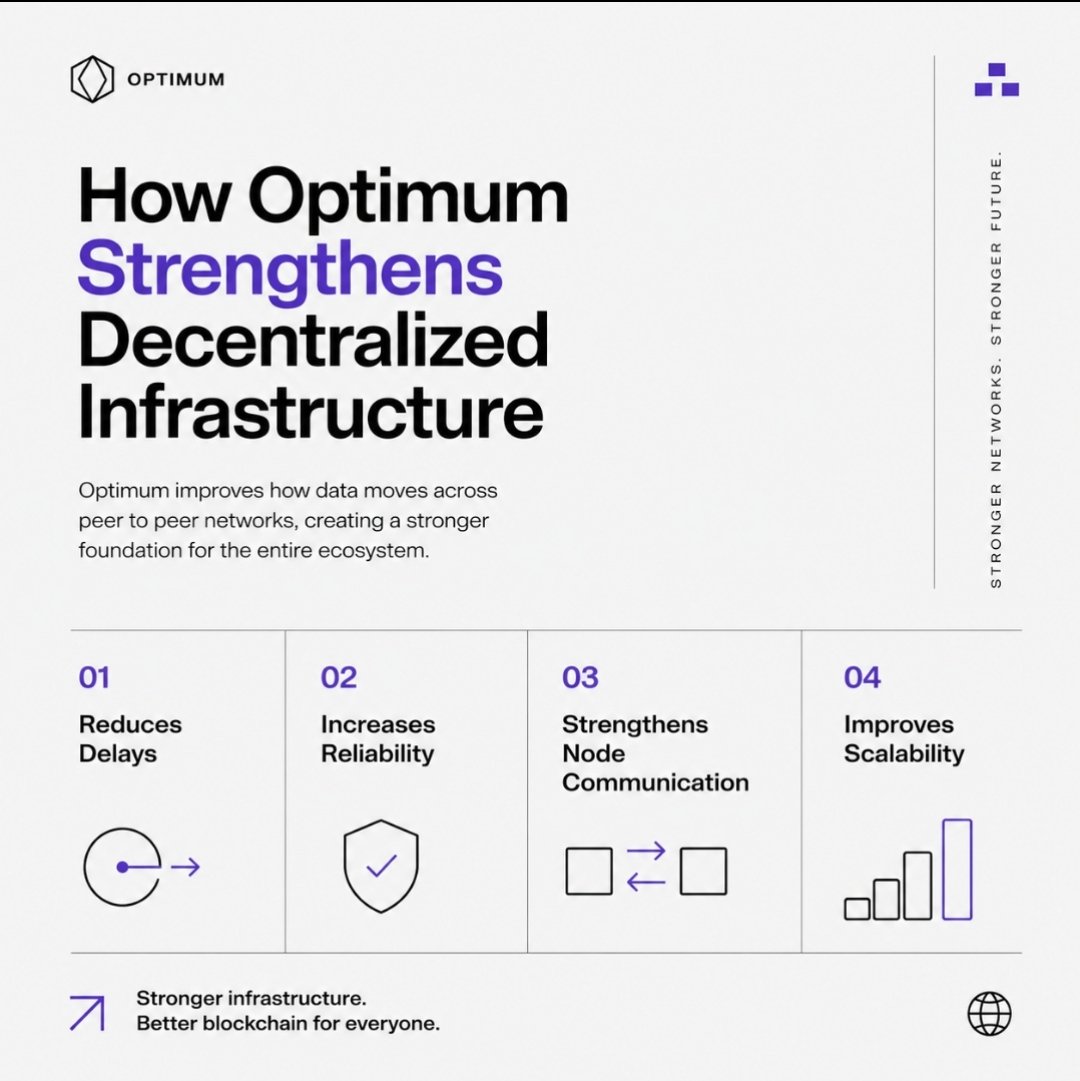
The Hidden Tax on Ethereum's Blockspace Market Most discussions about Ethereum's inefficiencies focus on gas fees, slippage, and MEV. But there's a deeper cost that shapes every decision in the PBS hot path one that never appears in any transaction receipt. Uncertainty. And it comes entirely from network latency variance. PBS is not simply an auction. It's an auction embedded inside a hard consensus deadline. Every 12 seconds, proposers face a binary outcome commit early and leave MEV on the table, or wait longer for better bids and risk missing the slot entirely. No partial credit. No second chances. When propagation is predictable, this is manageable. When propagation variance is high, rational actors hedge. And the hedging behaviors that follow are expensive for everyone. Builders duplicate bids across multiple relays. Proposers cut off selection before the economic optimum. Transaction originators pay premiums for private connectivity because open infrastructure becomes too unreliable under tight deadlines. Each behavior is individually rational. Collectively, they create more congestion, more variance, and more hedging. A self-reinforcing loop. As @sajidazouarhi put it at EthCC[9] in Cannes: "Hedging amplifies the very uncertainty it tries to mitigate." The solution isn't better auction design or smarter bidding algorithms. It's faster, more consistent, lower-variance propagation. When blocks arrive predictably, proposers can wait longer for better bids. Builders submit fewer, higher-quality bids. The market becomes more efficient. MEV capture improves. Validator revenue increases. This is exactly what @get_optimum is building. mump2p delivers ~150ms global block propagation 6× faster than GossipSub with dramatically lower variance. The content I have will be refracted and written on the shadow of this anime. Don't make any changes to the anime or the image, just do it the way I have given the directions. @blockchainjeff @shariaronchain