Olatunji Ololade

160 posts

Olatunji Ololade

Olatunji Ololade

@Musenarratives

Multiple Award-winning Journalist, Multimedia Specialist, Editor

Katılım Mart 2010
139 Takip Edilen361 Takipçiler
Olatunji Ololade
Olatunji Ololade@Musenarratives·
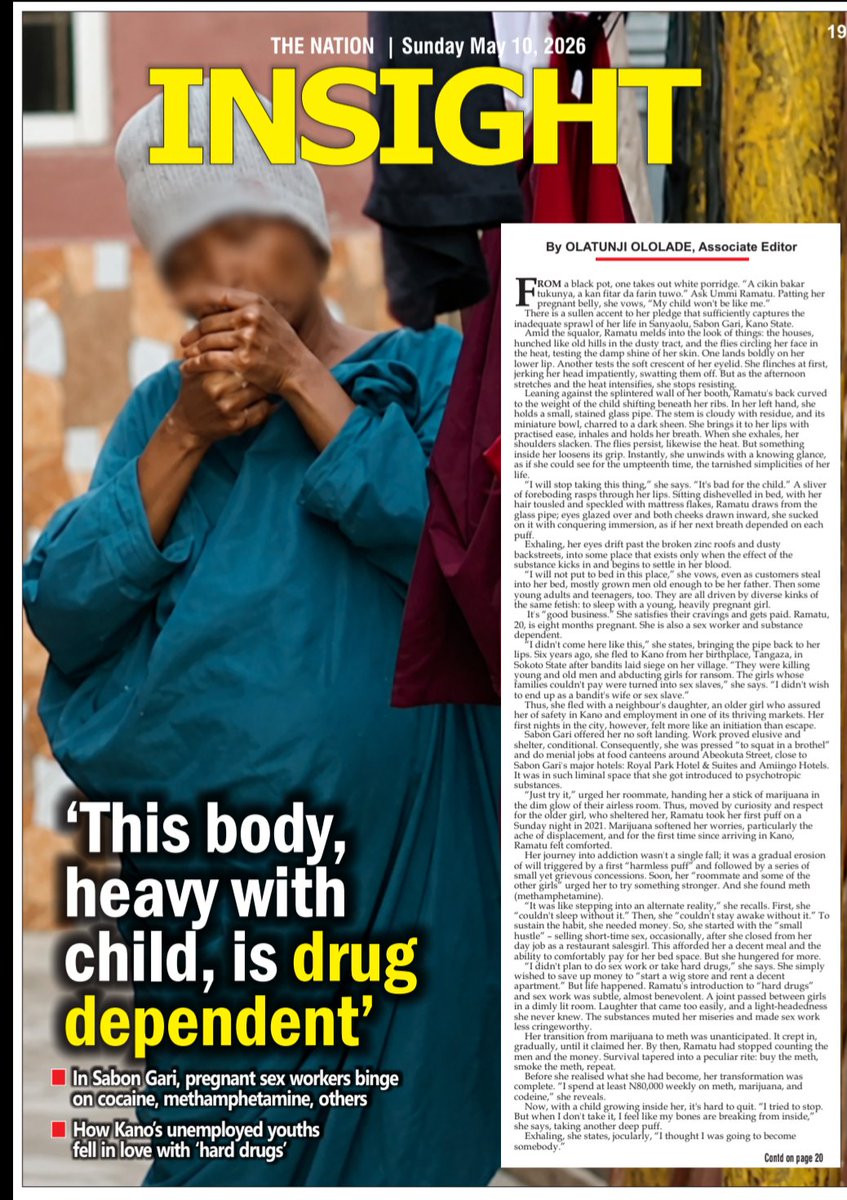
"Leaning against the splintered wall of her booth, Ramatu’s back curved to the weight of the child shifting beneath her ribs. In her left hand, she holds a small, stained glass pipe. The stem is cloudy with residue, and its miniature bowl, charred to a dark sheen...
Olatunji Ololade tweet media
English
0
0
0
37
Olatunji Ololade
Olatunji Ololade@Musenarratives·
@thefireofOla Honestly, Iran mustn't take the purported ceasefire to heart. The bandits - US-ISRAELI force - will try to sneak an attack on them. They never fight fair.
English
0
0
0
18
Olashile Abayomi-Wealth
Olashile Abayomi-Wealth@thefireofOla·
Lol. And you want to be the President of a Disgraced Country... The Country will suddenly be graceful if you get there.. Doctors went on 13 months strike when you were Governor, one would think you have never held a political post before. You are part of the rot. Wild Animals, over to you.
Peter Obi@PeterObi

Now a Disgraced Country Indeed Today, as the world marks World Health Day, we must pause for honest reflection. Nigeria, a nation of over 200 million people, continues to grapple with one of the weakest healthcare systems in the world. Our primary healthcare structure is almost comatose. We now record worse infant mortality outcomes than India, a country with a larger population, while health insurance coverage in Nigeria remains below 5%. These are not just statistics; they are a painful indictment of our priorities. Recent disclosures by the Honourable Minister of Health show that out of the ₦218 billion appropriated for healthcare capital expenditure, only about ₦36 million has been released. This is deeply troubling. At the same time, the Independent National Electoral Commission (INEC) has projected over ₦135 billion for legal expenditures. Let us reflect on this. The amount earmarked for election-related litigation is far higher than what has been made available for primary healthcare, the very foundation of a nation’s wellbeing. This is the same primary healthcare system expected to serve millions of Nigerians and support critical institutions such as: 1. University of Benin Teaching Hospital, Benin City 2. University of Calabar Teaching Hospital, Calabar 3. University of Abuja Teaching Hospital, Gwagwalada 4. University College Hospital, Ibadan 5. Obafemi Awolowo University Teaching Hospital, Ile-Ife 6. University of Ilorin Teaching Hospital, Ilorin 7. Irrua Specialist Teaching Hospital, Irrua 8. University of Nigeria Teaching Hospital, Ituku-Ozalla, Enugu 9. Jos University Teaching Hospital, Jos 10. Aminu Kano University Teaching Hospital, Kano 11. Lagos University Teaching Hospital, Lagos 12. University of Maiduguri Teaching Hospital, Maiduguri 13. Nnamdi Azikiwe Teaching Hospital, Nnewi 14. University of Port Harcourt Teaching Hospital, Port Harcourt 15. Usmanu Danfodiyo University Teaching Hospital, Sokoto 16. University of Uyo Teaching Hospital, Uyo 17. Ahmadu Bello University Teaching Hospital, Zaria 18. Federal Teaching Hospital, Abakaliki 19. Abubakar Tafawa Balewa University Teaching Hospital, Bauchi 20. Federal Medical Centre, Yola These institutions represent hope for millions. Yet, they remain underfunded, overstretched, and burdened by systemic neglect. A nation that prepares more for electoral disputes than for the health of its citizens is a nation that has lost its way. We must begin to ask the difficult but necessary questions: What are our true priorities? What kind of nation are we building? And for whom? Healthcare and education are not optional; they are the foundation of national development. Any country that neglects them undermines its own future. Nigeria must urgently reorder its priorities. We must invest in the health and wellbeing of our people, strengthen our institutions, and build a system that works for all, not just a few. A new Nigeria is POssible. -PO

English
201
377
1.1K
52.5K
Odiara O. Simo
Odiara O. Simo@Odiara_O·
@Onorpik That terrorist financier state must ba taught a lesson. You cant use the entire resources of a nation tou build weapons and supply them to terrorists to threaten your neighbours
English
2
0
0
518
KIPRONO
KIPRONO@Onorpik·
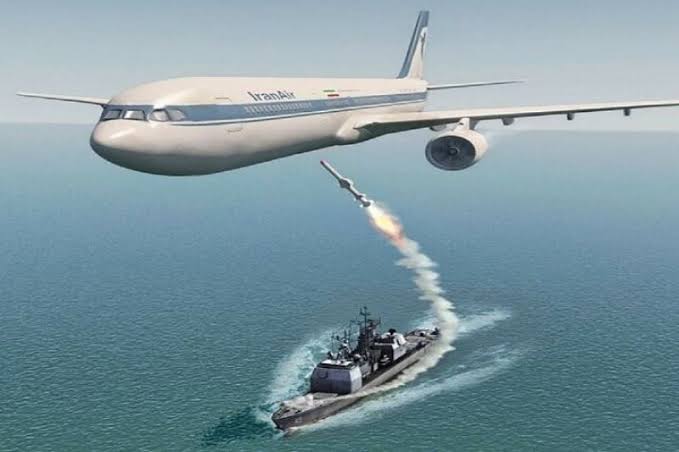
Did you know that on July 3, 1988, the US Navy cruiser USS Vincennes shot down Iran civilian airplane en route from Bandar Abbas to Dubai with two surface-to-air missiles, killing all 290 aboard—including 66 children. Now you know who the enemy is all along!
KIPRONO tweet media
English
156
6.2K
15.2K
260.6K
Rod Coffman
Rod Coffman@rodcoffman·
Had Iran chose the path both Russia & China laid out for her some 20-yrs ago there would be a combined $100 billion in investments or more in Iran & this certainly wouldn't be happening to them today. Iran would have about 20 nuclear power plants protected by Russian manned S-300's. Russia would have it's warm water port via train line running through Iran, exporting oil, NG, fertilizer, wheat & other products to the Global South. Iran would have advanced fighter jets to protect it's own airspace. China had committed to invest over $100 billion in Iran's ageing oil fields. Between the savings that nuclear power would give to Iran's oil & NG exports plus China's increased investments Iran today would be rivaling the Saudi's in oil output. With crude & NG revenue, along with Persian know how Iran would today have a booming economy. Instead Iran chose a path of revenge, invested not domestically but in war and funded foreign proxies who promoted war. Before this conflict even started the world was paying about a $10 premium for crude due to added insurance or transit distance by being denied the use of the Suez Canal. Investment fled the Middle East to go places more stable. Iran made their bed and as the Chinese love to say, was not good for business. Both Russia & China agree with that as well as their neighbors. I'm sorry this came to where we are, but I have no idea Pepe what you have been watching for the last 20-years.
English
1
0
1
179
ASHES of POMPEII
ASHES of POMPEII@Pompeii_Ashes·
Who Gets a Seat at the Multipolar Table? The unipolar club is closed. A new table is being set in global politics, and the question isn't whether the world is becoming multipolar. It is: who actually gets a seat? Not who is invited. Not who is hoped for. Who earns it. For decades, there was no table. There was only a throne. The United States sat alone at the head of the global order. Everyone else stood below - either as vassals secured by American protection or as enemies targeted by American power. There were no peers, only subjects and adversaries. But that hierarchy is crumbling. Look at the Philippines. For decades, a treaty ally, a strategic outpost in the American empire. Now, in light of developments in the Persian Gulf, Manila is in direct talks with Beijing to co-develop gas fields in the South China Sea. This isn't hedging. It's a recognition that the throne is, if not vacant, certainly vacillating. When a vassal starts negotiating with the hegemon's rival over disputed territory, it's not because the protection is "insufficient." It's because the hegemon can no longer fully enforce the hierarchy. The lesson is being written in fire as we speak in the Gulf. The Gulf monarchies, all hosts to American forces, are being pummeled, not despite the bases, but because of them. US air defenses could not stop it all. The message was brutal: alignment with Washington doesn't always buy safety. It can buy a target. The security umbrella has holes. The guarantee is no longer valid. For now, the Gulf states are sticking with USA, but for how long? So, who sits at the new table? The United States, China, and Russia are already seated. They have the nuclear arsenals, the economic mass, the global reach. They are poles by default, by history, by capability. But multipolarity demands more than three. It demands regional centers of gravity that can shape their neighborhoods without asking permission. Enter Iran. Iran isn't asking for a seat. It is taking one. Through active war, it is proving the criteria. A pole isn't defined by GDP or population alone. It is also defined by will, resilience, and reach. Can you absorb a blow and strike back? Can you project power beyond your borders without a patron? Can you impose costs on a superpower that make escalation politically unsustainable? Iran, under direct attack, has done all three. It has kept its missile forces operational, activated proxy networks across the region, and triggered the largest global energy shock since the 1970s by closing the Strait of Hormuz. That is leverage. That is pole behavior. Iran looks likely to emerge from the chaos in the Gulf as the regional superpower. A compariuson can be made to Prussia in the 19th century - smaller population and economy, but its punching power meant it was a full player in the concert of European nations of the time. And speaking of them, what of Europe? The UK, France, Germany, Italy - the EU as a whole? Europe is an economic titan, a regulatory superpower, a cultural beacon. But is it a pole? France has nuclear weapons and expeditionary ambitions, but it is overextended and domestically constrained. Germany has industrial might but remains a military lightweight, dependent on American security. The UK talks of "Global Britain" but lacks the resources to back the rhetoric. The EU can set standards for smartphones, but it cannot agree on a unified response to a war on its doorstep. Europe has wealth, but not unity; capability, but not will. It remains within the American orbit, even as that orbit weakens. Can we say it is a stakeholder, but not entirely a sovereign actor? If the need is a new USB connector, Europe is the first to get the call. But resolve a geopolitcal issue? Until and unless the current crop of leaders are replaced, Europe might get invited to the dinner, but they will only be allowed into the building through the servant’s entrance. Now consider who else doesn't get a seat, despite their wealth or alliances. Japan is an economic giant, a technological powerhouse, a key US ally. But it remains a protectorate, not a pole. Its military is constitutionally constrained; its foreign policy echoes Washington's. It has influence, but not autonomy. The Arab states, Saudi Arabia, the UAE, Egypt, have petrodollars and ambition. They broker deals, invest globally, and posture as regional leaders. But when the missiles flew, their US-backed defenses faltered. Wealth without will, or weapons without independence, does not earn a seat. They are customers, not architects. Then there is Turkey. Ankara desperately wants in. It plays all sides: NATO member, buyer of Russian systems, mediator in Ukraine, power broker in the Caucasus. But no one fully trusts it. Its ambitions outpace its reliability. In a world where poles must be predictable to their allies and formidable to their adversaries, Turkey's volatility keeps it on the periphery. It is a swing state, not a center of gravity. And Africa? For politeness, for the optics of inclusion, South Africa or Nigeria might be invited to the multipolar dinner. They have populations, resources, and regional voices. But at a global scale, they remain observers. Neither can project power beyond its subregion, nor shield its neighborhood from external intervention. They are important, but not yet indispensable. Their time may come. But the table being set today is not waiting. Which brings us to the other contenders. Brazil and Indonesia have massive populations, growing economies, and regional influence. They speak loudly at BRICS and the G20. But influence is not the same as imposition. A pole can set the rules in its neighborhood; a regional power often negotiates them. Can Brazil prevent external powers from intervening in South America if they choose? Can Indonesia deter great-power coercion in Southeast Asia? Currently, they remain arenas where the big three compete, not independent centers of gravity that can dictate terms. They are waiting for an invitation. But at this table, invitations aren't sent. Seats are taken. Then there is India. The wildcard. It has the raw materials: a booming economy, a large military, strategic location. It practices autonomy, buying Russian oil while partnering with the US on technology. But true pole status requires more than balance. It requires the capacity to enforce regional stability without outside help. India is moving in that direction, but it remains cautious, hesitant to fully shoulder the burdens of leadership. It is watching, calculating. But in a world where power is proven in real time, hesitation can cost you a seat. For now India is at the table, but as the junior member, whose major leverage is as swing state, not center of power. So, what actually makes a pole? Iran's example clarifies the test. It is less about raw totals and more about three things: resilience (can you take a hit and keep fighting?), reach (can you project influence beyond your borders?), and will (are you willing to pay the price for autonomy?). Economy, population, and military strength are the entry fee. But the seat is earned by how you use them under pressure. By that measure, Iran has earned its place. Japan and the Arab states have the wealth but not the will. Turkey has the ambition but not the trust. Africa has the potential but not the projection. Brazil and Indonesia are still preparing their applications. India is in, but not really a fully consolidated member. Europe assumes it will have a place of honor at the table, but that requires that the others respect it, even if grudgingly. Does Europe currently have that respect? The old rules no longer apply. In this new order, autonomy is the ultimate currency - and it is earned, not given. The question isn't who wants a seat. It's who is willing to do what it takes to claim one. The table is being set. The chairs are limited. And the world is watching to see who stands, and who finally sits. Substack 👇👇👇
ASHES of POMPEII tweet media
English
21
114
237
26.6K
Arashk Borzoo
Arashk Borzoo@arashkborzoo·
@thatdayin1992 I was in every recent protest in the last few years, I hope they take my family's property but I'll return to build my country. Also this is just the beginning, it's growing
English
1
0
1
653
Hassan Mafi ‏
Hassan Mafi ‏@thatdayin1992·
The US turned every single Iranian anti gov regime changers to full-fledged supporters of Ayatollah Khamenei 😂😭
English
61
844
3.9K
71.6K
Ayatony
Ayatony@TonyC617712·
@ME_Observer_ This is your opening statement: He moved only after he saw Hezbollah destroying Israeli tanks in the south I wanna see it
English
4
0
7
294
A.Y.O
A.Y.O@YusufAsunmogejo·
@just_incrediibl If after all I said, this is what you drew from it, then you are a blockhead. I am not even sure you are a smart person to begin with…
English
6
8
576
19.1K
A.Y.O
A.Y.O@YusufAsunmogejo·
Hey Jai, Your forefathers have tried more than this in the past, yet they failed. Yours won't be different. Your entire attack is built on an embarrassing category error. You are trying to compare the Christian theological concept of the Trinity to the phonetic dialects of a spoken language. Let me help you a bit, perhaps you may be guided. Hafs, Warsh, Qaloon, and the rest of those names on the covers are not different Qurans. They are not authors neither. They are the names of the scholars who preserved the oral transmission of the Quran in the different dialects of the Arab tribes. The Prophet Muhammad (peace be upon him) received the revelation and taught it in these dialects to make memorization easy for a widespread, illiterate society. In fact, just so you know how ignorant you are, Warsh and Hafs are not even the main Imams. They are just students (transmitters). For the sake of my audience, the seven Imams are Nafi', Ibn Kathir, Abu 'Amr, Ibn 'Amir, 'Asim, Hamzah, and Al-Kisa'i. To show you how deep this preservation goes, Hafs is a transmitter for Imam 'Asim, while Warsh and Qaloon are both transmitters for Imam Nafi'. As I said earlier, your meme is a big logical failure. How does the Trinity that claims three distinct persons with separate wills make up one God relates with the Qira'at of the Quran?. I don’t need to tell you what you are. The Qira'at of the Quran are about phonetics. All ten recitations teach the same theology, the same laws, and the same historical accounts. There are no missing chapters or conflicting narratives. Where one recitation might say "Malik" (King), another says "Maalik" (Owner). Both words describe Allah perfectly. They complement each other, they never contradict. To put this in a way your mind can process, if a British man writes "colour" and an American writes "color", or if one pronounces "schedule" with a hard C and another with a soft S, they are not reading two different books. They are expressing the same word in different dialects. Every single variation you see in those books traces its recitation back to the Prophet Muhammad (peace be upon him) through a mass-transmitted, unbreakable chain of narrators. It is a historical flex of preservation that your scriptures do not possess. Next time you want to critique Islamic preservation, drop the memes and read a book on Quranic sciences. Thank you for your attention.
Jai@JaiNDoC_RL

English
122
598
3.8K
279.8K
Olatunji Ololade
Olatunji Ololade@Musenarratives·
@lekan_olayinka1 Kudos on asserting your cosplay intellect. Ọmọ àlè tí ń fí sanyan irọ pẹ̀gàn òtítọ́, alágàbàgebè tí ń fí oko àlè dó furọ ìyá tó bí sáyé, nítorí wípé ó kó rírà bàbà rẹ. Welldone lad, you are acing your role as plantation butler.
Català
0
0
0
39
Lekan Olayinka
Lekan Olayinka@lekan_olayinka1·
Dear Ghana, the Asante Empire which is now modern day Ghana were leaders of slavery around 1701-1900. They heavily depended on enslaved Africans to sustain their gold, cotton driven economy. Historians conclude that around 6,500 slaves were added to the empire annually. This means Ghana, a superpower then, actually raided inland Africa and enslaved them. They were the ones who supplied the Europeans with enslaved Africa at the Chattel slave trade. So, why is the slave trade the gravest humanitarian sin and not the Africans who enslaved their own? Finally, this sudden “fight” for social justice has all the signals of some international powers pulling the strings. This is a speculation. A wild one. But I know when international giants are using an African nation as their tool. But dear Ghana, slavery was a humanity crime. It is gone, largely. Let Africa now fights its own internal battles of corruption, disregard for the rule of law. These are the real enemies of Africa, not an event that happened 400 years which nobody here today witnessed or experienced.
Ghana MFA@GhanaMFA

HISTORY MADE AT THE UNITED NATIONS The United Nations General Assembly has adopted resolution A/80/L.48, declaring the Trafficking of Enslaved Africans and Racialized Chattel Enslavement as the Gravest Crime against Humanity. Standing on the Right Side of History

English
288
252
909
169.7K
Olatunji Ololade
Olatunji Ololade@Musenarratives·
@YusufAsunmogejo @dipoaina1 Let's hope he's appropriately schooled. But I assure you he isn't. He's the proverbial tsetse fly that would escort faeces into the latrine, just to discover it's true nature. Check the comment thread. See the level of ignorance and venom? Now, sabr. Move on.
English
0
0
0
187
A.Y.O
A.Y.O@YusufAsunmogejo·
Dear Aina Dipo @dipoaina1 , I am responding to you because I see you have a large following and I won't want people to be deceived by your half-baked knowledge of religious events. The same thing you have raised is what your ilks have raised. I chose to ignore them, but I won't ignore you so you don't run with your ignorance as facts. First of all, you built your entire argument on a monumental fallacy. You asked what would have become of Adam if he had resisted temptation, and if his "divine state" would have remained. Where in the history of theology did you learn that Adam was divine? God formed Adam from dust. Dust is created matter. Divinity is the eternal nature of the Creator alone. It is not a temporary badge you earn for good behavior or lose when you sin. If a being can lose divinity, that being was never God to begin with. Then you shot your own argument in the foot by bringing up the temptation of Jesus in the wilderness. You proudly stated Jesus fasted for forty days and was tempted by the devil, asking if his divinity would be stripped if he sinned. Let me help you analyse this logically using the same Bible you reference. The book of James chapter 1 verse 13 clearly states that God cannot be tempted with evil. If the devil tempted Jesus, it means the devil saw a human with free will. You cannot tempt the Almighty. Again, God is self-sufficient. God does not starve. Fasting is a clear act of submission to a higher power. Who was Jesus fasting to? Also, you boldly challenged me to name another prophet who did not commit sin and was miraculously conceived. I see you are confusing Islamic theology with your church doctrine of original sin. In Islam, all prophets are protected from major sins. They are the finest of mankind. When prophets seek forgiveness from God, it is out of their supreme humility and constant desire to elevate their spiritual rank before their Lord. It is not an admission of moral corruption. As for miraculous conception, I will repeat it so it sticks. Adam was created without a father and without a mother. Miracles are a display of the infinite power of the Creator. They do not turn the creation into the Creator. You ended by mocking the title of a prophet, saying I still think he was just a messenger. Just so you know, being chosen as a Messenger of Allah is the highest honor a human being can attain. It means the Creator of the universe chose you to deliver His word. You think it is a downgrade because your theology forces you to turn a noble prophet into a deity just to validate his message. Do not try to force your church doctrines into Islamic theology. They will always fall apart. Thank you for your attention.
Ainà Dipo 🇳🇬@dipoaina1

Bro, come on.. Jesus was born miraculously, was quoted as the Messiah, the Word from, and the Spirit of God, conceived by Mary, was sinless, and will come back, but you still think He was just a messenger... You speak of God creating Adam, but you overlook that Adam later sinned and was driven out of the garden along with Eve. Logically, have you asked yourself what would have become of Adam if he had resisted temptation and not sinned? Would that divine state have remained with him, or not? Consider Isho (ܝܫܘܥ) Jesus Christ, a man without sin. He was tempted on several occasions but resisted. Now ask yourself: if He had succumbed to temptation and sinned, what would have been the consequence? Will his divinity be stripped like Adam or will it remain intact. As recorded in the Gospel of Matthew (4:1–11) and the Gospel of Luke (4:1), Jesus rebuked temptation in the Judean wilderness after fasting for forty days and forty nights. ***** Check all the documented prophets-messengers of God and tell me which of them didn’t coming sin and was miraculously conceived like Jesus Christ…..from Adam, to Abraham, Moses, David, Solomon and the last prophet, Mohammad (PHUB), which I also believe he is a Prophet of God. Anyways enjoy your day 👍🏽

English
51
169
543
27.3K
oseni rufai
oseni rufai@ruffydfire·
How many people have been killed in the war? •Iran: At least 1,500 people killed, 18,551 injured •Lebanon: At least 1,039 people killed, 2,583 injured •Iraq: At least 61 killed, dozens injured •Israel: At least 18 killed, 4,697 injured •US military: At least 13 killed, 200 injured •Palestine: At least four killed •Syria: At least four killed •Kuwait: At least six killed, dozens injured •Bahrain: At least two killed, dozens injured •UAE: At least eight killed, 160 injured •Oman: At least three killed, 15 injured •Saudi Arabia: At least two killed, 20 injured •Jordan: At least 28 injured •Qatar: At least 16 injured.
English
147
66
269
67.1K
(Ω)
(Ω)@strikesatchii·
Richard Black, a former Republican senator from Virginia . "Al-Qaeda and ISIS have always been our auxiliary forces on the ground in Syria. They carried out the American mission for us."
VΩX@VoxExVeritas

The Origin of Terror 🧵(DEEP THREAD) MAIN How the "Deep State" (US & Israel) Created Terrorism The US and Israel have created, funded, and armed the majority of terrorist organizations worldwide to momentarily combat their "enemies," justify more war, expand power, and/or instill fear in Americans to garner support for further militarization and foreign military campaigns. Al-Qaeda was essentially created by the US to fight the Soviet Union. Before the CIA trained and armed the mujahideen, they were loosely organized Afghan farmers/fighters defending their homeland. Operation Cyclone provided money, weapons, and training, integrating foreign Arab volunteers who later formed Al-Qaeda. Israel has also supported militias and proxy groups in Lebanon, Gaza, and elsewhere when it served its strategic interests. Many of these groups evolved beyond their original purpose, becoming autonomous organizations targeting not only original enemies but also Western interests for their involvement. The pattern is clear: The US and Israel create or support armed groups to achieve short-term objectives, fully aware they will later become uncontrollable — Al-Qaeda, ISIS, and others are deliberate examples of this strategy. The Iran–Contra affair (1985–1987) showed that the U.S. and Israel secretly armed groups for geopolitical gain; fueling violence. The Reagan administration covertly sold U.S. weapons to Iran (despite an arms embargo) to free hostages. Israel acted as a middleman, transferring U.S.-made arms to Iran—partly for profit, partly for strategic leverage. Profits from the arms sales were funneled to Nicaragua’s Contra rebels. The scheme prolonged conflicts, led to civilian atrocities by the Contras, and destabilized regions—showing how U.S. and Israeli covert actions intentionally profit from long-term instability and war. 🧵 1. Al-Qaeda Origin: Late 1970s–1980s, Soviet-Afghan War. U.S. responsibility: CIA’s Operation Cyclone funded, armed, and trained Afghan mujahideen; foreign volunteers trained in Pakistan camps later formed Al-Qaeda. Outcome: Turned on U.S./Western targets (e.g., 9/11). 🧵 2. Taliban Origin: Early 1990s, post-Soviet Afghanistan. U.S. responsibility: Covert aid to mujahideen factions via Pakistan’s ISI helped create a fragmented environment Taliban exploited. Outcome: Established sanctuary for Al-Qaeda leadership. Wikipedia: en.wikipedia.org/wiki/Taliban 🧵 3. Afghan Mujahideen Origin: 1979–1989. U.S. responsibility: Direct CIA funding, arms (e.g., Stingers), and training to fight Soviet forces. Outcome: Fragmented factions later formed Taliban, Al-Qaeda, and other militant groups. Wikipedia: en.wikipedia.org/wiki/Afghan_mu… 🧵 4. ISIS / ISIL Origin: Early 2000s; post-2003 Iraq insurgency and Al-Qaeda in Iraq, expanded in Syria. U.S. responsibility: 2003 Iraq invasion and dismantling of institutions created instability. Regional proxies armed by U.S. allies helped fuel insurgency. Outcome: Territorial seizure in Iraq/Syria and global terror campaign. Wikipedia: en.wikipedia.org/wiki/Islamic_S… 🧵 5. Hamas Origin: 1987, Palestinian branch of Muslim Brotherhood. Israeli responsibility: Strategic support of Islamist groups as counterweight to secular PLO/Fatah aided Hamas’s growth. Outcome: Became dominant Islamist political and militant force in Gaza. Wikipedia: en.wikipedia.org/wiki/Hamas 🧵 6. Fatah & Palestinian militias/factions Israeli & U.S. responsibility: Intervened to back rival factions, enabled fragmentation, and funded groups to undermine PLO unity. Outcome: Fragmented Palestinian politics; radicalization and militarization of factions. Wikipedia: en.wikipedia.org/wiki/Fatah 🧵 7. Lebanese militias (Phalangists, South Lebanon Army) Origin: Lebanese Civil War, 1975–1990. Israeli responsibility: Weapons, logistics, and direct backing; contributed to Sabra and Shatila massacre. U.S. responsibility: Covert aid to allied factions. Outcome: Fueled civil war and rise of Hezbollah. Wikipedia: en.wikipedia.org/wiki/Sabra_and… 🧵 8. Al-Nusra / Jabhat al-Nusra Origin: Syrian Civil War, 2012, offshoot of Al-Qaeda. U.S./allied responsibility: Opposition groups funded/trained by U.S. and Gulf states diverted weapons to extremists. Outcome: Became a major Al-Qaeda affiliate in Syria. Wikipedia: en.wikipedia.org/wiki/Al-Nusra_… 🧵 9. Global Mujahideen networks Origin: 1980s onward; Bosnia, Chechnya, Somalia, Yemen, Philippines, etc. U.S. responsibility: Training camps, funding, and logistics seeded fighters for global insurgencies. Outcome: Transnational jihadist networks that outlived original patrons. Wikipedia: en.wikipedia.org/wiki/Bosnian_m… 🧵 10. Hezbollah (Lebanon) Origin: 1980s, Shia militia. Israeli responsibility: 1982 invasion backfired, catalyzed Hezbollah’s rise. U.S. role: Support for Israel and allied militias indirectly strengthened Hezbollah. Outcome: Major militant and political force; key U.S./Israeli adversary. Wikipedia: en.wikipedia.org/wiki/Hezbollah 🧵 11. Mujahedeen in Bosnia & Chechnya U.S./Gulf intermediary responsibility: Funding and logistics via Pakistan/Saudi/Gulf channels seeded fighters. Outcome: Some later joined global jihadist networks. Brookings: brookings.edu/articles/the-g… 🧵 12. Libya (post-2011) & fractured militias U.S./NATO responsibility: Intervention toppled Gaddafi, empowered local militias, and created arms chaos. Outcome: Emergence of ISIS-affiliated and independent militias. The Guardian: theguardian.com/world/2016/feb… 🧵 13. Syrian rebel ecosystem & CIA’s “Timber Sycamore” U.S. responsibility: Covert program trained and armed rebels; weapons often ended up with extremists. Outcome: Fragmented opposition and prolonged civil war. Wikipedia: en.wikipedia.org/wiki/Timber_Sy… 🧵 14. Taliban-aligned Haqqani Network Origin: Afghanistan/Pakistan. U.S. responsibility: Funded via mujahideen-era networks. Outcome: Became autonomous insurgent group targeting U.S. and allies. Wikipedia: en.wikipedia.org/wiki/Haqqani_n… 🧵 15. Fatah al-Islam Origin: 2006, Lebanon. Israeli & U.S. responsibility: Indirect support via factional policies in Palestinian refugee camps. Outcome: Armed Islamist group in Lebanon. Wikipedia: en.wikipedia.org/wiki/Fatah_al-… 🧵 16. Boko Haram Origin: Nigeria, 2002. U.S. responsibility: Indirect through regional military aid and counterinsurgency programs. Outcome: Local and regional terror campaigns. Wikipedia: en.wikipedia.org/wiki/Boko_Haram 🧵 17. Al-Shabaab Origin: Somalia, 2006. U.S. responsibility: Funding and arms for Somali warlords in early 1990s indirectly facilitated rise. Outcome: Regional terror attacks in East Africa. Wikipedia: en.wikipedia.org/wiki/Al-Shabaa… 🧵 18. Taliban-linked Islamic Movement of Uzbekistan Origin: Central Asia. U.S./Pakistan responsibility: Mujahideen-era network links facilitated its growth. Outcome: Cross-border insurgent operations. Wikipedia: en.wikipedia.org/wiki/Islamic_M… 🧵 19. Fatah Hawks Origin: Palestinian territories. Israeli & U.S. responsibility: Funding and tactical support to rival factions undermined PLO control. Outcome: Localized attacks and fragmentation. Wikipedia: en.wikipedia.org/wiki/Fatah 🧵 20. ISIL-Libya Province Origin: Post-Gaddafi chaos. U.S./NATO responsibility: Intervention destabilized state; weapons flowed to groups. Outcome: Regional terror campaigns and territorial control. Wikipedia: en.wikipedia.org/wiki/Islamic_S… 🧵 21. Jaysh al-Islam Origin: Syrian Civil War. U.S./Gulf states responsibility: Trained and armed to fight Assad; weapons diverted. Outcome: Key Islamist faction in Damascus region. Wikipedia: en.wikipedia.org/wiki/Jaysh_al-… 🧵 22. Ahrar al-Sham Origin: Syrian Civil War. U.S./Gulf responsibility: Funded indirectly via “opposition” channels. Outcome: Major Islamist faction in northern Syria. Wikipedia: en.wikipedia.org/wiki/Ahrar_al-… 🧵 23. Fatah Revolutionary Council Origin: Palestinian territories. Israeli & U.S. responsibility: Enabled factional splits for political leverage. Outcome: Radicalized militant activities. Wikipedia: en.wikipedia.org/wiki/Fatah 🧵 24. Tehrik-i-Taliban Pakistan (TTP) Origin: Pakistan, 2007. U.S. responsibility: Mujahideen-era networks created recruitment base. Outcome: Attacks in Pakistan; cross-border operations. Wikipedia: en.wikipedia.org/wiki/Tehrik-i-… 🧵 25. Jaish-e-Mohammed Origin: Pakistan-administered Kashmir. U.S. responsibility: Regional power vacuums and early Cold War networks enabled emergence. Outcome: Terror attacks in Kashmir and India. Wikipedia: en.wikipedia.org/wiki/Jaish-e-M… 🧵 26. Lashkar-e-Taiba Origin: Pakistan, 1987. U.S. responsibility: Mujahideen-era networks provided early regional framework. Outcome: Mumbai attacks and Pakistan-administered Kashmir operations. Wikipedia: en.wikipedia.org/wiki/Lashkar-e… 🧵 27. Ansar al-Sharia (Libya & Yemen) Origin: Post-Gaddafi Libya & Yemen. U.S./NATO responsibility: State collapse after intervention created enabling environment. Outcome: Local terror campaigns. Wikipedia: en.wikipedia.org/wiki/Ansar_al-… 🧵 28. Abu Sayyaf Origin: Philippines, early 1990s. U.S. responsibility: Cold War-era mujahideen networks seeded Islamist militancy; regional military aid amplified them. Outcome: Kidnappings and terror operations in the Philippines. Wikipedia: en.wikipedia.org/wiki/Abu_Sayyaf Continuing from 🧵29: 🧵 29. Al-Qaeda in the Arabian Peninsula (AQAP) Origin: Yemen, 2009 (merger of Saudi and Yemeni Al-Qaeda branches). U.S. responsibility: Mujahideen-era networks and post-9/11 proxy operations indirectly enabled recruitment, funding, and logistics. Outcome: Regional and international terror operations. Wikipedia: en.wikipedia.org/wiki/Al-Qaeda_… 🧵 30. Al-Qaeda in the Islamic Maghreb (AQIM) Origin: Algeria, 2007 (rebranding of GSPC). U.S. responsibility: Cold War-era funding and weapons flows into North Africa helped form militant networks. Outcome: Terror attacks across North Africa; kidnapping and insurgency campaigns. Wikipedia: en.wikipedia.org/wiki/Al-Qaeda_… 🧵 31. Islamic State – Khorasan Province (IS-K) Origin: Afghanistan, 2015. U.S. responsibility: Power vacuums from long-term interventions and Afghan instability enabled emergence. Outcome: Deadly insurgency targeting Afghanistan and regional actors. Wikipedia: en.wikipedia.org/wiki/Islamic_S… 🧵 32. Jemaah Islamiyah (JI) Origin: Southeast Asia, 1993. U.S. responsibility: Mujahideen-era networks and Cold War-era anti-communist frameworks seeded Islamist mobilization. Outcome: Regional terrorism, including Bali bombings. Wikipedia: en.wikipedia.org/wiki/Jemaah_Is… 🧵 33. Al-Shabab (Somalia) Origin: Somalia, 2006. U.S. responsibility: Early 1990s Cold War-era interventions, arms flows to Somali warlords, indirectly enabled rise. Outcome: Regional insurgency and terror attacks in East Africa. Wikipedia: en.wikipedia.org/wiki/Al-Shabaa… 🧵 34. Harakat al-Shabaab al-Mujahideen (HSM) Origin: Somalia, 1990s. U.S./Gulf responsibility: Funding and indirect logistical support of Somali factions helped spawn militant networks. Outcome: Long-term regional terror network. Wikipedia: en.wikipedia.org/wiki/Al-Shabaa… 🧵 35. Islamic Jihad Union (IJU) Origin: Central Asia, early 2000s. U.S. responsibility: Afghan mujahideen-era networks and cross-border recruitment enabled formation. Outcome: Operations in Uzbekistan, Kyrgyzstan, and Germany. Wikipedia: en.wikipedia.org/wiki/Islamic_J… 🧵 36. Kata'ib Hezbollah (Iraq) Origin: Iraq, mid-2000s. U.S. responsibility: Post-2003 Iraq destabilization created space; regional proxy flows indirectly empowered militias. Outcome: Anti-U.S. insurgency and Iranian-aligned operations. Wikipedia: en.wikipedia.org/wiki/Kata'ib_H… 🧵 37. Jaysh Rijal al-Tariqa al-Naqshbandia (JRTN) Origin: Iraq, post-2003. U.S. responsibility: Iraq invasion dismantled state; militia growth enabled. Outcome: Local insurgent operations and sectarian violence. Wikipedia: en.wikipedia.org/wiki/JRTN 🧵 38. Al-Murabitun (North Africa & Sahel) Origin: 2013 merger of North African jihadist groups. U.S./France responsibility: Interventions in Libya and Mali destabilized region, allowing formation. Outcome: Sahel terror attacks and kidnappings. Wikipedia: en.wikipedia.org/wiki/Al-Murabi… 🧵 39. Boko Haram (Nigeria) Origin: 2002. U.S. responsibility: Regional military aid and counterinsurgency programs indirectly facilitated growth. Outcome: Terror campaigns, including kidnappings and attacks on civilians. Wikipedia: en.wikipedia.org/wiki/Boko_Haram 🧵 40. Ansar al-Sharia (Yemen) Origin: Yemen, post-Arab Spring. U.S. responsibility: Proxy interventions, destabilization, and arms flows indirectly enabled organization. Outcome: Regional insurgency and terror attacks. Wikipedia: en.wikipedia.org/wiki/Ansar_al-…

English
8
122
223
91.4K
Olatunji Ololade
Olatunji Ololade@Musenarratives·
@ruffydfire Now, you probably understand the depth and magnitude of Nigerians' brainwash. Let's hope we are spared the scourge of those bandit nations. They are here already, and alarmingly cheered by the madding crowd.
English
0
0
0
18
oseni rufai
oseni rufai@ruffydfire·
Trump always chickens out But he's supporters can never question their God trump
English
295
123
830
41.6K
Olatunji Ololade
Olatunji Ololade@Musenarratives·
@RajisGrace @ruffydfire How many voices spoke peace while Israel murdered Palestinians in the worst form of land theft and ethnic cleansing? Those that spoke peace, did it stop the maniacal murderers? It hits differently when the target ably shoots back.
English
0
0
2
20
Princess Grace Iye Adejoh
Princess Grace Iye Adejoh@RajisGrace·
@ruffydfire Am just looking for one voice that will speak peace here. Most of us are responsible for escalating wars globally by what we say or post. The truth is, “As we make our bed, so shall we lie in it.” The choice for a comfortable world to dwell in is ours to make.
English
4
0
1
773
Olatunji Ololade
Olatunji Ololade@Musenarratives·
@Big_christar_11 @ShaykhSulaiman @grok Bro, stop using Grok for confirmation, it's programmed to validate Western psyops and pro-USA/Israel misinformation. Except you simply seek an echo chamber for innate bias. Ire ó.
English
0
0
0
101
Sulaiman Ahmed
Sulaiman Ahmed@ShaykhSulaiman·
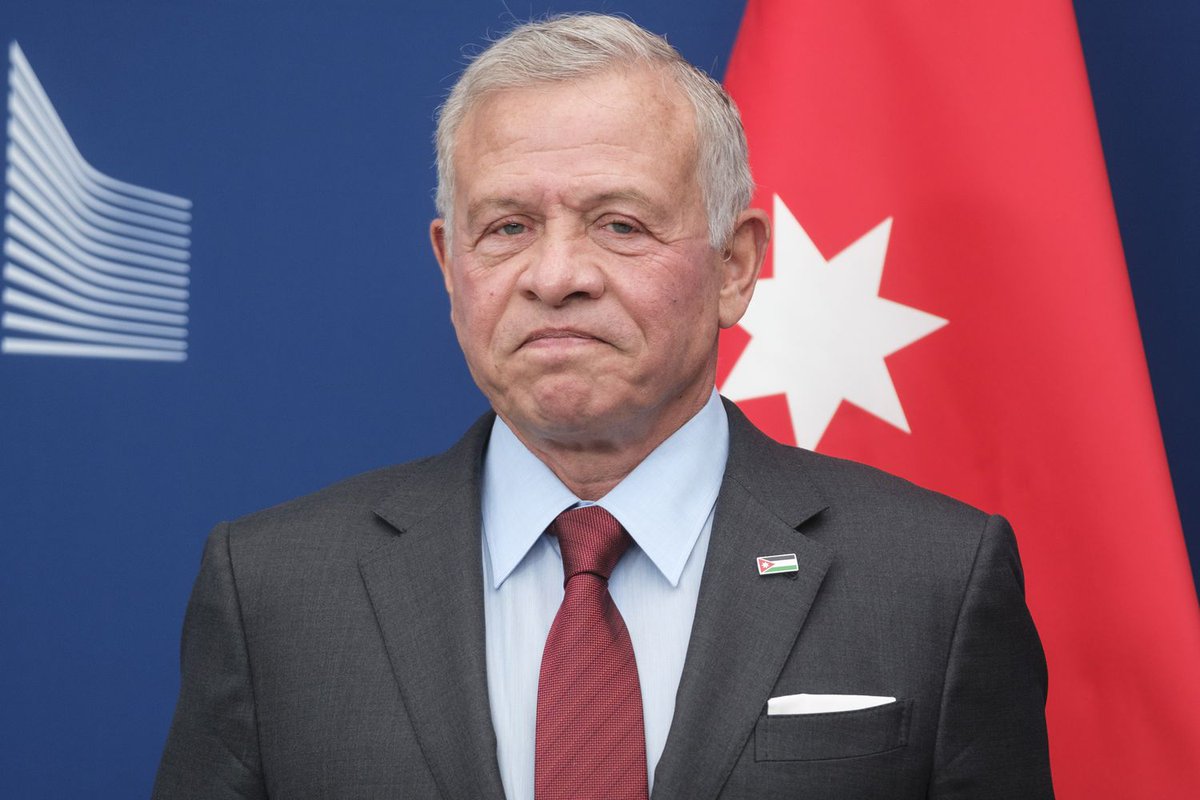
BREAKING: Israeli Media: King Abdullah II of Jordan must be punished because he allowed the Iranian missile to reach southern Israel and did not drop it over Irbid in Jordan as usual.
Sulaiman Ahmed tweet mediaSulaiman Ahmed tweet mediaSulaiman Ahmed tweet media
English
503
2.8K
11.4K
572.9K
Olatunji Ololade
Olatunji Ololade@Musenarratives·
@eseoyoma1 @grok @bossmuhadan @elonmusk Use your brain 'sweet goyim.' Grok is a compromised misinformation tool. It serves the interests of the Epstein class - the baby rapists and murderers that you defend. Smh. Use your brain 'goyim.'
English
0
0
0
15
Engr. Ken5yne
Engr. Ken5yne@eseoyoma1·
@grok @bossmuhadan Look at the parent comment and see how much misinformation that's been spread everyday on X.. if @elonmusk has not created grok, the world would've crashed to lies and fake news.. People just come out here, cook up stories to make them feel better...
English
1
0
0
23
ADINOYI
ADINOYI@bossmuhadan·
Nigerian zionists are no longer bragging about the Iron Dome. Una eye do see something abi😀?
English
112
222
1.4K
36.8K
Olatunji Ololade
Olatunji Ololade@Musenarratives·
@MaziEzike_Nedu @SprinterPress Both USA and Israel are having their asses and exaggerated ego pummelled in this war. Their strict embargo on news of casualties suffered is very instructive. Iran, on the other hand, publishes it's losses. Iran is winning this war. Bitter truth.
English
0
0
2
43
Mazi okwuoma
Mazi okwuoma@MaziEzike_Nedu·
The IRGC is basically sending a 'Save the Date' for a fight they definitely shouldn't want. Challenging the 82nd Airborne and the 1st Armored to a 'man-to-man' ground fight on a tiny island is peak psychological warfare, but the reality of a modern U.S. combined-arms response is a lot less cinematic. The rhetoric is hitting boiling point
English
2
0
3
327
Sprinter Press Agency
Sprinter Press Agency@SprinterPress·
The Islamic Revolutionary Guard Corps sent a message to the 1st Armored Division and the 82nd Airborne Division of the Armed Forces of the United States of America: “We are waiting for you on Kharg Island. Come by land and fight like men.”
Sprinter Press Agency tweet media
English
12
208
579
17.5K
REMILEX_TIPS ⚽️ 🏀 🎾 🔥
@jacksonhinkle The late Ayatollah and senior officials were perhaps the ones keeping the IRGC at bay as well as being open to diplomacy. These younger ones are itching and might not hold back.
English
1
0
1
418
Jackson Hinkle 🇺🇸
Jackson Hinkle 🇺🇸@jacksonhinkle·
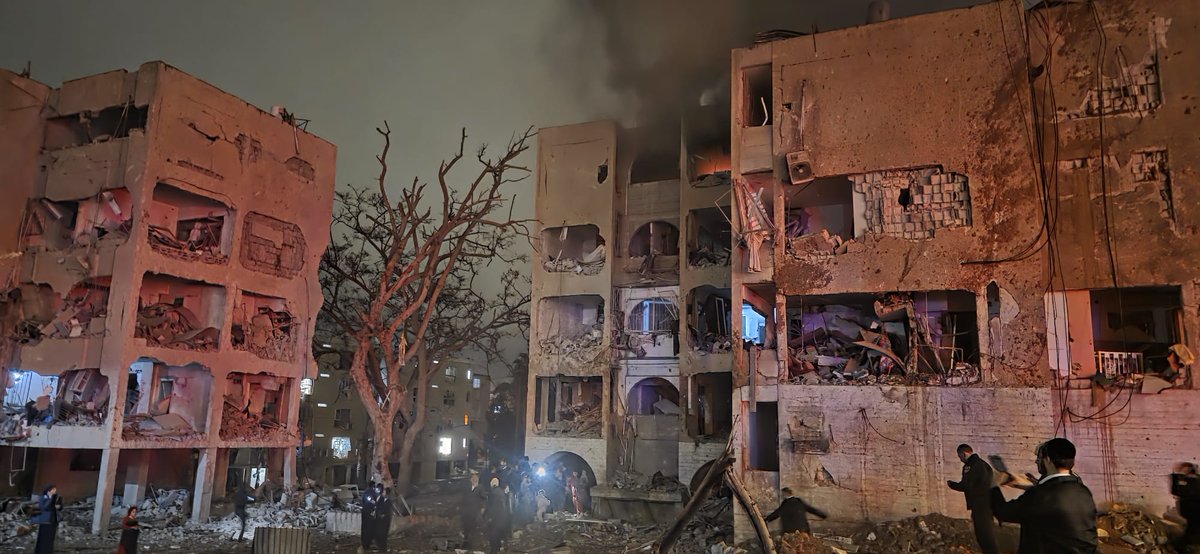
Dear Israel: Next time don’t start a war for no reason
Jackson Hinkle 🇺🇸 tweet mediaJackson Hinkle 🇺🇸 tweet media
English
318
2.1K
12.6K
185.8K