Nicolas Michel

132 posts

Nicolas Michel banner
Nicolas Michel

Nicolas Michel

@NicMicMacro

Chief Economist @ Alpen Privatbank AG | Husband of one, Father of two | Views are my own.

Katılım Mayıs 2020
108 Takip Edilen47 Takipçiler
Nicolas Michel
Nicolas Michel@NicMicMacro·
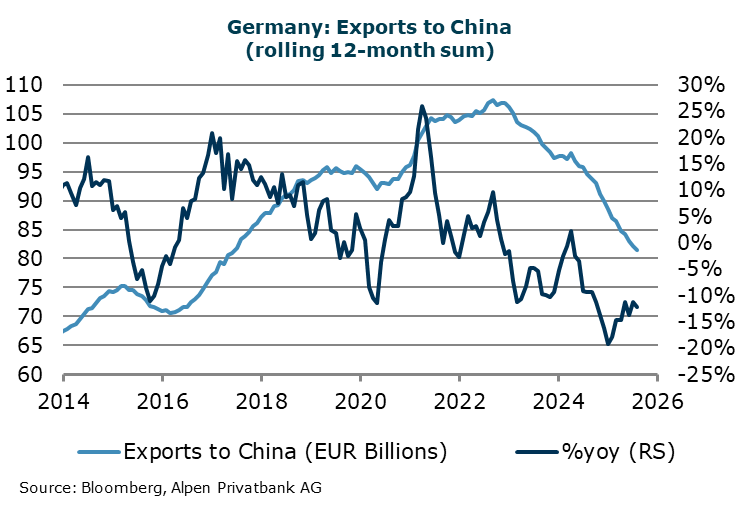
@heimbergecon Thanks for the insights. This is what it looks like for German exports (overall) to China
Nicolas Michel tweet media
English
0
6
27
3.1K
Philipp Heimberger
Philipp Heimberger@heimbergecon·
EU car exports to China are in freefall. For a time, the North American market offered Europe’s carmakers an important offset from the China shock. But this cushion is now vanishing due to US protectionism.
Philipp Heimberger tweet media
English
47
185
632
218.9K
Nicolas Michel
Nicolas Michel@NicMicMacro·
@ainyrockstar Doch, sie entsprechen dem Stadtbild, das Merz gerne hätte! Ironie 🤡
Deutsch
1
0
1
1.3K
Anabel Schunke
Anabel Schunke@ainyrockstar·
Und jetzt nochmal für die Fotografen von der anderen Seite. 🤡 Es ist alles orchestriert, hochgradig professionalisiert. Diese Witzfiguren haben nichts mit der Mehrheit der Bevölkerung zu tun. Und sie entsprechen schon gar nicht dem #Stadtbild in vielen deutschen Städten, die komplett überfremdet sind.
Deutsch
327
770
7.1K
116.7K
Prince Fynn
Prince Fynn@Prince_Fynnz·
Fasting for 72 hours is the best medicine on Earth. It triggers your body to "eat up" tumors, inflammation, and toxins. Here's how to fast correctly. Check Thread 👇
Prince Fynn tweet mediaPrince Fynn tweet media
English
249
3.3K
16.7K
2.8M
Thierry from arvy 🇨🇭
Thierry from arvy 🇨🇭@ThierryBorgeat·
Es gibt zu viel Lärm auf den Finanzmärkten. In einer Studie von Fidelity wurde die Performance 📈 von Konten analysiert, um festzustellen, welche Art von Anlegern die besten Renditen erzielt. Über einen Zeitraum von zehn Jahren waren die Kunden, die am besten abschnitten, diejenigen, die bereits tot waren, und die zweitbeste Gruppe waren Kunden, die vergessen hatten, dass sie Investitionen hatten!
Thierry from arvy 🇨🇭 tweet media
Deutsch
9
12
85
6.5K
Alex & Books 📚
Alex & Books 📚@AlexAndBooks_·
Author @JamesClear is the world's #1 bestselling non-fiction author. He says "developing a reading habit is a crucial task for anyone interested in earning more money or accumulating wisdom." Here are 33 helpful reading tips from him: 1) Read 20 pages to start the day. 2) I usually wake up, drink a glass of water, write down 3 things I’m grateful for, and read 20 pages of a book. 3) 20 pages is small enough that it’s not intimidating. Most people can finish reading 20 pages within 30 minutes. And if you do it first thing in the morning, then the urgencies of the day don’t get in the way. 4) Select a time to read every day. I suggest you do it first thing in the morning, but the important thing is to read at the same time every day. 5) Choose a page goal. Again you can use my 20-page goal or formulate your own. Just make sure that the goal is easy enough that you can’t say no, but significant enough for you to feel like you’re making progress. 6) Find a book to read today. If you wait til tomorrow, your reading time will arrive and you’ll be empty-handed. 7) Find a place to read. Reading in the same place every day will help solidify this habit. Find a comfortable place in your home or office where you are away from distractions. 8) Set a reminder. Use your calendar app or even a simple post it on your bathroom mirror. Create a trigger that will remind you to read. 9) Tell somebody about your commitment. Habit change does not happen in isolation. You need to share your commitment with others in order to make it feel real in your own mind. Email, call or text three people you care about that you plan to read x number of pages everyday at x time. 10) Read books that are relevant to what you want to achieve and reading will never seem boring. 11) If you know how to read, then reading books is relatively easy. You simply have to make time to read. Easier said than done, of course. 12) What matters is not simply reading more books, but getting more out of each book you read. 13) Quit books quickly and without guilt or shame. 14) Life is too short to waste it on average books. The opportunity cost is too high. There are so many amazing things to read. 15) I think Patrick Collison, the founder of Stripe, put it nicely when he said, “Life is too short to not read the very best book you know of right now.” 16) One way to improve reading comprehension is to choose books you can immediately apply. Putting the ideas you read into action is one of the best ways to secure them in your mind. 17) Choosing a book that you can use also provides a strong incentive to pay attention and remember the material. If you’re starting a business, for example, then you have a lot of motivation to get everything you can out of the sales book you’re reading. 18) Keep notes on what you read. You can do this however you like. It doesn’t need to be a big production or a complicated system. Just do something to emphasize the important points and passages. 19) I do this in different ways depending on the format I’m consuming. I highlight passages when reading on Kindle. I type out interesting quotes as I listen to audiobooks. I dog-ear pages and transcribe notes when reading a print book. 20) Store your notes in a searchable format. There is no need to leave the task of reading comprehension solely up to your memory. I keep my notes in Evernote. I prefer Evernote over other options because 1) it is instantly searchable, 2) it is easy to use across multiple devices, and 3) you can create and save notes even when you’re not connected to the internet. 21) My preference is to listen to audiobooks on 1.25x speed and then press pause whenever I want to write something down. The faster playback speed and slower note-taking process tend to balance out and I usually finish each book in the same time as normal. 22) I often hear from friends and readers who suggest listening to audiobooks at some crazy speed like 2x or 3x. Maybe my brain is just slow, but this is way too fast for me. Furthermore, I feel like burning through books at that pace is an indication of the wrong approach. It seems like the goal is simply to check books off the list rather than to deeply understand what the book is about. My preferred pace is slower, but hopefully my understanding is better. 23) I try to consider how the book I’m reading connects with all of the ideas that are already knocking around inside my head. Whenever possible, I try to integrate the lessons I’m learning with previous ideas. 24) When you read something that reminds you of another topic or immediately sparks a connection or idea, don’t allow that thought to come and go without notice. Write about what you’ve learned and how it connects to other ideas. 25) As soon as I finish a book, I challenge myself to summarize the entire text in just three sentences. This constraint is just a game, of course, but it forces me to consider what was really important about the book. 26) Read a variety of books on the same topic. Dig in from different angles, look at the same problem through the eyes of various authors, and try to transcend the boundary of your own experience. 27) Read the great books twice. The philosopher Karl Popper explained the benefits nicely, “Anything worth reading is not only worth reading twice, but worth reading again and again. 28) If a book is worthwhile, then you will always be able to make new discoveries in it and find things in it that you didn’t notice before, even though you have read it many times. 29) Revisiting great books is helpful because the problems you deal with change over time. Sure, when you read a book twice maybe you’ll catch some stuff you missed the first time around, but it’s more likely that new passages and ideas will be relevant to you. It’s only natural for different sentences to leap out at you depending on the point you are at in life. 30) One book will rarely change your life, even if it does deliver a lightbulb moment of insight. The key is to get a little wiser each day. 31) Even if you didn’t get something new out of each reading, it would still be worthwhile to revisit great books because ideas need to be repeated to be remembered. 32) If you think you can learn a lot from reading books, try writing one. 33) Start more books. Quit most of them. Read the great ones twice.
Alex & Books 📚 tweet media
English
28
165
769
140.4K
Brett Boettcher
Brett Boettcher@brettboettcher1·
You don't need a fancy gym to get strong. Use these 7 simple exercises to hit every muscle group in the body without any equipment. (Bookmark this for your next travel day)
Brett Boettcher tweet media
English
120
2.4K
16K
4.2M
Jurrien Timmer
Jurrien Timmer@TimmerFidelity·
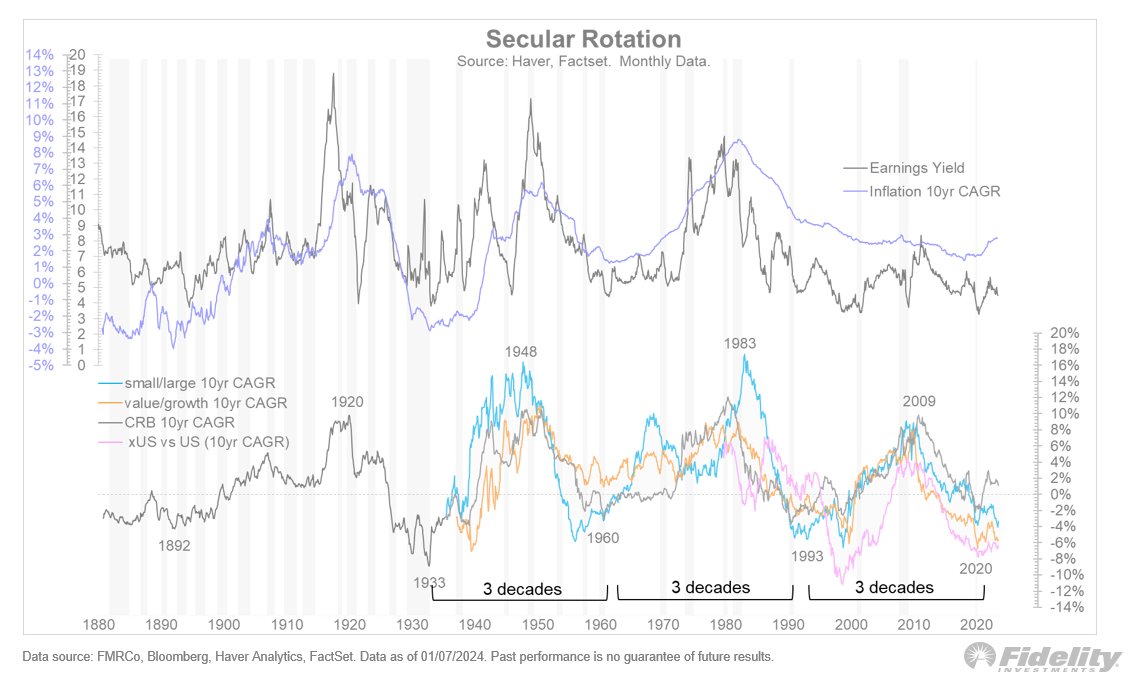
If so, we could be looking at gains of 20% or more as the market broadens. A bullish broadening. If that happens, there are a lot of forgotten stocks that could play catch-up, not only cyclically but also in a secular context. The chart below shows a 30-year super cycle for value vs growth, small vs large, and ex-US vs US equities. Lots of low hanging fruit out there. /END
Jurrien Timmer tweet media
English
3
9
46
10.5K
Jurrien Timmer
Jurrien Timmer@TimmerFidelity·
We know that market breadth has been narrow, and one of the big questions for 2024 is whether the market will broaden, and whether that can happen in a rising market (OK, that’s two questions).🧵
English
5
19
103
45.4K
Manuel Schwalm
Manuel Schwalm@coolservativ·
In der Kommunalpolitik finden nur noch AfD und lokale Bürgerbündnisse oder freie Kandidaten statt. Die CDU hat dieses Problem längst erkannt und arbeitet am (Wieder)Aufbau eigener Parteistruktur vor Ort bei den Menschen, z.B. im CDU-Landesverband Sachsen. Das wird aber Zeit brauchen, bis es Früchte trägt. Und es wäre schön, wenn auch die Ampelparteien dieses Problem endlich richtig adressieren würden. So aber bleibt vielerorts nur eine LINKE, die hoffnungslos überaltert ist und immer schwächer wird und eben die vitale AfD präsent. Wer präsent ist, wird eher gewählt.
Deutsch
4
0
41
5.1K
Manuel Schwalm
Manuel Schwalm@coolservativ·
Durch Aktionen, die das Dorfleben beleben, durch Kooperationen mit Vereinen, z.B. bei der Freiwilligen Feuerwehr, Sportclubs oder durch Anwesenheit ihrer Mitglieder in den ländlichen Strukturen, in denen diese als Multiplikatoren in die teilweise vereinsamten Milieus reinwirken.
Deutsch
2
1
43
5.7K
Billy Oppenheimer
Billy Oppenheimer@bpoppenheimer·
With 1.9 seconds left in overtime of Game 5 of the 2006 NBA Finals, Dwyane Wade went to the free throw line. Wade & the Heat were down by 1. The series was tied 2-2. He told Tiger Woods how he prepared to make those high-pressure free throws: “The night before,” Wade said, “I was in the gym at midnight. And I was like, ‘I know games come down to free throws. No matter what happens, it's going to come down to free throws.’ So I was in the gym and I had my cousin standing next to me, I had him right in my ear talking shit to me. And so the next night, I get in that same situation where I got to make these free throws. And I just went back to last night in the gym. I just went right back to that. I was like, ‘I just hit 200 of these last night. I got this.’" "That's so good," Tiger says. "It's like," Wade says, "your confidence comes from your work." "Correct," Tiger replies. Wade: "You've done it over and over. You've seen yourself do it." Tiger: "Correct, thousands of times." Wade hit the two free throws, and the Heat won 101-100 to take a 3-2 series lead. Then in Game 6, he had 36 points to help the Heat win the game and their first championship in franchise history. Wade was named NBA Finals MVP. Takeaway 1: Ryan Holiday likes to say, "Belief in yourself is overrated. Generate evidence." Wade simulated the situation so that when he was in that situation for real, he had the evidence. “You've done it over and over,” he told himself. “You've seen yourself do it.” Your confidence comes from your work, from your evidence. Takeaway 2: What Dwayne Wade figured out intuitively—that confidence is a function of the previous work put in—is scientifically accurate. For nearly three decades, the neuroscientist Dr. Lisa Feldman Barrett has been studying where emotions—calmness, panic, nervousness, and so on—come from. Her bestselling book, "How Emotions Are Made: The Secret Life of the Brain," gets its title from the discovery that emotions are constructed by the brain. "In every waking moment," she writes, "your brain uses past experience to guide your present sensations." In every waking moment, your brain sifts through its library of past experiences, looking for something similar to what is currently happening. If your brain can’t find anything in your past that is similar to your present, you are in a state of what brain scientists call “experiential blindness.” If you are at the free-throw line with the game on the line, for instance, and you start to panic—you’re in a state of experiential blindness. Your brain, Dr. Barrett would say, is calling you out. You didn't put in the work. You didn't form the past experience needed for your brain to be able to say, as Wade was able to say, "I just hit 200 of these last night. I got this." - - - “You are continually cultivating your past…the experiences you have today become the past that your brain uses to make predictions for tomorrow.” — Dr. Lisa Feldman Barrett Follow @bpoppenheimer for more content like this!
English
53
412
3.1K
1M
Alex Banks
Alex Banks@thealexbanks·
Last week McKinsey released their generative AI report. Here are the 10 key takeaways everyone must know:
English
71
578
3K
1.8M
Rowan Cheung
Rowan Cheung@rowancheung·
One last thing- contrary to popular belief, this thread was NOT free. I spent all day making this, so I'm hoping you honor the gentlemen's agreement: 1. Follow me @rowancheung for more 2. Retweet the tweet below to share with your friends 🤝 twitter.com/rowancheung/st…
Rowan Cheung@rowancheung

Regular ChatGPT generated text is generic and unimpressive. Many people don't know this, but you can train ChatGPT to write exactly like you. Here's how to do it in six easy steps:

English
25
70
235
100.4K
Rowan Cheung
Rowan Cheung@rowancheung·
Regular ChatGPT generated text is generic and unimpressive. Many people don't know this, but you can train ChatGPT to write exactly like you. Here's how to do it in six easy steps:
English
145
969
5K
2.3M
Rowan Cheung
Rowan Cheung@rowancheung·
Microsoft just dropped a bombshell. All free ChatGPT users can browse the real-time internet using the 'Browsing with Bing' plugin soon. 5 insane browsing prompts I tried on GPT-4 that everyone can access soon:
Rowan Cheung tweet media
English
144
790
4.3K
2.1M
The Intrinsic Value Podcast
The Intrinsic Value Podcast@TIV_Podcast·
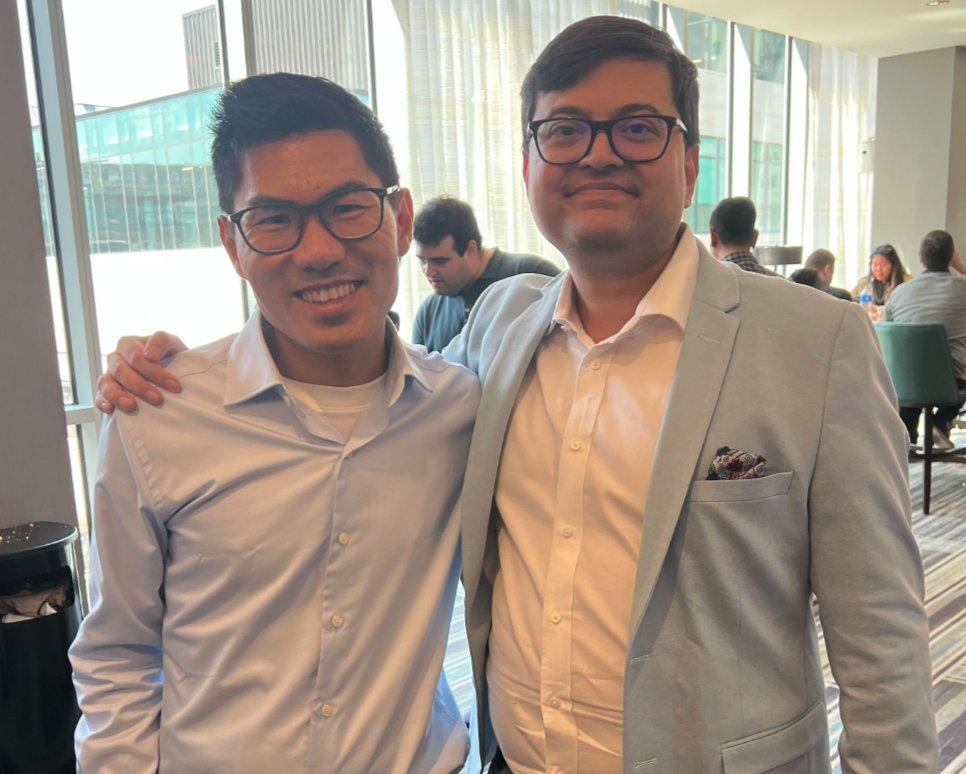
20/ Thank you @Gautam__Baid for your contribution to the investment community! It was a pleasure seeing you in Omaha. Can we look forward to a second book?
The Intrinsic Value Podcast tweet media
English
1
0
10
1.4K
The Intrinsic Value Podcast
The Intrinsic Value Podcast@TIV_Podcast·
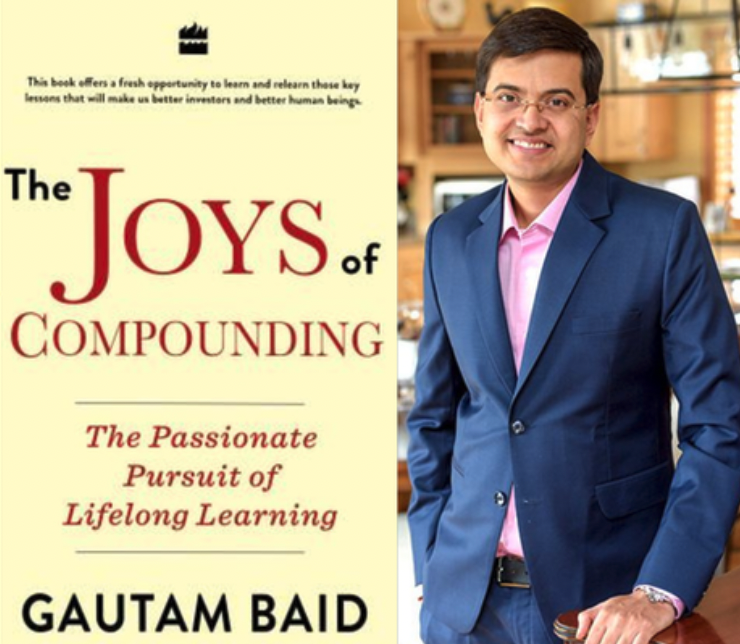
How can YOU become a better investor and even better human being? One of our favorite books, The Joys of Compounding by Gautam Baid, provides a fantastic roadmap for us. Here are our top takeaways from his book: 1/20 🧵⬇️
The Intrinsic Value Podcast tweet media
English
7
66
361
177.7K
Dr. Nicole LePera
Dr. Nicole LePera@Theholisticpsyc·
Breaking generational cycles is the most important work a human being can do. It's also the hardest and most rewarding. Here's How To Do It:
Dr. Nicole LePera tweet media
English
90
2.2K
12.7K
1.8M
Zain Kahn
Zain Kahn@heykahn·
If you want more AI prompts and insights, join Superhuman ― my newsletter with 140k+ readers that teaches you how to leverage AI to boost your productivity: superhuman.beehiiv.com/subscribe
English
32
56
399
87.8K
Zain Kahn
Zain Kahn@heykahn·
ChatGPT is free education. But almost everyone's still stuck in beginner mode. 10 powerful prompts to accelerate your learning:
English
286
3.9K
18.4K
3M
Moritz Kremb
Moritz Kremb@moritzkremb·
20 ChatGPT prompts to finish hours of work in seconds:
Moritz Kremb tweet media
English
166
1.1K
6.3K
1.3M
Andrew Lokenauth | TheFinanceNewsletter.com
I've been hired by JP Morgan, Goldman Sachs and Citi, and received job offers from many others. Here are 10 common interview questions and tips for answering each so you stand out & get a job offer: 1) What sets you apart from other candidates? 🧵1-10 with tips for each:
English
198
3.4K
16.1K
3.8M