

Andrew Pery
1.7K posts

Andrew Pery
@RealAndrewPery
Veteran worship leader, theologian and engineer https://t.co/DqO79iRfFZ
United Kingdom Katılım Aralık 2025
139 Takip Edilen104 Takipçiler

I am DONE correcting the many, many mistakes of Heiser's fan club. Wow. Just shoot me if I ever gain followers like that.
English
@SteveW928 @aaronogre I meant I’m not avoiding the truth. I’ve found too many fans of Heiser are not interested in proof. They’ll defend him to the death. Sorry if I was rude but I’ve had enough of the sealioning.
English

@RealAndrewPery @aaronogre I'm not avoiding any truth. I just don't see a lot of basis in the severe reactions.
A lot of the critique hasn't been nuanced enough rebuttals of his positions, or young-earth'ers who think that's a hill-to-die-on, or such.
English

I find the sudden upsurge of hate for Heiser to be odd. I've appreciated some of his work and disagreed with other parts. Isn't that what it means to be an adult?

English
@aaronogre You’re not interested in proof. You’re just sealioning.
English
@RealAndrewPery You are rambling a bit so maybe something is lost in translation here but you want me to take responsibility for my walk with God based on accusations you don't feel you need to prove?
So whoever you denounce is just guilty of heresy because you say so without explanation?
English
@SteveW928 @aaronogre Just calling it like it is. Better to be honest than to avoid the truth.
English
@RealAndrewPery @aaronogre That's pretty harsh. I certainly disagreed with him on a few things, but I'm not aware of anything he was teaching that was blasphemy or heretical.
English
@aaronogre You’re the one who used the word “hate”. I don’t hate Heiser. However, I am baffled at the utter lack of discernment and then the old brush-off: “prove it” instead of taking responsibility for your own walk with God. It’s irksome.
English
@RealAndrewPery "real Christian's" eh?
Certainly not very charitable toward a brother who has done you no wrong.
And making a denouncement is not the same thing as proving it. You are free to try and convince me, and I'd encourage you to, but so far you are off to a rough start.
English
Apparently we can’t talk about Keller or Heiser.
You know what this is? Some kind veneration gone awry. Same thing with the Roman Catholics and Mary. And the charismatics and their false prophets. It’s a kind of idolatry. It’s wicked.
Megan Basham@megbasham
The impact and legacy of Keller‘s ministry is a perfectly legitimate topic for evangelicals to debate. In fact, given his outsized influence in both positive and negative ways, it’s something we must have freedom to analyze. This “touch not the Lord’s anointed” when it comes to Keller’s theology and how it is applied needs to end.
English
@5Solas2 I enjoy mythology and fantasy but thankful God has given me the wisdom to separate that from reality. Seems some folks can’t.
English
These are the types of people who like Heiser. They're into all this mythology and fictional fantasies.
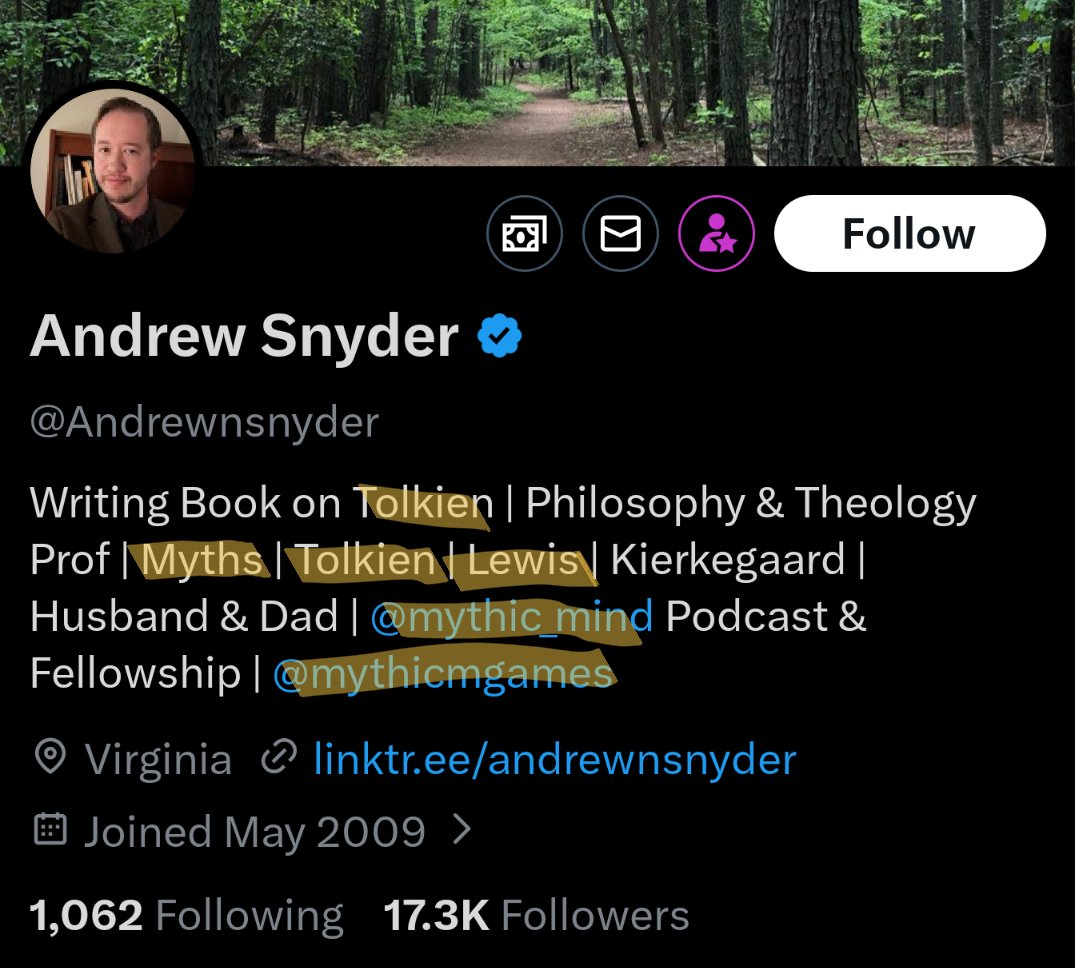
Andrew Snyder@Andrewnsnyder
I see a lot of people hating on this right now. I think Heiser does some very worthwhile things. He is worth a read as long as you don’t make his work your entire personality. As with most things, consider what he says while maintaining discernment.
English

My church preached on the raising of Eutychus (Acts 20:1–16) two Sundays ago. Yesterday we had our own Eutychus-type incident.
In the middle of my sermon, a woman fell into the aisle. She was having a stroke or a heart attack. Apparently she had been unresponsive for a minute or two, and some quick-thinking person near hear had already called 911. The EMTs arrived in 2 minutes, and it’s a good thing they did, as she not breathing and had no pulse by the time they arrived.
One of them broke out the AED pads while the other began performing CPR. The entire church was watching with horror, so I asked them to bow their heads and pray with me.
I prayed for over 3 minutes (the audio guy later told me), but I have no memory of what I said—not even one word. Mutatis mutandis, it was Luke 12:12 and Romans 8:26 moment.
When I finished praying, I saw the woman’s body jolt violently. I had assumed it was the shock paddles, but I was later told that the CPR had resuscitated the woman just as the EMTs were about to put the AED pads on her.
I wasn’t sure how long the paramedics would be working on her, so I told the church we would adjourn, and I invited them to continue in prayer for her as they went. But as soon as I said this (literally the moment I finished), the EMTs took her out of the building on a stretcher.
Now I was of two minds: We could recess, as I had originally said—which seemed like a prudent thing to do, given all that we had just witnessed. Or we could continue the service, hoping that somehow the Lord would give me the wits to continue and give his people the ability to worship.
I told the congregation that I felt torn and wasn’t sure what to do. I looked around as I announced the two options, and there seemed to be no strong consensus to depart. So I told everyone that I would continue, with God’s help, and I gave permission for anyone to leave who needed to do so. Everyone stayed except for the family of the resuscitated woman and one nurse who had been attending to her until the paramedics arrived.
When I finished preaching, I had significant feelings of doubt about my course of action. I was preaching Acts 20:17–38, about how pastors are called to lead God’s people. I wondered whether my choice had seemed wise or compassionate. I feared that many would I think I had acted in a foolish manner.
But then one of the other pastors, who had been in contact with the family, came over and told me that the woman was alert, responsive, and appeared to have suffered no brain damage from the event. (She knew her name, knew where she was, and had no slurred speech.)
So we were able to tell the good news to the church before we rose to sing together as a congregation. Had we dismissed early, everyone would have left wondering whether they had seen a woman die that day. Instead, everyone stayed and thus was able to hear that God had answered our prayers for mercy, reviving this woman from a state of death.
After the service, over a dozen congregants reached out to me, pointing out the parallels to Paul’s situation. I hadn’t miraculously raised a “Eutychus” from the dead (I’m no apostle), but I did continue preaching, as Paul did, after someone had died and was brought back to life.
So, not only was the Lord kind enough to rescue this woman but also he had providentially prepared our people for this moment by having us hear the story of Eutychus the week prior.
God is good all the time, as we rightly say. But he was especially good to us yesterday. And that’s a Sunday I’ll never forget.

English
@JustinPetersMin @jimcosman2 @danandrobinlong Watched it today - great video! I kept on thinking, tell us how you really feel about these guys, Justin! 😂
English

.@jimcosman2 and I had a great time being interviewed by Dan Long @danandrobinlong about the charismatic prophets once again stepping on a prophetic before a watching world.
longfortruth1@danandrobinlong
Charismatic "prophets" Mike Signorelli, Joseph Z, Alan DiDio, and others claim they were called to a secret meeting in the middle of nowhere — phones on airplane mode, assumed identities, the works — to be briefed on coming "alien disclosure" and save the church from deception. But what came out of that meeting may be some of the most blasphemous teachings we've ever covered on this channel, including a direct comparison between the Virgin Birth of Christ and fallen angels having relations with women. @JustinPetersMin and @jimcosman2 join me to expose the secret meeting, dismantle the bad theology behind the Nephilim/alien hybrid claims, address Joseph Z's failed "prophecy" over Joni Lamb, and explain why none of this — biblically, theologically, or even scientifically — holds up. If you're a former Charismatic trying to think clearly about all the alien talk flooding social media right now, this episode is for you. youtu.be/kHMVerj0BUE?si…
English
@megbasham Same thing (only worse) with Michael Heiser. He’s an heretic but receives vitriolic anger from his sycophants when we raise the problems with his theology. But discuss it we must.
English

The impact and legacy of Keller‘s ministry is a perfectly legitimate topic for evangelicals to debate. In fact, given his outsized influence in both positive and negative ways, it’s something we must have freedom to analyze.
This “touch not the Lord’s anointed” when it comes to Keller’s theology and how it is applied needs to end.
Josh Barzon@JoshuaBarzon
Yesterday, I posted a photo of Tim Keller and asked what people’s thoughts of him were. And I got hate for it 😂 🤦♂️ The responses have been a reminder of why echo chambers are so dangerous. The most discouraging part? It wasn’t the critics of Keller who came after me. It was his fans, essentially arguing I had no right to ask an open question because someone might “say something negative.” For those who don’t know me… I have openly and recently credited Tim Keller’s books with helping me understand the gospel at a time when my grasp of it was legalistic and very wrong. I am grateful for him. Do I think he drifted in his handling of social issues toward the end of his ministry? Yup. Do I also believe he was a genuine blessing to the Church through decades of Christ-centered preaching and writing? Absolutely. Both things are true. I will not cower to the pressure of only posting things that draw safe, comfortable applause. My track record here speaks for itself. I have no camp. I respect those more Reformed than me and those less Reformed. More charismatic and less charismatic. Etc etc etc. I will keep using this platform for honest conversation, real engagement, and yes (gasp) …disagreement. Sincerely, Josh
English

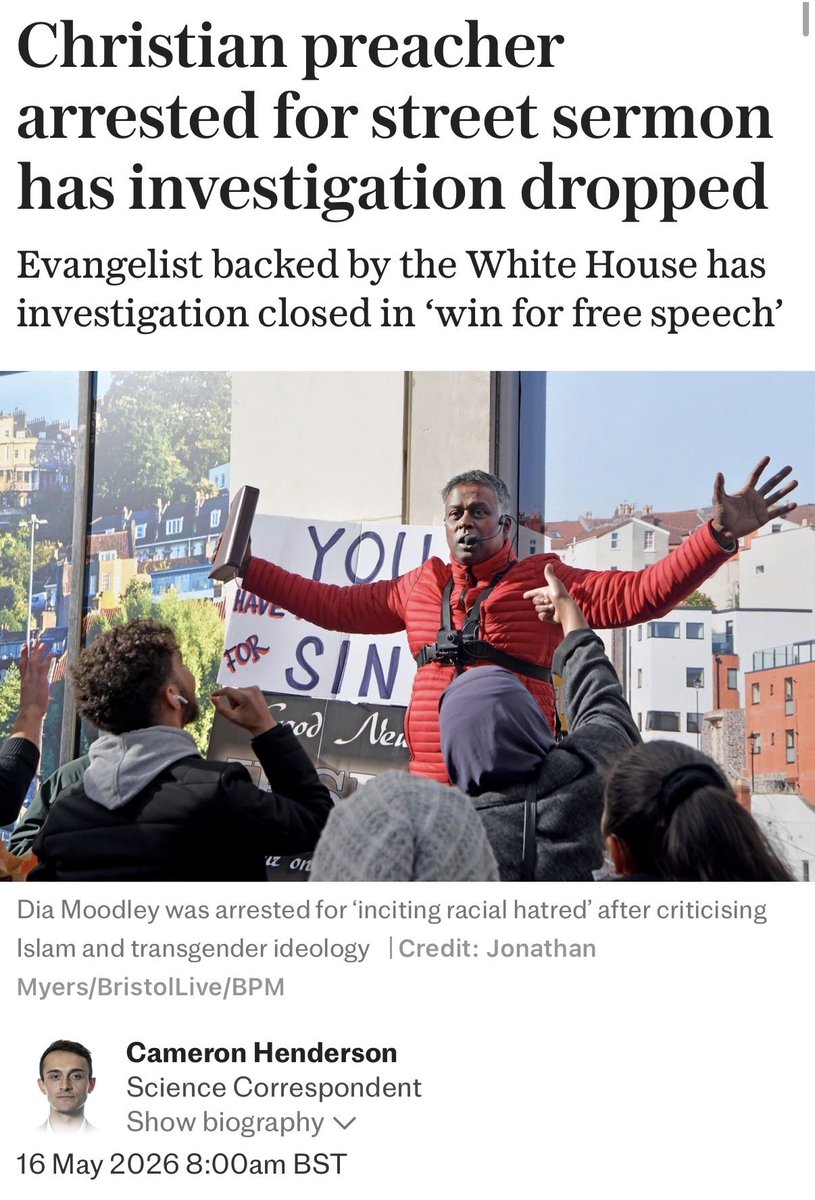
The fact that a Christian preacher can be arrested in the UK for peacefully preaching in public tells you how far free speech has collapsed. Dropping the investigation months later does not erase the damage done. A nation that once defended open debate now increasingly punishes biblical conviction while bowing to activist pressure. Britain needs to turn this around before speaking Christian truth in public becomes treated as criminal by default.
English

Police have dropped their investigation into Christian street preacher Dia Moodley in a victory for free speech.
Moodley, an evangelical preacher, was arrested in November 2025 on suspicion of “inciting religious hatred” after delivering a street sermon in Bristol criticising Islam and transgender ideology.
The White House-backed pastor said the decision was “a win for free speech”, but argued the case should never have been investigated in the first place.
“I’m glad Avon and Somerset Police eventually did the right thing and dropped their criminal investigation,” he said.
“This is a win for free speech, but I never should have been arrested, treated like a criminal and investigated for months for peacefully sharing my faith in the public square.”
Moodley accused the police of “two-tier policing”, warning of an alarming crackdown on Christian street preachers, with police kowtowing to activists and misapplying the Public Order Act.
Read more below 👇
English
@5Solas2 There’s some really weird stuff out there… demonic.
English
What do all these have in common?
They imply that ordinary Christians, pastors, creeds, confessions, and centuries of biblical interpretation were missing the real meaning of Scripture until modern scholars recovered this hidden knowledge (gnosis) of a “lost world.”
Same stuff with Michael Heiser. "RECOVERING the supernatural worldview of the Bible".
Good thing he came along 2000 years later and recovered it. It might have been lost forever if not for Heiser.
They all claim to have this secret knowledge that the church has been lacking for 2,000 years. They are the new Gnostics.

English
@MyWrldUpsdDown @5Solas2 @JustinPetersMin Thanks for sharing! The Bible Project is well known for being heterodox in too many areas. Not a trustworthy source at all. I’ll go check that article out.
English

@RealAndrewPery @5Solas2 @JustinPetersMin I’ll have to look that up!
He also partnered with Tim Mackie who doesn’t believe in hell & denies PSA.
Here’s another good explanation of his false teaching.
christiananswersnewage.com/article/troubl…
English

@brivael Can’t remember the title, but I read a book a few years back about the private lives of many intellectuals. They were disgusting, perverted people who certainly did not deserve to be listened to. There ideas are as evil as their lives were.
English
@Meldougherty77 @nosoup4knowles I’ve encountered this a lot more recently. It’s such a strange mind-disease! “How do we KNOW they landed on the moon??” A world where nothing can be known, nothing can be trusted. Everything’s up for subjective judgment. It’s sad.
English

@nosoup4knowles I don't understand how this would benefit Erika if she faked her pregnancy. This conspiratorial thinking is a mind poison. It's a strange sort of postmodernist corner they've backed themselves into. Trust nothing. Be constantly uncertain. You can't really know what's true.
English

"Receipts are in that Erika Kirk faked her pregnancy"
(scroll to the bottom)
"I can't say it's definitive proof"
😂😂😂

English
The Heiser cult is mad but this is EXACTLY where his book belongs.
Josh Barzon@JoshuaBarzon
You get to pick one book to never have been written. Which one are you picking?
English
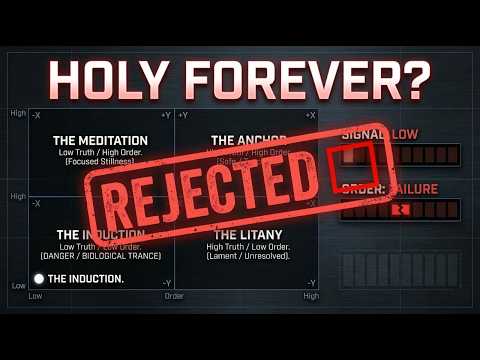
@swils0608 @conservmillen @christomlin Tomlin has an incorrect view of the theology behind musical worship. This results in real errors in the lyrics. The music itself is repetitive and hypnotic. He associates with bethel.
Forensic Audit: The Hidden Problem with Chris Tomlin's Holy Forever
youtu.be/6HG7BQl2vCY
YouTube
English

@RealAndrewPery @conservmillen @christomlin What serious error is evident in his music? I'm not aware of his embrace of any heresies through his songs.
English

“All thrones and dominions
All powers and positions
Your name stands above them all”
@christomlin
What a powerful anthem to declare over our country. The gospel was shared plainly and God was glorified today.
English
@5Solas2 Bro, no one can convince them of their own irrationality.
"But these, like irrational animals, creatures of instinct, born to be caught and destroyed, blaspheming about matters of which they are ignorant, will also be destroyed in their destruction" -2 Peter 2:12
English

@brivael AI is a complete game changer for those who know how to use it and have something worth saying.
English

Tous les pseudo-intellos gauchistes de X depuis 24 h

Billy Mericano ✨@BillyMericano
Ça pleure dans tous les sens face au succès explosif de @brivael « Pavés IA », « AI slop », gnagnagna. Voici ce qui se passe. Avant, l’auteur passait des heures à écrire des textes que ses lecteurs survolaient en quelques instants. Là, avec l’IA, le lecteur est tenté d’accorder de longues minutes d’attention à un auteur qui a bossé quelques secondes sur l’action qui cristallise des années de développement perso. Personne ne pleurait d’à peine accorder un regard aux auteurs qui craftaient leurs textes pendant des heures. Et ici, ça pleure parce que la gravité textuelle est effective ? Hôpital, charité. L’IA est un outil, comme le tracteur. Certains continuent d’apprécier bêcher leur potager, mais qu’ils ne se plaignent pas que d’autres nourrissent des villes entières assis dans un tracteur connecté par satellite.
Français