
Rick Kuperman retweetledi
Rick Kuperman
765 posts

Rick Kuperman
@RickKuperman
director/choreographer. Half of @kupermanbros
New York Katılım Mart 2013
817 Takip Edilen410 Takipçiler
Rick Kuperman retweetledi

A new documentary exec produced by Sam Harris, "Unraveling the Dream," traces the full arc of psychedelic science: from early pioneers, through the dark years, to today's renaissance. What do these states reveal about the mind? Link below.

English
Rick Kuperman retweetledi

THE GREATEST RUN IN HISTORY 🤯
Sabastian Sawe takes OVER A MINUTE off the world record in the marathon and becomes the first-ever sub-2 hour runner in an official race with a 1:59:30 victory over Yomif Kejelcha, who also breaks two hours in his debut marathon, running 1:59:41 for second.
Sawe is now 4 for 4 with marathon victories. After the leaders hit halfway in 60:29, Sawe ran 59:01 FOR HIS SECOND HALF as he and Kejelcha worked together to drop third placer Jacob Kiplimo, who himself ran 2:00:28 to finish under Kelvin Kiptum’s old WR mark.

English
Rick Kuperman retweetledi

Rick Kuperman retweetledi

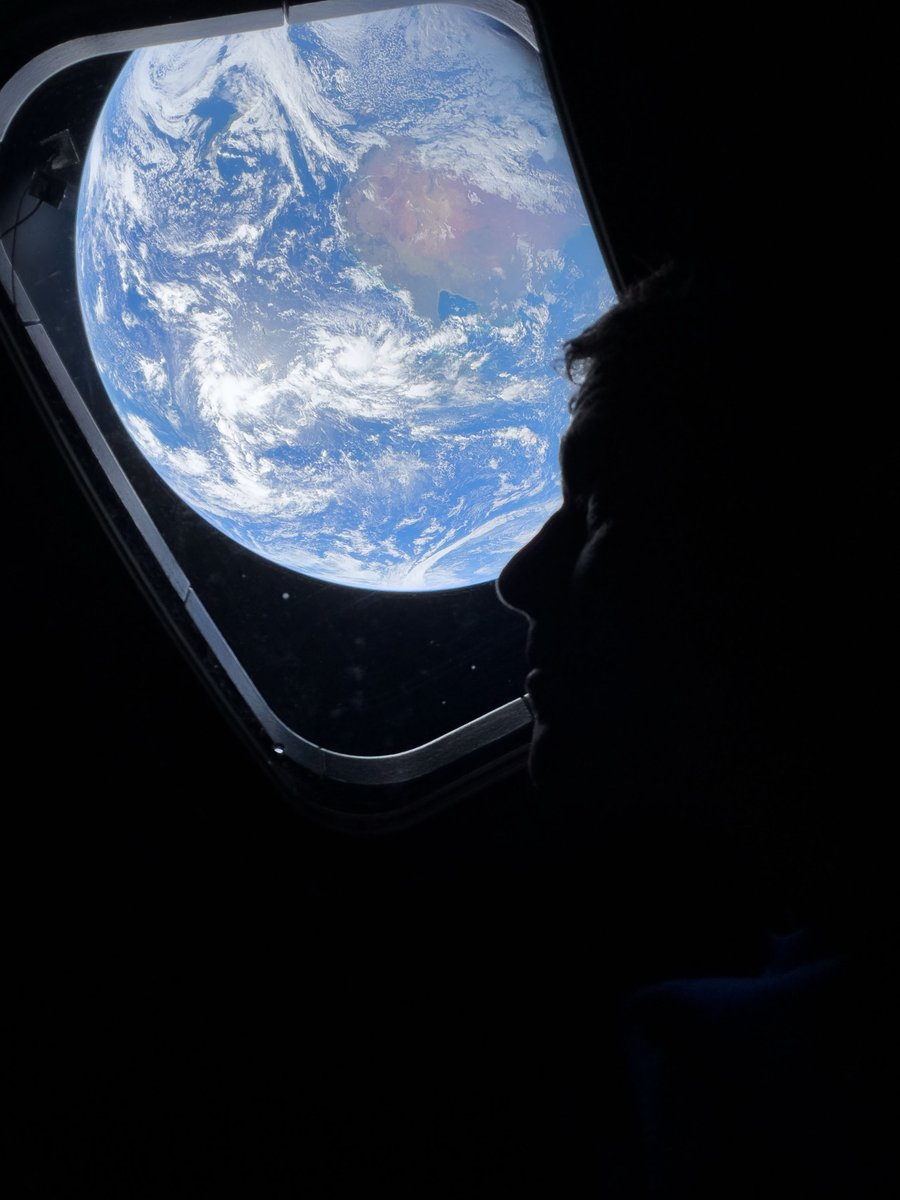
Our official main stage brings together 1,000+ of Canada's top builders from around the world.
Featuring @tobi @andrewgordonmac @nickfrosst @lucyhargreaves4 @Sirupsen @MaxBrodeurUrbas @ElainaYallen @EliotPence @mitrymin @Alex_Danco and more.
Limited in-person tickets. Request access ➡ luma.com/TTWHomecoming

English
Rick Kuperman retweetledi

Max Hodak (@maxhodak_) is the co-founder of Neuralink and founder of @ScienceCorp_, a company building brain-computer interfaces that can restore sight.
Science has developed a tiny retinal implant that stimulates cells in the eye to help blind patients see again. More than 40 patients have already received the treatment in clinical trials, including one who recently read a full novel for the first time in over a decade.
In this episode of How to Build the Future, Max joined @garrytan to discuss how BCIs work, what it takes to engineer the brain, and why brain-computer interfaces may become one of the most important technologies of the next decade.
00:26 — The retinal chip helping blind patients see
01:51 — What brain-computer interfaces really are
03:37 — Could BCIs enhance intelligence?
05:44 — The brain’s incredible plasticity
09:23 — What it feels like to see with an implant
13:01 — Can we restore full human vision?
17:55 — Is the brain basically a computer?
24:59 — Max Hodak’s path into brain tech
28:57 — How Neuralink actually started
33:10 — How the brain represents information
39:47 — Bio-hybrid brain interfaces
44:32 — Building the company Science
51:27 — The future of BCIs and human longevity
English
Rick Kuperman retweetledi

I spent last night with Andrew Strominger and Alex Lupsasca, two of the top physicists in the world
They just released a paper, co-authored with OpenAi, that seems to me like ASI
Andrew, who helped develop string theory, told me that a year ago, his view was that he didn’t know how helpful AI was going to be.
A year later, after some back and forth with GPT 5.2 pro, they submitted a final query to an internal model which solved AND proved a previously unsolved problem in quantum field theory…in 12 hours.
A model, doing something two of the smartest people in the world in their field couldn’t do. And, when I was with them, they were giddy with excitement for what might lay ahead.
Andy said “It is the first time I’ve seen AI solve a problem in my kind of theoretical physics that might not have been solvable by humans.”
They said, “two things changed: the model improved and we figured out how to talk to it.”
Andy also told me “I also now feel that with the recent advances, most physicists who want to keep up with the frontiers of progress will need to learn how to talk to it. That wasn’t true a year ago.”
ASI is here, just not evenly distributed.

English
Rick Kuperman retweetledi

Congrats on the launch @simile_ai ! (and I am excited to be involved as a small angel.)
Simile is working on a really interesting, imo under-explored dimension of LLMs. Usually, the LLMs you talk to have a single, specific, crafted personality. But in principle, the native, primordial form of a pretrained LLM is that it is a simulation engine trained over the text of a highly diverse population of people on the internet. Why not lean into that statistical power: Why simulate one "person" when you could try to simulate a population? How do you build such a simulator? How do you manage its entropy? How faithful is it? How can it be useful? What emergent properties might arise of similes in loops?
Imo these are very interesting, promising and under-explored topics and the team here is great. All the best!
Joon Sung Park@joon_s_pk
Introducing Simile. Simulating human behavior is one of the most consequential and technically difficult problems of our time. We raised $100M from Index, Hanabi, A* BCV, @karpathy @drfeifei @adamdangelo @rauchg @scottbelsky among others.
English
Rick Kuperman retweetledi

Rick Kuperman retweetledi
This speed reading training starts at 300 words per minute and end at 900 wpm.
Can you read them all?
x.com/fluxfolio_/sta…
English
Rick Kuperman retweetledi
Rick Kuperman retweetledi

Our model can now learn from its own experience with RL! Our new π*0.6 model can more than double throughput over a base model trained without RL, and can perform real-world tasks: making espresso drinks, folding diverse laundry, and assembling boxes.
More in the thread below.
English
Rick Kuperman retweetledi
Rick Kuperman retweetledi
Rick Kuperman retweetledi


Rick Kuperman retweetledi

Tristan Harris's TED talk is amazing. He's been right all along, about the attention economy and incentives that make social media so destructive. Now he lays out the far larger risks of AI, and the "narrow path" that might get us through.
@HumaneTech_
ted.com/talks/tristan_…
English
Rick Kuperman retweetledi


Rick Kuperman retweetledi
We can in stop arguing about whether AI can pass the Turing test:
Bojan Tunguz@tunguz
It's over. ChatGPT 4.5 passes the Turing Test.
English
Rick Kuperman retweetledi

Rick Kuperman retweetledi

Mustafa, Cindy Lee and more: The Canadians who made their mark in the arts world in 2024 theglobeandmail.com/arts/article-c…
English