Ryo Yamamoto

116 posts

Ryo Yamamoto banner
Ryo Yamamoto

Ryo Yamamoto

@RyoYbioinfo

interping bio models @GoodfireAI · behind EVEE prev; PhD UCLA (Zaitlen / Xiao)

Katılım Temmuz 2017
434 Takip Edilen237 Takipçiler
Sauers
Sauers@Sauers_·
@RyoYbioinfo Is there a Slack or Discord for Silico users?
English
1
0
3
175
Sauers
Sauers@Sauers_·
Goodfire's Silico decided to show me this result of how representation of days of the week emerges over pretraining
Sauers tweet media
English
5
6
71
3.6K
Ryo Yamamoto
Ryo Yamamoto@RyoYbioinfo·
@7uomoki will get calibration correct at least 😭😭😭
English
0
0
1
39
Ryo Yamamoto
Ryo Yamamoto@RyoYbioinfo·
@jatin_n0 we dont fully know yet! could be different types of conservation, analyses showed it's related to some kind of sequence composition
English
0
0
3
76
Jatin Nainani
Jatin Nainani@jatin_n0·
@RyoYbioinfo very cool! what does this shape imply? different types of conservation?
English
1
0
1
101
Ryo Yamamoto retweetledi
dron
dron@_dron_h·
multidimensional concepts are everywhere! see e.g. this concept, tracking the orientation and ends of ECG wires in a radiology model. real data is both rich and highly structured -- we are super excited about using BSFs to discover the low-dim structures embedded in reality
dron tweet media
Goodfire@GoodfireAI

If models think in shapes, our tools should too. Our latest research: Block-Sparse Featurizers (BSFs), a new way to find concepts in model activations - using multidimensional “blocks” instead of single directions. (1/9)

English
0
6
33
2.5K
Ryo Yamamoto
Ryo Yamamoto@RyoYbioinfo·
while this manifold is unsurprising for the model of this kind, regular SAE was not able to find this manifold on GPN! gating is also important for bio models
English
0
0
7
161
Ryo Yamamoto retweetledi
Goodfire
Goodfire@GoodfireAI·
We removed an LM's ability to speak German by fine-tuning on only 4 German tokens. As part of a 1-day hackathon with our product Silico, we removed a 67M-parameter language model's ability to predict German text, by tuning only a scalar factor on one subcomponent of the weights. (1/6)
Goodfire tweet media
English
57
131
1.4K
305K
Ryo Yamamoto
Ryo Yamamoto@RyoYbioinfo·
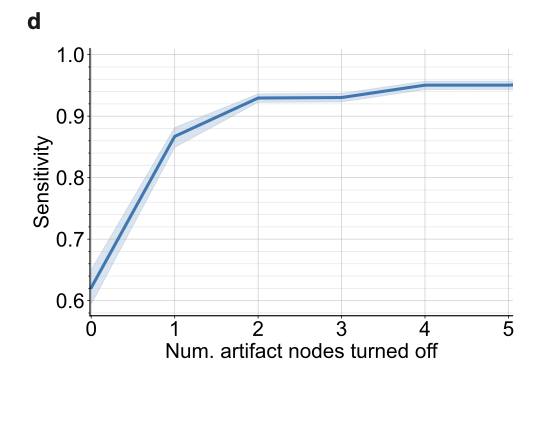
pancancer SAE atlas of pathology FM! the denoising result is very neat. zero the tissue-fold concepts at inference and classifier sensitivity jumps 0.61→0.95, no retraining!! subtractive SAE steering fixing a real artifact so clean
Ryo Yamamoto tweet media
Peter Koo@pkoo562

Excited to share new work on interpreting and steering pathology foundation models! A fun collaboration led by @ChanwooKim_ and @suinleelab, with support from our pathologist collaborators Zhen Zhao and Deepika Savant, and Jakub Kaczmarzyk. Paper: biorxiv.org/content/10.648… 1/N

English
0
1
8
1.6K
Ryo Yamamoto
Ryo Yamamoto@RyoYbioinfo·
this Omnii model is legit good, EVEE got steamrolled😭😭 we still got that synonymous AUPRC tho 💪💪Particularly impressed that it's just zero shot scores! Excited to figure out what model internal has learned Congrats to the team @RadicalNumerics !!
Ryo Yamamoto tweet media
Eric Nguyen@exnx

Together with my co-founders Michael @MichaelPoli6, Stefano @Massastrello and Armin @athmsx, I am excited to announce @RadicalNumerics is emerging from stealth with a $50M seed round to build general biological intelligence. We’re also sharing an early preview of our new model Omnii, the most powerful genome language model to date. Omnii preview link: radicalnumerics.ai/blog/radical-n… At Radical Numerics, our mission is to master the code of life, and to drive the frontier of biological AI for both design and defense. This is our dual mandate, which comes from something our own team helped make possible. Our founding team trained Evo and Evo 2, the largest biological AI models (40B params) trained on DNA sequences. Trillions of tokens across all of life, from microbes to mammals. It’s fully open source, and created the field now known as generative genomics. Last year, scientists used Evo to generate the world’s first complete genome from scratch using AI. Turns out it was a bacteriophage—a type of virus. It functioned in the real world, and in this case it was harmless. But for us, it was a clear turning point. It showed that AI is no longer just analyzing biology. It is on the cusp of generating functional lifeforms. Eventually, AI will have the power to design and control life itself. That should make all of us incredibly excited, and incredibly uneasy. (Anyone can design DNA with a new function, and have it synthesized and delivered, like something from Amazon Prime). The same technology that will help us cure cancer is the very technology that might create the next global pandemic, or worse, allow the creation of bioweapons that can wipe out populations. We believe these forces are inseparable. If you work on the frontier of biology, you have to build technology to safeguard it from its misuse. Existing biosecurity tools are sorely losing the arms race, relying on outdated “have I seen this exact thing before?” style algorithms. We founded Radical Numerics to turn the tide. And we can’t do that by training on textbooks and natural language. We must understand the language of biology from the raw physical data itself, to reason across every molecule and modality, from DNA to proteins. The next frontier for AI goes far beyond chatbots or video generators to models that can understand and engineer life. Today, we’re previewing Omnii, which is already far surpassing Evo 2, and will continue improving as we scale and add new modalities (training now). 1. For human health, Omnii can read and write whole genomes (more on writing later). It’s state of the art (SOTA) on detecting causal variants for disease, and can rank Alzheimer's mutations zero-shot. We’re partnering with a diagnostics company to use Omnii for early cancer detection (pancreatic and multi-cancer). 2. For defense, Omnii is SOTA at detecting AI-generated pathogens. We benchmarked existing detection tools, and they simply can’t detect the AI-generated ones (“deepfake viruses”). We’re partnering with a US national lab to pilot Omnii for detecting the next pandemic, both natural and AI-generated. We have a data center full of Blackwells in construction now to build the most powerful biological AI models ever. This mission takes a new kind of AI lab that can actually scale on physical, biological data: new alignment research (mid/post training), scaling long context, building out mech interp teams to dissect what these models learn, new architectures and systems designs, all from the ground up. Our team is made up of AI researchers and scientists from top labs and institutions (e.g. Stanford, MIT, Google DeepMind), but more importantly, we all share the belief that this is the most important challenge of our lifetime. If you feel similarly, we are hiring. We aim to bring the brightest minds in AI and science together to save lives. Thanks to our partners on this journey, led by Emergence Capital @emergencecap, with Obvious Ventures @obviousvc, Triatomic @TriatomicCap , and Patrick Collison @patrickc. Our advisors include Eric Horvitz @erichorvitz, CSO of Microsoft, Chris Re @HazyResearch of Stanford, George Church @geochurch of Harvard, and Andrew Weber @AndyWeberNCB, former Assistant Secretary of Defense for Nuclear, Chemical and Biological Defense Programs. Fortune article: fortune.com/2026/06/15/exc… Jobs: radicalnumerics.ai/join-us

English
2
0
8
2.2K
Ryo Yamamoto
Ryo Yamamoto@RyoYbioinfo·
sbayesRC-gpu is live! inspired by recent GWFM paper from @JianZengR's lab, wanted to speed up the MCMC sampling of sbayesRC through small CUDA kernel patches for GPU matrix ops. up to 5x speed up end to end, applicable to any GWAS! hope you enjoy :) github.com/ryo1024/sbayes…
Ryo Yamamoto tweet media
English
0
0
4
284
Ryo Yamamoto retweetledi
Sauers
Sauers@Sauers_·
How representation of color emerges across LLM training (OLMo 32B)
English
9
9
157
14.9K
Ryo Yamamoto
Ryo Yamamoto@RyoYbioinfo·
Wow generalizable spatial resolution prediction from stain image + ESM embedding. Pretty neat
Sandeep Kambhampati@SandeepKambham2

I'm excited to share our new preprint "Vermeer: Autoregressive generative modeling of microscopy predicts protein localization," a collaboration between @MSFTResearch and @insitubiology! Preprint: biorxiv.org/content/10.648… Protein localization is fundamental to protein function, but experimental imaging, a key technique to study localization, cannot scale to the entire human proteome across all biological contexts. To address this challenge, we introduce Vermeer, an autoregressive generative model trained on Human Protein Atlas data @ProteinAtlas. Vermeer synthesizes fluorescence microscopy images of proteins conditioned on cell morphology reference stains and protein sequence embeddings (ESM-C). Vermeer can leverage latent information about protein localization in the ESM embeddings to generalize to proteins the model has never seen during training. (1/n)

English
0
0
3
321