Sabitlenmiş Tweet

Nous savons qu'ils mentent.
Ils savent qu'ils mentent.
Ils savent que nous savons qu'ils mentent.
Nous savons qu'ils savent que nous savons qu'ils mentent.
Et pourtant ils persistent à mentir.
Alexandre Soljenitsyne
Français
Sergent Principal ✨
354 posts

@SergentPpal
Nous savons qu'ils mentent. Ils savent qu'ils mentent. Ils savent que nous savons qu'ils mentent. Nous savons qu'ils savent que nous savons qu'ils mentent.













Hey Team PK namwe Ntore mwe, come here for a second let’s talk nk’abantu bakuru. If you like the way Kagame humiliates leaders and you think it actually brings results, tell me this: would you do the exact same thing to Kagame himself so he also delivers results for us? If not, who do you think can? He demands accountability from everyone else, but who holds him accountable? @PaulKagame is the only thing that hasn’t changed in that government for the past 30 years. That means if something isn’t working, he’s part of the problem too. No one deserves to be publicly shamed and humiliated like that. Even if you paid me millions, you still have no right to disrespect me like that especially in public. I’d walk away the very next morning. So tell me, if you think this method works, who’s going to hold Kagame accountable the same way he does to others? Let’s be honest this is bullying, and it needs to stop.




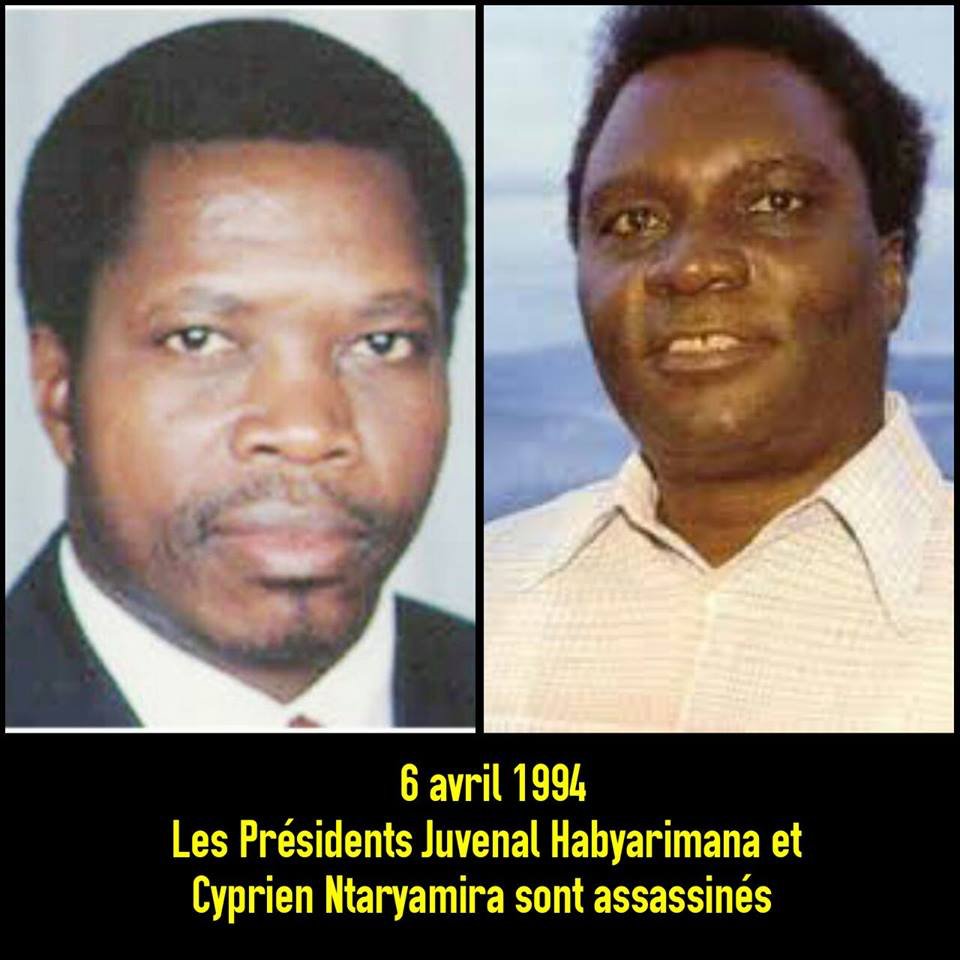
Debunking Jean-Luc Habyarimana's Lies About the Genocide committed against the Tutsi as a Planned Crime Among the monstrous falsifications of history put forward by @JLHaby, the most blatant shamefully claims that the “International Criminal Tribunal for Rwanda never proved the planning of the genocide committed against the Tutsi.” The truth is quite different. The ICTR established that there can be no genocide without the intent to commit the acts constituting this crime, without their preparation or planning. In all its judgments, the ICTR proved and definitively established that a genocide was committed against the Tutsi in Rwanda, with the intent to exterminate them as an ethnic group protected by the Genocide Convention of December 9, 1948. Let's examine this: A. No genocide without intent to commit genocide The Genocide Convention of December 9, 1948, does not mention the word “planning” anywhere, but uses its equivalent, which is the intent to commit genocide. Article 2 states that genocide is committed whenever there is a perpetration of “the killing of members of the group, causing serious bodily or mental harm to members of the group, intentionally inflicting on the group conditions of life calculated to bring about its physical destruction in whole or in part, measures intended to prevent births within the group, and forcibly transferring children of the group to another group, committed with intent to destroy, in whole or in part, a national, ethnic, racial or religious group, as such.” This is the provision of international law on the crime of genocide. B. The International Criminal Tribunal for Rwanda (ICTR) established the genocidal intent to exterminate the Tutsi. With regard to its temporal jurisdiction, which ran from January 1, 1994, to December 31, 1994, the ICTR proved in all its judgments that there was an intent to destroy the Tutsi ethnic group, followed by crimes constituting genocide and crimes against humanity. 65 people accused of genocide out of 78 prosecutions were found guilty and sentenced to prison terms ranging from 6 to 15 years (for those who pleaded guilty: Serushago Omar, Rutaganira Vincent, Paul Bisengimana, Michel Bagaragaza, Joseph Serugendo, Georges Ruggiu, etc.) up to life imprisonment for those who refused to comply, including some of the planners. C. The Planning of the Genocide Against the Tutsi: A Central Point in the Guilty Plea and Conviction of Former Prime Minister Jean Kambanda Jean Kambanda's guilty plea acknowledges the planning of the genocide against the Tutsi before April 6, 1994, and establishes a series of preparatory and execution acts of this genocide committed by his government starting on April 7, 1994, but which had been prepared and planned before that date: preparation of the genocide in cabinet meetings, in meetings of senior army and gendarmerie officers, meetings to prepare and assess the genocide with prefects, training and arming of pro-government militias, drafting of directives on how the killings will be carried out, use of the media to raise awareness of the genocide, setting up roadblocks to check identities and extract Tutsi for killing, tours by ministers to prefectures to coordinate the genocide, etc. Paragraph 39 of the Kambanda judgment establishes the planning of the genocide against the Tutsi in these terms: “Before April 6, the then government organized and began military training of the youth movements of the MRND and the CDR with the intention of using them in the massacres that followed.” The interim government distributed weapons and ammunition to the militias; roadblocks manned by joint patrols of elements of the Rwandan armed forces and the Interahamwe were erected in Kigali and elsewhere in the country following the announcement of the death of President Juvenal Habyarimana; The media were used to mobilize and incite the population to commit massacres of the Tutsi civilian population, and groups existed within the army, militias, and political apparatus that had planned the elimination of Tutsis and Hutu opponents.” On September 4, 1998, Jean Kambanda was sentenced to life imprisonment for genocide, conspiracy to commit and public incitement to commit genocide, complicity in genocide, and crimes against humanity. In addition to Jean Kambanda, two former officials in his government, the Minister of Information Eliézer Niyitegeka and the former mayor of Murambi, Jean-Baptiste Gatete, were found guilty on appeal of the crime of "conspiracy to commit genocide." D. Recognition of the Genocide Committed Against the Tutsi as a Specific Crime As early as June 28, 1994, the UN Commission of Experts, headed by Professor René Degni-Segui, after weeks of investigations in Rwanda in 1994, established the existence of a planned genocide committed against the Tutsi in these terms: “The Commission concludes that there is overwhelming evidence attesting that acts of genocide were committed against the Tutsi group by Hutu elements acting in a concerted, planned, systematic, and methodical manner. The classification of genocide must therefore be upheld with regard to the Tutsi.” In the second decision rendered by the ICTR, on September 2, 1998 against Jean-Paul Akayesu, the existence of the intention to exterminate the Tutsi was firmly upheld by the Tribunal: "It then became clear that the massacres which took place in Rwanda in 1994 had a specific objective: that of exterminating the Tutsis, chosen specifically because of their membership in the Tutsi ethnic group, and not because they were RPF fighters (...) It was a genocide which was committed in Rwanda in 1994, against the Tutsi as a group. “ In all its subsequent judgments, the ICTR has consistently reiterated, as was the case in the appeal judgment of Emmanuel Ndindabahizi, former Minister of Finance, on January 16, 2007, that “there was only one genocide, perpetrated in Rwanda between April 6 and July 17, 1994, which resulted in the massacre of hundreds of thousands of Tutsis. E. The genocide committed against the Tutsi has no connection with the war between the Rwandan Armed Forces (FAR) and the Rwandan Patriotic Front (RPF). Like @JLHaby falsify the intentional facts of the preparation and execution of the genocide against the Tutsi by creating a false causal link with the armed conflict that took place between the former Rwandan Armed Forces and the Rwandan Patriotic Army. There is no connection between these two events; the Tutsi were killed in places where the war was not taking place. The ICTR's response on this point was unequivocally clear from the outset in the Akayesu judgment, in which the judges clearly emphasized the unique nature of the genocide against the Tutsi in these terms: “Alongside the conflict, a genocide against the Tutsi group was indeed perpetrated. The genocide against the Tutsi, although it was concurrent with the conflict, is obviously of a fundamentally different nature. The genocide was organized and planned by elements of the Rwandan Armed Forces (FAR) as well as by political forces grouped around Hutu Power, and was carried out primarily by civilians, including armed militiamen and even ordinary citizens; and above all, the Tutsi victims were overwhelmingly non-combatants, including thousands of women and children, and even fetuses. The fact that this genocide was perpetrated while the FAR was in conflict with the Rwandan Patriotic Front (RPF) cannot in any way be considered a mitigating circumstance. “ F. The ICTR has, in the end, established the genocide committed against the Tutsi as a matter of public record. On June 16, 2006, the Appeals Chamber of the ICTR, presided over by Judge Mohamed Shahabuddeen, took the step in the Edouard Karemera case by establishing that “the genocide of the Tutsi in Rwanda is a matter of public record,” which “is part of world history,” and that “there is no reasonable basis for anyone to deny that in 1994, there was a campaign of mass killings aimed at destroying, in whole or at least in large part, the Tutsi population of Rwanda.” G. The UN Security Council endorsed the ICTR judgment On April 16, 2014, in Resolution 2150, the UN Security Council recognized the public awareness of the genocide perpetrated against the Tutsi and emphasized the importance for all States and individuals of not to tolerate the denial of the genocide committed against the Tutsi in Rwanda in 1994. IN CONCLUSION The sum of these few definitively established legal facts now possesses the authority of res judicata. They sufficiently demonstrate that imposters like Jean-Luc Habyarimana and his accomplices are nothing but inveterate liars, guided by an ideology of hatred that they cannot bring themselves to classify as an evil to be banished once and for all. This is Jean-Luc Habyarimana's way of perpetuating the criminal legacy of his infamous father, Juvénal Habyarimana.