Stewart McAlpine Knoepp, MD, PhD

1.5K posts

Stewart McAlpine Knoepp, MD, PhD banner
Stewart McAlpine Knoepp, MD, PhD

Stewart McAlpine Knoepp, MD, PhD

@StewartKnoepp

community health & environment, service pathology & laboratory medicine residency/fellowship @harvardmed @MGBpathology md/phd @medunivsc @AOA_society

Michigan Katılım Şubat 2017
773 Takip Edilen303 Takipçiler
Stewart McAlpine Knoepp, MD, PhD
@HalCranmer I'm already following you. I love what you're doing and I love this post. I'd love to replicate something similar to what you're doing but up in Michigan. There's such a huge need/demand.
English
0
0
0
3
A Paradise for Parents
A Paradise for Parents@HalCranmer·
If this thread changed how you think about heart disease, give me a follow. I share what we've learned running care homes and break down conversations with the best doctors I know into things families can actually use. New threads like this every week
English
5
3
43
16.9K
A Paradise for Parents
A Paradise for Parents@HalCranmer·
I interviewed a Mayo Clinic-trained cardiologist with 30 years of experience. Dr. Todd Hurst told me 10 things every adult over 40 needs to know to prevent heart disease: 1) 90% of heart attacks should never happen
English
20
178
994
486.8K
Michael Weintraub, MD
Michael Weintraub, MD@MWeintraubMD·
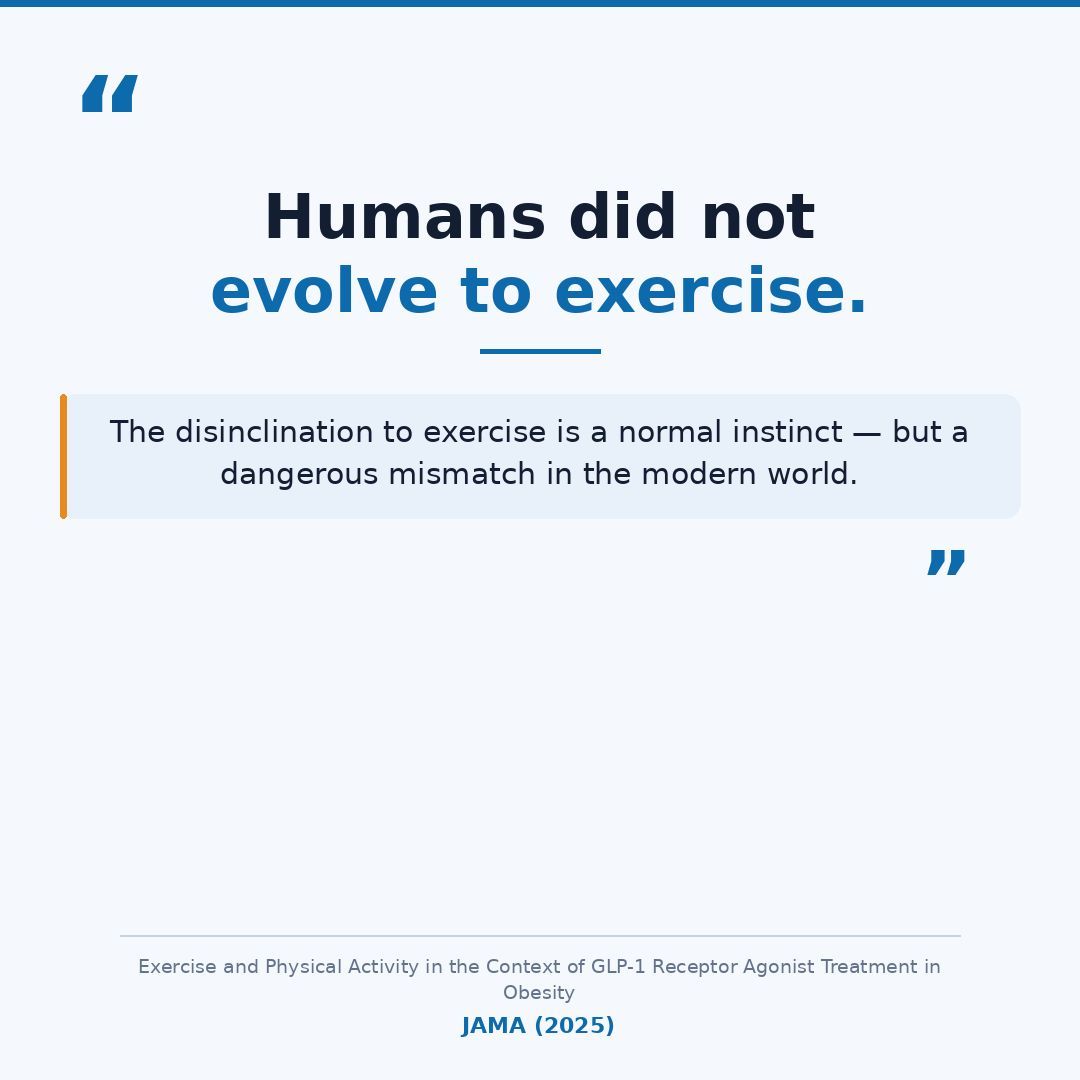
🧬 "Humans did not evolve to exercise — that is, to undertake discretionary physical activity for the sake of health and fitness." 🏃 Instead, humans evolved in energy-limited conditions to be physically active primarily when it was necessary and to otherwise avoid nonessential and unrewarding physical activity. 🤔"The disinclination to exercise is often a normal instinct but has become a mismatch in the modern environments" An interesting perspective in JAMA: jamanetwork.com/journals/jama/…
Michael Weintraub, MD tweet media
English
9
22
113
9.5K
Stewart McAlpine Knoepp, MD, PhD
@NightShiftMD The term "antivaxxers" is a prejudiced term and anyone using it broadcasts their bias. It's a non-specific and meaningless term. Why engage in dialogue or debate if you obviously have already made up your mind?
English
0
0
0
10
Robert Lufkin MD
Robert Lufkin MD@robertlufkinmd·
Omega-3 supplements were linked to FASTER cognitive decline, not slower. ADNI cohort, 819 older adults, 5 yrs. Worse on MMSE, ADAS-Cog13, CDR-SB. Observational, but a real signal. @RobertLufkinMD" target="_blank" rel="nofollow noopener">youtube.com/@RobertLufkinMD #BrainHealth
Robert Lufkin MD tweet media
English
16
7
27
5K
Stewart McAlpine Knoepp, MD, PhD retweetledi
A Paradise for Parents
A Paradise for Parents@HalCranmer·
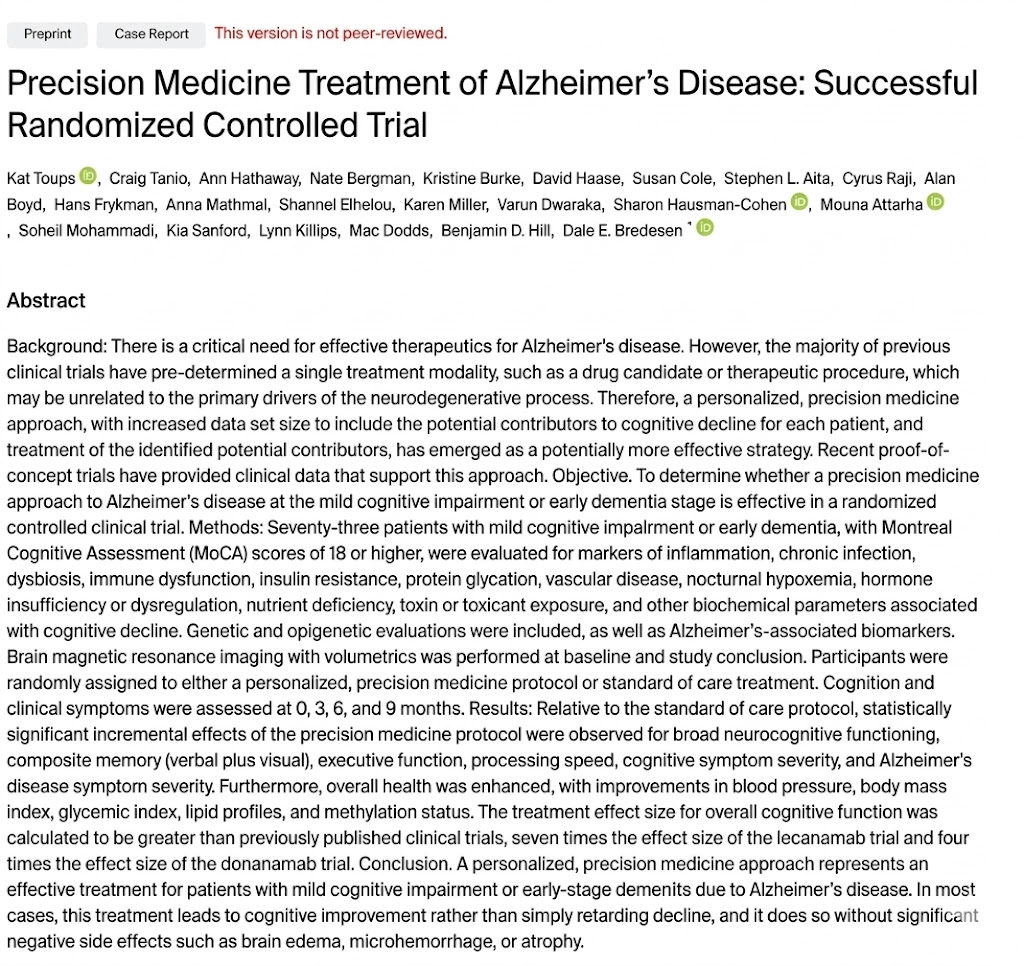
A 9-month study of 73 Alzheimer's patients just released results the lead researcher called unheard of. • Memory scores jumped 12 points • Spouses noticed cognitive improvements at home • 100% of patients reversed their memory loss at one clinic The complete breakdown: 🧵
A Paradise for Parents tweet mediaA Paradise for Parents tweet media
English
50
381
1.8K
394.9K
Nick Norwitz MD PhD
Nick Norwitz MD PhD@nicknorwitz·
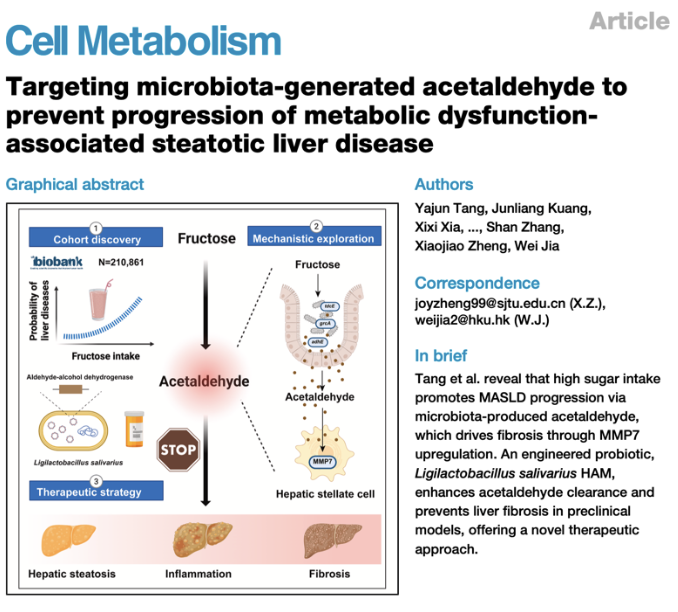
1/6) 2026 research published in Cell Metabolism reveals how fructose harms the liver. It’s a form of microbiome “alchemy” where microbes convert sugar into a toxic byproduct of alcohol metabolism. Yes, really! Here’s what you need to know. (Link at the end.)
Nick Norwitz MD PhD tweet media
English
9
18
105
8.7K
Stewart McAlpine Knoepp, MD, PhD retweetledi
Steve Skojec
Steve Skojec@SteveSkojec·
He’s dead on.
English
1.7K
15.3K
72.3K
2.3M
William A. Wallace, Ph.D.
William A. Wallace, Ph.D.@WilliamWallace·
A 1-minute tea and a 5-minute tea are different beverages. Same leaf, same water, different chemistry. Caffeine extracts fast. Most of it is in your cup within 1-2 minutes. Catechins (EGCG, the compound driving most green tea health research) extract slower and continue building through 3-5 minutes. Tannins extract last, becoming prominent after 4-5 minutes and producing astringency. The 30-second tea bag dunk is mostly caffeine with minimal catechins. The 8-minute brew adds tannins that make the cup harsh. The 3-5 minute window captures the catechin peak before tannin onset. Separately, tea polyphenols as a class reduce non-heme iron absorption by approximately 60% when consumed with meals (Hurrell 1999). This applies to all brews, not just over-steeped tea. If you have iron status concerns, drink tea between meals rather than with them. Astill, J Agric Food Chem 2001: pubmed.ncbi.nlm.nih.gov/11714326/ Hurrell, Br J Nutr 1999
William A. Wallace, Ph.D. tweet media
English
10
86
340
13.4K
Stewart McAlpine Knoepp, MD, PhD
Stewart McAlpine Knoepp, MD, PhD@StewartKnoepp·
@drterrysimpson Thanks for the thoughtful response; 100% agree with most. However, lack of disease in such FH patients does "overturn the rule" in those patients. We should learn from those cases. Same for LMHR. Why? We may discover treatments more effective than standard lipid lowering therapy.
English
0
0
0
8
Dr Terry Simpson
Dr Terry Simpson@drterrysimpson·
True—there are FH outliers who reach older age with little apparent disease. That’s real. It just doesn’t overturn the rule. What it shows is risk is modified, not erased. In Familial Hypercholesterolemia, event rates are far higher and earlier than the general population. The “protected” group likely has modifiers—lower lifetime exposure, favorable genetics (e.g., Lp(a), inflammatory tone), lifestyle, or earlier treatment. Survivorship bias plays a role—you’re seeing those who made it, not those who had events earlier. Outliers don’t negate causality any more than lifelong smokers without lung cancer make smoking safe. Bottom line: variability exists, but more apoB over more time still shifts the odds toward atherosclerosis.
Stewart McAlpine Knoepp, MD, PhD@StewartKnoepp

@drterrysimpson RE: "Familial Hypercholesterolemia, where lifelong high exposure leads to early disease" Correct, except for the substantial number of FH patients who have no appreciable disease well into old age.

English
1
0
1
241
Stewart McAlpine Knoepp, MD, PhD
Stewart McAlpine Knoepp, MD, PhD@StewartKnoepp·
@drterrysimpson RE: "Familial Hypercholesterolemia, where lifelong high exposure leads to early disease" Correct, except for the substantial number of FH patients who have no appreciable disease well into old age.
English
1
0
0
250
Dr Terry Simpson
Dr Terry Simpson@drterrysimpson·
As someone who has plaque from decades of high LDL seven years is nothing . You’re asking for a prediction, but the science gives probabilities, not prophecies. No one says, “you will have X mm³ of plaque.” What we can say is this: More apoB/LDL particles over time → higher chance of plaque. That’s built on decades of data, including Familial Hypercholesterolemia, where lifelong high exposure leads to early disease. Like me- I’m 7 decades in. Your scan (like a Coronary CT angiography) is a snapshot, not immunity. Some people with high LDL will look “fine” for a while—biology has outliers. Oxidation matters—but only after particles enter and get trapped. Fewer particles → fewer chances for that to happen. So if your plaque is low, great—for now. It doesn’t change the rule: more particles over more time = more risk.
Nick Norwitz MD PhD@nicknorwitz

Here’s something odd. Despite the expressed certainty that high LDL is a primary cause driver of atherosclerosis, with claims like “there’s no safe level of high cholesterol” regardless of metabolic state, when I present what seems my own clear-cut case of having a total cholesterol of 700 for nearly 7 years, and then ask a simple question: How much plaque will be in my arteries? Almost nobody guesses: “a lot.” Now, to be clear, this isn’t just a basic coronary artery calcium scan I'm getting. I recently underwent an advanced coronary CT angiography, with expert-guided interpretation and AI-based quantification down to the cubic millimeter (mm3). Of note, people in their 20s and 30s often do show plaque on these scans, including some well-known nutrition influencers. One example that comes to mind is someone in the plant-based community, in his 30s, with a total plaque volume of 61.3 mm³. So I come back to the question: 👉How much plaque will be in my heart? 👉And why does it seem that no one wants to guess “a lot”? These aren’t results I could possibly fake.
English
30
6
58
16.1K
Stewart McAlpine Knoepp, MD, PhD
Stewart McAlpine Knoepp, MD, PhD@StewartKnoepp·
@DoctorTro @2krazyketos People that argue a lot tend to be louder and post a lot of controversial comments. For every one of them there are 10 of me, people that don't post that much but are quietly amassing knowledge and living the life. We practice all of those eating patterns you mentioned. Cheers.
English
0
0
0
9
DoctorTro
DoctorTro@DoctorTro·
Why must people in the keto, carnivore, whole food, and paleo diet camps be divided when we agree on some of the most metabolically essential truths? The 2 Krazy Ketos (@2krazyketos) talk with us about why adherents of the many diets within the spectrum of ‘the proper human diet’ must join together to spread the message of metabolic health and generate change.
English
6
15
166
8K
Nick Norwitz MD PhD
Nick Norwitz MD PhD@nicknorwitz·
Peter Misses the Plot: a Swift Debunking 👇 It’s come to my attention that @PeterAttiaMD has come out with an attempted debunk to The Cholesterol Code documentary and, more broadly, the research on lean mass hyper-responders. I won’t mince words: It’s embarrassing. It’s simultaneously arrogant, deeply misinformed, and, as I read it, a transparent avoidance of the facts at hand. It’s posturing, not insight. And I’m prepared to back that up. First, Peter attempts to discredit the documentary, the research on lean mass hyper-responders, and the Lipid Energy Model, on superficial grounds: credentials and authority. He almost exclusively referring to the work as a product of the Citizen Science Foundation (CSF), i.e., @realDaveFeldman: the 'uncredentialed' outsider. He conspicuously avoids discussing the broader teams involved, many of whom carry credentials that would easily meet the standards typically valued in more traditional, credential-focused settings (and exceed his own). Even setting aside myself, an MD-PhD, there is: Dr. Adrian Soto-Mota, MD-PhD, ith the Lundquist team, there are others who have co-authored work in this space, including Anatol Kontush, Ronald Krauss, William Cromwell, and, notably, Peter’s own former head of research, Bob Kaplan. Go figure. Might have been a fact fact for Peter to include: "My former head of research was a coauthor on the Lipid Energy Model paper I'm inadequately trying to debunk." And that’s the short list. I’ll also point out that when I was writing an editorial on lean mass hyper-responders, I reached out to Peter, and he declined to contribute, citing that it was not his area of expertise. He instead referred me to Ronald Krauss at “the expert,” who has now collaborated with us on a couple of projects. So even at a superficial level, what we’re seeing here is avoidance, posturing, and frank hypocrisy. Peter further attempts to cast doubt on lean mass hyper-responders by questioning the existence of the phenotype, which is, frankly, comical. It exists. It is defined by three clear cut points, and people meeting those criteria unquestionably exist. It is also a dynamic and reproducible phenomenon, as demonstrated by multiple experiments, case series, and even meta-analyses of randomized controlled trials that we have published. Peter forgot to talk about those data. No surprise there. Peter also demonstrates a misunderstanding of the Lipid Energy Model, for example by incorrectly suggesting a contradiction between the model and the low triglycerides observed in lean mass hyper-responders. And, more broadly, he reveals a lack of familiarity with the practical realities and constraints of clinical study design. If we are going to lean on authority, then it is fair to ask about experience. To my knowledge, Peter has not conducted clinical trials, and frankly, that gap shows here. At a deeper level, I don’t think Peter understands this physiology or this domain. And behavior like this, particularly when presented under the banner of scientific critique, is exactly the kind of thing that fuels “broader distrust in institutions and experts.” This is a textbook case of the pot calling the kettle black. I could go on, but I think the core point is clear. If further discourse is needed, Peter and his colleagues, including Tom Dayspring, have had ample opportunity to engage, collaborate, and discuss these ideas directly. If they choose not to, that speaks for itself. In the meantime, we’re not going anywhere. And no amount of pedantic posturing is going to change the trajectory of the data. Oh, and two more things… i. For those tempted to fall back on the overly simplistic take that “they’re saying high LDL is good” and “fear mongering about pharma,” or similar caricatures, you’ve entirely missed the plot. And, I have something coming this week. Again, if you interpret it as a pivot, you’ve missed the point entirely, as Peter has. ii. Finally, Peter’s central criticism seems to be that the documentary and our research suggest that even very high LDL cholesterol may not always indicate cardiovascular risk. Well, yes. The alternative is to argue that in all circumstances, at all times, very high LDL necessarily drives cardiovascular disease. This isn’t about discrediting, with a blanket statement, any role of ApoB or LDL in cardiovascular disease. This is about asking important questions at the frontier of science, because the status quo has been wholly inadequate in addressing the problem at hand. That's obvious. At least to some extent, we have been barking up the wrong tree. Anyone with a modicum of perspective can see that. And anyone with genuine curiosity would be willing to engage with the nuance, rather than lecture, avoid, and misrepresent, as Peter is doing here. Lastly: See the Cholesterol Code Documentary. It's on Amazon. And judge for yourself.
Nick Norwitz MD PhD tweet media
English
92
108
697
88.1K
Craig Murray
Craig Murray@CraigMurrayOrg·
@GazaKhaldo58133 It is ludicrous. I am not permitted to know what is being alleged in the closed sessions, and have no opportunity to reply. My "interests" are "represented" in the closed session by government approved lawyers who are not permitted to communicate with me.
English
16
153
510
27.7K
Craig Murray
Craig Murray@CraigMurrayOrg·
UK government efforts to frustrate the Scottish Judicial Review of proscription of Palestine Action include a "closed process" for secret evidence, and thousands of pages of new disclosure. Today we cut through that by a motion to suspend the order pending the review.
English
8
221
450
9.2K
Stewart McAlpine Knoepp, MD, PhD
Stewart McAlpine Knoepp, MD, PhD@StewartKnoepp·
@CynicalPublius Turmeric, low-carb high-fat diet, and omega 3 supplementation. Two years ago I had debilitating knee pain when running and stiffness in my spine and joints. Now, pain is gone, flexibility has returned, and I'm running 7 minute miles in my 50s.
English
0
0
0
11
Cynical Publius
Cynical Publius@CynicalPublius·
I'm getting my knee scoped on Tuesday. I have a bad meniscus tear. It went from being a minor annoyance to crippling almost overnight, without any single instance of injury. There is some arthritis in there too, I'm hoping to avoid an eventual knee replacement (too many bad PLFs and 12 mile ruck marches, IYKYK😉). I already have an icing machine from my shoulder replacement, but does anybody have any helpful tips/ideas? Thanks in advance.
English
1.4K
185
2.7K
114.1K
David Sinclair
David Sinclair@davidasinclair·
DNA is misrepresented! For 70 years, teachers, textbooks & even scientific institutions have perpetuated a myth How did one of the most gorgeous structures in the universe turn into ugly, twisted pasta? ...🧵
HHMI@hhmi_science

Stunning new landmark study from #HHMIInvestigator David Reich & team @harvardmed lets us watch human evolution in real time across 10K yrs, & what ~16K ancient genomes reveal is striking: Natural selection didn't stop when civilization began — it sped up: bit.ly/4ep7uJI


English
16
67
646
148.9K
Stewart McAlpine Knoepp, MD, PhD
Stewart McAlpine Knoepp, MD, PhD@StewartKnoepp·
@ScottAppliedSci Where you go wrong in your analysis is you're talking about a high fat diet combined with a high-carb diet. Look at the diet on low-carb high-fat diets (LCHF). You will find the opposite of what you say about visceral/ectopic fat and insulin resistance. Read @garytaubes books.
English
2
0
1
16
Andrew Scott
Andrew Scott@ScottAppliedSci·
Carbs -> insulin -> diabetes & obesity Is FALSE. I’ve known countless people who see their HbA1c get worse on keto. Briefly, here is why. Glucose is a major energy currency and is constantly released from your liver and kidneys, whether you eat carbs or not. And you always have background insulin (except T1Ds and a few others). If you consume a lot of fat, it will fill your available storage depots and then begin accumulating in visceral and ectopic sites. This causes insulin resistance, so your blood glucose rises and your insulin with it. This can cause some people’s pancreatic insulin output to falter. Some combinations of genetics and lifestyle amplify this. It can be enough to get you into the diabetic range. I know - I did it. I also speak to people all the time who see their blood glucose levels fall as they reintroduce carbs IF they cut energy intake.
English
19
3
26
2.1K