Jon Moore

42 posts

Jon Moore banner
Jon Moore

Jon Moore

@Tree_Coder

Former research scientist, Carbon Cycle & Forests. PhD in Maths, MSc Meteorology. Tweet about climate, biodiversity, and inequality. ME/CFS/POTS #FBPPR

UK Katılım Nisan 2026
201 Takip Edilen4 Takipçiler
Jon Moore
Jon Moore@Tree_Coder·
@25_cycle @TheDisproof @MontgomeryToms I realised I hadn't checked my assumptions about Mars, so deleted my tweet. There is actually more mass of CO2 above each m^2 on Mars than Earth. It's the broadening effect of collisions on the absorption linewidths that actually mean more IR is aborbed by less CO2 on Earth.
English

1
0
1
18
Montgomery Toms
Montgomery Toms@MontgomeryToms·
Anyone who believes in man-made climate change needs to take a long hard look at themselves. Here are the basic facts: - 0.04% of the atmosphere is carbon dioxide. Once we drop below 0.02% plants will start dying. - Of that 0.04%, 97% of that is made up of natural emissions (gas released from tectonic shifts, historic volcanic, eruptions etc) - 3% of that 0.04% is made up of human contribution. - Of that 3% of 0.04% Britain contributes 1%. The man-made climate change narrative is nothing more than a control mechanism by technocratic globalist elites.
English
201
998
3K
31.6K
Jon Moore
Jon Moore@Tree_Coder·
@BlokeOnWheels How to privatise the NHS against the public's wishes and sell all our data to Palantir?
English
0
0
2
45
Jon Moore
Jon Moore@Tree_Coder·
@TheDisproof @brucemcd23 So he was just trying to scare you, I guess? He never had a case, as you have all the published science behind you.
English
0
0
1
7
BONUS🌍
BONUS🌍@TheDisproof·
@Tree_Coder @brucemcd23 Because I made a video about misleading fossil fuel lobby group talking points that he amplified. His lawyers never got in contact.
English
1
0
2
18
Bruce McD
Bruce McD@brucemcd23·
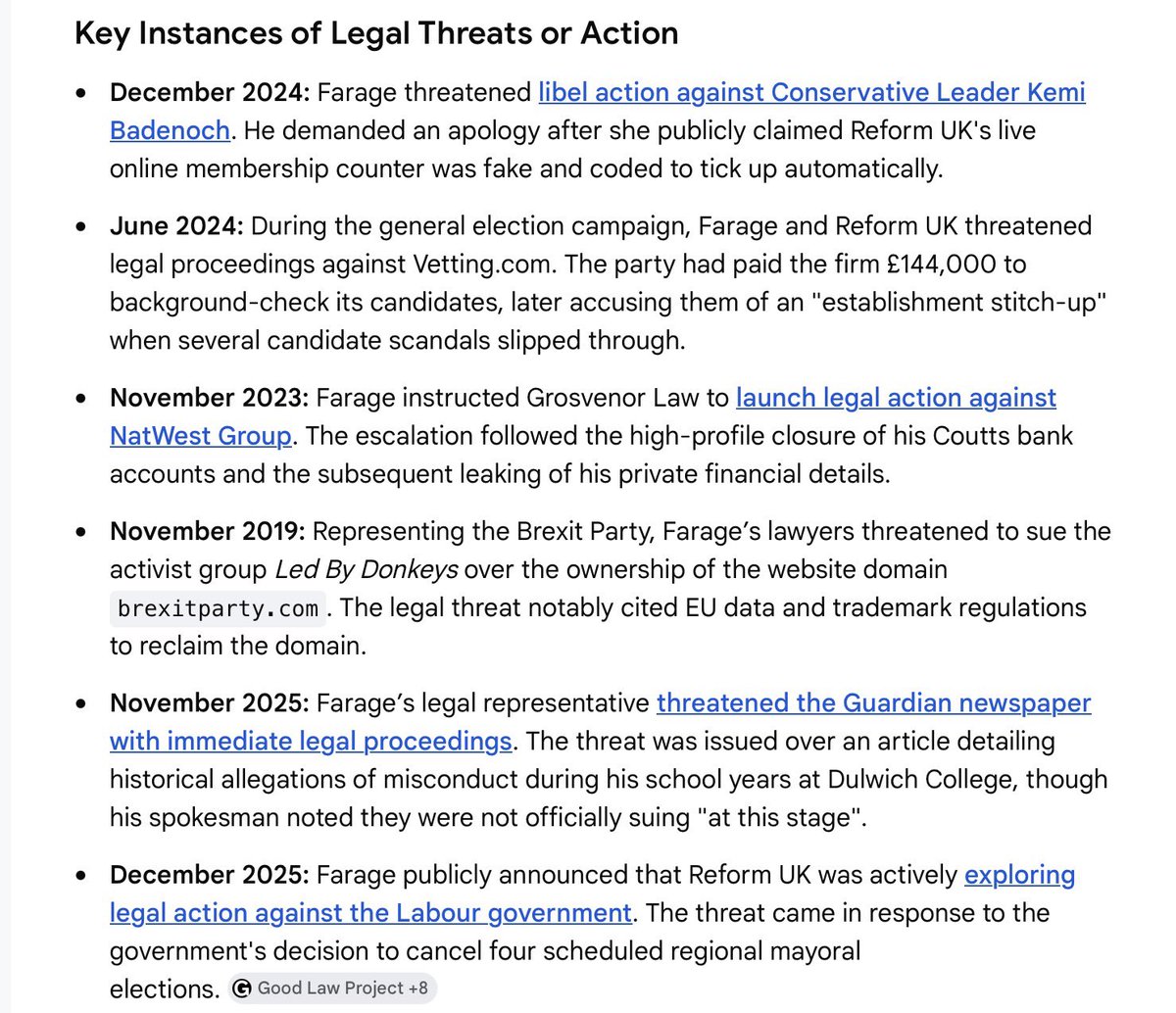
FARAGE’S LEGAL THREATS The £5m Man, Nigel Farage claims he doesn’t often take legal action Here’s six examples of legal action that Mr Farage has taken in the last few years Mr Farage appears to be constitutionally incapable of making truthful and accurate statements
Bruce McD tweet media
English
6
172
367
53.4K
Jon Moore
Jon Moore@Tree_Coder·
@CountBinface Well, our politics is a total bin fire, so might as well go all the way and get the expert in. Hope you paid your intergalactic vehicle tax, though.....
English
0
0
1
319
Count Binface
Count Binface@CountBinface·
When you become the likeliest election winner, the scrutiny is bound to increase.
Dan Neidle@DanNeidle

@The_Landlord Sorry, can’t respond. Busy hunting down investigations into Count Binface.

English
17
68
1.6K
84.1K
Jon Moore
Jon Moore@Tree_Coder·
@TheDisproof Probably won't help much that they slashed funding for the US Forest Service
English
1
0
6
41
BONUS🌍
BONUS🌍@TheDisproof·
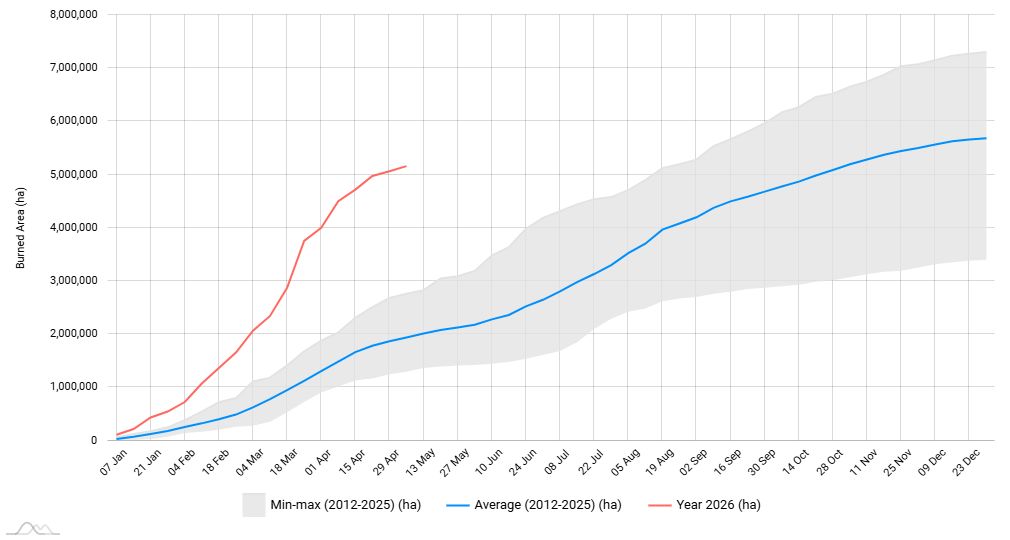
It's only May..... but look at the 2026 USA Wildfire Weekly Cumulative Burnt Areas.🫣
BONUS🌍 tweet media
English
4
27
72
1.7K
Jon Moore
Jon Moore@Tree_Coder·
@ali__samson The problem for him is he opted to stay Manchester mayor in 2024. If he wanted to lead the Labour party he should have not run for mayor then. Trying to win a by-election now is madness.
English
0
0
1
14
ali
ali@ali__samson·
Going forward, will Andy Burnham lose a current Labour constituency to Greens or Reform I wonder.
English
7
1
10
479
Jon Moore
Jon Moore@Tree_Coder·
@Angie_RejoinEU @labourlewis The end says there is a spectrum with a lot of overlap. At what point does a social democracy become a democratic social state? What are the essential industries that are public in a social democracy? Does it include things like water, power etc or not?
English
0
0
0
2
Clive Lewis MP
Clive Lewis MP@labourlewis·
Westminster may finally be about to have the argument it has spent 40 years avoiding. If Andy Burnham returns to Parliament, the political class will know how to cover it. A leadership drama. Who is up, who is down, whether Keir Starmer can survive, whether Labour is once again turning inward. The familiar machinery of Westminster psychodrama will whirr into life. That framing misses the larger point. Burnham’s possible return matters not because of what it says about Labour’s leadership, but because of what it reveals about the British state: what it can still do, what it has forgotten how to do, and what kind of country it must become if it is serious about resilience. Britain is finally having a more serious conversation about national security. The Strategic Defence Review, the pivot back towards Europe, the recognition that hybrid warfare turns citizens, infrastructure and civic institutions into part of the front line: all of it marks a real shift in how the state thinks about its own survival. But at the centre of that conversation lies a question that the defence establishment, and most of Westminster, still does not want to answer. What kind of society do you need to be before resilience is possible? Finland is now the model everyone cites. Comprehensive security. Whole-of-society defence. Civilian preparedness woven into military planning. British strategists admire the Finnish system and ask how it might be copied. But the admiration stops short of the uncomfortable question: why does it work there? The answer is not geography or history or some mysterious quality of Finnish national character. It is structural. Nearly 80% of Finns say they would defend their country if attacked. In Britain, the figure is closer to 33%. That gap is not an accident. It exists because Finland has spent decades building a society in which people have a genuine stake in what they are being asked to defend. Energy is affordable. Housing is available. Public services function. Institutions command trust. The Nordic welfare state is not a sentimental add-on to Finnish security policy. It is the foundation of it. You cannot ask people to defend a country that does not work for them. Britain has spent 40 years building the opposite. The privatisation of essentials – energy, water, transport, housing – transferred wealth upwards from households to shareholders while making the basics of everyday life more expensive. The state, stripped of the tools to control costs at source, has been reduced to compensating after the fact. Out of every pound the Government spends on housing, 88p goes to subsidising private rents. Just 12p goes to building homes. When energy prices spiked in 2022, the Government spent £40bn in a single winter cushioning the blow, not because it had a resilient energy system but because it lacked one. Debt interest now consumes more than £100bn a year. Britain has the highest debt servicing costs in the G7: the compounding price of financing failure rather than eliminating it at source. This is what bond market dependency actually looks like. It is not an abstract fiscal condition. It is the consequence of a state that has been stripped of the supply-side tools that would let it cure the problems it now pays, indefinitely, to manage. And here is the paradox the Treasury refuses to confront. The countries that borrow most cheaply are often those that have retained the public investment model Britain abandoned. The spread between UK and Dutch borrowing costs has widened sharply not because markets fear public investment, but because they have lost confidence in a model that borrows to subsidise private failure while never addressing its causes. This is the connection Britain’s defence debate is missing. The familiar framing, that social spending is what must be sacrificed to meet the NATO target, is not merely politically toxic. It is strategically illiterate. Cutting the foundations of social cohesion to fund the hardware of national defence is self-defeating. You end up with planes and no pilots, submarines and no crew, an army that cannot recruit because the society it is meant to protect has stopped believing in itself. I think Burnham understands this. That is why his programme is more interesting than the leadership gossip suggests. What he has been building in Greater Manchester – public control of transport, expanded social housing, investment in the productive foundations of the city economy – is not a nostalgic rerun of postwar nationalisation. It is a proof of concept for a different kind of state. The Bee Network is the most visible example, but the argument behind it travels. A state that can shape markets is not condemned to subsidise their failures. A state that produces affordable energy through public generation does not need to spend tens of billions cushioning every price shock. A state with a serious public housebuilding programme does not need housing benefit to rise endlessly in line with private rents. A state that builds institutions people can see, use and trust begins to restore the civic confidence on which resilience depends. The real constraint on Britain is not money. It is capacity: the workers, institutions, supply chains and public purpose needed to turn national will into national renewal. Britain’s tragedy is not that it has run out of money. It is that after 40 years of hollowing out the state, it has made itself less able to act. Burnham’s critics will reach for the familiar warning. Borrow more, spend more, spook the gilt markets, repeat the Truss disaster. But this misunderstands both the problem and the opportunity. Bond markets do not have ideological preferences. They have functional ones. They prefer clarity, credible revenue streams, productive investment, and a state with a plan. What they punish is not public ambition but incoherence. A properly designed productive state programme would not be a leap into fiscal fantasy. It would be an attempt to end the much costlier fantasy that Britain can keep borrowing to compensate for broken markets while refusing to repair them. The defence conversation and the economic conversation need to become the same conversation. Finland did not build national resilience by choosing between welfare and security. It built resilience by understanding that they are inseparable: that a country in which the basics work, where people trust one another and the institutions around them, is one that can face danger with something more than anxiety. That is the deeper argument Burnham represents. Westminster will be tempted to treat him as a leadership story. It should resist the temptation. The question is not whether Burnham can return to parliament. It is whether Britain can return to the idea that the state should make life work. Because a country that cannot command the confidence of its people cannot truly defend itself.
English
550
799
3.6K
778K
Jon Moore retweetledi
Harry Eccles
Harry Eccles@Heccles94·
The only news group who consistently held Farage and Reform UK to account BEFORE the elections were @BylineTimes Give them a follow, and consider a monthly subscription (I get their hard copy monthly and love it)
English
38
327
1.1K
19.1K
Jon Moore
Jon Moore@Tree_Coder·
@Ferretgrove While I'm a big critic of the PM, this seems ridiculous, unecessary and premature. Labour was elected because people didn't want the drama and infighting of the Tories but here we are🤷
English
0
0
0
5
Jon Moore
Jon Moore@Tree_Coder·
@MrMatthewTodd @Ed_Miliband @AttitudeMag I agree he is a man of principle and a decent person but not convinced he has the charisma to win over a majority. He failed in 2015 not sure he'd do any better now. The problem is not sure if Labour have anyone charismatic enough to win over voters in the face of hostile press
English
0
0
0
21
Matthew Todd 🌏🔥
Matthew Todd 🌏🔥@MrMatthewTodd·
I met @Ed_Miliband several times when I was editor of @AttitudeMag He was the only party leader who responded to an invitation to meet regarding the problem of bullying of kids. He came with us to a school that was taking bullying seriously to meet kids and met the mother of a young man who’d died after years of bullying. All I can tell you is that I found him to be decent, caring, intelligent and genuine. If he became leader and had scientists broadcast the facts of what climate change is going to mean for all of us, he could radically change this country.
Matthew Todd 🌏🔥 tweet media
English
7
15
55
2K
Jon Moore
Jon Moore@Tree_Coder·
@MrMatthewTodd Agreed. Things we need are PR, media reform and end to any political donations other than capped amount from individual UK residents who are on electoral roll.
English
0
0
0
11
Matthew Todd 🌏🔥
Matthew Todd 🌏🔥@MrMatthewTodd·
You won’t ever get another left wing government while you have the Mail, GB News, The Sun, Telegraph all owned by the rich. Labour only got in last time because of party-gate. The right could incinerate your kids futures - they are - and people would still vote for them if the mass media told them to. The best thing @UKLabour @Keir_Starmer @ZackPolanski @EdwardJDavey @Ed_Miliband could do is call Leveson 2 and tell the public the truth about who owns our media.
English
98
531
1.8K
26.6K
Jon Moore
Jon Moore@Tree_Coder·
Even though I'm not Labour as such and a critic of Starmer I largely agree with this. Problem with Labour has been comms, political nous and the headline policies backfired plus a few minor scandals playing into RW media hands. A lot of the less talked about policies are ok.
Andy Thompson@mexicola25

@kieren_rees @b0n0myt1res We are close to ungovernable as a country, press won't let people govern, opposition parties are not held to account (and that went for Labour at times), people acting like Labour have been the worst, they have been alright 6/10, had a fairly productive first legislative session.

English
0
0
0
20
Jon Moore
Jon Moore@Tree_Coder·
@hausfath NCAR and NASA over +4C, goodness. Any idea why those models are that much higher than the others?
English
0
0
0
4
Zeke Hausfather
Zeke Hausfather@hausfath·
Here are the November forecasts for the ensemble median of each of the newly released NMME models:
Zeke Hausfather tweet media
English
2
4
24
2K
Jon Moore
Jon Moore@Tree_Coder·
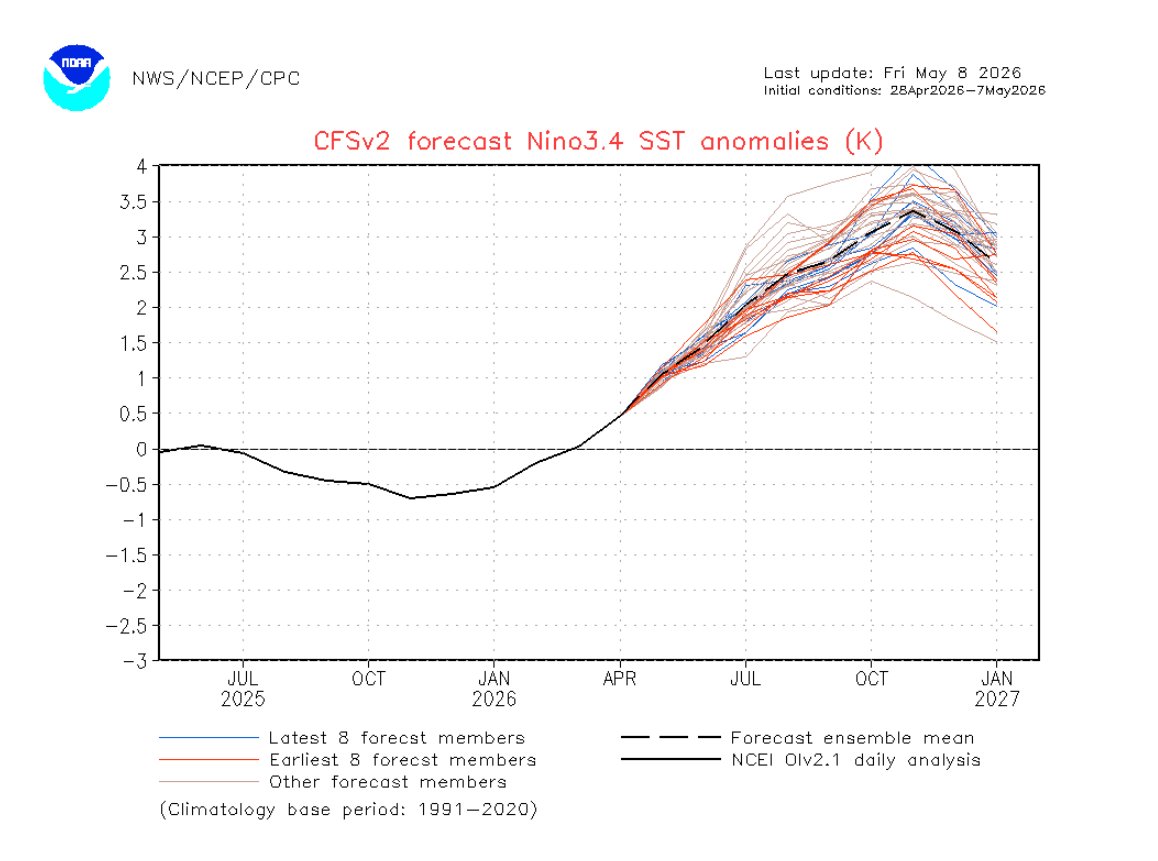
@EliotJacobson I think I'll start selling y-axis extension kits on eBay.... Going to be a really big El Nino this one, worrying times
English
0
0
1
14
Jon Moore
Jon Moore@Tree_Coder·
@Ferretgrove With the hostile media, Labour needed to be on their A game with top tier politicial nous. Now I'm struggling to work out how we avoid the horror of a Farage govt in 2029. No alternative to Kier seems any better.
English
0
0
0
5
Jon Moore
Jon Moore@Tree_Coder·
@Ferretgrove I was last on here in the run-up to the GE 2024. I had worries about Labour then. They seemed not to have a plan and ability to communicate effectively. I hoped they would reveal a plan and keep Reform down, but it's been a sadly predictable result.
English
1
0
0
12
Ferret
Ferret@Ferretgrove·
Fckn hell, even Wales is letting RefUK in. It’s like a collective madness.
English
18
1
27
1.6K