Luís Fernandes

902 posts

Luís Fernandes banner
Luís Fernandes

Luís Fernandes

@apidcloud

Backend Developer @ArtiviveApp | CS PhD | Complexity · HCI · VR · Cultural Heritage | @scarletteditor · @Gibbo2D

Vienna, Austria Katılım Ekim 2012
663 Takip Edilen115 Takipçiler
MDN Web Docs
MDN Web Docs@MozDevNet·
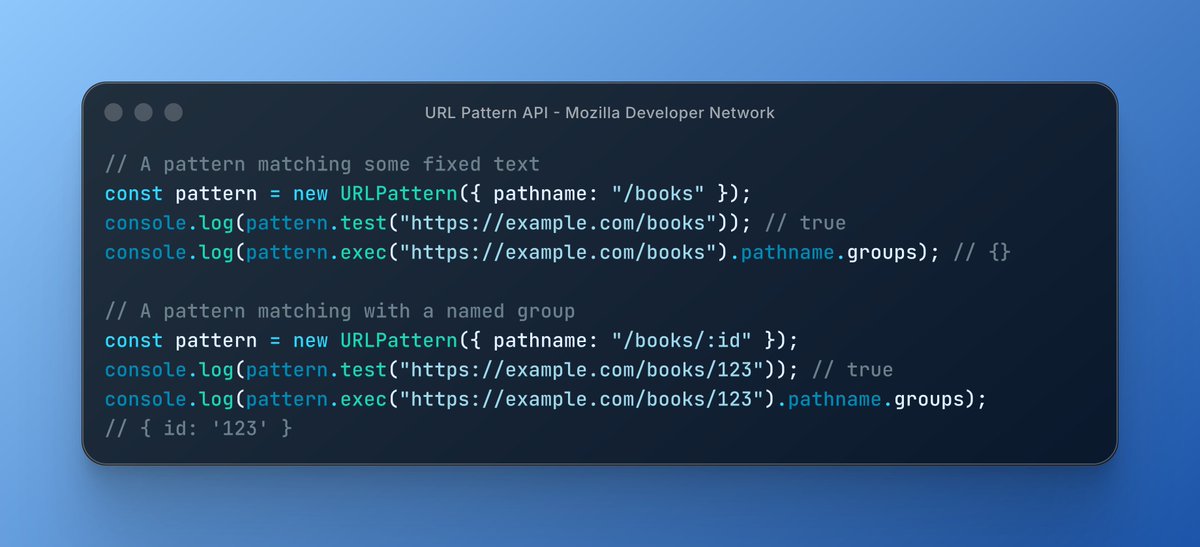
🆕 The URL Pattern API is Newly Available! Use it to match and extract parts of URLs, no need to reinvent routing logic. Supports literals, wildcards, named groups, and even regex constraints. Learn how it works 👇 developer.mozilla.org/en-US/docs/Web…
MDN Web Docs tweet media
English
1
26
187
16.8K
Luís Fernandes
Luís Fernandes@apidcloud·
@GabRoXR @playcanvas I think at this point it’s just better to wait for khronos to finish the gltf spec where they add Gaussian splat
English
0
0
0
55
Gabriele Romagnoli
Gabriele Romagnoli@GabRoXR·
@playcanvas 's support for #GaussianSplatting keeps improving and adds environmental effects like fog, rain and snow. In addition to LOD and "automeshing", creating tours that run on the web around photorealistic scenes is becoming a very compelling option. Am I the only one seeing "standard" game engines like Unity and Unreal lagging behind? For the latest updates around #3DGS make sure to check out my newsletter (link on top of my profile)
English
1
2
24
1.4K
Klemens 🦆 Art of Fauna
Klemens 🦆 Art of Fauna@klemensstrasser·
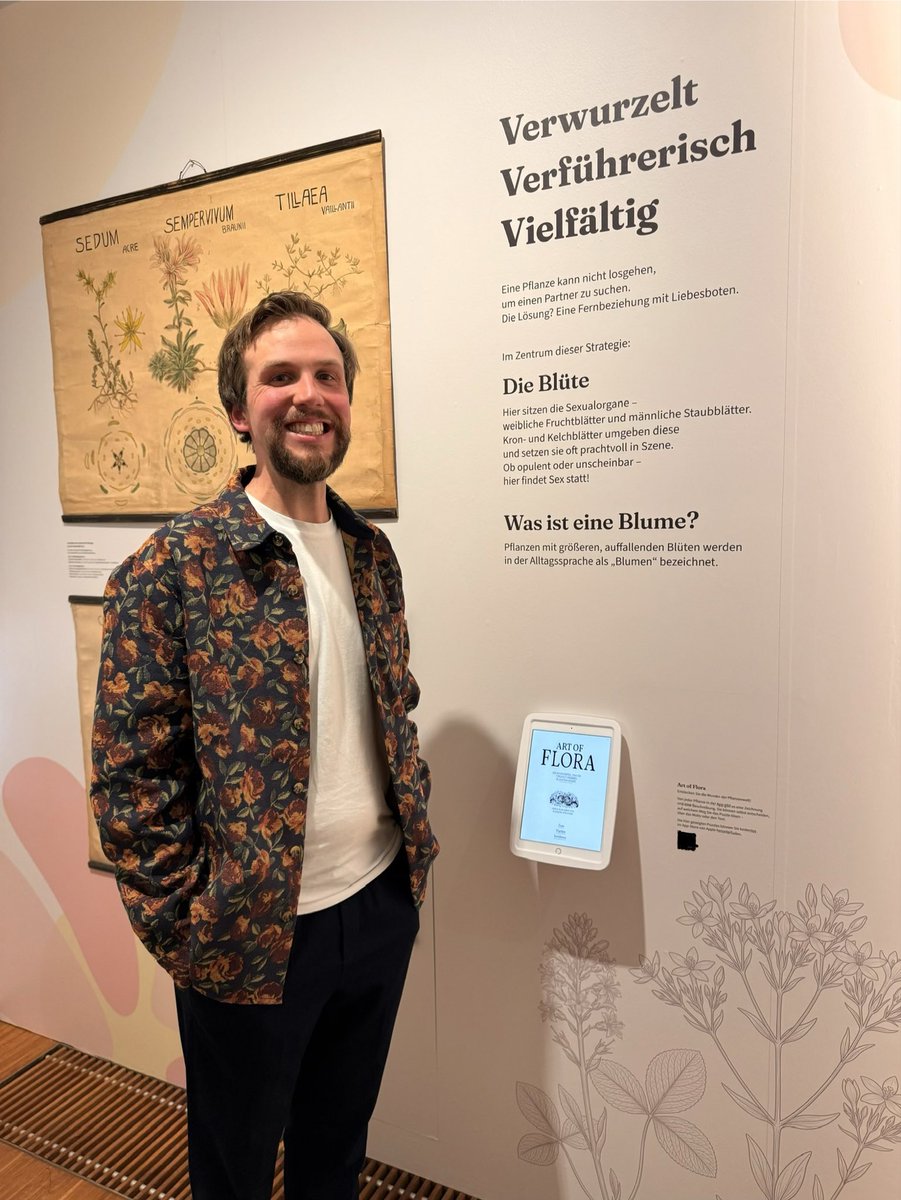
Finally can talk about one of the most incredible things: Art of Flora is now hanging in the natural history museum in Graz until 2027! 🌺 You can play exclusive puzzles there, and also take them home with you by scanning a QR-Code! 💚 I’ll tell you more about how this came to be in the future! 🔮
Klemens 🦆 Art of Fauna tweet mediaKlemens 🦆 Art of Fauna tweet media
English
24
15
205
12.2K
Luís Fernandes retweetledi
Sci-Fi Archives
Sci-Fi Archives@SciFiArchives·
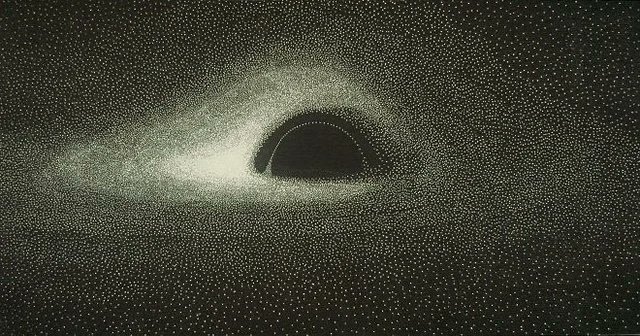
The first simulated image of a black hole, calculated with an IBM 7040 computer using 1960 punch cards and hand-plotted by French astrophysicist Jean-Pierre Luminet in 1978.
Sci-Fi Archives tweet media
English
50
1.4K
18.7K
430.2K
Luís Fernandes
Luís Fernandes@apidcloud·
@_Felipe When the term started being used I got the meaning from the context but had to google it lol (particularly images with horses)
English
0
0
1
70
Felipe O. Carvalho
Felipe O. Carvalho@_Felipe·
“harness” is what you call a “wrapper” when you’re trying to convince others that a wrapper is necessary and valuable.
English
2
0
29
1.9K
MDN Web Docs
MDN Web Docs@MozDevNet·
Split text by words and sentences, for any language 🌍 Intl.Segmenter handles locale-aware text segmentation, including CJK languages where spaces don't separate words. Learn more 👇 developer.mozilla.org/en-US/docs/Web…
MDN Web Docs tweet media
English
1
16
96
4.7K
antirez
antirez@antirez·
Jesus, I did the error of watching F1 (the movie with Brad Pitt). How it is possible to let people that are totally clueless write the script? The script is pure poo: it is a terrible movie, totally terrible. A lot of money and efforts to produce something so lame.
English
23
1
135
23.9K
Shahriar Shahrabi | شهریار شهرابی
Another demo scene. I can finish these in around one and half hour. I did realize here that I need new front type for the gothic structures that has no door and window, and new tower tops. But over all very happy with what the tool can do so far
English
5
5
61
2.5K
めかぶ
めかぶ@aybena·
アニメのワンシーンのような
めかぶ tweet media
日本語
13
115
1.3K
33.2K
Andrew Jefferson
Andrew Jefferson@EastlondonDev·
Flawless resizing GitHub, 10/10 no notes
English
13
17
1.1K
69.3K
SolvingForZ
SolvingForZ@SolvingForZ·
Polar and Cartesian coordinates are two fundamental ways of representing the position of a point in a plane. In the Cartesian coordinate system, every point is defined using an ordered pair (x, y), where x represents the horizontal distance from the origin and y represents the vertical distance. This system is based on two perpendicular axes and is widely used to represent algebraic curves such as straight lines, parabolas, and other functional relationships. Because of its grid structure, the Cartesian system is highly effective in algebra and geometry for analyzing how variables change with respect to each other. On the other hand, the polar coordinate system represents points using a distance and an angle instead of horizontal and vertical measurements. A point is written as (r, θ), where r is the distance from the origin and θ is the angle measured from the positive x-axis. This representation is especially powerful for describing circular and rotational patterns such as circles, spirals, cardioids, and rose curves, where angle-based movement is more natural and intuitive. Both systems are closely connected through simple transformation formulas: x = r cos θ and y = r sin θ, allowing easy conversion between Cartesian and polar forms depending on the problem requirement. #math #mathematics #calculus #learning #education
English
4
59
300
13.9K
Luís Fernandes
Luís Fernandes@apidcloud·
@_Gyeke It’s just so ingenious. I like how it gives a real signal an imaginary copy by rotating it 90 degrees, opening up so many possibilities
English
1
0
0
25
Misunderstood
Misunderstood@_Gyeke·
My top two transformations are: 1) Park’s transformation (A little bit of bias I admit) 2) Laplace transform (and Fourier by extension) Anyone have a different transformation they find interesting?
English
1
0
1
34
Mathematica
Mathematica@mathemetica·
One curve. Three projections.f(t) = e^{-γ(t-t₀)²} ⋅ e^{iωt} From the Re-t plane: damped cosine. Im-t: damped sine. Re-Im: perfect inward spiral.Same reality, different slices.
English
14
232
1.1K
59.1K