Andrés A. Ponce M.D., Ph.D.

6.9K posts

Andrés A. Ponce M.D., Ph.D. banner
Andrés A. Ponce M.D., Ph.D.

Andrés A. Ponce M.D., Ph.D.

@aponce

🇦🇷 Prof of Physiology, School of Medicine|. UNC UNLaR Ex alumnus DAAD-Uni Gissen 🇩🇪 & UCSD 🇲🇾 | Runner 🏃‍♂️ | 🔬 |

Katılım Mart 2009
68 Takip Edilen1.6K Takipçiler
Andrés A. Ponce M.D., Ph.D. retweetledi
Journal of Physiology
EDITOR'S CHOICE 🎓️ Via a randomized cross-over trial, Aedan J. Rourke and colleagues (@MacKinesiology) observed that acute ketone monoester ingestion lowers resting cerebral blood flow 🧠 💊 🔗 buff.ly/QIMRSVh
Journal of Physiology tweet media
English
1
2
2
393
Andrés A. Ponce M.D., Ph.D. retweetledi
Michael Okun
Michael Okun@MichaelOkun·
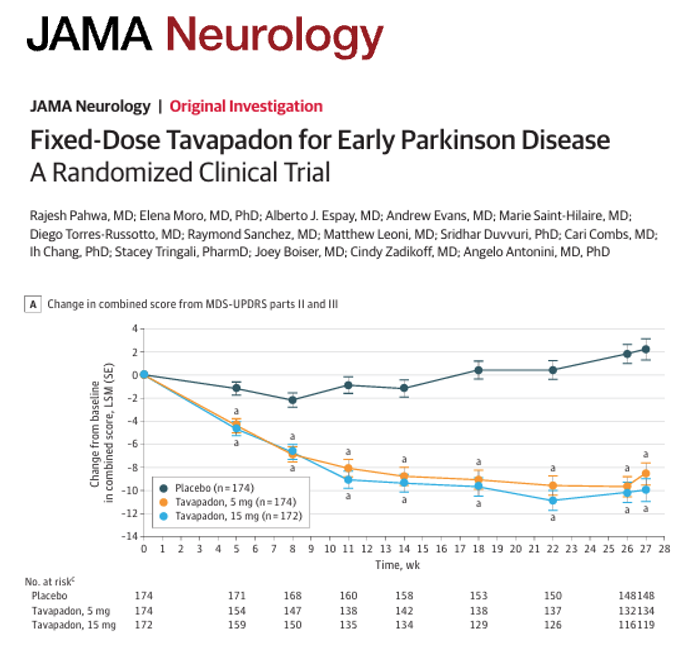
A new drug 'on the block' for Parkinson’s: Tavapadon, a D1/D5 selective dopamine agonist. Randomized trial results are in and positive. Randomized means participants were assigned by chance to different groups. Pahwa and colleagues describe in their new paper in JAMA Neurology the results of a phase 3 randomized trial of Tavapadon in EARLY Parkinson’s disease. Key Points: - Tavapadon significantly improved motor symptoms as measured by MDS-UPDRS II and III scores compared to placebo over 26 weeks. - Clinical benefit emerged as early as week 5 and was sustained through the duration of the study. - The drug demonstrated a favorable safety profile, w/ most adverse events mild to moderate including nausea, headache and dizziness. My take: This is an important study that brings a D1/D5 selective dopamine agonist into the spotlight. The idea of targeting D1 pathways while potentially avoiding some of the D2/D3 related side effects is compelling. However, we should be cautious as longer term data will be critical to understand durability, safety and real world impact. Here are 5 points that resonated w/ me: 1- Early Parkinson’s disease remains a window where smarter therapies could meaningfully alter trajectories. 2- Selective D1/D5 agonism represents a different pharmacologic strategy compared to traditional dopamine agonists. 3- The magnitude of motor improvement in this trial appears clinically meaningful and not just statistically significant. 4- Side effects were frequent, however mostly manageable, and this balance will matter in early disease decision making. 5- The future will hinge on long term safety, comparative effectiveness and identifying which folks benefit the most. cutt.ly/btIYBwr3 @JAMA_current @JAMANeuro
Michael Okun tweet media
English
5
32
122
9K
Virginio Gallardo
Virginio Gallardo@virginiog·
ResearchRabbit una herramienta de IA para búsqueda académica de papers Con capacidad para conectar artículos, visualizar redes de autores y ahorrar tiempo Ideal para preparar una revisión sistemática o scoping review con palabras clave + filtros). researchrabbit.ai
Virginio Gallardo tweet media
Español
1
50
233
8.4K
Andrés A. Ponce M.D., Ph.D. retweetledi
Keith Siau
Keith Siau@drkeithsiau·
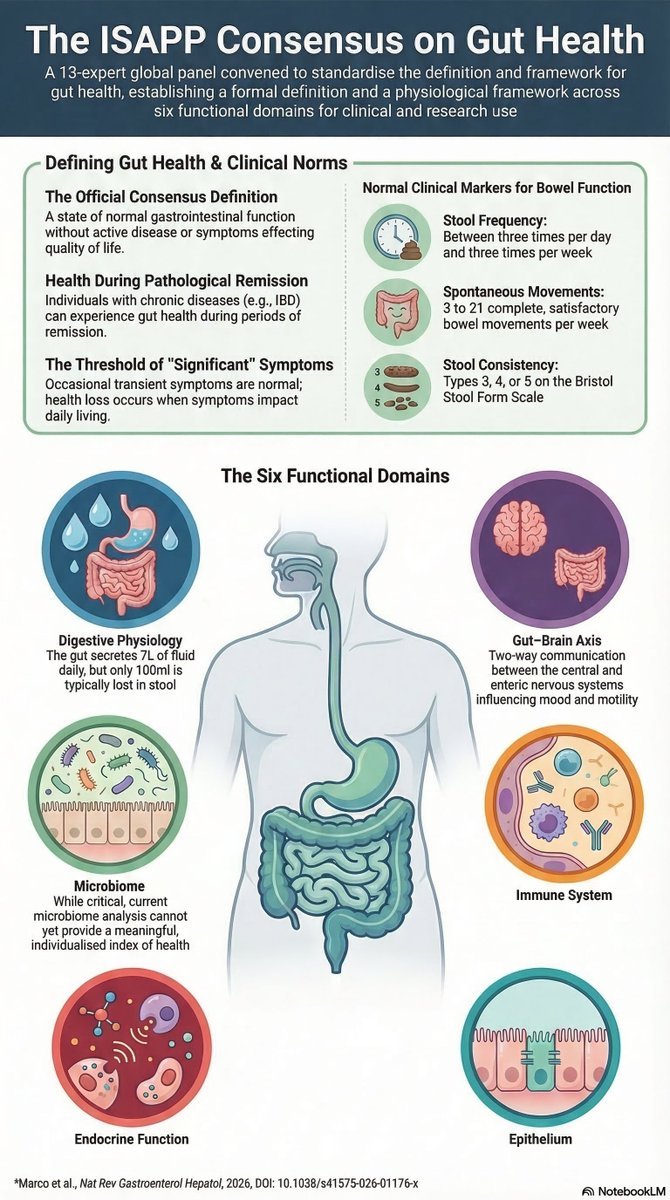
What is “gut health”? In this consensus statement from the International Scientific Association for Probiotics and Prebiotics (ISAPP), gut health is defined as “a state of normal gastrointestinal function without active GI disease and gut-related symptoms that affect quality of life.” To optimise gut health, each of the 6 following domains should be addressed👇 nature.com/articles/s4157…
Keith Siau tweet media
English
14
112
379
15.2K
Andrés A. Ponce M.D., Ph.D. retweetledi
Prof. Kevin J. Tracey, MD
Prof. Kevin J. Tracey, MD@KevinJTraceyMD·
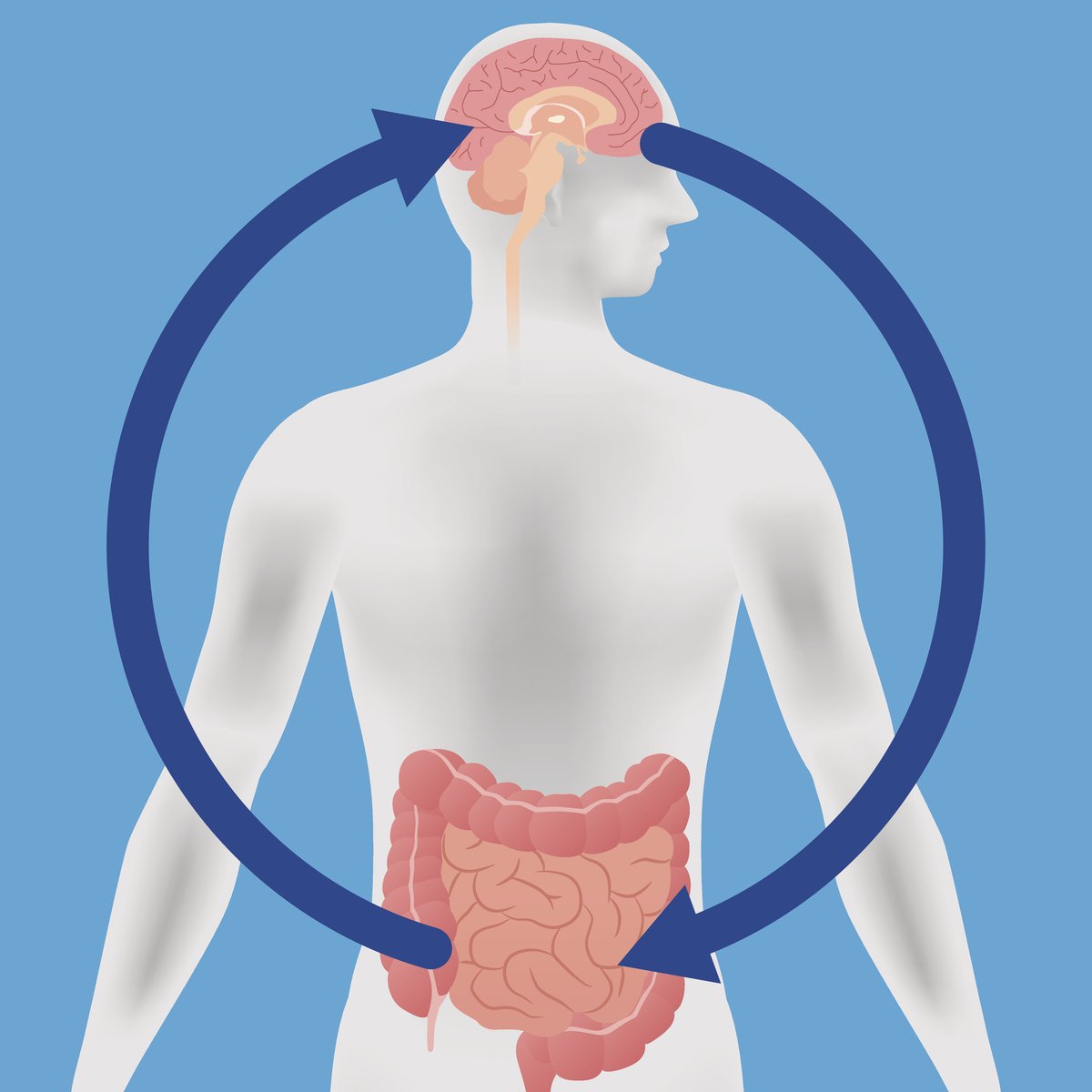
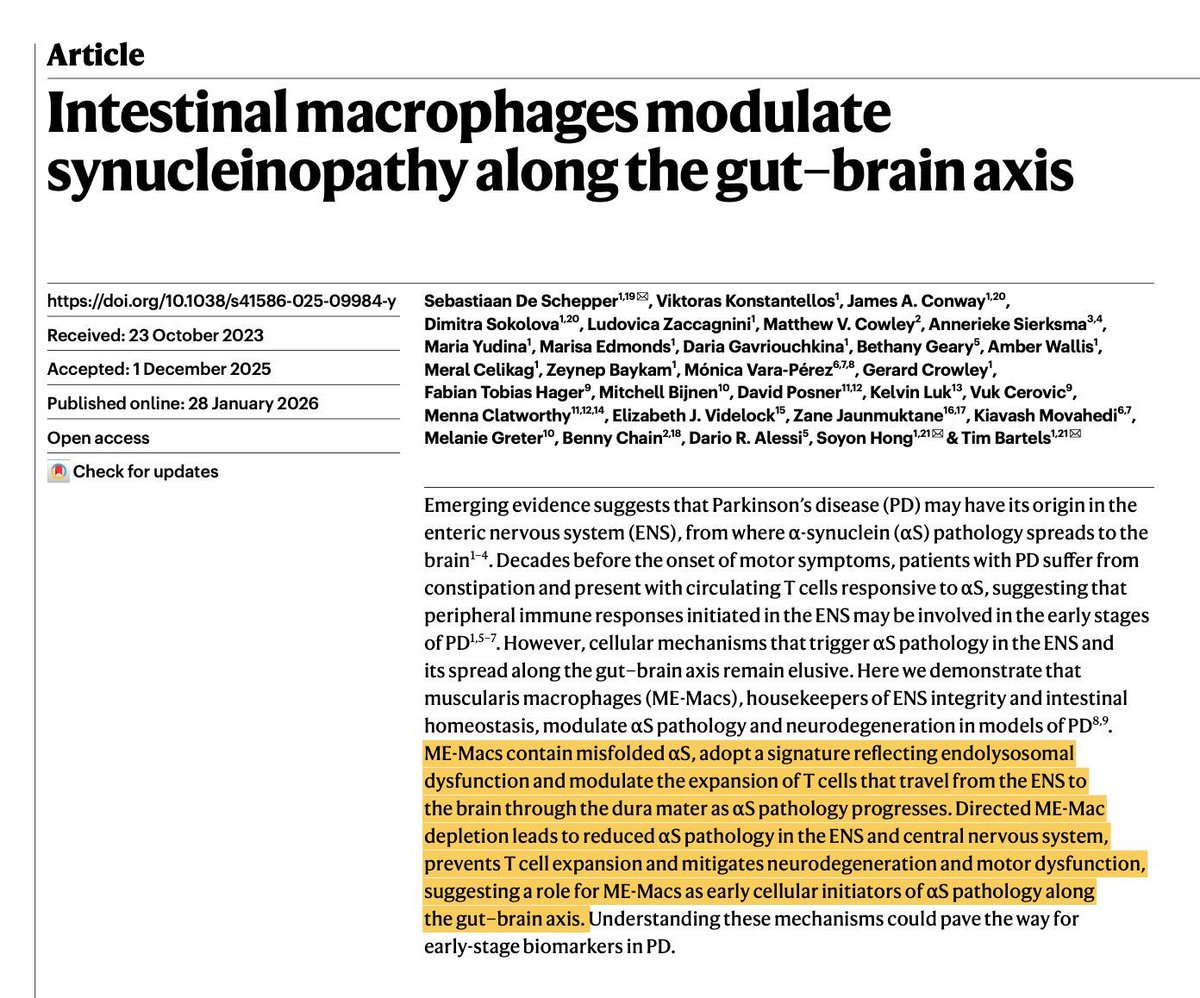
Parkinson's disease may begin in the gut, something Dr Parkinson suggested when he described the disease in 1817. How?: intestinal macrophages regulate alpha-synuclein pathology which ascends into the brain via the vagus nerve. This suggests several research strategies to prevent the brain disease by targeting the gut-vagus-brain axis.
Prof. Kevin J. Tracey, MD tweet media
English
8
30
126
8.2K
Andrés A. Ponce M.D., Ph.D. retweetledi
Mateo Trader Growth 📊
Mateo Trader Growth 📊@MTOgrowth·
El método de Carl Jung para hacer que tus deseos se conviertan en realidad Funciona incluso para los escépticos. Pratícalo durante 10 días y algo extraño comenzará a suceder. - Hilo -
Mateo Trader Growth 📊 tweet media
Español
13
595
2.1K
177.8K
Andrés A. Ponce M.D., Ph.D. retweetledi
Michael Okun
Michael Okun@MichaelOkun·
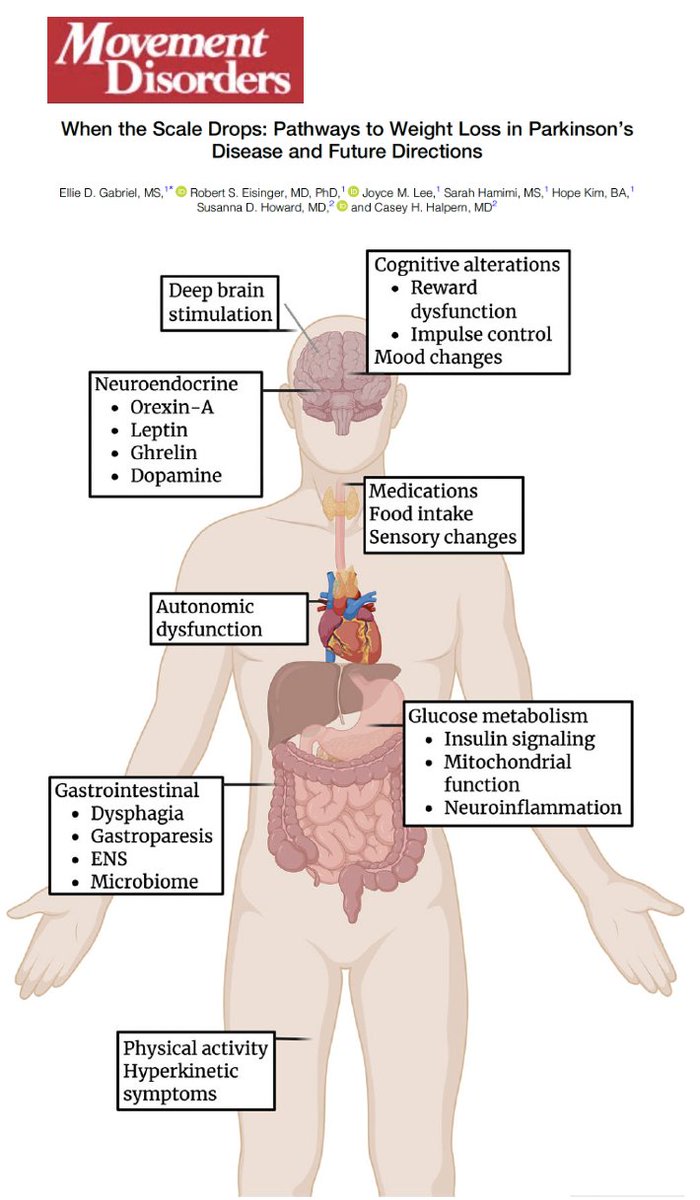
Why do many folks lose weight with Parkinson’s disease? The biology is more complex than eating less. Metabolism is how the body converts food into energy and regulates fuel use across organs including the brain. Gabriel and colleagues describe in a new paper in Movement Disorders how multiple biological pathways combine to drive weight loss in Parkinson’s disease. The review highlights how metabolism, gastrointestinal function, brain signaling and treatment effects all interact to shape weight trajectories across the disease course. Key Points: - Weight loss in Parkinson’s disease frequently begins years before diagnosis and can exceed 5 percent of baseline weight as the disease progresses. - Disruptions in metabolism, neuroendocrine signaling, gastrointestinal function and brain reward circuits can alter appetite, digestion and energy balance. - Weight loss is linked to frailty, cognitive decline and worse quality of life, making early monitoring and nutritional strategies important for care. My take: Weight loss in Parkinson’s disease is not a simple story of eating less. It reflects a systems level disruption affecting metabolism including the gut, hormones and brain circuits that regulate hunger and reward. Understanding these pathways will help health care providers better recognize weight changes earlier and to intervene before frailty develops. Here are 5 points that resonated w/ me: 1- Weight loss can begin years before motor symptoms, suggesting it may be an early biological signal of Parkinson’s disease. 2- Gastrointestinal changes such as dysphagia, gastroparesis and constipation can reduce nutrient absorption and appetite. 3- Brain changes affecting smell, motivation and reward can blunt the drive to eat even when food is available. 4- Metabolic and hormonal disruptions including ghrelin, leptin and glucose signaling can create a perceived low energy state in the body. 5- Monitoring body weight at routine visits and involving nutrition specialists may help protect quality of life and reduce frailty in Parkinson’s disease. …mentdisorders.onlinelibrary.wiley.com/doi/10.1002/md… @MDJ_Journal @ParkinsonDotOrg #parkinson
Michael Okun tweet media
English
2
27
88
4.5K
Andrés A. Ponce M.D., Ph.D. retweetledi
Fran Actúa
Fran Actúa@Fran_actua·
Necesito esto YA
Español
5
51
316
25.2K
Andrés A. Ponce M.D., Ph.D. retweetledi
MentalidadFeroz
MentalidadFeroz@MentalidadFeroz·
Algunos trucos importantes... Especialmente el último.
Español
4
488
3.6K
644.4K
Andrés A. Ponce M.D., Ph.D. retweetledi
Prof. Kevin J. Tracey, MD
Prof. Kevin J. Tracey, MD@KevinJTraceyMD·
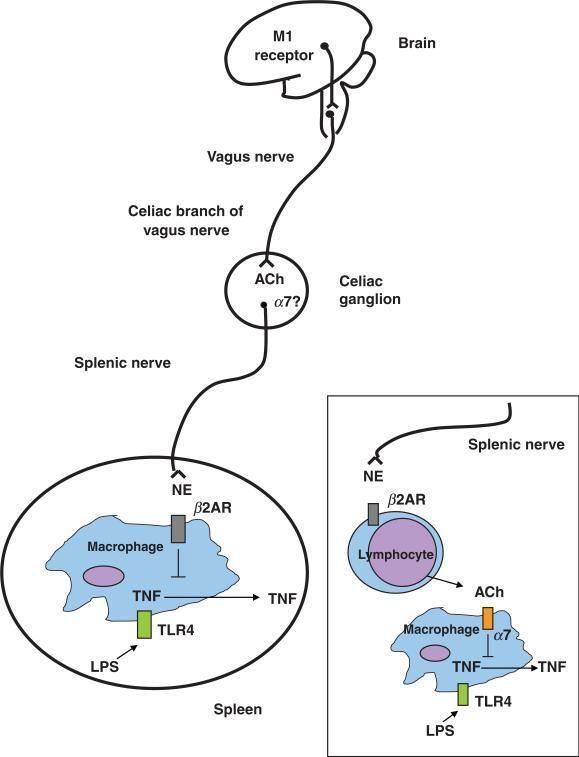
Vagus nerve fibers do not connect directly to immune cells in the body. But their signals extend into the spleen, causing a specialized population of T cells to release acetylcholine (Lowei's "vagusstoff!") This signals monocytes and macrophages to slow down production of TNF and other cytokines. Just one neuroimmunology example of vagus neural signals arising in the brain, traveling to the body, to regulate immunity. And the tip of the iceberg for countless more neuroimmunology discoveries waiting to be made.
Prof. Kevin J. Tracey, MD tweet media
English
9
98
398
12.7K
Andrés A. Ponce M.D., Ph.D. retweetledi
Ruslan Rust
Ruslan Rust@rust_ruslan·
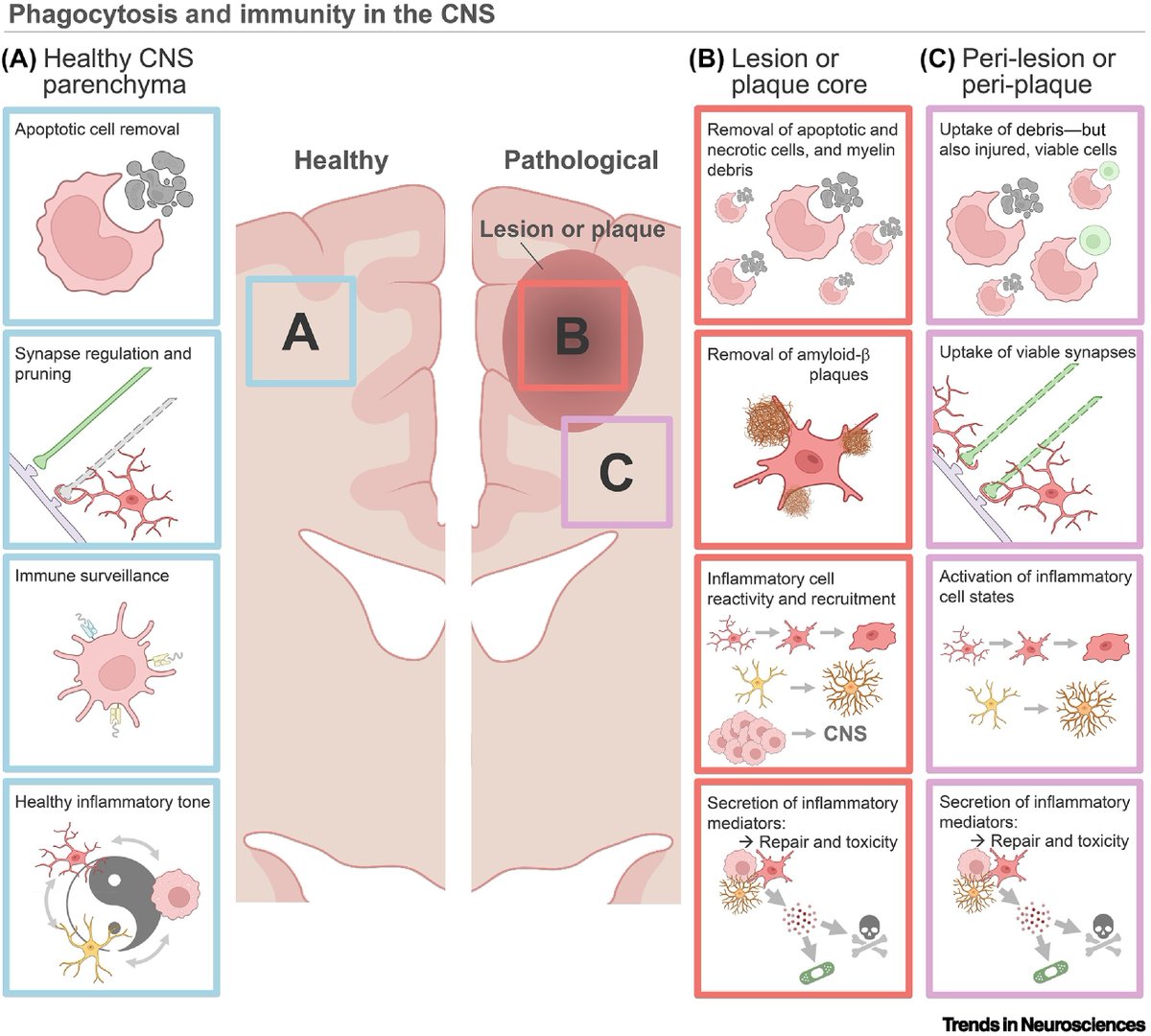
Excellent review on the role of phagocytosis and neuroinflammation with great illustrations in @TrendsNeuro The highlights: (1) Phagocytes in the central nervous system (CNS), including astrocytes, microglia, and macrophages, shape development and maintain homeostasis by pruning synapses and clearing apoptotic debris. (2) Phagocytosis is mediated by diverse ligand receptor dyads and signaling pathways, allowing CNS phagocytes to adapt to neuroimmune changes across the lifespan and in disease. (3) Phagocytic pathways regulate recovery across multiple CNS pathologies, including multiple sclerosis, CNS injury, ischemic stroke, and age related neurodegeneration. (4) Phagocytic pathways are tightly linked to inflammatory cell states and can also eliminate viable cells in pathology adjacent tissue, underscoring the complexity of therapeutic targeting. (5) To maximize therapeutic benefit while minimizing off target damage, phagocytosis based strategies should optimize timing and spatial precision according to the specific CNS pathology.ocation, tailored to each CNS pathology.
Ruslan Rust tweet media
English
2
35
109
5.8K
Andrés A. Ponce M.D., Ph.D. retweetledi
thmonk
thmonk@thmonk_pf·
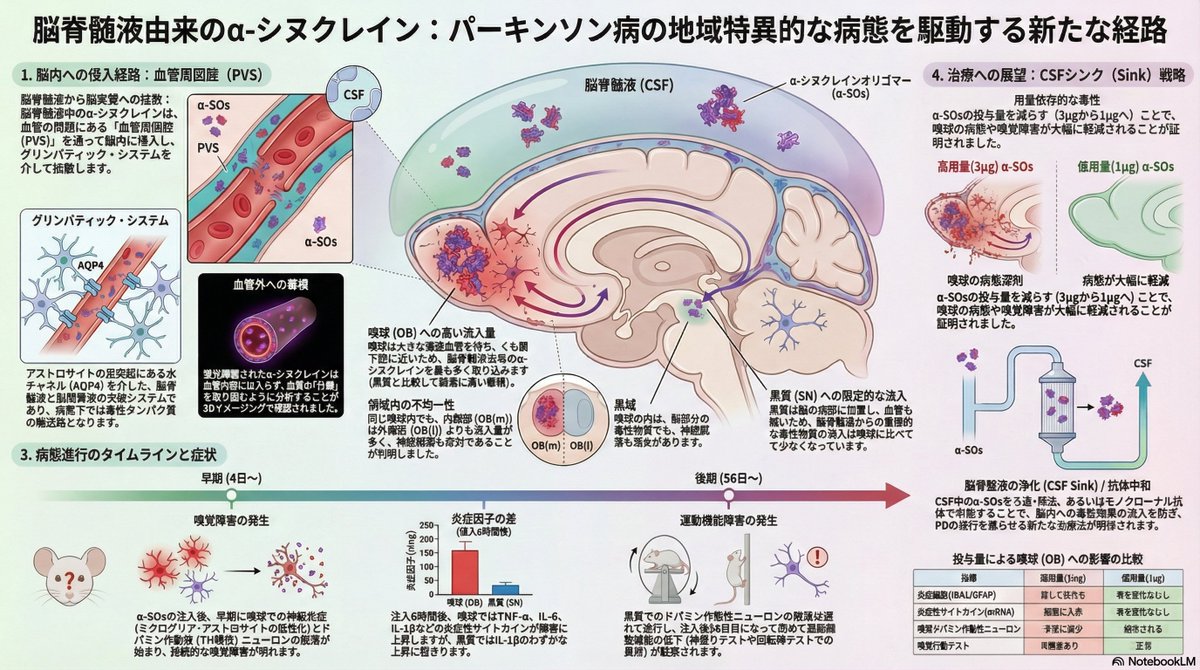
Parkinson病(PD)CSFで増加するα-synuclein pligomer(α-SOs)が血管周囲腔を介し脳内に侵入し嗅球に優先的に蓄積することを3D全脳imaging実証 早期の嗅球dopamine神経変性/嗅覚障害と遅発性の黒質変性/運動障害というPDの臨床進行を再現 OA #Parkinsons #papers nature.com/articles/s4153…
thmonk tweet media
日本語
2
6
37
2.2K
Andrés A. Ponce M.D., Ph.D. retweetledi
Oliver Hahn
Oliver Hahn@Oliver__Hahn·
🚨 Postdoc position in my lab @calico is live! I'm looking for someone deeply curious about the aging brain🧠⌛️, who wants to build novel scientific projects from scratch and carry them to publication and, ideally, into their own lab🥼🧪. No neuroscience background needed.
English
15
72
376
31.4K
Andrés A. Ponce M.D., Ph.D. retweetledi
Vineet Augustine
Vineet Augustine@vinnyaug1·
Happy to share a new paper from my lab published in Cell led by Saurabh Yadav. We demonstrate that myocardial infarction (heart attack) is not just a heart injury, it is a distributed neuroimmune disorder. cell.com/cell/fulltext/…
English
5
35
122
8.1K
Andrés A. Ponce M.D., Ph.D. retweetledi
Roeder lab
Roeder lab@RoederLab·
A Postdoctoral Associate position is available in the Roeder Laboratory at Cornell University in Ithaca, NY with a focus on researching Polyploidy. Apply by March 1. Please spread the word. apps.hr.cornell.edu/recruiting/fac…
Roeder lab tweet media
English
2
71
176
17.4K