

This is a first. I was in Starbucks near Nagarbhavi. I saw someone pitching Crypto (more specifically Infinity DAO) to an investor.
English
Aravind Yarra
2.8K posts

@aravindajad
Engineer, Programmer, Maker, and Runner. Already living my passion; Learning it is. My running alter ego @imgeeksonfeet






@cedar_db is incredibly cool and more people should know about it. They’re a team of PhDs in Munich building a new relational database, on top of almost 10 years of academic research, that crushes existing benchmarks and maybe (finally?) gets us to the HTAP grail. The core idea is that existing RDBMSes like MySQL and Postgres were built more than 30 years ago, on assumptions about hardware constraints that are just not true anymore. These ecosystems have evolved admirably but ultimately…it’s a database. It’s built not to change very much. Here are a few of the ways that CedarDB is rethinking every element of the database: 1) A better query optimizer In the last 30 years we’ve made a lot of progress on how to optimize SQL queries, to the point where an optimized query can easily outperform a not-so-optimized query by a ton. But not many query optimization improvements have made the leap from research into databases today. CedarDB did a few things on this front: Implemented the unnesting algorithm developed by Thomas Neumann (one of the leaders of the Umbra research project CedarDB came from) — an improvement of more than 1000x Developed a novel approach to join ordering using adaptive optimization that can handle 5K+ relations Created a statistics subsystem that tells the optimizer things that traditional databases can’t 2) What if your database was actually a compiler? CedarDB doesn’t interpret queries, it instead generates code. For every SQL query that a user writes, CedarDB processes, optimizes it, and generates machine code that the CPU can directly execute. This has been a holy grail for a while, and they implemented it via a custom low-level language that is cheap to convert into machine code via a custom assembler. Another way that CedarDB improves performance is through Adaptive Query Execution. Essentially they start executing each query immediately with a “quick and dirty” version, while working on better versions in the background. 3) Taking advantage of all cores / Ahmdal’s law Distributing fairly between all available cores is notoriously difficult, and the CedarDB team would argue that most databases underutilize their hardware. Their clever approach to this problem is called morsel-driven parallelism. CedarDB breaks down queries into segments: pipelines of self-contained operations. Then, data is divided into “morsels” per segment – small input data chunks containing roughly ~100K tuples each. You can read more in the original paper here: db.in.tum.de/~leis/papers/m… 4) Rethinking the buffer manager Modern systems come equipped with massive amounts of RAM; there’s actually much more “room at the club” than database developers initially assumed. So the idea of the revamped buffer manager in CedarDB is that you can (and should) expect variance not just in data access patterns, but in storage speed and location, page sizes and data organization, and memory hierarchy. CedarDB’s buffer manager is designed from the ground up to work in a heavily multi-threaded environment. It decentralizes buffer management with Pointer Swizzling: Each pointer (memory address) knows whether its data is in memory or on disk, eliminating the global lock that throttles traditional buffer managers. 5) Building a database for change Databases are built to not change. It’s exactly this stability that gives each generation the confidence to build their apps (no matter how different they are) on systems like Postgres. You know what you’re getting. But there’s also a clear downside to this rigidity. CedarDB’s storage class system employs pluggable interfaces where adding new storage types doesn’t require rewriting other components. E.g. if CXL becomes the go-to storage interface at some point in the future, you don’t need to write another whole component, you just need another endpoint for the buffer manager. Anyway these are just a few of the ideas they’re bringing to the table. Maybe it’s because they’re in Germany, maybe it’s because they’re just really humble, but more people should know about this team!! Check out the full post here: amplifypartners.com/blog-posts/the…

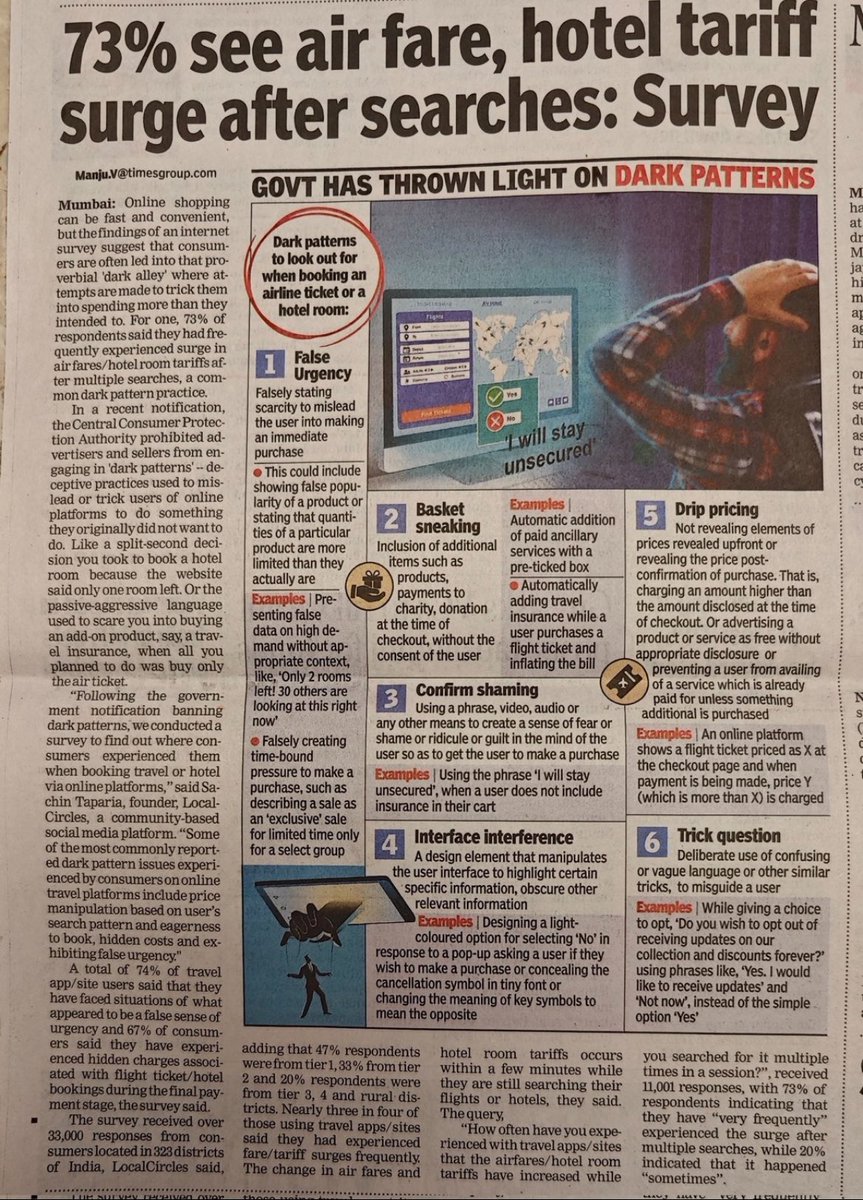
🚨How does a paid flight ticket turn into a group booking without asking? 🚨 What the F is going on @YatraOfficial #sos Booked a regular flight ticket on Yatra. Payment went through. Ticket came unconfirmed. After sending multiple emails and getting no response, I finally received a call from Yatra. I was told the airline hadn’t confirmed the booking, so Yatra “confirmed it from their side”. The PNR shared with me doesn’t show up on the airline system at all. Called the airline myself. They said this booking was done as a group booking. This took me by surprise. I never selected a group booking option. Now I’m being told the PNR will update 12 hours before departure, which is worrying when the fare is already paid and the flight date is close. Flight bookings are time-sensitive. Silence for hours and unclear answers don’t help, especially when prices keep moving. I just want what I paid for - a proper, airline-confirmed ticket that actually reflects on the airline’s system. Emailed CEO, Founders but none of them have responded. Absolutely pathetic state at YATRA w/ NO RESOLUTION sight. @Yatra_Care @DGCAIndia @MoCA_GoI @manish_amin @dhruv_shringi #Yatra #TravelIssue #CustomerExperience




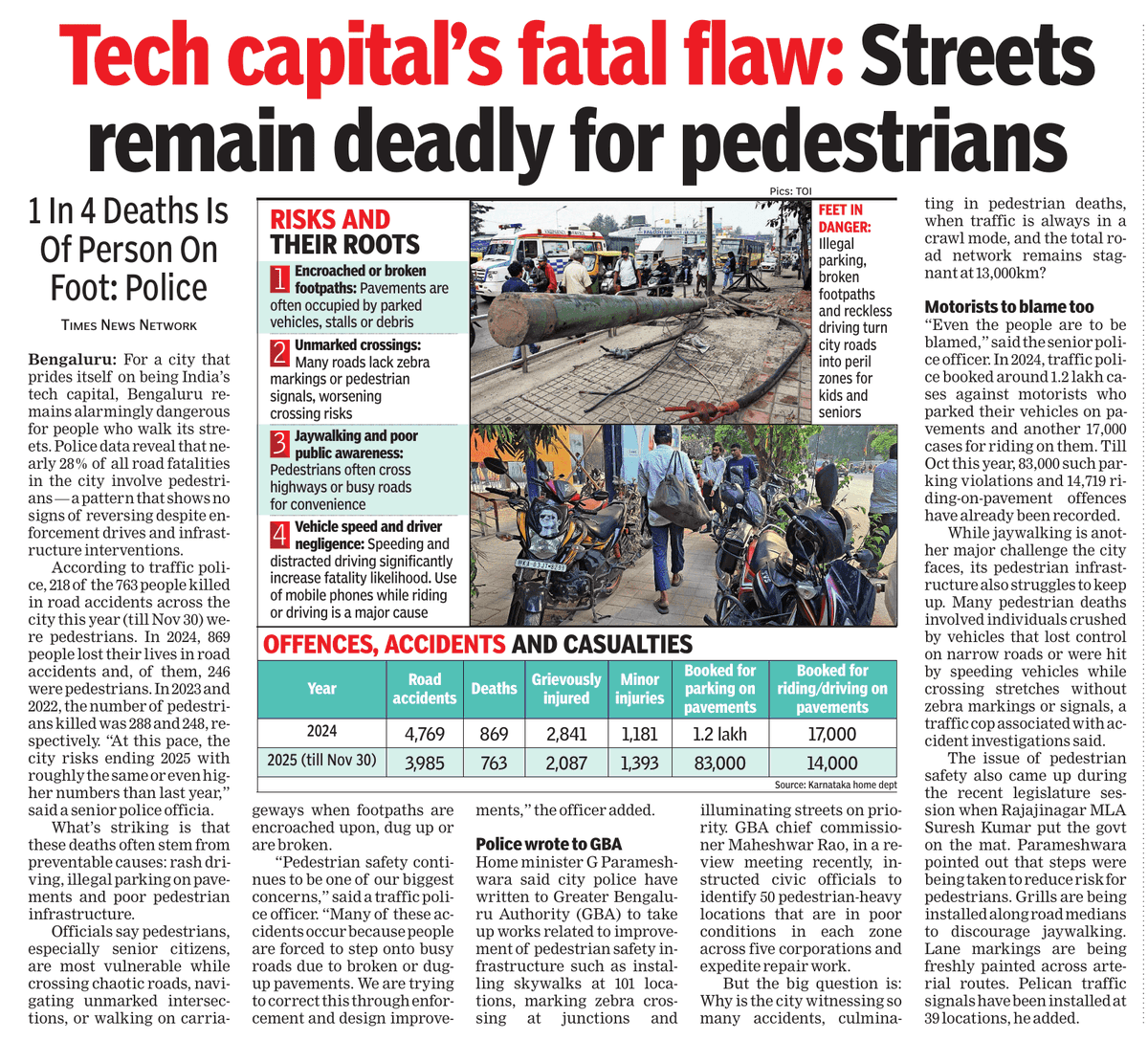

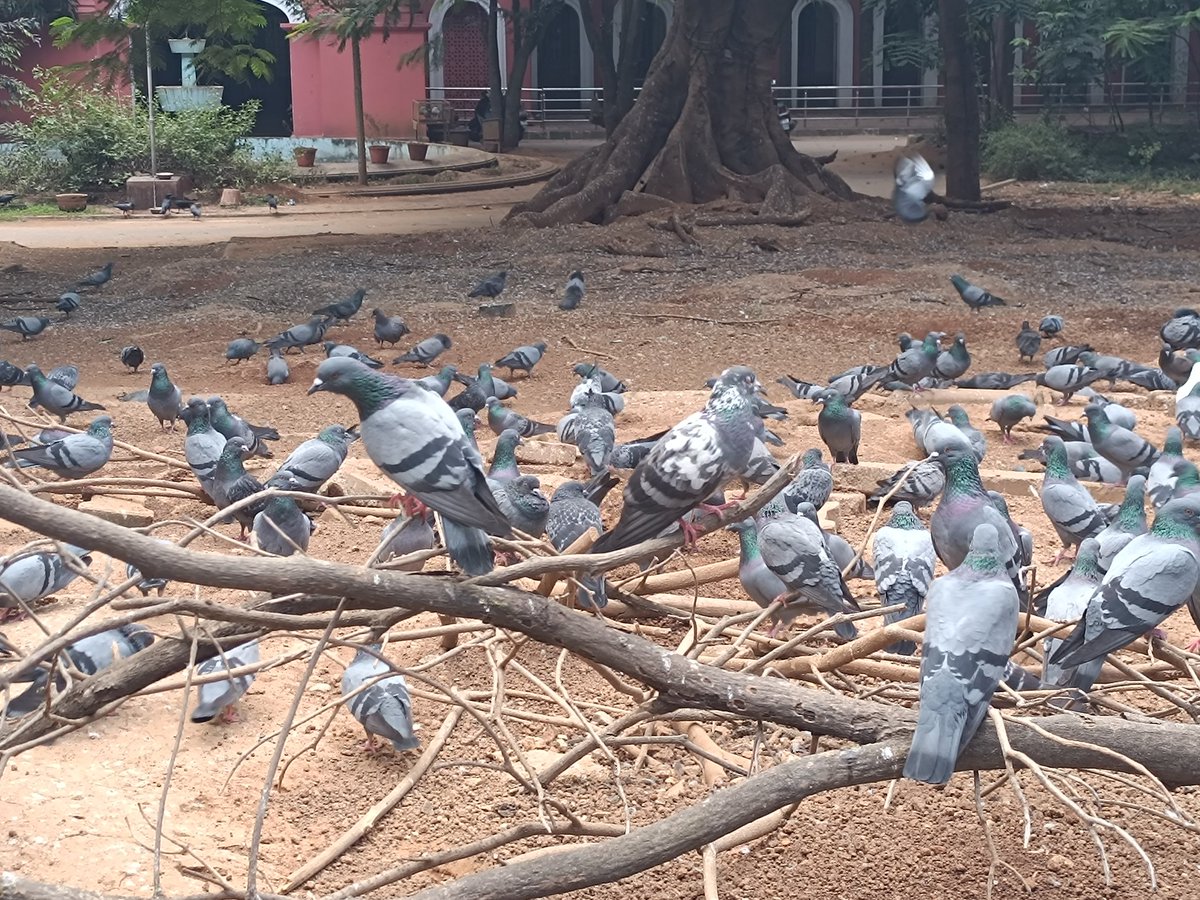


All 1,200 neighbourhood parks in Bengaluru will remain open for the public between 5am and 10pm. Dy CM @DKShivakumar made the announcement today


Incredible letter in @thetimes


So imagine you are trying to add a Payee into your hdfc netbanking website. you are midway typing a long account number and if that text box loses focus or you switch to another window the value in the box resets. Some genius at that bank has decided that they will personally ensure people can’t copy paste, or use their website if you cannot remember a long account number. twice. After all why should you be able use their bank if you are stupid. Anyway I am now going to use a pair of nose pliers to pull each of my toe nails. It is light entertainment compared to what hdfc bank subjects me to every time I try to get anything done.


THE RECKONING Michael Burry just bet $1.1 billion that the AI revolution is a lie. Not the technology. The valuation. Eighty percent of his entire portfolio now sits in put options against Nvidia and Palantir … the twin gods of the machine age. This is not hedging. This is conviction. The same conviction that made him $700 million when he shorted the housing bubble while the world called him insane. Burry sees it again. The same fever. The same math that doesn’t work. Nvidia trades at 54 times earnings. Historical baseline: 20. Palantir at 449 times. These are numbers that require perfection forever. Numbers that have never survived reality. In 1999, tech stocks drove 80% of market gains before surrendering 78% in the crash. Today, AI commands 75% of S&P 500 returns. The script hasn’t changed. Only the costume. Global AI spending has exploded to $200 billion annually … up 120% … yet productivity gains crawl below 20%. We are building cathedrals before we’ve proven the god exists. Fifty-four percent of fund managers now call this a bubble. Not pessimists. The people managing the money. The energy math alone is apocalyptic. AI will consume 1% of global electricity by 2027. That’s $100 billion in costs against $200 billion in spending … before a single dollar of proven return. Michael Burry isn’t betting against artificial intelligence. He’s betting against human nature … our willingness to mistake momentum for permanence, narrative for numbers, revolution for immunity from gravity. Every transformative technology reaches this moment: where promise becomes price, where believers stop calculating and start crusading. Electricity was real. The market crash of 1929 was real. Both were true. Palantir’s CEO calls Burry’s position “batshit crazy.” Of course he does. When you’re the priest, the skeptic is always the heretic. But Burry has already been the heretic once. He bought credit default swaps when Wall Street laughed. He walked out with generational wealth when Wall Street walked out with nothing. This is $5 trillion in AI market value balanced on one assumption: that exponential curves never flatten, that competition never arrives, that margins never compress, that reversion to the mean died with the old economy. It didn’t. If Q4 earnings crack, if Nvidia’s 75% margins slip, if adoption stalls or chips supplies fracture … the unwind will reshape markets for a generation. Not because AI fails. Because math finally matters again. Burry may be early. He usually is. But early and wrong are separated only by time. And time has never lost. The machine gods will endure. The question is whether their disciples will survive the fall. Watch the margins. Watch the energy. Watch what happens when faith collides with physics. History doesn’t repeat. But it rhymes. And this verse sounds disturbingly familiar.

you can hate blr all you want but bmtc electric buses are goated no other state comes close to karnataka when it comes to buses