Will

1K posts

Will banner
Will

Will

@catch_capone

growing onchain finance @anchorage // prev product marketing @okx + @wallet

Tampa, FL Katılım Aralık 2020
389 Takip Edilen288 Takipçiler
Will retweetledi
Anchorage Digital ⚓️
Anchorage Digital is more than a vault. Head of Policy @KevWysocki explains our role as a true infrastructure provider. ↓
English
2
3
26
1.8K
Will retweetledi
Lorenzo Valente
Lorenzo Valente@LorenzoARK·
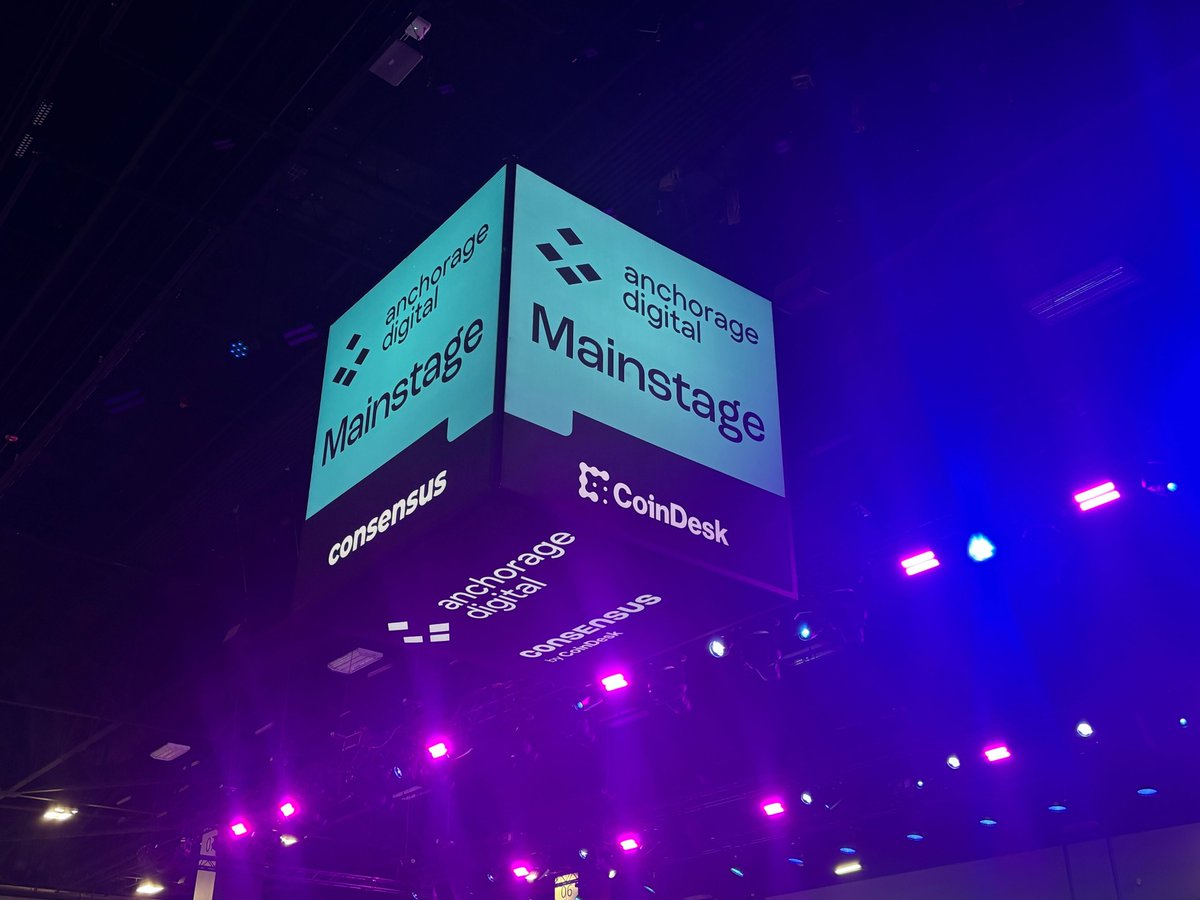
Just got back from @consensus2026 Miami. Some unfiltered thoughts on the vibes: The industry has clearly grown up. The degens are gone, the allocators are wearing suits, and your @Uniswap booth has been replaced by a JP Morgan activation with 50 year old boomers. Cautiously optimistic with a distinctly institutional aftertaste. This was not a bull market conference. Key takeaways: 1) CLARITY Act has serious momentum. Everyone at the conference basically agrees it's getting done before summer. The urgency is real, people are done waiting. And the regulatory window feels genuinely unprecedented: CLARITY Act, GENIUS Act, a CFTC chair actively engaging with the industry, this combination has never existed simultaneously before. The institutional urgency you're seeing everywhere is directly correlated to this window feeling time-limited. Miss it and you're explaining to your board why you sat on your hands during the most favorable crypto regulatory environment in history. 2) Institutions are not dabbling anymore. They are ALL IN on tokenization and terrified of missing it. No one is debating whether blockchain rails are useful. The debate is now who gets the mandate. And quietly @coinbase , @krakenfx , @RobinhoodApp and @Bullish and others are being seen more as competitors than potential partners by a lot of these TradFi players. 3) TradFi M&A is going to keep ripping. @krakenfx just grabbed Reap for $600M. Visa, Mastercard, Swift etc they can't miss the train and they're willing to overpay for the ticket. 4) Crypto VC is consolidating fast. @a16z and @katie_haun just announced $2.2B and $1B funds respectively. Meanwhile the boutique VCs are either pivoting to AI or quietly closing shop. Same playbook is happenign as traditional VC, the big platforms eat everything and the small guys scramble. Seed and pre-seed is basically a ghost town right now. Late stage and pre-IPO is where the action is. 5) Investment themes were aggressively consensus (no pun intended): Stablecoins, tokenization, vertically integrated neo-banks, regulated or permissioned DeFi. Literally everyone is trying to be a tokenization platform. Issuance, management, settlement, curation, pick your lane, slap tokenization on it, try to raise money. 6) Building in crypto is genuinely hard now. Your competition isn't some scrappy new L1 or GMX, it's @tether , @Anchorage , and @Securitize. there are now many crypto businesses running 200M+ annual Rev with serious management teams and deep pockets. The barbarians are now the establishment. New entrants are going to have a very bad time. 7) Pure token-only plays have become extremely contrarian. Controversial take but I think the biggest returns will come from a handful of tokens that can credibly signal in a compliant way that the token remains the only value accruing asset going forward. 8) A lot of teams are in a genuinely weird spot on the token/equity dynamics. Decent products, decent teams, but a complete stakeholder clusterf*** that nobody can untangle. Many of these will simply not survive. 9) The agentic finance and agentic commerce crowd was loud. The actual substance was not. A lot of big claims, very little to show for it. Feels very early and mostly vibes. Color me skeptical for now. 10) @Bullish acquiring Equinity for $4.2B was the boldest move of the conference. @ThomasFarley and @BonannoDavid now have a full-stack RWA proposition: issuance, transfer agency, tokenization, exchange and settlement under one roof. Massive move. Very positive for the industry regardless of whether you think the price or the move were right. 11) @BitMNR and @fundstrat are apparently tired of winning and has decided to let your grandma keep her ETH... for now. The pace of accumulation is slowing. Tom, we await your next allocation with bated breath. 12) DeFi apps are moving up the stack and getting smarter about it. They don't want to be the commodity infrastructure layer getting squeezed by exchanges that own distribution. Some genuinely interesting announcements, @buffalu__ at @jito_sol launching JTX being the highlight. 13) Nobody at the conference was talking about retail coming back. The entire conversation was institutional. That's either a sign of maturity or a sign that the industry has quietly given up on mainstream consumer adoption for now and is betting the next cycle gets pulled by institutional flows rather than retail FOMO. Probably both. 14) The L1 debate is officially dead. Nobody and I mean nobody was arguing SOL vs ETH or pitching their shiny new L1. The crowd that used to religiously defend their chain of choice has either grown up, cashed out, or both. Institutions don't care about your consensus mechanism. They care about settlement finality, compliance rails and liquidity. The L1 wars were fun while they lasted. RIP. 15) DATs are a mess. Had some genuinely productive conversations with a few of them but let's be honest most are an absolute clusterf*** operationally and very few are running anything resembling a legitimate business. The structure is a disaster at the stakeholder level and the governance makes your average startup cap table look clean. That said, the permanent capital vehicle concept is still genuinely compelling and I think a handful of these will turn out to be absolute home runs. The model isn't broken, most of the teams just are. Bottom line: Consensus 2026 felt like the moment crypto stopped being a movement and started being an industry. Whether that's exciting or depressing probably depends on when you got in.
English
105
126
976
252.1K
Zone21
Zone21@Zone21BTC·
Need to borrow against your Bitcoin but unsure about the hidden risks? Imagine instantly peeking under the hood of every Bitcoin-backed loan to understand exactly how risky it is. Now you can. Introducing Zone21. Bitcoin-backed lending exploded last bull cycle, but unsafe practices caused tens of billions in losses (remember Celsius, BlockFi, Voyager?). Now, new lenders promise better practices like minimal rehypothecation and Proof-of-Reserves, but many risks remain hidden and misunderstood. Bitcoin lending combines two intricate worlds: Bitcoin technology (multisig, DLCs, custody solutions) and traditional finance (debt instruments, liquidity risks). It's a minefield. Even savvy Bitcoiners struggle to untangle the complexity. We built Zone21 to fix this. Several of our team members spent years developing @nunchuk_io, a non-custodial Bitcoin wallet. It taught us the stark difference between real safety and security theater. We now bring that rigor to analyzing Bitcoin-backed loans. Our Risk Model scores Bitcoin loans across 13 critical factors: • Collateral type • Rehypothecation • Custody • Security & governance • Platform reliability • Oracle integrity • Liquidation buffer • Rate & terms • Transparency • Loan currency • Privacy • Provider history • Jurisdiction Each factor measures specific risks. For examples: • Collateral: Native BTC safest; wrappers add risk. • Rehypothecation: Hidden leverage amplifies blowups. • Custody: Controls who can move coins and how safely. • Transparency: Can outsiders verify code and solvency? See full details at: zone21.com Zone21 is fully independent: • No affiliation with lenders. • No financial advice. • Built by Bitcoiners, for Bitcoiners. Our goal is transparent, informed choices when borrowing against your Bitcoin. Our model isn't perfect; risks evolve continuously. We welcome feedback, corrections, and insights, especially from lenders themselves. Explore the model and contribute your thoughts: zone21.com Next week, we'll publish a state-of-the-industry report on Bitcoin lending, guided by our Risk Model. Give us a follow and turn on notifications to stay updated!
English
27
35
160
57.1K
Will
Will@catch_capone·
@saylor Realized or unrealized?
English
0
0
1
28
Michael Saylor
Michael Saylor@saylor·
$BTC capital gains fund $STRC credit dividends.
English
908
693
9.5K
1M
Will retweetledi
Andy
Andy@andyyy·
Consensus Miami so far: > zec and hype barbell > nice shirts and slacks > way better vibes than other conferences this year > tokenization and RWAs > "whats your institutional strategy?" > beautiful weather today > morale with natives is improved > everyone recognizes that you need to be selective in picking cryptoassets > alot of sui signs in streets > about a 50/50 split between bottom being in and lower to go > a16z & haun fundraise set the tone > ppl like miami, as usual
English
35
15
452
58.1K
Will retweetledi
LTR
LTR@maybeltr·
"Non technical teams are now shipping production code"
LTR tweet media
Brian Armstrong@brian_armstrong

This is an email I sent earlier today to all employees at Coinbase: Team, Today I’ve made the difficult decision to reduce the size of Coinbase by ~14%. I want to walk you through why we're doing this now, what it means for those affected, and how this positions us for the future. Why now Two forces are converging at the same time. We need to be front footed to respond to both. First, the market. Coinbase is well-capitalized, has diversified revenue streams, and is well-positioned to weather any storm. Crypto is also on the verge of the next wave of adoption, with stablecoins, prediction markets, tokenization, and more taking off. However, our business is still volatile from quarter to quarter. While we've managed through that cyclicality many times before and come out stronger on the other side, we’re currently in a down market and need to adjust our cost structure now so that we emerge from this period leaner, faster, and more efficient for our next phase of growth. Second, AI is changing how we work. Over the past year, I’ve watched engineers use AI to ship in days what used to take a team weeks. Non-technical teams are now shipping production code and many of our workflows are being automated. The pace of what's possible with a small, focused team has changed dramatically, and it's accelerating every day. All of this has led us to an inflection point, not just for Coinbase, but for every company. The biggest risk now is not taking action. We are adjusting early and deliberately to rebuild Coinbase to be lean, fast, and AI-native. We need to return to the speed and focus of our startup founding, with AI at our core. What this means To get there, we are not just reducing headcount and cutting costs, we’re fundamentally changing how we operate: rebuilding Coinbase as an intelligence, with humans around the edge aligning it. What does this mean in practice? - Fewer layers, faster decisions: We are flattening our org structure to 5 layers max below CEO/COO. Layers slow things down and create coordination tax. The future is small, high context teams that can move quickly. Leaders will own much more, with as many as 15+ direct reports. Fewer layers also means a leaner cost structure that is built to perform through all market cycles. - No pure managers: Every leader at Coinbase must also be a strong and active individual contributor. Managers should be like player-coaches, getting their hands dirty alongside their teams. - AI-native pods: We’ll be concentrating around AI-native talent who can manage fleets of agents to drive outsized impact. We’ll also be experimenting with reduced pod sizes, including “one person teams” with engineers, designers, and product managers all in one role. In short: AI is bringing a profound shift in how companies operate, and we’re reshaping Coinbase to lead in this new era. This is a new way of working, and we need to leverage AI across every facet of our jobs. To those who are affected I know there are real people behind these decisions — talented colleagues who have poured themselves into this company and our mission. To those of you who will be leaving: thank you. You’ve helped build Coinbase into what it is today, and I am sincerely grateful for everything you've done. All impacted team members will receive an email to their personal account in the next hour with more information, and an invitation to meet with an HRBP and a senior leader in your organization. Coinbase system access has been removed today. I know this feels sudden and harsh, but it is the only responsible choice given our duty to protect customer information. To those affected, we will be providing a comprehensive package to support you through this transition. US employees will receive a minimum of 16 weeks base pay (plus 2 weeks per year worked), their next equity vest, and 6 months of COBRA. Employees on a work visa will get extra transition support. Those outside of the US will receive similar support, based on local factors and subject to any consultation requirements. Coinbase prides itself on talent density. Our employees are among the most talented people in the world, and I have no doubt that your skills and experience will be highly sought after as you pursue your next chapters. How we move forward To the team that is staying, I know this is a difficult day. We’re saying goodbye to colleagues and friends you've been in the trenches with. But here’s what I want you to know as we move forward together: Over the past 13 years, we have weathered four crypto winters, gone public, and built the most trusted platform in our industry. We’ve made it this far by making hard decisions and by always staying focused on our mission. This time will be no different – nothing has changed about the long term outlook of our company or industry. And most importantly, our mission has never been more important for the world. Increasing economic freedom requires a new financial system, and we’re building it. The Coinbase that emerges from this will be more capable than ever to achieve our mission. Brian

English
20
68
1.4K
58.9K
Will retweetledi
David Lawant
David Lawant@dlawant·
When the wife asks how we can afford to buy more BTC
David Lawant tweet media
English
0
2
10
662
Will retweetledi
Jim Hiltner
Jim Hiltner@HiltnerJim·
One of the most underrated aspects of RWAs in DeFi is collateral protection. Unlike most crypto assets, RWAs operate with allowlisted addresses which means built-in controls over who can hold and interact with the asset. This doesn’t prevent composability. It just means protocols and smart contracts must be diligenced and approved to get on the allowlist. The result: if keys are compromised or a protocol is exploited, assets can only move to approved addresses, creating transparency and improving the likelihood of recovery. This is how TradFi will adopt DeFi: with defined controls, auditability, and protection. Over time, a significant share of DeFi TVL will shift toward RWAs and the space will harden as more serious financial institutions participate.
English
9
6
60
3.9K