Colleen Kelly

305 posts

Colleen Kelly banner
Colleen Kelly

Colleen Kelly

@ckellymd

Ohio at ❤️ living in PVD RI ⚓, GI/obesity medicine/IBD 🏥 Microbiome, C. diff, FMT research, alt-middle, free thinker, slow runner 🏃🏻‍♀, mom 💕🇺🇸😊🦔⚖️🫘

Providence, RI Katılım Ağustos 2011
1.5K Takip Edilen545 Takipçiler
Dr. Toonces, MD, PhD
Dr. Toonces, MD, PhD@toonces4280·
Two weeks ago I watched the FDA call the only promising Huntington's disease therapy "snake oil" on an anonymous press call. The official who said it is gone. A US senator launched an investigation. The stock went from $9 to $21. But the drug still isn't approved. And this problem is way bigger than one therapy. Huntington's disease is 100% fatal. Zero approved treatments slow it. AMT-130 showed 75% slowing of progression with a p-value of .003. The FDA's response? Reverse their own written agreement and demand a new trial where dying patients undergo brain surgery and receive nothing. 48,000 families fought back. It worked. But we can't run that playbook for every drug, for every disease, for every family. A guy in Australia used AI to design a personalized cancer vaccine for his dying dog. It worked. He said the red tape took longer than designing the vaccine itself. Three months of paperwork, two hours every night, for a 100-page ethics document. For his own dog. Sid Sijbrandij, the co-founder of GitLab, was told he had no options left for his osteosarcoma. He went into "founder mode on his cancer." Self-funded experimental therapies. Assembled an entire team to navigate the regulatory maze. He's been relapse-free since 2025. He's also a billionaire. Most patients aren't. Jake Seliger had advanced throat cancer. He was just as willing to try anything. He couldn't hire a team to navigate the system. He died. Same disease. Same willingness. Different bank accounts. Different outcomes. The system we built to protect patients has become the system that kills them. It takes 7 to 10 years and $1.2 billion to move a promising idea to Phase III results. Some of that delay is science. A lot of it is paperwork. Australia runs clinical trials 2.5 to 3 times cheaper and faster than the US. No increase in safety events. Three decades of data proving it works. US biotechs are moving their early trials there because it's easier to test drugs in Australia than in America. That should embarrass everyone in Washington. The real fix isn't just personnel changes at the FDA. It's structural. Let researchers choose their ethics review board. Create a notification pathway for early trials instead of requiring pre-approval for everything. Scale manufacturing requirements to match trial size, not commercial production. A terminal patient willing to accept risk should not need a billionaire's resources to access an experimental therapy. A therapy that met its primary endpoint should not be called "snake oil" by an anonymous government official. A family watching someone die should not be told the paperwork isn't done yet. The Huntington's fight isn't over. The Q2 FDA meeting and 48-month data are next. But if this moment only fixes one drug for one disease, we've wasted it. The system needs to change. Not just the people running it. Read @RuxandraTeslo's piece on what real reform looks like. Link in the replies. $QURE #HuntingtonsDisease #AMT130 #RareDisease #RightToTry
English
6
27
110
7.5K
Colleen Kelly
Colleen Kelly@ckellymd·
@toonces4280 This “expert” is 💯 AI generated pretending to be a crispr scientist.
Colleen Kelly tweet media
English
0
0
0
19
Dr. Toonces, MD, PhD
Dr. Toonces, MD, PhD@toonces4280·
The FDA is demanding that terminally ill Huntington's patients undergo 10-hour brain surgery — just to receive a placebo. HD is 100% fatal. There is no treatment. Every day matters. This isn't science. It's cruelty. $QURE #HuntingtonsDisease
English
16
55
265
21.7K
Ashish K. Jha
Ashish K. Jha@ashishkjha·
A good summary by @matthewherper of the Vinay Prasad debacle at the FDA Vinay had some good ideas His constant ad hominem attacks on anyone who disagreed with him made him a flawed leader in a public health agency that relies on trust
Matthew Herper@matthewherper

5 lessons from Vinay Prasad’s turbulent tenure at the FDA Prasad brought his convictions to the agency — and reaped chaos. My thoughts on an eventful week for one of the most outspoken people in medicine. statnews.com/2026/03/08/vin…

English
19
19
146
77.3K
Colleen Kelly
Colleen Kelly@ckellymd·
@RepAuchincloss Leave them alone. Prasad is one of the smartest, bravest and most ethical among us. The piece by Anish Koka explains it all. The system is horribly corrupt and broken and this is why my patients don’t trust anything anymore.
English
2
0
2
222
Rep. Jake Auchincloss 🟧
Rep. Jake Auchincloss 🟧@RepAuchincloss·
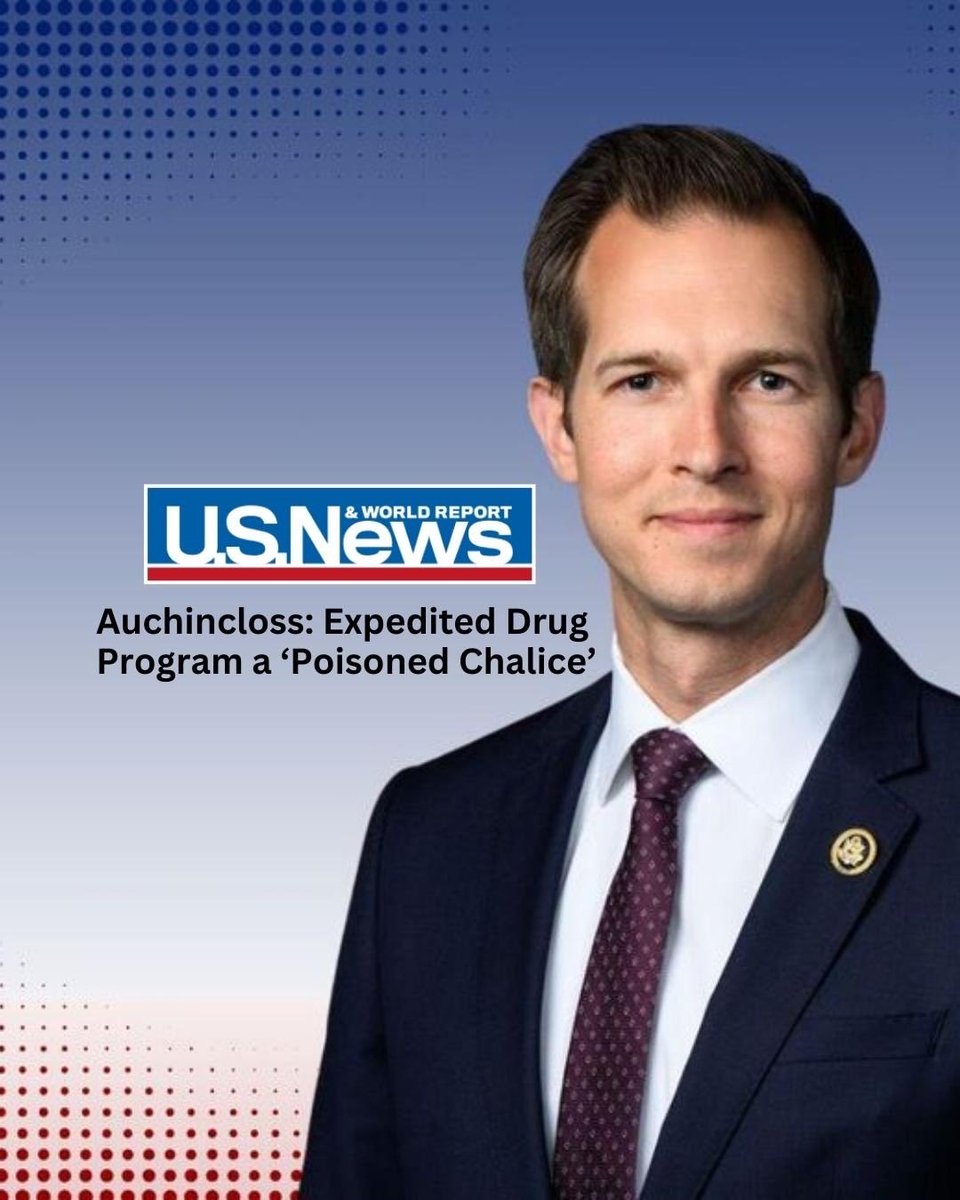
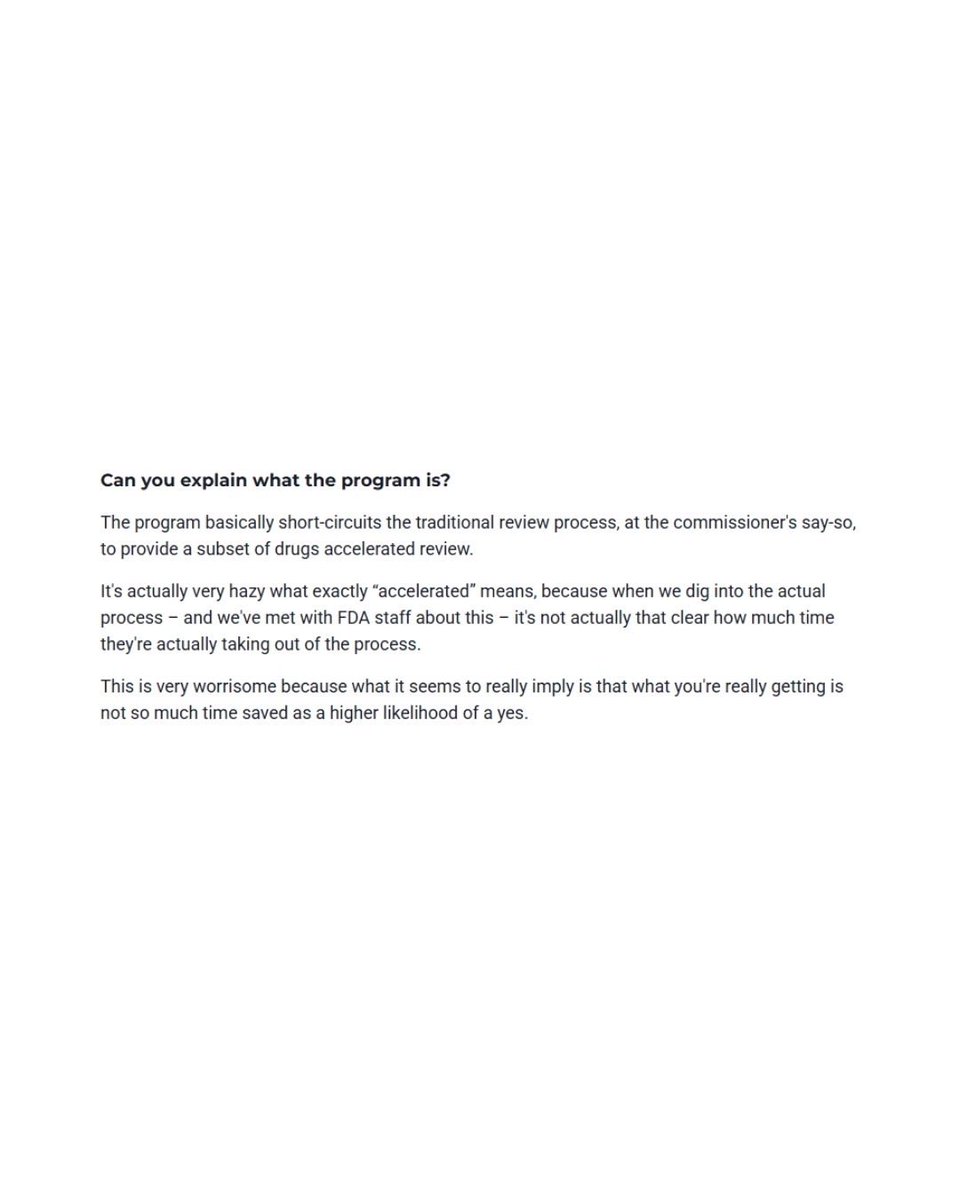
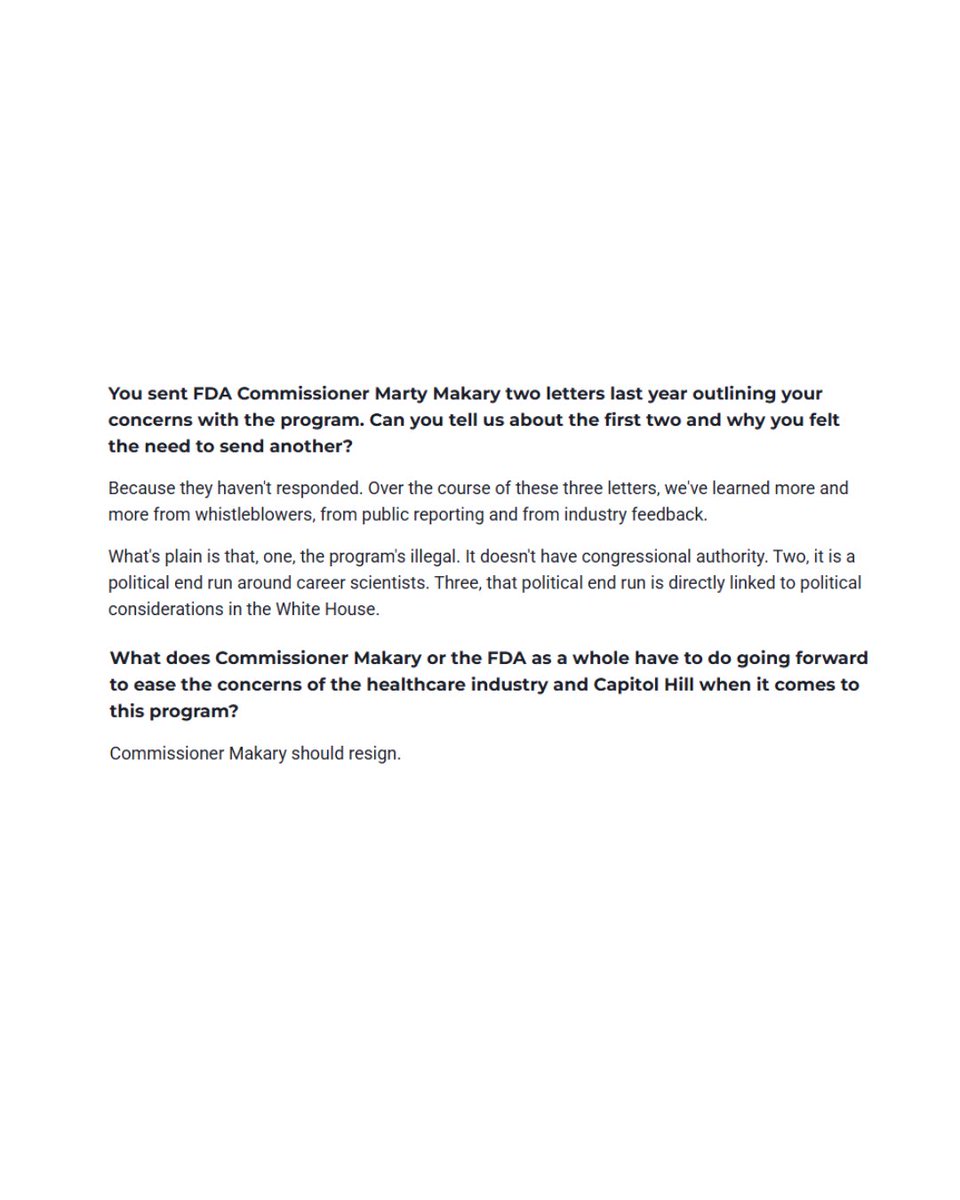
The FDA commissioner & his CBER director are breaking the law. Under GOP gavels, the Energy & Commerce Committee has done nothing to stop it. The simple first step is a hearing.
Rep. Jake Auchincloss 🟧 tweet mediaRep. Jake Auchincloss 🟧 tweet mediaRep. Jake Auchincloss 🟧 tweet mediaRep. Jake Auchincloss 🟧 tweet media
English
29
39
224
21.7K
Colleen Kelly
Colleen Kelly@ckellymd·
@DrJBhattacharya @ashishkjha @meganranney I think option 1 would be a good way for public health leadership to come together and begin to rebuild public trust. Hoping we can get past the politics and start healing. ❤️‍🩹
English
0
0
0
33
Colleen Kelly retweetledi
Jay Bhattacharya
Jay Bhattacharya@DrJBhattacharya·
I think this thread is posted in at least a simulacrum of good faith, so I'll give a substantive response. It is obviously true that in the moment of crisis, leaders face tremendous pressure to do something dramatic to address the crisis, and often those decisions turn out, in retrospect, to be wrong. In the case of the covid crisis, the problems were confounded by a determined unwillingness of scientific and public health leaders to respond to data -- in real time -- that showed that core assumptions underlying the lockdown strategy were wrong. Here is a short list of facts about covid that undermined these leaders' core assumptions: * covid is airborne, * covid spreads asymptomatically, * covid infection fatality rate << case fatality rate, * covid has a sharp age gradient in its infection mortality risk, * lockdowns cannot suppress covid spread or protect the vulnerable for long, * lockdowns crush the lives and well-being of children, the poor, and the working class, and almost everyone other than the laptop class * lockdowns cause a form of psychological terror that guarantee they could never last just two weeks The WHO and public health leaders got all of these facts wrong in 2020, which I suppose is understandable. What is not understandable is that these same leaders conducted "devastating takedowns" of even well-credentialed outside critics who pointed out that the WHO's core assumptions were incorrect, and accepted these assumptions as true even as overwhelming data to the contrary emerged in real time. What is not understandable is the utter confidence that the WHO and public health leaders expressed in these ideas and lockdown policies to the public as the only way to protect the population, going so far as to call for censorship of contrary voices on social media and elsewhere. The closest analogue I can think of is the set of "best and brightest" advisors who told Pres. LBJ that victory in the Vietnam War was just around the corner, based on a whole host of faulty information. Leaders who come out of such situations having embraced such a litany of catastrophically failed ideas and policies have a few choices on how to handle the post-crisis era. 1) They can, in good faith, admit their failures and work to reform systems so the disaster never happens again. This would be best, though I would understand why the public would want a new set of leaders to design and implement the reforms. I personally am very happy to work with and learn from public health leaders who choose this option. 2) They can pretend to have done nothing wrong, clinging to power for as long as they can, hoping against hope that history will vindicate them, crushing public trust in the institutions they lead. 3) They can try to pretend they never recommended or adopted the catastrophically failed policies, hoping that the public has a short memory. This is the current strategy that the @WHO is taking. 4) They can appeal to the difficulty of the job of handling a crisis under considerable uncertainty, not in a spirit of reform, but rather as an excuse to avoid responsibility for their failed crisis management. This is the approach that Koopmans is taking in her thread. I have very little sympathy for the covid crisis leaders who choose options 2, 3, or 4. Their job was to manage the uncertainty with wisdom and humanity, which they failed to do. They cannot, at this juncture, turn around and expect public sympathy because their job was hard, or expect the public to forget their failure. These leaders have destroyed public trust in public health, and should step aside as a new set of public health leaders works to fix the damage they caused.
Marion Koopmans, publications: https://pure.eur.nl@MarionKoopmans

@DrJBhattacharya I will give this 1 try. I am looking at your inciting tweets with astonishment. You probably group me in the box of lock down pushers. I wonder if you ever have been in a public health crisis advisory role, hospital outbreak management team, employer health

English
503
2.2K
8K
683.6K
Colleen Kelly retweetledi
Wafik S. El-Deiry, MD, PhD, FACP
I am pleased to share the peer-reviewed published manuscripts by Kuperwasser and El-Deiry “COVID vaccination and post-infection cancer signals: Evaluating patterns and potential biological mechanisms” and El-Deiry “Hypothesis: HPV E6 and COVID spike proteins cooperate in targeting tumor suppression by p53” both published today but censored due to cybercriminial attack on the @Oncotarget @OncotargetJrnl website. The authors are happy to share the full PDFs with any interested reader upon request by email.
Wafik S. El-Deiry, MD, PhD, FACP tweet mediaWafik S. El-Deiry, MD, PhD, FACP tweet media
Wafik S. El-Deiry, MD, PhD, FACP@weldeiry

Freedom of the Press is protected under the First Amendment of the US Constitution. But: Censorship is alive and well in the US and has come into medicine in a big awful way. The future is bleak if weaponized censorship in medicine continues to suppress any narratives that stand up to pharma, that expose inconvenient or suppressed truth. #injusticeinscience #injusticeinmedicine @HHSGov @RobertKennedyJr @NIHDirector_Jay @FBIDirectorKash @DHSgov @FBI @Oncotarget @OncotargetJrnl @SabinehazanMD @SenRonJohnson @RWMaloneMD @RetsefL @KUPERWASSERLAB @Jikkyleaks @JanJekielek @MaryanneDemasi @danaparish @RandPaul

English
63
599
1.2K
293.3K
Colleen Kelly retweetledi
Coach Tommy Tuberville
Coach Tommy Tuberville@SenTuberville·
Just a few days ago, Ella Cook was tragically murdered by a deranged psychopath at Brown University. Ella was an outspoken Christian and a patriot who truly loved this country. Though she is no longer with us here on earth, we know she is in heaven. Today I spoke on the Senate floor to honor her memory.
English
761
2.3K
12K
407K
Colleen Kelly
Colleen Kelly@ckellymd·
Approach to Weight Management in GI Practice Obesity contributes to many GI diseases and cancers, and gastroenterologists must take this on to help our patients. Here’s an easy guide mdedge.com/gihepnews/arti…
English
1
0
0
45
John Damianos, M.D.
John Damianos, M.D.@john_damianosMD·
⭐️Thrilled to share our latest publication! We found that GLP-1 receptor agonists, commonly used for diabetes and weight loss, are associated with the development of small intestinal bacterial overgrowth and intestinal methanogen overgrowth🦠 #GITwitter journals.sagepub.com/doi/10.1177/26…
John Damianos, M.D. tweet media
English
19
74
282
36.9K
Colleen Kelly retweetledi
U.S. FDA
U.S. FDA@US_FDA·
FDA Commissioner Makary sits down for a conversation with the newly appointed director of the Center for Biologics Evaluation and Research (CBER) Dr. Vinayak “Vinay” Kashyap Prasad and Sanjula Jain-Nagpal, Associate Director of Policy & Research Strategy, Office of the Commissioner (OC). The trio talks about the current and future happenings at the FDA.
English
113
165
870
461.8K
Dr. Marty Makary
Dr. Marty Makary@DrMakaryFDA·
I’m proud to welcome Dr. Vinay Prasad, MD, MPH, as the new head of FDA’s Center for Biologics Evaluation & Research. With 500+ peer-reviewed publications and two books, Dr. Prasad brings the kind of scientific rigor, independence, and transparency we need at CBER—a significant step forward. Welcome aboard, Dr. Prasad.
English
632
745
7K
1.2M
Colleen Kelly retweetledi
STAT
STAT@statnews·
#Breaking: Vinay Prasad will be the next director of the FDA's Center for Biologics Evaluation and Research, after Peter Marks was forced out. trib.al/fVbnX9G
English
109
144
981
206.1K
Colleen Kelly retweetledi
Brigham and Women's GI
Brigham and Women's GI@BrighamGI·
Join us at the 1️⃣8️⃣7️⃣ research & clinical presentations by #BrighamGI faculty & fellows at Digestive Disease Week #DDW2025! 📊154 research abstracts including: 🗣47 podium presentations 📜107 posters 🎙33 invited clinical lectures For the full list: bit.ly/BrighamDDW2025
Brigham and Women's GI tweet mediaBrigham and Women's GI tweet mediaBrigham and Women's GI tweet mediaBrigham and Women's GI tweet media
English
0
6
39
6.4K
Colleen Kelly retweetledi
Nature is Amazing ☘️
Nature is Amazing ☘️@AMAZlNGNATURE·
why is the sound of birds chirping in the morning the best thing to ever exist
English
642
5.2K
28.3K
797.2K
Colleen Kelly retweetledi
ACG
ACG@AmCollegeGastro·
Clinical Research Award: Colleen R. Kelly, MD, FACG Brigham and Women's Hospital, Harvard Medical School “Exploring Predictors of Relapse in Microscopic Colitis” @ckellymd
ACG tweet media
English
1
3
9
549
Colleen Kelly retweetledi
Vinay Prasad MD MPH
Vinay Prasad MD MPH@VPrasadMDMPH·
Eco Health alliance NIH directs $3,000,000 Indirects -$20,000,000,000,000
English
17
94
479
24.9K