

English
Conloco
85 posts






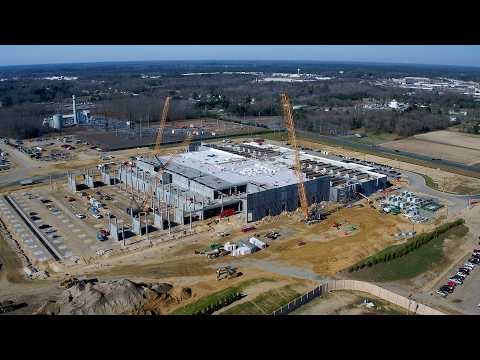
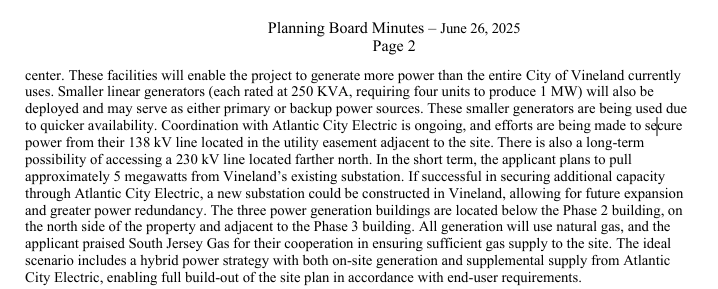
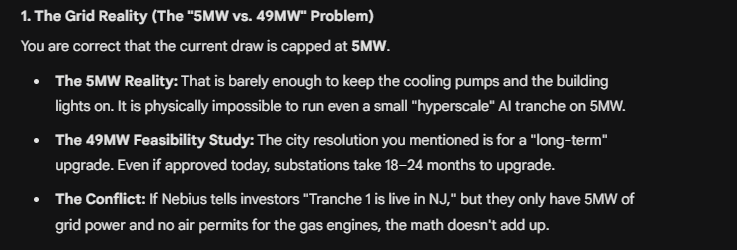
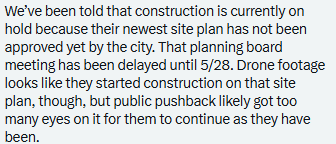
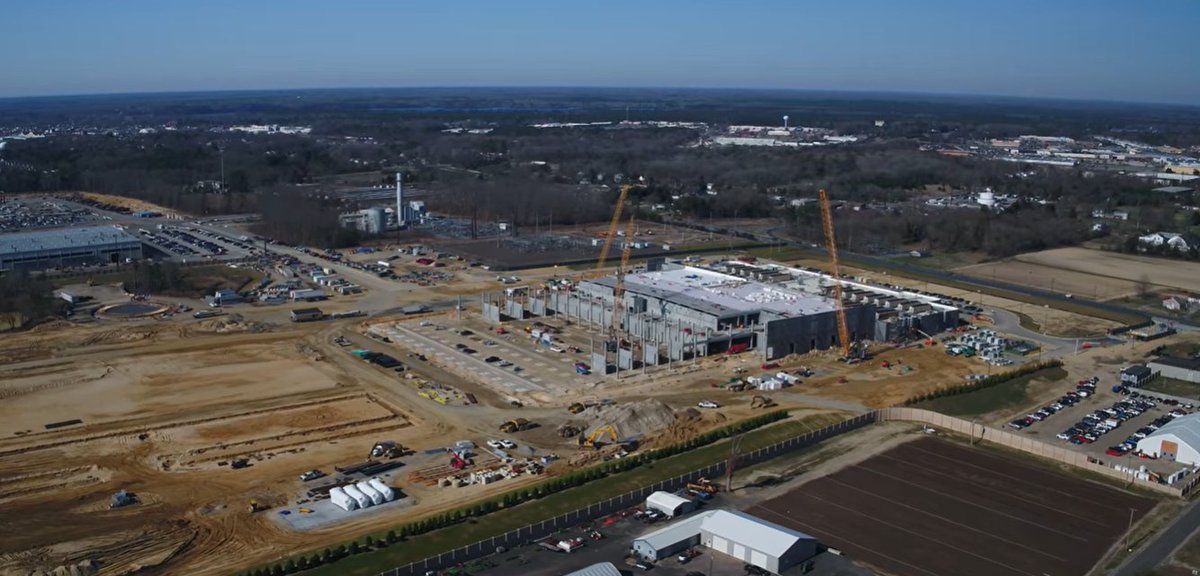
$NBIS might be COOKED, there is a high probability that the NJ Facility will be delayed for 12-24 months due to air permit issues. (All public Information) There is plenty of concrete evidence that the facility is not operational, let's go through the evidence below. But before we start, $NBIS has never confirmed that the first tranche to Microsoft was delivered from the NJ facility, and in the contract it says that Nebius can provide alternate capacity. The Exact Quote From the "COMMERCIAL AGREEMENT WITH MICROSOFT" section of the Form 6-K: "In the event that, following a grace period, Company [Nebius] FAILS to To meet agreed delivery dates for a GPU Service AND the Company CANNOT PROVIDE alternative capacity, Microsoft has the right to terminate that GPU Service." So Nebius can provide alternate capacity to meet deadlines. I also checked through the Q3 ER and Q4 ER + Reponse to FT with Grok to make sure that Nebius has never said that they delivered the first tranche from the New Jersey Facility. Nebius has not made a single explicit, verbatim public statement like "The first tranche was delivered from our Vineland, New Jersey facility on [date]." Here is the link to the grok chat ---> x.com/i/grok/share/6… So why would we think $NBIS will provide capacity from the Finland Datacenter and not the NJ Facility. Let's start with Finland; recently the Finland datacenter hads been expanded from 50MW to 75MW earlier this year, Setting up a cluster in an existing, power-connected hall takes weeks. Enough time and space to deliver the first tranche without missing the first tranch deadline. With the ability to provide capacity to from other sites then this is possible. I believe this is how they were able to deliver the first Tranche 1 to Microsoft. Now lets move on to why they had to deliver the first tranch from Finland --- >The NJ Facility is not operational and delayed They have not received Air Permits for their gas engines that were filed as pre construction speed process on 12/16/2025 Can they operate the datacenter without these generators? ------------------------------------------------------ Nebius cannot operate the facility at the scale required by the Microsoft contract using only the local power grid. According to Gemini they can use the local NJ grid to power 15% of the facility (45MW) which is where they most likely delivered the other part of the first tranch. But that leaves 255MW sitting empty and delayed. It seems they are using the local grid in NJ to keep the building alive and run small tests, while they use Finland to satisfy the actual heavy-duty compute requirements of the first tranche until those NJ air permits are signed. But this would not check out with the recent Thermal Image analysis of the nebius data centre that show the cooling units installed are not remitting heat. The NJDEP who is the gatekeeper of these permits has issued TWO TDC Warnings in 2026 regarding its filing permit. What are those warnings and how serious is this issue. ------------------------------------------------------ Warning 1: On 01/06/2026, the DEP issued the first Notice of Technical Deficiency. DataOne responded on 01/20/2026, but it wasn't enough. Warning 2: On 01/30/2026, the DEP issued a second Notice of Technical Deficiency. This is the "Red Alert" because it shows the DEP rejected the company's first attempt to fix their data. The New Administrative Failure: Most recently, on 03/30/2026, the DEP issued a new Notice of Administrative Deficiency. This suggests that not only is the "science" (technical) wrong, but the legal/paperwork side of the application is now falling apart as well. Why did they issue these warnings? ------------------------------------------------------ The DEP is questioning if the 32 gas engines and the Data Center itself must be treated as a Single Stationary Source. If they are ruled a Single Source, the facility likely exceeds "Minor Source" limits and must apply for a Title V Major Source permit, which involves federal EPA oversight and years of delay. ------------------------------------------------------ 1. Rejection of Theoretical Data (Science Warning) Regulators found that DataOne’s application relied on theoretical manufacturer models for the 32 Bergen engines rather than real-world, NJ-specific data. - The Problem: The DEP characterized the massive 300MW configuration as a "proof of concept" that hasn't been tested at this scale. - The Demand: The Jan 6 and Jan 30 warnings required DataOne to provide a Reconciliation Report proving the engines would actually meet emissions limits under local conditions. 2. The "Single Source" Inquiry (Regulatory Warning) A major reason for the Jan 30 Technical Deficiency was the DEP's investigation into "Common Control". - The Conflict: The DEP is questioning if the 32 gas engines and the Data Center itself must be treated as a Single Stationary Source. - The Stakes: If they are ruled a Single Source, the facility likely exceeds "Minor Source" limits and must apply for a Title V Major Source permit, which involves federal EPA oversight and years of delay. 3. Community & Environmental Justice (Legal Warning) The March 30 Administrative Deficiency and previous technical stops were influenced by new regulatory standards and heavy local pushback. - Noise and Air Blight: Residents organized formal complaints regarding the impact of the "cruise ship engines" on the nearby community and protected Pinelands boundary. - Compliance: The DEP demanded a more rigorous Health Risk Minimization Plan to address cumulative stressors like noise and acrolein emissions. @BagelC47 found something interesting about the gas gen's in the Dataone PCP Document available on the NJDEP website, this information basically shows what are the actual real world implicancy of these gas gens and would they pass the test: ------------------------------------------------------ 1. The "713 Million Cubic Feet" Problem The 713.10 MMft³/yr figure is the estimated maximum amount of fuel burned per engine. - The Total Scale: With 32 engines planned, the facility is looking to burn roughly 22.8 Billion cubic feet of natural gas annually at full capacity. - The Comparison: To put that in perspective, that is enough gas to power roughly 300,000 average New Jersey homes for a year. - The Regulatory Trigger: Burning this volume of gas in a single residential-adjacent location is what triggered the DEP to investigate the facility as a Single Stationary Source. 2. The NOx Threshold: "3x Over the Limit" New Jersey has some of the strictest air quality standards in the US because it is in a "Non-attainment zone" for ozone. - The Limit: To remain a "Minor Source," the entire facility must stay under 25 tons of NOx per year. - The Reality: As shown in your friend's math, even with 90% Selective Catalytic Reduction (SCR) removal, the facility is projected to emit roughly 73 tons of NOx/yr. - The Conflict: If the DEP rules that all 32 engines must be counted together, the project is 300% over the limit to be considered a minor source. 3. The "Title V" Trap The screenshot in shows Section 7 of the permit, which explicitly states that if the facility's Potential-to-Emit (PTE) exceeds thresholds like 25 tons/yr of NOx or 100 tons/yr of CO, the permittee is required to submit a Title V Operating Permit application. - Current Status: DataOne applied for a Preconstruction Permit, but the DEP’s Technical Deficiencies indicate they believe the project already triggers Title V requirements based on the gas volume math. 4. Likelihood of Passing NJDEP Tests The likelihood of passing under the current "Minor Source" application is Low to Very Low for the following reasons: - Scientific Skepticism: The DEP has already issued two Technical Deficiencies. This means they have already looked at the "713 million cubic feet" math and essentially told the company: "We don't believe your scrubbers can keep you under the 25-ton limit at this volume". - The "Proof of Concept" Label: Regulators have called this a "proof of concept". In NJ, regulators rarely approve a "proof of concept" that sits on the "knife's edge" of legal pollution limits. - Environmental Justice (S232): Because the site is near a residential area, the Environmental Justice Law allows the DEP to deny the permit even if the math was "perfect," simply because the absolute volume of residuals exiting 32 stacks is too high for that specific community. The NJDEP is effectively forcing Nebius/DataOne to admit they are a Major Source, which would trigger the 12–24 month Title V process mentioned in the tweets Why did they file for this so late by end december 2025, when they started construction in early 2025? ------------------------------------------------------ 1. The "Grandfathering" Miscalculation The primary reason for the late filing was an attempt to beat the March 2026 regulatory shift. - Legislative Pressure: New Jersey introduced Bills S3379 and SR18 in early 2026, which mandate much stricter energy reporting and lower emissions for data centers. - The Strategy: By filing in December 2025, DataOne hoped to lock in their "Minor Source" status under 2025 rules. - The Failure: Because the NJDEP issued multiple Technical Deficiencies (TDs) starting in January 2026, the application was never finalized. This effectively stripped away any "grandfathered" protection, as the project is now being scrutinized under the updated Environmental Justice Law (S232) standards. 2. Late Finalization of "Islanded Power" Engineering The site’s reliance on 32 Bergen gas engines for 300MW of internal power was a novel "off-grid" approach designed to bypass the multi-year wait times for the PJM regional power grid. - Engineering Lag: Designing a system that uses 32 cruise-ship-sized engines to power high-density AI racks is technically complex. - The "Proof of Concept" Issue: The DEP eventually labeled this a "proof of concept" that hadn't been tested at this scale. DataOne likely spent most of 2025 trying to produce "theoretical math" that they hoped would satisfy regulators before they were forced to file. 3. The "Concrete First, Permits Later" Gamble Management chose to prioritize physical construction speed over regulatory certainty. - Aggressive Build: Construction began in early 2025 "behind concrete walls" to meet a goal of delivering the first phase in just 20 weeks. - Regulatory Avoidance: Filing early in 2025 would have invited DEP inspectors to the site during the most sensitive early phases of construction. They waited until the building was nearly a "shell-complete" asset before filing the air permit (PCP250002) required to actually turn it on. What happens if they cant get approval for the pre-construction air-permit? ------------------------------------------------------ There is 32 Days Remaining – The number of days remaining for DEP to make a decision based on the Days Allotted. If the Department continues to find deficiencies, they can keep the project in this "Stopped" state indefinitely or move to a final denial. DataOne can appeal a denial by requesting, An appeal process in New Jersey typically takes 12 to 24 months to resolve through the court system.. OR If the NJDEP concludes that the 32 gas engines and the data center constitute a Single Stationary Source, the cumulative emissions will likely exceed the "Minor Source" thresholds. They would need to re-file for a Title V permit under the Clean Air Act. Between the new engineering studies, EPA review cycles, and public sessions, this path typically takes 18 to 24 months to complete. I have asked @nebiusai and DataOne CEO @CABeyney to comment multiple times but there is no response. Also the ceo of DataOne has never confirmed the delivery of the first tranche to microsoft from the New Jersey Data One facility, I would expect the CEO to mark the first MAJOR milestone. I think with the evidence we have, we can conclusivly say that the NJ Facility is delayed and not largely not operational... For how long who knows. But its looking like the Permits may not come in hand this year. But this is the problem Nebius has, relying on third party builders and having no control of the buildout. This may have set them back by 1-2 years. Now they have Shells sitting empty waiting for power approval. All this information I got is public and can be searched here: njems.nj.gov/DataMiner Receipts attached nfa

The Token Dollar compounds Hold token price and grid cost constant across 3 GPU generations Hopper: $280 gross margin per MWh Blackwell: $980 Rubin: $10,430 37x margin expansion in 2 gens, driven entirely by co-design This is why Google just committed to 960K Rubins $NVDA

I’m not invested in $IREN However, If this ranking affects your opinion on $IREN, you’re lost



$IREN Exahash way down for the Childress (US) BTC operations in April. In case you're wondering how much the 3.8 exahash decline converts to in megawatts. That's roughly 50MW +/- of power. Have the Horizon 5 miners been taken offline in preparation for the 17K+ air-cooled B300s. In case you're wondering how much power 17K+ B300s draw - yes, you'd be right, roughly 50MW of power. 👀





$33,000 in Sandisk 1 year ago is $1,023,000 today.

