EB1A Experts

832 posts

EB1A Experts banner
EB1A Experts

EB1A Experts

@eb1aexperts

We assist Tech Professionals in obtaining their Green Card via the EB1A pathway!

India Katılım Mayıs 2024
8 Takip Edilen135 Takipçiler
Arnav Sahu
Arnav Sahu@arnavsahu341·
Took me 8 years to get a green card. And that’s only because I did a special petition via EB1. I know of people who’ve been in the country for 25 years, have kids and still don’t have a green card.
Trevor Blackwell@tlbtlbtlb

People may not know that the processing time for green card applications are months to years. So someone could come on a O-1 or H-1B, work for 5 years, become critical in their role, apply, and then have to abandon their job. Incredibly harmful to US industry.

English
451
67
866
191.7K
EB1A Experts
EB1A Experts@eb1aexperts·
A lot of employment-based applicants in technology and research are already deeply embedded in U.S. innovation ecosystems through job creation, infrastructure, research, and long-term economic contributions. How discretionary standards are applied in practice will matter significantly for talent retention.
English
0
0
0
16
Bob Gourley - e/acc
Bob Gourley - e/acc@bobgourley·
There is a great struggle underway today between totalitarian nations like China and open societies like the U.S. and other Western Democracies. Our adversaries have every intent on winning. All indications are they do not desire to challenge us with direct military attack, they would like to weaken us by any method short of conflict they can. This includes making it harder for America’s tech sector to innovate and serve our economy and our national interests. Which is why like many others I was disappointed in the phrasing of the USCIS policy memo of 21 May which provided guidance that will likely lead every USCIS officer to have a bias towards forcing any legal immigrant seeking permanent residency status to only be able to apply for that by returning to their home country and applying at a consulate. I get the intent, that use of a consulate at home is supposed to be the normal method. But this memo overlooks something important. This is not the right path for every case. There was so much outcry over this memo that USCIS has already issued a clarification by a statement that read: “... people who present applications that provide an economic benefit or otherwise are in the national interest will likely be able to continue on their current path.” Good clarification, but I would like to propose something else. My recommendation: USCIS officers should be explicitly directed to exercise a positive discretionary bias towards technology innovators, entrepreneurs who are building companies in the U.S., and other business leaders who create jobs and economic value here. This should not be seen as a special pleading. It is an alignment of discretion with our national interests. You have seen for yourself, I'm sure, the decades of data that show immigrant entrepreneurs are one of the main sources of economic value. Pick your favorite stat, there are many. Mine is that almost 50% of the Fortune 500 were founded either by immigrants or their children. But I also have so many personal anecdotes. I have seen first-hand how highly skilled immigrants have changed the world for the better, including by creating high tech firms and by serving the national security needs of our nation, a nation they love. If you live in America, high tech immigrants have made your life better. Now that we are facing incredible challenges in energy, healthcare and new tech hardware, we need to support these high tech immigrant leaders now more than ever. So, back to the memo. In my view, the guidance that adjustment status is “extraordinary” relief and that consular processing should be the default is not the right framing for technology leaders and entrepreneurs. USCIS leadership should instruct officers that, where the law allows, adjustment should be presumptively favored for applicants who can show a concrete record of innovation, job creation, and strategic value to the United States. That does not mean approving every founder; it means that, on the margin, doubts should be resolved in favor of those whose work clearly advances U.S. interests. A principled “positive bias” standard is what we need. A positive discretionary bias toward innovators and entrepreneurs can be grounded in objective, auditable criteria. Officers could be directed to weigh factors such as: - Documented U.S. job creation and payroll growth over time, especially in high‑value sectors. - Evidence of innovation: patents, peer‑reviewed work, technology deployments, or participation in advanced R&D initiatives.ideas. - Participation in U.S. defense, dual‑use, or critical infrastructure programs through contracts, grants, or cooperative agreements.journals. - U.S. investment in the enterprise, particularly from domestic funds or strategic corporate partners. When these factors are present and the applicant is otherwise admissible, guidance should say plainly: Adjustment of Status inside the United States normally warrants a favorable exercise of discretion. That sort of structured positive bias is no more radical than the current memo’s guidance to lean toward consular processing; it simply points that discretion toward outcomes that maximize U.S. gains from the global competition for talent.
English
32
2
35
13K
EB1A Experts
EB1A Experts@eb1aexperts·
@Nick_Davidov One thing many people underestimate is how evidence-intensive these categories already are. The standard goes far beyond simply meeting a minimum number of criteria — the overall body of work, sustained impact, and final merits review all matter significantly in practice.
English
0
0
0
1
Nick Davidov
Nick Davidov@Nick_Davidov·
Let’s address the O1/EB-1A immigration path that takes an asymmetric hit by the newest nonsense DHS pushes for. This is the list of the requirements to meet to qualify: EB-1A — Extraordinary Ability (8 CFR §204.5(h)) The petitioner must demonstrate sustained national or international acclaim in the sciences, arts, education, business, or athletics, with achievements recognized in the field through extensive documentation. Eligibility may be established either by evidence of a one-time major, internationally recognized award (such as the Nobel Prize, Pulitzer Prize, Olympic Medal, or Academy Award), or by satisfying at least 3 of the 10 regulatory criteria below (But many petitions meeting just 3 get refused so lawyers always suggest you meet 7/10before applying): 1.Receipt of lesser nationally or internationally recognized prizes or awards for excellence in the field of endeavor. 2.Membership in associations in the field which require outstanding achievements of their members, as judged by recognized national or international experts in their disciplines or fields. 3.Published material about the alien in professional or major trade publications or other major media, relating to the alien’s work in the field for which classification is sought. 4.Participation, either individually or on a panel, as a judge of the work of others in the same or an allied field of specialization for which classification is sought. 5.Evidence of the alien’s original scientific, scholarly, artistic, athletic, or business-related contributions of major significance in the field. 6.Authorship of scholarly articles in the field, in professional or major trade publications or other major media. 7.Display of the alien’s work in the field at artistic exhibitions or showcases. 8.Performance in a leading or critical role for organizations or establishments that have a distinguished reputation. 9.Command of a high salary or other significantly high remuneration for services, in relation to others in the field. 10.Commercial successes in the performing arts, as shown by box office receipts or record, cassette, compact disk, or video sales. USCIS adjudicators apply a two-step analysis: first determining whether the petitioner has submitted qualifying evidence meeting the criteria (or the one-time major award), and then conducting a “final merits determination” assessing whether the totality of the evidence demonstrates that the beneficiary has sustained national or international acclaim and is among that small percentage at the very top of the field of endeavor. The applicant must also intend to continue work in the area of extraordinary ability, and the entry must substantially benefit prospectively the United States. —- This is why the small number of O1/EB1A immigrants create more jobs than they take, commit much less crime than the natives, or other immigrant groups, pay a lot of taxes, don’t rely on welfare, subsidies, or any help from the government. Their work benefits the country and the national interests (there’s even a national interest category) If you’re truly against this type of immigration, why? do you believe it doesn’t benefit the country? These people have options and a lot of extraordinary people in the immigration process dmed me yesterday saying that they aren’t very sure they want to come to the US after reading both the DHS announcement and people’s comments under my post.
English
24
5
107
19.5K
EB1A Experts
EB1A Experts@eb1aexperts·
@mmxh55 @ackocher A lot of the current discussion seems to center on how pending adjustment-of-status cases may be reviewed in practice, particularly where temporary visa intent and long-term immigration pathways intersect. Hopefully USCIS provides more operational clarity soon.
English
0
0
0
204
KooKoo
KooKoo@mmxh55·
@ackocher How about f1 visa (for 3 years) who are niw eb2 applicants and their aos is pending?
English
1
0
3
9.4K
Austin Kocher, PhD
Austin Kocher, PhD@ackocher·
USCIS issued PM-602-0199 on May 21. The press release said AOS would be granted "only in extraordinary circumstances." That phrase appears nowhere in the actual memo. The gap between the political statement and the operative policy is worth understanding. A thread.
Austin Kocher, PhD tweet media
English
18
94
834
226.1K
EB1A Experts
EB1A Experts@eb1aexperts·
@Peculiar_oma Meeting the criteria threshold is necessary, but not sufficient. USCIS is ultimately evaluating whether the totality of the record demonstrates extraordinary distinction, not just whether individual boxes are checked.
English
1
0
0
24
Barr Peculiar Oluomachukwu
If EB1A were a university admission process, most people would misunderstand it. People think: "I have awards." "I have publications." "I have media features." Therefore: "I qualify." But that's not how the conversation ends. Imagine a university saying: "Okay, we can see your grades. Now convince us you're one of the best students we've seen." That's closer to how EB1A works. Meeting criteria gets you into the conversation. The bigger question is: Do the totality of your achievements show sustained national or international recognition? That's why people sometimes become frustrated. Because they focus entirely on checking boxes. Meanwhile USCIS is trying to understand the bigger picture. The criteria open the door. The overall strength of the evidence is what walks through it.
English
2
0
1
22
Giang Nguyen
Giang Nguyen@giangnguyen2412·
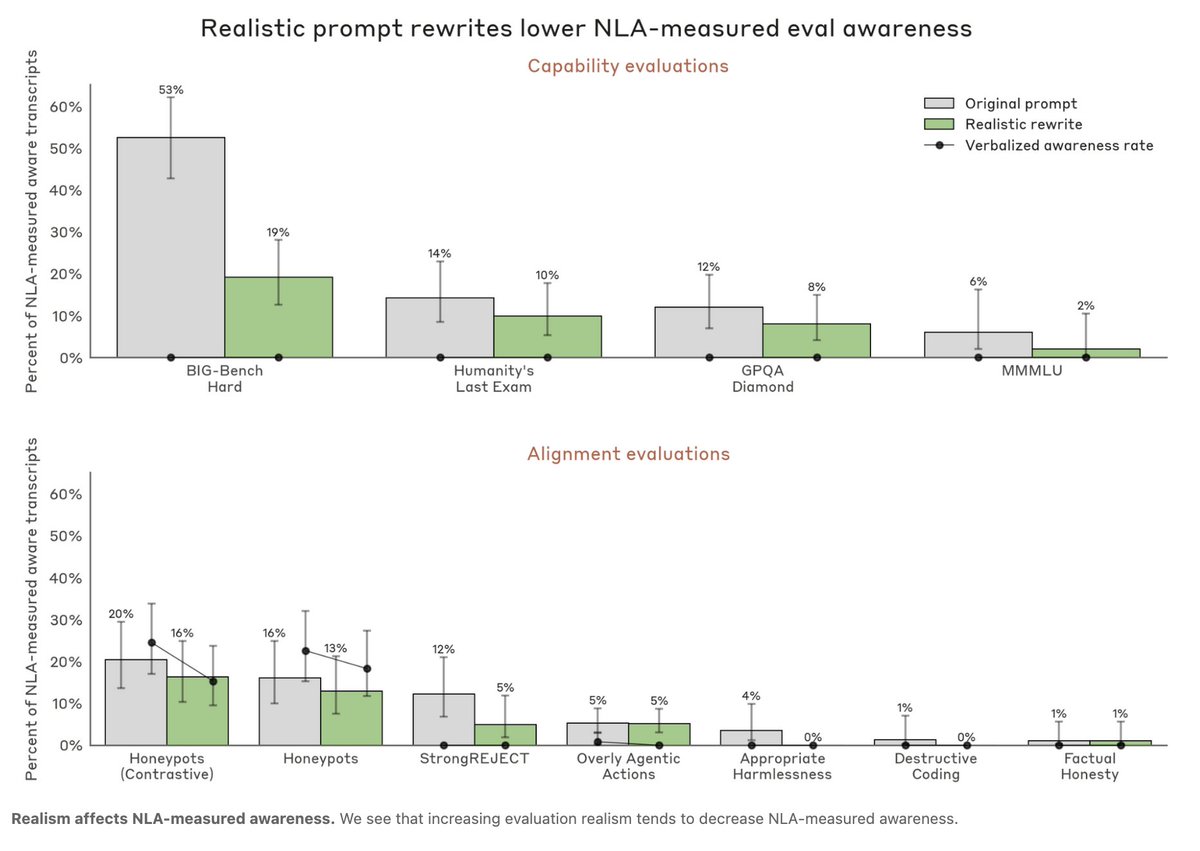
as @Tim_Hua_ pointed out, this graph is actually crazy. NLA is clearly picking up unverbalized eval awareness that the model is straight up hiding in its text output. but it also kinda proves the exact limitation i called out in the announcement thread 👇 x.com/giangnguyen241… - we're still just handing the black box problem to another black box and it is very inevitable to see NLA failures like that drop in NLA performance with rewritten prompts. NLA works well in one setting today, makes you trust it, but fails tomorrow without any signals. but the signal is strong. NLA is promising for detecting this kind of hidden awareness. looking forward to seeing more from them
Tim Hua 🇺🇦@Tim_Hua_

This graph from the NLA paper, imo, provides pretty convincing evidence that activation verbalizers surfaces unverbalized eval awareness. It is also crazy. Notice how the verbalized eval awareness dot is offset only when it's significantly more than zero. How did they even...

English
1
1
25
2.4K
Tim Hua 🇺🇦
Tim Hua 🇺🇦@Tim_Hua_·
This graph from the NLA paper, imo, provides pretty convincing evidence that activation verbalizers surfaces unverbalized eval awareness. It is also crazy. Notice how the verbalized eval awareness dot is offset only when it's significantly more than zero. How did they even...
Tim Hua 🇺🇦 tweet media
English
6
0
41
5.2K
EB1A Experts
EB1A Experts@eb1aexperts·
@gm8xx8 Interesting direction. Reducing idle hardware time through heterogeneous scheduling is a really practical optimization angle.
English
0
0
0
3
EB1A Experts
EB1A Experts@eb1aexperts·
@HarshalsinghCN Very interesting findings. Simple evaluation-order effects causing such strong bias is pretty striking.
English
0
0
0
34
harrrshall
harrrshall@HarshalsinghCN·
spending the next few weeks diagnosing reward hacking in LALM-judge-driven TTS preference optimization. 100% position bias across 10 pairs. Off-the-shelf audio-LMs (Qwen2.5-Omni-7B, GPT-4o-Audio, Gemini-2.5) don't actually listen to TTS audio when judging naturalness. They pick whichever clip is in slot B, then write a confident rationale for why B was better. Swap the audio order. Same model, same prompt. Verdict: still B. Same rationale word-for-word, now pointing at the OTHER audio. some runs drift into hallucinated dialogue ("Human: I think Recording A has a more natural rhythm..."), making up conversation that never happened. CoT rubric prompting didn't fix it. Just inverted the bias from always-B to always-A. SpeechJudge-GRM (Qwen2.5-Omni fine-tuned on 99k human naturalness prefs, arXiv 2511.07931) is the only judge above 0% survival in our lineup, at 22%. Still below the 50% random baseline. Why this matters: if you can't trust the judge as a reward signal, every DPO/GRPO run on top of it is reward-hacking by construction. Pal et al. called it exactly ("Hearing the Order", arXiv 2510.00628), but the magnitude on real preference pairs is striking. takeaway: model confidence isn't correctness. Logged raw outputs + swapped slot order, caught in 30 minutes. Same skepticism whether the model is citing a paper or analyzing a waveform. @reach_vb @sanchitgandhi99
harrrshall tweet media
English
2
0
15
2.1K
Claudia Cuttano
Claudia Cuttano@ClaudiaCuttano·
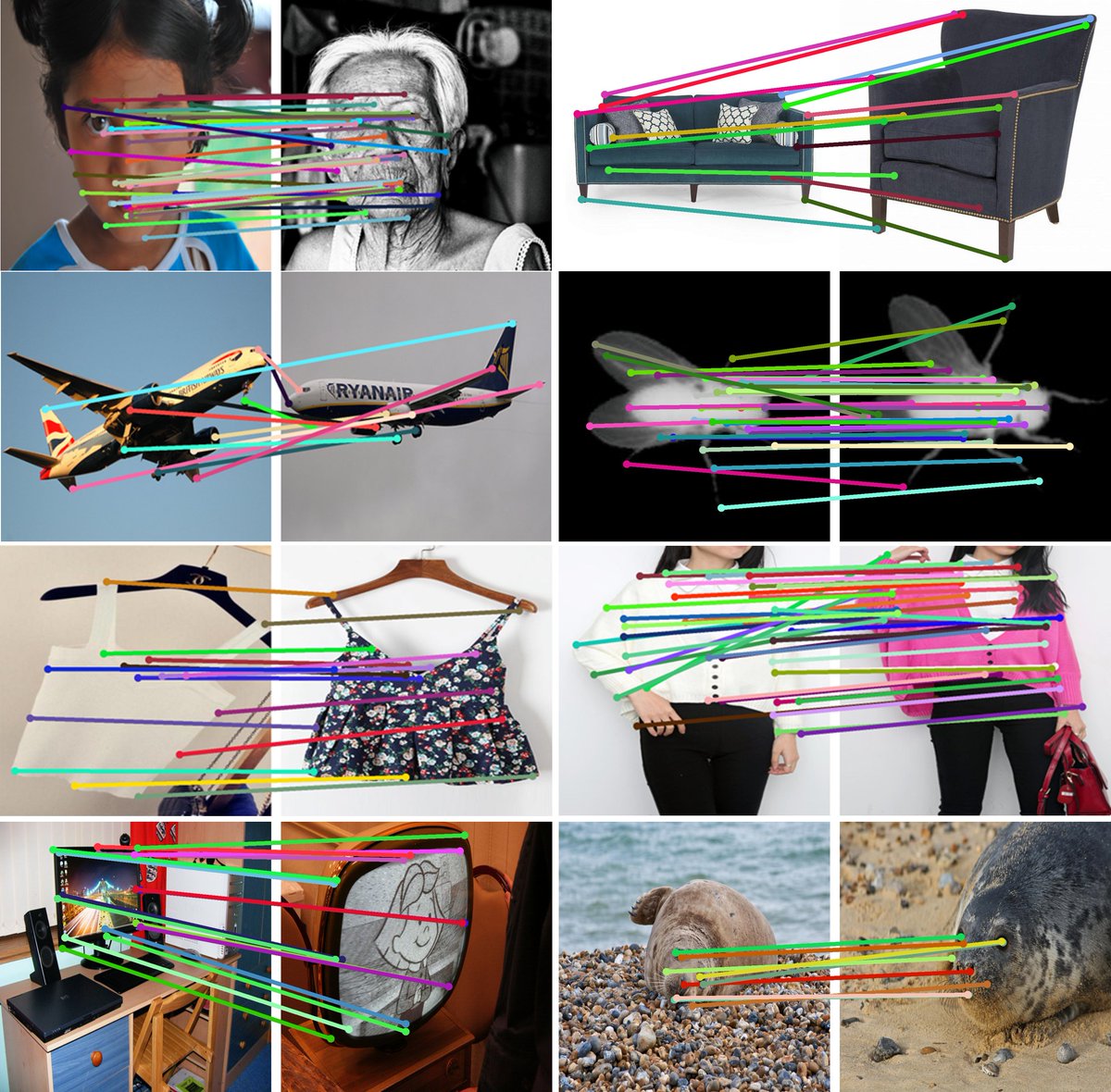
#CVPR2026 Oral ✨ A tale of a failed experiment: what if you fine-tune DINOv2 on sparse keypoints, beat every benchmark, only to discover it performs worse than the original frozen model on novel keypoints? 🚀MARCO closes this gap: a unified model for generalisable correspondences github.com/visinf/MARCO
Claudia Cuttano tweet media
English
7
48
407
22.6K
EB1A Experts
EB1A Experts@eb1aexperts·
@AtakanTekparmak “Why not?” research often leads to some of the most interesting ideas. Curious to see where this direction goes.
English
0
0
1
90
Rosinality
Rosinality@rosinality·
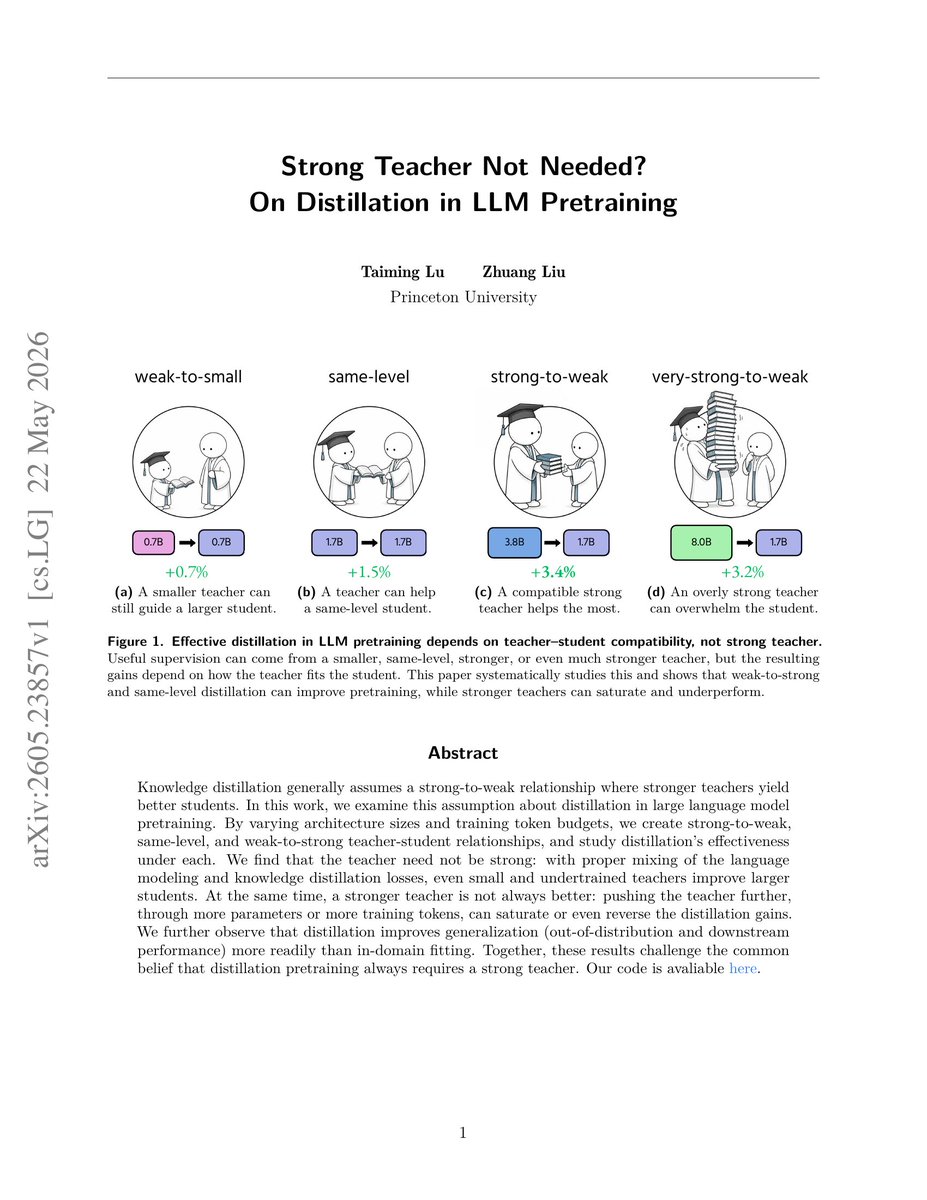
arxiv.org/abs/2605.23857 Could it be useful to distill from a smaller model? I think, beyond distillation, we could get some signal from the loss difference across the scales.
Rosinality tweet mediaRosinality tweet media
English
4
26
130
10.8K
EB1A Experts
EB1A Experts@eb1aexperts·
@aHpaBean Really interesting work. Supervising how representations evolve, not just the prediction target itself, is a compelling idea.
English
0
0
1
72
Xiangdong Zhang
Xiangdong Zhang@aHpaBean·
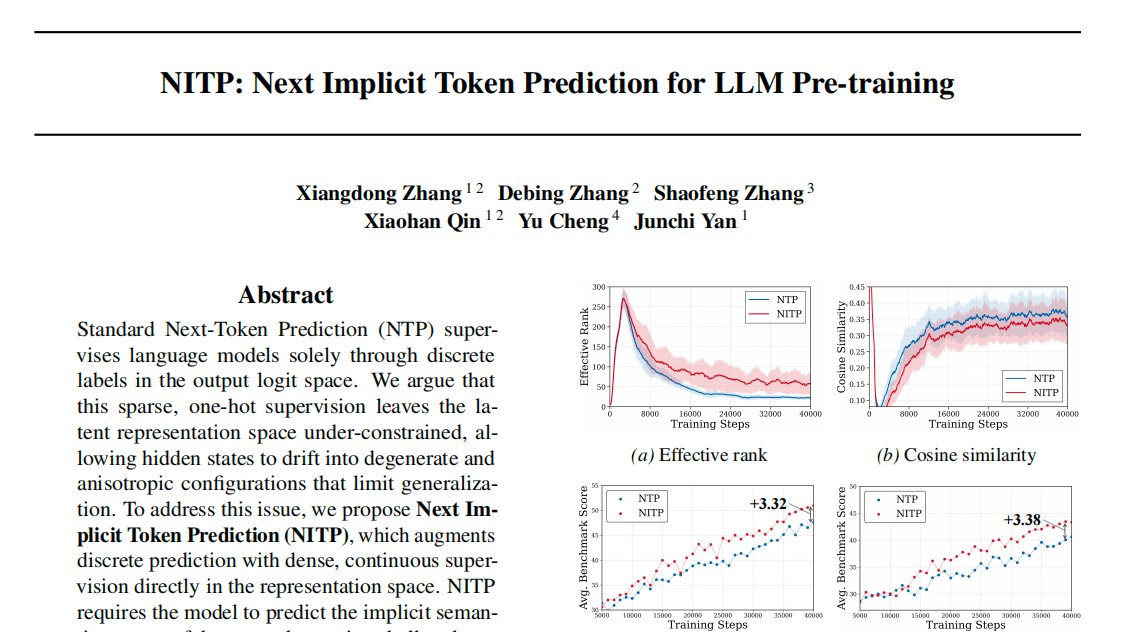
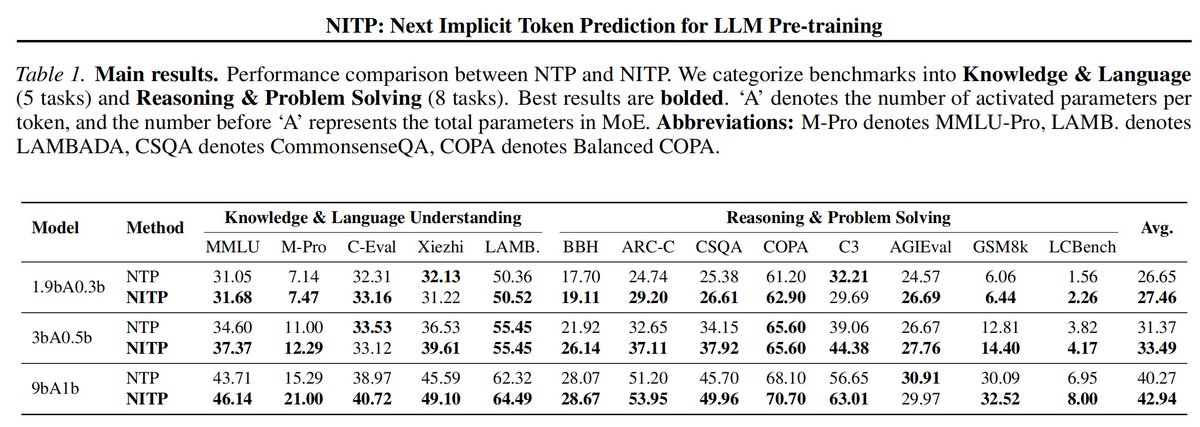
Paper is now released: github.com/aHapBean/NITP Next token prediction defines what to predict, but fails to supervise how predictions are represented. We propose NITP: Next Implicit Token Prediction for LLM pre-training. NITP adds representation-level supervision to NTP.
Xiangdong Zhang tweet mediaXiangdong Zhang tweet mediaXiangdong Zhang tweet mediaXiangdong Zhang tweet media
English
9
22
123
7.6K
Gouki Minegishi
Gouki Minegishi@GoukiMinegishi·
Our paper was accepted as a #ICML2026 Spotlight! Reasoning in LLMs has improved largely by chaining local steps. But is that the whole story? Humans occasionally make inferential "leaps" across domains, a faculty known as analogy. We design a synthetic task to show how small Transformers acquire analogical reasoning, and find that the same signatures appear in pretrained LLMs. arxiv: arxiv.org/abs/2602.01992 code: github.com/gouki510/Analo…
English
26
129
962
62.9K
Prithviraj (Raj) Ammanabrolu
Prithviraj (Raj) Ammanabrolu@rajammanabrolu·
Ever wished we had fewer X-training hyphenates? Pre, mid, post etc. Why not just Training? Trying to bridge the divides (and get all our friends into one team again), we intro *Introspective X Training*, an offline RL inspired method that scales effectively across any LLM stage by annotating your data with a thinking reward generated language critique! Up to 2.8x FLOP efficiency + 5-10 point score gains (esp with math and code) at any stage from scratch to 24T tokens on 8b (active) sized models!! We burned much compute ablating so you wouldn't have to Moral of the story is‼️don't throw out any data via filtering, just feedback condition it‼️ You can spend FLOPs up front on inference to *classify* data quality and then train so that tokens aren't all treated equally based on the feedback starting early in training itself. Right now they're really only separated out much later during mid/post training This improves overall compute efficiency and gives us benchmark perf not possible with just baseline methods! Paper here: arxiv.org/abs/2605.20285 Thanks to @BrandoCui and @GXiming for leading this w/ @__SyedaAkter @davidjesusacu @hyunw_kim @jaehunjung_com Yuxiao Qu @shrimai_ @YejinChoinka
English
2
17
100
18.2K
EB1A Experts
EB1A Experts@eb1aexperts·
@davidjesusacu Very interesting direction! Making data quality an explicit training signal instead of only a filtering mechanism feels really powerful.
English
0
0
0
4
Larry Dial
Larry Dial@classiclarryd·
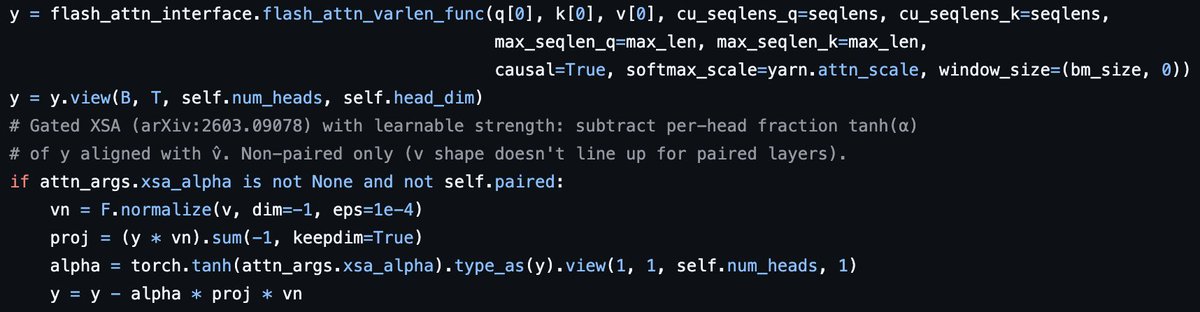
New NanoGPT Speedrun WR at 81.2 (-0.6s) from @_djdumpling , with learnable XSA. Per head learnable scalar to subtract out the portion of attn that is orthogonal to a token's own value vector. Applied to the 6 non paired head layers. github.com/KellerJordan/m…
Larry Dial tweet media
English
3
13
84
13K
Jie Wang
Jie Wang@JieWang_ZJUI·
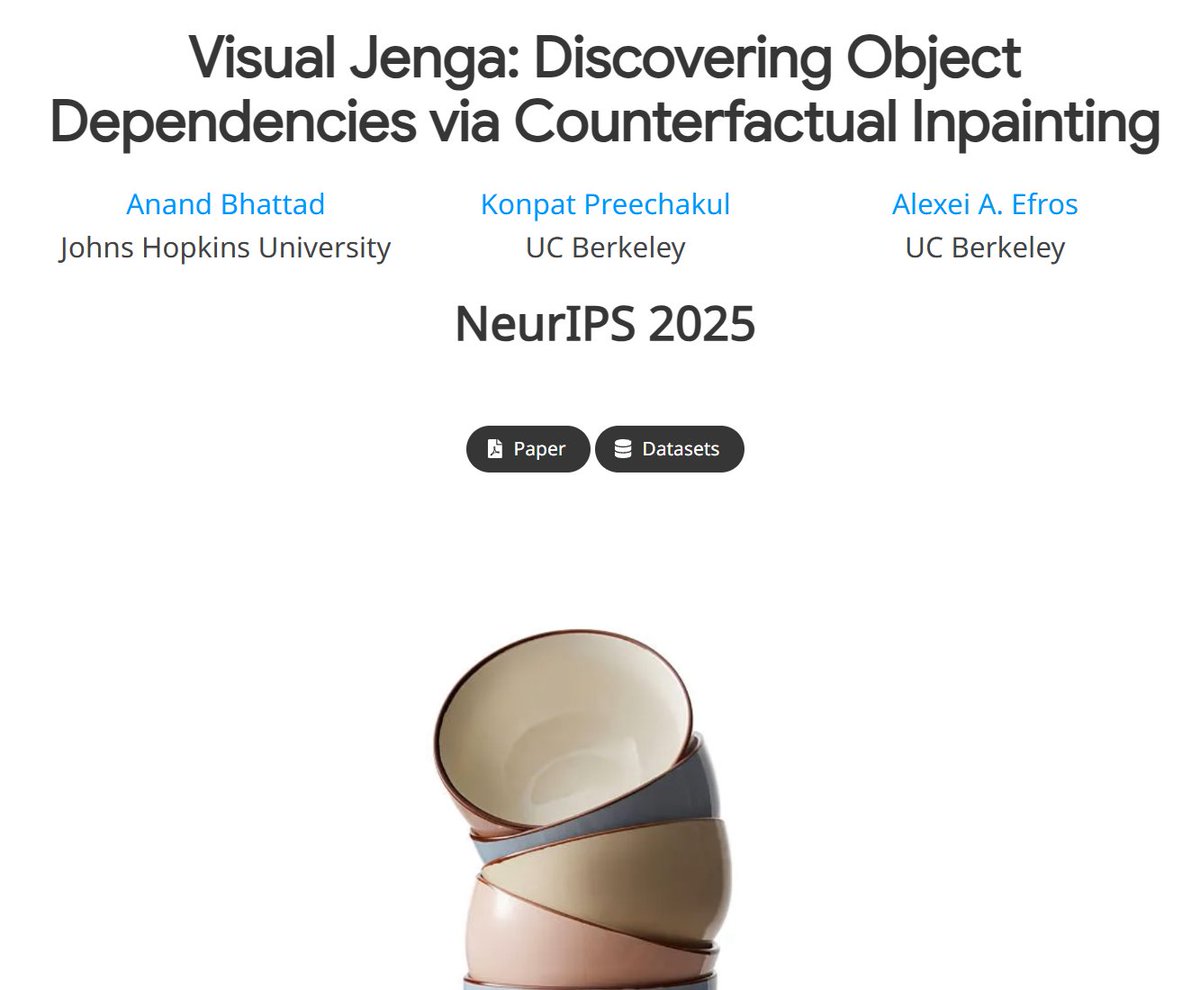
🧵 I reproduced Visual Jenga (Bhattad et al. NeurIPS 2025), a method that removes objects from a scene one-by-one in physically plausible order, like the jenga game. Here's what I found interesting (and what went hilariously wrong) 👇
Jie Wang tweet media
English
3
13
244
21.9K