

Eytan Klawer
2.4K posts

Eytan Klawer
@eklawer
Husband & Dad | Optimistic Centrist | The Rabbit Hole is the Path | Sci-fi is for Seeing the Future | Hiking = Best Exercise | Ice Cream = Best Food | YOLO
Bay Area, CA Katılım Nisan 2007
3.3K Takip Edilen505 Takipçiler


this is some great whistleblowing
Shadow of Ezra@ShadowofEzra
A former employee at OpenAI is blowing the whistle on Sam Altman, claiming he is building portals and summoning aliens using artificial intelligence. The portals are reportedly located in the United States and China, with a new one added in the Middle East. "We're building portals from which we're genuinely summoning aliens."
English
Although I think Jensen is right about the more nuanced and mature view of the rivalry (despite Jensen's position clearly "talking his own book"), the way @dwarkesh_sp challenged Jensen and made him spell it out repeatedly made for more understanding.
Great heated debate & kudos for challenging super-powerful leader while keeping composure.
Dwarkesh Patel@dwarkesh_sp
The Jensen Huang episode. 0:00:00 – Is Nvidia’s biggest moat its grip on scarce supply chains? 0:16:25 – Will TPUs break Nvidia’s hold on AI compute? 0:41:06 – Why doesn’t Nvidia become a hyperscaler? 0:57:36 – Should we be selling AI chips to China? 1:35:06 – Why doesn’t Nvidia make multiple different chip architectures? Look up Dwarkesh Podcast on YouTube, Apple Podcasts, Spotify, etc. Enjoy!
English
Eytan Klawer retweetledi
Fully admit this is a skill issue, but #openclaw, for me, is so good at making policy and so bad at following policy 😅
English

The cost of your flight went up because you searched for it twice. Your rideshare costs more because your phone battery is dying.
This is surveillance pricing – corporations using your own data and behaviors against you.
In the US Senate, I’ve got a plan to ban it.
English

Okay and who of you couldn't reply to this? Please please only if you couldn't okay?
@levelsio@levelsio
Okay let's see who can reply to this
English
@openclaw #OpenClaw We’ve mostly solved agent state knowability (projects, handoffs, checkpoints, ready/stale, etc.). The unsolved problem is reliable consultation: how do you make an agent actually check/heed that state at the right moment?
Looking for ideas on runtime-level enforcement / forced awareness/ alerts that are enforced as high-priority.
English
@Austen Yes, but this time build the whole back end, like the whole entire comprehensive definitive fully operational back end
English

AI Agent: "We're all set and you're totally ready, the app is working and fully ready for production."
Me: "OK, what else do you think would make the app better?"
AI Agent: "Well, I completely faked the backend so no data will persist. Would you like me to build a backend?"
English
@CoastalFuturist Interested. I’m using it to automate boring local business. Goal is to run a business that would take 5-10 people with just 2
English

@levelsio I'm seeing the same for the first time today, except i use gpt-5.3-codex...any ideas?
English

i'm going to offer a rebuttal to absolutely everything @pmarca has said about introspection here.
and Marc, i say this respectfully, with peace and love. i would still love your support one day 😜
but this has to be said.
<3
context:
so, in a recent interview, Marc proudly declared he has "zero" introspection - "as little as possible" - and then made one of the most historically inaccurate claims i've ever heard a public intellectual say out loud:
"if you go back 100 years ago, it never would have occurred to anybody to be introspective. all of the modern conceptions around introspection are manufactured in the 1910s, 1920s."
he went further:
"great men of history didn't sit around doing this stuff at any prior point. it's all a new construct."
he blamed freud. he called it a "guilt-based whammy" from vienna designed to make individuals second-guess themselves. he said the best founders operate at "0% neuroticism" - no self-examination, no looking back. just forward. just go.
right...
except theres a huge problem with this: virtually every great mind in recorded human history disagrees with him.
lets take this part case by case-
socrates (469–399 BC) said "the unexamined life is not worth living" — and was executed rather than stop examining it. that was 2,400 years before freud opened a practice in vienna.
marcus aurelius (121–180 AD) - roman emperor, the most powerful man alive - kept a private journal of ruthless self-examination. night after night, entry after entry: where am i failing? what are my weaknesses? how do i govern my own reactions before i govern rome? that journal became the meditations, one of the most influential texts in western civilization. marc says "great men of history didn't sit around doing this stuff." marcus aurelius literally ran the roman empire while doing exactly this.
seneca (4 BC–65 AD) described his nightly introspective practice: "when the light has been removed and my wife has fallen silent, i examine my entire day and go back over what i've done and said, hiding nothing from myself and passing nothing by." that's therapy without a therapist. two thousand years before anyone in vienna was born.
augustine of hippo (354–430 AD) wrote the confessions - 13 books of pure introspection examining his desires, his motivations, the nature of memory itself. it's considered the first autobiography in western literature. 1,500 years before freud.
the buddha (5th century BC) built an entire system of practice around it. vipassanā literally means "clear seeing" - seeing into your own mind. the entire buddhist tradition is introspection formalized into a path of liberation.
confucius (551–479 BC): "i daily examine myself on three points." self-examination was a prerequisite for ethical governance in chinese philosophy, not a weakness.
lao tzu: "knowing others is intelligence; knowing yourself is true wisdom."
the upanishads (800–200 BC) made self-knowledge - ātman - the central pursuit of human existence.
montaigne (1533–1592) literally invented the essay as a literary form - and the entire point of it was self-examination. the word "essay" comes from essayer: to try, to test. he was testing himself on paper. four centuries before freud.
benjamin franklin created a systematic daily self-examination practice, tracking 13 virtues on a grid and reviewing his own behavior every single night. he wrote about it extensively in his autobiography.
leonardo da vinci filled thousands of pages of private notebooks with constant self-questioning, to-do lists for self-improvement, and reflections on his own thinking process.
thomas jefferson - whom marc literally name-drops in this same interview as a "founder-type" - kept meticulous journals, wrote extensively about his own contradictions, and advised: "when angry, count to ten before you speak. if very angry, count to a hundred." that's emotional self-regulation through introspection.
alexander the great - also name-dropped by marc — slept with a copy of homer's iliad annotated by aristotle under his pillow. he was consumed with measuring himself against mythological heroes. that's introspection filtered through narrative identity.
every major civilization on earth - greek, roman, indian, chinese, japanese, islamic - independently arrived at the same conclusion: the examined inner life is the highest form of human development. not a weakness. not a disease. the pinnacle.
Marc's claim isn't just wrong. it's the kind of wrong that like requires never having read a single primary source from before 1900. that kind of wrong.
theres another layer to this that kinda makes all of this even more mind boggling to me - even his own peers, the founders he holds up as exemplars, practice exactly what he dismisses...
steve jobs did extensive zen meditation for decades. he credited it with sharpening his intuition and decision-making. he traveled to india specifically seeking inner knowledge. he once said his time meditating was the most important thing he ever did.
elon musk has spoken repeatedly about examining his own first-principles thinking - the process of questioning your own assumptions down to bedrock. that is introspection. it's directed inward at your own reasoning patterns.
mark zuckerberg did year-long personal challenges - reading a book every two weeks, learning mandarin, running every day, meeting someone new every day - each one designed as structured self-improvement through self-examination. you can't design a personal challenge without first looking inward at what needs to change.
ray dalio built an entire management philosophy - principles - around radical self-awareness. he literally calls it "the most important thing."
jeff bezos has talked about his "regret minimization framework" - a deeply introspective thought exercise where you project yourself to age 80 and look back at your decisions. that's introspection operating across a lifetime.
you see what i mean? these are marc's people...his world. and they all do the thing he says nobody needs to do.
okay now *this* is the part that really matters here (to me, at least):
what Marc is actually describing when he says "introspection" isn't introspection at all. it's rumination. and those are **opposites*.
rumination is dwelling on the past. spiraling. getting stuck in loops of regret and self-criticism. it's correlated with depression and paralysis.
rumination is genuinely counterproductive. it is all the things Marc describes introspection being.
introspection is self-awareness. its pattern recognition applied to your own mind. understanding your motivations, your biases, your blind spots. it iss correlated with better decision-making, stronger leadership, and longer-lasting impact.
Marc has confused the disease with the medicine - and built an entire philosophy around avoiding the cure because he thinks it's the illness.
the deepest irony: the claim that introspection is useless requires zero introspection to make. like...he didn't examine it. he didn't check it against history. he didn't question his own assumption or anything. he just said it, it felt right, and he kept going. then doubled down bc thats what supports the claim that he doesnt introspect.
he even almost catches himself in the interview: "to actually analyze that properly would require a level of therapy that i'm not willing to engage in."
he knows there's something under there. he just doesn't want to look, i guess?
and that's fine as a personal choice. but don't dress it up as history. don't claim that socrates, marcus aurelius, the buddha, confucius, augustine, leonardo, franklin, jefferson, and every contemplative tradition in human civilization were all doing something that was "invented" by sigmund freud in 1920, man...like wtf.
that's not a bold take, imho, it's just not having done the reading.
(yes, claude did help me write this. no, that doesnt mean its any less sincere.)
David Senra@davidsenra
Great men of history had little to no introspection. The personality that builds empires is not the same personality that sits around quietly questioning itself. @pmarca and I discuss what we both noticed but no one talks about: David: You don't have any levels of introspection? Marc: Yes, zero. As little as possible. David: Why? Marc: Move forward. Go! I found people who dwell in the past get stuck in the past. It's a real problem and it's a problem at work and it's a problem at home. David: So I've read 400 biographies of history’s greatest entrepreneurs and someone asked me what the most surprising thing I’ve learned from this was [and I answered] they have little or zero introspection. Sam Walton didn't wake up thinking about his internal self. He just woke up and was like: I like building Walmart. I'm going to keep building Walmart. I'm going to make more Walmarts. And he just kept doing it over and over again. Marc: If you go back 400 years ago it never would've occurred to anybody to be introspective. All of the modern conceptions around introspection and therapy, and all the things that kind of result from that are, a kind of a manufacture of the 1910s, 1920s. Great men of history didn't sit around doing this stuff. The individual runs and does all these things and builds things and builds empires and builds companies and builds technology. And then this kind of this kind of guilt based whammy kind of showed up from Europe. A lot of it from Vienna in 1910, 1920s, Freud and all that entire movement. And kind of turned all that inward and basically said, okay, now we need to basically second guess the individual. We need to criticize the individual. The individual needs to self criticize. The individual needs to feel guilt, needs to look backwards, needs to dwell in the past. It never resonated with me.
English
@davidsenra @pmarca Hahahah… so not true! Does he mean “they didn’t dwell on negative thoughts about their feelings”?
English

Great men of history had little to no introspection.
The personality that builds empires is not the same personality that sits around quietly questioning itself.
@pmarca and I discuss what we both noticed but no one talks about:
David: You don't have any levels of introspection?
Marc: Yes, zero. As little as possible.
David: Why?
Marc: Move forward. Go!
I found people who dwell in the past get stuck in the past. It's a real problem and it's a problem at work and it's a problem at home.
David: So I've read 400 biographies of history’s greatest entrepreneurs and someone asked me what the most surprising thing I’ve learned from this was [and I answered] they have little or zero introspection.
Sam Walton didn't wake up thinking about his internal self.
He just woke up and was like:
I like building Walmart. I'm going to keep building Walmart. I'm going to make more Walmarts. And he just kept doing it over and over again.
Marc: If you go back 400 years ago it never would've occurred to anybody to be introspective.
All of the modern conceptions around introspection and therapy, and all the things that kind of result from that are, a kind of a manufacture of the 1910s, 1920s.
Great men of history didn't sit around doing this stuff.
The individual runs and does all these things and builds things and builds empires and builds companies and builds technology.
And then this kind of this kind of guilt based whammy kind of showed up from Europe. A lot of it from Vienna in 1910, 1920s, Freud and all that entire movement. And kind of turned all that inward and basically said, okay, now we need to basically second guess the individual.
We need to criticize the individual.
The individual needs to self criticize.
The individual needs to feel guilt, needs to look backwards, needs to dwell in the past.
It never resonated with me.
David Senra@davidsenra
My conversation with Marc Andreessen (@pmarca), co-founder of @a16z and Netscape. 0:00 Caffeine Heart Scare 0:56 Zero Introspection Mindset 3:24 Psychedelics and Founders 4:54 Motivation Beyond Happiness 7:18 Tech as Progress Engine 10:27 Founders Versus Managers 20:01 HP Intel Founder Legacy 21:32 Why Start the Firm 24:14 Venture Barbell Theory 28:57 JP Morgan Boutique Banking 30:02 Religion Split Wall Street 30:41 Barbell of Banking 31:42 Allen & Company Model 33:16 Planning the VC Firm 33:45 CAA Playbook Lessons 36:49 First Principles vs. Status Quo 39:03 Scaling Venture Capital 40:37 Private Equity and Mad Men 42:52 Valley Shifts to Full Stack 45:59 Meeting Jim Clark 48:53 Founder vs. Manager at SGI 54:20 Recruiting Dinner Story 56:58 Starting the Next Company 57:57 Nintendo Online Gamble 58:33 Building Mosaic Browser 59:45 NSFnet Commercial Ban 1:01:28 Eternal September Shift 1:03:11 Spam and Web Controversy 1:04:49 Mosaic Tech Support Flood 1:07:49 Netscape Business Model 1:09:05 Early Internet Skepticism 1:11:15 Moral Panic Pattern 1:13:08 Bicycle Face Story 1:14:48 Music Panic Examples 1:18:12 Lessons from Jim Clark 1:19:36 Clark Versus Barksdale 1:21:22 Tesla Versus Edison 1:23:00 Edison Digression Setup 1:23:13 AI Forecasting Myths 1:23:43 Edison Phonograph Lesson 1:25:11 Netscape Two Jims 1:29:11 Bottling Innovation 1:31:44 Elon Management Code 1:32:24 IBM Big Gray Cloud 1:37:12 Engineer First Truth 1:38:28 Bottlenecks and Speed 1:42:46 Milli Elon Metric 1:47:20 Starlink Side Project 1:49:10 Closing Includes paid partnerships.
English

"You can just do things" is basically the same heuristic as "Everyone has a plan until they get punched in the face" except for people who haven't been punched in the face yet.
English
@jasonlk One of the first things I’m doing is creating a QA agent that maintains a test harness with daily reports that show something current. Not sure it will solve every “drift” issue but that’s my approach for trying to manage it
English
We had an AI agent stop ingesting data four months before we noticed.
No errors. No alerts.
Just stale outputs wearing the mask of something functional.
You can't train an AI agent and then just … go away.
English

One of the clearest signs that we’re entering the age of agents is how many people in SF walk around with their laptops open so they don’t cancel a long-running task 😂
English
i did this for now:
here is how Added a custom model provider in openclaw.json that points straight at OpenAI’s API and defines GPT-5.4 explicitly, so OpenClaw doesn’t rely on its built-in catalog.
Conceptually: Create a custom provider (we used something like openai-direct) Point it at api.openai.com/v1
Tell it to use the Responses API Add a model entry with id: "gpt-5.4"
Add that model to your allowed models list so Telegram can select it
Restart the gateway
In Telegram, switch model to openai-direct/gpt-5.4 (alias gpt54)
English


There is plenty more to dive into when it comes to observing, evaluating, and optimizing your 🦞. We built Opik to tackle all of the above.
And like OpenClaw, Opik is 100% open source.
If you want to learn more, come take it for a spin: comet.com/docs/opik/inte…
English

@HarryStebbings Very much enjoying, and learning from, the pod with @jasonlk and @rodriscoll . Thank you!
English

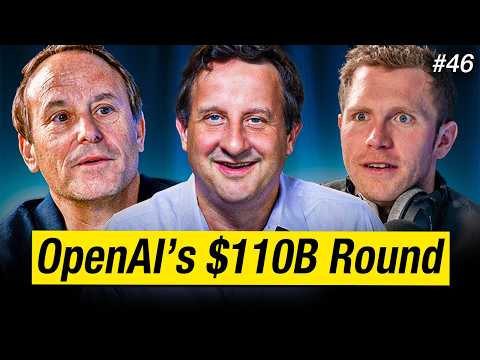
The only podcast you have to listen to every week.
No politics. Just tech.
- Anthropic vs The Pentagon: Who Wins
- OpenAI's $110BN Mega Round
- Cursor Hits $2BN in ARR
- Block's 40% Headcount Reduction: AI or Overhiring
Spotify 👉 open.spotify.com/episode/6kflT4…
Youtube 👉 youtu.be/7RHwE_M68BY
Apple Podcasts 👉 podcasts.apple.com/us/podcast/20v…
This week's show with @jasonlk and @rodriscoll 👇
YouTube
English