Elliot Nell

102 posts

Elliot Nell banner
Elliot Nell

Elliot Nell

@elliot_nell_

Co-Founder/CEO @MersenneTech and investing @novi_loren. Technologist, veteran. @NavalAcademy / @StanfordGSB

NYC Katılım Ocak 2025
243 Takip Edilen230 Takipçiler
Sabitlenmiş Tweet
Elliot Nell
Elliot Nell@elliot_nell_·
Would Laplace’s Demon take Pascal’s Wager?
English
0
0
1
256
Elliot Nell retweetledi
Erik Bruckner
Erik Bruckner@E_Bruxxx·
The most overlooked role in hard tech: Head of Finance / CFO
English
15
3
78
6K
Andrew Côté
Andrew Côté@Andercot·
What is the state-of-the-art in Data Center cooling systems - I am assuming there is an incredibly optimized heat-exchanger / regen stack.
English
11
0
18
6K
Elliot Nell retweetledi
Garry Tan
Garry Tan@garrytan·
Everytime I get mad at people in the cheap seats criticizing founders in the arena, I remind myself of what Giannis said. Arguably my favorite response to a reporter ever.
English
225
1.2K
9.6K
735.8K
Elliot Nell retweetledi
Jesse Peltan
Jesse Peltan@JessePeltan·
@EnergyJvd Harnessing the power of uranium and thorium is not in conflict with harnessing the Sun. Fission provides dense, on-demand, location independent power. Its value is differentiated. It’s extremely useful in areas with poor solar resource, like the far North or deep space.
English
4
8
136
47.9K
Jesse Peltan
Jesse Peltan@JessePeltan·
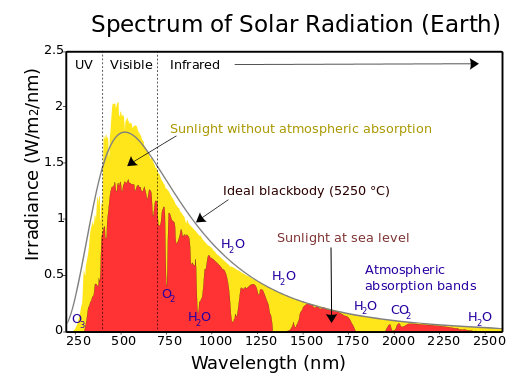
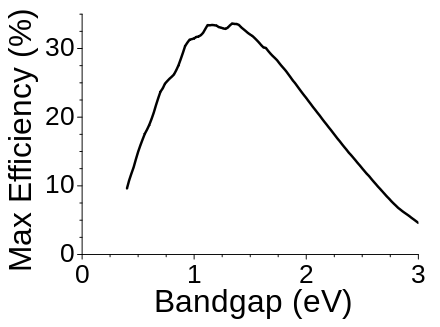
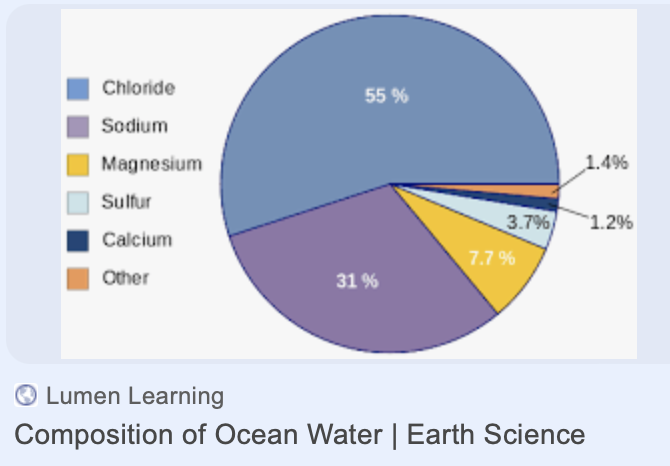
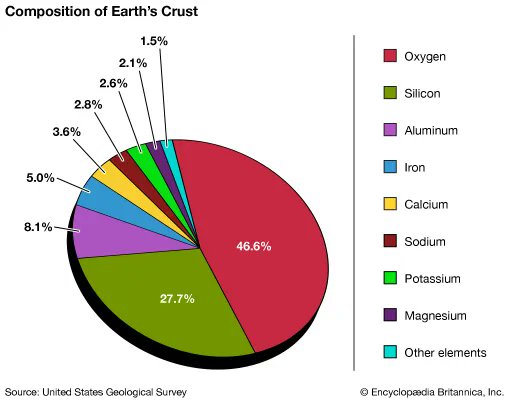
If God wanted us to build Type 1 Civilization, he would have: 1. put a giant fusion reactor in the sky (emitting blackbody radiation around 5800 K) 2. made 28% of Earth's crust out of a semiconductor with a matching bandgap (~1.1 eV or so) 3. filled the oceans with an alkali metal we could use to store limitless quantities of energy (sodium or something similar) That would be a crazy coincidence...
Jesse Peltan tweet mediaJesse Peltan tweet mediaJesse Peltan tweet mediaJesse Peltan tweet media
English
830
2.8K
16.7K
4M
Elliot Nell retweetledi
Ramez Naam
Ramez Naam@ramez·
Texas is building out renewables at a blistering pace. California isn't. The impediments to clean energy in the US aren't the repeal of the IRA or NEPA: They're state level permitting, environmental review, and interconnection policies. Charts by @JEBistline & @curious_founder
Ramez Naam tweet mediaRamez Naam tweet media
English
23
80
408
61.8K
Elliot Nell retweetledi
Packy McCormick
Packy McCormick@packyM·
A lot of people build startups to win the lottery instead of building the thing they'd build if they’d already won. The companies I'm most drawn to are ones that founders build as machines to do the stuff they want to do with other people who do, too. notboring.co/p/the-company-…
English
68
93
1.3K
300K
Elliot Nell
Elliot Nell@elliot_nell_·
@MakeSunsets I have genuinely believed for years that this was the optimal way to combat warming. Let’s pair with distributed nuclear to cut emissions! @MersenneTech
English
1
0
8
326
Make Sunsets
Make Sunsets@MakeSunsets·
Love this question—and it’s exactly why some folks get confused and say we should “just vent SO₂ from power plants.” They’re mixing up the troposphere and the stratosphere. Letting SO₂ slip past smokestack scrubbers would cool a bit locally, but it also drives acid rain, haze, and respiratory disease. In places/times where SO₂ controls have been weak (e.g., parts of India and China), that’s effectively what happens—and the health and environmental costs are huge. x.com/ASong408/statu… We go higher—into the stratosphere—on purpose. That’s where the ozone layer resides and where the Brewer–Dobson circulation slowly spreads particles around the globe. Ozone is produced mostly in the tropical stratosphere when UV splits O₂ and it recombines into O₃; then air motions transport ozone poleward, which is why satellite maps show a global “ozone layer.” If you release SO₂ in the troposphere, it’s washed out in days to ~10 days. In the stratosphere, it converts to sulfate aerosols that persist ~1–2 years, giving a cooler, steadier, global effect. In short: stratospheric delivery = fewer injections, longer life, and worldwide distribution—without the smog and acid rain you get from tropospheric emissions. It’s our “Ozempic for climate,” the same basic cooling mechanism big stratovolcanoes demonstrate in nature—just measured, higher up, and far cleaner for people on the ground.
Ryan Johnson×͜×@McgregorJonryan

@MakeSunsets I am a proponent first of all but have a question: SO2 is a major biproduct of Coal Plants with large plants emitting 30-60 tons per day- why not optimize scrubbers in their stacks to allow some or all S02 to pass through while still capturing other particulates

English
8
9
73
7.9K
Shay Boloor
Shay Boloor@StockSavvyShay·
THE ELECTRICITY VALUE CHAIN • $CCJ uranium supply • $CEG nuclear baseload • $SMR modular nuclear reactors • $OKLO micro-nuclear generation • $EOSE zinc long-duration storage • $GEV power conversion hardware • $VRT power distribution & cooling • $VST flexible generation & storage • $TSLA utility-scale lithium storage • $FSLR thin-film solar for hyperscale • $NNE utility-scale renewable buildout • $TLN North American renewable generation • $BWXT nuclear components & specialty fuel
Shay Boloor tweet media
English
101
774
3.9K
519.5K
Elliot Nell
Elliot Nell@elliot_nell_·
1. Pick the biggest problem you can work on. 2. Find a solution space with early indications of viability. 3. Sell others on the value of ideal solution. 4. Iterate to solution. This is the process
English
0
0
0
49
Elliot Nell
Elliot Nell@elliot_nell_·
@Object_Zero_ Anyone pushing Uranium and Tungsten into the Abundance Zone reach out!
English
0
0
0
149
Object Zero
Object Zero@Object_Zero_·
The price of everything on Earth. This chart is all of the natural occurring elements, their occurrence rate in Earth's crust (X-axis) and their price in USD (Y-axis). The chart illustrates three clear price regimes. 1. Yellow band is stuff that is economically priced this is within 1 order of magnitude of -1 log-log. 2. Stuff above the yellow band is expensive for its relative abundance on Earth. 3. Stuff below the yellow band is cheap for its relative abundance on Earth. There is a by-product trap in the global economy and this is the dominant choke mechanism, many of the elements above the red line are by-products of primary processes and you can't build dedicated economies of scale for a material without a primary process. Likewise some things below the yellow band are also by-products or waste products of a primary process. Titanium is the canonical process opportunity of the 21st Century, it sits well outside the economy for such an abundant material a clear sign that Kroll + chloride chemistry is the issue. Any viable electrolyte/plasma/FFC type route is a multi sigma unlock for humanity. Noble gases are on the floor, they are cheap to stockpile and tied to industrial air separation processes ie oxygen and nitrogen plants. Rare Earth sit tightly in the economically priced band, their pricing is separation process and demand mix dominated, not scarcity dominated. The kink/flattening at high abundance shows where scarcity stops mattering, beyond circa 10^3 ppm the economy hits the energy floor and energy / logistics drive price illustrating the Earth is well below its carrying capacity for humanity. The chart also demonstrates that national resilience lies on process capacity and not access to ore, this is quite different to the learnings of WWII. But hey, times change. Policy should invest toward primary processes or waste stream recovery for Ga/Ge/In/Sc/Re/Te and we should be funding science for process breakthroughs in Ti/V/Nb/Ta/Hf. On the whole, humans get a B+ (maybe we should get an A++ when you consider nobody even thinks about this stuff and we just Adam Smith our way to glory?) Fun to plot this for other worlds and figure out what processes make sense to take there. Obviously all the prices start much higher when you start over and you have to spend a long time driving them down. The chart for Earth is mature, we've been doing this here a few thousand years now.
Object Zero tweet media
English
78
275
1.8K
119.6K
Elliot Nell retweetledi
Kevin Sekniqi 🔺
Kevin Sekniqi 🔺@kevinsekniqi·
If you're terminally online and want to build the future of humanity @MersenneTech by meme'ing your way there, HMU. You're gonna socials, video content, and broadly speaking marketing strategy. Remote OK, US citizens only.
Kevin Sekniqi 🔺 tweet media
English
8
3
28
3.3K
Elliot Nell
Elliot Nell@elliot_nell_·
@MersenneTech is hiring for a Thermal Test Engineer based in VA to work on something you will brag to your grandchildren about. Experience in hot gas systems highly preferred. DMs open!
English
0
0
0
39
Elliot Nell
Elliot Nell@elliot_nell_·
@kevinsekniqi There could be no better time to build deployable nuclear power.
English
0
0
0
61
Kevin Sekniqi 🔺
Kevin Sekniqi 🔺@kevinsekniqi·
Power needs in space are going to explode exponentially, and solar isn't going to cut it.
English
6
3
28
2.9K
Elliot Nell retweetledi
DA Sails
DA Sails@da_sails·
DOE Nuclear Fuel Cycle DPA Consortium: Strengthening Every Link in the U.S. Fuel Chain Workforce Development • DOE & NEI project 18 K–25 K new skilled workers needed by 2032 • ~35 % of nuclear workforce retirement-eligible by 2030 • BIL funding expanding apprenticeships and safety training • DOE and industry partner with community colleges in ~30 states Recycling & Reprocessing • U.S. hasn’t reprocessed commercial fuel since the 1970s • ~96 % of spent fuel material (U + Pu) is potentially reusable • Closed fuel cycles can cut high-level waste by ~90 % • DOE’s CURIE program funds pyroprocessing and recycling R&D Supply Chains • Pre-ban, Russia supplied 24 % (2023) of U.S. enrichment services • DOE investing $3.4 B to rebuild conversion & HALEU capacity • Centrus Piketon demo expanding through 2026 with options to 2030 • enCore Energy targeting ~3 M lbs/yr U₃O₈ from Texas ISR hubs Fuel Cycle Efficiencies • Gas centrifuges use ≈ 5 % of diffusion energy per SWU • Laser (SILEX) tech may cut power use another 70–80 % • DOE pursuing ≈ 20 % cycle-wide efficiency gain by 2035 • Modern deconversion plants reduce UF₆ waste and emissions HALEU Availability & Strategic Reserves • HALEU (5–20 % U-235) fuels most Gen-IV reactors • DOE HALEU Availability Program allocates $700 M (IRA funds) • Federal Register (Dec 2022 & Oct 2024) details stockpiling framework • Goal: stable domestic supply for advanced reactors by late 2020s Forecasting Demand Growth • DOE targets ~200 GW new nuclear capacity by 2050 • 60–95 GW can come from existing or retired sites • Fuel infrastructure must scale for HALEU & LEU supply • ORNL models forecast mid-century capacity growth Bottom Line For the first time since the 1970s, the U.S. is rebuilding a sovereign, closed, high-efficiency nuclear fuel cycle…from mine to recycle…to secure energy independence and net-zero goals. #NuclearEnergy #EnergySecurity #HALEU $LEU $UUUU $BWXT $NNE $EU
DA Sails tweet media
English
2
6
31
7.2K
Dave Friedman
Dave Friedman@friedmandave·
It’s difficult to square the multi-trillion-dollar capex that American AI labs deem essential to advance the state of the art with the fact that Chinese labs are achieving near-comparable benchmark performance at a fraction of the cost. Some ways to resolve the apparent paradox: 1) The multi-trillion dollar claim is an extrapolation of frontier ambition, not of current necessity 2) U.S labs are building vertically integrated ecosystems; Chinese labs are parasitic on existing infra 3) Benchmark parity does not imply generalization parity. 4) Cost compression in China comes from diminishing returns in the West (they're exploiting algo efficiency techniques that the West already published). 5) It's not an apples-to-apples comparison. US AI labs are quasi-financial institutions at this point, with investors modeling long-duration AGI monopoly rents. Chinese AI is a national industrial project: compute is allocated through state channels, costs are socialized.
English
1
0
1
149
Elliot Nell retweetledi
Andrew Côté
Andrew Côté@Andercot·
The US Navy has managed a total of 273 nuclear reactors, 6200 reactor-years, over 177 million miles, averaging 4 new reactors per year over 70 years. They have done this with a perfect safety record. Zero accidents. Zero injuries, zero deaths, zero environmental pollution.
Andrew Côté@Andercot

The view that the US has stopped producing nuclear reactors is actually pretty inaccurate. Over the last decade the US Navy has commissioned 1-2 new nuclear reactors per year. They currently operate 100 reactors, more than any other org on the planet.

English
666
4.2K
35K
1.8M
Elliot Nell retweetledi
Packy McCormick
Packy McCormick@packyM·
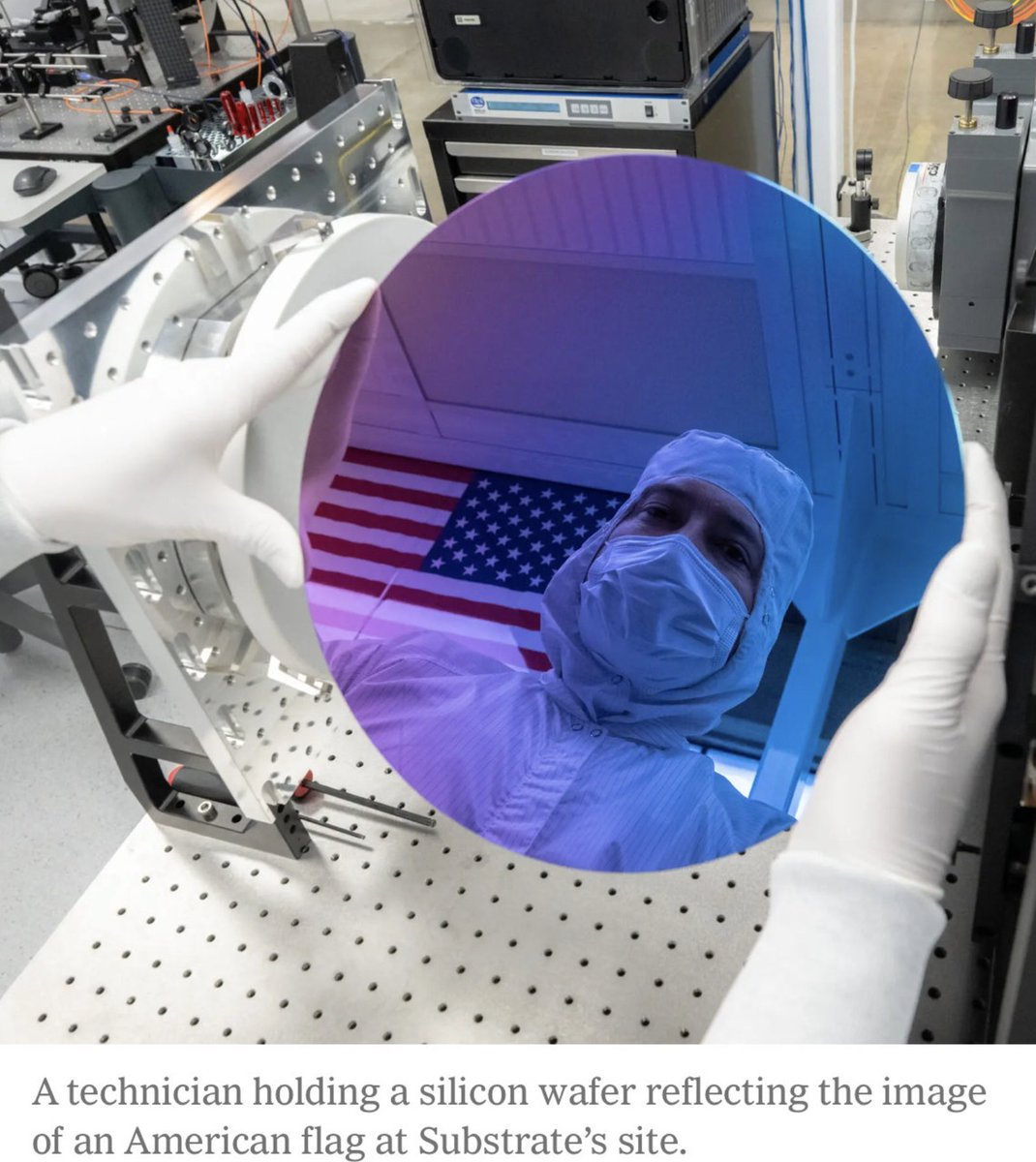
Substrate vs. ASML & TSMC. Extropic ships thermo chips. Mazama makes geothermal super hot. Mersenne announces compact nuclear. Valthos raises for next-gen biodefense. 1X begins selling NEO home robots for $20k. +J. Storrs Hall x Abundance ++ X-59 What a week for the optimists.
Packy McCormick tweet mediaPacky McCormick tweet mediaPacky McCormick tweet mediaPacky McCormick tweet media
English
15
14
119
22.4K