
Sabitlenmiş Tweet
Jesse
26.9K posts

Jesse
@Ember421
Process engineer. Energy, infrastructure, industrial decarbonisation, P(🌎net0|☢️📉) less than P(🌎net0|☢️📈). Views my own. Ember42 at m**https://t.co/I5egdcoNEx or BS
Ontario, Canada Katılım Kasım 2018
1.3K Takip Edilen1.6K Takipçiler
@CapriciousQT @_AndrewRN We refine roughly the same amount we use, and mostly regionally balanced except for BC has a deficit and NB has a surplus.
Refined products are hard to ship far economically, so where we export we satisfy local US markets.
English

@_AndrewRN also population of Canada in 70s with 40 refineries....around 24mill ppl. Now we have over 40mill ppl so clearly we need more....processing and jobs
English

There’s a reason Canada doesn’t have 40 refineries anymore, and it’s because the refineries that remained became more productive.
Canada’s refineries in the 70s process 40-50k barrels per day.
Canada’s current refineries process ~120k barrels per day.

CapriciousQT@CapriciousQT
@Mellyfax @BillFredericco @EvanRenStan @CanadianCoffey we used to have 40 refineries in the 70s. Looked it up a few weeks ago. We need to start up our OWN refineries again. Sure they are dirty but its 10 yrs to build & its needed for Sovereignty.
English

So much of modern engineering is inseparable from 9.8 m/s2 gravity and STP. Some people who talk about a space industry don’t understand that and it shows
English
@stephens_t8238 @Gabby_Hoffman Water tables are rarely at sea level unless you are right at the coast.
If you have a shallow well, general construction could absolutely impact your water source. It’s not data center specific. Agricultural runoff is a noted issue in places.
English

@Ember421 @Gabby_Hoffman Just how deep do those pilings go? Hundreds of feet? Or is the water table and the land both about sea level?
Sounds like more bullshit to me, just like the fracking bullshit.
English

Closed-loop cooling in data centers DOESN'T use municipal drinking water. Local drinking supply is therefore unaffected.
Where was this water sample was sourced from!?
The Congresswoman is the key House author of the Green New Deal resolution. Be skeptical of her performative gestures.
Rep. Alexandria Ocasio-Cortez@RepAOC
This is what drinking water in Georgia looks like after Meta began data center construction in the community. Today I called for EPA and Congressional investigations into the impact of data center construction on local drinking water supplies. We cannot take water for granted.
English
@stephens_t8238 @Gabby_Hoffman “Closed loop” doesn’t tell you what the ultimate heat sink is, it just tells you what goes to the IT side. The ultimate sink could be air cooling (no water consumption), evaporative, hybrid etc
But construction (pilings, etc) could also introduce contamination into a water table.
English
@Gabby_Hoffman She's either an idiot, a liar or both.
Closed systems use demineralized water, to prevent corrosion and calcification. You don't drink that, and you don't water golf courses with it or flush it.
And you demineralize just what you need to save cost.
English
@duncancampbell And ironically, ends out being unwilling to pay for firm gas contracts with such low utilization…
English

One possibility of BTM for DCs is they overbuild build a bunch of high heat-rate gas power, it connects to the grid a few years later, and now the grid has a a bunch of extra peaking capacity that almost never runs and thus doesn't pollute, but backstops solar and wind expansion.
English
@TKavulla @AmericanAffrs Would it make sense to have that “open season” run on the generation side in parallel, and then comparison would select power and load resources to maximize the amount added while still having the load ‘willingness to pay’ cover the generation ‘willingness to build’?
English

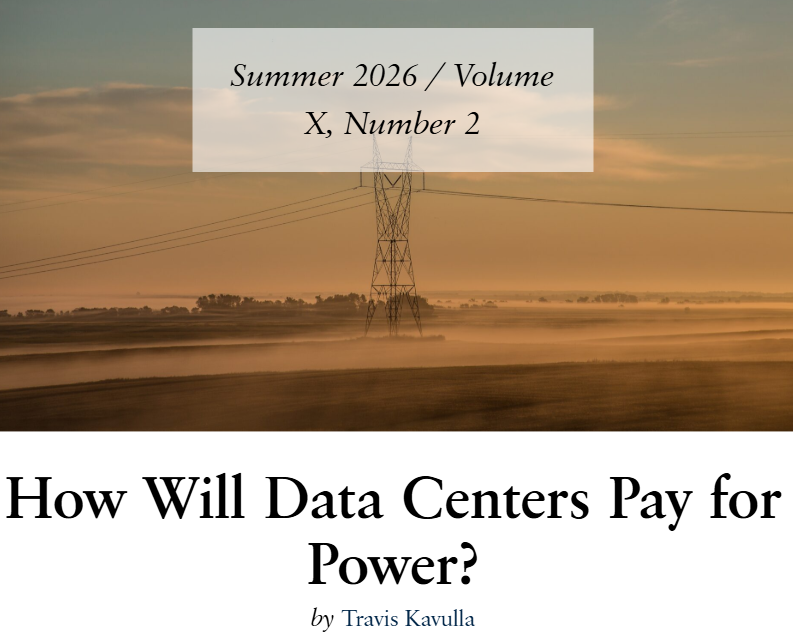
Out today: My @AmericanAffrs essay trying to reset the often-fever-pitched conversation about data centers & energy, with concrete ideas for how growth can be accelerated and legacy consumers can be protected -->
English
@NiyerEnergy It also means the comparison is not to the LCOE you are fuel saving against, but the marginal cost to operate…
English

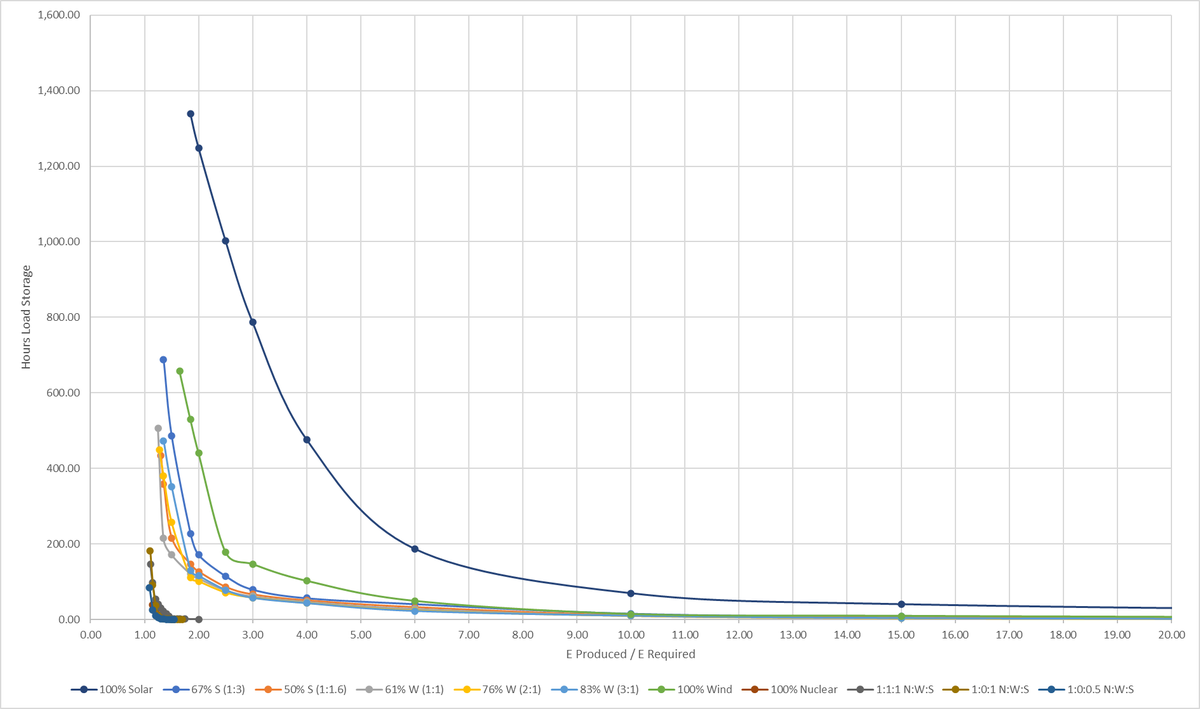
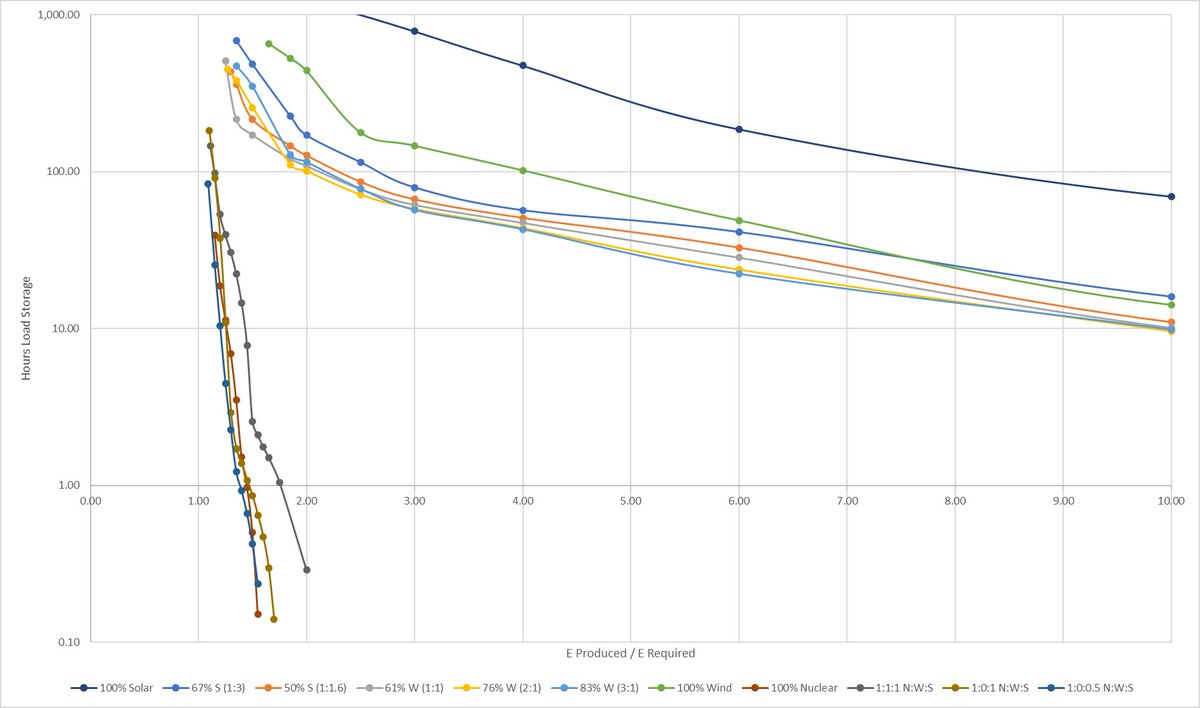
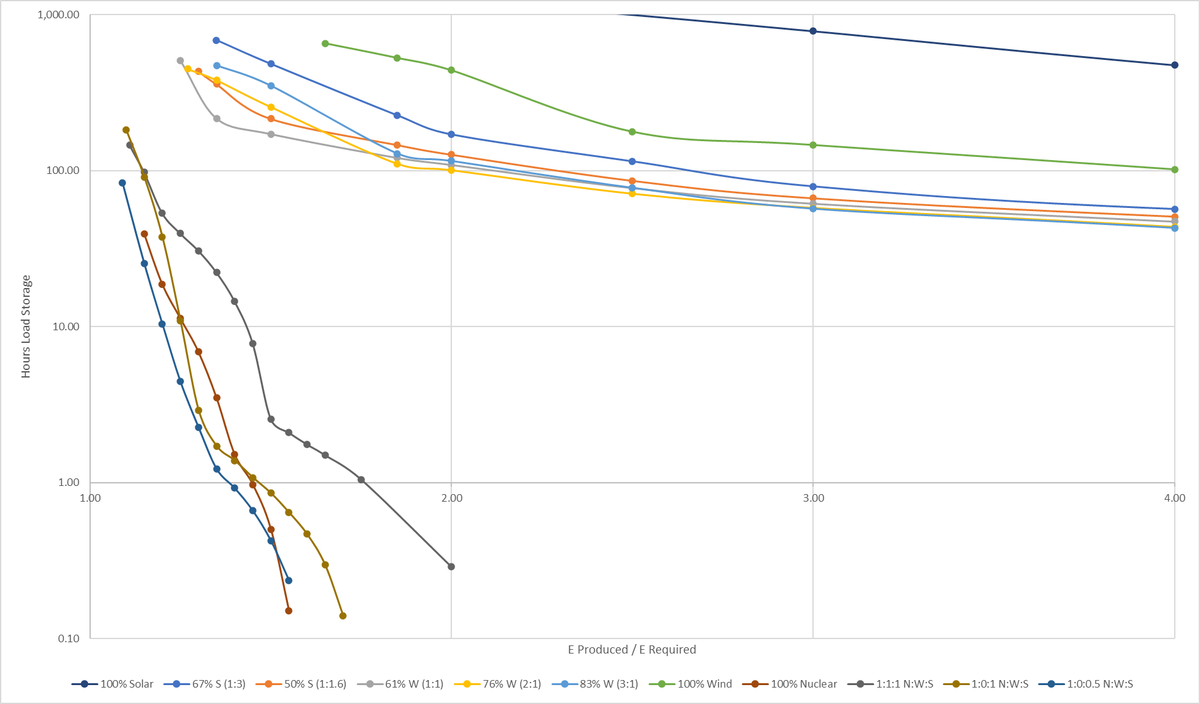
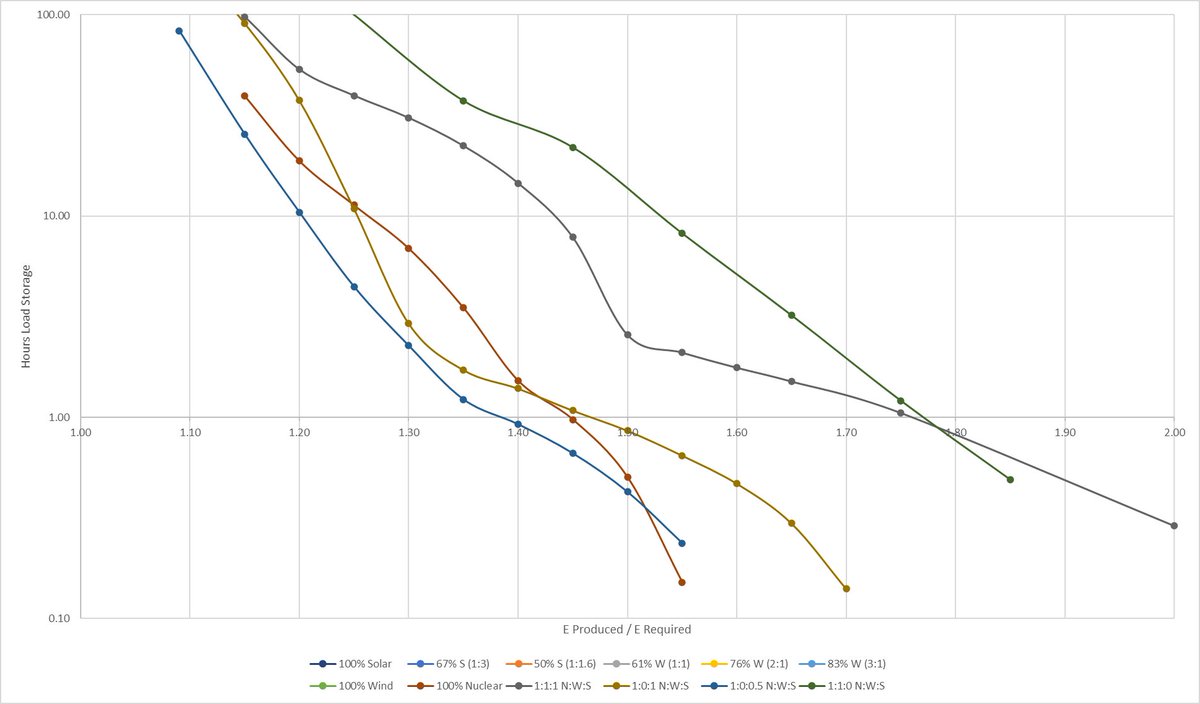
Ay so LCOE is fine actually for fuel saving resources, but like you're gonna hit declining marginal returns at 40% solar and 50-60% wind and 70% combined.
So it creates a "regime shift" at higher levels of clean the optimization flips aggressively from pure renewables to pure clean firm.
English
@Metamagician @HistoryBoomer But *someone* in the authorship team should have read it, and taken responsibility on behalf of the larger team, no?
Of course that’s not even the standard ArXiV is asking for. They are just asking for all the references to be *real*…
English

I've been following this without wanting to get too involved. As someone who is trained in law and analytic philosophy, I'm used to quoting and dissecting the books, articles, legal judgments, etc., that I cite, with precise page numbers given, discussion of nuances of how the text should be interpreted, etc. Law journals, in particular, will have a team of people going through all this very closely once a paper is accepted (I did some of this kind of reference checking myself when I was on the board of the Melbourne University Law Review - which, like other traditional law reviews, was run by students with oversight from academics).
But I try to be fair.
I don't see how the following applies to economics ... but in a field like climate science, where a paper might be put together by dozens of hyperspecialized collaborators who have to trust each other, I can imagine that not every collaborator will normally read every paper that every other collaborator wants to cite. Maybe there will be one or two people who have enough general understanding across the entire project to read everything, but others may have to take on trust work that is out of their own field and which they'd find incomprehensibly specialized.
If the sort of remarks being made by defenders of not having to read every cited paper were restricted to this sort of situation - involving large scientific research teams with hyperspecialized experts across numerous relevant fields - I'd be more sympathetic.
English

How can you cite something that you haven’t read?
Bizarre mindset.
Lenka Zdeborova@zdeborova
@eiszett Have you read all the sources you ever cited? During my PhD we, along with dozens of other papers, cited a paper that I later found did not contain the result for which it was commonly cited. I should be banned I guess.
English
@MatthewWithy The actual media for (solid) thermal storage is the trivial cost part.
The insulation system, electrical system, and thermal transfer systems are where the money is for sure.
English

@Ember421 I keep counting the transformers and then trying to estimate the LV cable diameters.
I suspect there is more money in electrical infra than in their boxes full of graphite blocks.
English
This is the correct press release for a thermal energy storage company.
“We built it and it’s on already”
50MW \ 5GWh thermal. Interesting.
Antora Energy@antoraenergy
Today, we’re proud to announce the commissioning of Project Big Stone, one of the world’s largest battery storage systems. The 5 GWh project is already delivering round-the-clock energy to @POETbiofuels' Big Stone City, SD facility: antora.com/project-big-st…
English
@moebius_strip @alexcerne I agree with the *should* but the Arxiv rules clarification there were just that the references were not hallucinations.
English

@Ember421 @alexcerne they have to exist and they have to say what the author is claiming they say. If an author cites a 500-page book, the author doesn't have to have read the entire book, but they should have read the relevant part.
English

One of my least favourite things about our current era is now many people and institutions are gleefully throwing their credibility on a bonfire.
James Miller@JimDMiller
So this means you expect every author to check every citation and make sure that every citation is real and accurate? What if it's beyond the ability of one of the authors to verify one of the citations because that citation is in a language he doesn't know or concerns technical material he doesn't understand but another author on the paper does?
English
@Xort_TC @johnrhanger IRENA redefined ‘firm’ specifically for their report…
English

@johnrhanger If firming was cheaper than coal at 3 cents we would see massive roll out of batteries to act as peaking plants and pull in rates 20 times higher than average. We don't so we know that's just not true.
English
Um...batteries.
Solar plus batteries and wind plus batteries...firmed wind and solar are CHEAPER NOW than gas or coal plants in many grids around the world.
Anti-RE zealots and Petrostate supporters are in denial.
Here is the IRENA data:
irena.org/News/pressrele…
Grubbycw@Nyplodder
@johnrhanger @mwt2008 Meaningless, because still it doesn't produce anything when the sun doesn't shine, - the word is intermittent. Tell me the plan to get around that in a cost effective manner?
English
@RichardRusk007 Part, but a fraction.
The problem being that all the solar and all the wind in a region each have common cause outages modes. They are not independent, but highly auto-correlated.
English

Coal plants have unplanned outages. All sources do.
A multi-source grid with spare capacity is reliable. Solar and wind can be a part of it.
Chris Gloninger, CCM, CBM@ChrisGloninger
When a coal plant trips offline, it generates exactly the same electricity as zero coal plants. In July 2025, this happened in Texas to roughly 37% of ERCOT's accredited coal capacity, about 5,000 MW of unplanned outages, and wind and solar filled the gap. Every generation source has a capacity factor below 100%, and grids have always been planned as portfolios rather than as single assets. The "one million idle turbines equals one idle turbine" framing only works if the entire continental United States is windless simultaneously, which is the reason grids are planned around geographic diversity rather than single weather events. ERCOT, which is run by a state legislature that does not appreciate climate lectures, drew roughly 36% of its electricity from wind and solar in the first nine months of 2025 per EIA data, while the lights stayed on through record summer peak demand. The argument survives only by not looking at the data from the most pro-fossil grid in the country.
English
@MattLoszak 4. A very limited set of applications that have tractable heat transfer methods, are higher temperature than normal steam, but not higher temperature that practical core and heat exchanger MoC can tolerate, after at least two exchanges...
English

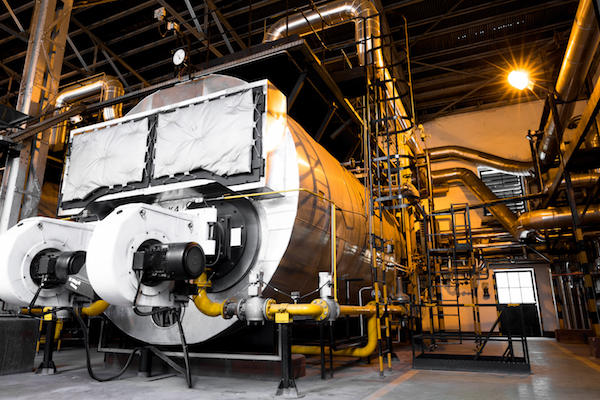
Nuclear has long dreamed of powering industrial process heat, but it's never actually happened at scale.
Why not? 🧵
English
@Beazy_Rampezy @Atomicrod Wouldn’t light water moderate a lot more than heavy water, so a light water filled calandria could do as much as a heavy water calandria AND tubes?
To that it sounds exotically energy dense or low U consumption, but better than a HALEU / graphite design?
English

@Ember421 @Atomicrod Full circle.
Now you’re back to needing a larger space for the He to create the same moderation impacts as you would having D2O and pushing the H2O, and any moderation, further away from fuel.
So I’m back to my original question.
English

Imagine a reactor that uses cheap, readily available and very effective light water as the moderator with low cost, inert helium gas as the heat transfer fluid.
Since the water isn't moving heat from the reactor, it doesn't need to be hot or pressurized. And, as Admiral Rickover famously said, water doesn't crack.
When in contact with helium or low temperature water, zirconium alloys are both effective cladding and not susceptible to hydrogen-generating metal-water reactions.
With water moderation, regular fuel can enable long duration, compact cores.
(Regular fuel = LEU in the form of UO2 pellets at <5% enrichment.)
Without pressurized water, reactor vessels can be thin walled, relatively light and easily manufactured.
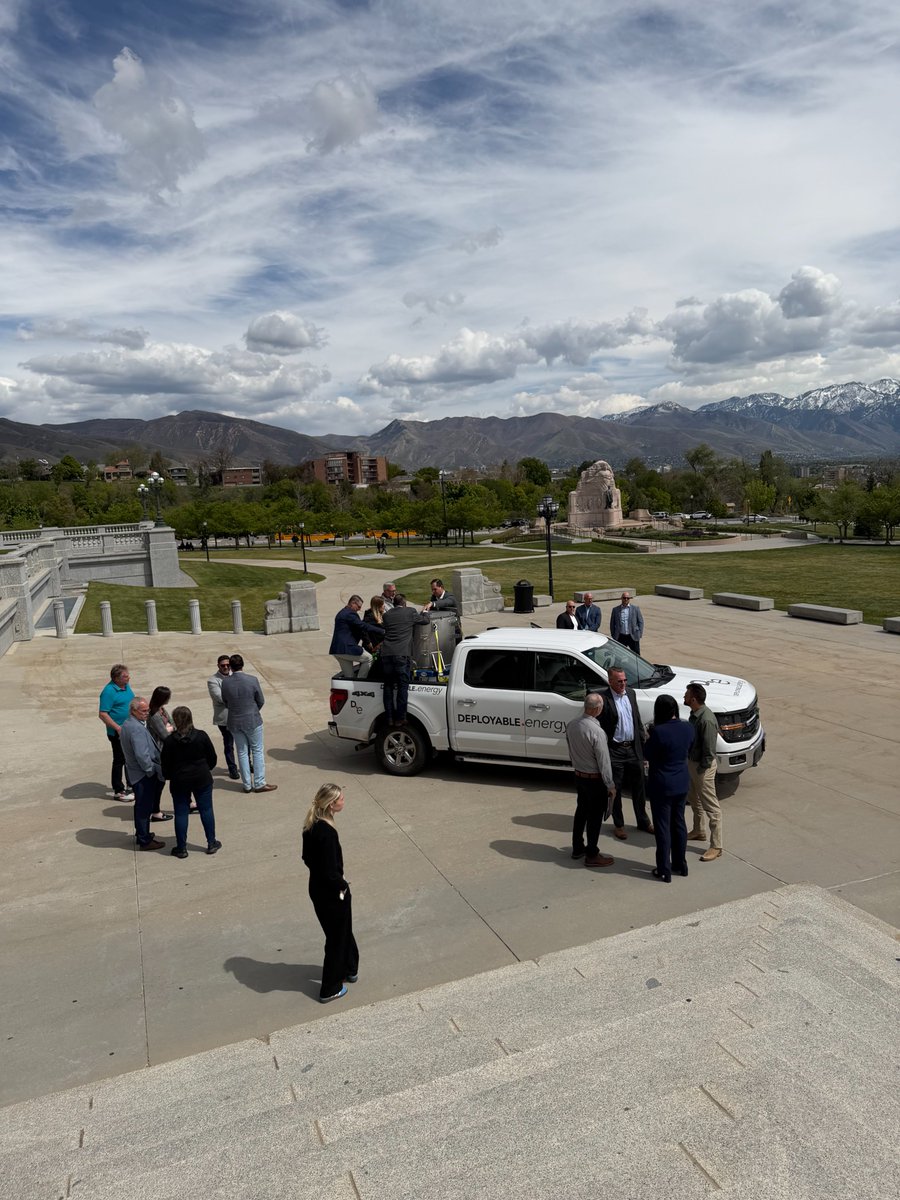
These ideas are some of the foundational concepts for Deployable Energy's Unity Nuclear Battery.
Bobby Gallagher, the founder, CEO and CTO of Deployable Energy joined me for Atomic Show #345 to talk about his company, their product and their visions.
Link to follow.
English
@Beazy_Rampezy @Atomicrod The water would not be in the pressure tubes, the HE would, along with the fuel...
English
@Ember421 @Atomicrod Then you don’t need the He…
🤷🏻♂️
And the goal of a power producing system is a large temperature differential.
100C at the fuel surface doesn’t get you that at all.
English
@Beazy_Rampezy @Atomicrod Yes, but if you cycle it enough (like a CANDU), you can keep it below 1bara pressure / <100C.
English
@Beazy_Rampezy @Atomicrod In a one sentance answer at the start of the episode, sounds like it is this kind of config. But not NU, so presmuably doesn't need as much neutron efficiency so H2O vs D2O in the calandria?
English
@Ember421 @Atomicrod Yeah. But CANDU’s have D2O in the fuel tubes versus helium. Meaning you’re already getting some moderation benefit better than He. Without that, and with He density…you need more space for He. And then you’d reduce the efficiency of the moderator. And tons of leakage. 🤷🏻♂️
English
@Beazy_Rampezy @Atomicrod CANDU style fuel tubes, but with He in them, and a water filled calandria?
English
@Atomicrod I’ve actually never heard this as their concept before. Interesting.
How is the H2O close enough to fuel and heat transfer fluid to actually moderate but not experience any heat transfer?
You gotta get H2O under 400F for the Zr-H reaction elimination I think?
English