
ibukun' oluwadamilola

19K posts

ibukun' oluwadamilola banner
ibukun' oluwadamilola

ibukun' oluwadamilola

@ibukun_dami

A systems thinker decoding performance in sports & cities https://t.co/QyovrQZP7F ✍🏾 https://t.co/OSpTj30WcS 📩 https://t.co/YvCA09vhW3

lagos Katılım Şubat 2012
1.5K Takip Edilen1.4K Takipçiler
ibukun' oluwadamilola
ibukun' oluwadamilola@ibukun_dami·
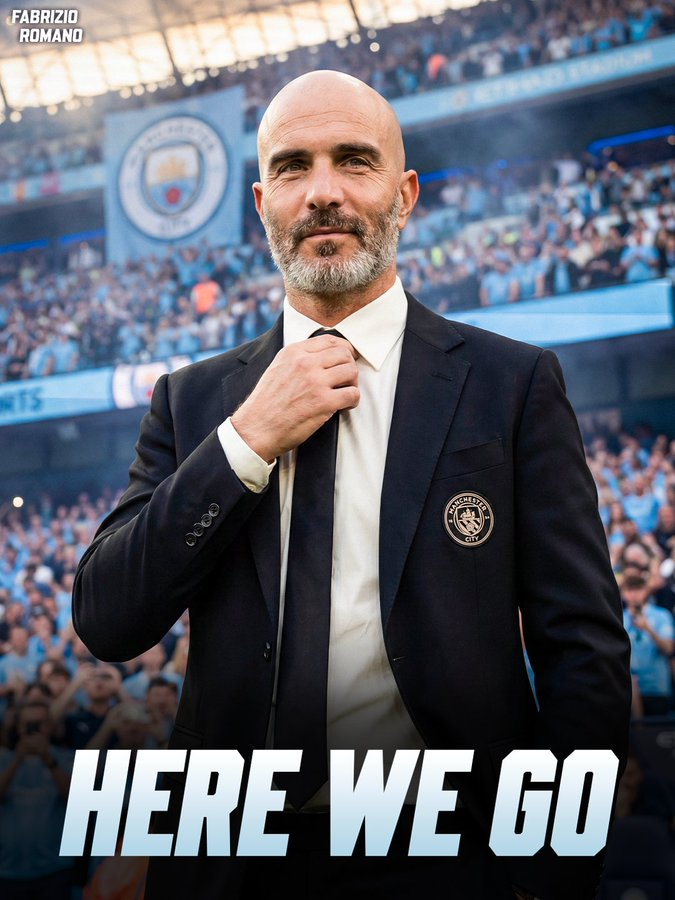
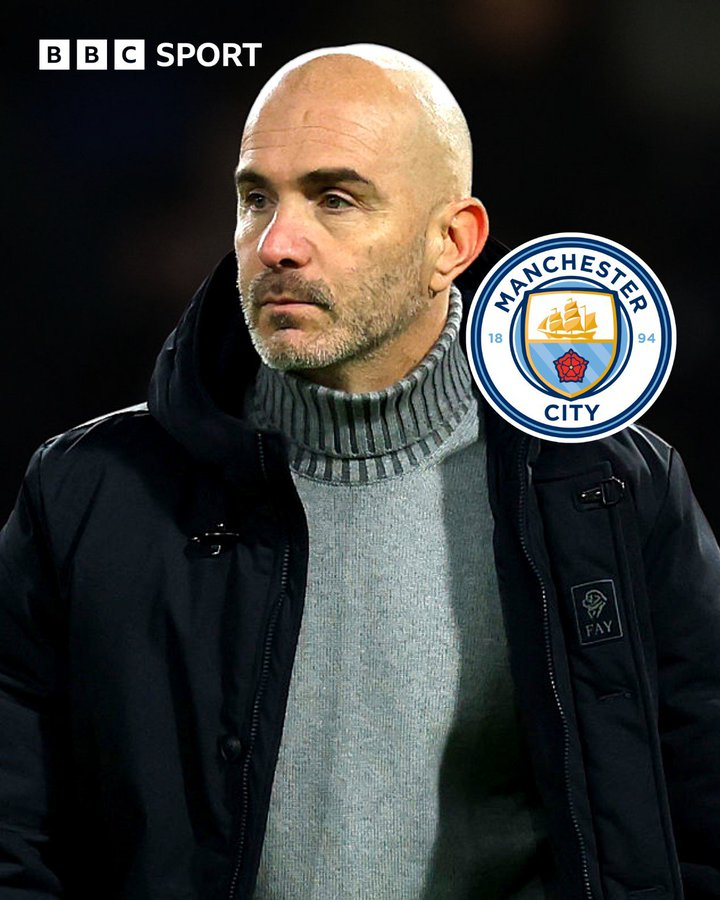
Enzo Maresca to Manchester City is not a sentimental appointment. It would be a structural bet on continuity of ideology, with a calculated acceptance of tactical evolution risk. Maresca’s footballing identity is explicitly Pep-derived, but not a copy-paste version. It is a refinement of positional play with heavier emphasis on controlled progression, third-man combinations, and structured rest defence rather than pure territorial dominance. At Leicester City, his work in the Championship was defined by control in a transitional chaos league. He imposed a possession-first structure in a division that often punishes slow build-up. The outcome was success through dominance rather than volatility reduction. The key tactical feature was the use of inverted full-backs and a midfield box that consistently created superiority in central lanes. At Chelsea, the context shifts. You are dealing with higher variance players, less tactical continuity, and a squad still in identity formation. His implementation there has been about stabilising possession phases, reducing vertical chaos, and building repeatable chance creation patterns rather than relying on individual brilliance or transition-heavy football. Where he succeeds, Chelsea begin to resemble a “positional control team in progress” rather than a reactive side. Now, the Manchester City question introduces a different layer entirely. City under Pep are already the most structurally complete possession team in Europe. So Maresca’s appointment would not be about revolution. It would be about continuity with subtle recalibration. Tactically, the expectation would be: -Preservation of inverted full-back structures -Greater emphasis on midfield rotation timing rather than static occupation -Slight increase in positional risk-taking in final third combinations -More explicit “automation-based” build-up sequences, reducing dependence on improvisational genius moments The reward side is clear. City would retain their identity beyond Pep, ensuring system survival after a generational manager. Maresca is one of the few coaches who understands positional play at a granular enough level to avoid structural regression. He would likely maintain elite possession metrics, chance quality control, and defensive rest structure efficiency. The risk, however, is equally real. First, managerial inheritance pressure. You are replacing not just a coach, but a footballing era-defining figure. Any dip in intensity or efficiency will be amplified. Second, adaptability ceiling. Maresca’s system is structured. Against elite tactical disruptors in knockout football, rigidity can become a constraint if in-game deviation is limited. Third, dressing room dynamics. City’s squad is built around elite autonomy within structure. Over-systemisation risks reducing expressive edge in key moments. The most important truth is this: Maresca at City would not be about improvement in dominance. It would be about preservation of dominance with lower volatility in transition between managerial cycles. In other words, Guardiola builds the empire. Maresca would be tasked with preventing its architectural decline. My view is straightforward. It is a smart footballing appointment on paper, but it only succeeds if City accept that continuity of control will replace evolution of control. If they expect innovation on Pep’s level, the project becomes misaligned from day one. That is the real tension: inheritance versus reinvention. #EnzoMaresca #ManCity #PepGuardiola #ChelseaFC #LeicesterCity #TacticalAnalysis #PremierLeague #FootballTactics #PositionalPlay #FootballTwitter @premierleague @ManCity @Edwyeen @PremLeaguePanel @ESPNFC @SkySportsPL @The_Khalifaa @tobyasky @McFlybowy @devoyceofgod @genakhena
ibukun' oluwadamilola tweet mediaibukun' oluwadamilola tweet media
English
2
2
2
138
ibukun' oluwadamilola retweetledi
Rola
Rola@kofoworola__a·
Now that Guardiola is leaving, I expect all ManCity fans to return back to their original clubs
English
401
2.6K
18K
261.7K
ibukun' oluwadamilola retweetledi
Edwin Onyebolise
Edwin Onyebolise@Edwyeen·
#SportsCafe • NBA • Arsenal • Pep • Jose Mourinho • Neymar
HT
7
11
40
763
DEVOYCE
DEVOYCE@devoyceofgod·
Who’s your flop of the 2025/2026 European football campaign? I’d go LIAM DELAP! You?
English
10
1
7
933
Sam Humphreys
Sam Humphreys@SamHumphreys34·
OKC just took the Spurs best punch, and it still took 2OT, on a night where everyone not named Dub and Caruso were objectively horrible. I remind you that last year OKC lost Game 1 against Denver on a Gordon game winner & Game 1 against Indy on a Hali game winner. Long series.
English
963
232
2.9K
298.1K
ibukun' oluwadamilola
ibukun' oluwadamilola@ibukun_dami·
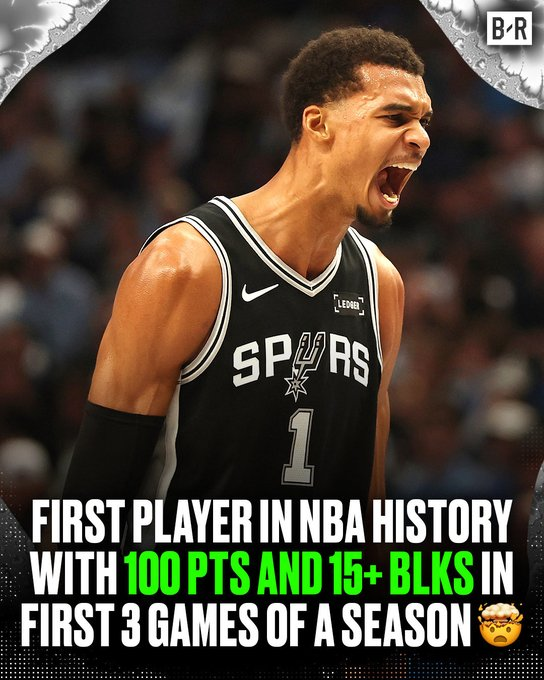
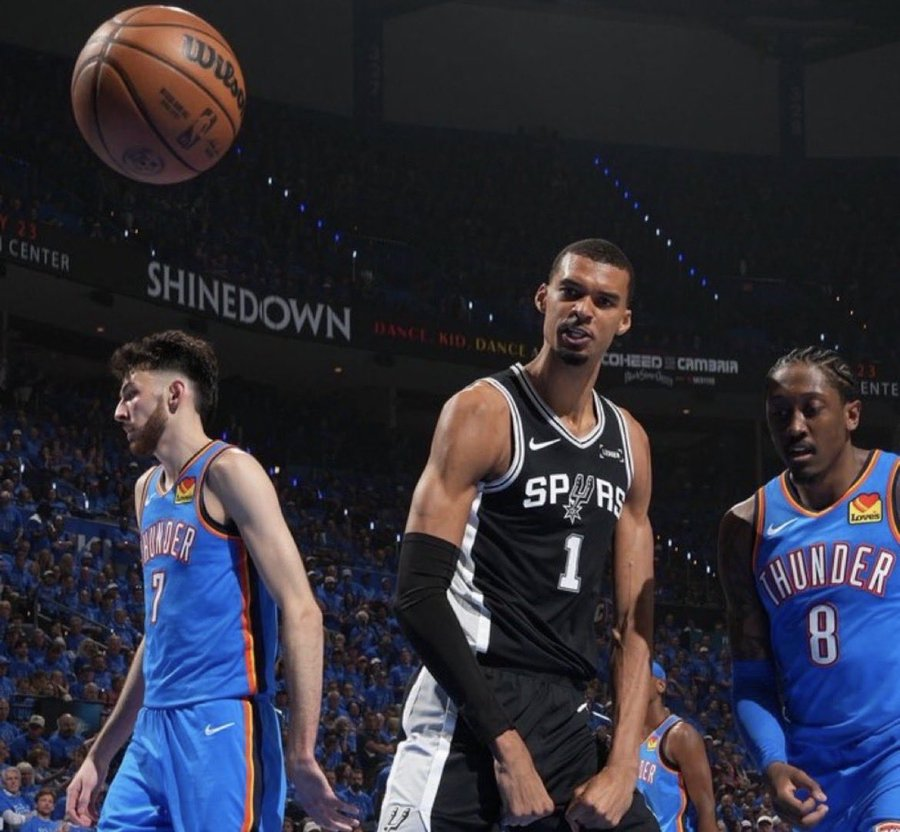
Victor Wembanyama is already operating in a category that modern basketball struggles to properly classify. At 7’4” with perimeter coordination, he is not just a mismatch problem; he is a system disruption. Defensively, he compresses space before possession even stabilises. Offensively, he bends coverages simply by existing above the normal decision-making horizon of defenders. What makes Wembanyama distinct is not only the highlight blocks or the perimeter shot creation, but the speed at which his game is scaling. Most big men develop incrementally in one direction: rim protection or interior scoring or spacing. He is expanding across all three simultaneously, which is structurally rare. If you project him forward, the ceiling conversation becomes less about All-Star or All-NBA tiers and more about whether a single player can anchor both elite offence and defence without requiring structural compromises from the roster. That is historically uncommon even among the greats. There is still development ahead, particularly in strength absorption, decision economy under physical pressure, and late-game shot selection consistency. Those are the margins that typically separate dominance from legacy. But the baseline is already uncomfortable for the league. San Antonio does not simply have a franchise player; they have a gravitational force that forces opponents to redesign their entire half-court approach. The honest framing is this: if his trajectory holds, we are not looking at “best in his position” conversations. We are looking at “how do you game-plan a player who affects every layer of the floor at once?” That is what true dominance looks like before it fully arrives. #NBA #VictorWembanyama #Spurs #Basketball #NBADominance #FutureOfBasketball #NBAPlayoffs @farashade1 @NBA @The_Khalifaa @_JasonLT @stephenasmith @Chris_Broussard @ESPNNBA
ibukun' oluwadamilola tweet mediaibukun' oluwadamilola tweet media
English
0
3
6
172
ibukun' oluwadamilola
ibukun' oluwadamilola@ibukun_dami·
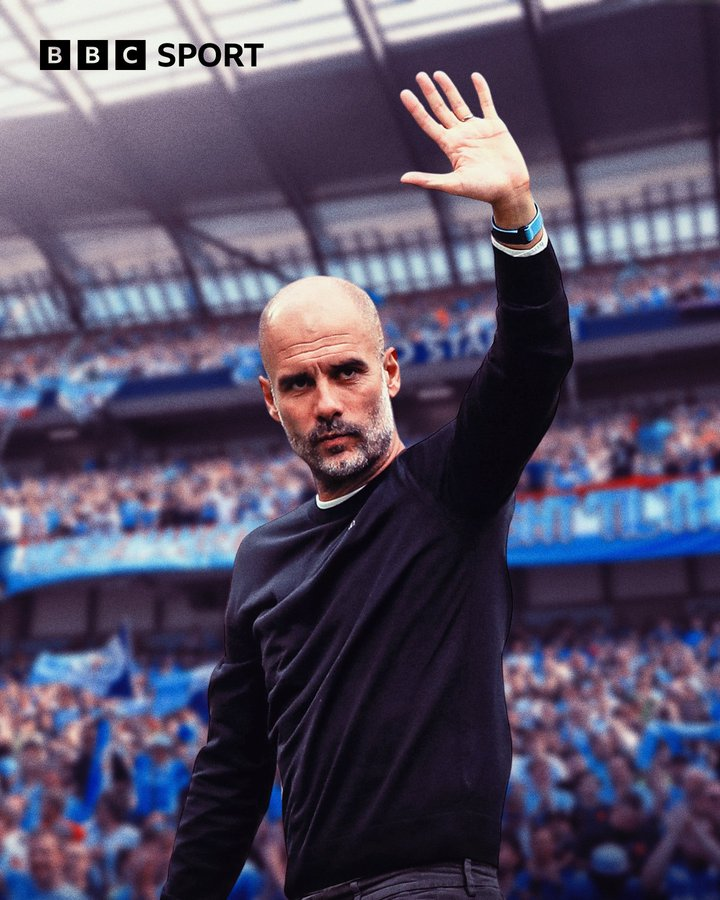
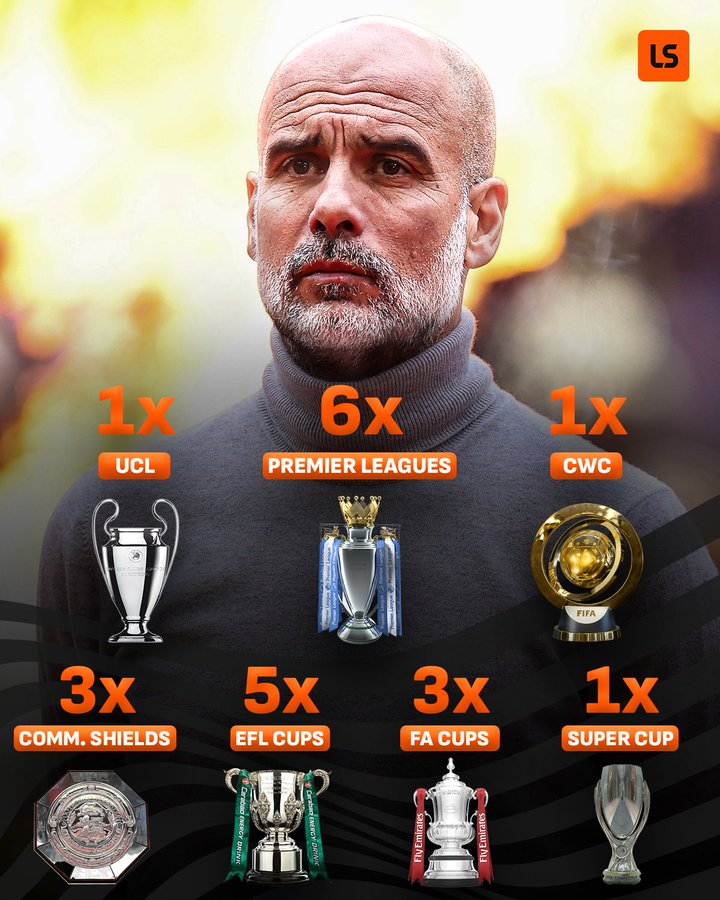
Pep Guardiola winning his 20th trophy at Manchester City feels bigger than silverware now because at this point, Pep is no longer just a successful manager. -He is an era. -A football ideology. -A tactical reference point for an entire generation and English football will never look the same again because of him. A thread 🧵 When Pep arrived in England in 2016, there was genuine scepticism. People said: “He only succeeds with elite teams.” “His football is too idealistic for England.” “The Premier League is too fast and physical.” “Cold rainy nights” and all the usual clichés. What followed was one of the greatest tactical invasions English football has ever seen. Pep did not merely win in England. He changed England. Look at the league before and after him. Before Pep: -transitions dominated -chaos was celebrated -technical midfielders were secondary -build-up play was inconsistent After Pep, everyone suddenly wanted: -ball-playing centre-backs -inverted full-backs -positional rotations -elite build-up structures -pressing systems -control He recalibrated the tactical IQ of the league. The most remarkable thing about Pep at Manchester City is adaptability. People wrongly describe him as rigid. In reality, Pep may be the most fluid elite coach of his era. -The Barcelona version. -The Bayern version. -The City version. All completely different ecosystems with the same principles and different executions. At FC Barcelona, Pep created perhaps the purest expression of positional football we have ever seen. That team felt like geometry in motion. -Xavi controlled rhythm. -Iniesta manipulated space. -Messi destroyed structure. -Busquets organised everything invisibly. The ball became a weapon of suffocation. Opponents barely touched it, but the Barcelona side often gets misunderstood. People reduce it to “tiki-taka”. That team was not sterile possession. It was aggressive possession. They used the ball to: -manipulate pressing structures -create overloads -isolate weak defenders -destabilise defensive shapes It was positional domination with violence underneath it. Then came FC Bayern Munich and honestly, that may have been Pep’s most intellectually ambitious phase. He walked into a club that had just won the treble under Jupp Heynckes and still tried to evolve everything. -False full-backs. -Centre-backs stepping into midfield. -Hyper-positional structures. -Insane rotational patterns. Some people hated it. Coaches around Europe studied it obsessively. Pep’s Bayern side did not fully conquer Europe. But tactically, that team became a research laboratory for modern football. A lot of concepts elite teams use today were refined there. You can see traces of Bayern's Pep in: -Arteta’s Arsenal -Alonso’s positional systems -De Zerbi build-up patterns -even aspects of modern international football Then came Manchester City F.C. and this is where Pep became something else entirely. This is because England forced him to evolve beyond idealism. The Premier League does not allow comfort. You deal with: -relentless transitions -physical duels -compressed schedules -tactical variety -emotional intensity Pep adapted and that adaptation made him even greater. Early City were obsessed with control and later City became monsters in every phase. They could: -dominate possession -destroy you in transition -press high -defend deep -attack wide -attack centrally -play physically -play technically That flexibility is why they became historically dominant and then there is the psychological effect Pep had on English football. Managers stopped thinking survival-first. Suddenly everyone wanted: -automatisms -structures -coordinated pressing -possession identities Even relegation-threatened teams now try to build from the back because Pep normalised tactical ambition across the pyramid. That influence is enormous. What separates Pep from many great coaches is sustainability. Most dynasties collapse after 3 or 4 years. Pep kept rebuilding. Different title-winning teams: -Aguero era -David Silva era -De Bruyne era -Haaland era -Different tactical structures too. -False 9s. -Box midfields. -Inverted full-backs. -Wide wingers. -Dual pivots. He keeps evolving before opponents fully solve him. and honestly, one underrated aspect of Pep’s greatness is his courage. This is because hyper-technical football is risky. One mistake and you look foolish. Pep never abandoned his footballing convictions completely even when critics mocked him relentlessly. That stubbornness reshaped modern football. The funny thing is people spent years trying to separate “great coach” from “great resources” with Pep. But football history already answered that. Elite clubs always hire elite minds. Nobody questions: -Ferguson at United -Sacchi at Milan -Cruyff at Barcelona Pep belongs in that lineage now. 20 trophies at City is absurd but the trophies alone do not explain the legacy. Pep changed: -coaching language -recruitment logic -player profiles -tactical education -academy structures -build-up philosophy -entire football cultures shifted around him. That is deeper than medals and maybe the ultimate compliment is thus: Even the coaches trying to “reject Pep football” are still reacting to Pep football. That is influence. The game bends around certain people historically. -Cruyff did it. -Arrigo Sacchi did it. - Sir Alex Ferguson did it. -Pep Guardiola did it for this generation. #PepGuardiola #ManCity #FCBarcelona #BayernMunich #PremierLeague #Football #Tactics #UCL #DeBruyne #Messi #Haaland #Arteta @PepTeam @ManCity @premierleague @PremLeaguePanel @Edwyeen @Ademola_Host @Okkeeeyy @TheOddSolace @Coachayere @Adikastakes @ZachLowy @dayveedtalks @ESPNFC x.com/i/status/20564…
ibukun' oluwadamilola tweet mediaibukun' oluwadamilola tweet media
English
0
5
10
256
ibukun' oluwadamilola
ibukun' oluwadamilola@ibukun_dami·
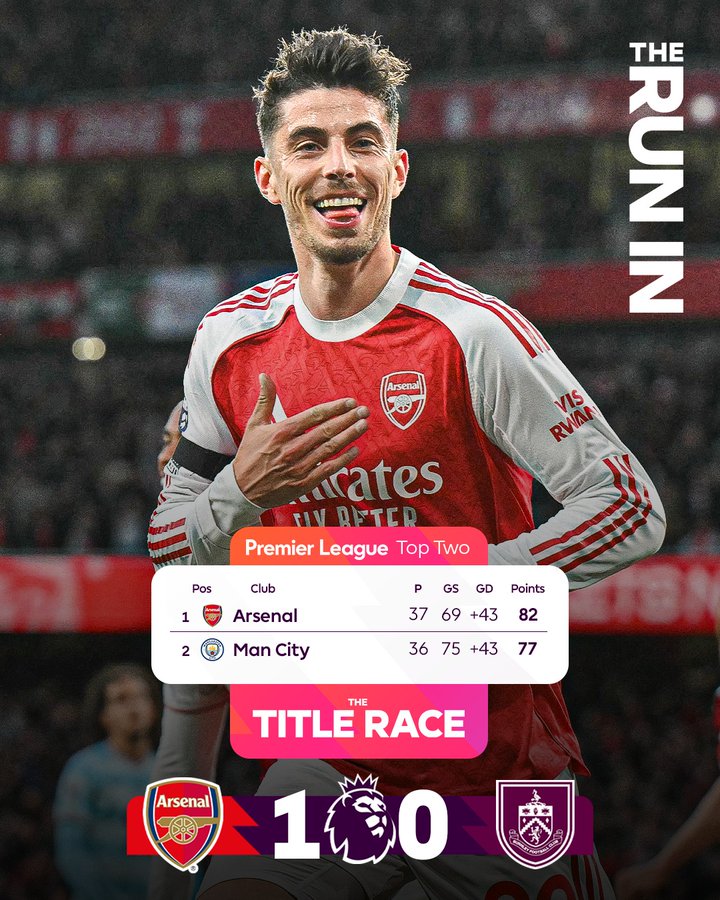
Arsenal’s title run has not just been about talent. It has been about structure, evolution and finally, tactical flexibility. For years, people accused Mikel Arteta of being too rigid. Too positional. Too rehearsed. Too obsessed with control. This season, Arsenal became something else entirely: a controlled chaos machine and that may finally deliver their first Premier League title in 22 years. A thread 🧵 The biggest change in Arsenal this season is psychological. Previous Arsenal sides wanted to dominate every phase perfectly. This version understands something critical: you do not win the Premier League playing one way for 38 games. The best teams adapt. The champions survive different game states. Arteta finally embraced fluidity. Last season Arsenal were elite in settled possession. This season they became elite in transitions too. They can: -suffocate you with possession -kill you in chaos -press high -defend deep -counter quickly -dominate territory -win ugly That tactical elasticity changed everything. A massive part of this evolution comes from Andrea Berta. People focus on signings.Berta’s biggest influence may actually be profile identification. Arsenal stopped collecting “good technical players” and started collecting tactical weapons. -Different profiles. -Different heights. -Different athletic outputs. -Different game-state solutions. That matters. Look at the squad construction now. Declan Rice gives them: -duel dominance -transitional recovery -vertical carrying -aerial superiority Ødegaard gives: -rhythm control -pressing triggers -creative overloads Saka gives: -width -isolation superiority -ball progression -final-third reliability Completely different weapons and perfectly synchronised. Then there is Kai Havertz. Possibly the defining tactical gamble of Arteta’s Arsenal. Not a pure midfielder. Not a pure striker. He became a chaos reference point. His movement destroys defensive organisation because defenders struggle to assign him. -He presses like a midfielder. -Attacks space like a striker. -Wins duels like a target man. -He changed Arsenal’s verticality. But the real tactical breakthrough? Arsenal stopped needing perfect build-up to create danger. Earlier Arteta sides almost needed laboratory conditions to attack. Now? One regain and they are attacking your box in seconds. That transition threat changed how opponents defend them. Nicolas Jover deserves enormous credit too. Arsenal turned dead-ball situations into a strategic weapon rather than an emergency option. Corners are no longer “cross and hope”. They are choreographed territorial assaults. -Blocking schemes. -Second-ball traps. -Crowding zones. -Back-post isolation. -Screening routines. -Set pieces became psychological warfare. People talk about the "lack of Arsenal’s attacking football". Their defensive evolution is just as important. Watch how they defend central spaces now. -The distances are tighter. -The rest defence is smarter. -The counterpress is more aggressive. -The recovery running is elite. Rice and Saliba are foundational here. They allow Arsenal to sustain pressure safely. William Saliba changes the geometry of the entire team because he dominates large spaces, Arsenal can: -hold higher lines -compress midfield -sustain attacks longer -recover transitions quicker Elite centre-backs are tactical multipliers. Saliba is one. Another key evolution: Arteta stopped trying to imitate Pep Guardiola completely. Early Arsenal often looked like a Guardiola tribute act. This Arsenal side is more direct. -More physical. -More transitional. -More Premier League-specific. Arteta adapted to England rather than idealising control endlessly. That maturity matters. And then there is the mentality. For two seasons Arsenal looked emotionally fragile in title races. -This year they look colder. -More cynical. -More mature. You can see it in: -game management -tactical fouls -tempo control -emotional discipline (no single redcard or penalty conceded) This is no longer merely an exciting young team. This looks like a side that understands how to win titles. The beautiful irony? After years of being accused of overcoaching, Arteta may finally win the league because he loosened control slightly. -Arsenal became less robotic. -More adaptable. -More ruthless. And in the Premier League, adaptability is often the final step from contenders to champions. If Arsenal complete this title run, it will not simply be a victory for Arteta. It will validate: -long-term squad building -tactical patience -elite recruitment structure -role clarity -specialist coaching Arteta, Berta and Jover all have different minds existing in one football ecosystem and perhaps most importantly: this does not feel like a temporary surge anymore. It feels sustainable. Arsenal are no longer chasing Manchester City’s standards. They are building their own. @premierleague @PremLeaguePanel @ESPNFC @SkySportsPL @Edwyeen @Arsenal @EBL2017 @SirLeoBDasilva @OlisaOsega @dayveedtalks
ibukun' oluwadamilola tweet mediaibukun' oluwadamilola tweet mediaibukun' oluwadamilola tweet media
English
1
4
6
232
Ororo😎
Ororo😎@McFlybowy·
Maresca at Man City, Alonso at Chelsea, Arteta at Arsenal, Carrick at Man United. Arne Slot at Liverpool, De Zerbi at Tottenham. The league look level, anyone can win the league. For fans, this is probably the healthiest the league has looked in years. No guaranteed champion, different football identities everywhere, younger coaches taking over, and clubs finally thinking beyond short-term panic decisions. That’s what makes this new Premier League era exciting, there’s no single dominant dynasty anymore. Every top club now has a coach with a clear football identity, a long-term project, and a system built to compete for years, not just one season. Arteta has already built Arsenal into a machine physically and tactically. Slot looks like he has continued Liverpool intensity without losing structure. Maresca brings control and positional football to City. Alonso has the aura and tactical flexibility to make Chelsea dangerous again. Carrick looks focused on rebuilding United through coaching instead of chaos, while De Zerbi at Tottenham guarantees one thing at least brave football and chance creation. The biggest difference now is that managers are no longer just adapting to the league, they are imposing ideas. You can already imagine tactical battles every week: high press vs build-up structures, possession vs transitions, man-marking systems vs positional play. Small details will decide titles now. And because the quality gap is smaller, consistency becomes everything. One injury crisis, one bad month, one tactical mistake in big games can completely change the title race. We could genuinely enter an era where 4 or 5 teams finish within a few points of each other regularly.
Fabrizio Romano@FabrizioRomano

🚨🔵 BREAKING: Enzo Maresca has a total verbal agreement with Manchester City, HERE WE GO! The Italian manager has always been considered the ideal candidate to replace Pep Guardiola. Deal in place and Maresca will sign an initial three year deal at #MCFC. 🇮🇹 New era, soon.

English
12
5
47
9.1K
shoebox
shoebox@jjss64·
If we are starting a nba league from scratch and every player in the history of the league is available, is Wemby the number 1 pick overall?? Ahead of Jordan, ahead of Lebron?
English
306
28
2.3K
515.6K
DEVOYCE
DEVOYCE@devoyceofgod·
There’s no justification for Joao Pedro exclusion! What more does a player need to do? It’s very very sad!
English
8
2
32
880
ibukun' oluwadamilola retweetledi
Solace Chukwu
Solace Chukwu@TheOddSolace·
Unless you are Brazilian or a proper Seleçao fan, you simply lack the depth required to evaluate this Neymar call-up. The same applies to any national team really: international call-ups, especially for major tournaments, are influenced by so many more factors than just form. Also, form is contextual. Club form matters less, especially for non-problem areas/functions, than you think. In this case, Neymar's utility transcends the pitch. He is a symbol, spiritual, psychological; the soul of a nation, the dying essence of ginga. He means something intangible but nevertheless utterly significant, so if he demonstrates even the minimum of fitness and form, he comes under serious consideration. The scales are not balanced, but that is the reality of football, of life. Since the exclusion of Joao Pedro is the current cause celebre, let's take him. What would he add that is missing from the group? Goals, hold-up? Igor Thiago has more. Flair, imagination? Neymar. Positional versatility, dribbling, pressing? Matheus Cunha. Am I saying every call-up in the list deserves it over him? Not necessarily. However, whether in Carlos Ancelotti's estimation or objectively, all have performed better in yellow, so they have that going for them. And that matters. Football is a team sport, and team sports are about dynamic interactions between individuals. Those interactions create a context separate from what players are comfortable with at club level. As the coach, you do not want to be trying to force that during a 5-week-long tournament with the highest conceivable stakes. You want to know it's there, not hope it could be. As such, you will take a marginally less talented player who has shown you something on international duty over a much more gifted one who, for whatever reason, has yet to find his feet.
English
6
16
25
3.3K
Taio Salaam
Taio Salaam@TYSalaam·
I’m not even surprised Wemby went crazy against OKC but 41 pts and 24 rebounds is just otherworldly, sheesh 😮 Told guys he’s ready to dominate in just his rookie season, that the Spurs front office has to give him a shot right away and I’m glad they listened. 👽
Taio Salaam tweet media
English
1
0
0
41
JML
JML@JohnMacfadden_·
@henrywinter @ibukun_dami bro, can you write about Pep's legacy beyond the trophies in the EPL and Europe at large? It would be great to read from your perspective
English
1
0
1
39
Henry Winter
Henry Winter@henrywinter·
Pep Guardiola’s legacy? Look all around from park pitches to Wembley. So many teams and coaches have been influenced by Guardiola. More teams playing out from the back, full-backs inverting into midfield, inviting the press, passing through it, attacking the space. Teams evolving. City won the league in 2021 with false 9s. Then a real 9 arrived, Erling Haaland, as Guardiola tweaked and twisted again. Mixing it up, possession, possession, then going long to Haaland if needed. Mixing it up, possession in the centre, then releasing flying wingers Jeremy Doku and Antoine Semenyo. Guardiola’s legacy? Look at the coaches who learned from him. Enzo Maresca, his likely successor. And Mikel Arteta, Xabi Alonso, Vincent Kompany, Xavi and Luis Enrique. Look at his impact on England. Nico O’Reilly starts at left-back. Phil Foden developed early by Guardiola, not sent out on loan, embedded in the first team early. He improved John Stones, Rico Lewis and Kyle Walker (who is now retired from England). Guardiola gave James Trafford a run in the cups. He gave Cole Palmer a chance before he craved more starts and went to Chelsea. Others have also moved on after a spell under Guardiola’s enlightened tutelage: Morgan Rogers, Liam Delap, James McAtee, Taylor Harwood-Bellis. Guardiola has undeniably enjoyed huge resources to call upon during his decade at City. He was able to draft in Marc Guehi and Semenyo in January. The sport still awaits the verdict of the 115 charges of rule breaches, charges which City deny vigorously. But Guardiola's achievements deserve celebrating: 591 games, 416 wins, 20 trophies. And so to the future. If it is confirmed that Guardiola is leaving after Sunday’s final game of the season, at home to Aston Villa, he will be greatly missed. Maresca is his mooted successor. He knows the club, knows the way Guardiola worked, and can seek to continue that work. It’s a relatively young squad that Guardiola has built. It’s a continuity job. Surely, though, Kompany would have been the man they really wanted. Club legend. But currently embedded at Bayern Munich. Guardiola's legacy is encouraging innovation, total commitment, near obsession with his work and playing attacking football. This City side are entertainers, playing 4-2-4 at times in the FA Cup final on Saturday. Even if the league is beyond him, the title seized by a coach he helped develop, Guardiola leaves as a winner, with two more trophies this season - and countless memories. Good luck to Guardiola in whatever he does next. #MCFC
English
362
320
2K
208.3K
Alabi
Alabi@the_Lawrenz·
They would be the worst champion ever in over 20 years. They can't even beat a relegated side more than one goal.. fake champions.
English
1.8K
225
2.2K
351.2K
Match of the Day
Match of the Day@BBCMOTD·
Should Kai Havertz have been sent off? 🤔 VAR checked the challenge for serious foul play, but the on-field decision of a yellow card was upheld.
Match of the Day tweet media
English
1.3K
189
2.2K
447.5K
TobyWrites
TobyWrites@tobyasky·
Arsenal fans, Red card or not for Havertz? I want to see the Christians among you😅
English
133
15
167
36.1K