This thread really shows how AI can advance sexual abuse against women! Great to see @grok learned from last year's mistakes though.
Sarcastic Sharma@sarkasticsharma
Hey @grok put her in an outfit appropriate for an commander to wear
English
Hon Peterrr Kaluma
43.7K posts

@ifKaluma
Loud on morality, silent on logic, Homabay’s self-appointed guardian of virtue, where opinions outshout facts.
Hey @grok put her in an outfit appropriate for an commander to wear
An advocate should not need rescuing to be protected. Protection must be built into the system. Over the past few years, many advocates have witnessed LSK leaders show up - at police stations, in court corridors and during moments of protest and civic tension. That visibility mattered. It saved people. But here is the hard truth: If advocates are still being arrested, harassed, intimidated and dragged into police stations in 2026, then presence alone is not enough. Emergency response cannot be the system. What the Bar needs now is leadership that converts courage into binding protection. That is the gap I know how to close. When I served as LSK Nairobi Branch Chair, we did not only mobilise lawyers - we built structures: - Rapid response communication platforms - Formal lawyer–police engagement frameworks - Institutional dialogue with enforcement leadership - The first draft MOU clarifying how police must treat advocates as officers of the court Those frameworks worked because they changed behaviour, not just headlines. My manifesto takes this further - nationally and permanently: •A binding national LSK–Police MOU, enforceable across all counties •A National Lawyer–Police Relations Committee with clear reporting and escalation powers •Institutionalised branch-level engagement so protection is not personality-based •A push for a Judiciary Enforcement Police Department to ensure court orders are respected without advocates being exposed to retaliation This is not about replacing presence. It is about ensuring presence becomes the last resort, not the first line of defence. Young advocates deserve more than midnight WhatsApp mobilisations. Mid-bar practitioners deserve certainty when handling sensitive briefs. Senior advocates deserve institutional respect, not fraught negotiations at police counters. A strong Bar does not rely on who is available to show up. It relies on systems that protect everyone-everywhere-every day. #TimeIsRIPE #StrongLSKForAll #BreadAndButterFirst


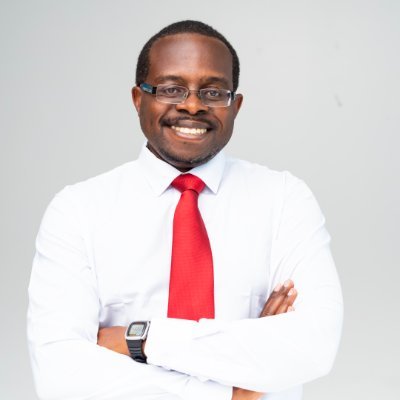


During the recent NTV debate, several "concerns" were raised about my record and my principles in my absence. While I believe in the freedom of every voter to question their candidates, I also believe in the right to a factual, honest response. My record for this Society - from the Nairobi Branch to the Devolution Fund - has always been built on Integrity and Independence. My faith is part of who I am. But my professional duty is to the Constitution and to ALL 20,000+ advocates - regardless of their beliefs, backgrounds, or positions on any issue. Let’s focus on the real issues: your practice, your welfare, and the future of our Bar. Read my full response in the attached statement. Then judge me by my track record and manifesto, both of which you can find at charleskanjama.com. #TimeIsRIPE
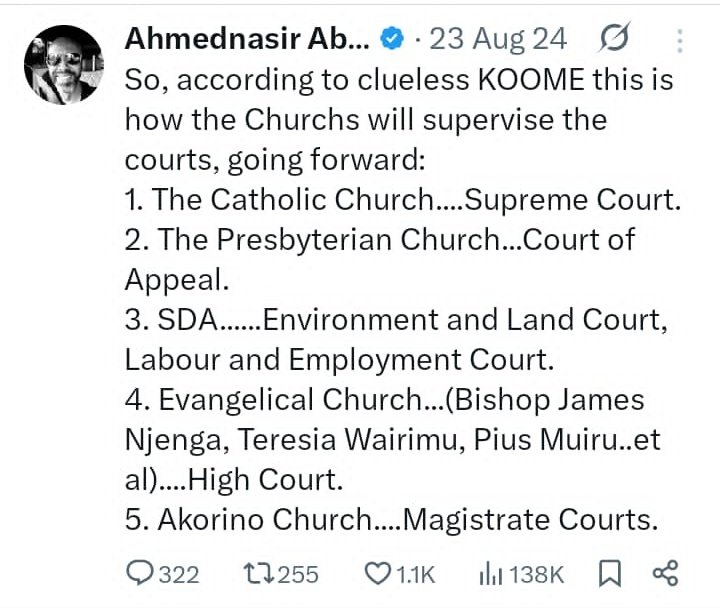
Tabitha is very right BTW because Kanjama being an Opus Dei and part of the Judicial Officers for Christ raises precisely this concern. Kenya is expressly constituted as a secular state under Article 8 of the Constitution. Judicial authority, under Article 159, is derived from the people and the Constitution not from faith, ideology, or theology. The concern, therefore, is not religious belief per se, which is protected under Article 32, but whether institutional boundaries have been crossed between private faith commitments and public legal authority. If faith-aligned judicial networks are perceived rightly or wrongly to influence legal reasoning, leadership decisions, or the institutional posture of the Law Society of Kenya, a legitimate constitutional question arises: are leadership decisions constitution-first or belief-guided? And what becomes of advocates who do not share those faith positions but must nonetheless operate under LSK leadership? This leads to a broader issue. Can the leadership of a statutory professional body tasked with safeguarding the rule of law, judicial independence, and constitutional supremacy be exercised without conflict where personal religious networks intersect with judicial or quasi-judicial influence? The issue is not whether a lawyer may hold religious beliefs all advocates do. The issue is whether those beliefs have previously entered institutional decision-making spaces and, if so, whether the profession can reasonably trust that they will not do so again under expanded authority. Where a clear separation between personal faith networks and professional institutional roles has previously failed, what assurance exists that this separation will be upheld when one is entrusted with the full leadership of the Law Society of Kenya?


Lawyer Tabitha: I will not vote for Charles Kanjama because he opposed the current Constitution... #TheLastWordNTV @jamessmat @EricLatiff

During the recent NTV debate, several "concerns" were raised about my record and my principles in my absence. While I believe in the freedom of every voter to question their candidates, I also believe in the right to a factual, honest response. My record for this Society - from the Nairobi Branch to the Devolution Fund - has always been built on Integrity and Independence. My faith is part of who I am. But my professional duty is to the Constitution and to ALL 20,000+ advocates - regardless of their beliefs, backgrounds, or positions on any issue. Let’s focus on the real issues: your practice, your welfare, and the future of our Bar. Read my full response in the attached statement. Then judge me by my track record and manifesto, both of which you can find at charleskanjama.com. #TimeIsRIPE


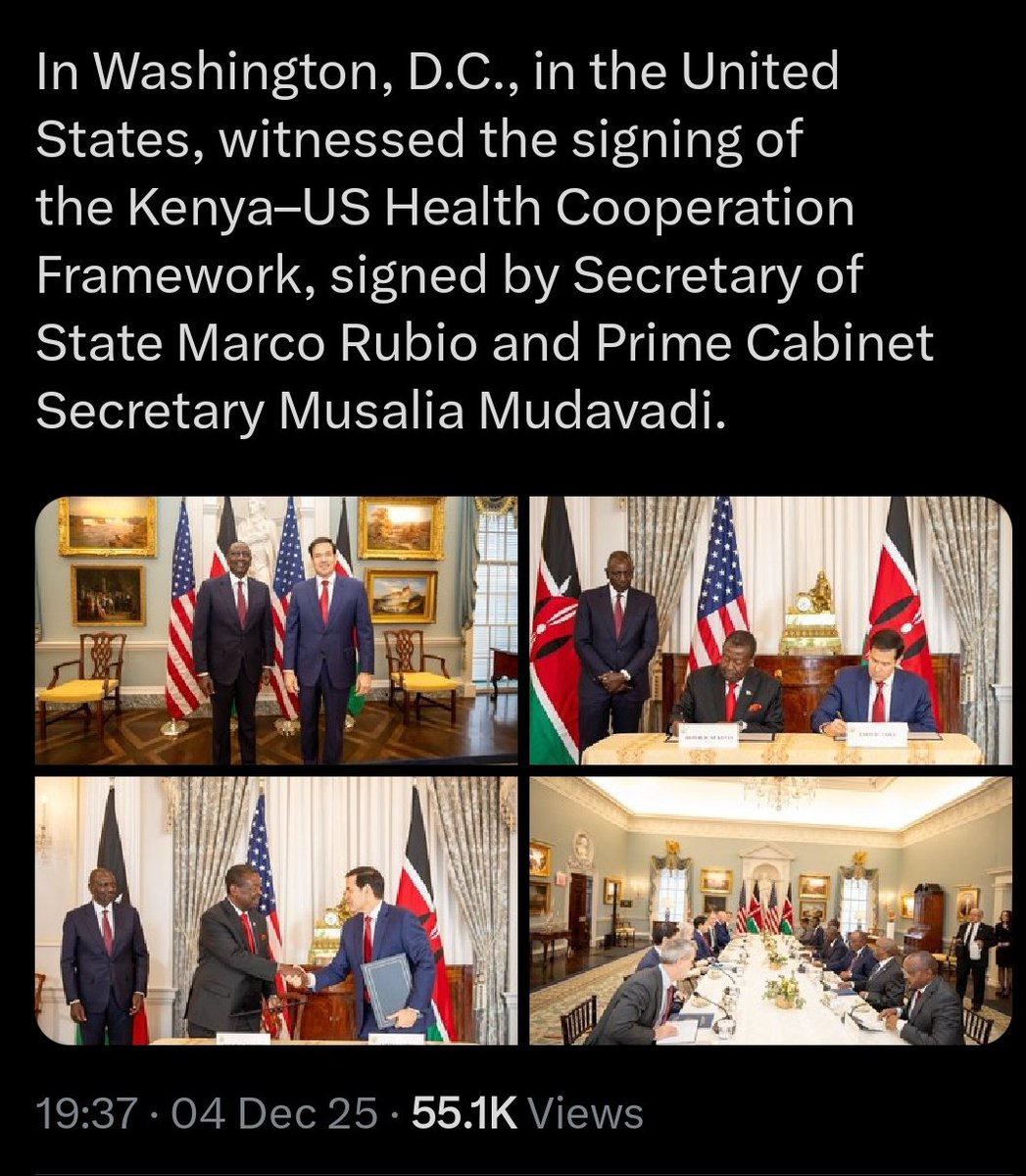
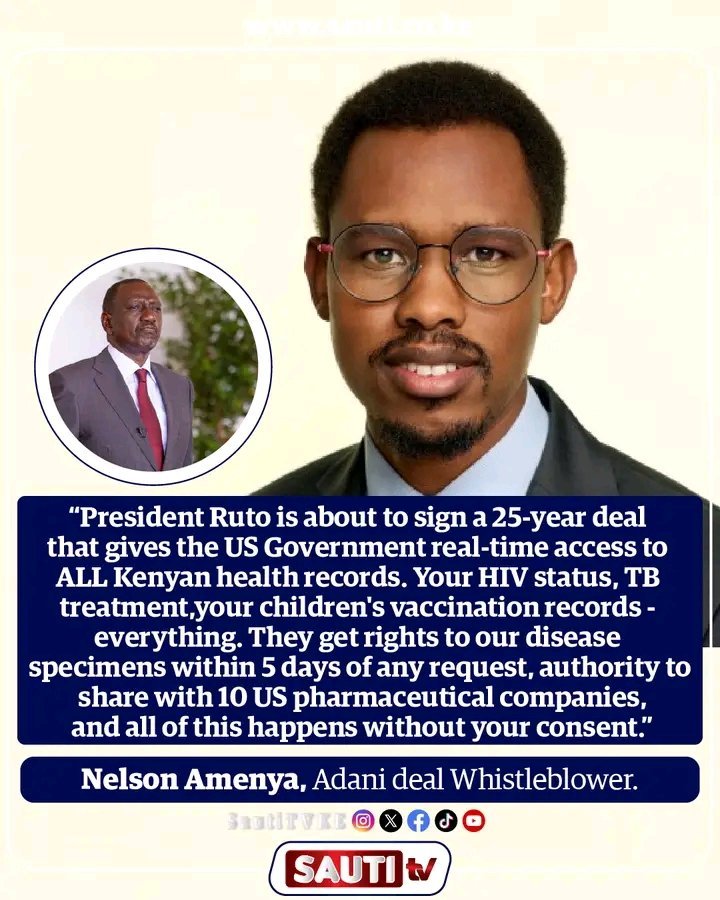






The signing of the historic Health Cooperation Framework between Kenya and the Government of the United States marks a significant strengthening of our commitment to the full actualisation of universal health coverage. This transformative framework prioritises the supply of modern medical equipment to our hospitals, the efficient and timely delivery of essential health commodities to our facilities, the upscaling of our health workforce, and the expansion of health insurance to ensure that every Kenyan is protected. Under this agreement, the United States will commit 1.6 billion dollars to Kenya over the next five years-resources that will be channelled directly through government institutions, eliminating third-party intermediaries and guaranteeing that support reaches the intended beneficiaries for maximum impact and accountability. We express our deep appreciation to the Government of the United States, under the leadership of President Donald J. Trump, for choosing Kenya as the first nation to sign such a Framework. This decision reflects growing confidence in the strength, sustainability, and reform momentum of our healthcare systems. This partnership builds upon Kenya’s long-standing health cooperation with the United States, an enduring collaboration spanning more than 25 years and backed by over 7 billion dollars in investment. In Washington, D.C., in the United States, witnessed the signing of the Kenya–US Health Cooperation Framework, signed by Secretary of State Marco Rubio and Prime Cabinet Secretary Musalia Mudavadi.



Joined Chartered Institute of Arbitrators (CIArb) and its Chair, Prof Ken Mutuma, at the CIArb Gala Dinner, culmination of a hugely successful Alternative Dispute Resolution (ADR) week. The gala dress code was Maasai Glam, and it was fabulous 👌