Daniel Kang

193 posts

Daniel Kang

Daniel Kang

@itsdankang

Founder @ycombinator | Author @WileyGlobal | ex-investor @Softbank | policy @uniofoxford | 🇨🇦🇺🇸🇰🇷🇬🇧

Los Angeles, CA Katılım Ocak 2021
442 Takip Edilen654 Takipçiler
Sabitlenmiş Tweet
Daniel Kang
Daniel Kang@itsdankang·
Recently saw seed-stage founders dilute themselves 50% from a SAFE raise. I’ve looked at hundreds of SAFEs as an investor at @Softbank and now a @ycombinator/ @launchhouse founder. SAFEs may no longer be the "standard" for early-stage raises. Here are four reasons why:
English

29
60
443
0
Daniel Kang
Daniel Kang@itsdankang·
@paulg @naval Does that assume the smart founders will eventually pivot out of pure software?
English
0
0
0
96
Paul Graham
Paul Graham@paulg·
@naval I wouldn't say that. The most important thing in a startup is the founders. If smart, determined founders are doing pure software, I'll invest.
English
36
16
574
45.1K
Naval
Naval@naval·
Pure software is rapidly becoming un-investable.
English
1.3K
2.1K
24.1K
5.8M
Daniel Kang
Daniel Kang@itsdankang·
If agents cost more than engineers, and token budgets are created for top devs, I wonder if new incentive structures would emerge? For example, a P&L given to engineers, who can minimize tokens to maximize profits for themselves. If extended to freelancers and companies using more agents and less people, could lead to interesting tax, social security, and employment implications
English
0
0
0
12
The All-In Podcast
The All-In Podcast@theallinpod·
What Happens When AI Tokens Cost More Than Your Employees? @Jason: “We, with our agents, hit $300/day per agent using the Claude API, like instantly. And that was doing, maybe, 10 or 20%. That's $100k/year per agent.” @chamath: “We're getting to a place where we have to basically now say, ‘What is the token budget that we're willing to give our best devs?’” “And then if you aggregate it across all people, you can clearly see a trend where you're like, ‘Well, hold on a second, now they need to be at least 2x as productive as another employee.’” “That is actively happening inside my business, because otherwise I'll run out of money.” Jason: “Yeah. This is a very interesting trend that you're not going to hear anybody else talk about, but when do tokens outpace the salary of the employee?” “Because you're about to hit it. I'm about to hit it.”
English
437
369
3.1K
2.7M
Paul Graham
Paul Graham@paulg·
1. When you write something intended to be read by an important person, go through it and cut every unnecessary word. 2. The reader of anything you publish is an important person.
English
450
702
10.3K
928.7K
Daniel Kang
Daniel Kang@itsdankang·
If agents mattered, consumers would already be using them—protocol or not. UCP is just the latest addition to the ACP / MCP / A2A acronym stack. Agentic commerce doesn’t have a protocol problem. It has a product-market-fit problem. 1. Do users actually want agentic commerce? Integrated commerce has created massive value (app stores, Apple Pay). Users clearly value convenience. But the open question is what specific pain point agents remove — or what new delight they deliver — beyond simply embedding shopping into a default interface. 2. What must be solved for agentic commerce to scale? Even if PMF exists, scaling agentic commerce still requires several hard problems to be solved. Synthesizing my own research and work by @Natlevywesthead, @arampell @venturetwins : - Signal & agency: real behavioral-based preferences, memory, and clear authority to act - Supply & execution: comprehensive, callable inventory, pricing, and transactions that reliably complete - Trust & rails: agent identity & authorization, KYC/ KYA-like safeguards, and web/MCP/A2A rails that aren't brittle Protocols matter—but only insofar as they help solve a much harder problem: PMF. Until agents feel meaningfully better than existing products, agentic commerce cannot scale.
English
0
0
2
60
Daniel Kang
Daniel Kang@itsdankang·
@paulg Sounding “fancy” is an easy way to hide muddy thinking. Written in plain words, the thinking often has gaps. If you have clear thinking, then use of certain words can make it sound fancy without sacrificing clarity. The hard part for early writers is to first think clearly.
English
0
0
0
32
Paul Graham
Paul Graham@paulg·
One of the biggest problems afflicting young writers is the belief that writing has to sound fancy — that it can't just sound like spoken English. Actually the more it sounds like spoken English the better.
English
199
183
2.7K
151.4K
Daniel Kang
Daniel Kang@itsdankang·
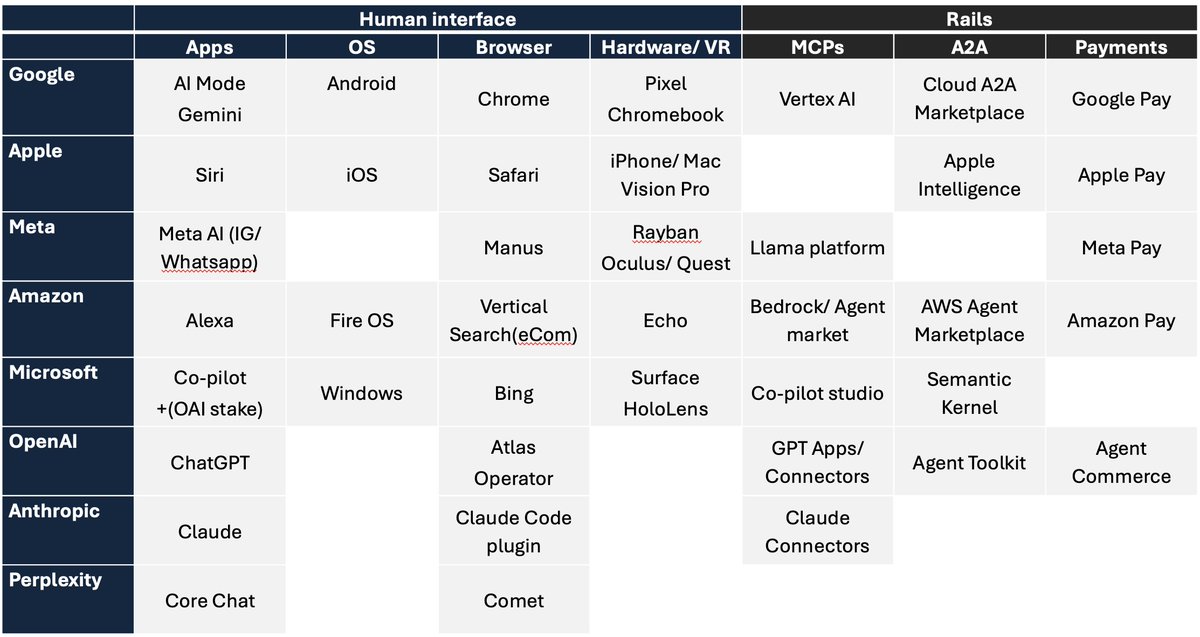
Meta's acquisition of @ManusAI isn't a random product moves. It shows how tech companies prepare for multiple "probable future states" - like AI bingo. Every major tech company is placing pieces on the board. A few elementary levers creates dozens of permutations: 1. Interface (where users interact with AI) - Apps like ChatGPT, Claude - OS powering phones and computers - Browsers like Comet, Chrome, and Atlas - VR/ Hardware like Vision Pro, Alexa, and Google Home 2. Rails (How agents execute and coordinate) - Tools & data integrations (MCPs i.e. OpenAI connectors, ACPs i.e. Stripe) - Virtual browsers (Operator, Manus) Once you map this out, the moves make more sense. A few months ago, OpenAI didn't have Atlas - now they have browser distribution. Yesterday, Meta didn't have manus - now they have a virtual-browser execution layer. These aren't isolated product decisions. They are coverage moves that build towards a portfolio, balancing their resources and unfair advantages. This is not the perfect bingo card, missing obvious futures - but every major player is filling some version of it. Whether you're a startup, investor, or executive, the question isn't what is "the" future, but which futures you're actively building or buying for - and which ones you're choosing to ignore. 👉 If you're working in agentic search and commerce. I'd love to connect to trade notes! DMs open. #AI #agenticsearch #agents
Daniel Kang tweet media
English
0
0
1
50
Ankur Nagpal
Ankur Nagpal@ankurnagpal·
QSBS is the most generous tax break in America today: - Start a C-Corp - Hold shares 5 years - No taxes on $15M on sale Advanced features can multiply the impact: - Gifting shares - Setting up trusts - Rolling over QSBS - Converting a LLC at $50M Comment QSBS for my guide
English
460
36
761
117.6K
Deedy
Deedy@deedydas·
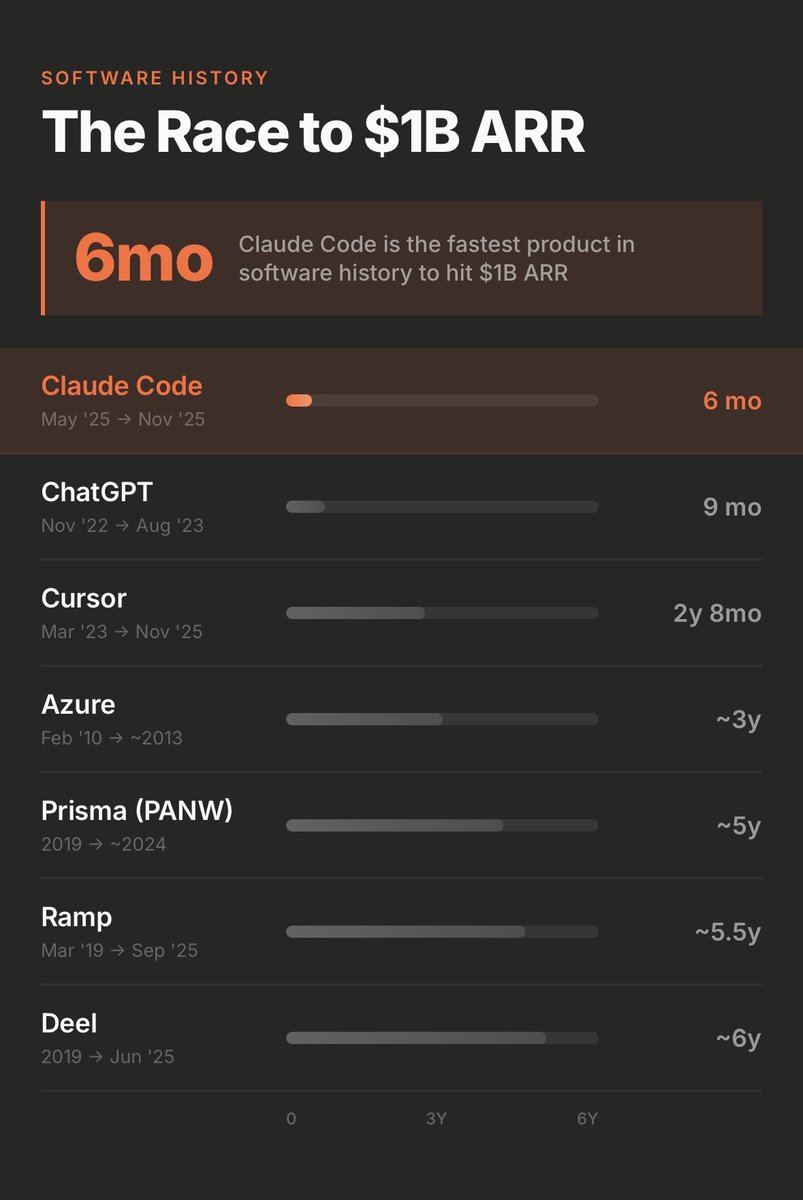
There is a new fastest product in technology history to reach $1B in ARR.
Deedy tweet media
English
74
86
1.5K
106.7K
Daniel Kang
Daniel Kang@itsdankang·
@naval With high intelligence, high energy, and high integrity?
English
0
0
0
27
Naval
Naval@naval·
The secret to investing is to invest in unstoppable people building inevitable things.
English
1.4K
3.5K
29.4K
2.3M
Daniel Kang
Daniel Kang@itsdankang·
@thejustinwelsh I imagine founders in 40s succeded on their Nth company, and had “failed” startups in 20s/30s. Not all experiences are useful/ compound to build startups. In fact, many experiences probably reduce your chances of success.
English
0
0
0
60
Justin Welsh
Justin Welsh@thejustinwelsh·
A study of 2.7 million startups: The average age of people who started the fastest-growing tech companies is 45. Everyone's in a rush, but shouldn't be.
Justin Welsh tweet media
English
147
129
1.2K
81.9K
Daniel Kang
Daniel Kang@itsdankang·
@naval Your posts are generally incompressible. Is this one overcompressed or intentionally contentious?
English
0
0
1
24
Naval
Naval@naval·
Wealth is the ability to make things happen.
English
654
2.1K
17.6K
622.3K
Harry Stebbings
Harry Stebbings@HarryStebbings·
Founders do not change your product strategy to make VCs happy. Listen to customers. Work closely with them. They matter. Not BS product advice from VCs.
English
57
32
388
23.4K
Daniel Kang
Daniel Kang@itsdankang·
Designed for exactly what founders want: - Application+interview on funding cycle: No warm intros; fast yes or no decision. - Transparent scope/ terms: PMF Series-A; 10% ownership on founder’s terms; no board seats Dalton provided amazing advice during my time at YC and recommend submitting before the 9/17 deadline.
English
0
0
3
747
Dalton Caldwell
Dalton Caldwell@daltonc·
We just opened up applications for Standard Capital’s inaugural fall 2025 funding cycle!
English
54
33
855
218K
Daniel Kang
Daniel Kang@itsdankang·
@paulg Curious if there are ideas now that you immediately discount beyond the usual tarpit ideas
English
0
0
0
29
Paul Graham
Paul Graham@paulg·
I've been doing office hours with startups for 20 years now. I must have talked to over a thousand of them. How have I not become bored by it? I think the reason is curiosity. Each startup's idea is different, and it's a puzzle to figure out how to make it work.
English
118
69
2K
152.7K
Daniel Kang
Daniel Kang@itsdankang·
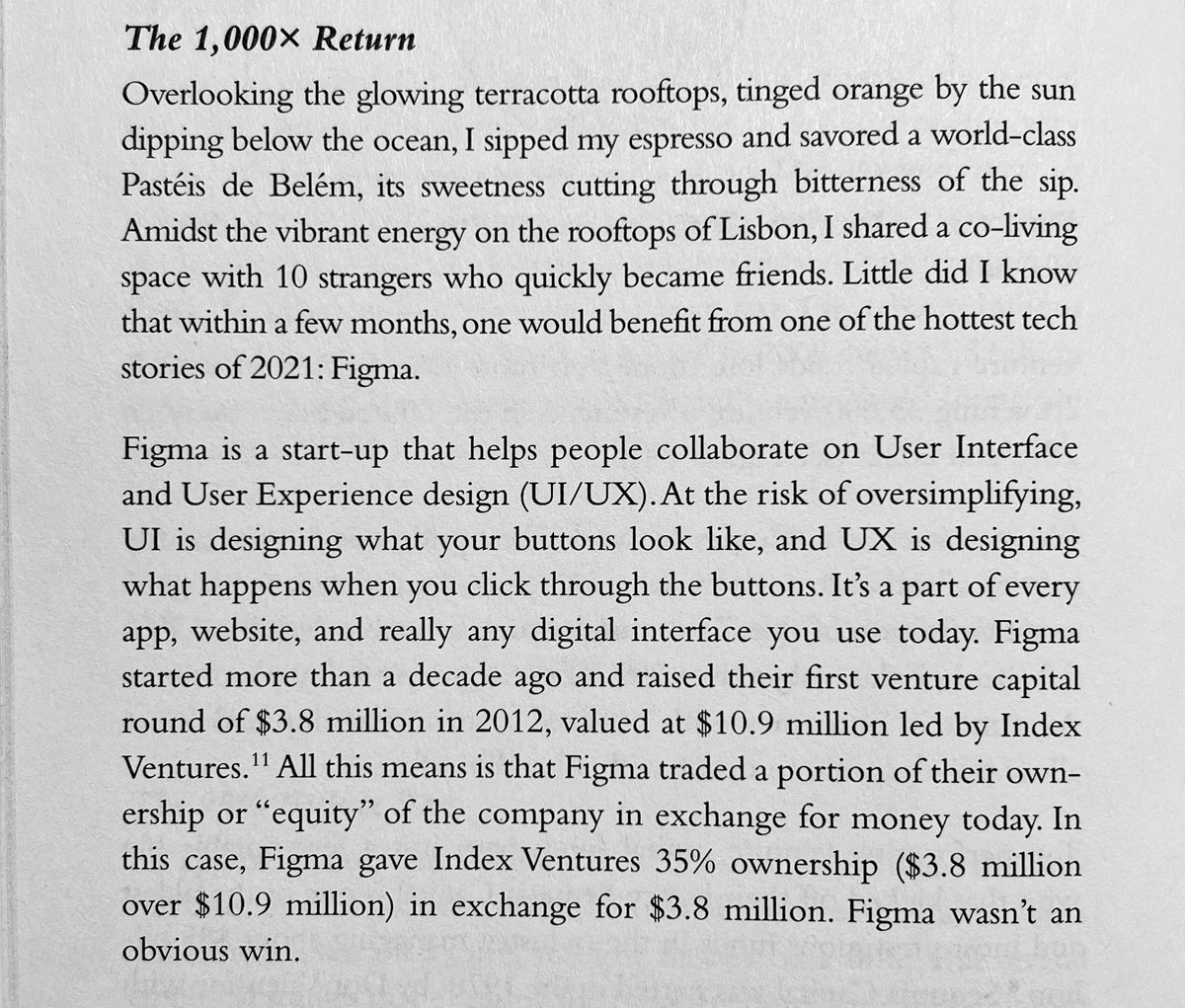
Figma was on page 6 of my book The Super Upside Factor with @WileyGlobal. It's THE case study I used to introduce Asymmetric Principles - where the few wins are enormous, and many losses are survivable. Last week, Figma IPOd and hit $60B in valuation. Figma's founders and early investor all kept the core three principles needed to make this happen: 1. Budget for a 90% failure rate. For nearly a decade Figma didn't generate real revenue. They stayed lean and iterated - failing several experiments until they found PMF. 2. Position every bet for 100x outcome. You can compensate the 90% failure if every swing you take has the potential for 100x outcomes. Figma tinkered with monetizations for a while, and in 2021, they hit an inflection point, generating almost $100m ARR. 3. Create positive feedback loops. Adobe tried acquiring Figma in 2021 for $20B, but it fell apart. Figma didn't stop there, and continued to build until they hit almost triple that with $900m ARR. These seem like simple principles, but as a YC founder, I know it's incredibly hard to stick with them for this long. I'm happy to see all the hard work pay off! Huge congrats to @zoink and @dannyrimer and @tmrohan at Index as the earliest institutional investors!
Daniel Kang tweet media
English
0
0
2
214
Daniel Kang
Daniel Kang@itsdankang·
Probably absorbed into branches without labelling it psychology. ie - neuroscience/ medicine —> link brain chemistry to behavior and treatment - economics —> behavioral economics and game theory analyzing human decision patterns Education —> learning optimization across children and adults - sociology —> how humans behave in group settings Big fan of your work
English
1
0
5
630
Paul Bloom
Paul Bloom@paulbloomatyale·
I'm writing a post that explores the value of the field of psychology. One way to frame the question is to ask: If there were no psychologists, what would the world miss out on? Anyone?
English
89
20
185
25.7K
Daniel Kang
Daniel Kang@itsdankang·
@snowmaker Yes! And if you want to start a company while you have a job. Use your advantage to walk over with food and coffee to talk about problems with any department in the company And THEN land them as your first customer before making the leap
English
0
0
1
377
Jared Friedman
Jared Friedman@snowmaker·
If you're building an AI agent to automate some job, like a payroll specialist, the hardcore move is to just go get that job and do it for a while. We call this "going undercover", and we're seeing more of the top founders do it. It's the best way to learn what to build.
English
243
279
4.7K
641.6K
Daniel Kang
Daniel Kang@itsdankang·
Everyone assumes LLMs will be "horizontal" — like Google sending traffic to links, or Apple enabling apps. Incentive structures suggest otherwise. 🔍 𝗟𝗟𝗠 𝘀𝗲𝗮𝗿𝗰𝗵 𝗶𝘀 𝗴𝗿𝗼𝘄𝗶𝗻𝗴 — 𝘄𝗶𝘁𝗵 𝗹𝗶𝘁𝘁𝗹𝗲 𝗶𝗻𝗰𝗲𝗻𝘁𝗶𝘃𝗲 𝘁𝗼 𝘀𝘂𝗿𝗳𝗮𝗰𝗲 𝗲𝘅𝘁𝗲𝗿𝗻𝗮𝗹 𝘀𝗼𝘂𝗿𝗰𝗲𝘀 • ChatGPT's daily queries at a 1:6 ratio to Google's daily search volume. • Web traffic from LLM search depressed by 80% "sucking oxygen for the web" • Major LLM partnerships focused on enhancing functions, not information. 🏗️ 𝗜𝗻𝗰𝗲𝗻𝘁𝗶𝘃𝗲𝘀 𝗽𝘂𝘀𝗵 𝗟𝗟𝗠𝘀 𝘁𝗼𝘄𝗮𝗿𝗱 𝘃𝗲𝗿𝘁𝗶𝗰𝗮𝗹 𝗼𝘄𝗻𝗲𝗿𝘀𝗵𝗶𝗽 𝗶𝗻 𝘁𝗵𝗲 𝘀𝗵𝗼𝗿𝘁 𝘁𝗲𝗿𝗺 • Consumer-interface held their price while compute cost fell 10x each year. In the same time API costs have fallen, likely approaching cost-plus • More product leverage, double and tripling dipping from consumer subscriptions, take rates (OpenAI x Shopify), and ad revenue (Perplexity) • OpenAI hired @fidjissimo as CEO of apps; Perplexity formalized verticals, Anthropic launched Claude for Financial Services Travel is among the most searched topics on ChatGPT (per @colintjarvis, OpenAI). It’s also massive — nearly 9% of global GDP. Also loved the commentary from @AravSrinivas (Comet launch) and @kirstenagreen (“From Search to Service”). Curious how others see this shift playing out. If you're building in the Travel x AI space, comment or DM and we can chat! 👉 Full break down here: itsdankang.substack.com/p/travel-x-ai-…
Daniel Kang tweet media
English
0
0
2
111
Daniel Kang
Daniel Kang@itsdankang·
Totally doable. Edward Palmer at Harvard figured this out back in the '60s with "The Distractor." I referenced this in my book, The Super Upside Factor: They'd show kids educational clips while competing with random distracting images. If the content didn't hold 90%+ attention, they'd keep tweaking until it did. Obviously, the competition for attention is fiercer, but so is the affordability of creating content, and we can iterate much faster.
English
0
0
1
364
Garry Tan
Garry Tan@garrytan·
Request for YouTube channel: kids brainrot but actually secretly teaching them everything they need to know to do awesome in life Like Sesame Street for the 2020s
English
301
114
3.5K
281.4K