Keaton Keller

13.2K posts

Keaton Keller banner
Keaton Keller

Keaton Keller

@keaton

building @UGCdotcom, creator @techsmartt, prev @gmg

USA Katılım Ekim 2009
824 Takip Edilen2.2K Takipçiler
Jelena
Jelena@jelena_noble·
CMDX, you were spectacular!🫶 Thank you to @Stablecoin @privy_io @stripe team for putting on a fantastic first Stripe Commons for the stablecoin and fintech community to come together and have meaningful IRL conversations amid the noise.. Never been more bullish on this space!
Jelena tweet media
English
4
2
27
935
Keaton Keller
Keaton Keller@keaton·
@yo bookmarked this and monitoring the situation
English
0
0
1
42
Troy Osinoff 🕺
Do you pronounce it like “U-G-C” or “Ughkuh”?
English
7
2
12
2.2K
nader.deso
nader.deso@nadertheory·
Big news! Last Friday the SEC officially dismissed its enforcement action against me and against DeSo. This was the last legal issue I had to deal with and I am now completely and totally free to innovate and build again, unhobbled for the first time in years. Three important points: 1) This dismissal was NOT a settlement. It was "without costs or fees" to me or anyone involved (extremely rare) because there was no wrongdoing and no actual aggrieved parties. 2) This dismissal was "with prejudice" (also rare). This means they can't bring any related action back against me or DeSo in the future. 3) In the SEC's own words, it was based on "a reassessment of the evidentiary record," meaning the actual facts regarding my innocence were heavily scrutinized and drove the decision. Simply put: The government made a mistake in bringing this case in the first place. The government accused me of misleading an investor who I knew I had a great relationship with, as in they backed me two separate times and I literally had breakfast with them at their house not long prior to the charge. As a result, soon after the charge I found out that not only were they not upset with me, but they wanted the government to go away as badly as I did. As I understand it, the government compelled the investor to do an interview and then took their neutral testimony and represented it as adversarial. It was an alleged fraud with no actual misrepresentation nor any actual aggrieved parties. My lawyers said they'd never seen anything like this, and I think it speaks to how dogmatically anti-crypto the prior administration's SEC was. In the coming days and weeks, I will be hopping on some podcasts to tell the whole story, and boy is there a story to tell. Stay tuned, and if you know anyone who'd like to have me on as a guest please reach out. I'm also excited to start sharing more about what my team has been working on soon. We haven't been twiddling our thumbs. For now, though, I just want to explain why DeSo is so important to me. DeSo is still the only platform on the internet where you can post content directly to a blockchain without fear of censorship, and where you can monetize your content directly with crypto (including stablecoins). It's really quite shocking how in 2026 we not only have virtually no viable alternative for this clearly-important category, but also other important efforts are actually shutting down. The world needs more people working on decentralizing social media, not less. I'm excited to finally be able to share our vision directly again, and to start bringing more people who care about freedom and censorship into our community. What we have built with DeSo is something people take for granted until they really need it, but hopefully we can convince them sooner than that. Lastly I want to say how grateful I am to everyone around me. My family, my friends, my backers, and everyone in the DeSo community. For me, this experience showed me just how trusting, loyal and caring everyone around me really is, and reaffirmed my belief that always trying to do the right thing really does pay off. We're just getting started.
nader.deso tweet media
English
54
46
196
48K
Bruno Faviero
Bruno Faviero@Bfaviero·
Excited to announce that @magna_digital is joining forces with @krakenfx ! Same Magna team, brand, product, and mission (helping protocols and communities!) operating as a unit within Kraken, with a roadmap turbocharged by Kraken's custody, OTC, exchange, token sale, on/off ramp infra and more. So much more we can do for our clients and partners. More energized than ever. LFG. Looking forward to working with @arjunsethi and team!🚀 fortune.com/2026/02/18/kra…
English
143
25
452
54.8K
Jackson Dahl
Jackson Dahl@jacksondahl·
Andrew Reed has quietly become one of the best growth investors of his generation. This is his first long form interview. I talked to @andrew__reed about conviction under pressure, what great founders look like, and how humanity and competitiveness coexist inside @sequoia. Andrew is a growth investor at Sequoia Capital, which he joined at 23. He led his first investment 4 years later into @RobinhoodApp, and he has partnered with @figma, @Klarna, @phantom, @VantaInc, @elevenlabs, @mubi, @Strava, and more. We discuss: - People over spreadsheets, every time - Why great companies often have a few metrics screaming red and others screaming bright green - Investing $200M into Robinhood during the first week of COVID - How he developed conviction on Vanta in 14 seconds - Why the hardest round to invest in is the one after you first invest - Craft as a commercial input - Writing memos through the night as a gut check on conviction - why Sequoia's extreme performance culture is empowering - What he's learned from Doug Leone, Mike Moritz, and Pat Grady Timestamps: 0:00 - Opening Highlights 2:02 - Intro: Andrew Reed 3:50 - Thanks to Notion 5:23 - Start: Humanity, Spotting Weird, and Competitiveness 19:07 - Investing & Great Founders 37:53 - Andrew's Style, Pat Grady, and Continuous Learning 47:31 - Doubling Down and Not Flinching 56:09 - Empathy on Boards, Learning the Real Business, "Expensive" Prices, and Selling 1:07:18 - Managing Ego and Becoming a Leader 1:14:08 - Craft as a Commercial Input, Knowing vs. Feeling, Preparing for Big Days, Becoming a Great Closer 1:28:39 - Sequoia Capital 1:38:57 - Don Valentine, Mike Moritz, and Doug Leone 1:51:29 - Closing Questions @DialecticPod Ep. 39: Andrew Reed - Don't Flinch - is out now, below and on all platforms.
English
16
32
373
256.2K
Ryan Myher
Ryan Myher@ryanmyher·
We care deeply about our community @GeniusTerminal. I've sat for 14+ hours today, answering tickets, chatting with users, and figuring out how we can provide the most value. I am so excited to build this community piece by piece.
English
36
4
81
9.3K
Nichole Wischoff
Nichole Wischoff@NWischoff·
Lessons I've learned this year from running an early stage VC firm and being a human trying to do it all (all in the latest newsletter linked below): Don’t be too conservative: TLDR: 2025 kicked me in the teeth. We made 13 investments, met thousands of companies and feedback for myself from 30,000 feet is that we were a little too conservative. We passed a lot on great founders based on price. A few keep me up at night. Every other year that we have been investing, giving the first term sheet to a team meant a lot and our chances of winning the deal were over 90%. That was not the case this year. Moving first meant your chances were around 60%. Every blue-chip decided to swim at seed on top of the thousands of early stage funds I still know nothing about. Don’t get me wrong, I love competition, but this job is largely a math problem. Our model is 10% ownership and typically for sub $2M checks which means $30M+ post breaks our model. Not that I believe we settled at all for the deals we did do, but we walked on a handful of what I still believe to be great companies because they were priced sky high and we wouldn’t match. Sure, we lose for other reasons like not moving quickly enough/being late to the deal but price was a real pain this year. Most early stage funds decided to take 5% ownership and to do the deals, which again, if you do the math, in some cases with a large enough exit, it can return a fund, but I’m not convinced this is worth it most of the time. The best funds in the world have humble beginnings: I went on many walks with GPs at a handful of the best firms in the world today. A very common theme from all of them: they had very humble beginnings that they never talk about publicly. More specifically, many that manage billions spent a few years stitching together SPVs because no LPs believe in them yet to invest in a fund. You only ever hear the beginning of their story on podcasts to be some flashy first deal that exited massively. They skipped Chapter One. I think of my $5M fund I raised back in 2021, look at the $75M in AUM and candidly feel like a pathetic loser that will never cross the chasm. No father to anchor me, no signal from a wealthy family that grew up in Atherton. The truth is, it takes time. We are in incredible companies that need time to bake. Never be discouraged by the journey or your starting place in line. Don’t quit. No one knows what the “perfect” founder looks like: Every year I survey the portfolio, rank the companies from who is performing best and who isn’t doing well. Every year this shifts dramatically. Some years it seems obvious: top CS degrees, technical, chip on shoulder. Others make no sense. Non-technical PM founder, no childhood trauma, decent IQ and very high EQ, total dog in them. The world is headed where it’s headed, and no one knows where that is: My favorite part of this timeline we are living in is the amount of content you can absorb online. The smartest people on any given topic write incredible blog posts, sit for long interviews and let you inside of their mind. Even better, not a single “expert” is aligned on the future of AI, enterprise adoption of it, are data centers being overbuilt, if we are in a bubble, etc. Stay the course, whichever yours may be. SF is the probably best place to build, if you are in build mode: If (when) I had a billion + in net worth, would SF be my top choice of places to live? Probably not. But its the very best place to be when you are still at the peak of your career, right on cutting edge of your potential and want to accomplish incredible things. I moved back five months ago and the density of brilliant minds and your access to anyone on any topic at any moment is unbeatable. I wasted countless total days of my life on planes traveling to CA. Best way to be on a fast track (though there is no real fast track) is to get here and get in the mix on a daily basis and let things compound. Access to the best investors, the best founders, best LPs, all here. If you will do whatever it takes to win, I highly recommend the “sacrifice”. The bigger house won’t solve a single problem: I have journal entries from when I was 12 years old, living in a tiny 1200 sf home with 7 people, dreaming of the white picket fence, the big house on a few acres, THE home to host everyone I love. Earlier this year I moved my family from a home we lived in for five years that we loved, modest 3,800 sf (for Nashville), .25 acres, cute. I was having more financial success from a few personal investments and wanted something to show for it, the thing I dreamed about. We find this house across town, 8,000 sf on an acre, right next to my favorite coffee shop. This is it I told myself. I hired movers that ended up breaking 50% of our personal items, had a horrible 5 day move in. We were under tornado watch on day 6 and had to wake up our 10 month old and move him to the basement multiple nights. The house was new construction and very loud, appliances that made no sense for someone that actually cooked (tiny fridge for one, appliances that were so fancy you had to read a 500 page manual to get the over on), etc. It’s a complete mess somewhere at all times. You either spend all of your time cleaning or hiring people who never leave your house. It was a revolving door of people doing things, too many stairs for a small child and poorly insulated. It was so clear we made a huge mistake. We left our home because I wanted “more”. Needless to say, we moved to SF. I don’t know that we ever would have left Nashville if I didn’t tear us from a home that we loved, but I do think it was the right thing. No big huge fancy houses in SF or ever again! You don’t need them. The unexpected beauty of being with someone for almost 10 years: I think my husband and I can honesty say this was the most challenging year of our lives together. It’s been almost 10 years. We are both growing our own companies, moved twice, one huge move to SF with a one year old and my parents. Raising even a single child is a huge endeavor, especially when he wakes up one minute after 5am. We disagreed on a few important things this year when we are usually very aligned on values. I used to think when we first started dating that at any big intersection where we weren’t aligned perhaps we weren’t meant to be. Dating is such a funny thing, constantly evaluating the other partner on marriage material, do we have a real future together, etc. But when you make that commitment, and you spend years of trials of miles together, these forks in the road are an incredible opportunity to get to know each other again. Kids are a gift but they also ruin the closeness you had for a period of time. There are no late nights staying up talking about things anymore. I’ve had numerous moments this year where I’ve never been more sure that the one thing I’ve gotten really right in my life is who I married. 10 years grants you this silent understanding and acceptance - you have so many years of compounding proof of we will figure this out together. What a sacred gift in this life, especially when most things are so fleeting. Daily inputs will take you anywhere you want to go: I am extremely hard on myself and feel like a pathetic idiot who has accomplished nothing in my life and so I challenged myself to sit down and make a list of things I haven’t accomplished in the past that I put everything into. The short answer: almost nothing. In college, I ran 80 miles per week to go to the NCAAs and break the 5k and 6k record at my college. I did both in three years. Every job I’ve ever really wanted I’ve gotten. Every fund I’ve gone out to raise, I’ve raised. One thing I have yet to do is run a sub 3 hour marathon, but I did run 3:09 in Boston and I’ll take that for now. Sure, some small things don’t workout, but anything I’ve put countless hours, days, months into without quitting have worked out. You are what you manifest - AND what you work at daily.
English
33
17
346
58.3K
Nick
Nick@ntrlsk·
Thrilled to share that I’m joining @hiFramework. After many years trading volatility, I'm excited to take a longer term view on markets and people. Feel free to get in touch.
English
27
5
125
42.3K
Keaton Keller
Keaton Keller@keaton·
@braveben Regulatory permitting. Waymo can do driverless rides w/o a human (in CA, NV, AZ) whereas Robotaxi needs a human operator
English
1
0
2
104
Troy Osinoff 🕺
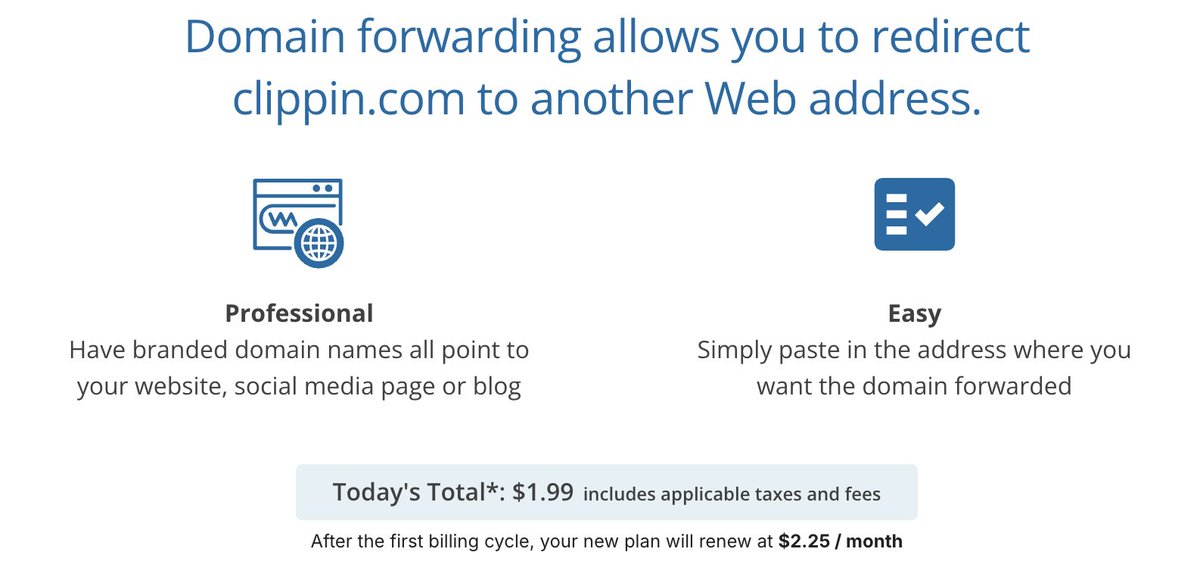
NetworkSolutions charges $2.25/mo to forward your domain... I miss Google Domains, these competitors are all awful
Troy Osinoff 🕺 tweet media
English
1
0
5
1.2K
Keaton Keller
Keaton Keller@keaton·
@bhalligan just tried out your @withdelphi call functionality, loved it and appreciated your insights - thanks again for this 🙏
English
0
0
2
68
Keaton Keller
Keaton Keller@keaton·
@Keller All organic? If so, masterclass content and rightfully deserved
English
1
0
0
89
Keaton Keller
Keaton Keller@keaton·
@parkerconrad Great pod, highly enjoyed. Thanks for the tips on your hiring process too 🙏
English
0
0
1
139
Parker Conrad
Parker Conrad@parkerconrad·
Brian is an incredibly talented interviewer and definitely got me chatting and spilling the tea. I'm sure Long Strange Trip is going to be a hugely successful podcast and can't wait to see the next episodes. 🙏
Brian Halligan@bhalligan

“Startups are somewhere between completely impossible and very, very, very, very hard.” That's @parkerconrad, CEO of @Rippling, on the first episode of Long Strange Trip. Parker's got one hell of a story. Violently fired by David Sacks from Zenefits. Character assassinated in the press. Everyone (including me) thought he was done. Then he built a $17B company in the exact same space. In this episode, Parker talks about turning your darkest professional moment into rocket fuel. How he keeps a 4,000-person scaleup moving at startup speed. Why he he's hired over 100 ex-founders. And what it's really like when someone plants a spy inside your company. This isn't your typical founder story. It's raw, it's real, and there are some serious lessons buried in the drama. I hope you enjoy it.

English
7
3
201
50.6K
Felipe | Robot.com
Felipe | Robot.com@felipekiwi90·
Okay, I'll bite. Here's why we really bought Robot.com (and no, it's not what you think) When we bought the domain, everyone assumed it was a branding play. A nice PR stunt. It wasn't. The truth is simpler, and bigger. We bought it because “robots” aren’t an idea anymore. They’re part of everyday business. Our team has spent years building systems that actually work at scale. 500+ of our robots have completed 1.7 million+ tasks across campuses, warehouses, & city streets. Our partners range from global enterprises to universities and logistics leaders. The rebrand isn’t about hype. It’s about clarity. It's about a name that matches the scale of what we’ve been building all along. Because the future of robotics doesn’t need more noise, it needs proof. And we have it. Follow along if this excites you.
English
18
21
127
47.2K
Gabriel Vasquez
Gabriel Vasquez@GEVS94·
Borderless Founders: Becoming the Benchmark I was born in a place the world saw as weak and foolish. I was told that borders define your potential. I have learned this is not true. The most exceptional people are born everywhere. They simply refuse to stay within boundaries. I call them Borderless Founders. They are rewriting what global ambition looks like, and they are the reason I am building what comes next.
Gabriel Vasquez tweet media
English
15
8
90
15.1K
Jack Zhang
Jack Zhang@awxjack·
@airwallex is now on the other side of $1B ARR. What I love about this chart isn’t that we hit a big milestone; it’s how fast the business is accelerating. It took us more than 6 years to 100M ARR, 9 years to 500M, and only one year to double it.
Jack Zhang tweet media
English
49
46
460
1.2M
Ash Egan
Ash Egan@Ashegan·
Archetype III $100M to back the next generation of crypto-native founders. We don’t chase hype. We fund what becomes default. fortune.com/crypto/2025/09…
English
63
14
352
25K
Keaton Keller
Keaton Keller@keaton·
@Nick_van_Eck Apt comparison of Tempo to Visa, I felt the same and brushed up on Acquired’s Visa episode. I firmly believe history is rhyming and repeating.
English
0
0
1
488
Nick van Eck
Nick van Eck@Nick_van_Eck·
Stripe has clearly gotten to the stage where they are comfortable “playing with fire.” Tempo is a clear shot across the bow that they are trying to build the next generation Visa network. There are many features here that make it a more practical network for businesses. The “credible neutrality” and “collaboration” is because Stripe maybe doesn’t want to risk appear to solely build a competing payment network. Which they clearly are and gaslighting everyone while doing so. They are openly declaring war against everyone building in stablecoins, the payment networks, and the banks. Visa and Mastercard are playing catchup onchain. The open question I have is when they start fighting back. There is something larger going on here and I don’t think, at least in the last few decades, Visa has really seen a threat like this. Visa/Mastercard could create serious issues for Stripe by nuking the relationship now. Sure they “lose” billions of volume from Stripe but it would probably just move over to other providers that use Visa/Mastercard rails anyways. The longer they lay down and let this happen, the less leverage they have. Which is probably why Stripe is speed running building the stack. And something Visa doesn’t have, is the entirety of SV on their cap table like Stripe. The opportunity up for grabs here is enormous. Probably $1T+ in enterprise value to be won or lost if we look a decade down the road. Someone told me recently @withAUSD is part of the “anti-Stripe portfolio”. I think I like that. Waiting for others to start fighting.
Matt Huang@matthuang

On Tempo, permissionlessness, L1 vs L2 Tempo will be a permissionless chain. On day 1, anyone will be able to deploy a token, and anyone will be able to transact on the chain. Some projects think that attracting real-world usage and serious institutions requires giving up on base layer neutrality. We do not think that, and that's not how we're building Tempo. The plan for Tempo is to have permissionless validation and permissionless smart contract deployment as well as permissionless usage: just like Bitcoin, Ethereum, Solana, etc. We’ll start with a permissioned validator set to get going and decentralize further from there. We’re building in features to make it easy for entities interacting with the blockchain (like asset issuers, money transmitters, etc.) to comply with their relevant obligations, but the base layer will remain neutral. This is a principle we feel incredibly strongly about (see: paradigm.xyz/2022/09/base-l…). As many parts of the mainstream world look to adopt crypto, we think there is a risk that they adopt permissioned systems. Our goal with Tempo is to help onboard them onto crypto rails that solve specific payments needs while still being truly permissionless. — Why L1 rather than an Ethereum L2? At Paradigm, we are heavily invested, both intellectually and literally, in the Ethereum ecosystem. We will continue to help it scale, and invest in and support companies building on Ethereum. We are also extremely excited about single-sequencer L2s for many use cases, including trading. But building a network for global payments will require bringing together thousands of partners that may not trust us, or Stripe, or anyone as a platform. We think a decentralized validator set—for the chain itself—is a necessary requirement for those partners, and to ensure that the chain is unquestionably neutral in the long run. From an operational perspective, we feel urgency to build for the demand that’s coming and want fewer dependencies, including on the rate of Ethereum L1 progress. With Tempo, we tried to remove all crypto tribalism and alignment games from our thinking and just focus on building the right product for crypto payments. At a technical level, we are prioritizing attributes like fast finality (L2s are generally only as final as the underlying L1), multiple validators (vs. single sequencer), and custom transaction lanes and gas pricing. Some of these are technically possible for an L2, but could be complex, slow to implement, and/or introduce many external dependencies. Tempo is stablecoin-focused, so interoperability through native issuance is more relevant to us than the native bridge to Ethereum that L2s have. We aren’t Bitcoin, Ethereum, or Tempo maximalists. We’re maximalists for permissionless crypto. We want Ethereum L1 to scale, and we want L2s to thrive. We love Bitcoin as a monetary asset. We find substance in Solana, Hyperliquid, and many other ecosystems. We want to ensure real-world payment flows happen on crypto rails, and that’s why we’re building Tempo.

English
68
43
784
237.4K
Austin Marrazza
Austin Marrazza@realitywarp·
hey friends, it's been a while. a personal update: i've stepped away from dragonfly to start a new company, Manifest we're building a new primitive at the app layer that i've been quietly obsessed with for many months. if you're an engineer and interested in zero to one journeys, let's chat deeply grateful for my time at dragonfly. a group of incredible people that collectively accelerates how you think about the world. if you're lucky like myself and get the opportunity to work with @tomhschmidt, take it this is the very beginning, follow along at @manifestios
English
267
19
857
78.8K