Miguel Ángel Abellanas
233 posts

Miguel Ángel Abellanas
@maabellanas
Brain-Immune Axis / Assistant Professor @unav / Former postdoc at Michal Schwartz's @WeizmannScience / Passionately loving the world / Hopefully optimistic
Pamplona, Spain Katılım Ağustos 2021
523 Takip Edilen135 Takipçiler
Sabitlenmiş Tweet

I’m very happy to share the preprint of one of the projects I’ve been working on during my postdoc in Michal Schwartz’s lab at the @WeizmannScience
🧠 Alzheimer’s disease disrupts bone marrow myelopoiesis, leading to systemic immune dysfunction.
biorxiv.org/content/10.110…
English
Miguel Ángel Abellanas retweetledi

Important announcement!!!🫵💥💫
Would you have a tooth pulled if it helped your chances to get an important grant funded?
Absurd question (obviously), but the situation right now is so bad funding-wise, that I bet some of you actually considered it for a second…
Well, don’t get desperate - we created a new tool that might help! (keep your teeth!)
I’m excited to announce that as of today we are officially releasing “QED for Grants” for everyone. What started off as an extension of our existing paper review platform, grew in the last few months to an entirely new design. We’ve been working like crazy on this, and although we have more things we want to add in the (very near) future, we decided to release our AI for grants NOW, earlier than planned. It’s not perfect, no AI is, but for the first time, when I run my own grants through @qedscience, I feel it gets the research, finds real problems, and gives me very useful feedback that I can implement before submission. It’s like sending it to 20 scientists from my domain, knowing they’ll agree to dedicate their entire week to carefully read and comment on every line.
It’s very important to write your own grants yourself, it makes you think hard and you learn a lot from doing it, and q.e.d’s system is designed to preserve these positive aspects and augment them - you get feedback on your own writing, we don’t write for you!!
But at the same time, a typical PI spends many months every year writing proposals and sadly only a tiny fraction gets funded, even if the ideas are good. When you are forced to submit an unreasonable amount of grants the quality of the writing drops, and rejection rates increase. Not because the essence is bad. It’s simply too competitive right now (the cuts made it so much worse) and if your proposal is not super clear and tight, and if it’s not a perfect fit for the grant you’re submitting, you’re doomed.
Our grant solution is not an authoring, text-generating tool. It gives you constructive feedback on your writing (it comments on the deep things, not grammar and typos). It’s meant to help you with the questions that torment you late at night (“is this a good fit?”, “Is this novel enough?”, “Did I miss something?”). Tens of thousands of you already use q.e.d to improve your manuscripts and critically read papers, we built the grant tool by the same principles (you’ll identify many of the features that you told us you like).
We’ve processed thousands of proposals, learned where things fail, where reviewers get stuck, why good ideas come out weak. We interviewed hundreds of scientists, and also experts who work in funding agencies and university research authorities, and implemented their feedback (we’re constantly looking for more feedback). Our AI is always happy to give you constructive (and polite!) critique, and it will go through your grant line-by-line, forcing you to improve clarity, flag weak points, and push the whole thing to a higher standard. We study, in scale, what gets funded and what doesn’t, and what is the perfect fit for each type of grant.
So please, use it, pressure-test it, tell us where it fails, and together we’ll improve it every day to put you in the best position for actually testing your ideas in the real world. As always with q.e.d, the system is completely secured and private, and we are NOT training on your data (see the FAQ on our website).
Please like, retweet, and share with your favorite colleagues! (link to the platform below in the thread👇)
English

@amycfanphd @RukmanThota @MaxKrummel @Nature @immunox @UCSF Definitely, your work opens many new possibilities about how microglia might be mediating neuron-immune interactions!! Super cool!
English

@maabellanas @RukmanThota @MaxKrummel @Nature @immunox @UCSF LOVE brain macrophages. Was super inspired by synaptic pruning and am curious what macrophages are doing with the material that they acquire from neurons (in the brain and potentially elsewhere?). I can imagine a world where developmental stage, tissue, etc. all play a role.
English
Miguel Ángel Abellanas retweetledi

Excited to announce our study (w/ @RukmanThota & @MaxKrummel) published today @Nature:
Macrophages “hold our living identities” by taking tiny bites from living cells and presenting this information to CD8 T cells.
nature.com/articles/s4158…
#immunology #cellbiology @immunox @ucsf
English
Miguel Ángel Abellanas retweetledi

Announced by the ERC today (really bad news for science!!! It starts in Europe but will affect everybody) Because the REVIEWING LOAD is so bad, if your application fails you may need to wait mulitple years (>3?!?) until you can submit again!
The ERC is the lifeline of the leading labs in Europe, so many research programs will be terminated (just no other sources to compensate).
The letter from the ERC says “the only way is to reduce applications” (highlighted in the picture below) No!!!
It's the wrong direction. Use AI to assist review. It’s not perfect (yet), but it allows more proposals to be evaluated, and it could support, not replace, human reviewers.

English
Miguel Ángel Abellanas retweetledi

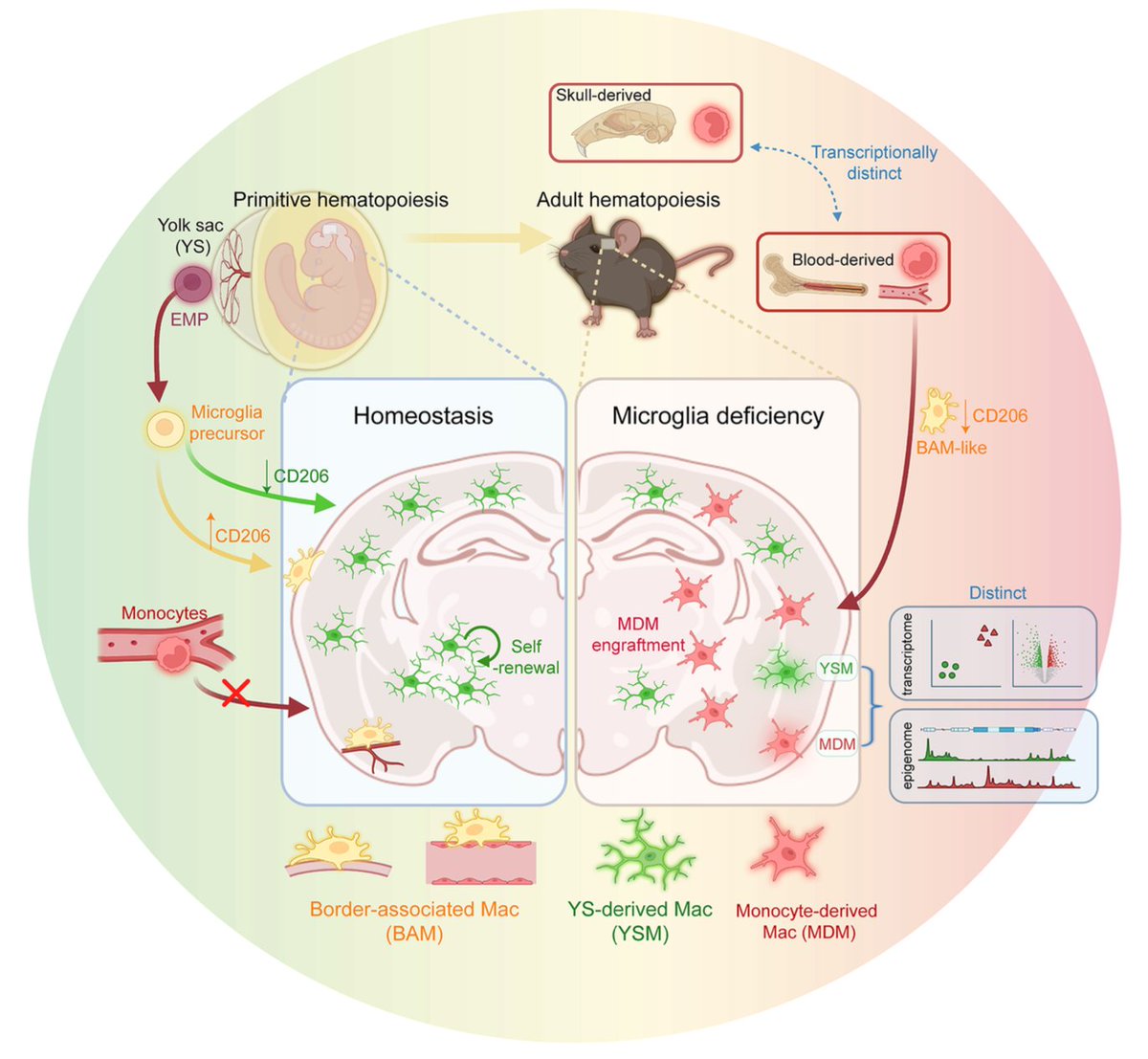
🧵Excited to share my thesis work out today in @NeuroCellPress from @kipnislab and @TheColonnaLab: "Brain-Engrafted Monocyte-derived Macrophages from Blood and Skull-Bone Marrow Exhibit Distinct Properties." 🧠🦴
sciencedirect.com/science/articl…

English
Miguel Ángel Abellanas retweetledi

New @NatureMedicine
The power of our mind to shape immune response, as seen in a randomized trial of trained neurofeedback for increased reward activity. More positive expectation-> more antibody response nature.com/articles/s4159…
nature.com/articles/s4159…

English
Miguel Ángel Abellanas retweetledi

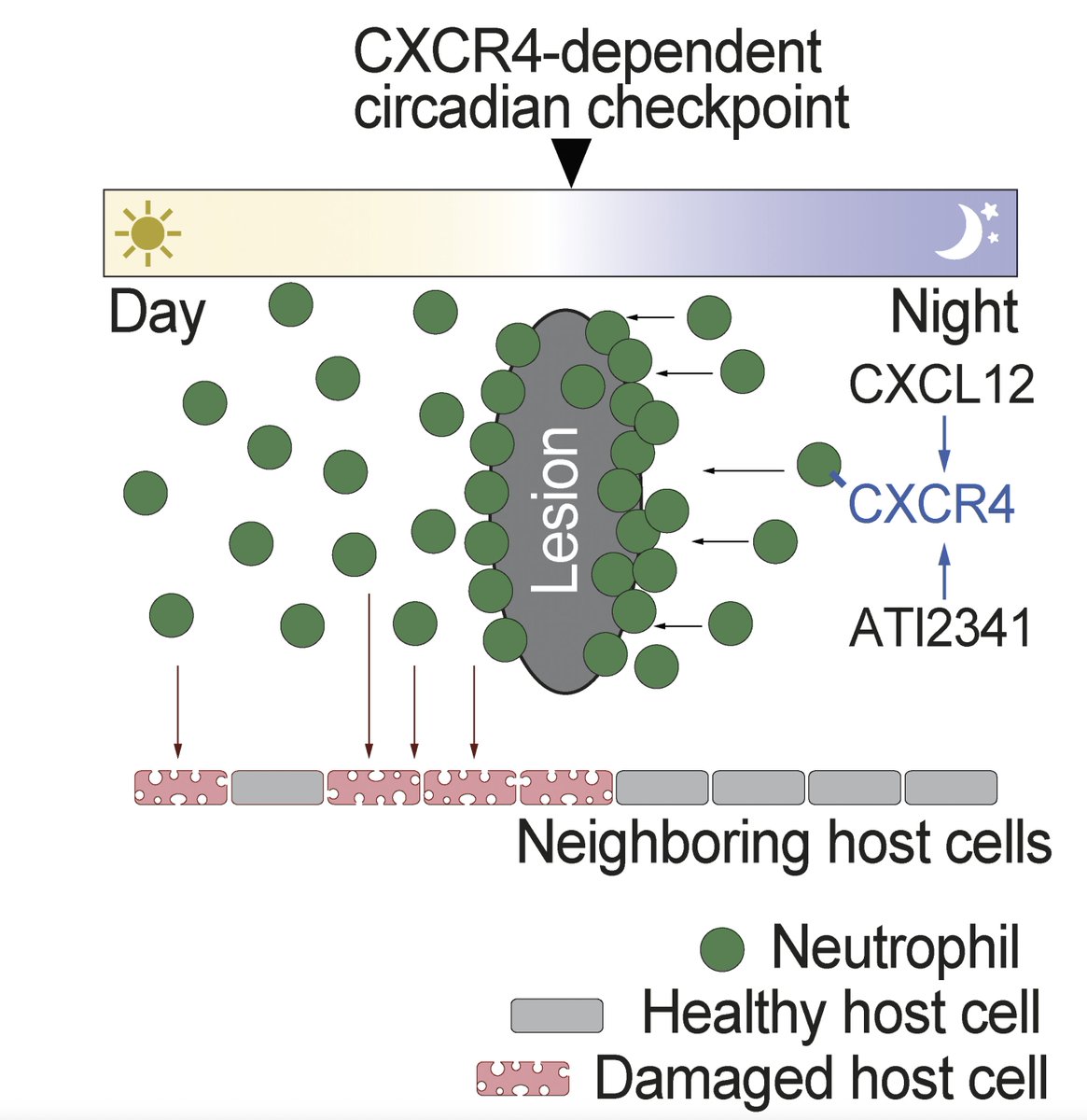
Why do heart attacks during the night cause less damage than during daytime? The role of neutrophils and circadian clock genes in reducing inflammation and injury @JExpMed in experimental model
rupress.org/jem/article/22…

English
Miguel Ángel Abellanas retweetledi

Absolutely thrilled to share that I’ve been awarded an ERC Consolidator Grant for HyperAstroMet! 🚀🧠✨
The next 5 years are going to be an incredible journey — stay tuned for opportunities to join the team! 🙌
Huge thanks to @ERC_Research 💫 #ERCCoG
European Research Council (ERC)@ERC_Research
The results of the ERC Consolidator Grant call have been announced! 📣 349 researchers have been selected for funding. Congratulations to all! #ERCCogG! 👉 erc.europa.eu/news-events/ne… #FrontierResearch #EUfunded #HorizonEurope @EUScienceInnov
English
Miguel Ángel Abellanas retweetledi

In vivo CRISPR screen reveals regulation of macrophage states in neuroinflammation @NatureNeuro
nature.com/articles/s4159…

English
Miguel Ángel Abellanas retweetledi

Save the date: #ReThinkNeuroimmunology is back in Weizmann - October 26-28 2026 🏄
Registration opening soon!
Co organized with: @jonykipnis @QuintanaLabHMS @stevens1lab @RejaneRua

English
Miguel Ángel Abellanas retweetledi

Immune dysfunction in Alzheimer disease — a Review by Oleg Butovsky, Neta Rosenzweig, Kilian L. Kleemann, Mehdi Jorfi, Vijay K. Kuchroo, Rudolph E. Tanzi & Howard L. Weiner
@OlegButovsky @mejorfi @KuchrooLab @RudyTanzi @weinerlabhms
nature.com/articles/s4158…
Deutsch
Miguel Ángel Abellanas retweetledi

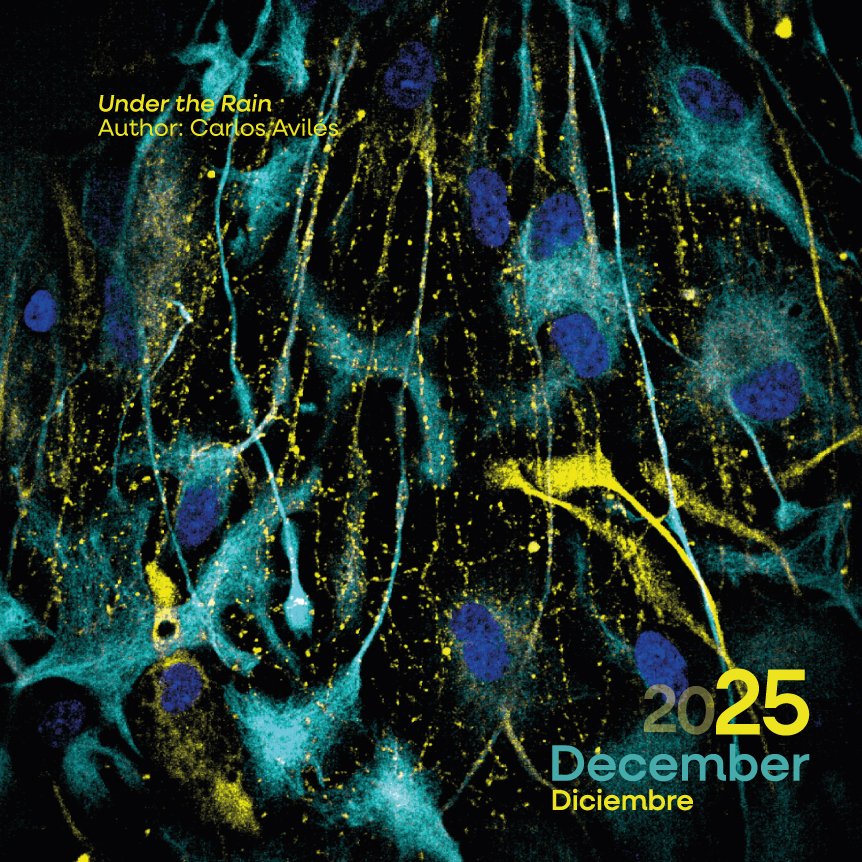
✨ ¡Bienvenido, diciembre! ✨
Cerramos el año celebrando la curiosidad que nos impulsa a explorar, descubrir y comprender nuestro mundo.
Iniciamos este mes con la imagen 'Under the Rain' de @carlosavilesgr #SciencePhoto_IN

Español
Miguel Ángel Abellanas retweetledi

Check out this new npj Parkinson’s Disease paper featuring #preclinicalresearch on $INMB's #XPro1595.
Modulating neuroinflammation was neuroprotective in a mouse model of #parkinsons, improving motor function & preserving neurons.
Full publication: go.nature.com/4hRPk3b

English
Miguel Ángel Abellanas retweetledi

Alzheimer’s disease causes bone marrow myelopoiesis dysfunction biorxiv.org/content/10.110…
English

@OdedRechavi I will!! Thanks for putting on this tool so much effort!
English

@maabellanas Thanks a lot! I'm very happy you liked it, and can't wait for you to try the new and much stronger verson! :)
English