™ ʇǝddnW ɹǝʇsɐW - 🇨🇦🇺🇲🇲🇽

39.7K posts

™ ʇǝddnW ɹǝʇsɐW - 🇨🇦🇺🇲🇲🇽 banner
™ ʇǝddnW ɹǝʇsɐW - 🇨🇦🇺🇲🇲🇽

™ ʇǝddnW ɹǝʇsɐW - 🇨🇦🇺🇲🇲🇽

@muppetmastertm2

Geopolitics, Geography, History, Science, Demographics, Markets and Finance. Read everything. Tear down all narratives. No Heroes. No idols.

North America Katılım Temmuz 2023
1.8K Takip Edilen856 Takipçiler
™ ʇǝddnW ɹǝʇsɐW - 🇨🇦🇺🇲🇲🇽 retweetledi
Dillion 🇺🇸
Dillion 🇺🇸@bencroyderived·
Brother what? The American Empire who guarantees free and open maritime navigation everywhere, should also be engaged in economic terrorism against the entire world? Vance is going down with the sinking ship that is this admin whether he makes a peace deal or not.
OSINTtechnical@Osinttechnical

Vance: “What [Iran] has done is engaged in this act of economic terrorism against the entire world… well as the President of the United States showed, two can play at that game.”

English
3
1
10
625
™ ʇǝddnW ɹǝʇsɐW - 🇨🇦🇺🇲🇲🇽 retweetledi
JH
JH@CRUDEOIL231·
What is the North Sea physic mkt, and how should the gap between the paper and physical markets be resolved? Every time I post about the physical market, I see a lot of complaints about why oil prices aren't rising further. Many ppl even criticize me, claiming I’m not explaining things properly. First, I’ll summarize the basic components of the North Sea market. ICE Brent Futures: A financially settled paper contract used primarily for broad directional hedging and speculation without the intention of physical delivery. EFP (Exchange of Futures for Physical): A swap that acts as a bridge, allowing a trader to convert a paper futures position into a physical cargo contract. Forward Brent: A standardized OTC physical swap for future delivery. It represents actual oil but remains non-dated bc the exact loading schedule is not yet determined. Dated Brent: The global benchmark price for physical crude. It is assessed daily by agencies like Platts based on actual trades of the most competitive grade within the BFOET+WTI basket, triggered once specific loading dates are confirmed (typically 10-30 days prior). CFD: A short-term swap representing the price difference between Forward Brent and Dated Brent. It is used to plot the physical forward curve and assess whether the market is in contango or backwardation. DFL (Dated to Frontline): A swap that links the physical Dated Brent assessment directly to the front-month ICE Futures contract, managing exposure between the physical and financial markets. Diff (Grade Basis): The premium or discount applied to a specific physical cargo relative to the Dated Brent benchmark. Driven by crude quality, logistics, and refinery demand, this unhedgeable spread is where physical traders generate profit. This alone should be enough. From there, I’ll explain how the gap between the paper market and the physical market actually closes. A massive divergence between Dated Brent (physic) and ICE Brent futures (paper) typically indicates acute near-term physical tightness relative to forward expectations. If Dated Brent remains at $120-130/bbl leading into the expiration of the front-month ICE Brent futures contract (currently around $100/bbl), the futures contract must converge toward the physical price. The convergence is not optional; it is mathematically enforced by the exchange's settlement rules and market arbitrage. This operates through three primary mechanisms: 1) Cash Settlement via the ICE Brent Index ICE Brent futures are cash-settled upon expiration and do not involve physical delivery. Expiring contracts are settled against the ICE Brent Index. The Index is a calculated average of trading activity in the relevant physical Forward BFOET(Brent, Forties, Oseberg, Ekofisk, Troll)+WTI Midland market during the final trading days of the futures contract. Bc Forward Brent and Dated Brent are intrinsically linked, a physical market sustaining $130 will generate an ICE Brent Index near $130. Consequently, any futures positions left open at expiration are forcibly settled at this higher Index price. 2) The Arbitrage Channel (EFP Mechanism) If a $30 spread exists between paper and physical markets, traders will immediately exploit the arbitrage using the EFP mechanism. Traders buy the undervalued ICE Brent futures at $100 and simultaneously sells a physical Forward Brent cargo at $130. They execute an EFP to swap their long paper futures position into a long physical Forward position. The newly acquired long physical position cancels out their short physical position, locking in a profit (minus the EFP swap cost). To execute this arbs on a large scale, traders must aggressively buy ICE futures. This massive purchasing volume forces the futures price up until the gap closes and the arb window is eliminated. 3) Forced Short Covering Market participants holding short positions in the ICE Brent futures market face extreme risk if the physical market disconnects to the upside. Knowing the contract is destined to cash-settle against a $130 physical Index, paper shorts cannot afford to hold their $100 positions into expiration. They are forced to buy back their futures contracts to close their positions before the expiry date. This forced buying—often resulting in a short squeeze—accelerates the upward momentum of the ICE futures price, driving it into alignment with the physical market. Through the combination of final index settlement and active EFP arbs, the paper market is structurally tethered to physical reality as expiration approaches. #oott #iran
English
70
212
1.1K
163.1K
™ ʇǝddnW ɹǝʇsɐW - 🇨🇦🇺🇲🇲🇽 retweetledi
🪖MilitaryNewsUA🇺🇦
🪖MilitaryNewsUA🇺🇦@front_ukrainian·
❗️Over 22,000 missions carried out by ground drones in three months, saving the lives of servicemen — Zelenskyy The President highlighted a breakthrough in the use of ground robotic systems: for the first time, an enemy position was captured without the involvement of infantry — only by drones and ground robotic complexes, forcing the occupiers to surrender with no losses on the Ukrainian side. The head of state stated that the Ukrainian defense industry is already producing millions of FPV drones per year, enabling long-range strikes and domestic missiles. Ukraine has not only developments but real weapons that work: “Neptune”, “Palianytsia”, “Vilha”, “Peklo”, “Flamingo”, “Ruta”. He also emphasized the development of unmanned systems: strikes at a distance of up to 1,750 km — and this is not the limit.
English
4
81
550
16.1K
™ ʇǝddnW ɹǝʇsɐW - 🇨🇦🇺🇲🇲🇽 retweetledi
Rev. Benjamin Cremer
Rev. Benjamin Cremer@Brcremer·
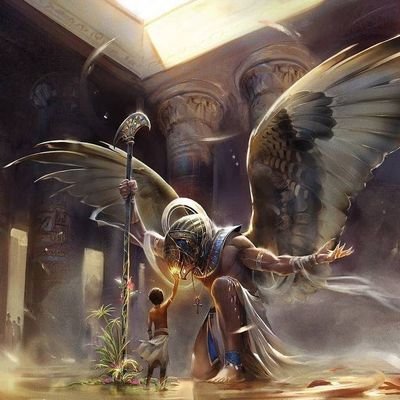
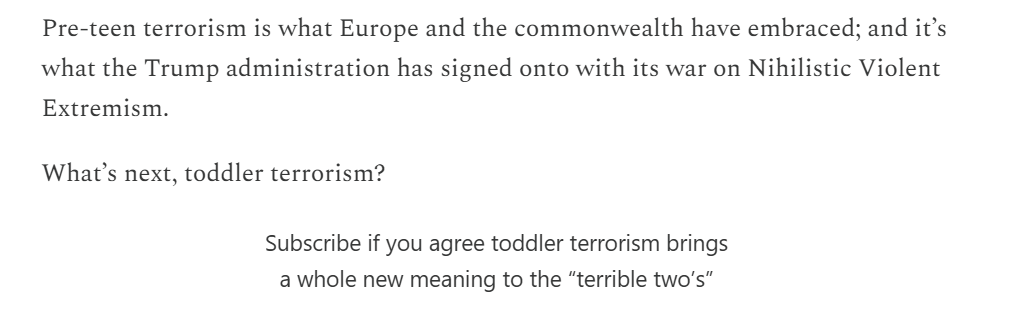
When someone tries to downplay the president’s recent post of an AI photo depicting him as Jesus, as if he’s not trying to make himself out to be divine, you may remind them that he’s also posted these.
Rev. Benjamin Cremer tweet mediaRev. Benjamin Cremer tweet mediaRev. Benjamin Cremer tweet media
English
126
2.8K
7.3K
139.2K
™ ʇǝddnW ɹǝʇsɐW - 🇨🇦🇺🇲🇲🇽 retweetledi
Eric Levitz
Eric Levitz@EricLevitz·
Last week, OpenAI argued that the government may need to create a vast new welfare state to counter AI-induced unemployment and inequality. And yet, the company's leaders have ignored - or abetted - attacks on actually existing social programs vox.com/politics/48546…
Eric Levitz tweet media
English
9
73
346
84.4K
™ ʇǝddnW ɹǝʇsɐW - 🇨🇦🇺🇲🇲🇽 retweetledi
First Squawk
First Squawk@FirstSquawk·
MICROSOFT HIKES SURFACE PRICES SIGNIFICANTLY AMID MEMORY SHORTAGE
English
4
17
179
24K
™ ʇǝddnW ɹǝʇsɐW - 🇨🇦🇺🇲🇲🇽 retweetledi
Sal Mercogliano (WGOW Shipping) 🚢⚓🐪🚒🏴‍☠️
🚨NAVAL LOGISTICS🚨 The routing of the Bush Strike Group - carrier George H W Bush (CVN-77), Donald Cook (DDG-75), Mason (DDG-87) and Ross (DDG-71) - highlights a critical @USNavy & @MSCSealift underway replenishment lesson. Sailing from Norfolk to Diego Garcia is 10,500 miles via Cape of Good Hope; 8,850 via Suez. The Bush and her escorts will be able to make a high speed run to the Indian Ocean around the Cape of Good Hope because they are supported by the fast combat support ships, USNS Arctic (T-AOE 8). Fleet oilers of the Kaiser and Lewis class have a top speed of 20 knots. Arctic, and her sistership Supply (T-AOE 6) can push 30 knots and support a high speed run around the world. The limitation is not the carrier, as she is nuclear, but the three Burke-class destroyers that will burn through their fuel at a rate twice to three time economical steaming. This also avoids having to sail though Suez or past the Houthis in the Bab el-Mandeb. Just another reason we need to be talking about building more Military Sealift Command logistic ships, including new AOEs.
USNI News@USNINews

EXCLUSIVE: Carrier USS George H.W. Bush Operating off Southern Africa as Iranian Blockade Begins — USNI News news.usni.org/2026/04/13/car…

English
41
133
649
54.6K
™ ʇǝddnW ɹǝʇsɐW - 🇨🇦🇺🇲🇲🇽 retweetledi
Sal Mercogliano (WGOW Shipping) 🚢⚓🐪🚒🏴‍☠️
Strait of Hormuz and Dueling Blockades - The United States and Iran Block Access to the Persian Gulf 1⃣Notice to Mariners Announcing the Blockade 2⃣Strait of Hormuz Update 3⃣How the US Will Conduct the Blockade
English
15
32
147
11.5K
™ ʇǝddnW ɹǝʇsɐW - 🇨🇦🇺🇲🇲🇽 retweetledi
BNO News
BNO News@BNONews·
BREAKING: Tony Gonzales (R-TX) says he will leave Congress after admitting to an affair with a staffer who later died by suicide
BNO News tweet mediaBNO News tweet media
English
124
711
5.8K
442.1K
™ ʇǝddnW ɹǝʇsɐW - 🇨🇦🇺🇲🇲🇽 retweetledi
Breaking911
Breaking911@Breaking911·
CRAZY FOOTAGE! Israeli security forces find SIXTY Palestinians hiding INSIDE GARBAGE TRUCK attempting to infiltrate into Israel. Driver detained for questioning; suspects taken into custody by police and IDF
English
1.4K
7.5K
29.9K
2.1M
™ ʇǝddnW ɹǝʇsɐW - 🇨🇦🇺🇲🇲🇽
Smartest take so far
Zineb Riboua@zriboua

The Arab Word is Watching a Different War: Three reasons why it has been difficult to understand the Arab position: The first is the Arab relationship with Iran. From the vantage point of Brussels or London, Iran presents itself as a resistance movement with a grievance against American hegemony and Israeli occupation, and this presentation maps comfortably onto familiar Western anticolonial frameworks. What it does not map onto is the lived experience of Arab populations in Lebanon, Iraq, Yemen, Bahrain, Syria, and across the Gulf. In those countries, Iran's presence meant Hezbollah holding the Lebanese state hostage to Tehran's decisions, thirty-five armed factions in Iraq drawing salaries from Iranian funds channeled through the Iraqi national treasury, and Houthi commanders answering to the Islamic Revolutionary Guard Corps while firing on Arab civilians from Yemeni soil. Freedom is not the word any serious Arab observer would use for what Iran brought. Indeed, the Arab world's quarrel with Iran runs far deeper than American bases or Israeli airstrikes. What drives it is the systematic subversion of Arab sovereignty by a foreign power that uses the language of Islamic solidarity as cover for an imperial project conducted through proxies. The second dimension is the proxy question itself, where Western analysis fails most comprehensively. Iran goes far beyond supporting armed groups. Parallel state structures get built inside Arab countries, financial systems get captured, and political figures get installed who owe their existence and survival entirely to Tehran. The Iranians who have administered this project understand it as the export of a revolution, but what Arab populations have experienced is closer to a colonial occupation conducted through intermediaries, and as of now, they’re not mourning the Islamic Republic. When Westerners treat these proxy networks as instruments of legitimate resistance rather than as mechanisms of subjugation, they endorse an imperial project while believing themselves to be opposing one, and as a matter of fact, make themselves the legitimizing force behind Iran’s war against the Arab world. The third dimension is the most counterintuitive for a Western audience, and it is the one most consequential for how the current war is understood and misunderstood. For Arab nationalists, including secular nationalists and even those with deep reservations about Israeli policy, Iran represents a greater and more immediate threat than Israel does. This is a position that Western media are structurally ill-equipped to render intelligible, because Western discourse on the Middle East has been organized for decades around the Israeli-Palestinian conflict as the primary axis of regional injustice. The result is that when Western governments and Western publics take strong positions against Israel’s actions against Iran’s operations, they believe themselves to be standing with the Arab world. In reality, they are advancing a position that the Arab world does not share and has not asked for, while ignoring the threat that Arab governments and Arab populations actually live with. The rhetorical use of Israel as a perpetual alibi for Iranian aggression has been one of the Islamic Republic’s most durable tools, and Western opinion has served as the unwitting amplifier of that tool across the entire duration of the Islamic Republic’s existence. open.substack.com/pub/zinebribou…

English
0
0
0
5
™ ʇǝddnW ɹǝʇsɐW - 🇨🇦🇺🇲🇲🇽 retweetledi
Elizabeth Tsurkov
Elizabeth Tsurkov@LizHurra·
"When Westerners treat these proxy networks as instruments of legitimate resistance rather than as mechanisms of subjugation, they endorse an imperial project while believing themselves to be opposing one, and as a matter of fact, make themselves the legitimizing force behind Iran’s war against the Arab world."
Zineb Riboua@zriboua

The Arab Word is Watching a Different War: Three reasons why it has been difficult to understand the Arab position: The first is the Arab relationship with Iran. From the vantage point of Brussels or London, Iran presents itself as a resistance movement with a grievance against American hegemony and Israeli occupation, and this presentation maps comfortably onto familiar Western anticolonial frameworks. What it does not map onto is the lived experience of Arab populations in Lebanon, Iraq, Yemen, Bahrain, Syria, and across the Gulf. In those countries, Iran's presence meant Hezbollah holding the Lebanese state hostage to Tehran's decisions, thirty-five armed factions in Iraq drawing salaries from Iranian funds channeled through the Iraqi national treasury, and Houthi commanders answering to the Islamic Revolutionary Guard Corps while firing on Arab civilians from Yemeni soil. Freedom is not the word any serious Arab observer would use for what Iran brought. Indeed, the Arab world's quarrel with Iran runs far deeper than American bases or Israeli airstrikes. What drives it is the systematic subversion of Arab sovereignty by a foreign power that uses the language of Islamic solidarity as cover for an imperial project conducted through proxies. The second dimension is the proxy question itself, where Western analysis fails most comprehensively. Iran goes far beyond supporting armed groups. Parallel state structures get built inside Arab countries, financial systems get captured, and political figures get installed who owe their existence and survival entirely to Tehran. The Iranians who have administered this project understand it as the export of a revolution, but what Arab populations have experienced is closer to a colonial occupation conducted through intermediaries, and as of now, they’re not mourning the Islamic Republic. When Westerners treat these proxy networks as instruments of legitimate resistance rather than as mechanisms of subjugation, they endorse an imperial project while believing themselves to be opposing one, and as a matter of fact, make themselves the legitimizing force behind Iran’s war against the Arab world. The third dimension is the most counterintuitive for a Western audience, and it is the one most consequential for how the current war is understood and misunderstood. For Arab nationalists, including secular nationalists and even those with deep reservations about Israeli policy, Iran represents a greater and more immediate threat than Israel does. This is a position that Western media are structurally ill-equipped to render intelligible, because Western discourse on the Middle East has been organized for decades around the Israeli-Palestinian conflict as the primary axis of regional injustice. The result is that when Western governments and Western publics take strong positions against Israel’s actions against Iran’s operations, they believe themselves to be standing with the Arab world. In reality, they are advancing a position that the Arab world does not share and has not asked for, while ignoring the threat that Arab governments and Arab populations actually live with. The rhetorical use of Israel as a perpetual alibi for Iranian aggression has been one of the Islamic Republic’s most durable tools, and Western opinion has served as the unwitting amplifier of that tool across the entire duration of the Islamic Republic’s existence. open.substack.com/pub/zinebribou…

English
12
173
751
43.8K
™ ʇǝddnW ɹǝʇsɐW - 🇨🇦🇺🇲🇲🇽 retweetledi
𝙺𝚊𝚝𝚎 𝙶𝚕𝚎𝚎𝚜𝚘𝚗
@Inevitablewest This is nothing to do with the far left governments they are protesting about the petrol tax being high. Stop making crap up. Our government is centre to centre-right, with some centre-left policies.
English
24
25
693
16.8K
™ ʇǝddnW ɹǝʇsɐW - 🇨🇦🇺🇲🇲🇽 retweetledi
NOELREPORTS 🇪🇺 🇺🇦
Ukrainian kamikaze drones struck the PhosAgro chemical plant in Cherepovets, with footage capturing the impact and aftermath. #Russia
English
7
98
749
55.1K
™ ʇǝddnW ɹǝʇsɐW - 🇨🇦🇺🇲🇲🇽 retweetledi
Peter Zeihan
Peter Zeihan@PeterZeihan·
President Trump made one of the most significant moves of the past year when he announced that the U.S. would blockade the Strait of Hormuz. Full analysis available exclusively on Patreon ➡️ bit.ly/3Q5Mrls #iranwar #geopolitics
English
9
16
168
23.4K
Ethical Skeptic ☀
Ethical Skeptic ☀@EthicalSkeptic·
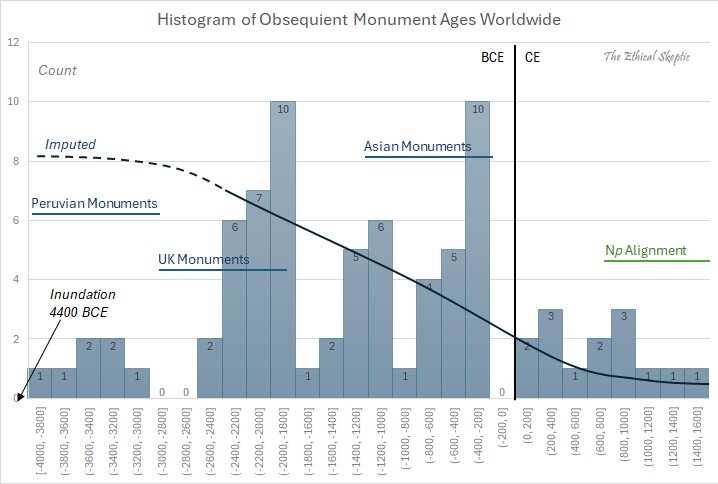
Have you stopped to ponder WHY there exists now a push-flurry of distracting ancient "discoveries" at play right now? 99% of them are noise. THIS, is not noise...
Ethical Skeptic ☀ tweet mediaEthical Skeptic ☀ tweet mediaEthical Skeptic ☀ tweet mediaEthical Skeptic ☀ tweet media
English
15
67
470
37.4K