Proloy Das, PhD

134 posts

Proloy Das, PhD

Proloy Das, PhD

@proloyd1

Scientist III/Assistant Professor @ National Brain Research Centre 👨‍💻 Developing computational tools for better understanding M/EEG.

Gurgaon, Haryana, INDIA Katılım Temmuz 2018
247 Takip Edilen192 Takipçiler
Sabitlenmiş Tweet
Proloy Das, PhD
Proloy Das, PhD@proloyd1·
Please do apply in our rich PHD program if you are interested in computational Neuroscience or Cog Sci. I am hiring and we will have a fantastic time with human neuroimaging and behavioral studies.
BRIC-NBRC@DBT_NBRC

🎓 NBRC Ph.D. Admissions 2025 Applications are open! 📅 Last date to apply (Online/Offline): 12 Nov 2025 💻 For more details, visit: nbrc.ac.in/html/nbrc/inde… @BricDbt @DBTIndia @rajesh_gokhale @DrSagarSengupta @PsethNbrc @arpansview @urssahu #NBRC #PhDAdmission #Research #Neuroscience

English

0
3
10
988
Proloy Das, PhD retweetledi
EngiNerd.
EngiNerd.@mainbhiengineer·
Let's calculate because I'm not a lockdown kid and also I can get slab rates from internet and do basic calculations. Consider a person earning 12L in 2014, paying rent 2.5L and 80C limit at 1L, 80D 15K, 80EE 1L, 80CCG 50K all in per year basis. Now if your remove all deduction and expemption, his taxable income based on last Budget by Manmohan Singh Govt would be 7.7L on which he would be paying 86.5K as tax. Now since we are in 2026, let's consider a generous inflation of 7%, although home, medical and education inflation is more than 10%. Now same person would be earning 27L inflation adjusted salary. Let's calculate the tax in 2026 - On 27L salary based on "highly relaxed" tax structure by Modi Govt he would be paying 3.8L income tax in new regime. So basically we are paying 4times tax on a 2 times increase in salary. PS: I usually ignore such post but today I spent 30 mins to do all the calculation because this myth that "No tax upto 12L" needs to busted.
desi mojito@desimojito

Lockdown kids have no idea about this

English

276
2.1K
9.3K
587K
Proloy Das, PhD retweetledi
Ignis Rex
Ignis Rex@Ignis_Rex·
India’s Missing Middle: A Society Without Values Cannot Create Prosperity India’s absence from the global middle-class map is not a statistical anomaly—it is the logical consequence of a society that has never been built on principles, values, or institutions that sustain prosperity. Bloomberg’s recent analysis rightly points out India’s fading presence in the global middle-income bracket. But the deeper truth is this: India is not merely unequal; it is structurally incapable of producing a middle class. A Hollow Growth Story For decades, India has been celebrated as “the next big market.” Economists and investors have projected a rising consumer base, a demographic dividend, and a vibrant democracy. Yet the reality is starkly different. India’s economy is polarized between a tiny elite and a vast underclass. The so-called middle class is a mirage—fragile, precarious, and dependent on patronage rather than merit. Unlike China, which built factories, infrastructure, and disciplined institutions to lift hundreds of millions into middle-income status, India has relied on slogans, subsidies, and rent-seeking. The result is an economy where luxury malls flourish for the elite, while the majority struggle for subsistence. There is no broad-based demand, no stable middle-income consumer, and no genuine ladder of upward mobility. Why Inequality Is Entrenched India’s inequality is not simply economic—it is cultural and institutional. - Caste and tribalism: Social hierarchies remain rigid. Meritocracy is suffocated by caste privilege, nepotism, and political favoritism. - Corruption as culture: Rules are bent, contracts ignored, and corruption normalized. In India, dishonesty is not an exception—it is the operating principle. - Absence of civic values: Societies that sustain a middle class are built on trust, accountability, and respect for law. India has none of these. Institutions are hollow, enforcement is arbitrary, and opportunism is the only ethic. - Protectionistic policy that punish foreign manufacturers and brands for being successful in the Indian market and dare to compete successfully against local heroes. India normally used tax and custom procedures to harrass these foreign companies. Why is value and principle important for a society? Without values, inequality becomes entrenched. Without principles, institutions collapse into corruption. And without institutions, there can be no middle class. The Mirage of Democracy India’s defenders point to its democracy as a safeguard. But democracy without values is merely populism. Elections are won through caste arithmetic, handouts, and manipulation. Policy is reactive, incoherent, and designed to appease factions rather than build institutions. The middle class, which in other societies acts as a stabilizing force, is too weak to play that role in India. Instead, politics amplifies division and entrenches inequality. Global Implications India’s failure to build a middle class has consequences beyond its borders. - Economic fragility: Without a strong middle-income base, India’s growth story is unsustainable. Domestic demand will remain polarized, vulnerable to shocks, and incapable of driving global markets. - Geopolitical weakness: India cannot credibly claim to rival China when it lacks the social and economic foundation of a middle class. - Investor caution: For global capital, India offers opportunities at the top and bottom of the pyramid—but the broad consumer market that sustains long-term investment is missing. Conclusion India’s missing middle is not a temporary setback—it is the inevitable outcome of a society that has never embraced values of fairness, merit, or accountability. Until India confronts its cultural and institutional dysfunction, it will remain a deeply unequal society, incapable of producing prosperity for the majority of its people. The world must stop indulging the fantasy of India as a rising middle-class power. The reality is harsher: India is a society without principle, and therefore without a future middle class. bloomberg.com/opinion/articl…
Ignis Rex tweet media
English
194
437
1.3K
142.4K
Proloy Das, PhD retweetledi
🦉
🦉@macroschema·
There is one fundamental difference between Indian and European society Which, honestly, I find both funny and deeply shameful Indians love VIP treatment. In Indian society, everyone wants special treatment to enter a place, to park a car, to eat at a restaurant, get a doctor’s appointment, you name it. Every time I pass through an Indian airport, I noticed how some cars are allowed to go all the way up to the entrance because they belong to so-called VIP. In the busiest cities in the country, entire roads are blocked so that a minister, bureaucrat, or other VIP can travel without being disturbed Meanwhile, in European society, VIP treatment is largely frowned upon. I would even say the concept barely exists. Preferential treatment is reserved only for those who genuinely need assistance. A bus driver will get down from the bus to make sure a passenger in a wheelchair has boarded safely.. it is completely normal for many politicians to use public transport, roads are not blocked so that a single politician can pass, there are equal queues for everyone.. European leaders often have minimal, discreet security. The goal is protection, not display of power. There are no sirens, flashing lights, or convoys to signal superiority It is this fundamental societal difference between India and Europe that explains the huge gap between the two economies in terms of wealth, prosperity, well-being, and overall quality of life
🦉 tweet media
English
34
87
517
16K
Proloy Das, PhD retweetledi
Frontier Indica
Frontier Indica@frontierindica·
> be me, 28m wagie living in Delhi > wake up at 8 AM for my IT coolie job > look out window, can’t see anything except a Grey haze > neighbhourhood looks like the inside of a tandoor that hasn't been cleaned since 1947 > chest feeling heavy, congestion built up in lungs > must be the weather changing > check phone > open IQAir app (Western propaganda tool) > screen is deep purple > AQI 650: "Hazardous. Do not breathe. Just die." > panic.jpg > am I being gaslit by the atmosphere? > turn on nationalist TV news channel > see senior Minister > looks calm, composed, probably breathing filtered Himalayan air in the studio > “Global rankings are not official. WHO guidelines are just suggestions.” > “India sets its own standards based on geography.” > realization hits me > foreign AQI is a colonial construct > Westoid lungs are weak, cannot handle the texture of Desi air > they need ‘clean air’ because they lack civilizational immunity > delete IQAir immediately > install ‘Sarkari Vayu Sewa’ app > refresh location > AQI is 45: “Satisfactory” > it’s not PM2.5, it’s ‘Atmanirbhar Particles’ > it’s not smog, it’s ‘Viksit Vapor’ > go to balcony > take a deep breath of sovereign, non-aligned air > taste the sulphur > cough up a black glob > stare at it > it looks vaguely like a map of Akhand Bharat > tears stream down my face (mostly from the nitrogen dioxide, but also patriotism) > Global Index: Rejected > Lungs: Congested > Nation: Protected > mfw I successfully rejected Western imperialism by reducing my life expectancy by 10 years
Press Trust of India@PTI_News

STORY | India sets its own air standards; global rankings not official: Govt The government on Thursday told Parliament that global air quality rankings cited by various organisations are not conducted by any official authority and that the World Health Organisation's (WHO) air quality guidelines serve only as advisory values, not binding standards. Responding to a question in the Rajya Sabha on India's position in global indices such as IQAir's World Air Quality Ranking, the WHO Global Air Quality Database, the Environmental Performance Index (EPI) and the Global Burden of Disease (GBD) metrics, the Environment Ministry said no official country-wise pollution ranking is carried out worldwide. Minister of State for Environment Kirti Vardhan Singh said the WHO's guidelines are meant to help countries set their own standards, taking into account geography, environmental conditions, background levels and national circumstances. READ: ptinews.com/story/national…

English
227
2.5K
21.2K
930.6K
Proloy Das, PhD retweetledi
Department of Biotechnology
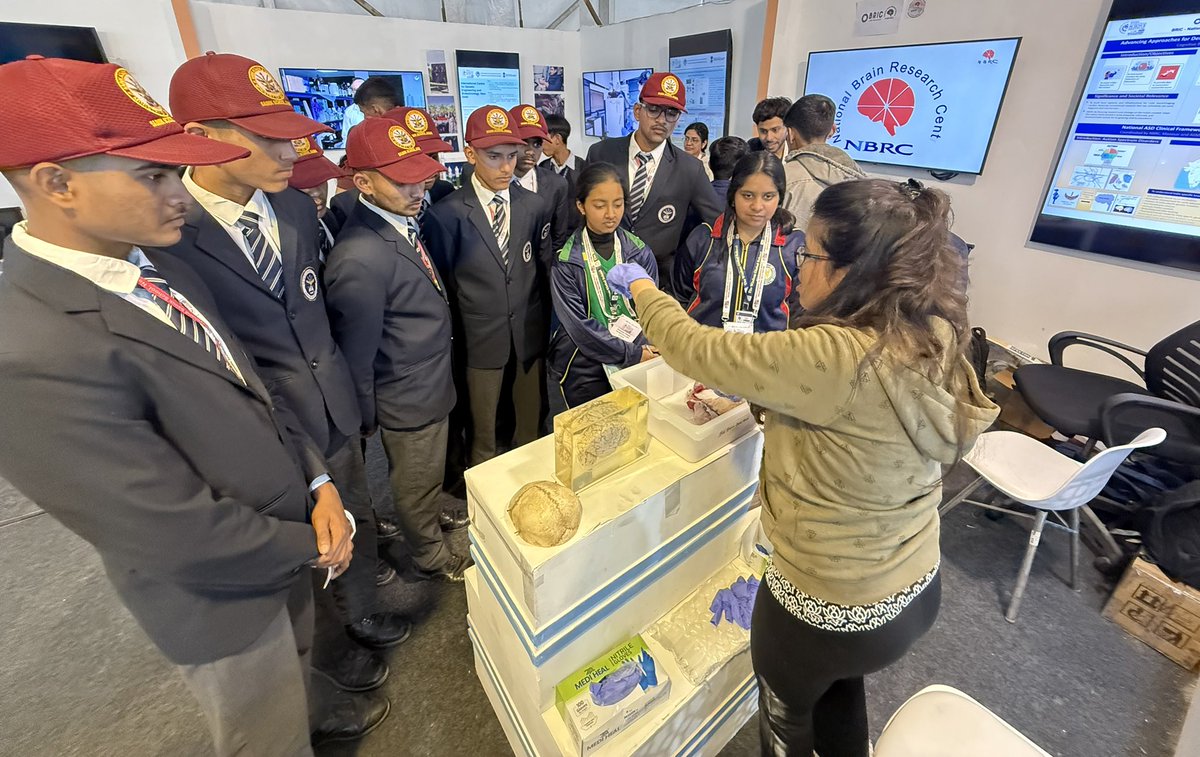
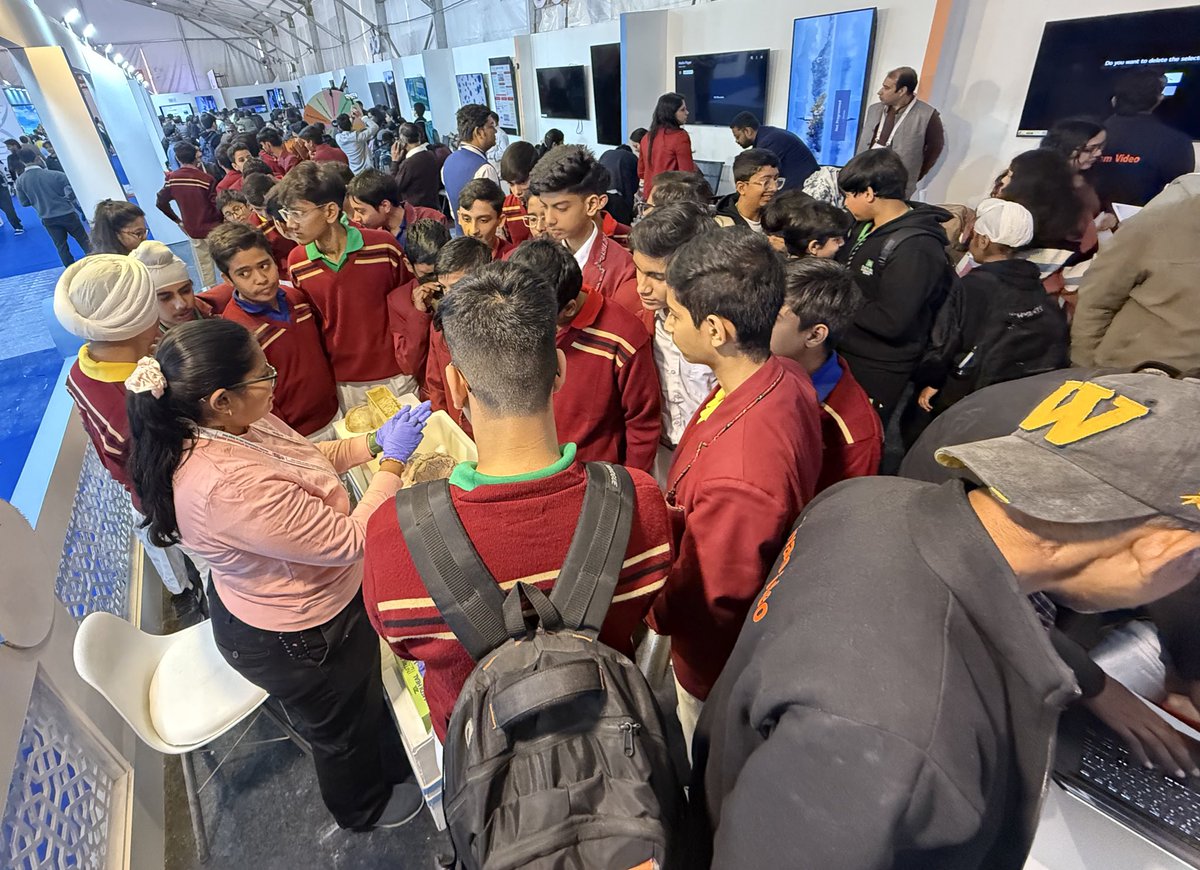
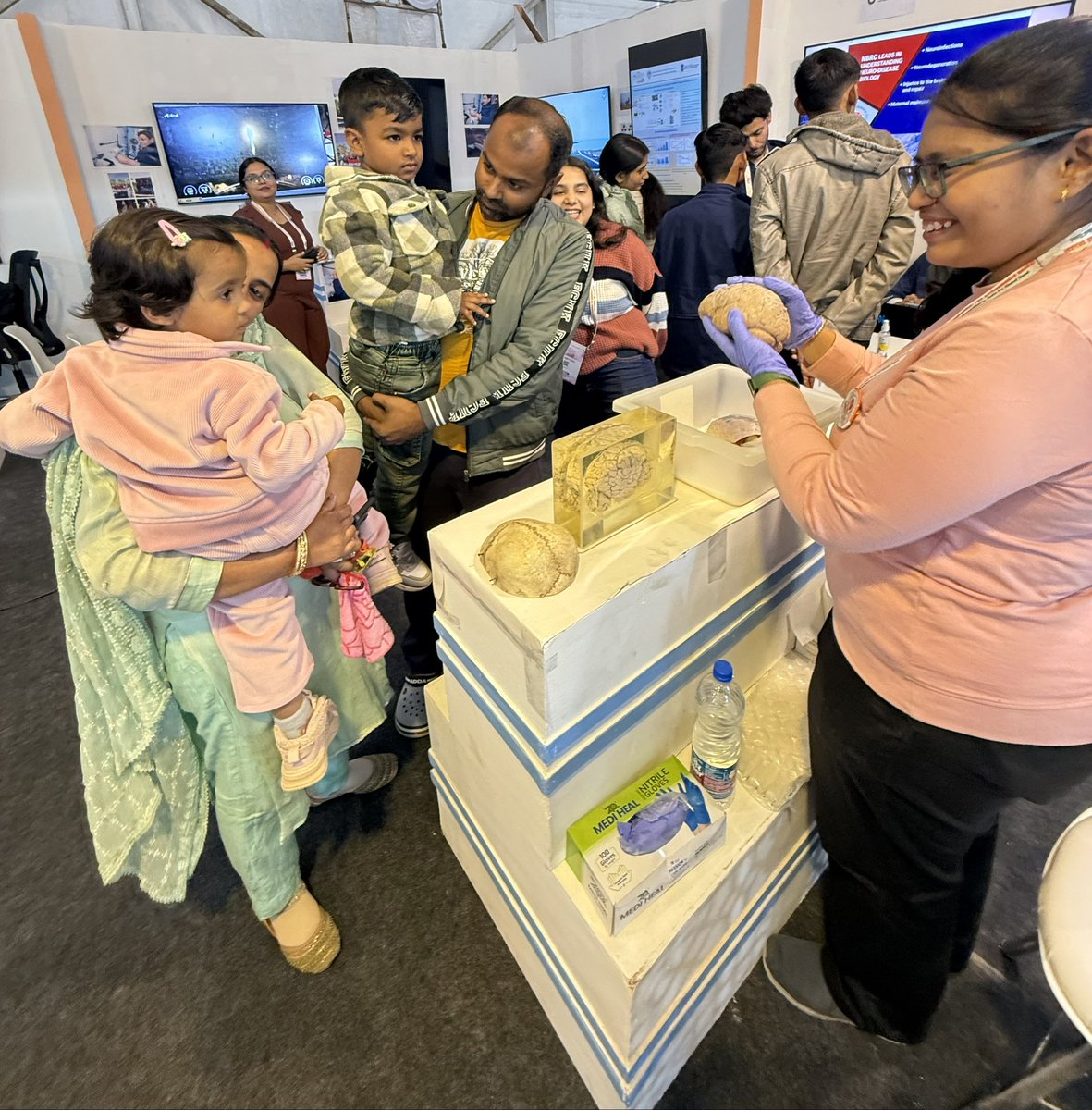
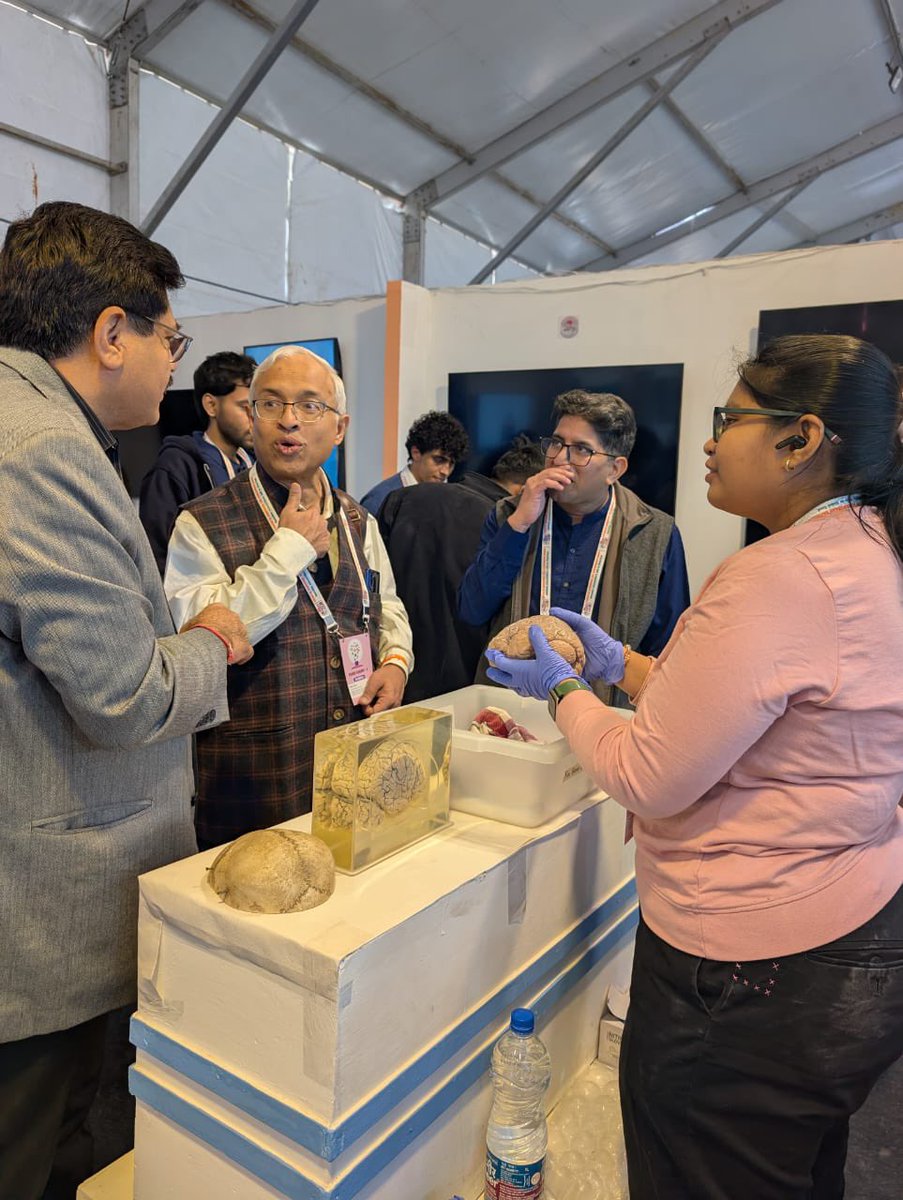
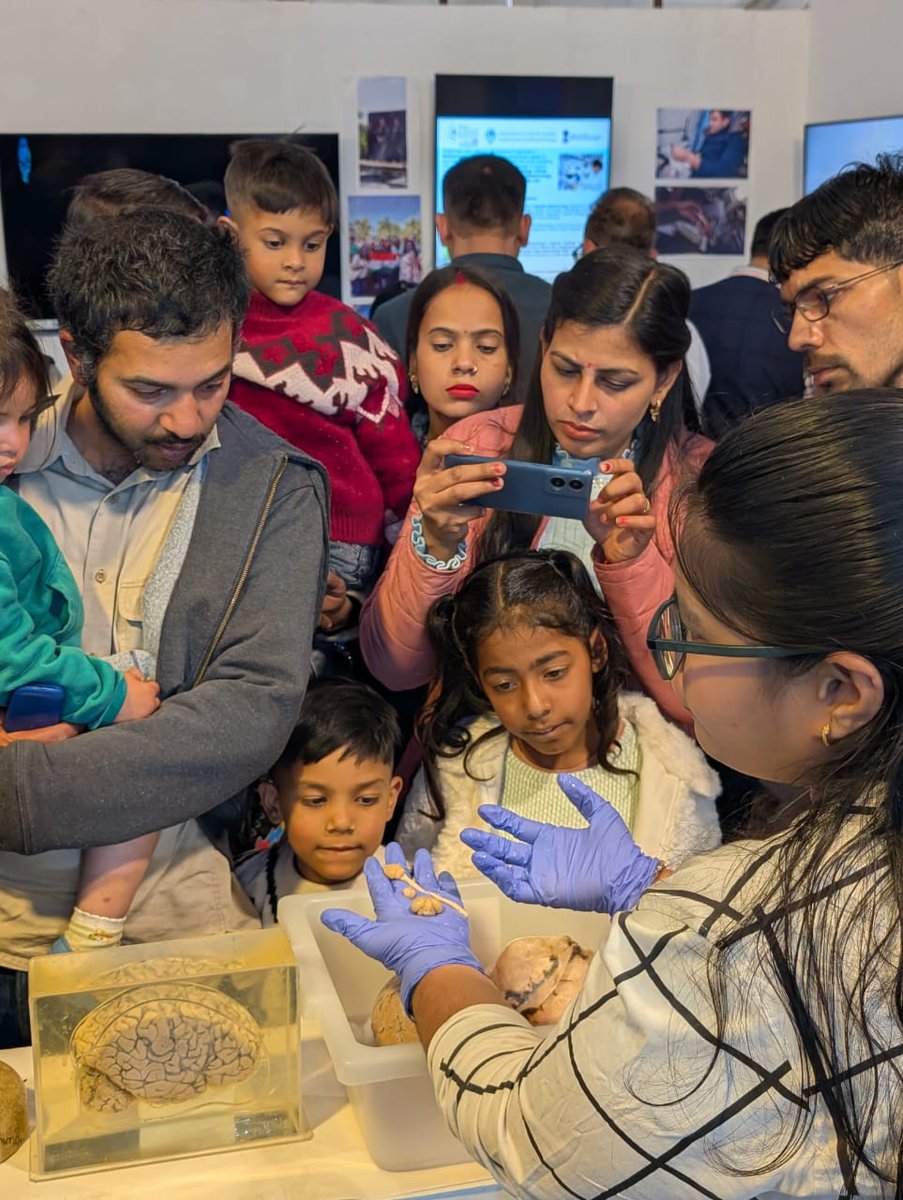
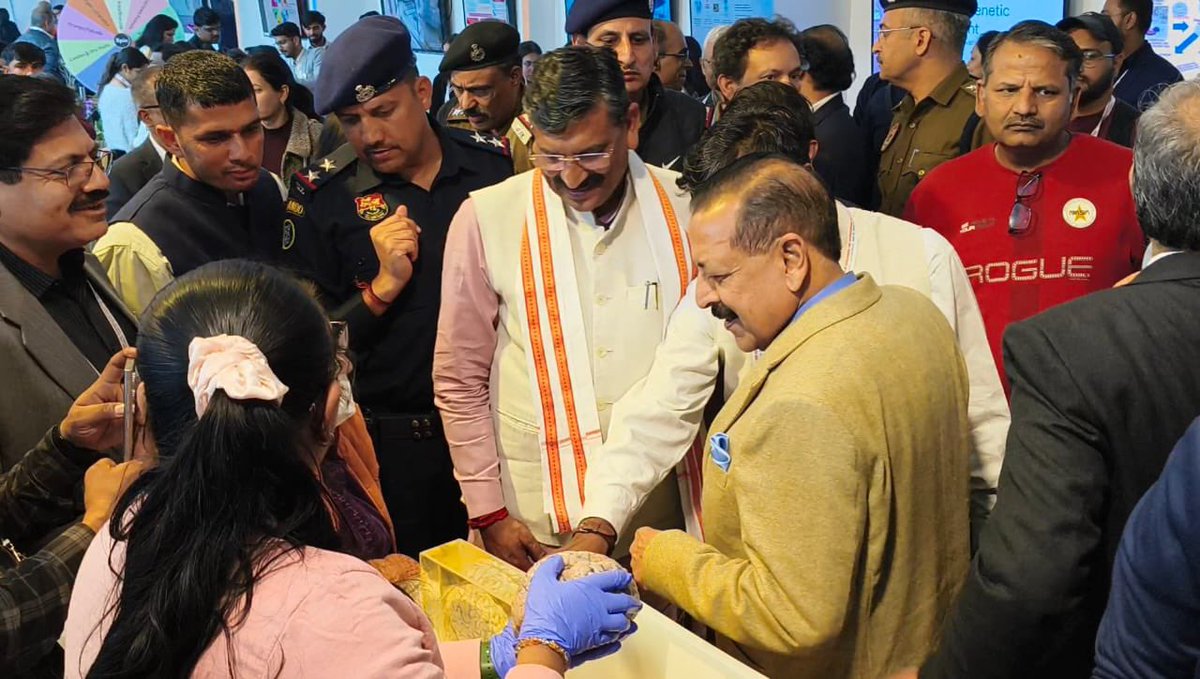
Day 2 of IISF 2025 witnessed an extraordinary wave of enthusiasm from young learners. The DBT Zone remained packed as school students explored models displayed by all iBRIC+ institutes, engaged deeply with scientists and researchers, and discovered the world of biotechnology through hands-on learning. Their curiosity and the knowledge shared by our experts made the space vibrant, inspiring, and truly unforgettable. 🔬✨ #IISF2025 #VigyanSeSamruddhi @narendramodi @PMOIndia @DrJitendraSingh @rajesh_gokhale @BricDbt @mygovindia @moesgoi @OfficeofDrJS @CSIR_IND @Ravi_MoES @ESSO_INCOIS @MoesNiot @Indiametdept @NCS_Earthquake @CentreCoastal @ESSO_NCESS @DAEIndia @isro @iitmpune @cmlre_kochi @ncaor_goa @ncmrwfmoes @IISF2025 @PrinSciAdvGoI
English
0
7
15
863
Anirudh Kejriwal
Anirudh Kejriwal@AnirudhKejriwal·
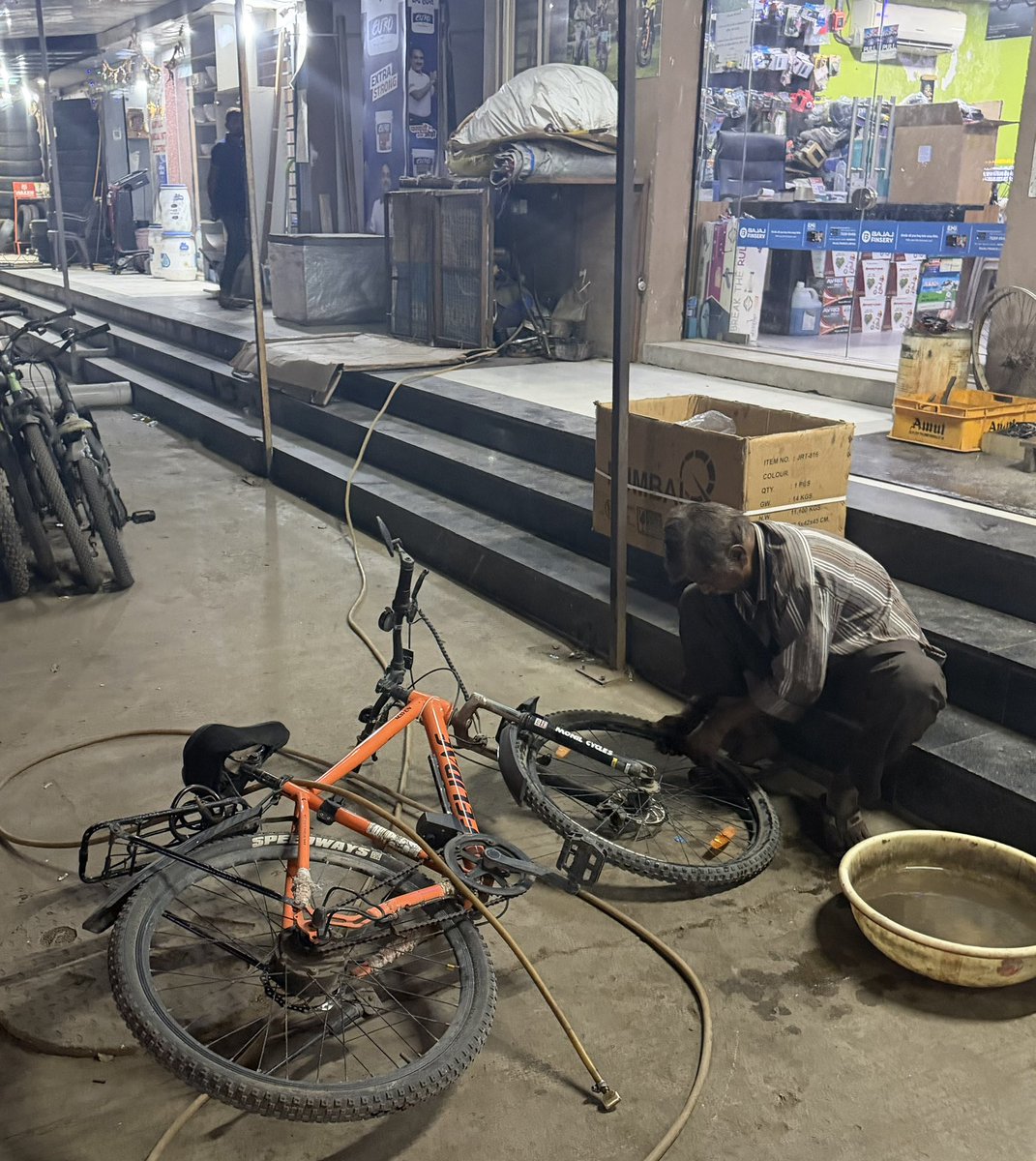
My cycle tyre went flat today. I walked to a nearby shop where the guy spent a solid 20 minutes fixing the puncture. He charged me ₹20, which is ₹1 per minute of skilled labour. In other places, a flat tyre is a weekend DIY project. Here, it’s a minor inconvenience solved with loose change. It’s cheap for us, but it implies a massive undervaluation of time. The guy would be on a fixed monthly salary, but if he has to survive solely on these unit economics, it’s a brutal grind.
Anirudh Kejriwal tweet media
English
139
120
2.5K
330.7K
Proloy Das, PhD retweetledi
BRIC-NBRC
BRIC-NBRC@DBT_NBRC·
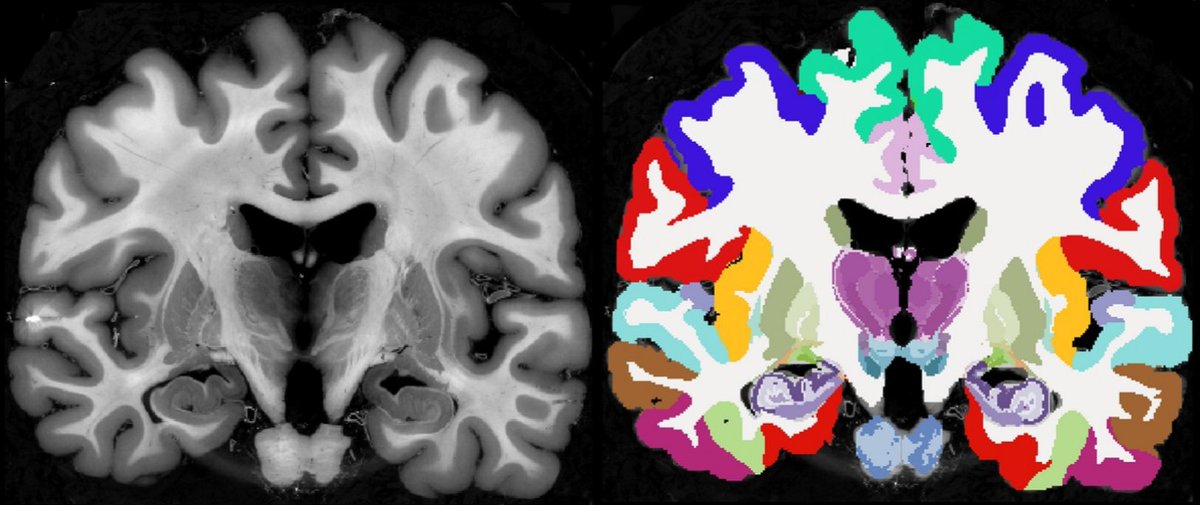
📢 NBRC announces the 3-day Neuroimaging Workshop: Clinical & Preclinical Perspectives 2025 🧠 🗓 Dates: December 8–10, 2025 |📍 Venue: NBRC Campus This advanced workshop will feature lectures and hands-on sessions on cutting-edge neuroimaging techniques, with distinguished speakers from India and across the globe: Distinguished Speakers: 1. Dr. N.R. Jagannathan, IIT Mumbai, India 2. Dr. Wen Li, UT Health Houston, USA 3. Dr. Thomas Hummel, Dresden Technical University, Germany 4. Dr. Sridharan Devarajan, IISc Bangalore, India 5. Dr. Harish Poptani, University of Liverpool, USA 6. Dr. Dipanjan Roy, IIT Jodhpur, India 7. Dr. Sanjeev Nara, IIT Mandi, India 8. Dr. Valentina Parma, Monell Chemical Senses Center, PA, USA 9. Dr. Uma Sharma, AIIMS, New Delhi, India Key Sessions: • Fundamentals & Applications of Brain Imaging • Human Cognitive Neuroscience • MRI & PET in Addiction • Neural Circuits, Behavior & Olfaction • Preclinical Imaging in Neuropsychiatric Conditions 💻 Registration Link: http://14.139.62.11/conference/index.php 📧 Organizers Contact: khushbu.agarwal@nbrc.ac.in | ahmad.raza@nbrc.ac.in Sponsored by: ANRF & NBRC Core @ANRFIndia @BricDbt @DBTIndia @DrJitendraSingh @rajesh_gokhale @DrSagarSengupta @Khushbu57737753 @110ahmadkhan #Neuroimaging #BrainResearch #Workshop2025 #NBRC #Neuroscience #ClinicalNeuroscience #PreclinicalResearch
BRIC-NBRC tweet media
English
1
7
15
1.5K
Proloy Das, PhD
Proloy Das, PhD@proloyd1·
Strongly recommend for people who want to hone their EEG/MRI skills.
English
1
1
6
373
Proloy Das, PhD retweetledi
Mahima Jalan ماهيما جالان
I was hiring for a role and saw a resume with a 4-5 year gap. Normally I don’t ask, but this time I did. He said he had been preparing for govt exams like SSC CGL, bank exams, even UPSC. So I casually asked him, “Do you really think it’s worth spending 4-5 years on an exam that’s so unpredictable?” His answer left me shocked. He said, “Where I come from, people believe govt jobs bring respect, power, and under table money that can secure 5- 6 generations. I didn’t know how to respond. If even today the young generation is bombarded with such thoughts, what kind of future are we securing?
English
266
329
3.3K
260.6K