
Dominik Daszuta

12.1K posts

Dominik Daszuta banner
Dominik Daszuta

Dominik Daszuta

@rubbadoc

Gasman, intensivist, resuscitationists, retired golfer, helping critically ill. Passionate about medicine. Slightly less serious than the rest :-) DESA #FOAM

Warsaw, Poland Katılım Haziran 2012
1.8K Takip Edilen1K Takipçiler
Dominik Daszuta retweetledi

IMCrit
IMCrit@IM_Crit_·
Our reaction to any new study is either “I don’t believe it” or “I knew it”... A NEJM trial in ICU pts w acute resp failure found that mucolytics (carbocisteine & hypertonic saline) don’t help. My ICU rounds line “mucolytics are useless” may need an update: “and possibly harmful”
IMCrit tweet media
English
9
58
261
23.3K
Dominik Daszuta retweetledi
M Velia Antonini
M Velia Antonini@FOAMecmo·
Organ donation after #ECPR, narrative review aimed to examine associated clinical & ethical challenges, with particular attention to transition from resuscitative intent to donation-oriented care ⚠️ patient autonomy 📋 consent ⛔️ conflicts of interest ⚖️ equity of access in adults & peds @Crit_Care 🔓 rdcu.be/fjpEl
M Velia Antonini tweet media
English
0
13
25
1.8K
Dominik Daszuta retweetledi
Mateusz Zawadka
Mateusz Zawadka@m_zawadka·
First POCUS International Course in Warsaw 🇵🇱 Three days of intensive, hands-on training in TCCD, lung/abdominal/vessel ultrasound and echocardiography — delivered in English by an international faculty. 📅 11–13 Sept 2026 🔗 criticalusg.com
Mateusz Zawadka@m_zawadka

📷 An international point-of-care ultrasound course. Three days. Intensive training programme. Warsaw, September 2026. We are honoured to invite you to the first edition of the POCUS International Course — in ENG 📷 Registration & details: criticalusg.com

English
0
3
4
781
Dominik Daszuta retweetledi
Fluid Academy
Fluid Academy@Fluid_Academy·
🌿 LIVE from Warsaw | Intensive Spring Conference 2026 🌿 We're thrilled to be part of #iSpring2026 – one of the most dynamic gatherings in critical care medicine, bringing together world-class intensivists from across the globe in the heart of Warsaw! 🇵🇱 🎤 Incredible panel discussions, thought-provoking lectures, and lively debates are already in full swing. Today's highlights include cutting-edge insights on: 💧 Fluid management in critically ill patients – When do you give a fluid bolus? Preload responsiveness, vasopressors, and the nuances of hemodynamic optimization are front and center. 🌍 Sustainability in the ICU – A timely session exploring the carbon footprint of intensive care, from Scope 1 to Scope 3 emissions, and what ICU teams can do to drive change. 📚 Proud to present our Springer open-access book "Rational Use of Intravenous Fluids in Critically Ill Patients" (Malbrain, Wong, Nasa & Ghosh) — available at the conference! 🎁 A huge thank you to our international faculty for sharing their expertise, and to all attendees who make this event such an energizing experience. The conversations happening here will shape critical care practice for years to come. 💡 📍 Warsaw, Poland | 14–16 May 2026 🏥 Supported by: Löwenstein Medical, Mindray, BD, Fisher & Paykel, GE, CIRRO & more 👉 Stay tuned for more updates throughout the conference! #IntensiveSpringConference #iSpring2026 #CriticalCare #ICU #IntensiveCare #FluidManagement #Hemodynamics #Sustainability #MedEd #Warsaw #OpenAccess #IFAD #Springer #ManuMalbrain
Fluid Academy tweet mediaFluid Academy tweet mediaFluid Academy tweet mediaFluid Academy tweet media
English
0
3
7
950
Dominik Daszuta retweetledi
Hans Huitink
Hans Huitink@AirwayMxAcademy·
Airway Management at a Crossroads: Why Global Adoption of Structured Airway Triage Could Transform Patient Safety Johannes Huitink, MD PhD FEAMS Airway management remains one of the most critical - and unforgiving - domains in acute care medicine. Despite decades of technological advancement, new devices, and refined guidelines, airway-related morbidity and mortality persist at an unacceptably high level. The paradox is striking: clinicians today have more tools than ever, yet adverse events continue to occur in operating rooms, emergency departments, and intensive care units worldwide. The problem is not primarily a lack of knowledge or equipment. It is a failure of decision-making under pressure. Specifically, it is the inability to consistently match the right strategy to the right patient at the right time. This is where the concept of structured airway triage - operationalized through an airway triage app methodology - has the potential to redefine global standards of care. A 🧵 1/4 The Core Problem: Variability in Human Decision-Making #airwaytriage #airwayassessment
English
1
1
2
409
Dominik Daszuta retweetledi
Benigno Valderrábano Salas
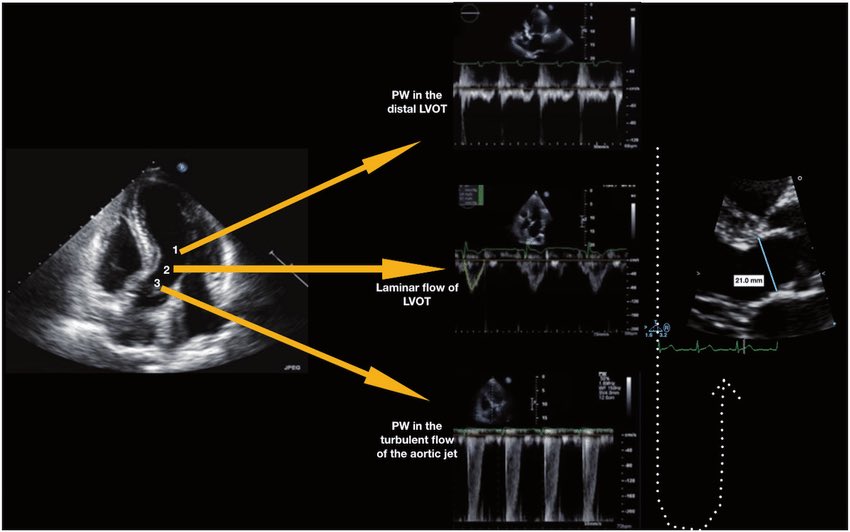
🫀 Did you know where the recommendation to place the pulsed wave Doppler sample volume 0.5–1 cm from the aortic valve to measure LVOT VTI comes from? The answer is more interesting than it seems. It doesn’t come from a single study or an experiment designed for that purpose. It comes from a historical chain spanning nearly 40 years: 🔬 1982–1984 — The physical foundation Pasipoularides and Murgo demonstrated using invasive catheters and mathematical models that in aortic stenosis there is a real zone of flow acceleration in the LVOT, just proximal to the valve, without any second anatomic obstruction. Pure hemodynamics — no Doppler yet. 👉 Bird et al. Circulation 1982 → doi.org/10.1161/01.CIR… 👉 Pasipoularides et al. Am J Physiol 1984 → doi.org/10.1152/ajphea… 📐 1984 — The apical 5-chamber view Lewis, Kuo and Quinones were the first to validate cardiac output measurement using pulsed wave Doppler from the cardiac apex. They described placing the sample volume “immediately proximal to the aortic valve leaflets” — but without specifying any distance in centimeters. 👉 Lewis et al. Circulation 1984 → doi.org/10.1161/01.CIR… 📏 1985 — The first numerical distance Skjaerpe, Hegrenaes and Hatle (the Norwegian group) were the first to quantify this in Doppler: they empirically observed that flow acceleration began 0.5 to 1.5 cm proximal to the valve, and placed the sample volume just proximal to that zone. They directly cited Pasipoularides as supporting evidence. This was the first time a numerical distance appeared in the technique. 👉 Skjaerpe et al. Circulation 1985 → doi.org/10.1161/01.CIR… 📊 1986–1988 — Practical consolidation Otto et al. used ~1.0 cm. Oh, Tajik and the Mayo Clinic group explicitly established the range of 0.5 to 1.0 cm in 100 patients, justifying it as necessary to avoid the subvalvular acceleration zone. This is the figure we all recognize today. 👉 Otto et al. JACC 1986 → doi.org/10.1016/S0735-… 👉 Zoghbi et al. Circulation 1986 → doi.org/10.1161/01.CIR… 👉 Oh et al. JACC 1988 → doi.org/10.1016/0735-1… 📋 2002 — It becomes “official” Quinones, Otto, Zoghbi and colleagues codified it in the ASE guidelines as “~5 mm proximal to the aortic valve”… but without citing any specific study to support it. It had already become expert consensus. 👉 Quiñones et al. JASE 2002 → doi.org/10.1067/mje.20… ⚔️ 2017 — The debate reopens Baumgartner et al. (EACVI/ASE) maintained the 0.5–1 cm recommendation. However, Hahn and Pibarot responded with a critical letter pointing out that the original articles from the 1980s measured at the aortic annulus, not 0.5–1 cm below it, and that moving away from the annulus introduces errors due to the elliptical and irregular shape of the subannular LVOT. 👉 Baumgartner et al. Eur Heart J Cardiovasc Imaging 2017 → doi.org/10.1093/ehjci/… 👉 Hahn & Pibarot. JASE 2017 → doi.org/10.1016/j.echo… 💡 Bottom line: The 0.5–1 cm figure was never experimentally validated as the optimal distance. It emerged from empirical observations in the 1980s aimed at avoiding a flow acceleration zone that had been demonstrated with invasive catheters. It was adopted through accumulated clinical practice and later elevated to a formal recommendation by consensus. The debate over whether to measure at the annulus or 0.5–1 cm below it remains open to this day. One of those recommendations we all follow but few know where it actually came from 🙂 Dr Benigno Valderrábano Salas @MDBeni @JaeKOh2 @ottoecho @WilliamZoghbi @ASE360 @EACVIPresident @NephroP @iamritu @PPibarot @hahn_rt @MAecocardio @SISIACOficial @SONECOM_AC @VazyurVasquez @Cardiotweets83 @HEARTof_echo @echobasics
Benigno Valderrábano Salas tweet media
English
17
134
410
54.7K
Dominik Daszuta retweetledi
Hans Huitink
Hans Huitink@AirwayMxAcademy·
The first decision in airway management - airway triage app #airwaytriage
Hans Huitink tweet media
English
0
2
5
218
Dominik Daszuta retweetledi
Dr. Chacón-Lozsán F .'.
Dr. Chacón-Lozsán F .'.@franciscojlk·
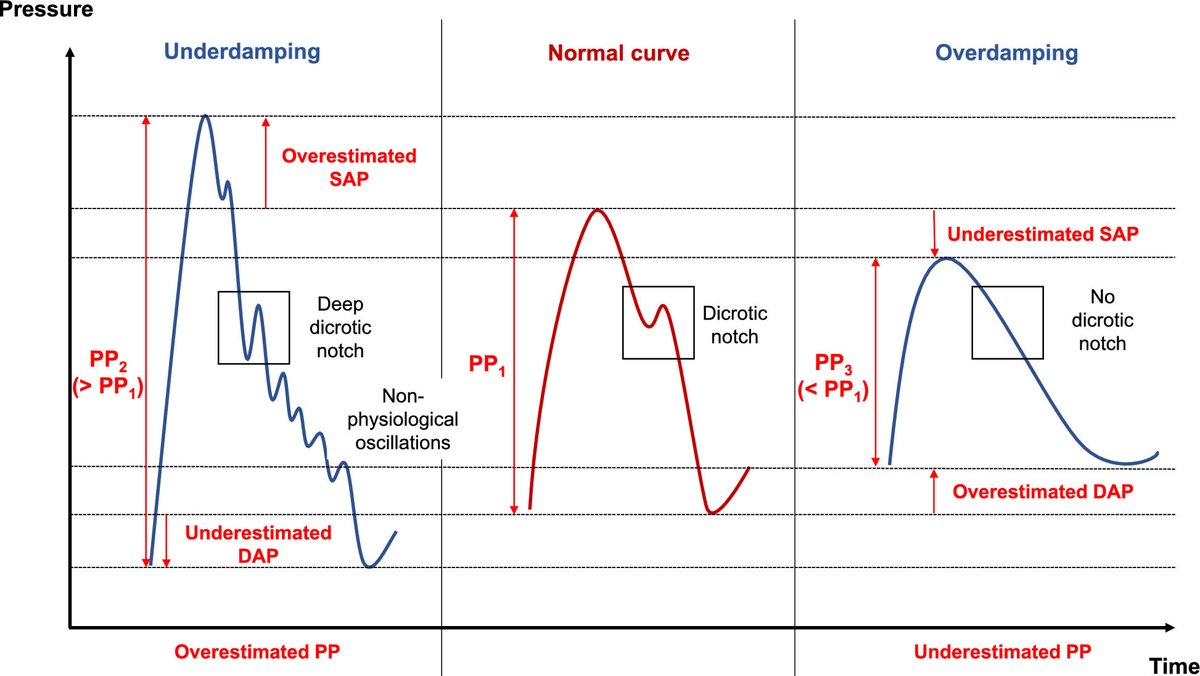
🩺 Arterial line ≠ just a number on the monitor If you’re only looking at MAP… you’re missing most of the physiology. 🧠 Invasive BP is a real-time hemodynamic language Every component tells a different story: ▪️ MAP → organ perfusion ▪️ DAP → vascular tone ▪️ SAP → LV afterload ▪️ Pulse Pressure (PP) → stroke volume surrogate ➡️ It’s not one number. It’s a dynamic physiological system ⚠️ First rule, often ignored: 👉 If the waveform is wrong → everything is wrong Before interpreting: ✔️ Check damping ✔️ Perform fast flush test ✔️ Look for: Rapid upstroke Dicrotic notch Smooth diastolic decay ➡️ Bad waveform = bad decisions 📉 MAP alone is NOT enough We target MAP ≥65 mmHg… but: ▪️ Duration of hypotension matters ▪️ Individual physiology matters ▪️ CVP matters 👉 Think instead: 🎯 Perfusion pressure = MAP − CVP (MPP) ➡️ A “normal MAP” can still mean hypoperfusion 🔥 DAP = your vasopressor trigger Low DAP = low vascular tone ▪️ Septic shock → ↓ DAP ▪️ Early signal before MAP collapses 👉 Use it to: ✔️ Start norepinephrine earlier ✔️ Avoid delayed vasopressor therapy ➡️ It’s one of the most underused variables in ICU ⚡ Pulse Pressure = hidden CO monitor PP reflects: ▪️ Stroke volume ▪️ Arterial stiffness 👉 Dynamic changes = key: ✔️ PLR ✔️ Fluid challenge ✔️ Ventilator cycles (PPV) ➡️ You can track CO trends without a CO monitor 🧬 Next-level physiology (very underrated): New indices: ▪️ DSI = HR / DAP → identifies vasoplegia early ▪️ VNERi = DAP / (HR × NE dose) → detects norepinephrine resistance 👉 These may define who needs vasopressin early 💡 Mindset shift Don’t ask: ❌ “What’s the MAP?” Ask: ✔️ “What is the physiology behind this waveform?” 🧠 Take-home Arterial line monitoring is not passive. It’s: ▪️ Diagnostic ▪️ Therapeutic ▪️ Predictive ➡️ If you read it correctly… it becomes a precision resuscitation tool 📚 Bertrand M et al. (2025)Annals of Intensive Care DOI: 10.1186/s13613-025-01608-y
Dr. Chacón-Lozsán F .'. tweet media
English
0
158
516
47.6K
Dominik Daszuta retweetledi
Manuel Garay-Fernández
Manuel Garay-Fernández@mandres80·
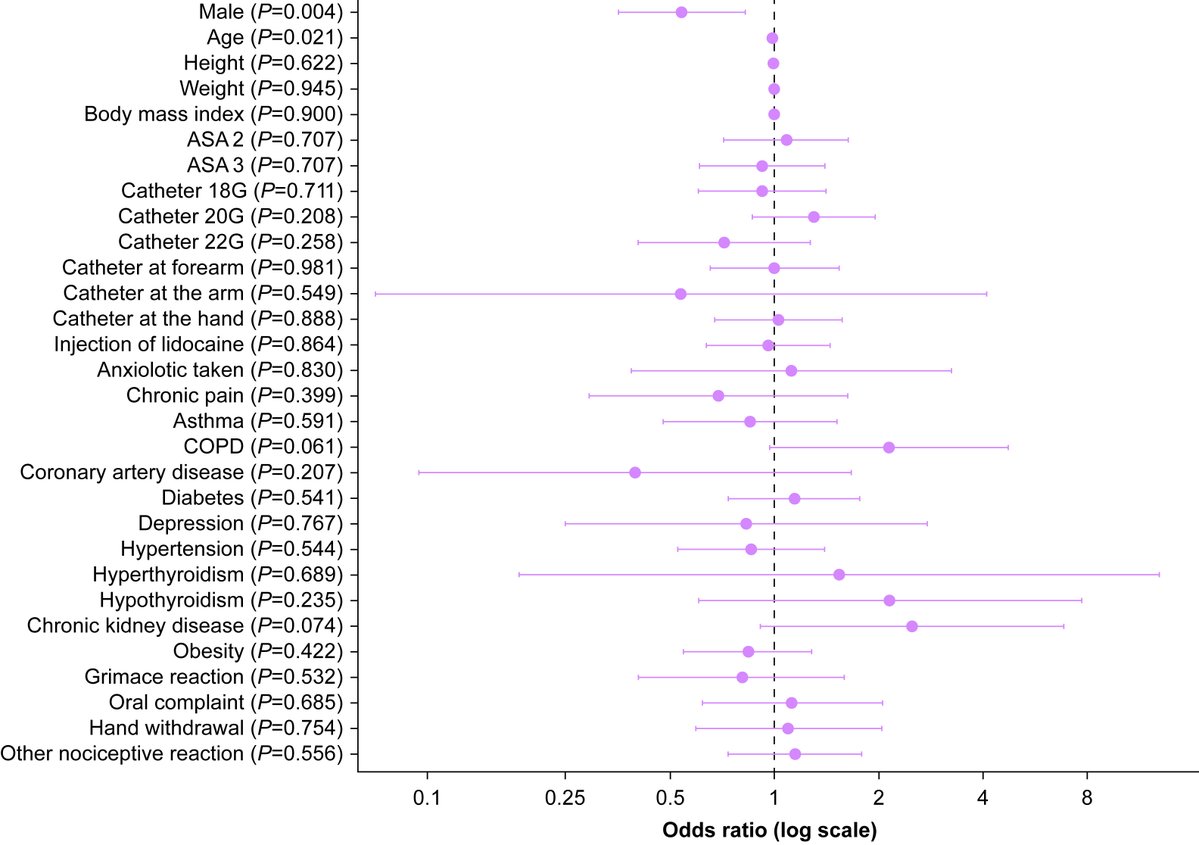
In a multinational cohort of ARDS patients, PaO2/FIO2 ratio was not associated with mortality and had poor prognostic utility, while driving pressure (ΔP) and the 4ΔP+RR index outperformed other variables in predicting mortality bit.ly/4gp3ZSo
English
1
12
45
4.7K
Dominik Daszuta retweetledi
Tim Leeuwenburg
Tim Leeuwenburg@KangarooBeach·
Congrats on a distinguished aeromedical career mate! So much wise experience
Mike Abernethy 🇺🇸@FLTDOC1

I am officially retired from @UWMedFlight . My final flight as a HEMS physician was today 4/11/26 It started in 1989. Over the last 36 years I have transported 4000+ patients with 3 HEMS programs: Univ of Chicago 1989-92 OSF St Anthonys 1995-200 Univ of Wisconsin Med Flight 1992-2026 I have worked in 10 helicopter models: SA 365 Dauphin N, N1, N2 AS 355 Twinstar Bell 222 Agusta 109 Power Agusta 109 Mk2 BK 117 EC 135 EC 145 What a long, strange trip its been!

English
0
3
8
1.6K
Dominik Daszuta retweetledi
Anna Oleksiak, MD PhD
Anna Oleksiak, MD PhD@ann_oleksiak·
"Intensywnie o krwotokach" podczas #FIT2026 👉 trend ku bardziej restrykcyjnej polityce przetoczeń preparatów krwiopochodnych 👉 zwrócenie uwagi na różnorodne zaburzenia hemostazy 👉 rosnąca rola testów wiskoelastycznych u krytycznie chorych 👉 racjonalizacja podawania albumin
Anna Oleksiak, MD PhD tweet mediaAnna Oleksiak, MD PhD tweet mediaAnna Oleksiak, MD PhD tweet mediaAnna Oleksiak, MD PhD tweet media
Krakow, Poland 🇵🇱 Polski
0
1
5
112
Dominik Daszuta retweetledi
Anna Oleksiak, MD PhD
Anna Oleksiak, MD PhD@ann_oleksiak·
"Intensywnie o krwotokach" i nie tylko podczas #FIT2026 👉 wąskie wskazania do wodorowęglanów na OIT 👉 ważna optymalizacja "opieki okołoendoskopowej" w krwawieniach z GOPP
Anna Oleksiak, MD PhD tweet mediaAnna Oleksiak, MD PhD tweet mediaAnna Oleksiak, MD PhD tweet media
Krakow, Poland 🇵🇱 Polski
0
1
5
168
Dominik Daszuta retweetledi
Critical Care Reviews
Critical Care Reviews@CritCareReviews·
Today's Paper of the Day is: Applied physiology at the bedside: using invasive blood pressure as a true monitoring tool criticalcarereviews.com/latest-evidenc… Join us to read 1 paper per day and stay up-to-date as we cover the spectrum of critical care across 2026
Critical Care Reviews tweet media
English
0
38
137
8.1K
Dominik Daszuta retweetledi
Rafael Melo
Rafael Melo@intensivaev·
Nephrologist wanted to remove fluid with rrt. I said no, instead, gave some fluids. Can anyone guess why? I believe that EVERY nephro should incorporate POCUS in the assessment of AKI in ICU…
Rafael Melo tweet mediaRafael Melo tweet mediaRafael Melo tweet media
English
10
10
69
21.5K
Dominik Daszuta retweetledi
Francisco Soto, MD, MS, MBA
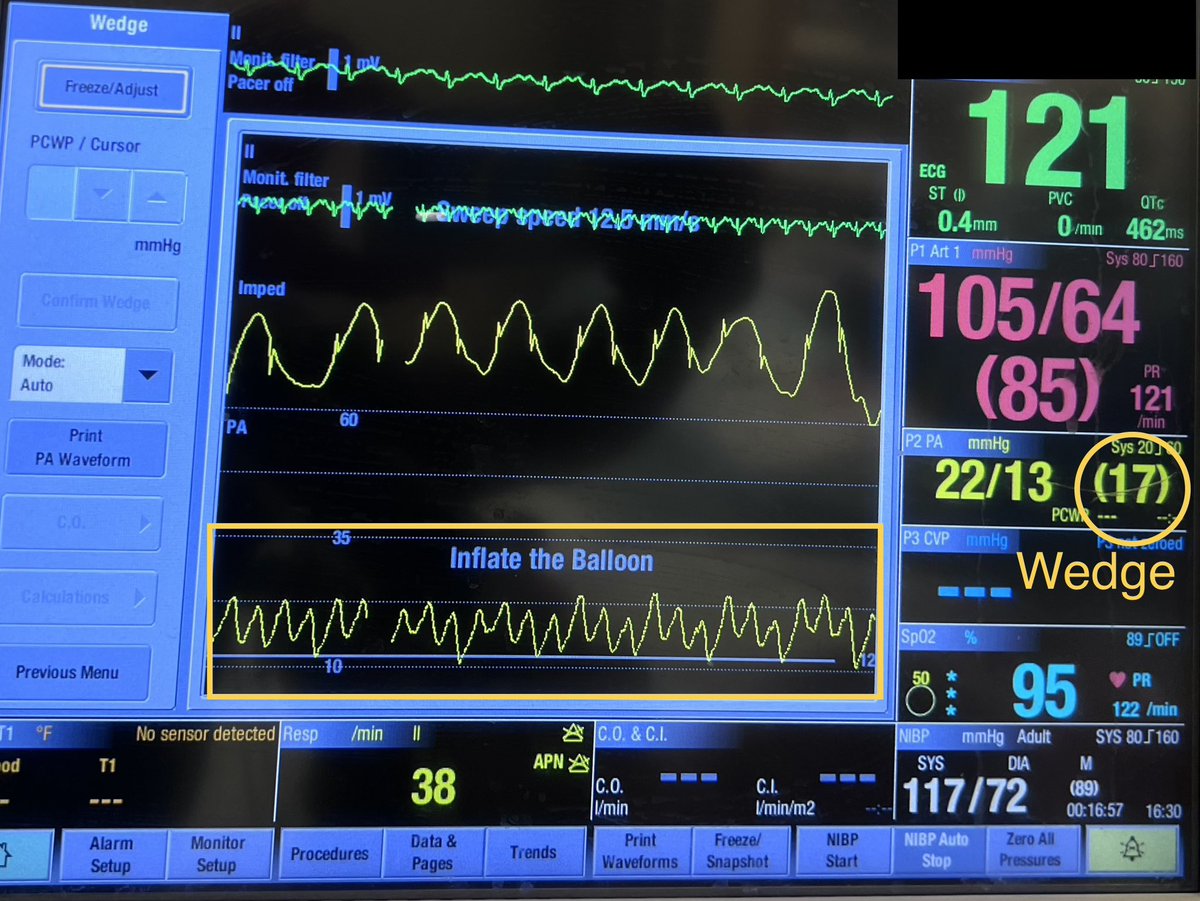
[1] #Hemodynamics Tweetorial #2 Heart failure pt in ICU is -3.5L after 2d of aggressive diuresis. On day 3, urine output is ⬇️and BUN/Cr is ⬆️ You personally wedge #PAC at bedside and obtain a mean wedge 17 mmHg (a normal mean wedge is 6-10 mmHg). Admission wedge was 24
Francisco Soto, MD, MS, MBA tweet media
English
29
484
1.3K
0
Dominik Daszuta retweetledi
Dr. Chacón-Lozsán F .'.
Dr. Chacón-Lozsán F .'.@franciscojlk·
🫀Hemodynamic monitoring. Are we measuring pressure or understanding physiology? A recent review in Turkish Journal of Anaesthesiology and Reanimation revisits the fundamental elements of hemodynamics and exposes a persistent gap between monitoring and true physiological interpretation. We measure more but, do we understand better? -Blood pressure is not perfusion Blood pressure is the most monitored variable in clinical practice Yet it is only the product of flow and resistance A patient may have normal pressure with low cardiac output Or adequate flow with abnormal pressure 🫀 Clinical implication Normal MAP does not exclude shock Always question flow behind pressure -Cardiac output is not enough Cardiac output reflects macrocirculation But tissue survival depends on microcirculation The article reinforces that oxygen delivery depends on both flow and arterial oxygen content 🫀 Clinical implication A normal cardiac output does not guarantee adequate oxygen delivery Hemoglobin, saturation, and extraction must be integrated -Oxygen delivery defines outcome DO2 is the real currency of resuscitation When oxygen delivery falls below a critical threshold Oxygen consumption becomes delivery dependent And cellular hypoxia begins Lactate rises late Extraction increases early 🫀 Clinical implication Do not wait for lactate Look at the trajectory of ScvO2, Pv aCO2 gap, and clinical perfusion -Macro vs microcirculation mismatch One of the most important concepts You can normalize global hemodynamics While microcirculation remains impaired This explains why patients deteriorate despite “optimal” numbers 🫀 Clinical implication If the patient is not improving Reassess perfusion, not pressure -Right ventricle. The forgotten determinant The right ventricle is highly sensitive to afterload And rapidly fails under pulmonary hypertension Yet it is often overlooked in perioperative and ICU settings 🫀 Clinical implication Always evaluate RV function in shock Especially when response to therapy is unexpected -Monitoring is evolving. Thinking must evolve faster The review highlights future integration of macro and microcirculatory monitoring But technology alone will not improve outcomes Interpretation will -Final reflection We have learned how to measure hemodynamics Now we must learn how to understand perfusion 📚 Demir ZA et al. Turk J Anaesthesiol Reanim. 2025. DOI: 10.4274/TJAR.2025.251925
Dr. Chacón-Lozsán F .'. tweet media
English
1
53
173
7.3K