
Ryan Kline

669 posts

Ryan Kline banner
Ryan Kline

Ryan Kline

@ryanlkline

Supporting @mcuban on early stage investing, @dallasmavs in China, @costplusdrugs in the US and many things in between.

Dallas, TX Katılım Mart 2011
1.8K Takip Edilen844 Takipçiler
Ryan Kline retweetledi

Aaron Levie
Aaron Levie@levie·
Whether it’s existing consulting firms, new ones that emerge, FDEs from agent vendors, or new internal agent engineering roles, the amount of work that is going to be created to implement agents in enterprises will exceed anything we imagine today. The complexity of implementing agents in any existing organizations is very real. When I talk to large enterprises, as you move from a chat paradigm to agents that participate in meaningful workflows, there are a number of things they need to do. First, you have to get agents to be able to talk to your data securely across your systems. In many cases, enterprises have decades of legacy infrastructure that contain the valuable context for AI agents. That’s going to take a ton of work to go modernize and move to systems that work well with agents. Then, you need to ensure that you’ve implemented agents with the right access controls and entitlements, the right scopes to be safely used, and have ways of monitoring, logging, and securing the work that they do. Next, you need to actually document the processes in the organization in a way that agents can utilize for doing the work. You also need to figure out what the new workflow looks like when agents and people are working together on a process, and who steps in where. Just replicating the old workflow will mute the gains. Oh and you likely need to create evals for your top new end-state processes. Finally, you have to keep up with a rapidly changing set of best practices and architectural shifts happening in the agent space. While it’s fun for people to change their personal productivity tools on a dime, it’s 100X harder to do this in a business process. The speed of change is a blessing and a curse right now for anyone trying to keep a stable system design. All of this means that individuals and companies that develop expertise on the above set of components (and more) are going to be needed to help organizations actually implement agents at scale. This is also the rationale for vertical AI agents right now that can go in deep on a business domain and help bring automation to it. This is a huge opportunity right now whether you’re doing this internally or as an external business provider.
English
149
257
1.9K
520.9K
Ryan Kline
Ryan Kline@ryanlkline·
@dp_oneill @BradSpellberg @mcuban @kevin_schulman It is already happening. Many of the patients with one of those insurers are on a self-funded plan. Every self-funded plan can have different coverage, benefits, eligibility rules, etc. In many cases the practice has someone calling the carriers all day to ask "What's the copay?"
English
1
0
0
25
Dan O'Neill
Dan O'Neill@dp_oneill·
@BradSpellberg @ryanlkline @mcuban @kevin_schulman Exactly. A typical doctor's office might have a couple of dozen insurers (or fewer) that cover 80-95% of patients, and the same is probably true for most individual hospitals. And that can already be challenging! Atomizing to an employer level is an order of magnitude worse.
English
2
0
1
32
Mark Cuban
Mark Cuban@mcuban·
Appreciate it. A couple reasons why we disagree. Most don’t know if their commercial insured business is profitable by carrier. But that’s a topic for another day. Most hospital assets/caregivers (surgeons and some others that get paid per surgery, etc , excepted ), are like a seat at an nba game, perishable. Hospitals pay for it whether it’s used or not. Unless everything is sold, the care/caid patient is all margin contribution - rcm %. Then there is 340b margin created by those patients, especially if you are in a state that makes the state pay full WAC. Then there is DSH and other state/federal contributions. Don’t look at each care event as what determines whether those patients are profitable. Look at it as whether the hospital is more or less profitable accepting those patients. I would bet they are more profitable I’m here to learn. So feel free to correct any of this As far as regulation compliance. It’s a cost for sure. The far greater cost is the cost of compliance and dealing with commercial payers. The amount they underpay, late pay, delay, deny, the cost of peer to peers and the games they play forcing to their PBMs , game brokers and consultants , TPAs and other subsidiaries , cost hospitals and sponsors far more
Breedlove@Breedlove2019

The patient mix is important to understand: charity care, Medicare/Medicaid, insured, self-pay. Only one of those covers actual costs. I think I've seen you also dismiss the affects of regulation and how that has raised costs exponentially. For example, the rapid increase in non-medical staff to monitor and keep organizations in compliance. For a start. I say all this with only the deepest desire to see our healthcare system fixed, which I believe is what you want to help with.

English
27
16
147
138.1K
Ryan Kline
Ryan Kline@ryanlkline·
@dp_oneill @mcuban @BradSpellberg To a large extent hospitals and practices are dealing with this already. @kevin_schulman's work has shown there are over 300k health plans in the US when you include ERISA plans. These plans get funneled through TPAs/ASOs but it still requires the provider to confirm coverage.
English
1
0
1
42
Dan O'Neill
Dan O'Neill@dp_oneill·
@mcuban @BradSpellberg I think it would be an administrative nightmare for a hospital (and certainly for a small, independent practice!) to have to deal with hundreds or thousands of employers to figure out what is covered, how to submit claims, submit prior auth etc.
English
2
0
1
28
Ryan Kline retweetledi
Mark Cuban
Mark Cuban@mcuban·
I don’t think people realize how much healthcare costs are driving big companies to fire and not hire. It costs them $30k per family, per year for premiums and care. Most of that goes to the massive, vertically integrated insurance companies that send weekly bills that no one reviews in details. And it doesn’t include the company overhead to deal with it all. It’s usually the 2nd largest expense after payroll. Which is insane It’s far easier to blame AI than it is to blame Healthcare costs. Want to increase jobs, wages and improve affordability for every American ? Break up the biggest insurance companies. Make divest non insurance companies. They don’t need thousands of subsidiaries. That’s how they game and abuse the system and increase costs for all of us. Call your senator and tell them to support the BreakUp Big Medicine Bill by @HawleyMO and @SenWarren.
English
1.5K
4.3K
29K
2.1M
Ryan Kline retweetledi
Mark Cuban
Mark Cuban@mcuban·
Want to know the craziest part about insurance company Pre Authorization Denials ? The insurance company defines the network of providers the patient can use When they deny care, they are effectively saying "we don't trust the judgement of the doctors we require you to use" 🤯🤯🤯
English
388
1.7K
8.6K
468.9K
Ryan Kline retweetledi
Nikhil Krishnan
Nikhil Krishnan@nikillinit·
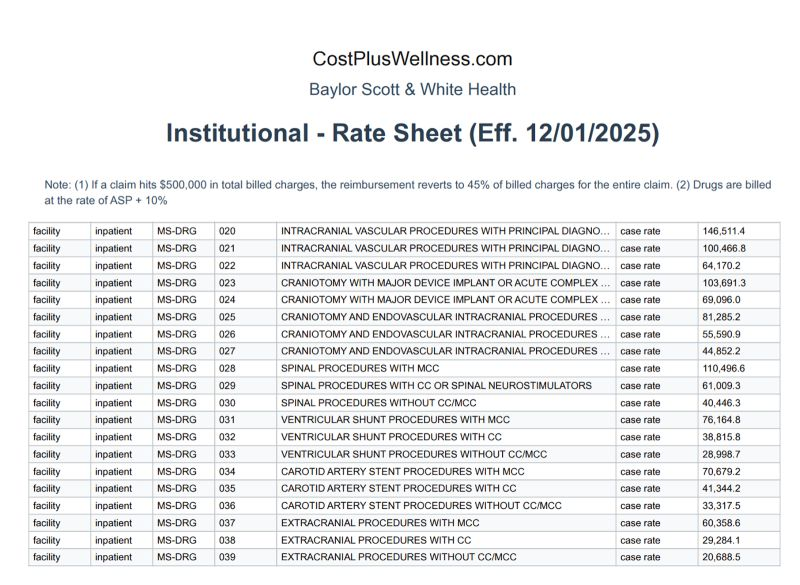
One more idea on how we can increase hospital competition - standardized contracts IMO one of the most underrated obstacles for new hospitals is the sheer complexity of payer contracting. It’s so complex and f***ed up, you have entire departments that need to handle this. If you know what “managed care contracting” is you need to find god. I think it could be interesting if you had way more simplified and modular contracts, especially if everyone could see them. There are some interesting experiments happening here: - Turquoise Health has Clear Contracts and Standard Service Packages to spin up simpler contracts powered by the price transparency data. - Cost Plus Wellness has been publishing transparent contracts that they have with hospitals. There’s a big disclaimer at the top that says these are only meant to be used as a reference but…still interesting to see. - CMS has something in the new LEAD model called CARA, an acronym matryoshka doll (CMS Administered Risk Arrangements). These are supposed to provide ACOs with shared data infrastructure, standard contract templates, and payment processing for specialist arrangements. What if CMS offered CARA-like infrastructure to new hospitals in concentrated markets? Provide standard contract frameworks, episode data, and payment rails that new entrants can plug into
Nikhil Krishnan tweet media
English
2
4
19
3.1K
Ryan Kline retweetledi
Kimberly Bizor Tolbert
Kimberly Bizor Tolbert@KBTDallasCM·
❄️Reminder❄️: City of Dallas Temporary Inclement Weather Shelters are open at Fair Park in the Automobile Building. If you or someone you know needs a warm, safe place, please come by. 🙏
English
4
10
15
2.6K
Ryan Kline retweetledi
Mark Cuban
Mark Cuban@mcuban·
What is needed is a national network of providers that will offer cash pay pricing around a single standardized contract to employers and a simple to understand price list for patients. Each can charge what they choose, as they do now. Employers will save money. Providers reduce admin costs significantly. Insurance companies will have to meet market prices for services. The game changes. Who puts this network together ? If the hospitals are smart , they will work together to create it. Otherwise they will be looking down the barrel of fighting single payer or universal healthcare, sooner rather than later. And if you wanna replace the ACA ? That’s also the first step. It answers the “how much does it cost “ question. The only 2 remaining questions are “how do you pay for the care “, and who takes the risk when patients can’t afford the cash prices. That’s a conversation for another post All suggestions welcome!
Wall Street Apes@WallStreetApes

American Health Insurance is legalized racketeering. It’s a scam American doctor calls the hospital to get self pay pricing for a patient for pregnancy care Hospital response: “If they're self-pay, they give them a package price which would include the delivery and all of the services that they might need during the nine-month period” Doctor “If you could give me the package price?” Hospital “$5,730.37 and this is for a routine vaginal delivery with pre and post care in the hospital.” Doctor “Okay, so does that cover like the hospital facility fee or is that just the OBGYN group fee?” Hospital “It is both. It includes all of it” Insurance pricing would be 2-3x+ this cost

English
392
263
2K
524K
Ryan Kline retweetledi
Mark Cuban
Mark Cuban@mcuban·
I know we are on the same side when it comes to PBMs. The big brands are more afraid of PBMs than what your father will do to them. They have been told if they work with @costplusdrugs, which would get low prices to patients, thePBMs will remove them from formularies, costing them 10s of billions of $. The big PBMs control 95 pct of commercial rebates. It's insane and not an open market. We are ready to hit those MFN prices
Donald Trump Jr.@DonaldJTrumpJr

My father, HHS Secretary @RobertKennedyJr and Republican Governors like my friend @SarahHuckabee are all committed to taking on the corrupt PBM industry to lower drug prices for Americans! #MAGA #MAHA nytimes.com/2025/06/10/opi…

English
72
105
945
317.7K
Ryan Kline retweetledi
Moolah Kicks
Moolah Kicks@moolahkicks·
DEAR MOOLAH FAM:
Our sales are up over 700% in the last two weeks (vs. 2024) since the NYT article and All-Star Weekend. All we can say is, thank you. We are overwhelmed with gratitude. 📈📈📈🎉🎉🙏🙏 Shoutout to @CourtMWilliams for lighting it up on court in Moolah! @mcuban
English
9
12
79
107.1K
Ryan Kline retweetledi
Mark Cuban
Mark Cuban@mcuban·
If you take Entresto, we now have the generic and it starts at $33.75 ! It's probably lower than your deductible or Coinsurance. So check it out with your doctor !
Mark Cuban Cost Plus Drug Company@costplusdrugs

📢 Generic Entresto is now available at Cost Plus Drugs ❗️ Sacubitril/Valsartan is now on costplusdrugs.com. A big step forward for those managing chronic heart failure. Available in: 💊 24mg/26mg 30 tablets - $33.75 - costplusdrugs.com/medications/sa… 💊 49mg/51mg 30 tablets - $33.75 - costplusdrugs.com/medications/sa… 💊 97mg/103mg 30 tablets - $33.75 - costplusdrugs.com/medications/sa… ➡️ No membership fees. No insurance needed. Just transparent pricing! Sign up today at costplusdrugs.com/create-account ⭐️ Thank you to Ascend Laboratories for making this possible!

English
66
144
756
392.1K
Ryan Kline retweetledi
Sean Wheeler, MD
Sean Wheeler, MD@DrSeanWheeler·
I had 4 patients that I saw in follow up that needed a joint injection. This past week my billing dept comes to me and says “you can’t do this anymore” I can’t do it anymore? This is fundamental care as a sports and pain doctor. Well, we have to figure something else, because in one case they down coded the injection, denied the follow up and paid you $22. In two cases they denied you both and paid you nothing and in the 4th they denied the injection and paid you $76. Well, we can’t afford to keep the place open if we get paid less than $100 for 4 patients and injections which by themselves almost cost that much. Maybe we can figure out which insurance does what so we can decide what they will and won’t pay? They were all the same insurance
English
91
103
787
77.4K
Ryan Kline retweetledi
TheracosBio
TheracosBio@theracosbio·
The HHS IG found the federal gov't spends billions on type 2 diabetes meds. @elonmusk & @VivekGRamaswamy at DOGE & @DrOz at CMS, why isn't the gov't buying @Brenzavvy? It's FDA-approved, up to 90% cheaper, & has yet to have a price increase since its launch! #Brenzavvy #T2D
English
13
11
64
95.5K
Calvin Ling
Calvin Ling@calvinling626·
parents of twitter: nuna or uppababy for stroller/car seat combo?
English
2
0
0
373
Ryan Kline retweetledi
John Arnold
John Arnold@johnarnold·
The $336 billion in savings and corresponding loss of healthcare access from Medicaid work requirements are illusory. The provisions are too difficult to implement with any integrity. The Senate should look at fraud and abuse in Medicare instead. "Work requirements" is a catchall phrase for a variety of eligibility options including work, schooling, caregiving, community service, addiction, and disability. Any new reporting system must be simple enough for the 19 million people subject to it to comply without excessive barriers, while also incorporating verification to prevent fraud. But how is an individual supposed to prove caregiving, addiction, or disability—and how will the state verify those claims? States don’t have the capacity to build a system that does all of this. Most can barely manage one piece of the process. In practice, they’ll face a tradeoff: either design a system that limits false positives but allows significant fraud, or one that reduces fraud but wrongly disqualifies many eligible people. These goals are fundamentally at odds in system design. Arkansas, which briefly enacted work requirements, struggled with this tradeoff and ultimately failed on both fronts. The House OBBB requires states to implement work requirements by the end of 2026. There's no chance they'll be ready. Here's my prediction of what happens: Next year, states will request and receive a one-year delay as they struggle to design the systems. In 2027, the inability to build a system with integrity will become clear. The administration will postpone implementation again, likely into 2029. The next President, regardless of party, will ultimately scrap the provision without replacing the savings. That will be good for healthcare access, but bad for the deficit.
English
29
19
105
22.8K
Ryan Kline retweetledi
Max Branzburg
Max Branzburg@maxbranzburg·
TL;DR: The future of money is here. A few things you can look forward to from @coinbase:
English
13
48
416
52.7K
Ryan Kline retweetledi
Mark Cuban
Mark Cuban@mcuban·
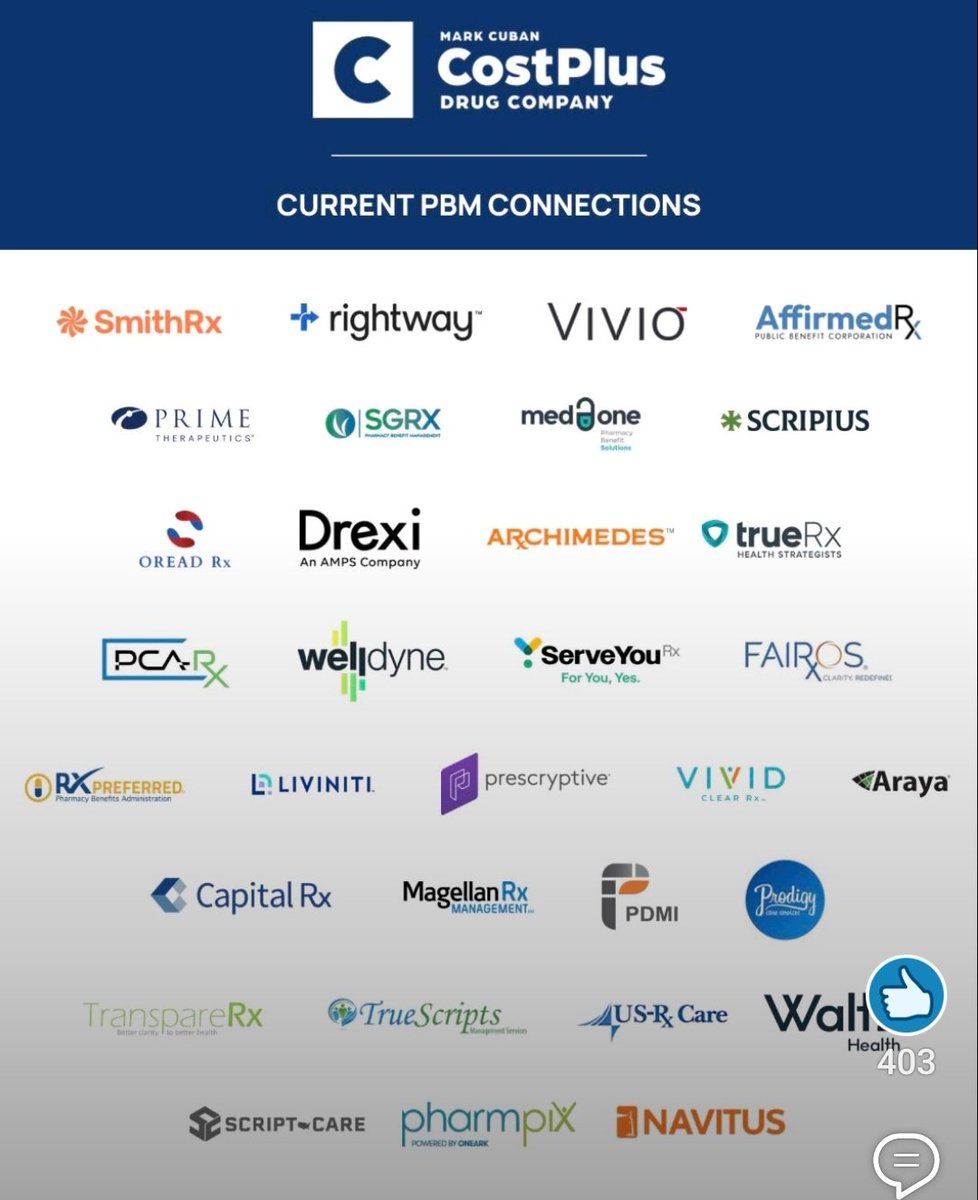
Here are the good guy, pass through PBMs that @costplusdrugs has partnered with. Talk to a couple of them before your company makes any decisions on their pharmacy benefits.
Mark Cuban tweet media
English
66
152
1K
163.7K