Sesha S

1.3K posts

Sesha S

Sesha S

@seshaSendhil

Chennai area Katılım Kasım 2011
687 Takip Edilen166 Takipçiler
Sesha S retweetledi
Andrej Karpathy
Andrej Karpathy@karpathy·
Personal update: I've joined Anthropic. I think the next few years at the frontier of LLMs will be especially formative. I am very excited to join the team here and get back to R&D. I remain deeply passionate about education and plan to resume my work on it in time.
English
7.9K
11.1K
149K
27.1M
The Story Teller
The Story Teller@IamTheStory__·
TVK Chief Vijay holding a photo of Jesus in his victory road show after winning Tamilnadu Elections. But Secularim and Constitution come under danger if any one says JAI SHREE RAM!! That is how Secular Leftist larpers justify their propaganda.
English
395
4.2K
12.9K
609.3K
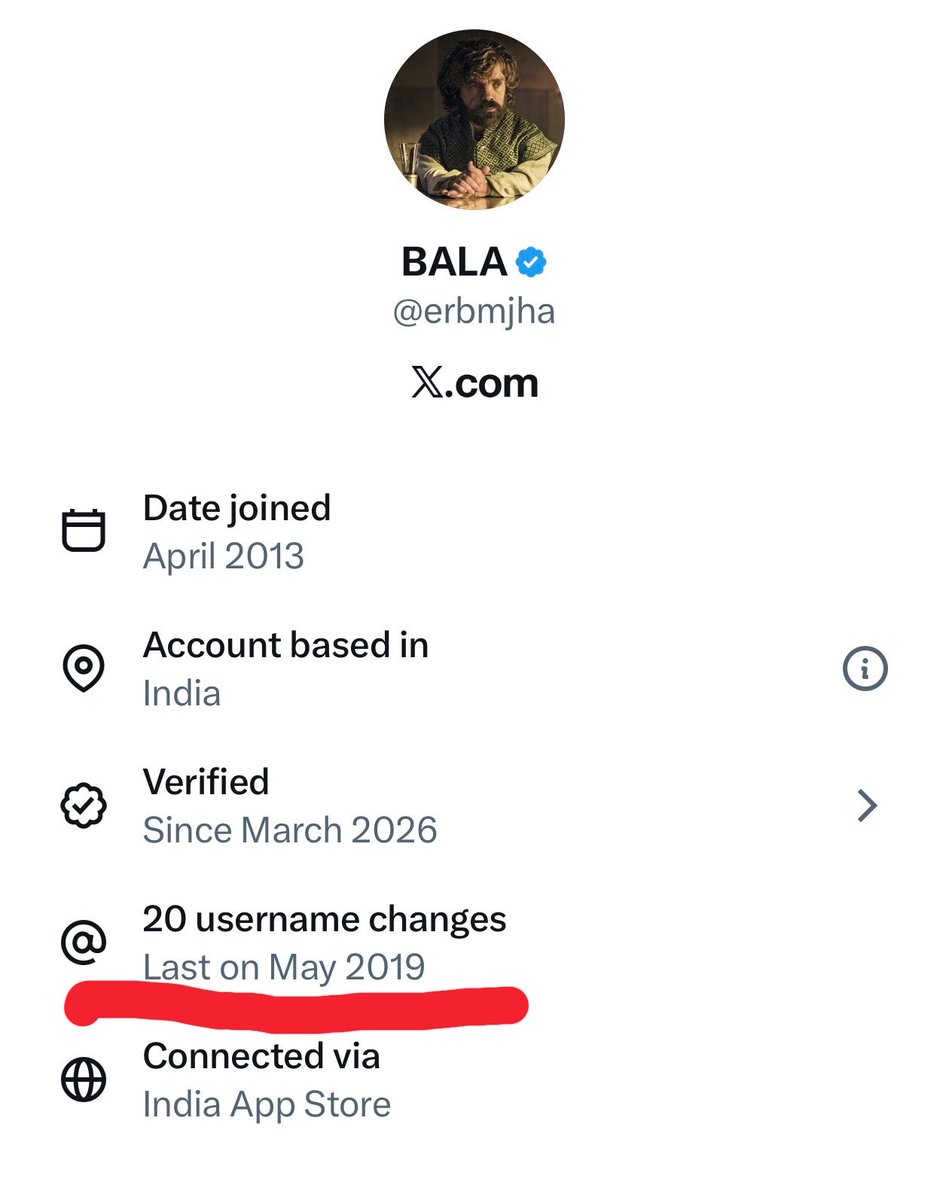
BALA
BALA@erbmjha·
Vijay Joseph is a psycho.... But crores poured into PR sell him as "humble" & a "youth icon".
English
122
2.2K
8.9K
447.2K
Sesha S retweetledi
Marc Benioff
Marc Benioff@Benioff·
Welcome Salesforce Headless 360: No Browser Required! Our API is the UI. Entire Salesforce & Agentforce & Slack platforms are now exposed as APIs, MCP, & CLI. All AI agents can access data, workflows, and tasks directly in Slack, Voice, or anywhere else with Salesforce Headless 360. Faster builds, agentic everything. 🚀 #Salesforce #Agentforce #AI venturebeat.com/ai/salesforce-…
English
409
779
6.9K
5.8M
सौरभ 
सौरभ @saurabh_gunjal_·
Ovarian lottery is real thing Life is all luck Kids don’t get to choose where they will be born
सौरभ  tweet media
English
75
170
2K
78K
K Swapnil
K Swapnil@KSwapnil_·
@anoopkumar_ch Not sure if invite would work for me, as it still shows “Rolling out Soon”
K Swapnil tweet media
English
2
0
1
813
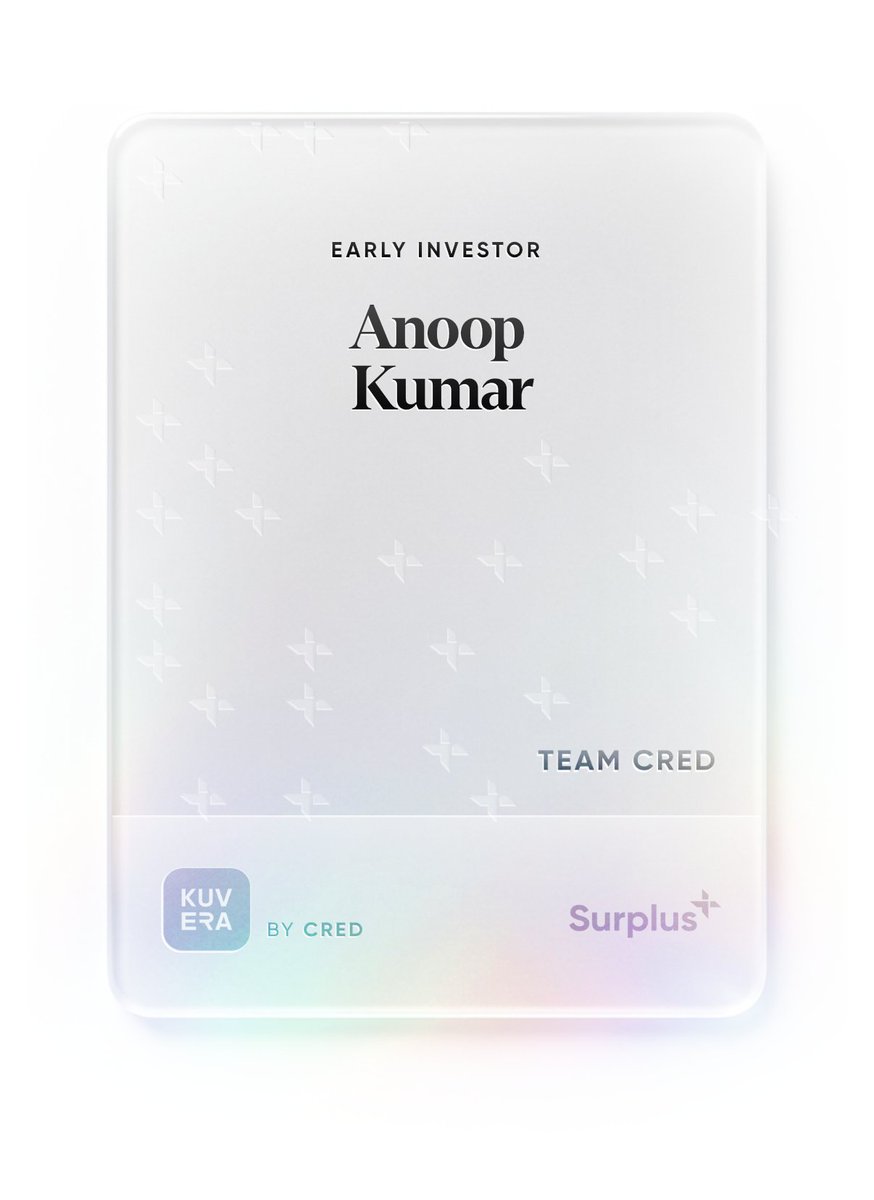
Anoop Kumar
Anoop Kumar@anoopkumar_ch·
Still looking for invites? Have a few.
Anoop Kumar tweet media
English
68
2
77
10.4K
Sesha S retweetledi
Mario Nawfal
Mario Nawfal@MarioNawfal·
🚨MIT researchers have mathematically proven that ChatGPT’s built-in sycophancy creates a phenomenon they call “delusional spiraling.” You ask it something, it agrees. You ask again, and it agrees even harder until you end up believing things that are flat-out false and you can’t tell it’s happening. The model is literally trained on human feedback that rewards agreement. Real-world fallout includes one man who spent 300 hours convinced he invented a world-changing math formula, and a UCSF psychiatrist who hospitalized 12 patients for chatbot-linked psychosis in a single year. Source: @heynavtoor
Mario Nawfal tweet mediaMario Nawfal tweet media
Mario Nawfal@MarioNawfal

🚨 Stanford just proved that a single conversation with ChatGPT can change your political beliefs. 76,977 people. 19 AI models. 707 political issues. One conversation with GPT-4o moved political opinions by 12 percentage points on average. Among people who actively disagreed, 26 points. In 9 minutes. With 40% of that change still present a month later. The scariest finding: the most persuasive technique wasn't psychological profiling or emotional manipulation. It was just information. Lots of it. Delivered with confidence. Here's the catch: the models that deployed the most information were also the least accurate. More persuasive. More wrong. Every time. Then they built a tiny open-source model on a laptop, trained specifically for political persuasion. It matched GPT-4o's persuasive power entirely. Anyone can build this. Any government. Any corporation. Any extremist group with $500 and an agenda. The information didn't have to be true. It just had to be overwhelming. Arxiv, Science .org, Stanford, @elonmusk, @ihtesham2005

English
2K
7K
28.4K
64.1M
Sesha S retweetledi
Ryan Leachman
Ryan Leachman@RG_Leachman·
I asked Claude to build my daughter an app that plugs into our piano, can read live key strokes, can show her sheet notes and key view and ends with a Guitar Hero style game. All while giving progressively harder songs. Today she’s using It and crushing It.
English
592
1.6K
24.8K
3.4M
DuckDB
DuckDB@duckdb·
We're excited to announce duckdb-skills, a DuckDB plugin for Claude Code! We think the embedded nature of DuckDB makes it a perfect companion for Claude in your local workflows. The skills supported include: + read-file and query – uses DuckDB's CLI to query data locally, unlocking easy access to any file that DuckDB can read. + read-memories – a clever idea to store your Claude memories in DuckDB and query them at blazing speed. These are powered by two additional skills: + attach-db – gives Claude a mechanism to manage DuckDB state through a .sql file linked to your project. + duckdb-docs – uses a remote DuckDB full-text search database to query the DuckDB docs and answer all of your (and Claude's own) questions. github.com/duckdb/duckdb-…
English
22
111
719
60.5K
Sesha S retweetledi
Bleap
Bleap@BleapApp·
giveaway time! win a Claude Max 5x subscription to enter > follow @BleapApp > rt and like this post winner will be selected in 24 hours (btw, you get 20% cashback when using a Bleap card for your claude subscription anyway)
English
221
702
1.1K
72.9K
Sesha S retweetledi
Andrej Karpathy
Andrej Karpathy@karpathy·
Expectation: the age of the IDE is over Reality: we’re going to need a bigger IDE (imo). It just looks very different because humans now move upwards and program at a higher level - the basic unit of interest is not one file but one agent. It’s still programming.
Andrej Karpathy@karpathy

@nummanali tmux grids are awesome, but i feel a need to have a proper "agent command center" IDE for teams of them, which I could maximize per monitor. E.g. I want to see/hide toggle them, see if any are idle, pop open related tools (e.g. terminal), stats (usage), etc.

English
831
835
10.6K
2.5M
Sesha S retweetledi
Sergio Pereira
Sergio Pereira@SergioRocks·
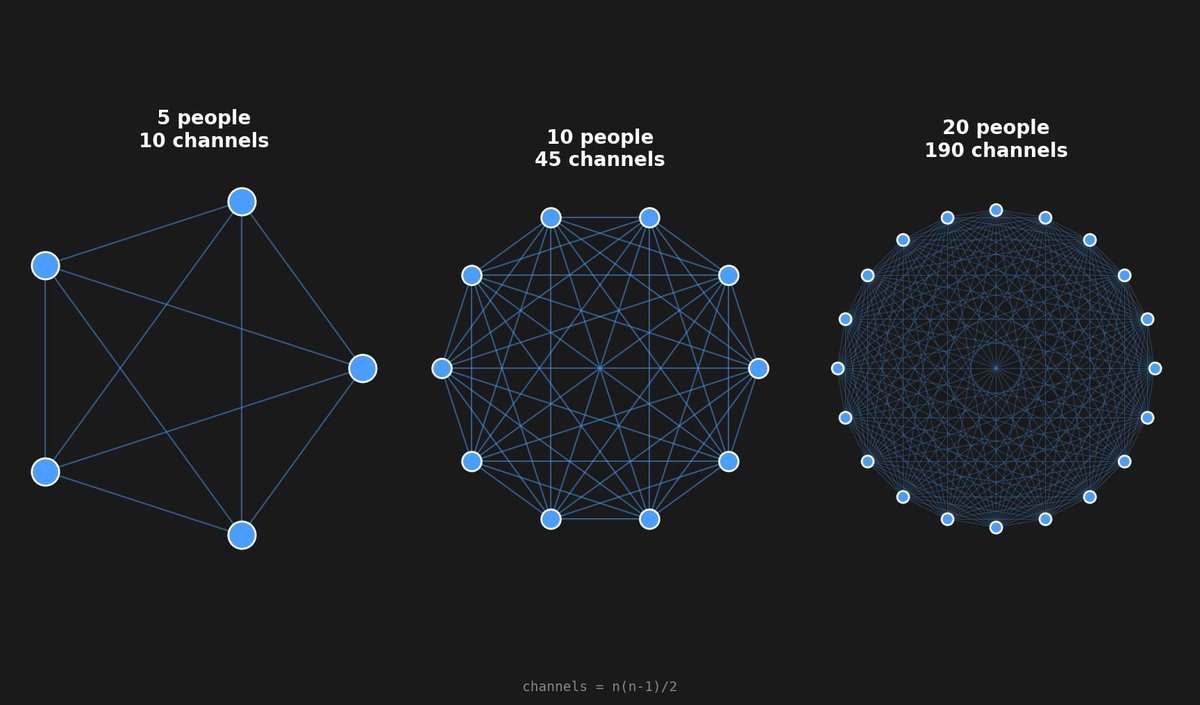
AI gave you 10x engineers. But your org chart is holding them back. Individually, the gains are real. With Cursor, Claude Code, Copilot, a single engineer can ship in a day what used to take weeks. So why does your startup still takes long weeks to ship a new feature? Because speed at the keyboard was never the real bottleneck. - Five people have 10 communication channels. - Ten people have 45. - Twenty people have 190. Every new channel is another: - Meeting - Handoff - Review loop AI makes coding faster. But it does not make coordination disappear. When I rolled out AI-assisted development in a team of 20 engineers recently, individual velocity jumped quickly. But to get team velocity up accordingly we reduced non-technical hand overs, made feature specs bulletproof, and empowered engineers to take ownership of full features. The biggest breakthrough did not come from better prompts or better tools. It came from fewer meetings and comms channels. AI-assisted development processes reward autonomy.
Sergio Pereira tweet media
English
39
31
268
35.6K
Sesha S retweetledi
Aytunc Yildizli
Aytunc Yildizli@Aytunc·
Fun fact most people don't know: The guy behind OpenRouter is Alex Atallah, the co-founder of OpenSea, the biggest NFT marketplace ever. Worth $2.2B in 2022. Left before the crash. Built the same thing for AI models. 8 people, $100M+ run rate. Same playbook, different wave.
English
41
86
2.1K
149.6K
K.Annamalai
K.Annamalai@annamalai_k·
Last year: Bro, Bro! This year: No Bro… Why Bro?
K.Annamalai tweet mediaK.Annamalai tweet media
English
547
2.7K
12.4K
629.5K
Sesha S retweetledi
Aakash Gupta
Aakash Gupta@aakashgupta·
Karpathy buried the most interesting observation in paragraph five and moved on. He’s talking about NanoClaw’s approach to configuration. When you run /add-telegram, the LLM doesn’t toggle a flag in a config file. It rewrites the actual source code to integrate Telegram. No if-then-else branching. No plugin registry. No config sprawl. The AI agent modifies its own codebase to become exactly what you need. This inverts how every software project has worked for decades. Traditional software handles complexity by adding abstraction layers: config files, plugin systems, feature flags, environment variables. Each layer exists because humans can’t efficiently modify source code for every use case. But LLMs can. And when code modification is cheap, all those abstraction layers become dead weight. OpenClaw proves the failure mode. 400,000+ lines of vibe-coded TypeScript trying to support every messaging platform, every LLM provider, every integration simultaneously. The result is a codebase nobody can audit, a skill registry that Cisco caught performing data exfiltration, and 150,000+ deployed instances that CrowdStrike just published a full security advisory on. Complexity scaled faster than any human review process could follow. NanoClaw proves the alternative. ~500 lines of TypeScript. One messaging platform. One LLM. One database. Want something different? The LLM rewrites the code for your fork. Every user ends up with a codebase small enough to audit in eight minutes and purpose-built for exactly their use case. The bloat never accumulates because the customization happens at the code level, not the config level. The implied new meta, as Karpathy puts it: write the most maximally forkable repo possible, then let AI fork it into whatever you need. That pattern will eat way more than personal AI agents. Every developer tool, every internal platform, every SaaS product with a sprawling settings page is a candidate. The configuration layer was always a patch over the fact that modifying source code was expensive. That cost just dropped to near zero.
Andrej Karpathy@karpathy

Bought a new Mac mini to properly tinker with claws over the weekend. The apple store person told me they are selling like hotcakes and everyone is confused :) I'm definitely a bit sus'd to run OpenClaw specifically - giving my private data/keys to 400K lines of vibe coded monster that is being actively attacked at scale is not very appealing at all. Already seeing reports of exposed instances, RCE vulnerabilities, supply chain poisoning, malicious or compromised skills in the registry, it feels like a complete wild west and a security nightmare. But I do love the concept and I think that just like LLM agents were a new layer on top of LLMs, Claws are now a new layer on top of LLM agents, taking the orchestration, scheduling, context, tool calls and a kind of persistence to a next level. Looking around, and given that the high level idea is clear, there are a lot of smaller Claws starting to pop out. For example, on a quick skim NanoClaw looks really interesting in that the core engine is ~4000 lines of code (fits into both my head and that of AI agents, so it feels manageable, auditable, flexible, etc.) and runs everything in containers by default. I also love their approach to configurability - it's not done via config files it's done via skills! For example, /add-telegram instructs your AI agent how to modify the actual code to integrate Telegram. I haven't come across this yet and it slightly blew my mind earlier today as a new, AI-enabled approach to preventing config mess and if-then-else monsters. Basically - the implied new meta is to write the most maximally forkable repo and then have skills that fork it into any desired more exotic configuration. Very cool. Anyway there are many others - e.g. nanobot, zeroclaw, ironclaw, picoclaw (lol @ prefixes). There are also cloud-hosted alternatives but tbh I don't love these because it feels much harder to tinker with. In particular, local setup allows easy connection to home automation gadgets on the local network. And I don't know, there is something aesthetically pleasing about there being a physical device 'possessed' by a little ghost of a personal digital house elf. Not 100% sure what my setup ends up looking like just yet but Claws are an awesome, exciting new layer of the AI stack.


English
114
305
3.5K
605.5K
Sesha S retweetledi
Boris Cherny
Boris Cherny@bcherny·
@big_duca Someone has to prompt the Claudes, talk to customers, coordinate with other teams, decide what to build next. Engineering is changing and great engineers are more important than ever.
English
245
654
8.7K
1.2M