Shogun

857 posts

Shogun banner
Shogun

Shogun

@shogntech

Lead at Horizon Incubation and Founder of Avant Labs. Interested in the intersection of tech and society

Katılım Ağustos 2021
2.1K Takip Edilen86 Takipçiler
Shogun retweetledi
Colossal Biosciences®
Colossal Biosciences®@colossal·
Meet Romulus & Remus—the world’s first de-extinct animals brought back from extinction using DNA from 72,000-year-old fossils. Follow to watch these dire wolves grow and to discover the next species we’re working to bring back.
English
130
545
8.1K
8.8M
Shogun retweetledi
Teng Yan · Chain of Thought AI
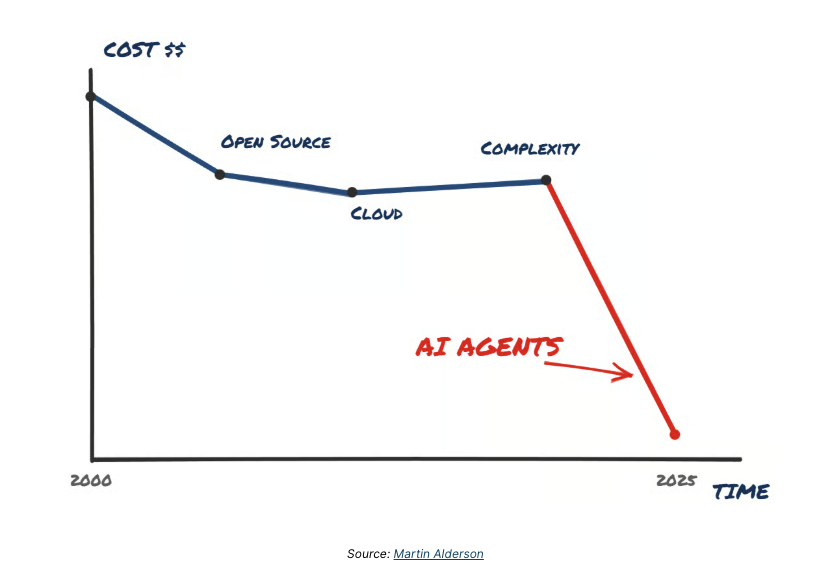
For 20+ years, software ate the world. Now, AI Agents are eating software. A massive signal just came out of China that most people missed: Bairong (a publicly listed enterprise giant) started selling "AI Workers". they call it Results-as-a-Service (RaaS). 🧵 instead of buying "seats," enterprises now "hire" agents. each agent comes with a job description, KPIs, and revenue targets. if performance drops, the bill drops. if the agent improves, it earns more. Bairong runs this through "Results Cloud". it’s essentially an HR system for machines. they’ve already deployed agents across: Sales & Customer Service + Recruitment (hiring cycles cut from 30 days to 2) + Legal & Tax (handling 90% of high-frequency work) this is where the SaaS model starts to crack. Traditional SaaS: You pay upfront. You carry the risk. Agentic Era: You pay for outcomes. The vendor carries the risk. this shift is being accelerated by the collapse of build costs. I came across this post by @martinald recently that agentic coding has slashed internal build costs by ~90%. when it's this cheap to build exactly what you need, the "Buy" in "Build vs Buy" dies. IMO, Vendors who are not able to price against results will struggle. the "Seat" is dead. the "Outcome" is everything. 🤖📈
Teng Yan · Chain of Thought AI tweet media
English
219
591
3.3K
406.7K
Shogun retweetledi
Balaji
Balaji@balajis·
Notably absent: places like Warsaw, Dubai, Riyadh, Shenzhen, Bangalore, Singapore, Ho Chi Minh City, and Shanghai. That’s why many Americans aren’t calibrated on the world outside the West. They aren’t flying there, and they aren’t seeing it on their TVs. So the rise is invisible, despite being all too visible.
Balaji tweet media
Sheel Mohnot@pitdesi

United airlines top international destinations by state & overall. I would have expected Tokyo to be lower than it is.

English
281
144
2.3K
1M
Shogun retweetledi
Chris Laub
Chris Laub@ChrisLaubAI·
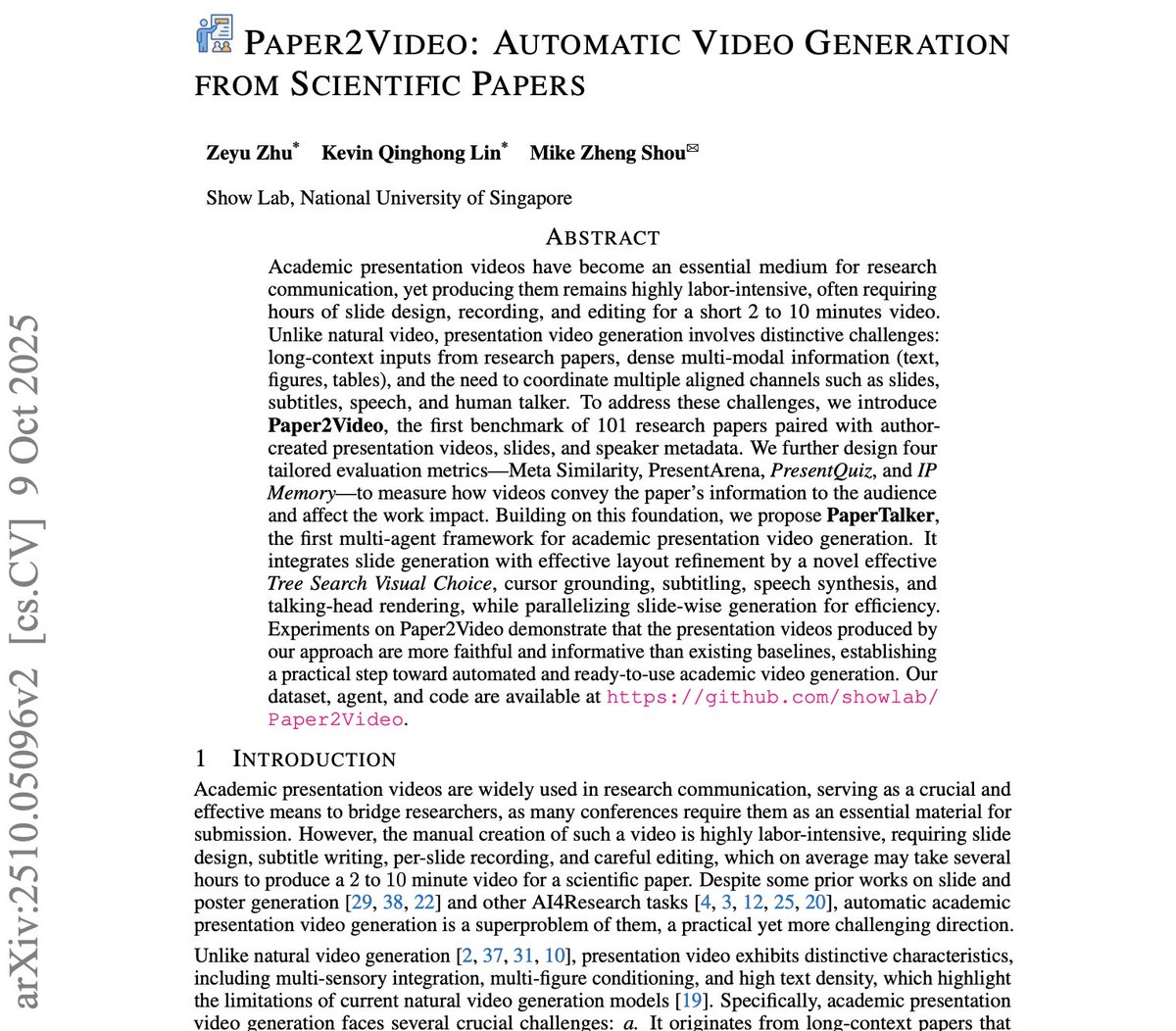
This is insane 🤯 A new system called Paper2Video can read a scientific paper and automatically create a full presentation video slides, narration, subtitles, even a talking head of the author. It’s called PaperTalker, and it beat human-made videos in comprehension tests. Hours of academic video editing... gone. AI now explains your research better than you do. 👉 github. com/showlab/Paper2Video
Chris Laub tweet media
English
79
988
4.5K
568.4K
Shogun retweetledi
Louis Gleeson
Louis Gleeson@aigleeson·
Someone used Elon Musk's actual thinking framework as AI prompts. It's the closest thing to having a billionaire engineer rip apart your ideas and rebuild them from physics. Here are the 15 prompts that changed how I solve problems:
Louis Gleeson tweet media
English
111
649
5K
606.8K
Shogun retweetledi
Jay Yang
Jay Yang@Jayyanginspires·
A wise mentor once told me: “Before you play the game, study the winners. If you don’t want their life, don’t play their game.”
English
172
4.7K
22K
410.1K
Shogun retweetledi
Lucy Guo
Lucy Guo@lucy_guo·
There is something deeply magical about the builder culture in SF. Late night weekend hackathons. Launching on ProductHunt. Going viral. Having friends left and right raise funding and have the opportunity to pursue their dreams.
English
4
3
42
25.8K
Shogun retweetledi
Lucy Guo
Lucy Guo@lucy_guo·
Things I do to prevent myself from getting sick: 🏃🏻‍♀️ 2x Barry's per day 💉 Vitamin C, D, Zinc IV 💊 NAD & Methylene blue pills 🥣 Bone broth and garlic (bread) Happy to say this has been working against whatever flu my entire office is catching
English
27
7
202
46.5K
Shogun retweetledi
Chris Paxton
Chris Paxton@chris_j_paxton·
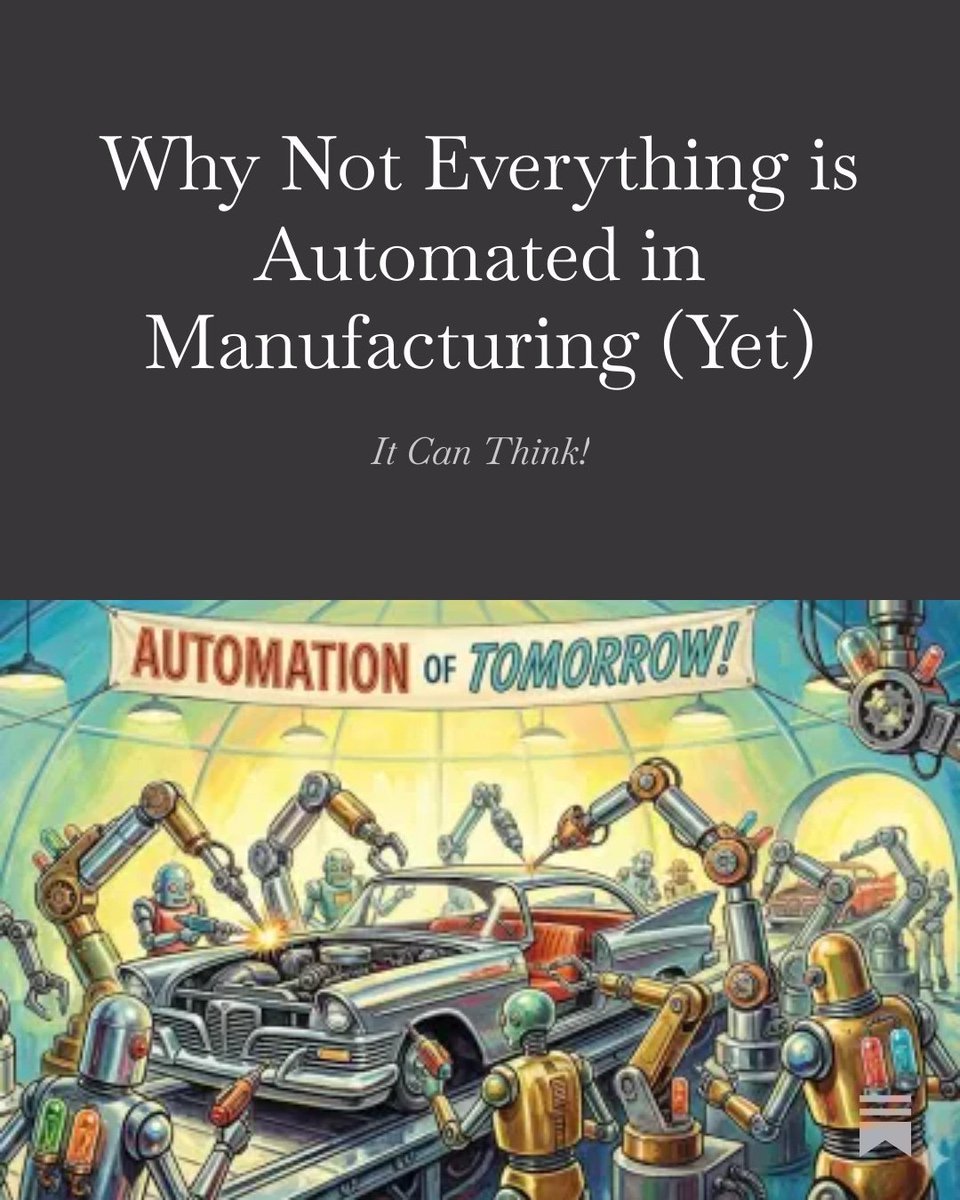
Why not everything in manufacturing is automated (yet) Every few weeks I see someone (even a major vc) wondering why so little of manufacturing, particularly in the United States, is automated. There are tons of reasons why, all of which boil down to the questions: - what can robots do reliably? - how do we engineer systems that are set up so that robots can leverage what few things they can do reliably, to produce actual value? And from this springs a whole range of issues. For more i wrote a blog post ->
Chris Paxton tweet media
English
34
122
884
97.2K
Shogun retweetledi
Mustafa
Mustafa@oprydai·
the future belongs to generalists because the world is no longer built in silos. problems are now multi-domain: energy + software biology + computation robotics + control + materials manufacturing + ai security + hardware cities + data finance + automation specialists go deep. generalists integrate. the next breakthroughs won’t happen inside a discipline. they’ll happen at the intersections; where no one has formal maps, and only wide-angle minds can see the structure. generalists: > translate across fields > combine tools that weren’t meant to interact > spot patterns specialists miss > build systems, not fragments > adapt faster than the pace of technological change the world is converging. knowledge is cross-pollinating. the bottleneck is not expertise but integration. the future is built by people who can move between domains without losing coherence.
Mustafa tweet media
English
102
546
3.5K
111.3K
Shogun retweetledi
Franz Bruckhoff
Franz Bruckhoff@taptanium·
A few thoughts on San Francisco. There's a widespread misconception that SF is a beautiful meritocracy, a fair system where rewards (energy) flows to the most talented, most hard & smart working. Look, I'm not arguing that the game is rigged. You bring your laptop, your vision, your skills, meet up with some VCs, and your company hatches from an golden egg. This seems directionally true. But what lots of people keep overlooking is that classifying the city as meritocracy is the equivalent of being stuck in a local optimum. Why? Because on a higher systemic level, San Francisco is embedded in a much larger system, the United States. The United States effectively runs a global people filter with an extremely lossy low-pass layer, preventing ambitious foreigners from participating in the world's greatest playground of opportunity that is San Francisco. Every year the system rejects some ~2 million visa applications and deters a presumably large latent pool of talent from even trying. In AI terms, these are 2 million input vectors that never make it past the first routing layer, that never get a chance to hit any VC's embedding lookup table. They are dropped like hot stones. Gone into the ocean. Submerged and forgotten. No gradients of SF-enhanced opportunity ever got to flow through them. Based on my propositional and experiential knowledge, it seems fair to infer that if we analyzed the discarded samples carefully, which of course the system would not allow us to, then we would find a heavy-tailed distribution of talent, ambition, grit, determination, raw intelligence and energy, or whatever other proxy we might identify for "future great impact". Ambitious would-be founders would not be stuck in dead-end startup graveyards like Venezuela, Somalia or Europe where the local optimization landscape is basically flat or even negative. 📉💀 Inadmissibility silently buries an unknown but almost certainly non-zero number of significant outliers, maybe 4‑σ or so of the global top talent distribution, punching holes through SF's abstract feature space of what the city could possibly generate. If these people would be teleported to San Francisco and get a realistic chance, a non-zero fraction of them would succeed in starting valuable companies that push the frontier at least another ~25 basis points forward. A true meritocratic system would not apply a hard exclusion prior like `p(access|talent) ≈ 0` based on things such as nationality, their spouse, parents, lottery or paperwork luck, where access is nearly impossible before observing any significant signal of valuable talent, ambition, grit, determination or competence. A true meritocratic system would not deliberately zero out a large chunk of its most promising tokens in the sequence before even running the first transformer block. Furthermore, even if someone makes it past the first routing layer and enjoys presence in the United States, they are confronted with a hard SF ReLU activation function where cashflow 𝐶 is the input and a minimum threshold 𝑇 is the cutoff: ƒ(𝐶) = max(0, 𝐶 − 𝑇) 𝐶 < 𝑇 → ƒ(𝐶) = 0 (game over, evicted) 𝐶 ≥ 𝑇 → ƒ(𝐶) = 𝐶 − 𝑇 (passes threshold) So, beyond border controls barring entry, San Francisco also imposes a strong economic post-entry filter in the way of exorbitant baseline cost of presence, effectively baseline-zeroing out everyone below that hard cutoff 𝑇. Finally, those who make it through the immigration pathway trade at a discount to fundamental value an potential and often find it hard to raise or hire because nobody wants to take on "immigration risk". Unless someone has cleared these nonlinearities, the forward pass of meritocracy doesn't quite run for them. Presence in SF is one of the greatest privileges on Earth for the ambitious. But a substantial chunk of the global talent distribution that might have generated extreme upward trajectories never even gets a chance to run the SF inference pass. Bottom line: No meritocracy. Solution: Network States (see @balajis)
Tim Wijaya@itsTimWijaya

Last week, a founder asked me to compare the Indonesia vs San Francisco startup ecosystem. My answer: "Indonesia is more elitist than America.” “People in SF value meritocracy. Opportunity flows to those who are competent. You can move to SF as a complete nobody, raise $5M in a weekend, and become the next Steve Jobs." “Indonesia is the opposite. Opportunity flows to those with the right connections. You're judged based on your last name and who you know." "Until this culture changes, we will always lag behind."

English
0
2
8
2.7K
Shogun retweetledi
a16z
a16z@a16z·
Marc Andreessen posted: “High IQ experts work for mid IQ generalists.” We asked him to elaborate. “We probably all underrate intelligence… The people who are in the fields that involve intelligence probably overrate intelligence.” @pmarca
English
43
94
1K
136.3K
Shogun retweetledi
Aaron Levie
Aaron Levie@levie·
AI agents are a force multiplier for your skill level in any particular field. This is why the argument of “don’t learn engineering because of AI” is bogus. This will basically be true in most areas of work. Those that deeply understand their field will always have the leg up because they understand what’s happening behind the scenes, they know when to intervene with the agent, they can make judgment calls about what works and what doesn’t. And what’s great is that AI will make it easier than ever for people to start getting into any new field of work, especially coding or design, so they can decide if it’s a space they actually enjoy and are good at.
eric zakariasson@ericzakariasson

turns out, senior engineers accept more agent output than juniors. this is because: - they write higher-signal prompts with tighter spec and minimal ambiguity - they decompose work into agent-compatible units - they have stronger priors for correctness, making review faster and more accurate - juniors generate plenty but lack the verification heuristics to confidently greenlight output shows that coding agents amplify existing engineering skill, not replace it

English
51
47
337
83K
Shogun retweetledi
KNOX
KNOX@knoxtwts·
high IQ is a poverty trap. let me explain. recently talked to a guy with 172 IQ. reads philosophy. understands complex systems better than most MBAs. completely broke. spends every day researching. perfecting ideas. waiting for the "right moment" to execute. scanning "best saas ideas" blogs. been "building in stealth" for 3 years. where it gets uncomfortable. couple months ago i took one of his half-finished concepts he mentioned in passing. packaged it with maximum conviction. sold it as an info product to women wanting to build careers in real estate. $12k/month in 90 days. product was average. idea wasn't revolutionary. i moved fast and marketed ugly. he's still perfecting version 1.0 while i'm cashing deposits from version 0.3 i built in a weekend. the psychology is brutal: intelligence creates options. options create paralysis. paralysis creates poverty. smart people see 47 ways something could fail. so they "research more." average people see one path forward and sprint. a gorgeous idea in the hands of someone who overthinks becomes a mental prison. a mid idea in the hands of someone who executes becomes a money printer. ideas without execution are expensive hobbies for smart people scared to look stupid. that's the trap. smart people protect their reputation for being smart. shipping something imperfect threatens that identity. so they delay forever. operators ship garbage. learn from the market. iterate. get paid while perfecting. you need speed and conviction, not perfect. confidence sells better than competence. always has. my genius friend will stay broke theorizing about businesses he never starts. operators with half his IQ are cashing out because they understood the assignment. speed of execution is the entire game.
English
622
1.5K
11.5K
1.4M
Shogun retweetledi
Rohan Paul
Rohan Paul@rohanpaul_ai·
Google is trying to win AI by making compute cheap, not by beating Nvidia on raw speed. Nvidia sells GPUs to clouds with a big 70%+ margin that sits on top of manufacturing and R&D cost and raises cloud prices. Google builds TPUs for itself at near manufacturing cost, adds no vendor margin, and then pushes aggressive cloud prices. That is vertical integration, chip to network to cloud, so pricing power comes from owning the whole stack. Training likes the fastest chips, but once a model is live, most money goes to inference, which values stable, low-cost hardware. If inference becomes 90% of spend, the winner is whoever offers the lowest cost-per-token at scale. Google’s plan is to keep cutting token cost with TPUs and pass savings through cloud pricing. If that holds, buyers may care less about peak speed and more about price, reliability, and availability. Nvidia will stay strong in frontier training, but its ability to charge high margins could shrink if workloads move to cheaper inference on TPUs. The distribution flywheel is a huge leverage for Google too, because Google can fill TPU capacity across Search, YouTube, Android, and Workspace.
Rohan Paul tweet media
Kris Patel 🇺🇸@KrisPatel99

$GOOGL Vs. $NVDA The Market is mispricing the AI War. Everyone is obsessed with "Who has the fastest chip?" (Nvidia vs. The World). They are missing the real disruption: Google isn’t trying to beat Nvidia on speed. They are redefining the economics of AI. Here is the reality: 1. The "Nvidia Tax" Nvidia is a merchant vendor. Every H100 sold to AWS or Azure includes a massive 70%+ margin. That cost gets passed to you. 2. Google is the only hyperscaler that doesn't need to profit on the chip. They build TPUs at manufacturing cost. They control the stack (Chip → Optical Switch → Cloud). They have zero margin stacking. 3. Training requires a Ferrari (Nvidia). But Inference (running the models) just requires a reliable semi-truck. As AI matures, 90% of spend shifts to inference. If Google drives the cost-per-token to zero using TPUs + aggressive cloud pricing, raw speed becomes irrelevant. Nvidia sells the generators. Google is building the electric grid. Cheap Compute + Massive Distribution = Empire.

English
74
269
1.4K
527.5K
Shogun retweetledi
Balaji
Balaji@balajis·
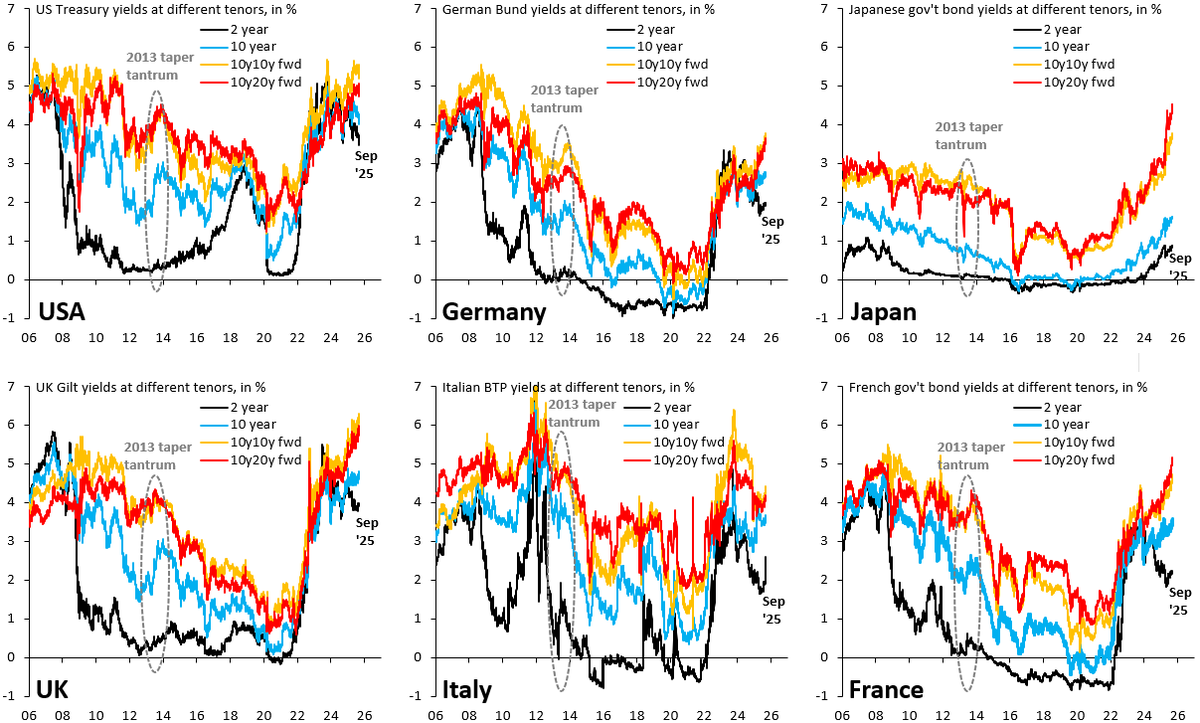
The cost-of-living crisis is really a sovereign debt crisis. You can only print and borrow for so long. It causes problems in the long run. And the long run is here.
Balaji tweet media
English
255
596
3.6K
200.4K
Shogun retweetledi
Tuo Liu
Tuo Liu@Robo_Tuo·
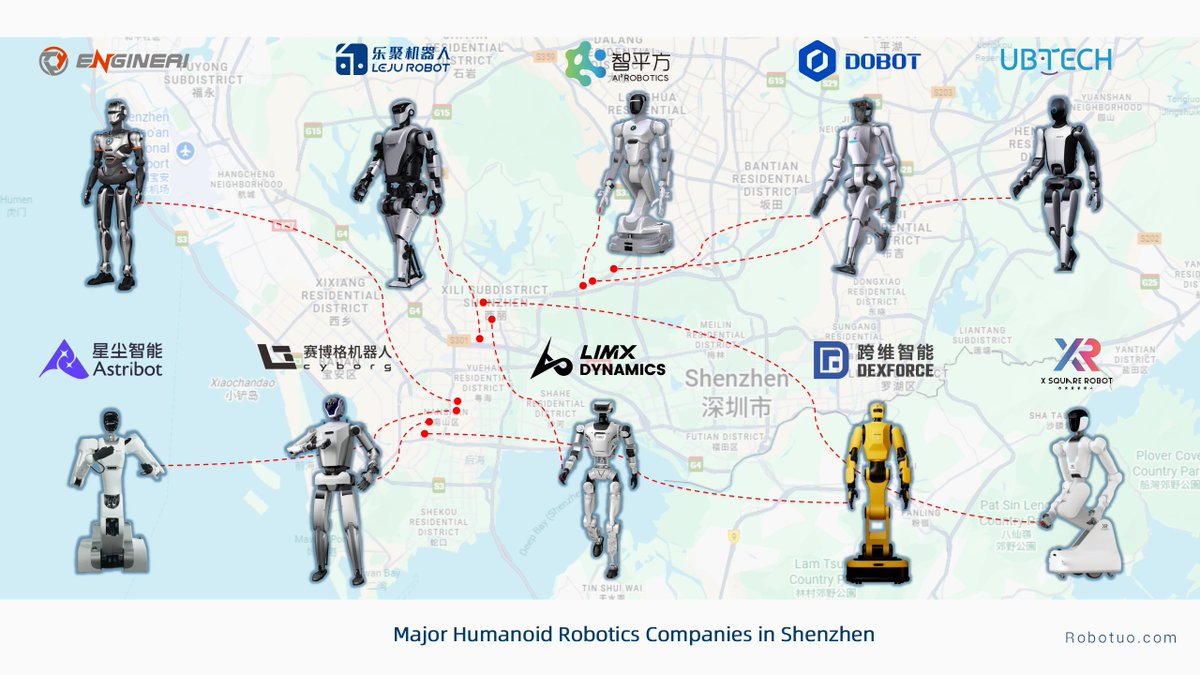
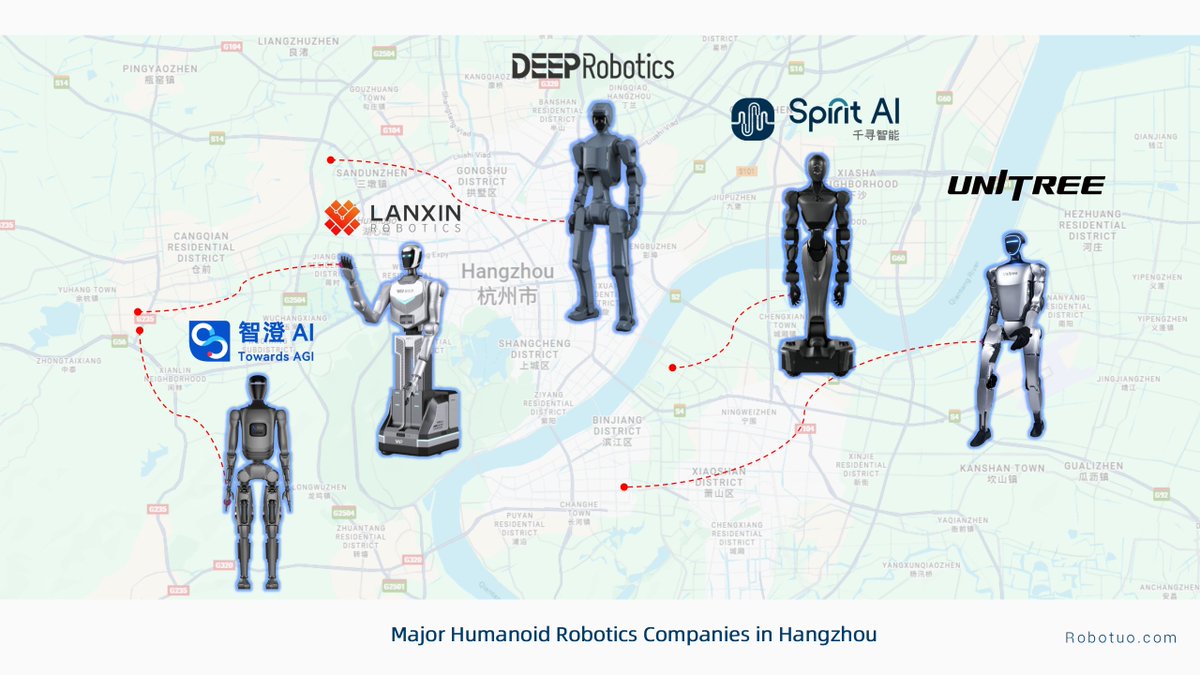
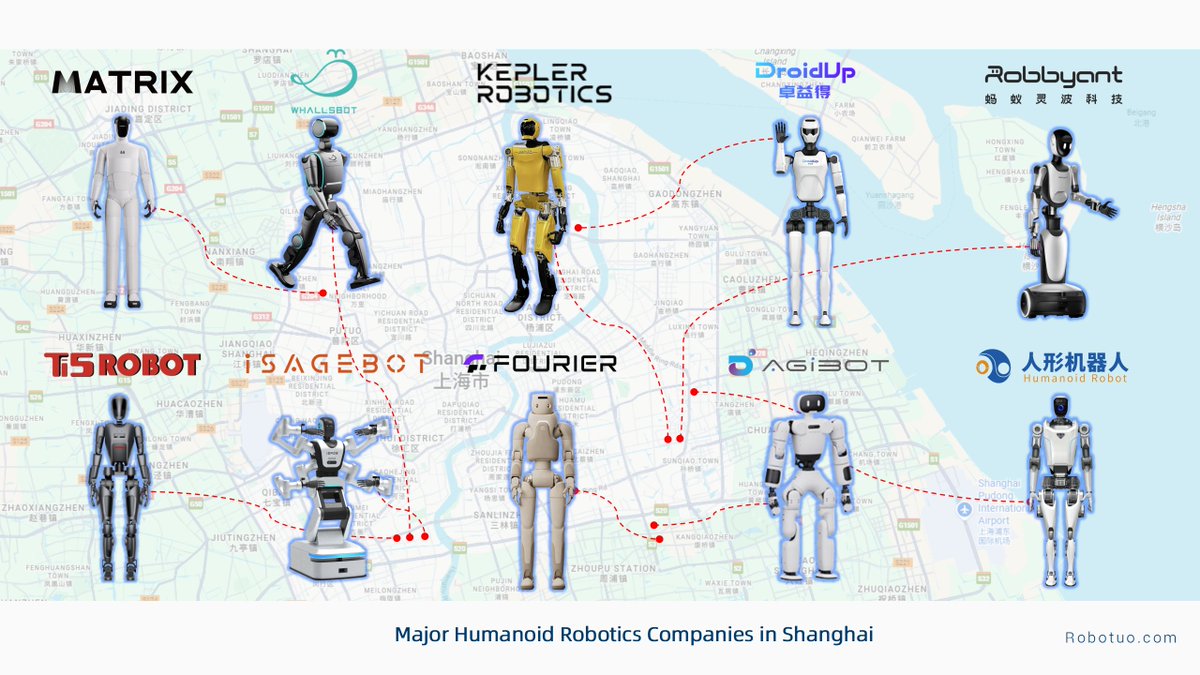
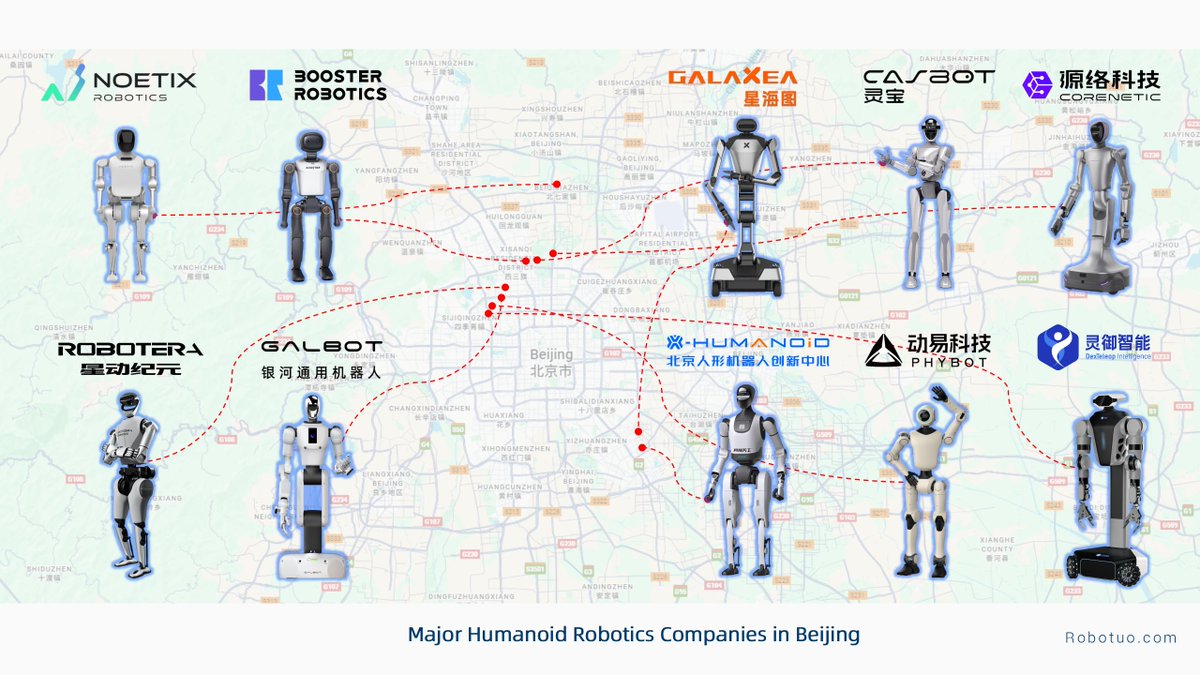
We now have humanoid robot maps for China’s four major cities: Beijing, Shanghai, Shenzhen and Hangzhou. It might feel overwhelming to see so many humanoids, but it’s exciting to see these robotics companies working hard to push humanity forward.
Tuo Liu tweet mediaTuo Liu tweet mediaTuo Liu tweet mediaTuo Liu tweet media
English
83
368
1.5K
385.8K
Aryan Mahajan
Aryan Mahajan@aryanXmahajan·
Gemini 3.0 + Lindy + Perplexity = AI Content Infrastructure that generated 30M views last quarter... This 3-agent system replaces entire content teams automatically using AI strategist + producer + analyst architecture... → No more $15K-$30K monthly payroll for 4-person content teams → No more 20+ hours weekly spent planning content calendars manually → No more creative bottlenecks killing your posting velocity → No more analysts tracking metrics in 10 different spreadsheets Just 3 AI agents → autonomous content infrastructure that runs 24/7. Here's how it works: → Strategy Agent (monitors trends, identifies angles, builds calendars automatically) → Production Agent (generates platform-native posts, maintains brand voice across 1000+ posts) → Analysis Agent (tracks engagement, identifies patterns, optimizes continuously) → Multi-Platform Publishing (LinkedIn + Twitter content deployed simultaneously) → Performance Loop System (learns what works, compounds results weekly) Built with Fortune 500 content velocity. Runs 24/7 without creative bottlenecks. Zero payroll overhead. Enterprise quality. Results from deployments: • 30M+ organic views generated • $500K+ in qualified pipeline revenue • 25 posts weekly (up from 5 posts with manual teams) • One creator: $20K writer team → $500 AI infrastructure Want the complete system? Like + comment "LINDY" + repost, and I'll DM it to you. (must be following)
Aryan Mahajan tweet media
English
705
343
1.3K
131.2K