Viet Ly

2.6K posts

Viet Ly banner
Viet Ly

Viet Ly

@vietly_7

Biology is computable. Hit rewind. ⏪ 🧬🥷 Vision 👁️ Alzheimer’s/partial reprogramming cofounder Youthbio Therapeutics🔥 https://t.co/Pz2PWO6hKu

Katılım Mayıs 2016
3.6K Takip Edilen933 Takipçiler
Sabitlenmiş Tweet
Viet Ly
Viet Ly@vietly_7·
Epigenetic rejuvenation startup YouthBio Therapeutics has received encouraging feedback from the US FDA on its investigational Alzheimer’s therapy YB002 as it seeks to bring partial cellular reprogramming into the clinic. The company today revealed that, following an INTERACT meeting with the agency, regulators agreed that existing preclinical data support the bioactivity of YB002 and the company’s proposed plans for a first-in-human trial. longevity.technology/news/is-this-t…
English
0
0
2
956
Viet Ly
Viet Ly@vietly_7·
Partial reprogramming is moving from theory toward translation — and may become one of the most important therapeutic platforms of the next decade. First, the eye. Then the brain. Then other tissues. Life Biosciences is advancing Yamanaka-factor-based approaches for ocular disease. YouthBio is working to bring partial reprogramming to the brain, starting with Alzheimer’s disease and age-related cognitive decline. The key idea is simple but powerful: aged cells may not be irreversibly damaged. In many cases, their gene-expression programs may have drifted into an older state — and partial reprogramming may help restore a more youthful functional state without erasing cell identity. Rejuvenation will likely arrive organ by organ: eye, brain, muscle, skin, immune system, and eventually combinations of tissues. The field is still early, but the direction is becoming clear: aging may be more programmable than we once thought. Thank you to the All-In Podcast for helping bring more attention to partial reprogramming and the longevity field. @friedberg @ydeigin @allinpod_clips @jpsenescence @davidasinclair @chamath @DavidSacks #YamanakaFactors #YouthBio #Longevity #PartialReprogramming #Aging
English
3
14
64
4.4K
Viet Ly retweetledi
HustleBitch
HustleBitch@HustleBitch_·
🚨 SURGEON WARNS THE BIGGEST BREAKTHROUGH IN HUMAN HISTORY IS HAPPENING RIGHT NOW — “BIGGER THAN AI” A surgeon is going viral after claiming scientists may have already discovered a way to partially REVERSE aging at the DNA level… and he says the implications are bigger than AI, social media, smartphones, or even the internet itself. Dr. Buck Parker’s claim: “The fountain of youth has been discovered.” “This is bigger than the Industrial Revolution. Bigger than the advent of the internet. Bigger than Amazon, Apple, the iPhone, Google, social media… bigger than AI.” And according to Dr. Parker… it’s already happening RIGHT NOW. The core claim revolves around something called “Yamanaka factors,” proteins discovered by Nobel Prize-winning researcher Shinya Yamanaka that can reportedly reset damaged cells back to a younger biological state. According to Dr. Parker: • Scientists have reportedly reversed visible signs of aging in animals • Wrinkled skin in test subjects appeared to become youthful again • Researchers are now experimenting with literally “turning back” cellular age • Human trials are reportedly beginning • Some scientists now believe aging itself may simply be accumulated DNA damage His warning: “If you’ve been alive for the last 40 years… you’ve seen some wild sh*t happen. It’s about to get more wild.” If this became available tomorrow… would you actually take it? 📹: drbuckparker
English
1K
3.2K
19.6K
902K
Viet Ly retweetledi
TheNewPhysics
TheNewPhysics@CharlesMullins2·
🚨 BREAKING NEWS 🚨 Humans are now entering the first FDA-approved trial of partial epigenetic reprogramming. This is one of the biggest longevity experiments ever attempted. The idea comes from the Yamanaka factors: special genetic instructions that can reset a cell’s biological age. A full reset turns cells back into stem cells dangerous and potentially cancerous. But scientists discovered something remarkable: A partial reset may rejuvenate cells while preserving their identity. Not replacing the cell. Refreshing it. In mice, versions of this approach restored vision, repaired damaged tissue, and extended lifespan dramatically in some studies. Now the technology is moving into human trials targeting the eye. Why the eye? Because it’s isolated, measurable, and easier to monitor safely. The deeper implication is massive: Aging may not just be damage accumulation. It may partly be an information problem. Cells might carry a kind of biological “memory corruption” over time and epigenetic reprogramming could restore the original instructions. Not immortality. But potentially the first real step toward programmable aging. Follow me if you want to see where biology becomes code.
English
42
253
1.1K
59.8K
Viet Ly retweetledi
Marcos Arrut
Marcos Arrut@MarcosArrut·
Yamanaka factors can reset a cell's biological age by decades in 13 days. We are not in the era of hoping to cure aging. We are in the era of engineering how to do it. That's all.
English
26
51
562
27.2K
Viet Ly retweetledi
Massimo
Massimo@Rainmaker1973·
Scientists have created one of the most detailed 3D reconstructions of a human cell (eukaryotic cell) ever produced. This groundbreaking model, often termed a "Cellular Landscape Cross-Section Through a Eukaryotic Cell," combines data from X-ray tomography, nuclear magnetic resonance (NMR), and cryo-electron microscopy to map molecular structures in extreme detail.
English
849
4.7K
22.1K
2.1M
Viet Ly
Viet Ly@vietly_7·
Emmanuel Henderson Jr. was a standout running back at Geneva County High School in Alabama, graduating as a four- or five-star recruit in 2022. He totaled over 3,400 rushing yards and 52 touchdowns in his final two seasons and ran a 11.40-second 100-meter dash, proving his elite speed. He was widely considered the No. 1 running back in his class. Transferred from Alabama. John loves high school stats, its a variable.
English
0
0
1
83
Brady Henderson
Brady Henderson@BradyHenderson·
Here's the Scouts Inc. scouting report on Henderson.
Brady Henderson tweet media
English
2
6
77
11K
Brady Henderson
Brady Henderson@BradyHenderson·
With pick No. 199, the Seahawks take Kansas WR Emmanuel Henderson Jr.
English
5
6
118
17.9K
Viet Ly retweetledi
Christin Glorioso, MD PhD🏳️‍🌈
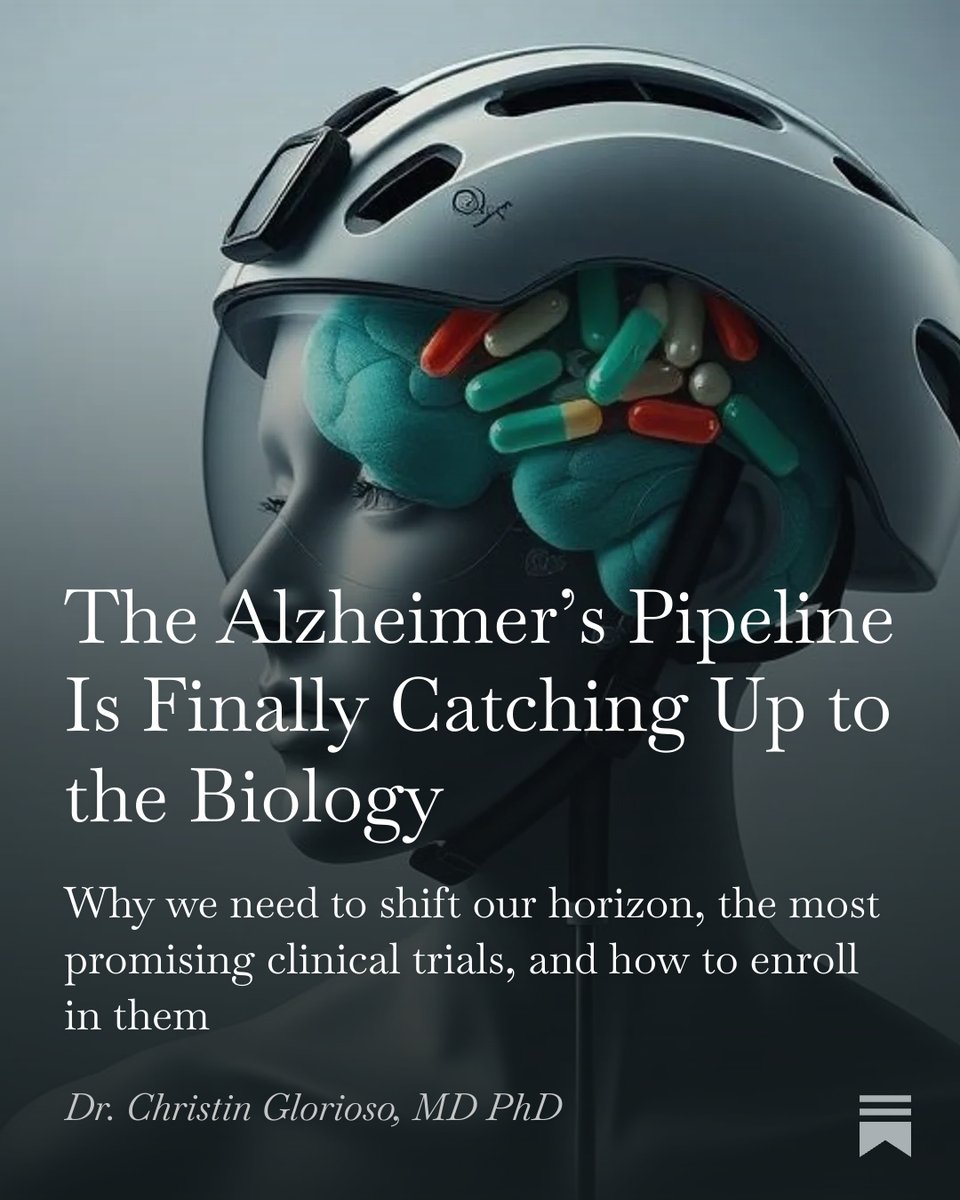
The Alzheimer’s Pipeline Is Finally Catching Up to the Biology Why we need to shift our horizon, the most promising clinical trials, and how to enroll in them People ask me all the time whether anything real is coming for Alzheimer's prevention and treatment. My answer has shifted over the past three years from cautiously optimistic to pretty certain we are riding a wave that will yield real solutions. Here's why. For decades, Alzheimer's was treated as one disease with one cause. Drug after drug targeted amyloid, and most failed. But the biology tells a different story. One person's dementia may be driven by vascular injury, another's by APOE4-driven lipid dysregulation, a third's by neuroinflammation, a fourth's by mitochondrial failure. These are distinct trajectories converging on the same clinical syndrome. Treating all of them with the same antibody is like treating every cancer with the same chemotherapy. The field finally is beginning to understand this and AI will help us identify which drug will work for which person and when. There are now 138 novel drugs in 182 active trials worldwide and the approaches that excite me most right now are: 💉 Trontinemab (Roche) — brain shuttle antibody clearing plaques in 91% of patients with ARIA below 5%, including APOE4 homozygotes previously excluded from all trials 💊 AR1001 & buntanetap — oral daily pills targeting amyloid pathways; Phase 3 results in 2026 🧬 BIIB080 — antisense oligonucleotide targeting tau, the pathology most tightly linked to cognitive symptoms 🧬 LX1001 — APOE2 gene therapy for the highest-risk patients; CSF expression in all 15 Phase 1/2 patients with zero ARIA ⚡ Sinaptica rTMS — personalized magnetic brain stimulation; 44% slowing of decline at 12 months in Phase 2 💊 BGE-102 (BioAge Labs) — CNS-penetrant NLRP3 inhibitor; 86% hsCRP reduction with confirmed brain penetration 💉 Klotho — single injection restored cognition in aged primates to levels of young animals 🔄 Partial reprogramming — Life Biosciences just entered the first human epigenetic reprogramming trial; YouthBio Therapeutics Inc.'s YB002 targets Alzheimer's directly The pattern across all of this is timing. Almost every drug that works in prevention fails when tested in patients with established disease. The biology has 15–20 years of momentum by then. The window for intervention is earlier than the field has historically targeted and identifying who needs intervention before symptoms arrive is now the central challenge. NeuroAge's multi-modal assessment combines brain MRI volumetrics, whole genome sequencing across hundreds of genetic risk markers, RNA biomarkers, and cognitive testing into a unified biological brain age profile. We are currently enrolling people with MCI or early Alzheimer's. Sign-up: docs.google.com/forms/d/e/1FAI… Full post: drglorioso.substack.com/p/the-alzheime…
Christin Glorioso, MD PhD🏳️‍🌈 tweet media
English
0
4
27
7.2K
Robert Nelsen
Robert Nelsen@rtnarch·
Great to see FDA & the administration prioritizing FIH (First in Human) reform. The current IND process is broken & has shifted FIH trials overseas. Countries like Australia have relied on a more flexible, notification-based pathway for years. Now Congress has to act.
Robert Nelsen tweet media
English
9
24
138
27.1K
Viet Ly retweetledi
Houman David Hemmati, MD, PhD
Houman David Hemmati, MD, PhD@houmanhemmati·
🚨HUGE news from @FDA! For many years, thanks to costly (millions), time-consuming & unethical (killing hundreds of monkeys & dogs) requirements to do small clinical trials in USA, only big pharma could do them here. Everyone else goes to Australia. That’ll soon change. FDA has proposed legislation to Congress to adopt similar policies as Australia, which keep humans safe while allowing quicker, cheaper, more ethical clinical trials that were very difficult to do in the U.S. Small biotech companies often go broke before they could start a trial because they’d have to repeat all their animal studies (take over a year & cost many millions) to satisfy a checkbox for regulators. This will benefit America & Americans tremendously once implemented properly.
Sebastian Caliri@SebastianCaliri

It looks like the White House is finally taking US-China biotech competition seriously. The FDA is putting forward an expedited IND pathway that would shorten time to first-in-human. Overdue, but good news for American biotech.

English
7
16
84
8.6K
Viet Ly retweetledi
Tuki
Tuki@TukiFromKL·
🚨 do you understand what scientists just did to deafness.. researchers injected a modified harmless virus directly into the cochlea the spiral cavity in your inner ear.. carrying a working copy of a gene called OTOF.. the gene that transmits sound signals from your ear to your brain.. without it, your ear hears everything.. your brain receives nothing.. 10 completely deaf patients.. single injection.. within weeks all 10 could hear.. 10 out of 10.. here's what nobody wants to say.. cochlear implants cost between $30,000 and $100,000 per patient.. hearing aids sell for up to $7,000.. the global hearing industry is worth over $9 billion a year.. every year.. recurring.. because deafness has never been cured.. just managed.. one injection ends all of that.. and in 2018 goldman sachs analysts literally wrote this in a report about gene therapy.. "curing patients is not a sustainable business model" that's a goldman sachs equity research note.. sent to investors.. warning them that companies developing one-time cures were a risky bet because cured patients stop buying products.. the science to fix single broken genes has existed in research labs for years.. the same platform used here already cured a form of blindness in 2017.. cured spinal muscular atrophy in babies in 2019.. there are over 10,000 known single-gene disorders.. millions of people labelled "incurable".. the platform exists.. the proof is 10 out of 10.. the question was never whether they could fix it.. it's whether fixing it was good for business.
Polymarket@Polymarket

BREAKING: An experimental gene therapy ear injection has cured deafness for 10 out of 10 patients in clinical trial.

English
312
6.4K
25.2K
1.8M
Viet Ly retweetledi
John Cumbers
John Cumbers@johncumbers·
David Sinclair's lab just discovered that the same technology that reverses aging also kills cancer cells. His team has been using epigenetic reprogramming to reset old cells back to a younger state. It works. Old cells become young again. But when they tried it on cancer cells, something unexpected happened. The cancer cells didn't get younger. They killed themselves. Sinclair (@davidasinclair) explained why. Cancer cells survive by ignoring the DNA damage inside them. They're filled with it. But they've shut down the part of the cell that would normally detect it and trigger self-destruction. Epigenetic reprogramming wakes that system back up. Sinclair put it this way: the cancer cell wakes up from its zombie-like state, looks at its own chromosomes, realizes they're destroyed, and says "I better kill myself." And it does. A normal cell gets reprogrammed and becomes young again. A cancer cell gets reprogrammed and destroys itself. Same technology. Two opposite outcomes. Both exactly what you'd want. His team has shown this works across many types of cancer. Side note: David Sinclair is speaking on May 6th at SynBioBeta this year - discussing the science of slowing and reversing aging. If longevity is the world you're in, the investors, partners, and scientists who matter in this space will be in the room. Link for tickets below.
John Cumbers@johncumbers

David Sinclair is on a mission to turn age reversal into a $100 pill. Right now, his gene therapy costs roughly $10 million to manufacture and requires a direct injection into whichever organ you're targeting. That's not going to work for 8 billion people. So Sinclair's team made a breakthrough. They found that the three age-reversal genes aren't the only path to resetting cells. They discovered CHEMICALS that do the same thing. In mice, they can now give an animal a liquid - not genes, not injections, a drink - and rejuvenate tissues in 4 weeks. Sinclair says it's now normal for his students to casually report: "We just rejuvenated the ear. We just rejuvenated the skin. We just cured ALS (motoneuron disease) in these animals." He calls his lab "Willy Wonka's chocolate factory" because the discoveries blow him away every week. But he wants one molecule that does everything. So they used AI to screen 8 BILLION candidates. They're now down to three molecules that work. And they're using AI to try to combine all three into one. The gene therapy could cost over $100,000 per treatment. Sinclair's goal: "What if it could be $100 instead? That's what I'm working for. I want to democratize this technology so anyone even in Kenya can take these medicines." They should know within a year or two if the molecules work in mice. The gene therapy is the proof of concept. The pill is the endgame. David Sinclair is speaking on May 6th at SynBioBeta this year - discussing the science of slowing and reversing aging. If longevity is the world you're in, the investors, partners, and scientists who matter in this space will be in the room. Link for tickets below. — @davidasinclair

English
40
255
1.6K
95.5K
Viet Ly retweetledi
Peter Adams🇪🇺🇺🇳
Peter Adams🇪🇺🇺🇳@AdamsBioAging·
This is an excellent conceptualisation of epigenetics of aging. Takes a complicated topic and distills it down. Good to see histone H3.3 featured. For our latest contribution on histone H3.3 and aging see here biorxiv.org/content/10.648… @NatureAging
Lifespan@JoinLifespan

This review is one of the most important syntheses in years. It doesn’t just catalog things. It proposes a unifying framework. ie. aging is a breakdown of epigenetic fidelity, the ability of cells to maintain correct gene expression over time...

English
3
15
88
51.3K
Viet Ly retweetledi
Anish Moonka
Anish Moonka@anishmoonka·
Your next cancer drug or gene therapy spends years stuck in a lab before it reaches a pharmacy shelf. Anthropic is testing a tool that goes after the bottleneck: the coding work biologists do before any human trial even starts. It’s called Operon. Four tasks show up on the loading screen and they tell you everything. “Design a CRISPR knockout screen” means turning off every gene in a cell, one at a time, across 20,000+ genes, to find which ones cause disease. Imagine flipping 20,000 light switches to figure out which one controls the kitchen. Planning that experiment alone takes a biologist months. “Analyze scRNA-seq data” means reading what each individual cell in a tissue sample is doing, instead of blending them all together into one average. The code to crunch that data takes weeks to write. “Rank enzyme variants with PLMs” means feeding an AI trained on 65 million protein sequences and asking: which version of this enzyme will actually work? It predicts the answer before anyone picks up a pipette. “Build a phylogenetic tree” means mapping how organisms or genes branched apart over evolution. How scientists trace where a virus strain came from. Every one of these jobs requires a PhD and serious programming chops. Operon wants to turn them into a conversation. The name itself is a nod. An operon is a cluster of genes that switch on together in biology. Nobody outside a biology department would pick that name. Operon sits inside Claude Desktop as its own mode, next to Chat, Code, and Cowork. It reads files straight off a researcher’s computer (biology datasets are way too big to upload). It has a planning mode and an auto mode, borrowed from Claude Code. Anthropic has been laying track here for months. Last October they launched Claude for Life Sciences with plug-ins for PubMed (35 million medical papers), Benchling (where scientists log experiments), and 10x Genomics. In January they added a drug compound database. Claude already beats human experts on a lab protocol comprehension test, 0.83 versus 0.79. And the real-world pharma results are hard to ignore. Novo Nordisk used Claude to chop clinical report writing from 15 weeks to under 10 minutes. A team of 50 writers shrank to 3. Their annual Claude bill costs less than one writer’s salary. Every day a drug hits the market sooner is worth roughly $15 million to them. The AI drug discovery market sits around $3 to 5 billion this year, growing 20 to 30% annually. Over 200 AI-discovered drug candidates are in clinical trials right now. But I want to be straight about what AI can’t touch: clinical trials still grind on for years. Regulatory review, manufacturing, all of that stays slow. AI trims the front of a decade-long pipeline. Anthropic hit $19 billion in annual run rate last month. $380 billion valuation. 80% of that revenue comes from businesses. Operon says a lot about where they think the next enterprise dollar is hiding. The lab.
🚨 AI News | TestingCatalog@testingcatalog

BREAKING 🚨: Anthropic is working on a new Operon agent for Claude Desktop, built for scientific research in biology! Operon will have a "private environment" to work alongside you. Users will be able to create different sessions within Operon projects, manage generated artefacts, and work with Skills. Cowork but for scientists 👀

English
11
75
423
50.9K
Viet Ly retweetledi
Lifespan
Lifespan@JoinLifespan·
A major new paper reframes aging as a systems failure of epigenetic information. Not wear and tear but a software problem. This is what the Information Theory of Aging predicts and, if correct, means aging is reversible. Let's dive in... 🧵
Lifespan tweet media
English
37
309
1.7K
448.8K
Viet Ly retweetledi
LongevityLab
LongevityLab@LxngevityLab·
The first scientist to ever reverse human aging just dropped the craziest interview on the internet. Here are 8 facts David Sinclair revealed about aging that will leave you speechless (THREAD): 1. Cancer & Alzheimer's are symptoms of the same disease.
English
68
714
4K
1.2M
Viet Ly
Viet Ly@vietly_7·
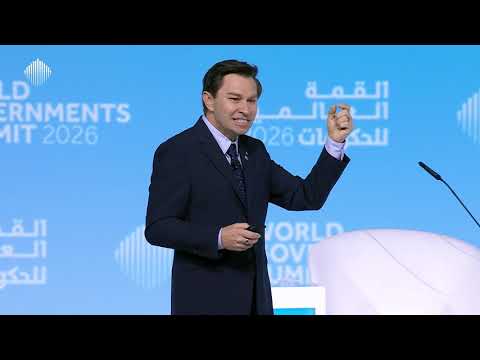
@davidasinclair full video. The Catalyst. During a Plenary Session, Prof. David Sinclair, Professor, Department of Genetics, Blavatnik Institute, discussed The Science of Living Longer – and Better at the World Governments Summit. youtu.be/BVkcjSqIVzU?si…
YouTube video
YouTube
English
0
0
0
77