

Kevin
657 posts
Kevin
@xbertolerox
I'm a fearless liver and lover of life
San Luis Obispo Katılım Kasım 2011
127 Takip Edilen72 Takipçiler



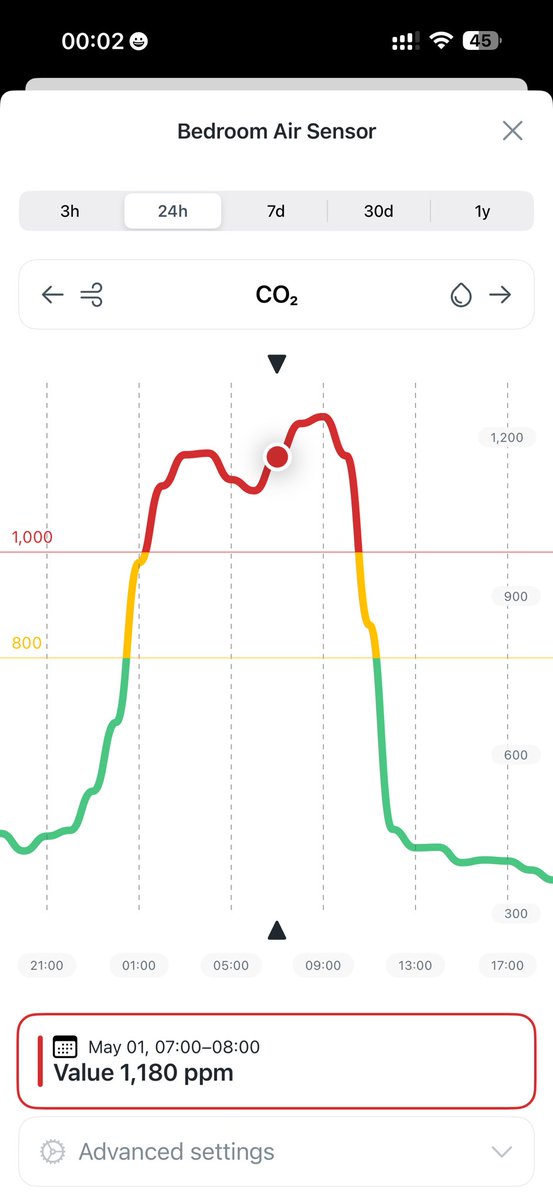
I still haven't solved the CO2 bedroom challenge
You open the window and you wake up from a 6am garbage truck or barking dogs and sunlight
You close it, you suffocate in 1200 ppl at 5am
I guess you really need some mini tube in your wall with a vent that opens and closed based on internal CO2 but how do I build that?
English
@bryan_johnson "Most honest biomarker we have" says the guy who has undergone numerous facial procedures like botox and fat grafting, has veneers and uses hair dye. OK
English

True. The face is the most honest biomarker we have. Sleep, stress, food, exercise, and sun all show up within weeks. The good news is it runs in reverse just as fast. Better inputs, younger face.
Avi Roy@agingroy
Scientists and educators age fastest. Athletes age slowest. A facial aging clock trained on occupation-linked photos found that the gap between your biological face-age and your real age predicts all-cause mortality. The wider that gap, the higher your risk. Women aged slower than men in every single occupation measured. No exceptions. The ranking, from youngest-looking to oldest-looking relative to chronological age: Athletes > service workers > sales > clerical > managers > professionals > scientists and educators. The people who study aging for a living look the oldest. I wish I could say I'm surprised. Your face is a record of cumulative stress, UV, sleep loss, and metabolic wear. Your job title determines how much of each you get.
English
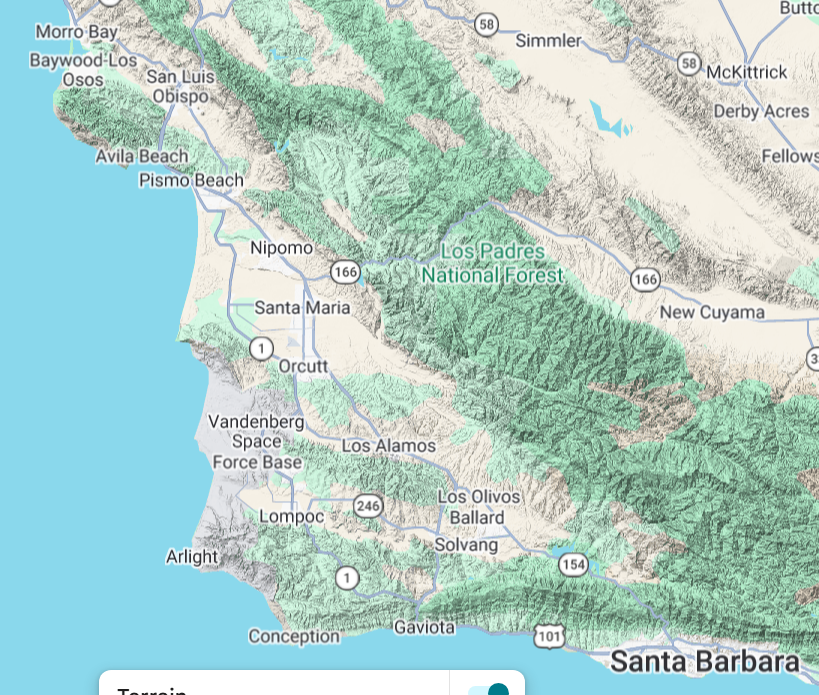
@Afinetheorem I live in SLO. No locals want to see it turn into the bay or LA. The California coast is plenty developed. And the city is getting developed by condos and new suburbs already so you can chill. If you want it turn into Santa Barbara, then move to SB, same weather
English

Urbanism Twitter is talking about SLO right now. In my view, the most wasted land in America. The two counties have perfect weather, beautiful coastal scenery...and the population density of Belarus or Missouri, growing 1/3 slower than US as a whole since 2000. Madness. 1/2
English
Kevin retweetledi

I stepped on a broken manhole in China…
I reported this Danger In Chengdu - Take a look at what the local government did.
Follow to see more of the REAL China.
@CCTV @XinhuaChinese @ChinaDaily @AmbXieFeng @SCMPNews
English
@mehdirhasan Hey the full interview was over 30 minutes why did you remove it from youtube and post this clipped version?
English

"It is possible I am a useful idiot."
I challenged the so-called "Chinese Nostradamus" and self-styled "Professor" Jiang on 'Mehdi Unfiltered' on his predictions, on Chinese censorship, accusations of antisemitsm, the Iran war, and more.
Full interview: zeteo.com/p/mehdi-goes-h…
English


This is the wrong way of thinking about it.
By this logic, a school shooter is "powerful" because they can kill an entire school.
Real power is the power to build, to maintain stability and prosperity.
It's not the power to destroy. Anyone can kill. Anyone can bomb, destabilize, spread chaos, set fires, create anarchy. Unfortunately, that's relatively easy.
The old America could build, not just kill.
That's the America I admire.

Philippe Lemoine@phl43
The US is so powerful that it could destroy the entire Middle East and it would barely register for most Americans, yet if you listen to geopolitics-pilled people, it's constantly threatened by enemies so fearsome they will somehow destroy the American way of life unless the US wreaks havoc halfway around the world in a place they've never even heard of.
English
@deepfates ey fair enough, you're welcome for the engagement, won't happen again 🫡
English

@xbertolerox How bout you ask your questions on your page and I'll ask the questions I want answers to
English
Kevin retweetledi

Let me explain exactly why every new subdivision in America looks like the top photo, because the math is wild.
A mature tree increases a home's value by 7 to 19 percent. On a $400,000 house, that's $28,000 to $76,000. A single shade tree produces the cooling equivalent of ten room-size air conditioners running 20 hours a day. One tree on the west side of a house cuts energy bills by 12 percent within 15 years. The bottom photo is worth more, costs less to live in, and sells faster. This has been documented by the University of Washington, Clemson, Michigan State, and the USDA. The data is not in dispute.
Removing those trees saves the builder roughly $5,000 per lot. Concrete trucks need twice the dripline radius of every standing tree. Utility trenches need flat ground. A bulldozer flattens 200 lots in an afternoon. Preserving trees adds weeks and thousands per home.
So the developer pockets $5,000 in savings and the buyer eats $50,000 in lost value for the next two decades. The person making the decision and the person paying for it have never been in the same room.
The Woodlands, Texas is the proof of what happens when they are. George Mitchell bought 28,000 acres of Houston timberland in 1974 and preserved 28% as permanent green space. He forced McDonald's to build behind the tree canopy. That McDonald's became one of the highest-volume locations in Texas. The first office building, designed to reflect the surrounding forest so you couldn't see it from the street, leased completely.
The Woodlands median home price today: $615,000. Katy, a comparable Houston suburb that clear-cut: $375,000. Named #1 community to live in America two years running.
Fifty years of data. The trees are worth more than removing them saves. Developers clear-cut anyway because they sell the house once and leave. You live in it for 30 years.
bitfloorsghost@bitfloorsghost
we ruined such a good thing
English

Have empathy for the victims, not those who inflict pain on others
Resist the Mainstream@ResisttheMS
WATCH: Elon Musk points out that "the fundamental moral flaw of the left is empathy for the criminals and not empathy for the victims." "It's undermining the people's faith in the legal system. It needs to stop."
English

JUST IN: The most irreversible consequence of this war is not happening in Tehran. It is happening in a barn in Iowa.
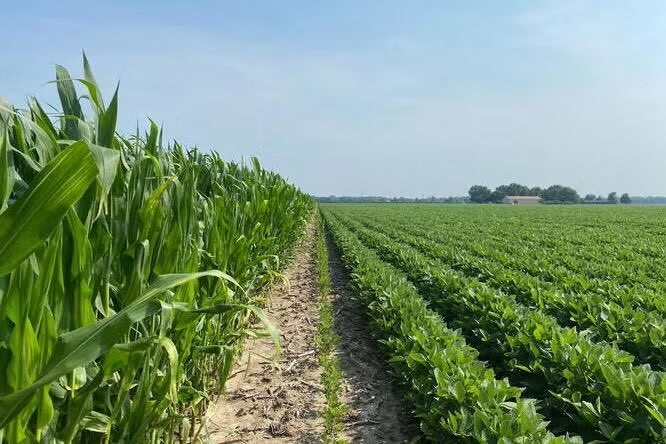
A farmer is standing over a kitchen table looking at two seed catalogues. One is corn. One is soybeans. Corn needs 180 pounds of nitrogen per acre. Nitrogen costs $610 per ton on the CBOT March futures settlement as of yesterday, up 35 percent in a month. Soybeans fix their own nitrogen from the atmosphere through root bacteria called rhizobia. They need nothing from the Strait of Hormuz.
The farmer is choosing soybeans. Millions of acres are choosing soybeans. And once the planter rolls into the field, the choice cannot be reversed until next year.
USDA projected corn at roughly 94 million acres for 2026, down from 98.8 million. Soybeans at 85 million, up from 81.2 million. Those projections were published February 19, before urea surged past $683 at New Orleans. The actual shift will be larger. USDA Prospective Plantings reports March 31. By then the seeds will be in the ground.
This is the transmission channel the world is not watching.
A 21-mile strait enforced by provincial commanders with sealed radio orders just rewrote the planting economics of 90 million acres of the most productive farmland on Earth. Not through sanctions. Not through diplomacy. Through the price of a single molecule that corn cannot grow without and soybeans do not need.
Now follow the cascade.
The Renewable Fuel Standard mandates 15 billion gallons of corn ethanol annually. That consumes roughly 43 percent of the entire US corn crop. The mandate is set by the EPA. It does not flex when corn acres shrink. It is inelastic demand consuming a fixed share of a declining supply. When supply tightens against a fixed mandate, the remaining corn reprices upward. Corn above $5 per bushel compresses every margin downstream.
The US cattle herd stands at 86.2 million head, a 75-year low per USDA NASS. Poultry and pork operations face compression from higher corn prices. Feed is the single largest cost in livestock production. When feed reprices, protein reprices. When protein reprices, every grocery shelf in America absorbs the increase.
This is the protein cascade. Corn to feed to meat to eggs to dairy to the checkout counter. Each link tightens because the link before it tightened. The originating cause is a urea molecule that cannot transit a strait because a provincial commander’s sealed orders say it cannot.
The farmer did not start this war. The farmer cannot end it. The farmer responds to the price on the screen and the biology of the two crops in front of him. Corn needs the molecule. Soybeans do not. At $610 the arithmetic is settled. The planter rolls. The season is locked.
Israel just authorised the assassination of every Iranian official on sight. The US has spent $16.5 billion. South Pars is burning. The Fed is holding rates because oil inflation will not break. Gold touched $5,000. Bitcoin is bleeding. China is running exercises near Taiwan. Sri Lanka shut down on Wednesdays.
And underneath all of it, a man in a barn is making the decision that determines whether four billion people pay more for food this year. He has never heard of the Mosaic Doctrine. He does not know what a sealed contingency packet is. He knows what nitrogen costs. And he is planting soybeans.
Full analysis - open.substack.com/pub/shanakaans…
Shanaka Anslem Perera ⚡@shanaka86
Right now, in barns and equipment sheds across the American Midwest, farmers are making the most consequential decision of this war. Not generals. Not senators. Farmers. At $683 per ton urea, corn economics have collapsed. Nitrogen is the single largest input cost for corn production. At pre-war prices a farmer could justify 180 pounds per acre and expect a margin. At $683 the math breaks. Soybeans fix their own nitrogen from the atmosphere through root bacteria. They do not need the molecule trapped behind the Strait of Hormuz. The seed decision is being made this week across roughly 90 million acres of American cropland. Once the planter rolls into the field, the choice is irreversible. Corn seed in the ground stays corn. Soy seed stays soy. The acreage allocation locks in. USDA Prospective Plantings reports March 31. That report will tell the world how American agriculture responded to the Hormuz blockade. But the decisions it captures are being made now, in conversations between farmers and agronomists and seed dealers who are looking at nitrogen prices and making the rational economic choice: plant the crop that does not need the input you cannot afford. Every acre that shifts from corn to soybeans tightens the corn balance sheet for the rest of the year. Corn feeds livestock. Corn feeds ethanol. The Renewable Fuel Standard mandates 15 billion gallons of corn ethanol annually, consuming roughly 43 percent of the US corn crop regardless of price. That demand is inelastic. If acres shift and production falls while the mandate holds, corn prices spike. Feed costs spike. The protein cascade reverses. The US cattle herd sits at 86.2 million head, a 75-year low. Poultry and pork margins that were benefiting from cheap feed compress when corn crosses $5 per bushel. This is how a naval blockade 7,000 miles from Iowa reaches the American grocery shelf. Not through oil. Not through shipping. Through nitrogen. The farmer cannot afford the molecule. The molecule cannot transit the strait. The farmer plants soy instead. The corn supply tightens. The ethanol mandate consumes its fixed share. The remaining corn reprices. The feed reprices. The meat reprices. The grocery bill reprices. The decision is not political. It is arithmetic performed on a kitchen table by a person who needs to plant in three weeks and cannot wait for a ceasefire, an escort convoy, or an insurance normalisation that the Red Sea precedent says takes years. The deepest penetrator in the American arsenal cannot reach a sealed Iranian doctrinal packet. But the fertiliser price it failed to resolve is reaching every planting decision on 90 million acres of the most productive farmland on Earth. The war’s most irreversible consequence is not happening in a bunker. It is happening in a barn. And by the time USDA publishes the data on March 31, the seeds will already be in the ground. Full analysis in the link. open.substack.com/pub/shanakaans…
English


Before you even contemplate seizing anyone’s assets, you have a moral responsibility to eliminate waste, fraud and abuse.
And anyone stealing from the government should face a 2x multiplier on their punishment.
@jason@Jason
Every time I read about this lunatic’s actions, I’m 1% more likely to move home and run for mayor We’re at 14% right now
English
@drmarkhyman In the same way we have USDA certified food, and "nutrition labels" we ought to have regular certification and testing of nutritional profiles for foods (vitamin & mineral content, toxicity etc).
English

The food on your plate may not be as nourishing as you think.
Over the last fifty years, conventional farming practices have stripped our soil of vital nutrients, and the result is food that can contain up to 50% fewer vitamins and minerals than it once did.
Same calories. Fewer nutrients.
When we prioritize yield, shelf life, and profit over soil health, we deplete the very foundation that makes food truly healing.
By supporting regenerative agriculture, choosing whole, real food grown in healthy soil, and demanding change from our food system, we can restore the nutrient density our bodies depend on.
Food is information. And the quality of that information matters.
English


Conservatives: the Super Bowl halftime show ABSOLUTELY MUST be in English!
Kid Rock: Ba Wit Da Ba Da Bang Da Bang Diggy Diggy
English
@MattBGilliland @AndyMasley Hey I appreciate the sincere time you put in. I studied resource management and in that field, a steady state ecosystem is good (homeostasis). Send me your best link to learn about steady state economies 👍
English

This is a generously-vague description of a steady-state economy, which both ignores the many unattractive details and somehow doesn't even hold firm on the fact that it requires a steady state. If there's any economic growth, it's not a steady-state economy, and if there's technological progress/innovation, increasing human capital, or increasing knowledge, you're going to have economic growth. You can have economic growth while resource use declines, and this is one of the reasons lives have gotten way better over time!
And a steady-state economy doesn't mean you're not using up resources, unless you've had enough growth in technology/human capital/knowledge to get your capital stock to be 100% durable and all your consumption to be 100% renewable with your current capital. If you want to get there, then we should *increase* economic growth!
I think you're well-meaning, so let me try to sum it up. Basically everything you've said about economics and economists is truly equivalent in understanding to the creationist who critiques evolution by saying it's "just a theory." Much of it is at the level of incorrectness where explaining why it's wrong is not possible via social media. My goal in saying this is not for you to adopt my beliefs and assume that I'm right, but it would be a great improvement *for you* if you believed that you didn't know the things you currently think you know. It's okay not to know about this stuff!
English

Jon Stewart has I think actually had a mostly negative effect on the discourse. He’s especially good at making wild wrong populist ideas about the world sound like the sane unbothered middle and then gets to say “I’m a comedian” when people push him to have higher standards
Michael Kofoed@mikekofoed
Economists: Let's try to get into the economists' mind. Jon Stewart (Pure look of fear, confusion, and disgust): So economists don't live in the world we live in. Pretty much every time my wife tells me that I should be more social...
English
@MattBGilliland @AndyMasley text limits are bad for the democracy of ideas (ironic elon). But the included screencap seems like a nice ideal to me. I am a fan of long term sustainability for humans on earth
English
@xbertolerox @AndyMasley You... hope we stop having technological progress and increases in human capital and knowledge so that people's lives stop getting better?
English
@MattBGilliland @AndyMasley I do agree with you that we ought to internalize as many externalities as possible. Maybe AI systems will do that for us. Perhaps John misunderstood Thalers response. Ultimately his heart is in the right place, he wants accountability and a system that works for more americans.
English
So if economic growth doesn't necessarily require increased resource use, then why would infinite economic growth (which economists aren't actually hung-up on) necessarily be an issue in a finite planet/universe?
Jon correctly points out Donald Trump's hypocrisy, but he's not correct that the government necessarily has to pick winners and losers and that "we should just be honest about it." We don't have a completely free market (and nothing in Thaler's response was headed towards implying that), but we could provide a more-or-less even playing field by internalizing as many externalities as possible. Donald Trump does lie when he says we can't pick the winners and losers. We can, and he intends to. But actively picking the winners and the losers by fiat rather than internalizing externalities and using the amazing information-dissemination powers of markets has huge costs, and the aim should be to do as little of the picking as possible.
Thaler is trying to make a point about the rules of the game, but doesn't have space to make it (and isn't dumbing it down enough). He's not a great communicator for the layperson, and Jon decides pretty quickly he's not interested in trying to understand. It's just a bad time all around.
English