NGKsSystems1

35 posts

NGKsSystems1 banner
NGKsSystems1

NGKsSystems1

@NGKsSystems1

Solo founder, building apps that solve problems. No SaaS lock-in. No corporate BS! Veteran Owned Auditable pipelines • Reproducible everything.
Texas, USA เข้าร่วม Mart 2026
47 กำลังติดตาม41 ผู้ติดตาม
NGKsSystems1
NGKsSystems1@NGKsSystems1·
Sorry all I was forced to migrate to a new page. X has this account locked down hard. I changed the @ on this account, added a 1. New Account is @NGKsSystems now. Thank you!
English
0
0
0
8
NGKsSystems1
NGKsSystems1@NGKsSystems1·
@ryandeiss If that job can be done largely by AI, take that 200k and invest in the business.
English
0
0
0
3
Ryan Deiss
Ryan Deiss@ryandeiss·
A founder I know is deciding what to do with his next $200k. Option A - Hire a senior operator. Adds $200k in fixed cost. Option B - Keep it as profit. Stay lean one more year. Which one would you choose?
English
45
2
32
14K
NGKsSystems1
NGKsSystems1@NGKsSystems1·
@DanielLockyer Prices are going the opposite way of most products. As the tech gets better and more efficient, one would expect prices to come down a little.
English
1
0
0
3
NGKsSystems1
NGKsSystems1@NGKsSystems1·
NGKsSystems is a veteran-owned independent software development studio focused on identifying gaps, inefficiencies, and pain points in existing products and workflows, then building software to eliminate or reduce them. The size of the problem is not what determines whether a product gets built. Some projects address major industry-wide challenges, while others solve smaller frustrations that waste time, create unnecessary complexity, or force users into expensive solutions. Every product begins with the same question: "What problem will the solve?" In some cases, the answer is a simple utility. In others, it may be a large-scale development platform. For example, some projects exist because existing solutions are advertised as free while hiding important functionality behind subscriptions or limitations. Other projects exist because established products, while powerful, have become overly complex, difficult to work with, or financially inaccessible to independent developers and small businesses. Rather than building software for the sake of adding another product to the market, NGKsSystems focuses on creating practical tools that simplify workflows, reduce friction, improve transparency, and provide users with solutions that are both capable and accessible. The goal is simple: Find the gap. Understand the problem. Build the solution.
English
0
0
0
3
Shannonigans 🍀
Shannonigans 🍀@ShannonigansX·
🚨 HEY!!! HAVE Y'ALL MET MY FRIENDS!? I have the BEST mutuals of any account on X!! I'd love to recognize the following accounts, as today's MEGA MAGA MUTUALS!!! @nessaTX @beckymarie1776 @pbarrett0 @ShannonigansX These friends always support God, the Constitution, Trump, and the American way! ❣️👊🇺🇸
Shannonigans 🍀 tweet media
English
95
89
182
4K
NGKsSystems1
NGKsSystems1@NGKsSystems1·
I don't know if this is what you are needing. If you want more specifics we can jump into DM and conversate. Advertising / self promotion is a field that I really fail at. NGKsSystems is a veteran-owned independent software development studio focused on identifying gaps, inefficiencies, and pain points in existing products and workflows, then building software to eliminate or reduce them. The size of the problem is not what determines whether a product gets built. Some projects address major industry-wide challenges, while others solve smaller frustrations that waste time, create unnecessary complexity, or force users into expensive solutions. Every product begins with the same question: "What problem has not been solved well enough?" In some cases, the answer is a simple utility. In others, it may be a large-scale development platform. For example, some projects exist because existing solutions are advertised as free while hiding important functionality behind subscriptions or limitations. Other projects exist because established products, while powerful, have become overly complex, difficult to work with, or financially inaccessible to independent developers and small businesses. Rather than building software for the sake of adding another product to the market, NGKsSystems focuses on creating practical tools that simplify workflows, reduce friction, improve transparency, and provide users with solutions that are both capable and accessible. The goal is simple: Find the gap. Understand the problem. Build the solution.
English
0
0
0
2
NGKsSystems1
NGKsSystems1@NGKsSystems1·
@pmitu How do you market with $0 dollars? This is what I need
English
0
0
0
1
Paul Mit
Paul Mit@pmitu·
Founder tips: Sell first. Build second. Do marketing every day. Growth is more important than new features.
English
139
43
480
15.7K
Quality Classics
Quality Classics@nelmagene2010·
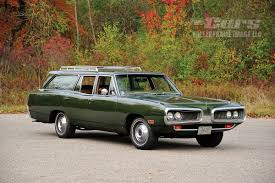
Sleeper or Slug? I really Hate that I need to do this, please forgive me. My business account is new and X has me in a box where my replies don't even show up. Please follow me @NGKsSystems i need to get over 100 Followers to get out of the most restrictive box. Thank you Amy for the follow. @Middlearthfan give her a follow too. Please and thank you. 1970 Dodge Coronet 440
Quality Classics tweet media
English
5
5
28
534
NGKsSystems1
NGKsSystems1@NGKsSystems1·
@Codie_Sanchez Perseverance wins the day every time. But it can so so hard to push through the barriers.
English
0
0
0
0
Codie Sanchez
Codie Sanchez@Codie_Sanchez·
In 2008, Elon was weeks away from bankruptcy. SpaceX had just failed its third launch and Tesla couldn't pay its suppliers. He had $30 million left. His friends begged him to put it all in one company so at least one could survive… But Elon couldn't let either mission die. So he split it. $15 million each. Those companies are now worth a combined $2.3 trillion. Last week I sat down with the man who documented it all. @EricJorgenson spent 5 years studying every single decision Elon made over his career, from his very first companies to today. And put it all together in his Book of Elon. 3 things I learned about Elon after this podcast: • He has an "Idiot Index" to find where he’s overpaying on manufacturing costs. Take any finished part, compare what it costs to what the raw materials inside are worth. The gap between those two numbers is his Idiot Index. He won't accept a ratio above 3. • He fired his scheduler. He wants to be the one deciding what to work on each day, not have that decided for him in two weeks in advance. • He replaced Tesla's entire month-long employee onboarding program (training videos, quizzes, and FAQs) with just one sentence given to employees on day one: "Be so good the customer talks about you at dinner.” It worked just as good. You can steal all Eric’s homework on Elon here: youtube.com/watch?v=m9VzUr… x.com/a16z/status/20…
YouTube video
YouTube
a16z@a16z

Against all odds. Congrats @elonmusk and @SpaceX.

English
28
42
317
45.8K
Alex Finn
Alex Finn@AlexFinn·
I was wrong I've been saying for months that open source AI models are 6 months behind frontier They caught up. GLM 5.2 is as good as Opus 4.8 This changes everything. If you run GLM 5.2 locally no government can take it away. You become sovereign And even if you run through APIs, its a fraction of the cost The battlefield is different now. If open source is as good as frontier, and people have cheaper alternatives, governments can't be as quick to regulate. It will destroy the frontier AI labs All of this is such a massive win for the people If you are not paying attention to local models yet, you are making a tremendous mistake
Z.ai@Zai_org

Introducing GLM-5.2: Frontier Intelligence, Open Weights - Significant improvements in coding and agentic tasks - Strong long-horizon capabilities with a 1M context window - Two levels of reasoning effort: GLM-5.2 (max) pushes the limits, while GLM-5.2 (high) strikes a strong balance between performance and token efficiency - MIT-licensed open weights - Same API pricing as GLM-5.1 Tech Blog: z.ai/blog/glm-5.2 Weights: huggingface.co/zai-org/GLM-5.2 API: docs.z.ai/guides/llm/glm… Coding Plan: z.ai/subscribe Chat: chat.z.ai

English
404
543
5.6K
934.3K
Codie Sanchez
Codie Sanchez@Codie_Sanchez·
You’ll make more if you can just do the boring things longer than everyone else. Most people stay broke chasing shiny.
English
118
70
756
28K
Codie Sanchez
Codie Sanchez@Codie_Sanchez·
The very first business I bought was a laundromat. I made $60k profit in year 1, with less than $100k down. Now I own several businesses doing 9-figures in annual revenue. If I had to do it again with no experience and $0 in the bank, here's exactly what I’d do: 1. Figure out what business is right for you First rule when buying something: You don’t want to resent it the moment you own it. You want it to fit your life and strengths PERFECTLY. I call this finding the “perfect fit”. Few questions to ask yourself: • What industries am I interested or have unfair advantages in? • How much money do I want to make vs invest? • Where do I want it located? • How do I want to finance it? Those answers become your filter for every business that comes your way. So you never fall in love with the wrong deal. 2. Decide how to buy it I’ve heard this statement too many times: “you need $500k saved before you can start.” False. There are lots of ways to buy any business without needing millions. If you have no money: → Sweat equity: Work for a business, add real value, then ask to get paid in equity instead of a paycheck → Earned equity: Help the owner make more money and take a cut of what I generate If you have some cash (and are willing to use it): → SBA loan: bank covers up to 90% of the business cost, you put down the rest → Seller financing: the seller becomes your bank. You put some money down, they get paid from the biz profits over time → Outside investors: find people willing to fund the deal in exchange for a cut of the equity If you’re going to use your own money, start by investing 1% of it for the first deal. That’s enough skin in the game to take it seriously. But not so much that it takes you out if the business goes under. 3. Know where to buy it First, make a free account on BizScout(.)com Then: • Go to “Marketplace” • Filter for your criteria from step 1 • Send inquiries to businesses that match your deal box That's your on-market pipeline. Personally, I’ve had more luck off-market (there’s less competition and you often get better terms). When I first started out, that meant knowing the owner personally, scraping data from Yelp, or physically walking into the business just to start a conversation. Now, you click on "Off-market leads" on BizScout and pull owner contact info directly. 4. Prep for downside risk The first year post-acquisition is the hardest of all. I call it the valley of death. • You're learning how to run the business while running it • Customers and suppliers don’t know you yet • Revenue often dips before it climbs You need to survive this phase before it gets good. So before you sign anything, know exactly how much cash you need to survive if the business goes under. BizScout has a free NWC calculator for this (NWC = Net Working Capital - the cash your business needs to keep running day to day). Plug in: • Monthly fixed costs (payroll, rent, utilities) • Receivables (money customers owe you) • Payables (money you owe vendors) What comes out is your minimum cash cushion (this is what you every day to stay afloat). My rule: Have at least 3-6 months of operating expenses in the bank after you close. - And that’s how to buy your first business in 2026! If you want to see me do it live, I’m running the last biz buying event of the year tomorrow. It’s a 3-day virtual event where I teach: Where to find deals, financing options, and live acquisition breakdowns. (I’m also giving away $5k worth of resources including 90 days of BizScout Pro free, my deal box and financing calculators, and my M&A negotiation guidebook to everyone who joins.) Save your spot here: ↓↓ codiesanchez.com/msm/?utm_sourc…
Codie Sanchez tweet mediaCodie Sanchez tweet media
English
20
25
403
29.8K