
Jeremy Yeung🐻🇭🇰

366 posts

Jeremy Yeung🐻🇭🇰 banner
Jeremy Yeung🐻🇭🇰

Jeremy Yeung🐻🇭🇰

@jeyecrypto

Crypto payment & neobank expert/ @RedotPay/ helped scale to 80% of global crypto card volume/ Growth hacker in Web3/ Emerging markets → Mainstream adoption

Hong Kong เข้าร่วม Aralık 2018
562 กำลังติดตาม284 ผู้ติดตาม
ทวีตที่ปักหมุด
Jeremy Yeung🐻🇭🇰
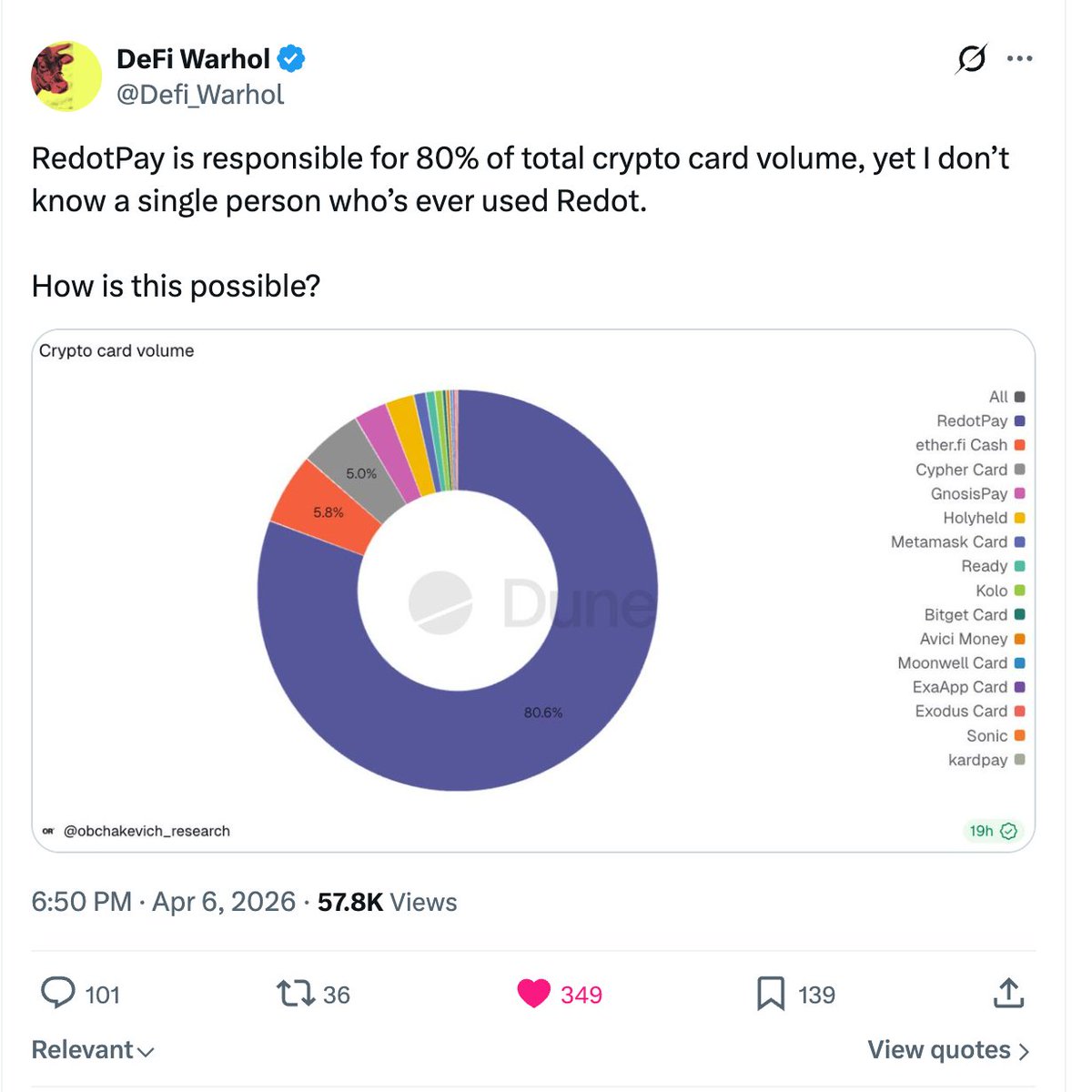
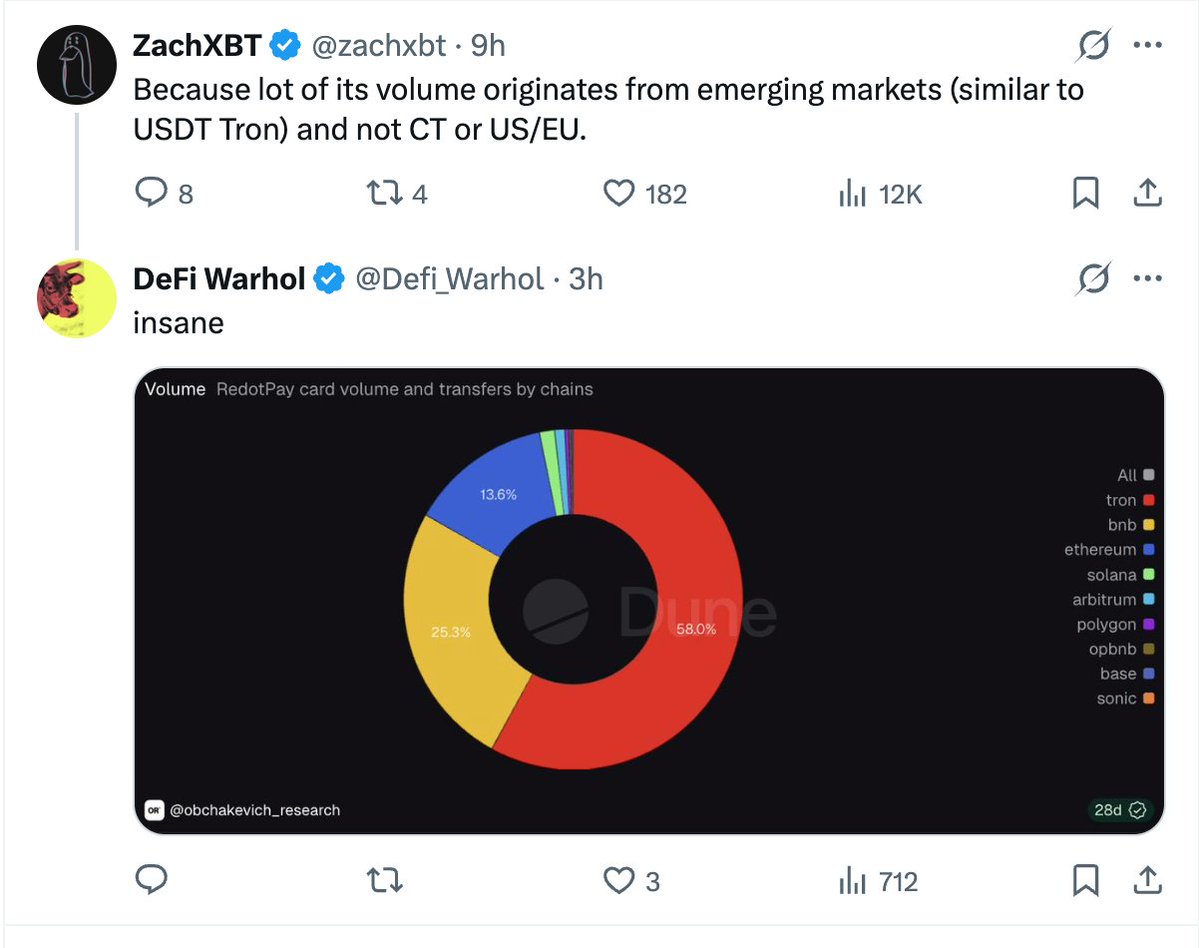
I was one of the earliest people at @RedotPay Let me explain exactly why you've never heard of it. RedotPay didn't build for the English-speaking crypto Twitter crowd. It built for everyone else. Arabic. Hindi. Spanish. Bahasa. Tagalog. Native content, native communities, native trust. You won't find it in your feed because it was never meant for your feed. The users aren't only crypto traders. They're the unbanked. The underbanked. People whose currencies are devaluing faster than they can save. Crypto Twitter is loud. But it's a small room. The real volume lives on Facebook groups in Lagos, TikTok reels in Manila, Instagram in Cairo. Hundreds of thousands of people showing their RedotPay card working at a local store, paying a bill, sending money home. 80% of crypto card volume didn't come from people who know what a DEX is. It came from people who just needed a better way to pay financially. That's the market nobody was watching. RedotPay was.
DeFi Warhol@Defi_Warhol

RedotPay is responsible for 80% of total crypto card volume, yet I don’t know a single person who’s ever used Redot. How is this possible?

English

2
0
5
221
Jeremy Yeung🐻🇭🇰 รีทวีตแล้ว
Sam Boboev
Sam Boboev@samboboev·
Revolut is no longer behaving like a fintech, it is operating like a compounding financial system. In my latest deep dive, I broke down its 2025 performance and what sits underneath the numbers: £4.5B revenue, £1.7B profit, 29% margin, and a 35% ROE that puts it in a different category entirely. But the real story isn’t the scale, it’s the structure. @Revolut has built a model where growth, monetization, and efficiency reinforce each other through product velocity, diversified revenue, and a tightly controlled cost base, turning what looks like expansion into a repeatable algorithm. It’s not one product winning, it’s the system working. This is what happens when a company stops optimizing features and starts engineering compounding. open.substack.com/pub/samboboev/…
English
0
2
6
229
Jeremy Yeung🐻🇭🇰
@Octop3s Adding feature is not enough, adding feature that can match with what regular banks does Plus better than them is the key
English
1
0
0
38
Octopus
Octopus@Octop3s·
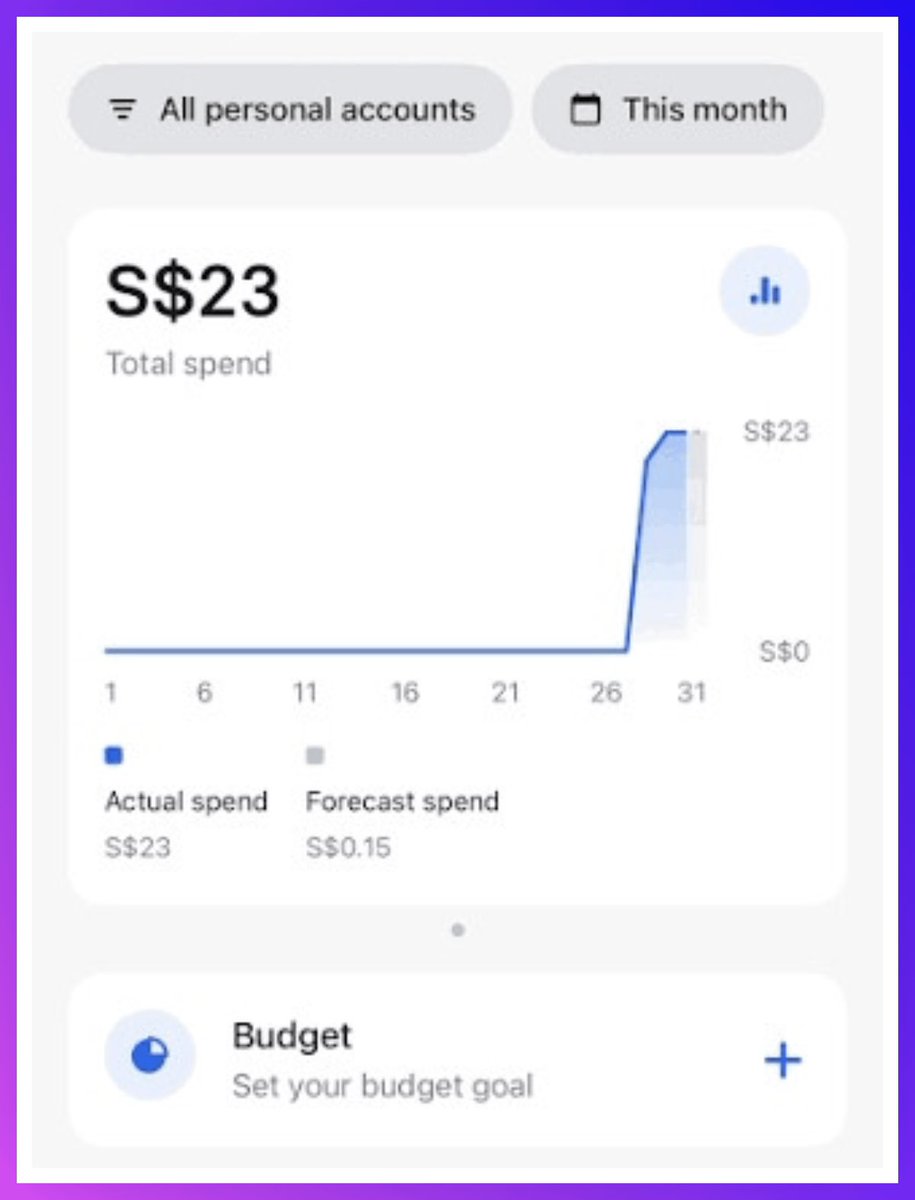
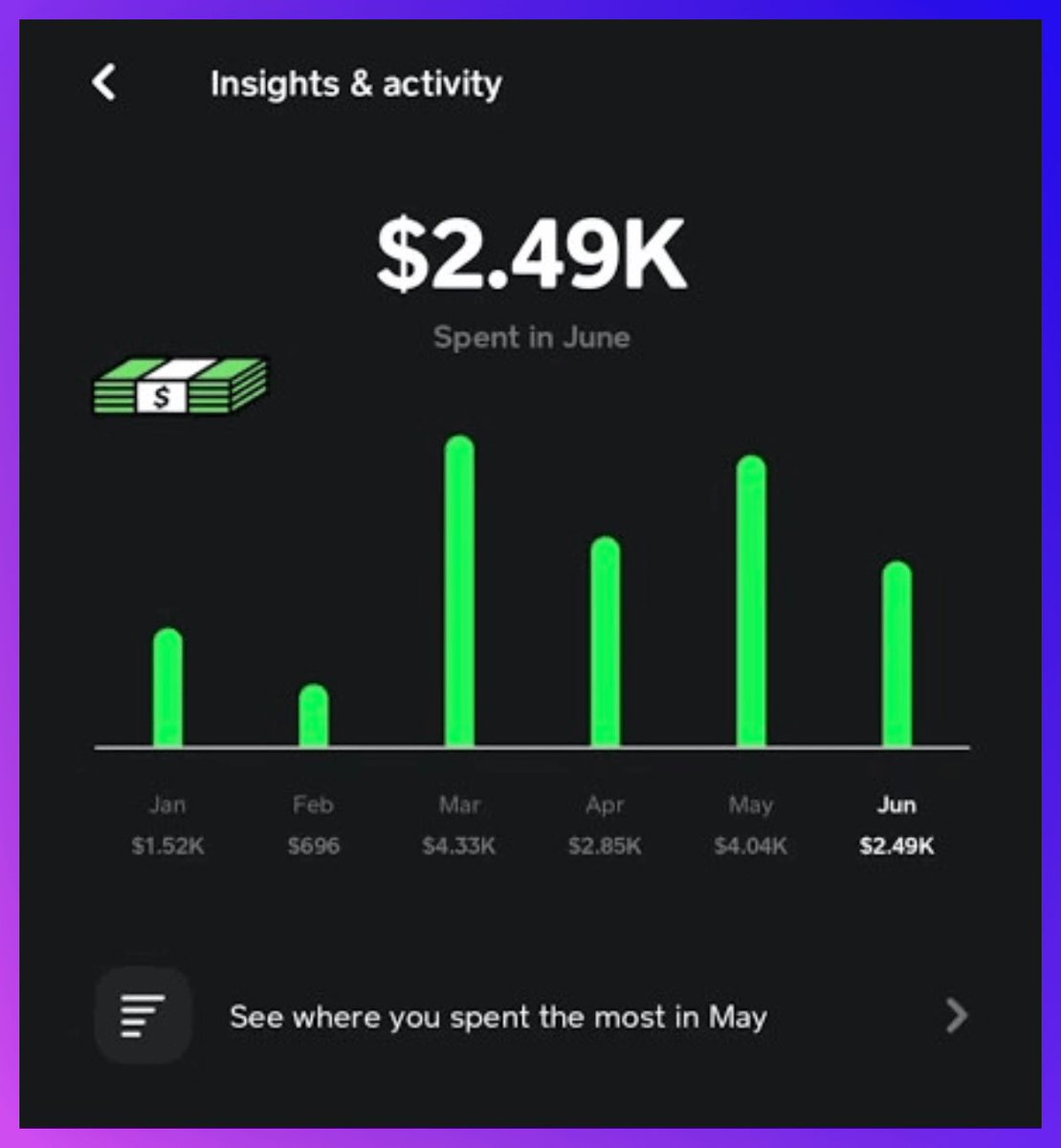
late gm still gm crypto neobanks will start feeling like real banks if you can: • set daily/monthly budgets • schedule payments so you don’t forget • track all expenses, sorted by category we’re still early in this game, but adding features like these would make them much better.
Octopus tweet mediaOctopus tweet media
English
5
1
16
764
Jeremy Yeung🐻🇭🇰
Jeremy Yeung🐻🇭🇰@jeyecrypto·
@camilosaka Right. Local stablecoins in a closed domestic loop are a worse Pix. For now, the use case only makes sense at the border, cross-border payments, remittances, international trade.
English
1
0
0
36
Camilo Sacanamboy
Camilo Sacanamboy@camilosaka·
I’ve been trying to find a real use case for local stablecoins and honestly, I don’t see it. Payments are already being solved locally: PIX in Brazil Bre-B in Colombia Instant. Free. Everywhere. So what are local stablecoins improving? Because right now it looks like: COP → stablecoin → COP Worst result (FX fees). More friction. Yes: - Lower merchant fees - Avoiding taxes like 4x1000 in Colombia But that seems not to be a strong enough incentive to change behavior. Feels like local stablecoins are a solution looking for a problem. No users → no merchants No merchants → no users Dead loop.
English
10
0
8
1.1K
Alex
Alex@obchakevich_·
Crypto cards continue to grow. I’d like to share some analytics for March 2026 to show you what’s changed in the market. @RedotPay continues to lead in both total and monthly volume; despite a negative MoM of -14.5%, it accounts for 75% of the total volume among 14 crypto cards. @AviciMoney (+575%), @BitgetWallet (+233%), and @kardpay (+208%) are currently showing the highest growth rates. Meanwhile, @KoloHub is showing the highest MoM growth at +44%, even though its market share is less than 2%. Which card do you use most often?
Alex tweet media
English
35
30
232
36.4K
Jeremy Yeung🐻🇭🇰
@obchakevich_ @RedotPay Apart from seeing RedotPay dominance in this board, their successful formula worth all crypto products a close look That is building a product that reach to everyone, not just crypto native but for those who really need Stablecoin usage in real life
English
0
0
0
719
Jeremy Yeung🐻🇭🇰
@Octop3s Indeed, they used to have a chance being the dominant one in the card market. But then shifted their focus, being an exchange(Profitable one) The playbook of their card right now make no sense comparing with other players in the market
English
2
0
1
727
Octopus
Octopus@Octop3s·
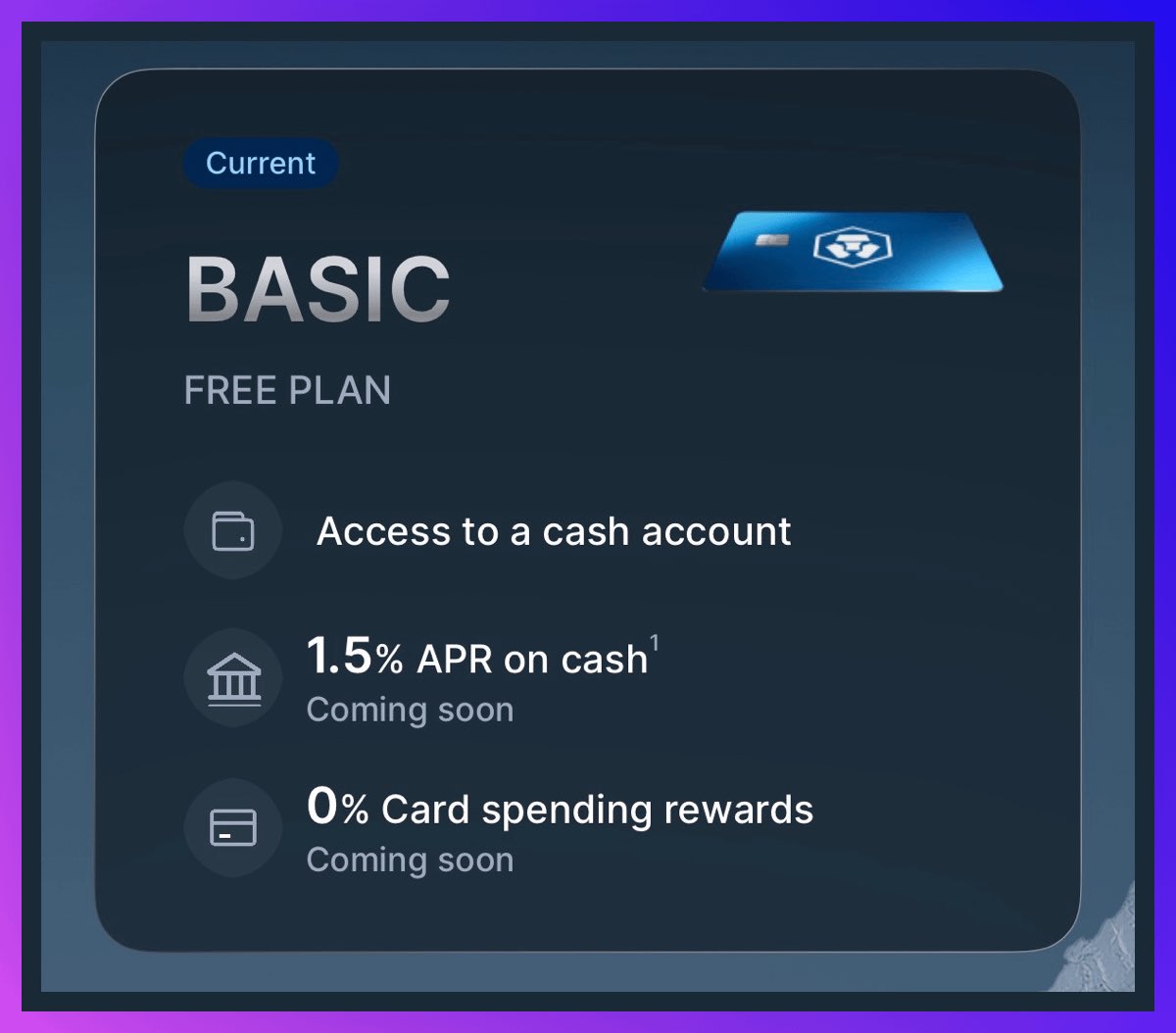
Crypto .com is a lesson to every project. they acted too superior when they were basically one of the only players offering crypto card service. they had a real shot at becoming the default crypto card provider due to how early they were. instead, they gated access with absurd tiers that mainly benefited their token. around 2018–2020, you needed roughly $1k staked for over 100 days just to qualify for card perks. and even when you unlocked it, you could lose access meaning you were basically locking funds for mediocre perks. at the peak, the highest tier (obsidian) reportedly required around $5m completely out of reach for normal users. now that crypto neobanks have democratized access to cards for everyday users, things have changed. basic tiers exist with no subscription or token lockups. something they should’ve done back in 2020. what an L.
Octopus tweet media
English
38
9
145
18K
Jeremy Yeung🐻🇭🇰 รีทวีตแล้ว
Alex
Alex@obchakevich_·
Crypto payment projects raised $3.1B in Q1 2026. In March, total funding reached $2.2B thanks to a $1.8B investment by @Mastercard in @BVNKFinance. Notable projects that received investments in March include @KASTxyz ($80M), @arq_finance ($70M), and @utexocom ($7.5M). Interestingly, 19 deals were closed in March, just as in January, but in January, no single investment stood out as dominant. Therefore, January remains a more active month for investments than March and February combined. In February, 12 deals were completed, but the total amount was modest at $39M. January proved to be more interesting, with a total of $896M. Notable deals included the acquisition of @0xsequence and @Coinme by @0xPolygon Labs for $250M. There were also investments in @raincards - $250M from ICONIQ Capital, Galaxy, Dragonfly and other funds. The first quarter proved productive, with 50 deals and a total investment amount of $3.1B.
Alex tweet media
English
2
4
21
3.2K
Jeremy Yeung🐻🇭🇰 รีทวีตแล้ว
DeFi Warhol
DeFi Warhol@Defi_Warhol·
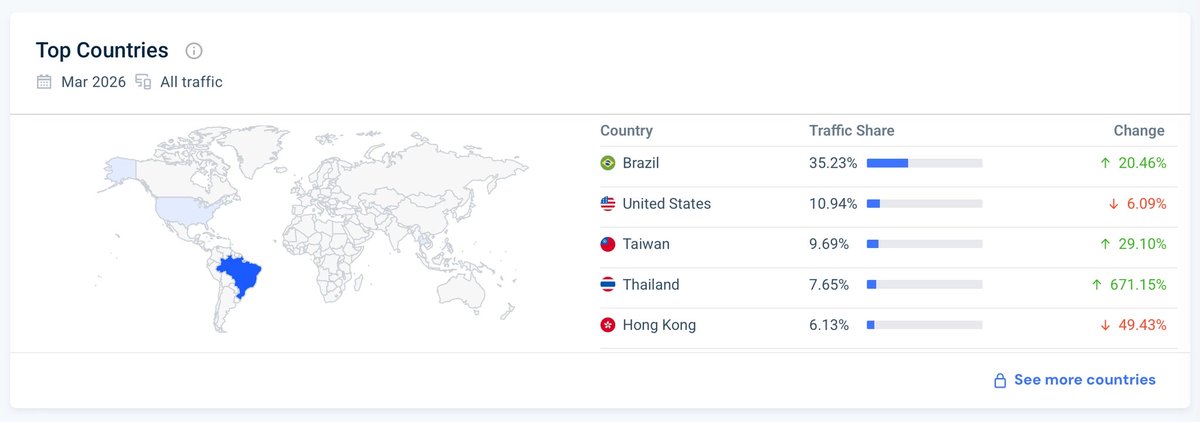
Why is Brazil a top country for @ether_fi usage? Pretty simple. I think a lot of people there see EtherFi more like a crypto neobank than a DeFi protocol. → Move local money in through PIX → App converts it to digital dollars → Either spend it or park it inside EtherFi To me, the appeal is obvious because it gives people a cleaner way to move money, get dollar exposure, and use crypto in a way that feels practical. I like seeing crypto solve real money problems.
DeFi Warhol tweet media
English
45
24
223
25.8K
Jeremy Yeung🐻🇭🇰
@Tresori_kalp @Revolut Exactly right. The AI layer is only as good as the data layer beneath it. For crypto neobanks especially, this is the unsolved problem. On-chain, off-chain, multi-chain, fiat rails, the payment. The data is fragmented by design.
English
0
0
0
3
Tresori
Tresori@Tresori_kalp·
@jeyecrypto @Revolut AI is becoming the interface layer for finance , But as neobanks add intelligence on top, the real challenge is still underneath clean data, unified visibility, and control across assets and flows. Without that, even the best AI won’t deliver real value.
English
1
0
1
24
Jeremy Yeung🐻🇭🇰
This is the next battleground for every neobank. @Revolut just launched AIR, an AI financial assistant that tells you exactly where your money is going. Every neobank needs an AI layer. A real financial assistant that knows your spending, flags your patterns, and helps you make better decisions. For crypto neobanks especially, this is the unlock.
Revolut@Revolut

Meet AIR. We’re rolling out gradually to UK customers first, with more countries launching soon.

English
1
0
0
98
Jeremy Yeung🐻🇭🇰
I was one of the earliest people at @RedotPay Let me explain exactly why you've never heard of it. RedotPay didn't build for the English-speaking crypto Twitter crowd. It built for everyone else. Arabic. Hindi. Spanish. Bahasa. Tagalog. Native content, native communities, native trust. You won't find it in your feed because it was never meant for your feed. The users aren't only crypto traders. They're the unbanked. The underbanked. People whose currencies are devaluing faster than they can save. Crypto Twitter is loud. But it's a small room. The real volume lives on Facebook groups in Lagos, TikTok reels in Manila, Instagram in Cairo. Hundreds of thousands of people showing their RedotPay card working at a local store, paying a bill, sending money home. 80% of crypto card volume didn't come from people who know what a DEX is. It came from people who just needed a better way to pay financially. That's the market nobody was watching. RedotPay was.
DeFi Warhol@Defi_Warhol

RedotPay is responsible for 80% of total crypto card volume, yet I don’t know a single person who’s ever used Redot. How is this possible?

English

2
0
5
221
Jeremy Yeung🐻🇭🇰 รีทวีตแล้ว
The Daily Block
The Daily Block@thedailyblock·
🚨JUST IN: Crypto card usage hits $600M in monthly volume, with USDC gaining ground on USDT in payment activity.
The Daily Block tweet media
English
65
9
113
11K
Jeremy Yeung🐻🇭🇰
Yes. The card is just the entry point. What keeps users is the full experience and ecosystem built around their actual needs. One slight pushback on the "emerging markets = low volume" assumption though. Volume doesn't only come from whales. It comes from frequency as well. I saw this firsthand at @RedotPay. In the early days, the majority of volume came from emerging markets. Not only from a few big spenders, but from a large base of real users with real daily payment needs..doing paypal transfer, buying tiktok/facebook ads, purchase from Aliexpress...
English
1
0
1
134
Alvin Kan
Alvin Kan@alvin_kan·
Sharing more thoughts around @BitgetWallet here after reading the post by @Defi_Warhol. (This post might be a little long.) Firstly, good to see data showing Bitget Wallet at #3 spot in terms of weekly txns and users. Data shows we have 95k card txns and 14k card users in the past week alone. Not bad for a start, but only a tiny fraction of where we're aiming for. You'll notice however that we aren't in the top spot for vol. Truth is that a big proportion of our users are not whales but retail users, and many from emerging markets. This is in line with our focus on bringing the benefits of stablecoin payments and digital dollars to users that need it the most (of course we'll welcome more whale users too 😀). We offer crypto cards in 50+ markets today, and will soon open up more. Argentina was the most recent launch, and soon we'll be in Africa and South Asia too. What we've learnt is that offering cards is only one piece of the puzzle. To really bring in mass retail users, there's a whole list of wallet infra to build that's interconnected. First u need features to offer a holistic end-to-end experience. Ultimately, many retail users don't just want a card. They want a digital dollar account with flexibility to save, pay and grow their money. We're talking about.. - onramp with low fees - VA or transfer-in from bank account - attractive earn yields - easy gas management/sponsorship - QR and other complementary payment modes - payouts ... And then there's a full suite of wallet features that's required to make it really safe and easy for non-crypto native folks to come in. For example, we now offer an 'onchain checkout' system. This means users can top up their card balance with any token from any chain with one click. A great example is in Argentina, where card issuers may only accept USDC but 90% of users use USDT instead. It's part of our job to build features that work invisibly to make things easier for users. Much easier, not just easy by web3 standards. Another one is customer support system, which requires a whole operating SOP, AI/systems integration and globally capable team to handle it professionally and promptly. Not all startup teams can ace this. And these are probably just a fraction of the things we do at Bitget Wallet. Day in, day out. To create a good user experience. If you're in the crypto neobank or crypto card space, happy to connect and chat to learn more mutually.
DeFi Warhol@Defi_Warhol

Crypto Cards Weekly Digest: March 30-April 6 Volume: RedotPay: $87.76M EtherFi: $14.92M KAST: $14.35M Karta: $6.38M Tria: $4.93M Cypher: $2.57M Gnosis: $2.22M Ready: $1.79M Other: $7.46M Total: $142.4M Transactions: EtherFi: 190,319 RedotPay: 102,582 Bitget Wallet: 95,488 BFinance: 51,186 Gnosis: 47,491 Safepal: 44,430 Avici: 25,813 MetaMask: 23,719 Other: 50,694 Total: 631,722 Users: RedotPay: 59,030 EtherFi: 19,587 Bitget Wallet: 13,981 BFinance: 13,522 Safepal: 6,738 Tria: 6,025 Gnosis: 5,376 Ready: 4,434 Other: 9,095 Total: 137,788 Some interesting stats: RedotPay Dominance: 61% (down 1% WoW) Tria was the bigger gainer, with a ~50% volume increase WoW. 34% of all transactions were made on Tron. It holds the lead, followed by BNB with 14%. h/t @datadashboards @tstereth for the great dashboards

English
10
16
68
13.6K
Jeremy Yeung🐻🇭🇰
This is the piece the industry has been missing. Not a new wallet. Not another app to download. The same tap, the same QR — just settling on-chain. Zero behavior change for the consumer. Zero middlemen for the merchant. That's how crypto payment project win the habit problem.
victorzh.eth@victorzh

Three ways to pay. No Visa. No banks. Card tap. Phone tap. QR scan. All settling on-chain in seconds through the same pipeline. Same EMV standard every terminal already reads. Our own IIN from ISO. P-256 cryptography. Fully decentralized. Non-custodial. No middlemen. @OpenPasskey | Built on @base youtu.be/mgDm9kYAw2k

English
2
1
7
469
Jeremy Yeung🐻🇭🇰 รีทวีตแล้ว
Alex
Alex@obchakevich_·
Since I was the one who created this analysis of @RedotPay transaction volume, I’d like to clarify @zachxbt point that the majority of volume flows through developing regions. This take is only half true, because in Q4 2025, the leaders among all regions were Europe, North America, and APAC (Australia, Japan, South Korea, and others), which accounted for about 40%. Europe and North America also showed the highest growth in metrics for the entire year of 2025.
Alex tweet mediaAlex tweet media
English
5
3
39
4.1K
Jeremy Yeung🐻🇭🇰
@tfadell Most product teams build in a silo and hand the story to marketing after. That's why so many products miss and nobody in the room actually felt what the user feels.
English
0
0
0
25
Tony Fadell
Tony Fadell@tfadell·
Most tech companies break out product management and product marketing into two separate roles: Product management defines the product and gets it built. Product marketing wires the messaging- the facts you want to communicate to customers- and gets the product sold. But from my experience that's a grievous mistake. Those are, and should aways be, one job. There should be no separation between what the product will be and how it will be explained- the story has to be utterly cohesive from the beginning. Your messaging is your product. The story you're telling shapes the thing you're making. I learned story telling from Steve Jobs. I learned product management from Greg Joswiak. Joz, a fellow Wolverine, Michigander, and overall great person, has been at Apple since he left Ann Arbor in 1986 and has run product marketing for decades. And his superpower- the superpower of every truly great product manager- is empathy. He doesn't just understand the customer. He becomes the customer. So when Joz stepped into the world with his next-gen iPod to test it out, he fiddled with it like a beginner. He set aside all the tech specs- except one: battery life. The numbers were empty without customers, the facts meaningless without context. And, that's why product management has to own the messaging. The spec shows the features, the details of how a product will work, but the messaging predicts people's concerns and finds way to mitigate them. - #BUILD Chapter 5.5 The Point of PMs
English
81
234
2.4K
794.5K
Jeremy Yeung🐻🇭🇰
This is the most honest take on stablecoin adoption I've heard. Users don't choose crypto. They choose better. The on with lower fees,stable value and money that just works. If a neobank delivers that built on stablecoin rails underneath, nobody asks what blockchain it runs on. They just use it. Crypto's biggest adoption killer was never regulation. It was bad UX. The moment you hide the complexity and lead with the outcome, the "crypto vs. traditional finance" debate becomes irrelevant.
a16z crypto@a16zcrypto

What consumer stablecoin adoption could look like, according to @nlevine19: “If you start looking at some of these neobanks that are built on stablecoin rails, from the consumer’s perspective, they don’t even realize that they’re using stablecoins.” “A lot of it is building product on the front end and doing a better job of hiding away the crypto component.” “For a lot of these things, I don’t think it matters that they know it’s a stablecoin or not.”

English
1
0
1
125