Ken Brookler

210 posts

Ken Brookler

Ken Brookler

@kenbrookler

เข้าร่วม Haziran 2009
422 กำลังติดตาม114 ผู้ติดตาม
Ken Brookler รีทวีตแล้ว
Dr David Unwin
Dr David Unwin@lowcarbGP·
Our 151st case of drug free T2D remission 🥳Just look how high his blood sugars were and yet he avoided drugs. He is so proud and feels properly well😊 This is how we did it nutrition.bmj.com/content/early/… Remember starch is ‘soon to be sugar’👍
Dr David Unwin tweet media
English
16
83
334
47.4K
Ken Brookler รีทวีตแล้ว
Isabella Cooper
Isabella Cooper@I_mitochondria·
Tumour cells voraciously consume glucose as their predominant energy source for their rapid and excess cellular growth and division. They also take up fatty acids in the context of plentiful glucose provision, to support their upregulated aerobic fermentation/glycolysis.   This research paper hones in on the concept of starving out the tumour cells by transplanting modified adipocytes (fat cells) that have more mitochondria which results in  beige adipocytes.  Endogenous therapeutic ketosis as a result of maximally restricting dietary carbohydrates, also known as Ketogenic Metabolic Therapy (KMT) increases the beiging of adipocytes.  KMT also directly starves tumour cells by restricting the availability of glucose. The decrease in dietary derived glucose (starchy carbohydrates such as potatoes, rice, noodles, wheat, flour, sugar, fruit, honey), results in the decrease of the growth and division signalling hormones insulin and IGF-1.  Chronic excess insulin (hyperinsulinaemia) signalling, harms mitochondria, causing an increase in reactive oxygen species (ROS). Subsequently up-regulating hypoxia signalling cascades that facilitate the increase in aerobic fermentation/glycolysis, which is the avid uptake of glucose to fuel tumour cell growth. Hyperinsulinaemia driven excess ROS, causes damage to the mitochondria, which govern cell division rate and are at the top of the hierarchy in healthy controlled cell death, apoptosis, which cancer cells evade.  KMT resolves hyperinsulinaemia, thus protecting mitochondria, reducing the signalling from damaged mitochondria that increase cell division mechanisms in tumour cells. Furthermore, low fibre KMT improves stomach acidity regulation (a more acid stomach, which is good), increasing the production, secretion and absorption of bile which is rich in the sulphonic acid taurine.  Taurine is essential in bile, in order to absorb the fat soluble vitamins A, D, E and K, as well as the essential fatty acids DHA and AA. Taurine is essential for healthy mitochondria, by regulating the quality of mitochondrial gene translation in the production of the electron transport chain (ETC) proteins. Taurine improves the catalytic capacity of ETC proteins, which reduces mitochondrial ROS mediated hypoxia signalling, that regulates tumour cell increase in glucose consumption via aerobic glycolysis/fermentation (reducing aerobic fermentation). Absorption of taurine rich bile increases the beiging of adipose tissue. Thus ketogenic metabolic therapy provides a way to modify one’s own fat cells to outcompete tumour cells for nutrients, whilst also directly depriving cancer cells of excess glucose and removing the excess growth factor hormone signalling, to grow and divide, by insulin and IGF-I.
Isabella Cooper tweet media
English
10
36
132
7.8K
Ken Brookler รีทวีตแล้ว
Isabella Cooper
Isabella Cooper@I_mitochondria·
Our newest paper is now published! Ketosis Suppression and Ageing (KetoSAge) Part 2: The Effect of Suppressing Ketosis on Biomarkers Associated with Ageing, HOMA-IR, Leptin, Osteocalcin, and GLP-1, in Healthy Females Metabolic dysfunctions are among the best documented hallmarks of ageing. Cardiovascular disease, Alzheimer’s disease, cancer, type 2 diabetes mellitus, metabolic-dysfunction-associated steatosis liver disease, and fragility fractures are diseases of hyperinsulinaemia that reduce life and healthspan.  We studied the effect of suppressing ketosis in 10 lean (BMI 20.5 ± 1.4), metabolically healthy, pre-menopausal women (age 32.3 ± 8.9 years) maintaining nutritional ketosis (NK) for an average of 3.9 years (± 2.3) who underwent three 21-day phases: nutritional ketosis (NK; P1), suppressed ketosis (SuK; P2), and returned to NK (P3).  Results: Ketosis suppression significantly increased: ➡️ insulin 1.83-fold (p = 0.0006) 💥 ➡️ glucose 1.17-fold (p = 0.0088)💥 ➡️ homeostasis model assessment for insulin resistance (HOMA-IR) 2.13-fold (p = 0.0008)💥 ➡️ leptin 3.35-fold (p = 0.0010) 💥 ➡️ total osteocalcin 1.63-fold (p = 0.0138) 💥 ➡️ uncarboxylated osteocalcin, 1.98-fold (p = 0.0417) 💥 Suppressing ketosis significantly decreased: ➡️ beta-hydroxybutyrate, 13.50-fold (p = 0.0012) and 💥 ➡️ glucagon-like peptide-1 (GLP-1), 2.40-fold (p = 0.0209). 💥 ☀️Sustained NK showed no adverse health effects and may mitigate hyperinsulinemia. ☀️All biomarkers returned to basal P1 levels after removing the intervention for SuK, indicating that metabolic flexibility was maintained with long-term euketonaemia. Awesome co-authors @Yvoni_Kyr @AdrianSotoMota @kenbrookler @Brads_science @_kurtisedwards @_LucyPetagine mdpi.com/2227-9059/12/7…
Isabella Cooper tweet media
English
19
99
298
42.4K
Ken Brookler รีทวีตแล้ว
Isabella Cooper
Isabella Cooper@I_mitochondria·
Awe thank you 🤗. @KetoLive was such a great retreat style conference superbly organised by Josephine Barbarino. So many brilliant medical and scientific researchers coming together that has sprung-boarded new projects. It was also fantastic to see many medical professionals openly keen to learn and implement ketogenic metabolic therapy into their patient care practices. They are leading the way to changing the current sickness management “health care”, into treating root causes to regain health. @drwafaafxmed @DominicDAgosti2 @AdrianSotoMota
Isabella Cooper tweet mediaIsabella Cooper tweet media
Drwafaafxmed@drwafaafxmed

@I_mitochondria … you are a great asset to @ketolive conference… a pleasure to listen to you on stage and hallways 😇🌷💗

English
0
7
36
4.3K
Ken Brookler รีทวีตแล้ว
Isabella Cooper
Isabella Cooper@I_mitochondria·
You know that feeling when you hang out with like minded curious efficiency seeking, self doubting, mechanisms obsessed, problem solving passionate people ?…well, I was in heaven as one geeky nerd to another!
Dave Feldman@realDaveFeldman

I have to say, I had one of the most meaningful conversations last night with @AdrianSotoMota & @I_mitochondria. These two truly possess the soul of science. #KetoLive
English
8
6
99
11.4K
Ken Brookler รีทวีตแล้ว
Isabella Cooper
Isabella Cooper@I_mitochondria·
Staying home to raise my girls when they were younger was harder than doing my PhD. It is more than a job-career-lifestyle. It’s THE job of all jobs and career of careers. Homemaker should not be considered “staying at home instead of at work”, it is at work 24/7, there is no 9 till 5pm, no paid holidays, no sick leave and no public holidays. Choosing to NOT stay at home and do one’s best to raise the next generation to the best of one’s capabilities is actually the easier option (I talk about this in the context of mothers who have the choice to stay home, and not the majority of women who have to work and be a homemaker). Stay at home mothers and wives are the chief of operations officers, radio control tower and executive PAs on top of nurse, nutritionist, chef, psychologist and much more all rolled into one hugely responsible job. The distain third and fourth wave feminists have for wife and motherhood is anti-woman. That kind of feminism essentially wants to do away with what makes woman amazing and unique in what she offers the world and is capable of. The freedom to choose one’s path is important. Womanism recognises that it is what makes us uniquely DIFFERENT to men, that gives stay at home wives and mothers their super powers!
English
5
6
58
2.8K
Ken Brookler รีทวีตแล้ว
Isabella Cooper
Isabella Cooper@I_mitochondria·
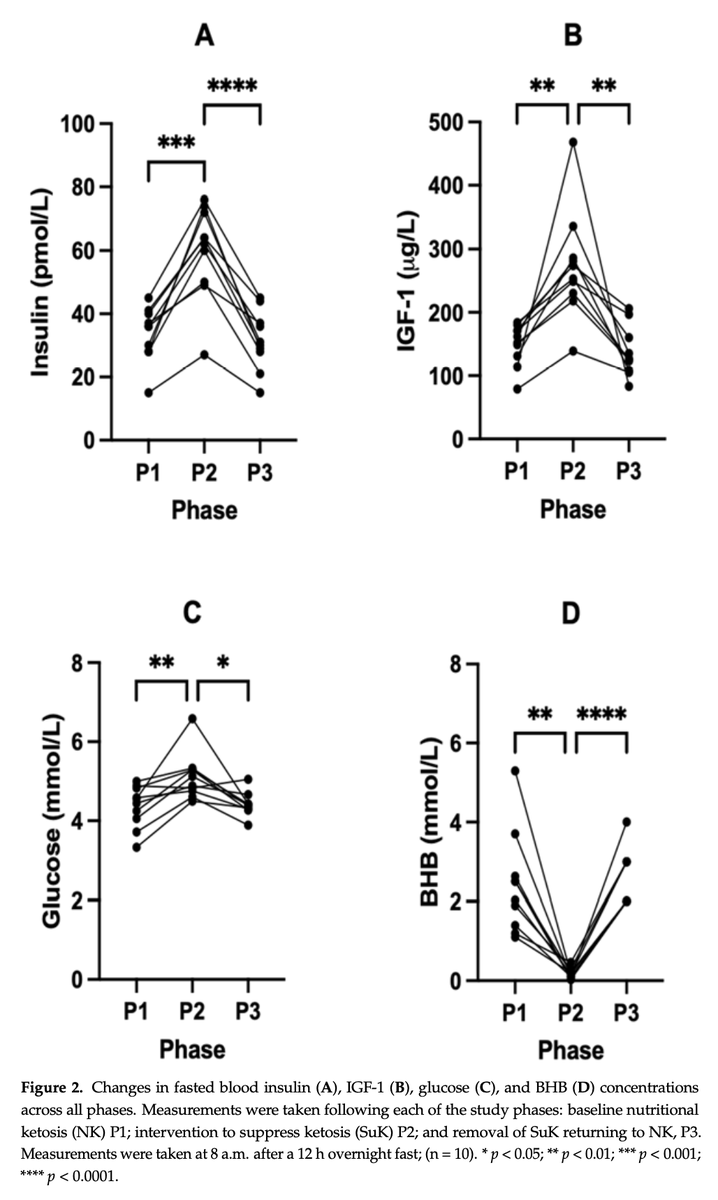
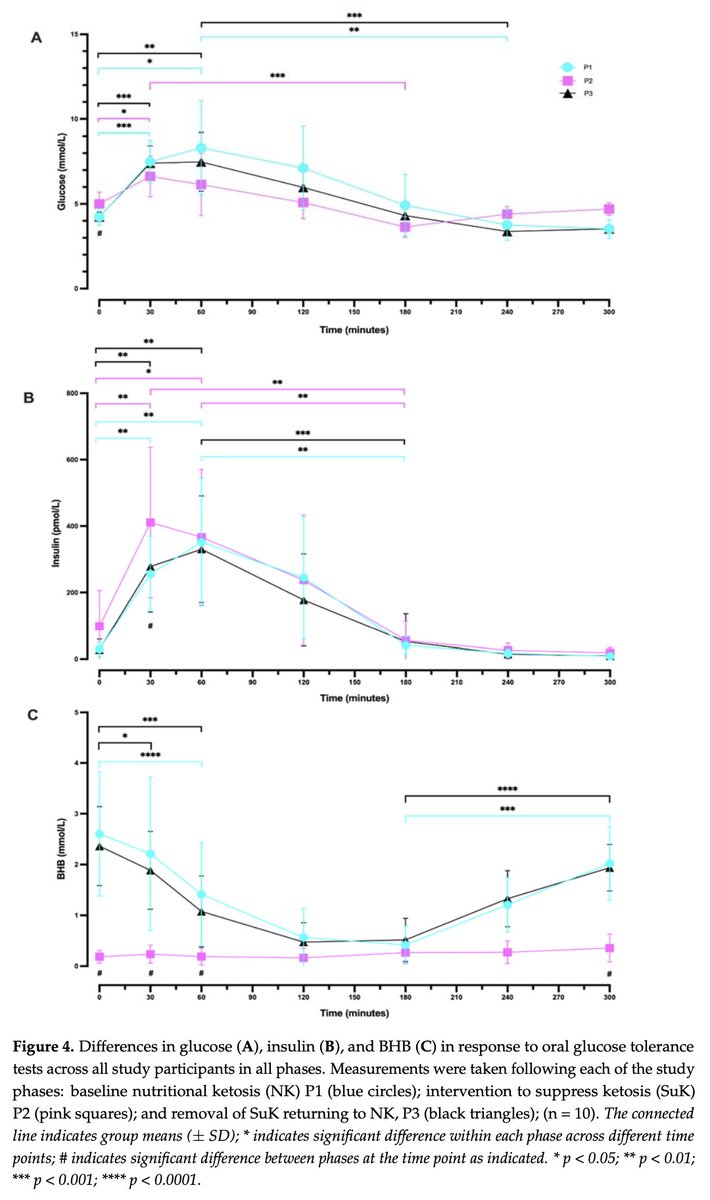
Our open-labelled, non-randomised cross-over trial is published. We studied the effects of short-term ketosis-suppression in healthy women on long-standing ketosis. Ten lean (BMI 20.5 ± 1.4), metabolically healthy, pre-menopausal women (age 32.3 ± 8.9) maintaining nutritional ketosis (NK) for > 1 year (3.9 years ± 2.3) underwent three 21-day phases: nutritional ketosis (NK; P1), suppressed ketosis (SuK; P2), and returned to NK (P3). (66 days in total with a 6 month qualifying lead in) Results: Adherence to each phase was confirmed with daily capillary BHB tests (P1 = 1.9 ± 0.7; P2 = 0.1 ± 0.1; and P3 = 1.9 ± 0.6 mmol/L). Ketosis suppression significantly increased: 👉Insulin, 1.78-fold from 33.60 (± 8.63) to 59.80 (± 14.69) mmol/L (p = 0.0002) 👉IGF1, 1.83-fold from 149.30 (± 32.96) to 273.40 (± 85.66) µg/L (p = 0.0045) 👉Glucose, 1.17-fold from 4.36 (± 0.53) to 5.12 mmol/L (± 0.59, P2; p = 0.0088) 👉Respiratory quotient, 1.09-fold 0.66 (± 0.05) to 0.72 (± 0.06; p = 0.0427) 👉PAI-1, 13.34 (± 6.85) to 16.69 (± 6.26) ng/mL (p = 0.0428). 👉VEGF, EGF, and monocyte chemotactic protein also significantly increased, indicating a pro-inflammatory shift. 👉Sustained ketosis showed no adverse health effects and may mitigate hyperinsulinemia without impairing metabolic flexibility in metabolically healthy women. Conclusions: Evolutionary evidence suggests that ancestral populations were predominantly adapted to patterns of intermittent and time-restricted feeding, as opposed to continuous nutritional intake, rich in farinaceous and sucrose carbohydrates that stimulate bolus insulin secretion. The escalating prevalence of T2DM, obesity, CVD, AD, and cancer observed in populations adhering to multiple substantial carbohydrate-dominated meals in developed nations is a testament to this. Individuals maintaining long-standing habitual NK, when subjected to 21 days of consuming carbohydrate to suppress ketosis, followed with restricting carbohydrate, reverted to an evolutionary ketotic state within one day, indicate metabolic flexibility and health. The negative changes in biomarkers associated with chronic diseases and ageing, which occur from a one-time excursion in a 1-year period of 21 consecutive days of suppressing ketosis, are rapidly restored after restoring the baseline dietary lifestyle of carbohydrate restriction which does not overstimulate insulin demand and secretion. Our data show that long-standing NK appears to provide major health benefits in the maintenance of euglycaemia, with low insulin and IGF-1, the triad of markers most strongly associated with chronic diseases and biological ageing. NK serves as a reliable surrogate marker for these parameters to understand an individual’s metabolic phenotype, and therefore risk. This study was conducted to establish a detailed metabolic phenotype biomarker profile in a long-standing healthy ketosis cohort, providing a NK control group for other studies to establish metabolic phenotypes in people with cancer, CVD, AD, T2DM, and ageing, and to assess treatment efficacy using KMT in gaining better health. Sustained NK may mitigate hyperinsulinemia without impairing metabolic flexibility and carbohydrate tolerance in metabolically healthy individuals. Maintaining low insulin requirement and IGF-1 levels through endogenous NK may offer lower chronic disease risk, resulting in benefits to both lifespan and healthspan. mdpi.com/1422-0067/24/2… Awesome co-authors: @Yvoni_Kyr @_kurtisedwards @_LucyPetagine @tnseyfried @TommyDeeMD @ascarbs @jacomesandra @AdrianSotoMota @kenbrookler @valennutrition @NovaesVanusa @Brads_science
Isabella Cooper tweet mediaIsabella Cooper tweet media
English
75
226
762
329.9K
Ken Brookler รีทวีตแล้ว
Isabella Cooper
Isabella Cooper@I_mitochondria·
Brilliant card sent to me from awesome friends ⁦⁦@zoeharcombe⁩ and Andy
Isabella Cooper tweet media
English
2
7
26
1.9K
Ken Brookler รีทวีตแล้ว
Isabella Cooper
Isabella Cooper@I_mitochondria·
Leukaemia cells subvert systemic glucose metabolism to support their growth via inducing IGFBP1 production from adipose tissue to mediate insulin sensitivity & induce gut dysbiosis, & serotonin loss. Low serotonin ➡️⬆️glucagon Leukaemia cells 🧡glucose ncbi.nlm.nih.gov/pmc/articles/P…
English
0
9
22
0
Ken Brookler รีทวีตแล้ว
Dr. Sarah
Dr. Sarah@DrSarahHallberg·
Sarah would have been so sad to hear of the loss of Dr. Adele Hite, a fellow pioneer for the science/practice of reversing type 2 diabetes. It's such an honor that Adele chose to make our new group, Reversing T2, part of her legacy. So grateful! @ahhite gofundme.com/f/dr-sarahs-le…
English
3
23
138
0
Ken Brookler รีทวีตแล้ว
Priyanka Wali, MD
Priyanka Wali, MD@WaliPriyanka·
“Nothing in medical school prepares you to understand human beings.” - @DrGaborMate
English
0
1
4
0
Ken Brookler รีทวีตแล้ว
Cate Shanahan, MD
Cate Shanahan, MD@drcateshanahan·
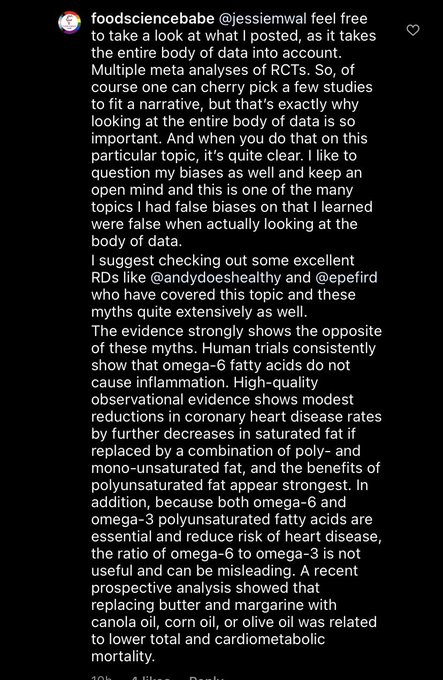
Folks who defend seed oils as healthy are doing exactly what the seed oil/big food/pharma/sickkness industry syndicate wants them to do: regurgitating fake science. Here's an example from Anon who sent with hope I could respond to these allegations 1/3
Cate Shanahan, MD tweet media
English
16
10
70
0
Ken Brookler รีทวีตแล้ว
Nina Teicholz, PhD
Nina Teicholz, PhD@bigfatsurprise·
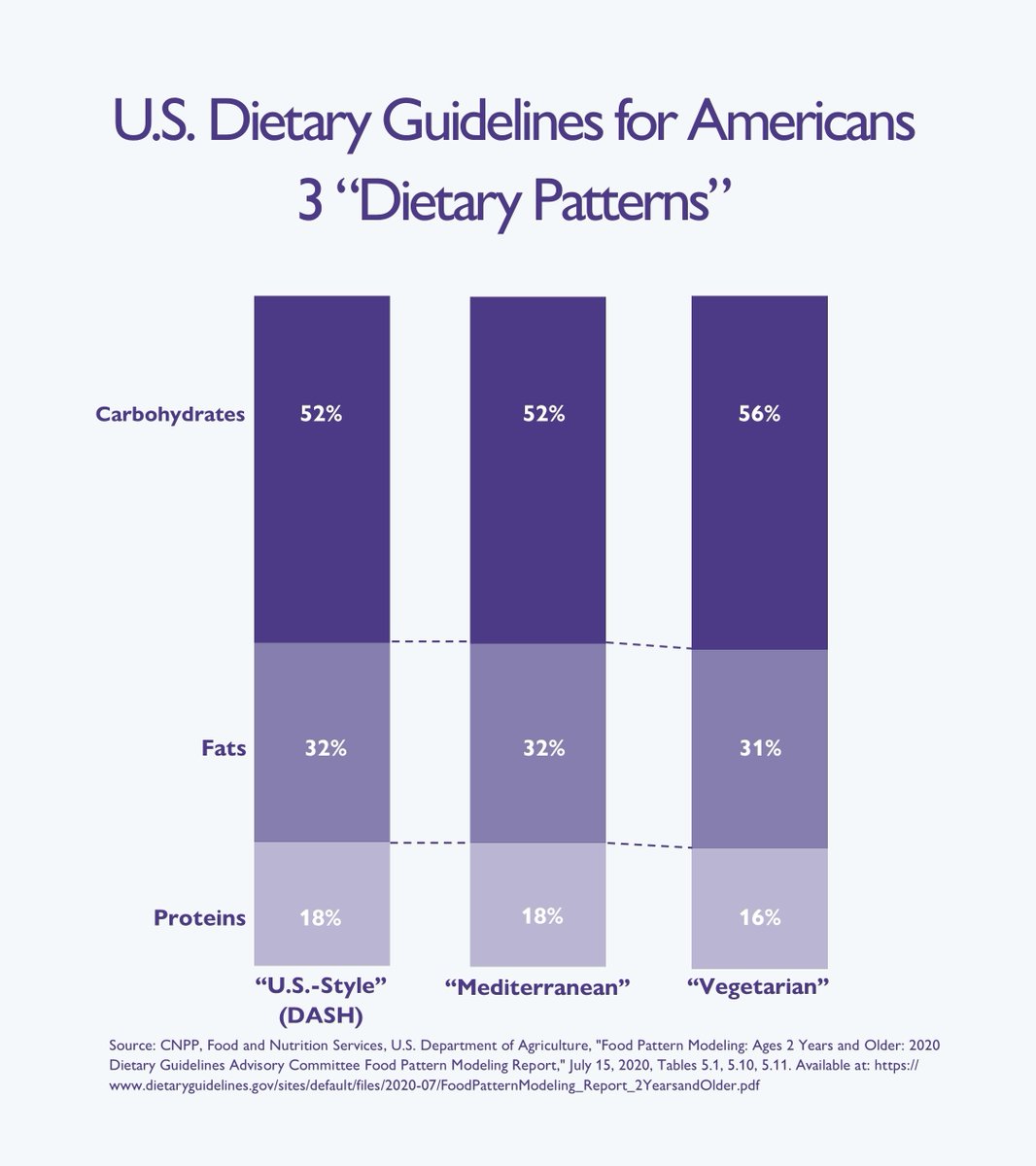
This is what the US gov't tells all Americans to eat. Carbohydrates turn to simple sugar upon digestion, and chronic high blood sugar leads to T2 diabetes, our most costly, devastating disease--also a major risk factor in poor Covid outcomes So this advice...#misinformation?🤔🧐
Nina Teicholz, PhD tweet media
English
32
140
449
0
Ken Brookler รีทวีตแล้ว
Isabella Cooper
Isabella Cooper@I_mitochondria·
Ivermectin, a potential anticancer drug. Ivermectin reported to inhibit proliferation of several tumor cells by regulating multiple signaling pathways. This paper reviews the mechanisms IVM inhibits development of various cancers and promotes apoptosis sciencedirect.com/science/articl…
English
19
141
380
0
Ken Brookler รีทวีตแล้ว
Isabella Cooper
Isabella Cooper@I_mitochondria·
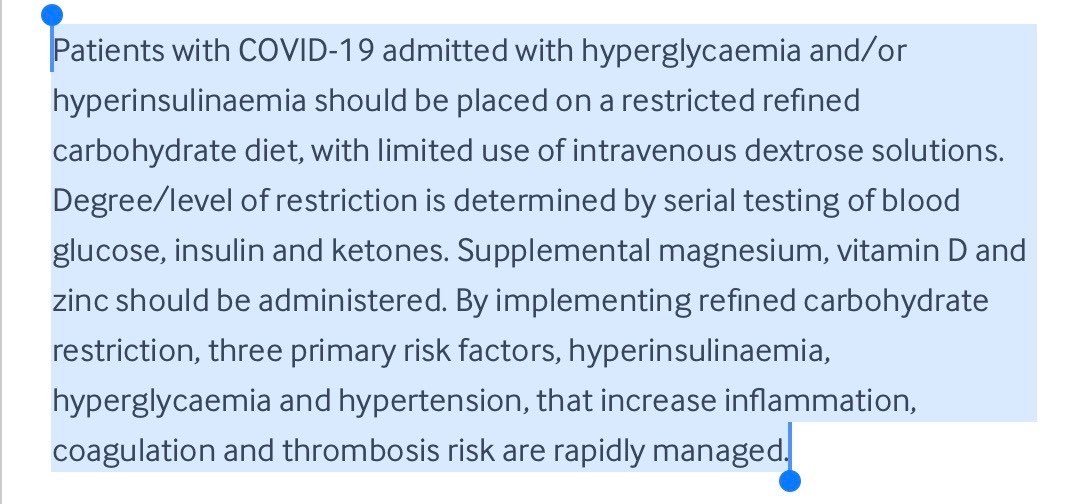
Lowering blood insulin levels could lower your risk of getting COVID-19 Researchers from Osaka University find that SARS-CoV-2 binds to a cell-surface protein whose expression is promoted by high blood insulin levels in older, obese, and diabetic individuals
Guðmundur Jóhannsson@gfj1979

“Our findings suggest that a high blood insulin level is an important risk factor that can predispose older, obese, and diabetic individuals to COVID-19 infection.” @DrRagnar @DrAseemMalhotra @ProfTimNoakes @I_mitochondria @gerdosi @FatEmperor @Mangan150 resou.osaka-u.ac.jp/en/research/20…

English
1
7
17
0