پن کیا گیا ٹویٹ

ceci n'est pas un dragon
Français
insert diffuse diverge solve subtract advect draw
605 posts

@wizardgamedev
Making a game about being a wizard in a world with fluid dynamics & symbolic magic.


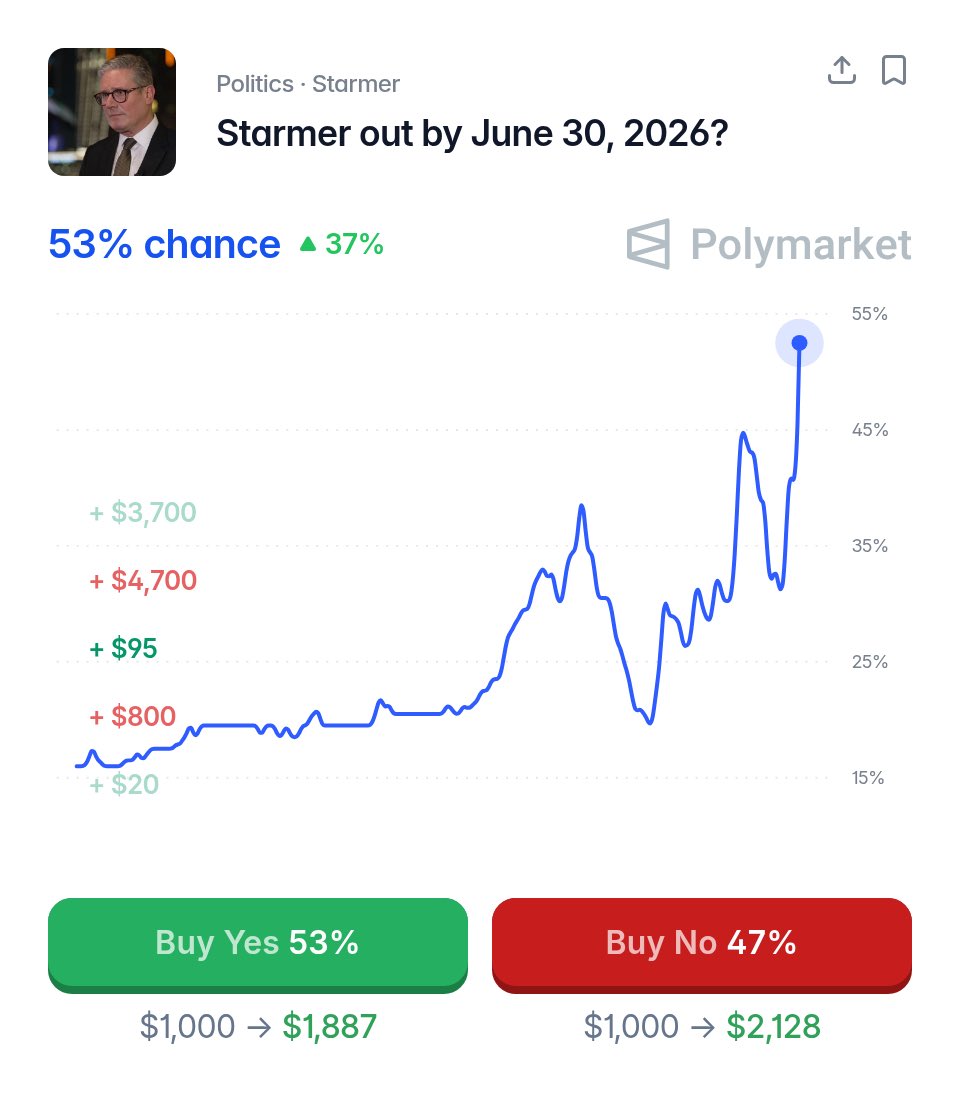
I usually agree with Dr. Locasale. But not on this. A $100 full-body ultrasound on asymptomatic people, sold as a wellness service, will open a massive can of financial worms for individuals. You’ll pay around $100 for the scan, there’s a 90% chance they find something you’ll worry about, your insurance won’t cover the expensive follow-up they recommend, so you’ll be deciding whether to spend thousands to relieve anxiety about something with a 98% chance of being nothing. How’d I get there? Enough screening full body MRIs have been done to give us a good idea of the size of the can and what’ll be in it. Roughly 90% of asymptomatic people who get a screening full body MRI have an abnormality. We have decades of diagnostic imaging with millions and millions of followed-up findings that allow 2/3 of those to be classified as incidental findings that definitely don’t need further work up. Of the roughly 1/3 they can’t be sure about, after work up, 10% of them (4% of people who got a scan) end up with something important, and about 1.5% of people have a cancer detected. And the existing evidence says finding those lesions doesn’t improve overall mortality. I know that’s hard to believe, but it’s true. Look up Korean thyroid ultrasounds or German melanoma screening. Now extend it to a modality we have no baseline data on follow-up of lesions. Midjourney has been explicit that the early scans train the model and diagnostic accuracy comes later. For the first year or two, it’s reasonable to say 90% of people who get a scan will have an abnormality they can’t rule out as concerning, and it’ll be up to the individual to pay to train Midjourney’s model. Insurance probably won’t cover the follow-up scan or biopsy with an established modality, because there’s no evidence saying it needs follow-up. So 90% of people who get scanned will be worried and facing the decision of whether to pay out of pocket for the expensive follow-up. A small percentage of those will have side effects and complications from the follow-up testing. And remember, 98% of the findings are nothing. You can argue affluent people could get one, chase down all the abnormals, then repeat a scam (sorry, meant scan) every 3 months to look for changes. But that just leads to over-diagnosis with no mortality benefit. So, rich people get scanned every 3 months with subsequent overtesting and overdiagnosis, normal people get anxious over things that are 98% likely to be fine, nobody has a survival benefit and Midjourney gets their model trained for free. I wonder who’s coming out ahead here?
@DavidSKrueger In a world where you beleive reckless people are building dangerous AIs, the only reasonable action is to build an AI powerful enough to limit the harms it does. Anthropic's flaw is trying to profit at the same time twists them into the very thing they swore to fight.


@drethelin @caryatis I think you're expecting patients/doctors will make reasonable use of the additional information. They generally will not.

Here, let me shake Twitter like a snow globe. Question at lunch today for classic Dungeons and Dragons players. Would you rather see Dungeons and Dragons die, or would you rather watch the game change, but evolve into something that you might not like.?




ON THE BASIS-DEPENDENCE OF SUPERPOSITION, THE EMERGENCE OF CLASSICAL REALITY, AND QUANTUM ALIENS, FOR SHAPE ROTATORS (This section rendered in attached image) Here's how it works out: you pick an observable $X$, such as spin or polarization or whatever, and express an arbitrary state $|\phi\rangle$ of the system—these states being elements of a vector [Hilbert] space—as a sum of eigenvectors of that observable. $X$ is self-adjoint by the definition of an observable, so it will always have a complete set of eigenvectors $\{|x_1\rangle, \ldots, |x_n\rangle\}$, or an eigenbasis, and such a decomposition will always uniquely exist (up to a choice of physically intangible phases $e^{i\theta}$ and order): $$|\phi\rangle = \sum_{i=1}^n c_i |x_i\rangle$$ The $c_i$ are the amplitudes of the various eigenvectors in the state $|\phi\rangle$, and the $|c_i|^2$ are the corresponding (Born rule) probabilities. The state $|\phi\rangle$ of the system is in superposition with respect to $X$ if and only if this unique decomposition in $X$’s eigenbasis has more than one non-zero $|x_i\rangle$. For instance, $|\phi\rangle$ might equal $\frac{1}{2}|x_{1}\rangle + \frac{\sqrt{3}}{2}|x_{2}\rangle$, in which case it's in superposition between eigenvectors 1 and 2, which represent measurements of $X$ with Born rule probabilities $\frac{1}{4}$ and $\frac{3}{4}$, respectively. But pick a different observable $Y$ for the same state $|\phi\rangle$, and it will have a different eigenbasis $\{|y_1\rangle, \ldots, |y_n\rangle\}$, yielding a *different* decomposition of $|\phi\rangle$ which may just consist of one $|y_i\rangle$. Then, $|\phi\rangle$ is *not* in superposition with respect to $Y$ even if it is with respect to $X$. (Rendered section ends here) Why, then, do we experience superposition to be a real feature of the world? It's because of the conditions we bring to the world by way of our physical form in spacetime. (The key terms here are *decoherence*, *einselection*, *quantum Darwinism*). Real quantum systems are *constantly, continuously* becoming correlated to their environment, and, through this environment, with us. Our physical forms are more sensitive to some facts of a quantum system than others; for instance, they are very easily influenced by large differences in the *position* of a possible system, since it only takes our interacting with e.g. a single photon from one position or another to entangle us with that position, which causes decoherence *with respect to the position eigenbasis*. A way of looking at it is that we ourselves are physical instruments, in a genuinely Kantian sense—this is our objective transcendental aesthetic—but we are also self-aware subjects of experience, so the observables that our body-instruments involuntarily decompose the world into happen to be experienced by us as the "preferred bases" of reality. It should be possible, at least in principle, for self-aware subjects of experience to inhere in substrates whose interactions with the external environment are *not* so strongly sensitive to matters of physical position—perhaps they exist as sufficiently isolated phononic systems with delocalized vibrational modes, for instance. Such subjects might perceive the many-worlds multiverse to 'branch' along an entirely orthogonal axis to ours, seeing *us* as superposed even as we might see *them* as superposed.



A conversation I had earlier today.






objectively terrible games, no fail states