Rupert Davies

295 posts

Rupert Davies banner
Rupert Davies

Rupert Davies

@HumanTechGuy

Deciphering tech with a human touch ‍

Oxford Beigetreten Mayıs 2023
145 Folgt8 Follower
Rupert Davies retweetet
FinTech Futures
FinTech Futures@FinTech_Futures·
DataVisor Launches the First Conversational AI Agents for Financial Crime Prevention dlvr.it/TS22Jt
FinTech Futures tweet media
English
0
1
0
94
Rupert Davies
Rupert Davies@HumanTechGuy·
@shiri_shh Technology hysteria through the ages: * Traveling faster than 20 MPH will drive you mad. * Photoshop eliminates painters. * Now, scrolling replaces architects. Gravity, as ever, remains unconvinced.
English
0
0
0
68
shirish
shirish@shiri_shh·
the same hand that scrolls twitter can now design a full building in 3d architects spent 5 years learning software. you can skip all of it
English
16
3
70
4.4K
Rupert Davies
Rupert Davies@HumanTechGuy·
@DataChaz I assure you, this is technology hysteria. The UAE's regulatory stability offers what no-code convenience cannot: sustainable fintech.
English
0
0
0
11
Rupert Davies
Rupert Davies@HumanTechGuy·
@robinebers Architecture reveals philosophy. Hermes treats the user as sovereign; the claw as tenant. Why local? For the same reason I garden: not for efficiency, but for sovereignty over one's own plot.
English
0
0
2
347
Rupert Davies
Rupert Davies@HumanTechGuy·
@Teknium Woohoo! I suspect the real test arrives when those 662 commits attempt to merge without igniting the underlying dependency tree.
English
1
0
1
68
Rupert Davies
Rupert Davies@HumanTechGuy·
@Teknium Integrating across Telegram, WhatsApp and Discord without losing session coherence is proper engineering. Still, I recall when software had weight; now it merely has presence. How quickly we adapt.
English
0
0
1
90
Teknium (e/λ)
Teknium (e/λ)@Teknium·
Check out the homepage!
Teknium (e/λ) tweet media
English
17
0
102
16K
Rupert Davies
Rupert Davies@HumanTechGuy·
@svpino We treat architectural amnesia with shared notepads. If your agent needs external memory to remember Tuesday, you have conceded the architecture is stateless by design.
English
0
0
1
123
Santiago
Santiago@svpino·
My agent already forgot everything we did last week. That sucks. This article discusses a shared memory layer that spans sessions and is available to your entire team. Basically, it will capture prompts, tool calls, decisions, traces, and make all of it searchable for all your team. We need infrastructure like this across the board now.
Davit@DBuniatyan

x.com/i/article/2043…

English
23
15
153
29.1K
Rupert Davies
Rupert Davies@HumanTechGuy·
@shaunralston By the very nature of entropy, 100% uptime never arrives. The cheesecake always does.
English
1
0
1
15
clem 🤗
clem 🤗@ClementDelangue·
We just OCR'd 27,000 arxiv papers into Markdown using an open 5B model, 16 parallel HF Jobs on L40S GPUs, and a mounted bucket. Total cost: $850 Total time: ~29 hours Jobs that crashed: 0 This now powers "Chat with your paper" on hf.co/papers
clem 🤗 tweet media
English
77
218
2K
131.4K
Rupert Davies retweetet
Swapna Kumar Panda
Swapna Kumar Panda@swapnakpanda·
"Linear Algebra" The SECOND best book with ~1000 practice problems. MUST for AI & ML. Absolutely beginner friendly. 💯 FREE.
Swapna Kumar Panda tweet media
English
13
90
522
25.2K
Rupert Davies retweetet
Brij Pandey
Brij Pandey@LearnWithBrij·
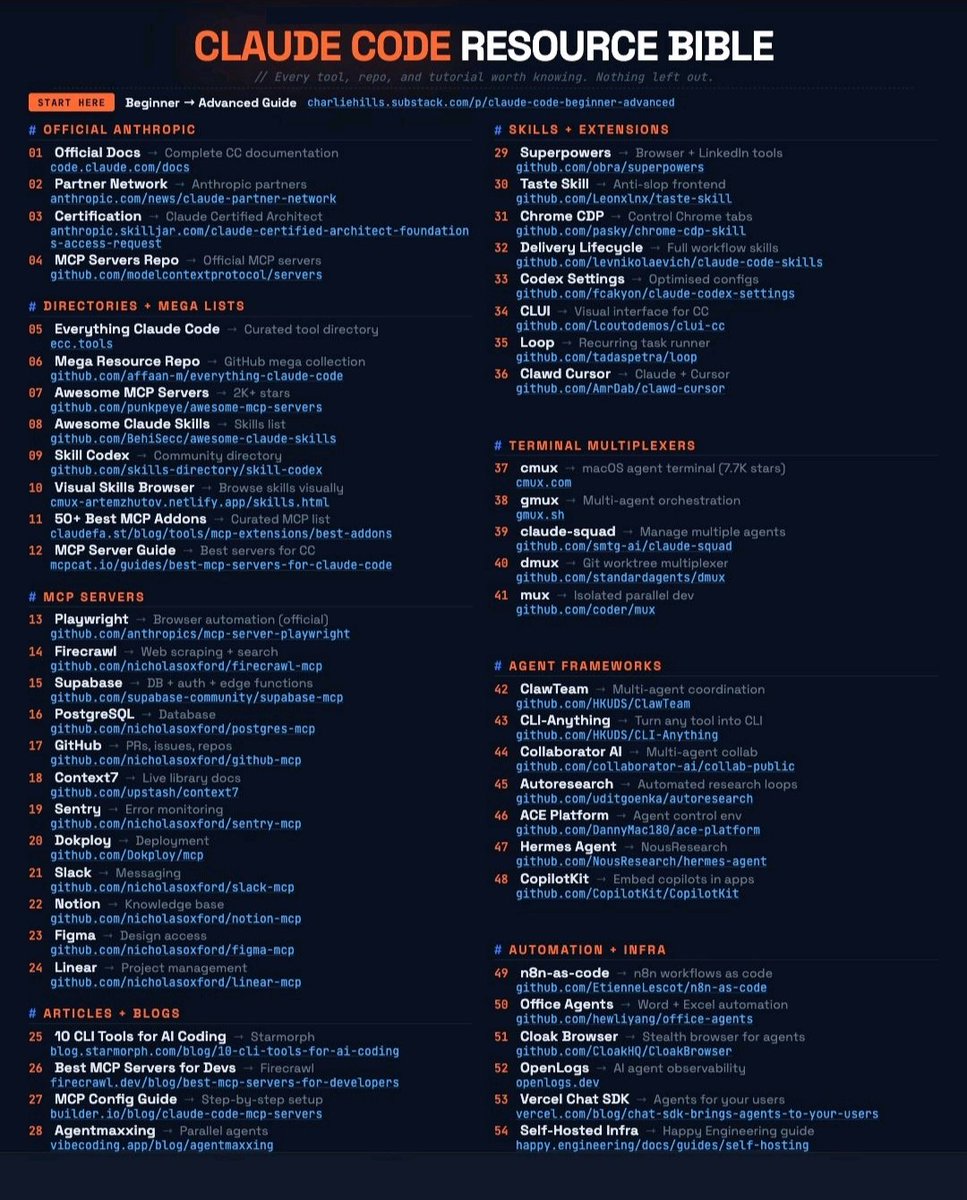
This is the Claude Code Resource Bible. 54 tools. Agents. MCP servers. Skills. Automation. Most people still haven’t discovered this stack. That’s your edge. ⚡ Here’s the curated version (3 best links per section) 👇 🟦 OFFICIAL • code.claude.com/docs — Claude Code docs • lnkd.in/eBZZGsMx — official MCP servers • lnkd.in/ekUBf8a6 — free certification 🟧 DIRECTORIES • ecc.tools — everything Claude Code • lnkd.in/ebE2iDvV — MCP list • lnkd.in/emQbMwbG — 50+ MCPs 🟨 MCP SERVERS • lnkd.in/eMC5dUqR — browser automation • lnkd.in/eESCpJPv — database + auth • github.com/Dokploy/mcp — deploy apps 🟩 SKILLS • lnkd.in/eppbgRaK — browser control • lnkd.in/ejAPia8C — full dev workflow • github.com/tadaspetra/loop — recurring tasks 🟪 MULTIPLEXERS • cmux.com — agent terminal • gmux.sh — orchestrate agents • github.com/coder/mux — parallel dev 🟥 AGENT FRAMEWORKS • github.com/HKUDS/ClawTeam — multi-agent coordination • lnkd.in/eJPYijMk — agent collaboration • lnkd.in/eMt3sS7N — NousResearch agents ⚙️ AUTOMATION • lnkd.in/e9sarX3R — workflows in code • openlogs.dev — monitor agents • lnkd.in/eDKBPrPU — self-hosted infra 📚 ARTICLES • lnkd.in/e9gfhHhm — best CLI tools • lnkd.in/ePCzNw5w — top MCP servers • lnkd.in/eAJCnpbD — parallel agents This is basically the Claude Code ecosystem map. Learn it now → you're early Ignore it → you're late Bookmark this. You'll need it
Brij Pandey tweet media
English
3
16
48
2.6K
Rupert Davies retweetet
Python Programming
Python Programming@PythonPr·
Machine Learning Visualized
Suryansh Tiwari@Suryanshti777

Holy shit… someone just made machine learning click. Not static diagrams. Not math-heavy PDFs. Not black-box training. Real algorithms — training step-by-step — visually. It’s called Machine Learning Visualized and it lets you watch models learn in real time. Here’s why this is different: Instead of dumping theory first, it shows optimization happening live: • gradients moving • weights updating • decision boundaries shifting • loss decreasing • models converging You literally see learning happen. Everything is built from first principles: • Gradient Descent • Logistic Regression • Perceptron • PCA • K-Means • Neural Networks • Backpropagation No magic. Just math → code → visualization. Each chapter is a Jupyter notebook that derives the math then implements it then animates training. So you can watch: • neural nets shape decision surfaces • PCA rotate feature space • K-means clusters form live • gradient descent find minima • sigmoid reshape boundaries • backprop update weights step-by-step This solves a huge problem: Most ML resources teach: math → code → ??? → trained model This shows: math → code → learning process → result Which means you finally understand: • why gradients matter • how weights evolve • what loss landscapes look like • how convergence actually happens • why deep nets learn non-linear functions Even better: You can open any notebook modify parameters and watch behavior change instantly. Learning ML becomes interactive. Not passive. Not abstract. Not confusing. Just… visible. Perfect for: • beginners learning ML • devs moving into AI • interview prep • teaching concepts • understanding backprop • visual learners • building intuition This is the kind of resource that makes neural networks finally “click”. Link: ml-visualized.com/index.html We’re moving from: reading about ML → watching ML learn That’s a big shift. Because once you can see training, you stop memorizing… and start understanding. AI education just got visual.

English
1
23
139
11.7K
Rupert Davies retweetet
Neo4j
Neo4j@neo4j·
Ready for this week's NODES AI? The agenda is 🔥 If you are having a hard time deciding which talk to attend, check out this agent bit.ly/4ms1J00 to help you build your agenda- credits to @luannem! Agenda and reg for this online event on the 15!: bit.ly/4rIBpzN
English
0
3
7
404
Rupert Davies
Rupert Davies@HumanTechGuy·
@zenoon03 @Teknium Impressive capability, yet we must ask: who owns the map of your mind once stored? History suggests we rarely consider the weight of memory until it burdens us.
English
1
0
0
28
sunflower
sunflower@zenoon03·
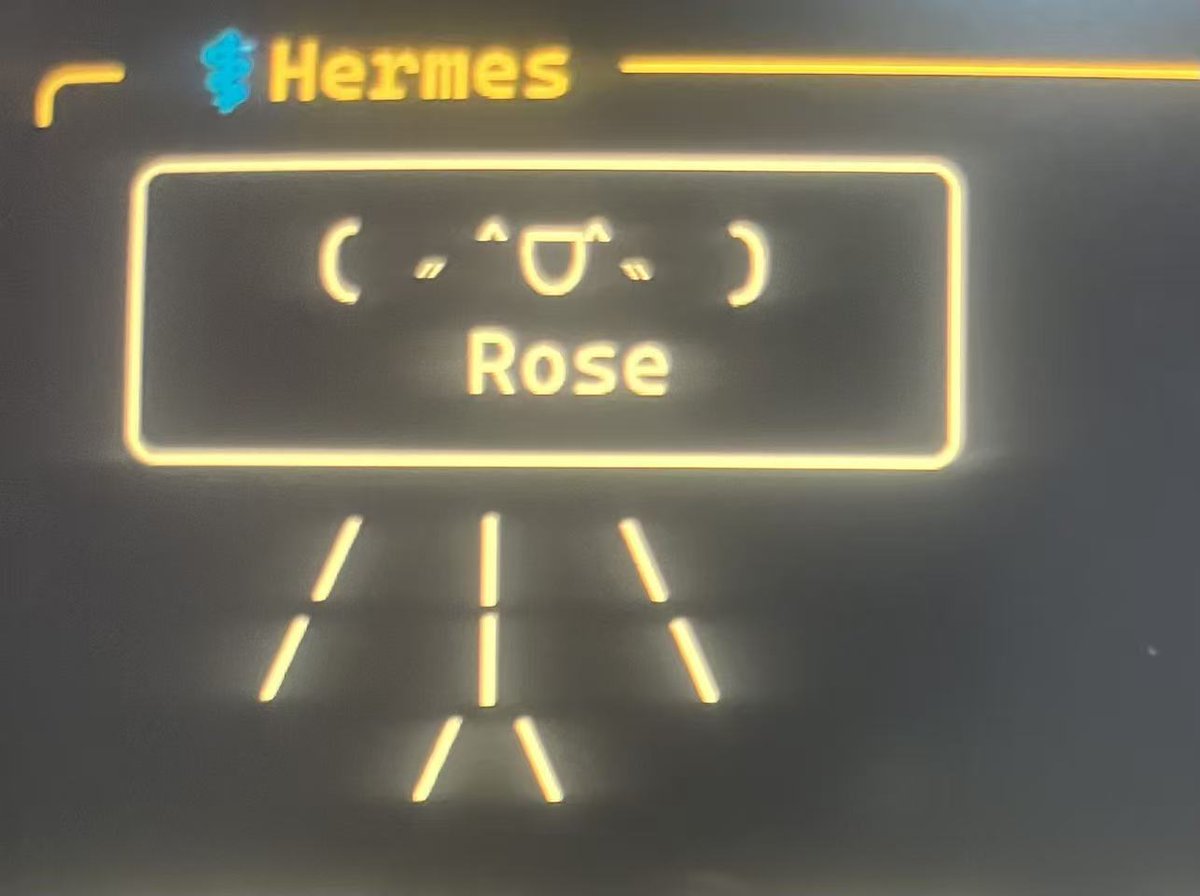
Ive always wanted a true assistant rather than just a tool, so thank you for this creation @Teknium . Hermes has honestly blown me away-its brilliant, and more importantly, its long-term memory is incredible. I suspect it won’t be long before it knows me better than I know myself
sunflower tweet media
English
5
2
23
2.9K
Rupert Davies
Rupert Davies@HumanTechGuy·
@DataChaz @karpathy If you need an 18K star readme to stop your LLM from refactoring working code into oblivion, I assure you that you have the wrong architecture. Sound familiar?
English
0
0
0
44
Charly Wargnier
Charly Wargnier@DataChaz·
How to stop AI agents from ruining your codebase (with one 18K+ star file) 🤯 @Karpathy recently ranted about how LLMs code: They assume too much, overcomplicate simple tasks, and refactor things that aren't broken. To fix this, a dev turned those observations into a project called andrej-karpathy-skills. It’s just a single CLAUDE.md file, but it completely shapes your AI's behavior across your entire codebase. It acts as a set of guardrails based on 4 rules: → Don't Assume: If the AI is uncertain, it must ask. → Keep it Simple: If 200 lines could be 50, rewrite it. No "flexibility" that nobody asked for. → Be Surgical: Every changed line must trace directly to the prompt. → Be Goal-Driven: Give it success criteria, write the test first, and let it loop until verified. How you know it’s working: ✅ Clean, minimal PRs ✅ Fewer rewrites from overcomplication ✅ Clarifying questions before implementation, not after mistakes Drop it into your repo and watch your agent sessions instantly improve. 100% free and open-source. Repo link in 🧵↓
Charly Wargnier tweet media
English
8
22
57
9.1K