
BlessingBox

24.3K posts

BlessingBox banner
BlessingBox

BlessingBox

@BlessingBox4u

Technical writer w/ specialization in social media, RN/CRRN, cultural creative, fact hacker, progressive, political junkie, pain advocate, hopeless dog lover!

USA Se unió Şubat 2013
2.2K Siguiendo1.6K Seguidores
Tweet fijado
BlessingBox
BlessingBox@BlessingBox4u·
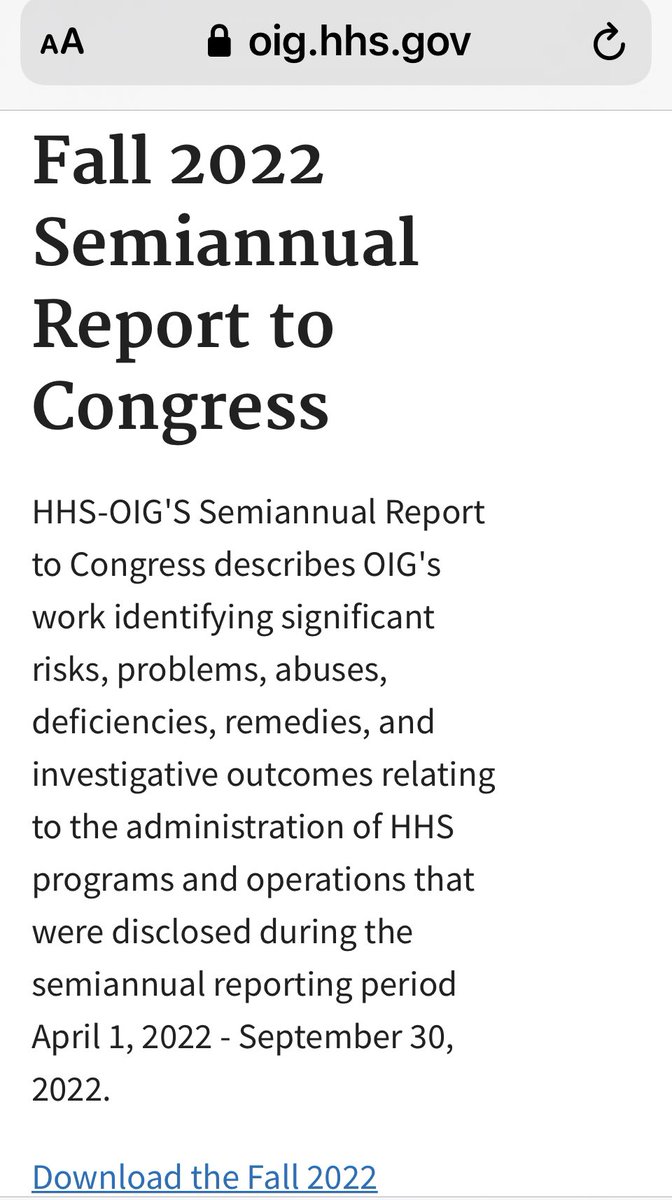
OIG Fall 2022 Semiannual Report to Congress (SAR), in part, provides an overview of HHS-OIG’s activities for the reporting period comprising the last half of fiscal year (FY) 2022 from April 1 through September 30, 2022. Press Release oig.hhs.gov/newsroom/news-…
BlessingBox tweet media
English
9
3
8
0
BlessingBox retuiteado
Hedgie
Hedgie@HedgieMarkets·
🦔A researcher invented a fake eye condition called bixonimania, uploaded two obviously fraudulent papers about it to an academic server, and watched major AI systems present it as real medicine within weeks. The fake papers thanked Starfleet Academy, cited funding from the Professor Sideshow Bob Foundation and the University of Fellowship of the Ring, and stated mid-paper that the entire thing was made up. Google's Gemini told users it was caused by blue light. Perplexity cited its prevalence at one in 90,000 people. ChatGPT advised users whether their symptoms matched. The fake research was then cited in a peer-reviewed journal that only retracted it after Nature contacted the publisher. My Take The researcher made the papers as obviously fake as possible on purpose. The AI systems didn't catch it. Neither did the human researchers who cited it in real journals, which means people are feeding AI-generated references into their work without reading what they're actually citing. I've covered the FDA using AI for drug review, the NYC hospital CEO ready to replace radiologists, and ChatGPT Health launching this year. All of that is happening in the same environment where a condition funded by a Simpsons character and endorsed by the crew of the Enterprise was being presented as emerging medical consensus. The people making these deployment decisions seem to believe the pipeline from research to AI to patient is more supervised than it actually is. This experiment suggests it isn't supervised much at all. Hedgie🤗 nature.com/articles/d4158…
English
782
12.4K
27.2K
1.2M
BlessingBox retuiteado
ACSH
ACSH@ACSHorg·
We traded science for fear-based politics, creating needless suffering along the way. Patients deserve evidence-based care — not ideology. Have restrictive opioid policies affected you or someone you love? Share your story below 👇 Full article: acsh.org/news/2026/04/0…
English
1
7
26
277
BlessingBox retuiteado
Chad D. Kollas, MD (he/him)
I am officially on my last nerve today with medical disinformation on opioid therapy and pharmacists who are at the peak of the curve that describes the Dunning Kruger Effect (original paper from 1999 can be found at pubmed.ncbi.nlm.nih.gov/10626367/). Here are the facts about opioid therapy: 1) The @US_FDA has approved opioid analgesics as safe and effective when prescribed appropriately for moderate-to-severe pain. Because they are safe and effective when prescribed appropriately for moderate-to-severe pain. 2) It is ethically impermissible to deprive patients from an established therapeutic benefit in a randomized, placebo-controlled clinical trial (RCTs); after a drug has been proven effective, studies that examine its long-term effectiveness should involve randomized comparisons to other drugs, such as in Enriched Enrollment Randomized Withdrawal (EERW) studies. Critics who wrongfully insist that we must have RCTs to justify the use of Long-term Opioid Therapy (LTOT) are either disingenuous or they are woefully uninformed (again, see the Dunning-Kruger Effect). 3) According to FDA Postmarketing Studies (PMRs) on opioid therapy, the prevalence of addiction in patients taking opioids for pain - operationalized BROADLY by the @US_FDA as patients meeting DSM-5 Criteria for moderate-to-severe opioid use disorder (OUD) - is approximately 1.5%. The prevalence of alcoholism in adults using ethanol is about 10% and the prevalence of tobacco addiction in adults who smoke is about 60-80%. Again, critics who refer to the risk of opioid addiction as "high" either lack the knowledge to appropriately contextualize that risk (Dunning-Kruger again) or they are disingenuous. 4) Buprenorphine is indeed a useful medication for treating both chronic pain and OUD, but it is too early to label it as the drug of choice for cancer pain or chronic, non-cancer pain. The largest review of buprenorphine in palliative care [Thakkar, et al. J Pain Symptom Manage. 2025 Dec 29:S0885-3924(25)01016-4] "found consistent evidence that buprenorphine was comparable to other full opioid agonists when used as both a short-acting and long-acting analgesic for palliative care patients. It also did not display significant differences in risks of adverse effect." Additionally, the authors observed, "While buprenorphine’s superior safety profile, particularly its lower risk of respiratory depression and overdose compared with full opioid agonists, is well established in the literature, none of the included palliative care studies reported on respiratory depression." Given this, it is also premature to conclude that buprenorphine is truly a safer option for LTOT than other full-acting opioids (FAOs); although that argument is a rational one, it remains unproven. 5) There is a substantial and growing body of evidence that suggests that abruptly discontinuing LTOT or reducing opioid doses too rapidly may cause patient harms including uncontrolled pain, mental health crises, increased risk of self-harm or suicide and increased risk of overdose from illicit fentalogues (See, for example, Oliva et al. BMJ. 2020 Mar 4;368). Discussions about reducing opioid dose or transitioning to buprenorphine should include a comparison of these risks versus the risks of LTOT. Additionally, clinicians must transition from a recovery model of illness to a model that acknowledges that some patients have PERMANENT, INTRACTABLY PAINFUL conditions that justify the use of LTOT under the ethical principle of double-effect. 6) The systemic vilification of opioid medications that began with the 2012 PROP Petition to the FDA on Opioid Labeling occurred - at least in part - to support large-scale multidistrict litigation (MDL) against opioid manufacturers and distributors. Many of the medical experts involved these lawsuits inappropriately influenced federal opioid policy despite having undisclosed financial and professional conflicts of interest that should have disqualified them from participating in the policy creation process [see Kollas CD, Boyer-Kollas B. Chapter 15: Laws and Policies Affecting Pain Management in the United States. Bonica’s Management of Pain, 6th Edition (James P. Rathmell JP, Edwards RR, Gilligan CJ). Wolters Kluwer, 2026, ISBN: 9781975222369. In press for Fall 2026]. 7) Ultimately, all pain care should be individualized and compassionate, make use of evidenced based treatments (that use both medication and non-medication-based approaches) and, when appropriate clinically, may include opioid therapy with a focus on optimizing therapeutic benefits while mitigating risks of both long- and short-term side effects, including the risk of OUD; patients with OUD or opioid addiction should enjoy the same level of access to individualized, compassionate care as patients with chronic pain. That level of care is detail-oriented, time-consuming and professionally challenging - but all of our patients deserve nothing less.
English
35
81
204
6.2K
BlessingBox retuiteado
Bev Schechtman🇮🇱
Patients with real disease were told their symptoms were psychological. A new study shows that didn’t just delay diagnosis, it caused long-term harm. Trust breaks. Patients stop seeking care. Outcomes change. We just broke this down in detail, including what the study doesn’t address. Has this happened to you? It happened to me in college before I got my Crohn's diagnosis. patreon.com/posts/they-fin…
English
11
27
74
768
BlessingBox retuiteado
Bev Schechtman🇮🇱
Bev Schechtman🇮🇱@ibdgirl76·
This is exactly why we submitted a Citizen's petition to FDA last year asking them to list NarxCare as Software as a Medical Device. Somebody needs to regulate them, and claiming they aren't used to make medical decisions is ridiculous, bc that's exactly what they do. The docket is still open in case you want to comment. regulations.gov/document/FDA-2…
Filter | harm reduction journalism@Filtermag_org

“Any tool that could affect a patient’s treatment should face a lot more scrutiny. The bar needs to be raised.” Cognitive-computing model to produce "opioid risk scores," used by health care systems, generates many false negatives, reports @sydneyasauer: filtermag.org/ai-opioid-risk…

English
2
23
43
833
BlessingBox retuiteado
PAC
PAC@PACRiseUp·
Quote “OCDETF frequently targeted dangerous drug cartels , Russian mafia & violent gangs moving fentanyl & weapons.” Trump administration dismantled OCDETF.” Quote “…JPMorgan Chase neglected to report more than $4 billion in suspicious financial transactions linked to Epstein.”
GIF
English
0
3
4
50
BlessingBox retuiteado
PAC
PAC@PACRiseUp·
DEA investigation disappear beginning Trump's 1st term- Epstein+14 for drug trafficking, prostitution,💰 laundering. AG Blanche blocked report from Senator Wyden.” 🙋‍♀️ Simultaneously instituting prohibition, suing manufacturers, flood US illicit fentanyl,🚀OD, prosecute MDs? 🔗 ⬇️
English
3
3
6
154
BlessingBox retuiteado
PAC
PAC@PACRiseUp·
Plot thickens… and we should, as a community, be asking WHY is international drug trafficking being covered up, and demanding accountability… for dismantling & criminalizing healthcare & harming patients? IMHO youtu.be/zGoC_zn1fG0?si…
YouTube video
YouTube
English
0
3
5
214
BlessingBox retuiteado
Bev Schechtman🇮🇱
Bev Schechtman🇮🇱@ibdgirl76·
Were Pain Patient Deaths the Plan All Along? We were told these were “unintended consequences.” But patients warned them. They don't get to say "unintended consequences" after a decade of ignoring patient cries. Watch this. Please help us rebuild our YouTube channel as our channel was terminated. Link in comments.
English
11
34
81
1.9K
BlessingBox retuiteado
PAC
PAC@PACRiseUp·
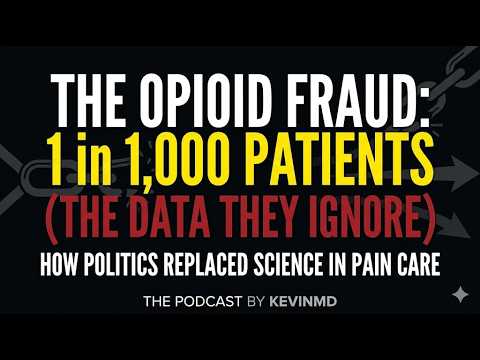
@UrWithintheNorm @Ledhedd2 @DrLizaMD @ZerlinaMornings @whitfieldlewis6 @MHarrisPerry @CMerandi @JohnFugelsang @DeanObeidallah @DRBMarino @BarbMcQuade @DrMargaretShow @HelenBorel1 @jmkillingnyc @camjenglish @MichaelSteele @AliVelshi @CapehartJ “U.S. opioid policy history: How politics replaced science in pain care” RICHARD A. LAWHERN, PHD & STEPHEN E. NADEAU, MD JAN 31, 2026 kevinmd.com/2026/01/u-s-op… “Politics & fear have replaced science in U.S. pain management” youtu.be/cEf8KtQRL6U
YouTube video
YouTube
English
0
4
4
104