Mr. William

747 posts

Mr. William

Mr. William

@1313geroprotect

Scientist at Geroprotect® Open-source longevity supps. Natural small molecules & peptides. Chemical reprogramming, biohacking, biochem engineering.
Dubai, United Arab Emirates Katılım Mart 2023
1.1K Takip Edilen244 Takipçiler
Michael Levin
Michael Levin@drmichaellevin·
I’m not sure if you have a specific application in mind, or if you mean human data (which is not in vivo yet), but in general, almost of our bioelectric work is has been in vivo, not cell culture. Birth defects repair, whole organ induction, appendage regeneration, cancer normalization - all in vivo.
English
0
5
14
953
Mike Lustgarten, PhD
Mike Lustgarten, PhD@mike_lustgarten·
Epigenetic reprogramming might make an impact on slowing/reversing age-related changes, but the biggest bang for the buck will be bioelectric signalling restoration via @drmichaellevin's approach
Brian Armstrong@brian_armstrong

Aging is arguably the root cause of most major diseases. Our cells lose function as we age, allowing various conditions to manifest, which is why most major diseases correlate with age. Yes, it is more complex than this, but this is a major component. @newlimit is working on treating a root cause of disease (aging) using epigenetic reprogramming.
English
5
1
25
2.4K
Mr. William
Mr. William@1313geroprotect·
Yes but LEV is not a permission slip to live badly now and hope medicine fixes it later. Rejuvenation works against damage, not in the absence of biology. The more damage you carry into the future, the worse your odds. Reprogramming needs energy. Damaged mitochondria can turn transition into senescence. Stem cells and gene therapy won’t perfectly reach every tissue. Neurons, barriers, and heavily damaged niches will stay hard. LEV won’t end the fight against aging. It will start a new one.
English
0
0
0
407
Peter H. Diamandis, MD
Peter H. Diamandis, MD@PeterDiamandis·
We're so close to longevity escape velocity (LEV by 2033) that your sole responsibility right now is to avoid dying from something stupid. The next 5 years will deliver more medical breakthroughs than the previous 50.
English
118
209
1.9K
55.9K
Mr. William
Mr. William@1313geroprotect·
LEV is not a permission slip to live badly now and hope medicine fixes it later. Rejuvenation works against damage, not in the absence of biology. The more damage you carry into the future, the worse your odds. Reprogramming needs energy. Damaged mitochondria can turn transition into senescence. Stem cells and gene therapy won’t perfectly reach every tissue. Neurons, barriers, and heavily damaged niches will stay hard. LEV won’t end the fight against aging. It will start a new one.
English
0
0
0
27
Mr. William retweetledi
Avi Roy
Avi Roy@agingroy·
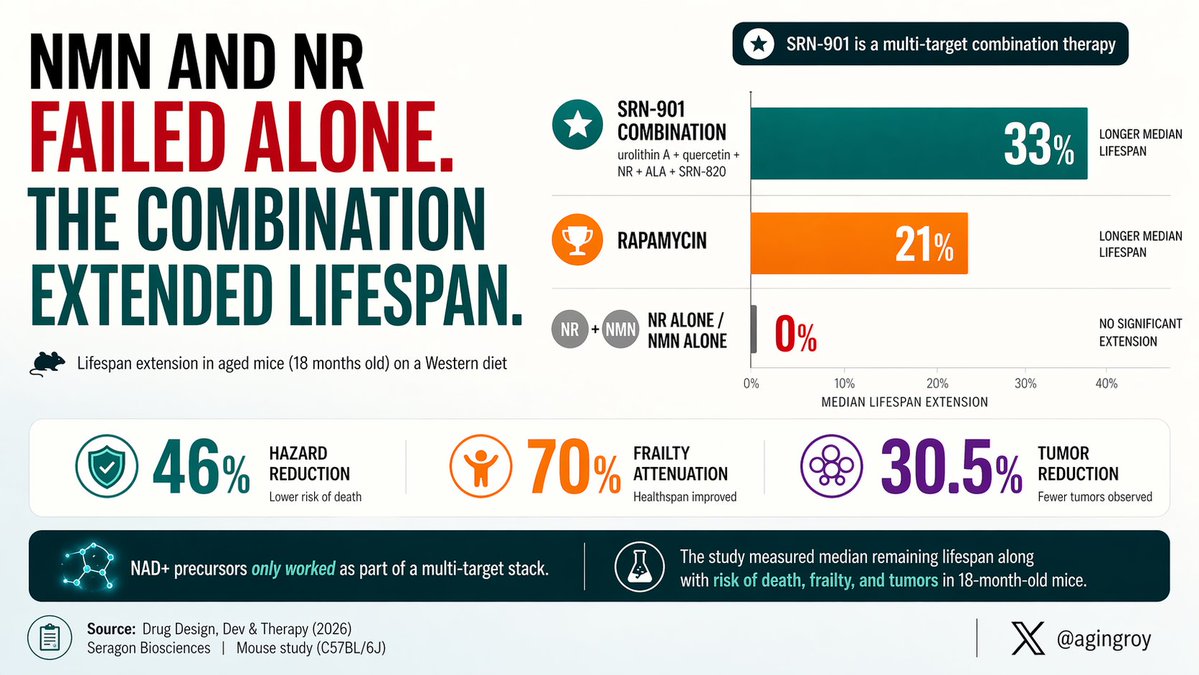
NR alone did not extend lifespan. NMN alone did not extend lifespan. A five-compound combination that includes both of them extended it by 33%. SRN-901 combines urolithin A, quercetin, NR, alpha-lipoic acid, and a proprietary compound called SRN-820. In 18-month-old mice on a Western diet, it produced a 33% increase in median remaining lifespan and a 46% reduction in hazard of death. Frailty progression dropped 70%. Tumor burden fell 30.5%. For comparison, rapamycin hit 21%. The uncomfortable finding for the supplement community: NAD+ precursors taken individually moved nothing on the endpoint that matters most. They only worked as part of a multi-target stack that hits nutrient sensing, mitochondrial quality, and stress response simultaneously. Mouse study. Industry-funded by Seragon Biosciences. But the head-to-head comparisons are the kind this field has needed for years.
Avi Roy tweet media
English
12
14
119
7.7K
Mr. William
Mr. William@1313geroprotect·
@MTSlive @MartinShkreli Peptides are mainly pro growth and regenerative, this class doesn’t target disease. Most medicine are on the opposite site, they inhibit what peptides stimulate. That’s why peptides also have a bad name they do the opposite of what cancer medicine do.
English
1
0
2
2.1K
MTS
MTS@MTSlive·
.@MartinShkreli: "The peptide thing is all BS." "Drugs are like seemingly simplistic. And the reality is, it's pretty freaking difficult." "Imagine the SpaceX landing, like the chopstick or the landing on its head... drug development makes that look easy." "Peptides in general are just this terrible asset class for pharma, because you need drugs that have long half-lives." "What this really is about isn't about pharmacology or science. This is about rebellion: I don't want to pay Pfizer. I don't wanna see my doctor. I don't wanna pay insurance... I'm gonna do this myself."
Martin Shkreli@MartinShkreli

If you like “peptides” like BPC come explain why you’re not retarded
English
83
40
1.2K
405K
Bilu Huang
Bilu Huang@BiluHuang·
The characteristics of "reversing aging" through partial reprogramming are transient. Research has found that after partial reprogramming concludes, telomeres do not lengthen or show slight shortening, aging markers begin to accumulate again, and the epigenetic age returns to its pre-reprogramming state [81]. Huang, Bilu and Hu, Xiaowen, The Information Theory of Aging Is Not Reliable (June 21, 2025). Available at SSRN: ssrn.com/abstract=53156… or dx.doi.org/10.2139/ssrn.5…
David Sinclair@davidasinclair

New article: The Information Theory of Aging (ITOA) states that epigenetic drift is a cause of aging, with cells taking up new identities. New review says slowing a process called "mesenchymal drift" has emerged as is a new strategy for rejuvenation
English
8
12
67
7.5K
Mr. William retweetledi
William A. Wallace, Ph.D.
William A. Wallace, Ph.D.@WilliamWallace·
The Q-SYMBIO trial is the most important study ever conducted on CoQ10 and cardiovascular outcomes. If you are not familiar with it, that is not an accident. Mortensen et al., JACC Heart Failure, 2014. 420 patients with moderate to severe chronic heart failure. Two-year randomized double-blind trial. 100mg ubiquinone three times daily vs placebo, on top of guideline-directed medical therapy. This was adjunct to optimal care, not instead of it. At two years, 15% of patients in the CoQ10 arm hit the primary endpoint of major adverse cardiovascular events. 26% in the placebo arm hit it. That is a 43% relative reduction in serious cardiac events in patients who were already on best-available pharmacotherapy. Cardiovascular death was 9% vs 16%. All-cause mortality was 10% vs 18%. Heart failure hospitalizations were 8% vs 14%. Every clinically meaningful endpoint moved in the same direction. The magnitude of benefit is competitive with most of the pharmaceutical interventions used in this population. The mechanism is well-understood. CoQ10 shuttles electrons between Complex I/II and Complex III in the mitochondrial electron transport chain. No other molecule in human biology performs this function. Heart failure depletes myocardial CoQ10. Statins deplete it further via the mevalonate pathway. Tissue levels track with heart failure severity. Supplementation restores the deficit. Restored mitochondrial function produces measurable improvements in cardiac output. The finding was replicated by KiSel-10 (Alehagen, Int J Cardiol, 2013). 443 elderly Swedes. 200mg CoQ10 ubiquinone + 200μg selenium daily for four years. Cardiovascular mortality dropped from 12.6% in the placebo arm to 5.9% in the treatment arm. The 12-year follow-up showed the mortality benefit persisted long after the intervention ended. Two independent trials. Both using ubiquinone. Both showing large cardiovascular mortality reductions. Here is what the marketing does not tell you. Both trials used ubiquinone, the oxidized form. Specifically Bio-Quinone sold as Myoqinon. Not ubiquinol. Every major trial demonstrating hard cardiovascular outcomes from CoQ10 used the cheaper form. Fladerer & Grollitsch (Curr Cardiol Rep, 2023) reviewed 28 clinical trials and found no ubiquinol trial has replicated these cardiovascular mortality findings. Their explicit recommendation: ubiquinone over ubiquinol for cardiovascular disease. Why did it work? The formulation. Bio-Quinone is crystal-dispersed ubiquinone in a soft gel with carrier oil. Crystal dispersion breaks CoQ10 out of its crystalline lattice so it can dissolve in GI fluid. Absence of crystal dispersion drops bioavailability by approximately 75% (Mantle & Dybring, Antioxidants, 2020). The soft gel ensures lipid-phase absorption. Three times daily dosing maintains serum levels above the approximately 3 μg/mL therapeutic threshold commonly cited in the CoQ10 cardiovascular literature. The trial worked because the formulation worked. Practical: if you or someone you care about has heart failure, CoQ10 has the strongest evidence base of any dietary intervention for reducing cardiovascular death. 100mg three times daily. Ubiquinone. Crystal-dispersed soft gel. With meals. Talk to a cardiologist. If on warfarin, monitor INR. This is adjunct therapy, not a replacement for medical care. The broader point. When the best-designed trial on a supplement outperforms most pharmaceutical interventions in its target population, you would expect the industry to lead with it. Instead, the field pivoted to selling a more expensive form that has not replicated the outcome data, while the cheaper form that generated the evidence sits in the background. Formulation science beat redox chemistry. The market has the story backwards. pubmed.ncbi.nlm.nih.gov/25282031/ pubmed.ncbi.nlm.nih.gov/22626835/ pubmed.ncbi.nlm.nih.gov/37971634/ pubmed.ncbi.nlm.nih.gov/32486268/
William A. Wallace, Ph.D. tweet media
English
9
54
222
92.9K
Mr. William
Mr. William@1313geroprotect·
@niko_kukushkin They used CRISPR and a strong EMF like 5 mT (50 gauss). If you’re not lying on a proffesional mat on purpose I don’t think you get exposed. Cheap EMF mats have only 0.1-0.01 mT.
English
1
1
9
445
Mr. William
Mr. William@1313geroprotect·
@LivingForever8 EMF has been FDA approved for bone healing for more then 40 years. Just make sure you have enough gauss en a variable frequency. You can buy a good quality device from around 1000 dollar.
English
0
0
1
29
Mr. William retweetledi
William A. Wallace, Ph.D.
William A. Wallace, Ph.D.@WilliamWallace·
Some polyphenols don’t need to be absorbed to affect the brain. Astringent flavanols activate gut sensory pathways that signal the locus coeruleus, increasing noradrenergic tone, arousal, and short-term memory (within minutes).
William A. Wallace, Ph.D. tweet media
English
5
21
140
4.5K
Mr. William retweetledi
William A. Wallace, Ph.D.
William A. Wallace, Ph.D.@WilliamWallace·
Most people who take CoQ10 think of it as an antioxidant. It is one. But that is not the most important thing it does. CoQ10 is the only lipid-soluble mobile electron carrier in the inner mitochondrial membrane. The electron transport chain has four protein complexes fixed in the membrane. Complex I accepts electrons from NADH. Complex II accepts them from FADH2. But neither can pass those electrons directly to Complex III. They hand them to CoQ10, which physically shuttles across the lipid bilayer to deliver them. Complex III passes them to cytochrome c, the second mobile carrier, which delivers them to Complex IV. Complex IV reduces oxygen to water. The proton gradient pumped by Complexes I, III, and IV powers ATP synthase to produce ATP. Without CoQ10, the chain breaks between Complex I/II and Complex III. Electrons have nowhere to go. Proton pumping stops. ATP production stalls. This is not an antioxidant function. This is the core mechanism of aerobic energy production. CoQ10 is predominantly synthesized endogenously through the mevalonate pathway, the same pathway that produces cholesterol. HMG-CoA reductase is the rate-limiting enzyme of the pathway. Statins inhibit HMG-CoA reductase. That is how they lower cholesterol. It is also how they lower CoQ10. An updated meta-analysis by Qu et al. (2018) pooled 12 RCTs with 1,776 participants and found statins significantly reduced circulating CoQ10. The reduction was present across statin types, intensities, and durations. Both lipophilic and hydrophilic statins showed the effect, with no significant difference between them. This is consistent with what the biochemistry predicts: the pathway is shared. On top of statin-induced depletion, CoQ10 in human heart tissue declines naturally with age. Kalén et al. (1989) measured CoQ10 concentrations in myocardial tissue and found levels peak around age 20, decline by more than 30% by age 40, and drop approximately 50% by age 80. The organ with the highest energy demand loses half its electron carrier over a lifetime. A 2025 meta-analysis by Kovacic et al. (Journal of Nutritional Science, 7 RCTs, 389 patients) found CoQ10 supplementation significantly reduced statin-associated muscle symptoms measured by pain intensity. This is the most current pooled data on clinical outcomes. One important nuance: while plasma CoQ10 depletion from statins is well established, whether intramuscular CoQ10 drops proportionally is inconsistent. Some studies found no change or even increases in muscle tissue CoQ10 during statin treatment. The plasma reduction may partly reflect reduced LDL particles, which are the primary carriers of CoQ10 in blood. The clinical significance of depletion beyond muscle symptoms remains debated. Roughly 200 million people worldwide take statins. The mevalonate pathway that produces their target also produces the electron carrier their mitochondria depend on. The mechanism is not controversial. The clinical implications are still being debated Sources: pubmed.ncbi.nlm.nih.gov/2779364/ pubmed.ncbi.nlm.nih.gov/30414615/ pubmed.ncbi.nlm.nih.gov/41158831/
William A. Wallace, Ph.D. tweet media
English
16
100
443
25.9K
Mr. William
Mr. William@1313geroprotect·
When you start living healthily, skip seed oils, be mindful of microplastics and air pollution, eat whole foods, and choose organic options as much as possible. Practice intermittent fasting, exercise, and breathwork or meditation. When you put enough weight on the healthy side of the balance, it will tip toward health. You are then doing more anti-aging than pro-aging. You will become younger every day. It really is that simple. It’s not as much work as you think, and it doesn’t lower the value of your life, it raises it. It starts with stopping drinking, smoking, and any other addictions. You can do it….
English
0
0
1
37
Mr. William
Mr. William@1313geroprotect·
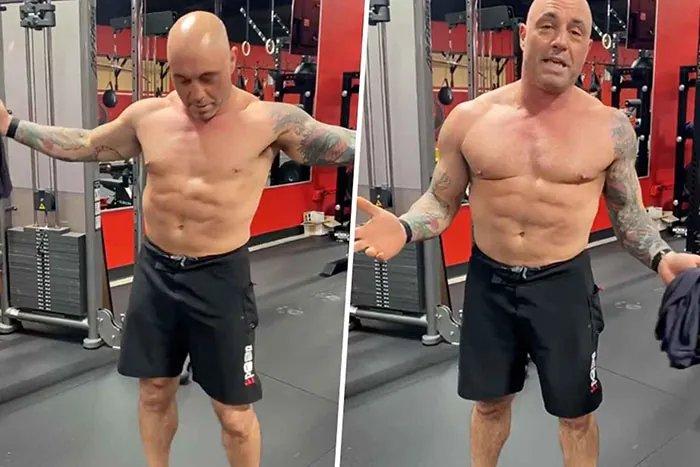
@SammyRArmstrong I like Joe Rogan, but he is listening to the wrong people, his lifestyle accelerates aging in stead of slowing it down.
English
1
0
5
1.6K
SammyArmstrong
SammyArmstrong@SammyRArmstrong·
Joe Rogan is 58 years old. He holds black belts in jiu-jitsu. He trains harder now than he did at 30. Most men at 58 are slowing down. He's accelerating. Here are 7 things he does to stay that way:
SammyArmstrong tweet media
English
48
48
724
365.4K
Mr. William retweetledi
Lifespan
Lifespan@JoinLifespan·
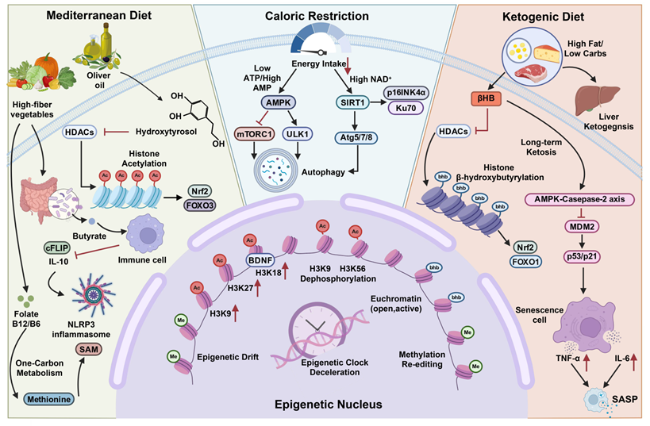
New review out on dietary interventions that may slow aging by stabilizing the epigenome, including SAM, NAD+, α-KG & Acetyl-CoA tinyurl.com/3a54y5t4
Lifespan tweet media
English
4
43
174
51K
Mr. William
Mr. William@1313geroprotect·
@mike_lustgarten @drmichaellevin They have very good synergy (Epigenetic reprogramming (chemical) X bioelectric signalling is fast track to rejuvenation/ regeneration.
English
1
0
0
38
Simmo
Simmo@yoursimmo11·
I've noticed that every alternative health influencer tells you to take 5,000 IU of vitamin D3 daily. Brecka built half his brand on it, Rogan recommends it, and your doctor probably does too. Nobody tells you supplemental D3 (cholecalciferol) is the exact same chemical compound in commercial rat poison at 0.075% concentration. The difference between your supplement and rodenticide is concentration, not chemistry. 20 minutes of midday sun gives you D3 your body actually recognizes... sulfate-bound, cholesterol-transported, no hexane extraction, and no rat poison chemistry. But the sun is free... and free doesn't have an affiliate code.
English
58
11
103
64.2K