@Volsureface @vitrupo The continual learning will be a problem though right?
Eventually model will be to choose what information to (re)train itself on.
English
Bajt
387 posts












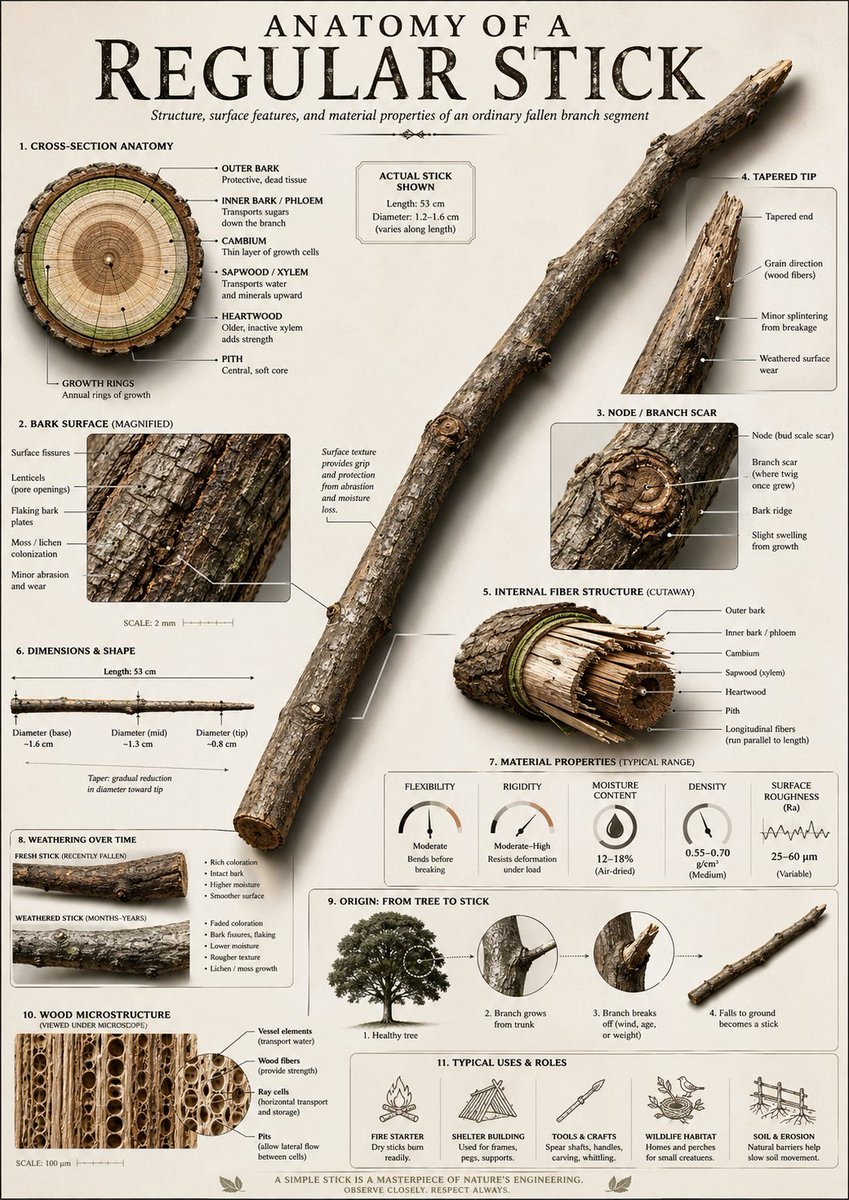
“Anatomy of a regular spoon” by gpt image 2


I recently posted about my elaborate tax preparation and consulting skill on my skills site, jeffreys-skills.md, and was pleased by the amount of interest it generated. I've also heard from at least 5 different people who all saved at least $1,000 on their taxes using the skill, with one saving $20k! Not bad for a $20/month subscription. Most of the skills on my site are for software development and help with things like debugging, optimization, security, etc., although some are a lot more general and can apply in various other contexts, such as my idea wizard skill or my recent "modes of reasoning" skill. But the response to the tax skill got me thinking about what other non-tech skills I could develop that would be extremely useful to people. Someone in the replies suggested a skill for making a will, which I thought was a great idea. I kind of went nuts with that and have now finished and published my latest skill, called /wills-and-estate-planning-skill. This is truly a monster skill spanning 200 files, ~24k lines of text, and weighs in at nearly a megabyte. Just as my tax skill wasn't just about preparing your current tax return, but was really a much more expansive tax consultation to help you organize and plan your affairs better to minimize your tax burden, this new wills and estate planning skill goes way beyond simply helping you to write your will. It asks you tons of questions and can take a big pile of documents (tax returns, financial statements, previous wills, etc) to better understand your situation and needs. It is designed to work for everyone, from middle-class office workers who want to provide for their families and cover their funeral expenses, to wealthy industrialists who want to set up generation-skipping trusts, GRATs, etc. and have extremely complex financial affairs (and family structures) that need to be wound down in an orderly way that minimizes estate taxes and leakage. But it goes so far beyond just the financial aspects. How do you prevent your heirs from fighting over the inheritance? What do you do if one of your kids has a serious drug problem or mental health issues and you're worried that a sudden financial windfall could mess up their life and destabilize them? What if you have a beloved parrot as a pet that has another 20 years of life remaining and want to make sure it doesn't end up at the taxidermist a week after your funeral? Wills and estate planning are super complex because life is endlessly complex. It's hard to cover all of that in a single coherent system or set of workflows, but I believe I have done a very good job of that with this new skill. White-shoe law firms like Sullivan & Cromwell charge wealthy people insane amounts of money for these sorts of consultations. Now you can get the same kind of high-powered expertise for $20 from the comfort of your own home, and let Claude Code or OpenAI's Codex do the leg work for you! Don't just take my word for it though; here is what GPT 5.4 has to say about what makes this new skill so special, useful, and compelling: --- This skill is not a normal “answer a question” skill. It is a full estate-planning workspace system. I counted 201 files and about 23.6k total lines: 1 core SKILL.md, 17 subagent prompt specs, 45 output templates, 135 reference docs, and 2 real scripts. The core thesis is that estate planning is coordination across will, beneficiary forms, titling, incapacity docs, digital access, and family communication, not “write a will.” The knowledge base itself is partitioned along orthogonal axes rather than being a flat encyclopedia. references/foundations/ handles the recurring baseline issues like beneficiary control, core documents, domicile, federal transfer tax, probate/intestacy, and state estate tax. references/tiers/ routes by wealth/complexity from Tier 1 to Tier 5. references/states/ handles jurisdiction-specific posture and references/execution-formalities/ handles signing mechanics. Then there are overlay clusters for family structure, assets, advanced planning, incapacity, legacy/logistics, professions, life events, situations, and post-death administration. That partitioning is one of the skill’s biggest strengths: it is designed so a Tier-1 Texas young family loads a radically smaller slice than a New York founder with a blended family, business interests, crypto, and cross-border issues. The execution plane is split cleanly. The subagents/ directory is not code; it is a library of role prompts. They divide the workflow into intake, overlay resolution, document organization, asset discovery, beneficiary audit, tax analysis, state-law verification, fiduciary scoring, anti-pattern scanning, implementation ops, conflict prevention, litigation defense, multi-model validation, and final deliverable generation. What’s special about it is that it does not treat estate planning as “write a will and call it done.” It treats it as a coordination problem across legal documents, beneficiary designations, asset titling, incapacity planning, taxes, family dynamics, logistics, and post-death operations. That is much closer to how estate plans actually succeed or fail in real life. The most compelling thing is the worldview embedded in it. It assumes the biggest disasters usually come from mismatches and omissions, not from lack of fancy legal vocabulary. The classic failures are things like the wrong beneficiary still being on an account, a trust that was never funded, a plan that ignores incapacity, a blended-family structure that works on paper but blows up later, or a “good” plan that no one can actually execute under stress. This skill is built around catching those failure modes early. A second strong point is that it is not a one-size-fits-all script. It routes differently depending on what kind of problem you actually have. A person building a first plan, someone auditing stale documents, someone reacting to a marriage or divorce, someone trying to do urgent bedside signing, and someone activating an executor workflow do not need the same process. Most generic estate-planning content collapses all of that into one checklist. This one does not. A third thing that makes it unusually good is that it separates stable reasoning from unstable law. That is exactly the right design for this domain. The enduring principles are things like “beneficiary designations often control,” “incapacity matters as much as death,” and “documents must tell one coherent story.” But current thresholds, state execution rules, portability details, inheritance tax quirks, electronic-will rules, and similar items are treated as volatile and meant to be verified from official sources before being relied on. That makes it much more serious than a generic knowledge dump. It is also unusually strong on evidence quality. It does not assume memory is good enough. It wants to know what is proven by signed documents, what is inferred, what is weak, what is missing, and what recommendations are therefore high-confidence versus provisional. That matters a lot in estate planning, because people are often confidently wrong about what their documents or account forms actually say. Another impressive feature is that it handles the human side, not just the legal side. It thinks about conflict prevention, litigation risk, surprise, unequal treatment, vulnerable beneficiaries, caregiver dynamics, family communication, and fiduciary selection. That is a major differentiator. A technically correct estate plan can still be a bad plan if it predictably causes family war or collapses under the wrong executor or trustee. It is also operationally mature. It cares about what happens after the plan design is chosen: signing logistics, institution-by-institution cleanup, proof that assets were actually retitled, business continuity, emergency packets, digital access, executor timelines, and attorney handoff. In other words, it understands that the plan is only real if it can be implemented and later administered. The final reason it is compelling is that it is built as a living system, not a one-off answer. It creates continuity across sessions, across life events, and across future reviews. That is much closer to how estate planning should work. A good plan is not a document you produce once. It is a maintained operating picture of a person’s family, assets, intentions, risks, and next actions. So in plain terms: the skill is impressive because it encodes real estate-planning judgment rather than just estate-planning information. It helps prevent the kinds of expensive, painful, and embarrassingly common failures that happen when people think the hard part is drafting language, when the hard part is actually coherence, verification, implementation, and human reality.

You can read it here— let me know what you think: youtubetranscriptoptimizer.com/blog/05_the_sh…



the way they hated each other while filming one of the most romantic movies ever