Alex Shev

305 posts

Alex Shev banner
Alex Shev

Alex Shev

@AlexshevPm

AI employees that never sleep → https://t.co/k7tBf0F9Hl Marketplace for AI agent skills → https://t.co/CLZE23xBLr


Katılım Temmuz 2023
94 Takip Edilen21 Takipçiler
Federico Martelli
@AlexshevPm every missed call is a paid lead you already acquired. the cost of not following up is just the ad spend you're writing off.
English
1
0
1
3
Alex Shev
Alex Shev@AlexshevPm·
Missed calls are not “call back later.” For local businesses, they’re warm leads you already paid for — SEO, ads, referrals, GBP. AI missed-call recovery can text back in seconds, qualify the buyer, answer basics, book the next step, and log it in CRM. Link in first comment.
Alex Shev tweet media
English
2
0
1
25
Alex Shev
Alex Shev@AlexshevPm·
@OptimaiNetwork Agree with the infra angle. Agents need live context, identity, permissions, and trust layers before they become real economic actors.
English
0
0
1
80
OptimAI Network
OptimAI Network@OptimaiNetwork·
Great to join the X Space with BNB Chain and fellow builders pushing the agent economy forward. One theme was clear: The next frontier for AI agents is infrastructure - live context, verifiable identity, trust, and seamless payments. That is exactly the layer OptimAI is building for. 💡optimai.network • Search gives agents real-time context. • Claw turns context into execution. • Persona Agents turn expertise into reusable intelligence. • Marketplace makes it composable. The agent-native internet is not a slide deck. It is being built now. Thanks to everyone who joined the conversation!💪 Play recording at 👇
BNB Chain@BNBCHAIN

Join our X Space with some AI infra builders powering the adoption of agents on BNB Chain: @Chain_GPT, @APRO_Oracle, @OptimaiNetwork, @CournotProtocol & @termix_ai Happening in 12 hours 👇 x.com/i/spaces/1MKgN… x.com/BNBCHAIN/statu…

English
33
82
355
3.9K
Alex Shev
Alex Shev@AlexshevPm·
@haider1 Benchmarks like this are useful because they test the uncomfortable part: full project reconstruction, not isolated coding puzzles.
English
0
0
0
6
Haider.
Haider.@haider1·
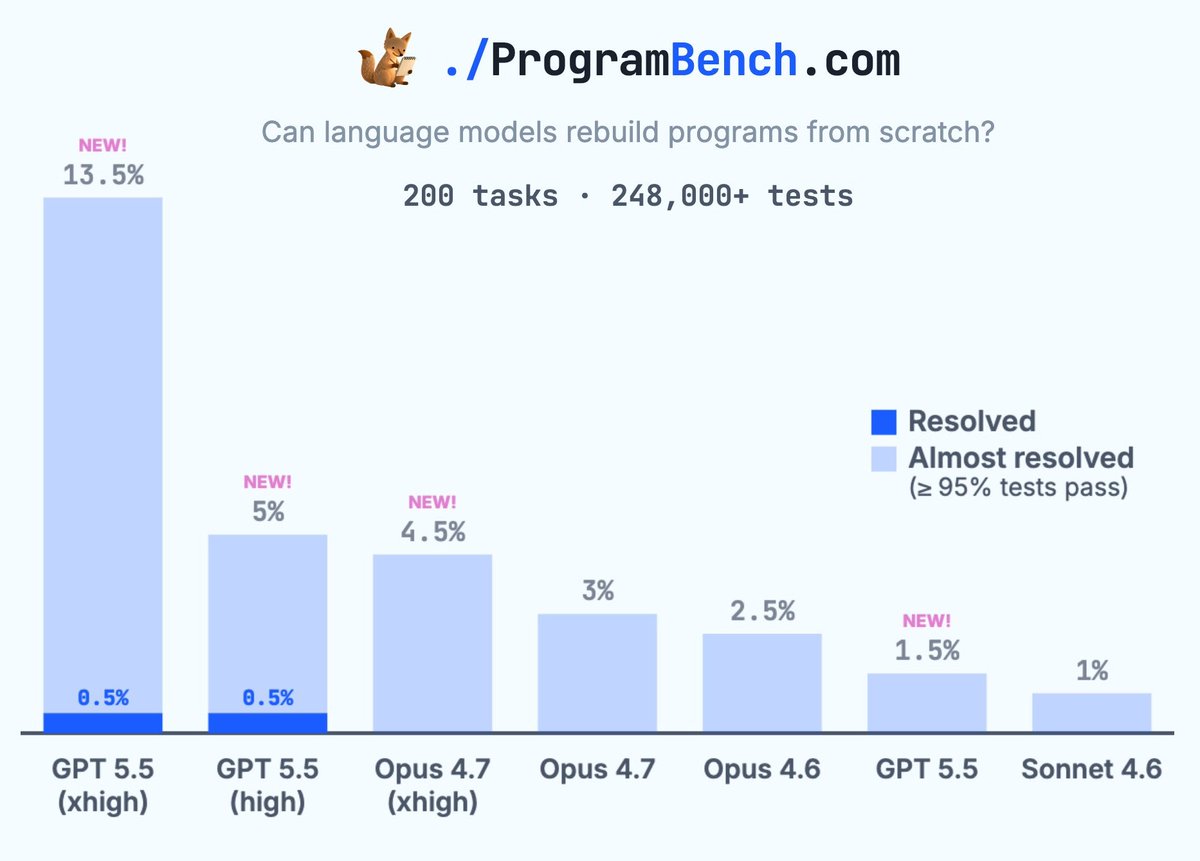
gpt-5.5 is the strongest coding model ProgramBench is a new agentic SWE benchmark that tests whether AI agents can rebuild full software projects from only the executable + docs gpt-5.5 xhigh: fully solved 0.5% = about 1 out of 200 projects almost solved 13.5% = about 27 out of 200 opus 4.7 xhigh: fully solved 0% = 0 out of 200 projects almost solved 4.5% = about 9 out of 200
Haider. tweet media
English
25
12
170
8.9K
Alex Shev
Alex Shev@AlexshevPm·
@Scobleizer @gillinghammer Agent wallets sound futuristic, but the real question is governance: who approves, who audits, and where the spending limits live.
English
0
0
0
9
Alex Shev
Alex Shev@AlexshevPm·
@BetterStackHQ The hard part is not making agents write code. It’s making them predictable enough to trust inside a real PR workflow.
English
0
0
0
1
Better Stack
Better Stack@BetterStackHQ·
AI coding agents are powerful… but chaotic. Archon + Agent Skills turn them into deterministic PR machines. Parallel agents. Zero merge conflicts. Running locally on my M4 Pro.
English
1
0
1
229
Alex Shev
Alex Shev@AlexshevPm·
@dotnet Agent frameworks are getting serious when debugging, tracing, graph workflows, MCP discovery, and cross-runtime messaging become first-class.
English
0
0
0
16
.NET
.NET@dotnet·
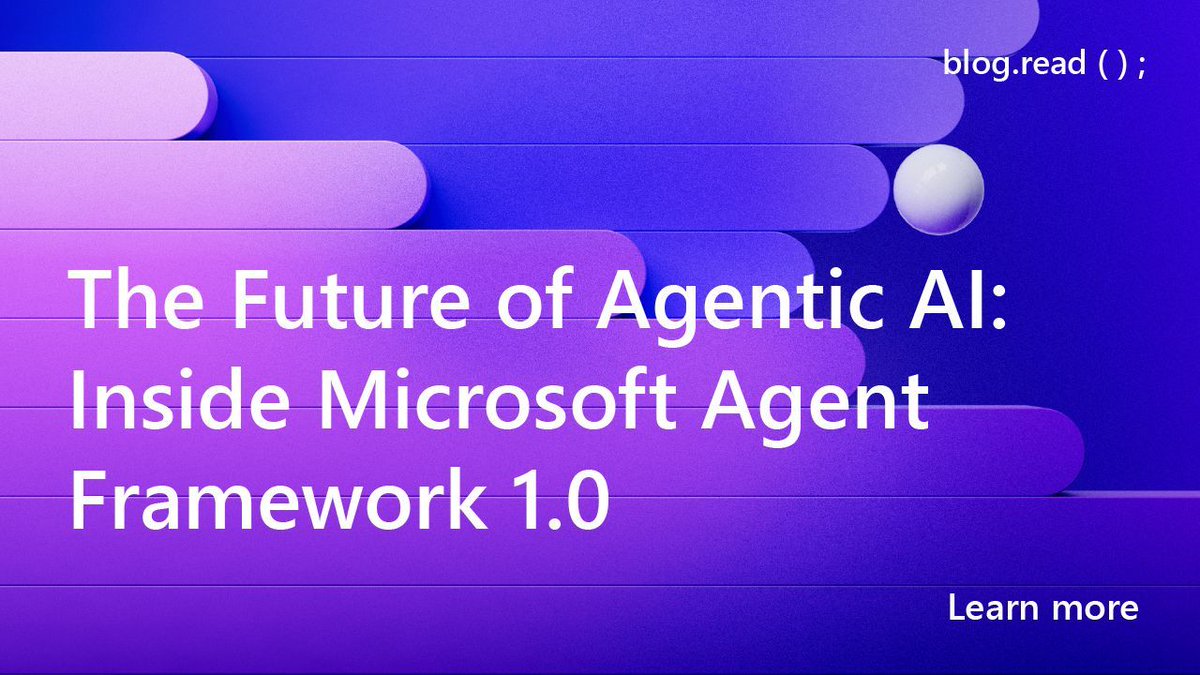
Agentic AI is growing up. Microsoft Agent Framework 1.0 brings stable APIs, A2A cross‑runtime messaging, MCP tool discovery, graph‑based workflows, and a DevUI debugger for real‑time agent tracing. #dotNET + Python parity finally lands. Read 👉 buff.ly/NbKQBmG
.NET tweet media
English
2
6
45
3.5K
Alex Shev
Alex Shev@AlexshevPm·
@neotechro The big signal here is verticalization. Generic chat is the starting point. Specialized workflow agents are where the business value starts.
English
0
0
0
7
Tech郎
Tech郎@neotechro·
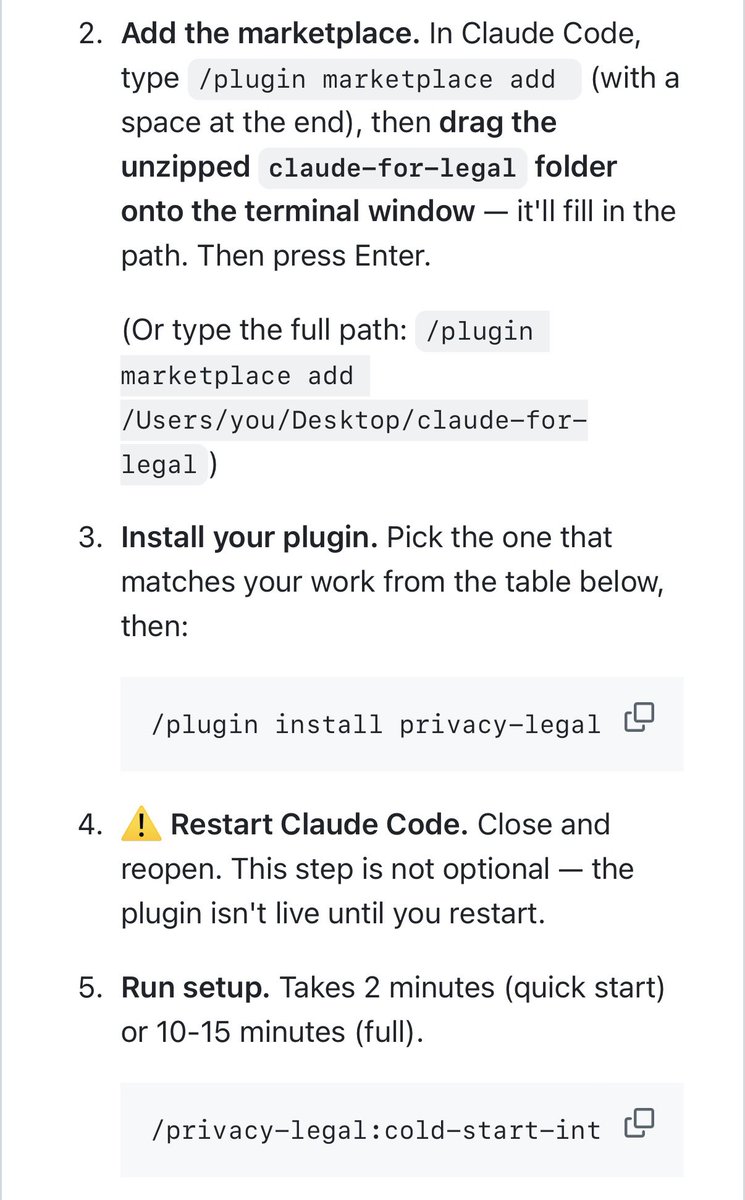
Anthropic just launched the cheapest lawyer in the world. It’s called “claude-for-legal.” And here’s what it can do: • Read and review contracts • Draft legal responses • Build litigation claim tables • Track deadlines and renewals • Connect directly to your tools: Slack, DocuSign, Ironclad, Lexis+… All without ever leaving Claude. How it works: → Install it in 60 seconds → Runs on Claude Cowork, Claude Code, or your own API → Open-source and 100% free What it covers: • Commercial contracts & privacy • Litigation & regulatory work • AI governance • Legal training What used to take lawyers hours… now takes minutes. Link below 👇
Polymarket@Polymarket

JUST IN: Anthropic rolls out new Claude tools aimed at automating legal work for lawyers & law firms.


English
1
1
2
2K
Alex Shev
Alex Shev@AlexshevPm·
@ArtificialLawya This feels like the beginning of vertical AI products becoming open workflow kits, not just closed SaaS tools.
English
0
0
0
18
Alex Shev
Alex Shev@AlexshevPm·
@scottastevenson 100%. Legal AI won’t be won by raw capability alone. Distribution, trust, review workflows, and change management matter just as much.
English
0
0
1
23
Scott Stevenson
Scott Stevenson@scottastevenson·
If you think the Claude for legal plugins are going to completely disrupt legal AI… you have not sold to lawyers
Scott Stevenson tweet mediaScott Stevenson tweet media
English
39
11
233
23.4K
Alex Shev
Alex Shev@AlexshevPm·
@helloparalegal The interesting part is not “AI lawyer.” It’s packaged legal workflows: playbooks, connectors, citations, review gates, and repeatable tasks.
English
0
0
0
24
Ann Srivastava
Ann Srivastava@helloparalegal·
Somewhere yesterday morning, the founders of Harvey, Spellbook, and Casetext woke up to a GitHub notification. Anthropic had just released Claude for Legal. Open source. Apache 2.0. Free. 12 practice-area plugins. 80+ named agents. 20 MCP connectors covering Lexis+, iManage, Ironclad, Everlaw, CourtListener. A vendor agreement reviewer. A DSAR responder. A claim chart builder. A privilege log reviewer. A subpoena triage agent. A deposition prep agent. Every product that just raised tens of millions of dollars to build a stripped-down version of, Anthropic just shipped end-to-end for free. The architecture is the part that should worry them most. Every plugin starts with a cold-start interview that builds a practice profile. Every agent reads from it. Generic output becomes house-style output the moment setup is done. That is the pattern I have been writing about for six weeks. Anthropic built it into the foundation. Every output is framed as a draft for attorney review. Citations from connected research tools get a source tag. Citations from model knowledge alone get flagged for verification. That is the answer to Mata v. Avianca. Built in. Now the harder truth. The repo is free. The deployment is not. 12 practice areas. 80 agents. 20 connectors. A solo cannot read all of it in a weekend. A managing partner cannot map it to her firm's workflow on a Monday morning. The IT team cannot wire it into the firm's iManage instance by Friday. What just opened up is not the build. It is the choosing - which four of the 80 agents matter for THIS practice this week. And the wiring - into this firm's existing tools, without breaking the confidentiality posture. That is the new job. Anthropic shipped the parts. If you are a solo or small-firm partner reading this - DM me. 3 free 20-min sessions this week to map your practice to the Claude for Legal modules that actually matter for your work. No pitch. Just the map.
English
7
5
62
6.4K
Alex Shev
Alex Shev@AlexshevPm·
@patrick_oshag This platform vs application question is the whole market right now. The winners will own either the model layer or the workflow surface.
English
0
0
0
102
Patrick OShaughnessy
Patrick OShaughnessy@patrick_oshag·
Krishna on how Anthropic thinks about the platform vs. application layer, and when they decide to build their own products like Claude Code. It’s the question every investor and founder is thinking about: “Most of what we're building is platform. There's so many examples of where a platform can accrue a lot of value, but the customers who are building on that platform actually accrue even more value. We will build our own applications on that same platform where a couple of things are true. Number one, if we feel like we have a vision into where the models are going and we can demonstrate that and create customer value in that, that might be something like Claude Code. The second is thinking about ways to demonstrate value for the ecosystem that others might emulate. If you think about Claude for financial services or Claude for life sciences, these are ways in which we've composed the platform. We're building on the same platform as our customers. That creates a level playing field. We also think that there's so much value that's going to accrue in these areas that our customers can win and we can win as well. So I think of our strategy as mostly horizontal. A lot of the value is going to accrue to the customers that are building on top of it. Our goal is build the best models and then build the products and tools and services that allow that intelligence to proliferate within customers."
Patrick OShaughnessy@patrick_oshag

Krishna Rao is the CFO of Anthropic, and this is his first podcast appearance. He joined the company two years ago when run-rate revenue was about $250M. Today it is $30B. He has helped raise ~$75B and is responsible for the procurement and allocation of compute. I feel lucky we get to hear what it is like to sit inside a company this consequential at a moment this pivotal. We discuss: - The cone of uncertainty - How he allocates compute across Trainium, TPUs, and GPUs - What investors misunderstand about model companies - Why the returns to frontier intelligence keep rising - Platform vs application and where Anthropic builds its own products - How Anthropic uses Claude internally I have asked my closing question about the kindest thing more than 500 times. Krishna's answer is one I have never heard before. Enjoy! Timestamps: 0:00 Intro 2:38 The Compute Canvas 6:51 The "Cone of Uncertainty" 11:58 Why the Returns to Frontier Intelligence Are So High 16:45 Recursive Self-Improvement 20:20 Scaling Laws 23:30 Sourcing $100 Billion in Compute 28:05 Platform vs. Application Strategy 32:52 Pricing Dynamics 38:48 How Anthropic’s Finance Team Uses Claude 43:24 Raising Capital & Overcoming Investor Skepticism 52:32 Public Perception, Risks, and Government Regulation 57:25 Mythos Release 1:12:33 What Could Derail the AI Revolution? 1:13:47 Biotech and Healthcare 1:15:31 The Kindest Thing


English
6
18
145
82.2K
Alex Shev
Alex Shev@AlexshevPm·
@TechCrunch SMBs are probably the most interesting AI market: fewer politics, more pain, and a much faster path from “cool demo” to daily workflow.
English
0
0
2
758
Alex Shev
Alex Shev@AlexshevPm·
@AndrewCurran_ The enterprise AI race is becoming a workflow race. Adoption follows the model that saves teams time inside their real tools.
English
0
0
1
15
Andrew Curran
Andrew Curran@AndrewCurran_·
According to the new data from Ramp, Anthropic has passed OpenAI in business adoption for the first time. 'Adoption of Anthropic rose 3.8% in April to 34.4% of businesses. OpenAl adoption fell 2.9% to 32.3%. Overall Al adoption rose 0.2 percentage points to 50.6%.'
Andrew Curran tweet media
Ara Kharazian@arakharazian

ANTHROPIC beats OpenAI in business adoption for the first time. per @tryramp data Today's update of Ramp AI Index shows 34.4% of businesses using Anthropic versus 32.3% using OpenAI. Adoption of Anthropic quadrupled over the last year, while OpenAI rose only 0.3%.

English
30
48
387
57.2K
Alex Shev
Alex Shev@AlexshevPm·
@Polymarket Makes sense. Businesses don’t just want the “smartest model.” They want workflows that actually survive inside operations.
English
0
0
0
12
Polymarket
Polymarket@Polymarket·
JUST IN: Anthropic officially surpasses OpenAI in business adoption for the first time.
English
162
319
4.7K
202.9K
Alex Shev
Alex Shev@AlexshevPm·
@awscloud @OpenAI The next phase is less about smarter demos and more about trust, permissions, context, and reliable handoffs between agents and humans.
English
0
0
1
347
Amazon Web Services
Amazon Web Services@awscloud·
Have you thought about the future of Agentic AI? We have too, so AWS and @OpenAI leaders recently came together to discuss where agents are working today, and what your organization needs next to lead with AI. Check out the full stream below.
English
84
112
1.3K
8.4M
Alex Shev
Alex Shev@AlexshevPm·
@OpenAIDevs @AriX @romainhuet Background computer use is underrated. The real unlock is agents doing multi-step work across apps without stealing the user’s whole machine.
English
0
0
0
8
OpenAI Developers
OpenAI Developers@OpenAIDevs·
Computer use lets Codex work across your apps without taking over your Mac. @AriX talks with @romainhuet about what changes when agents can click, type, and keep working in the background.
English
124
93
1.2K
101K
Notion Developers
Notion Developers@NotionDevs·
Introducing the External Agents API: bring any agent into Notion, even the ones you build yourself. We’ve also partnered with @claudeai, @OpenAI Codex, @DecagonAI, @cursor_ai, @warpdotdev, @cognition, @floraai, @Amplitude_HQ, @console__, and @getserval so they work out of the box. With all your agents in Notion, their work is visible, reviewable, and actionable alongside the rest of the team, without copy-pasting context between tools. Join the External Agents waitlist → ntn.so/ext-agents
English
3
9
58
13.5K