Sabitlenmiş Tweet

@chuckcha @sahouraxo I instantly block accounts that spread lies like that. It saves time.
English
Asar Cadyn
17.6K posts
@AsarCadyn
Nothing makes me special. I am just an old man. Not my real name.










Lolz, when your country was busy spreading Christianity under the guise and cover of colonialism, you didn't remember there will be a day for retribution. The fact that you acknowledge Britain has an "Islamic future" now is nothing but an utter waste of time. Britain as it stands today is far more Islamic than Nigeria and UAE. You think the hatred of UAE towards the labour party is out of the blue? It is because Britain has effectively become more .............. No amount of restoration can help you.

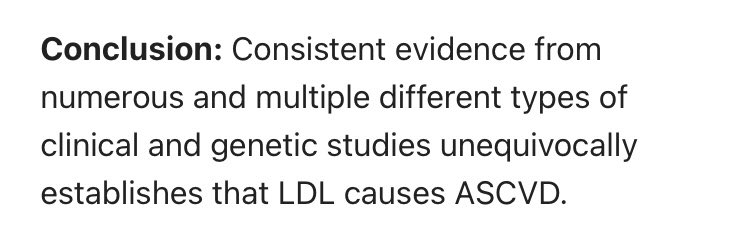
I can't say I've ever encountered someone who conflates elevated LDL with heart disease. Most operate, rightly so, from the standpoint that heart disease is a probabilistic outcome influenced by numerous factors, one of which is circulating LDL / apoB concentrations. This is entirely compatible with Nick's personal experience. Since his anecdote has zero external validity, it can rightly be ignored in favor of population-level data and mechanistic inferences when dealing with literally any person other than Nick himself. Most importantly, is there any health benefit from maintaining higher vs lower levels? What, exactly, is the point of keeping LDL extremely elevated when it probabilistically increases disease risk?


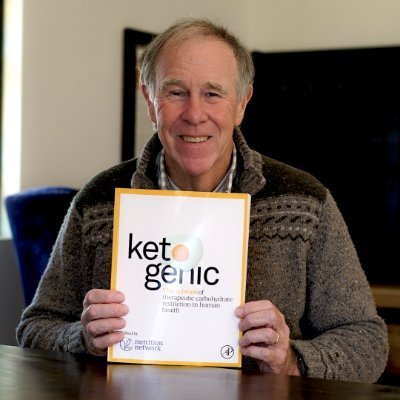
🚨New Paper: "Seven Years of 700 Cholesterol Without Coronary Atherosclerosis: A Lean Mass Hyper-Responder Case Report" Link: doi.org/10.3390/diseas… For the past 7 years, I’ve been running what is essentially a natural experiment in cholesterol and heart health. During that time, I’ve largely lived with: 👉Total cholesterol around 700 mg/dl 👉LDL cholesterol between 500–600 mg/dL I recently underwent advanced coronary CT angiography imaging with AI-guided analysis. This is not a CAC. It measures all plaque (soft + calcified), with expert interpretation and AI-guided analysis capable of quantifying plaque down to the cubic millimeter (mm3). Now, to address the obvious question: Am I too young for plaque? In brief: No. The clearest comparison is individuals with homozygous familial hypercholesterolemia, who often have similarly extreme LDL/ApoB levels and can develop advanced plaque as toddlers, and even heart attacks as early as age 8. Also, nutrition influencers in their 30s have publicly shared quantified plaque scores from these same imaging technologies. In one recent case, a plant-based influencer in his thirties was found to have 61.3 mm³ of plaque despite having far lower lifetime LDL exposure. (He can identify himself if he so chooses.) My case also isn’t a one-off. There are many individuals like me, including older individuals with similar LDL-C and ApoB without any plaque. The difference is that I’m an unusually well-characterized subject, with extensive metabolic data and health markers tracked over time. You can learn more at the newsletter or open-access paper, linked above. The science of heart health is not settled. And cholesterol is not a simple story. 🚨 If you want to help spread the word... Quote Tweet this post (or create an original post) including the article link with a thought. Academic papers are increasingly evaluated using attention metrics. Original posts from unique users are one way to increase these metrics and help ultimately increase its reach. 🚨 If you want to learn more, I'll include more learning resources below 👇