
Tom Hyde

2.3K posts

Tom Hyde banner
Tom Hyde

Tom Hyde

@CotsCardiology

Cardiologist with an interest in coronary artery disease, from prevention to stenting. Professional account, views my own. Occasionally misunderstood.

Cotswolds Katılım Nisan 2013
2.5K Takip Edilen1.5K Takipçiler
Tom Hyde
Tom Hyde@CotsCardiology·
@venkmurthy It seemed to show it leads to more preventative therapy in patients with coronary calcium. Maybe something in this approach. Outcome data not there yet, agreed but prevention is a laudible aim.
English
0
0
0
225
Tom Hyde
Tom Hyde@CotsCardiology·
@khurramn1 @minhaskh Maybe they just wanted a score, I think a score can be approximated from a non gated scan using software. The key is communicating the message to patients and healthcare workers that there is a prevention opportunity
English
0
0
0
125
Khurram Nasir
Khurram Nasir@khurramn1·
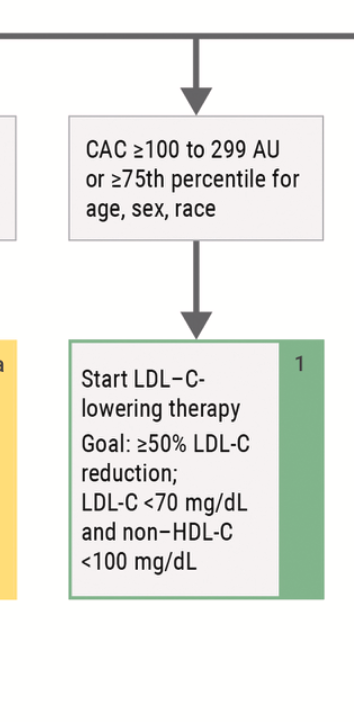
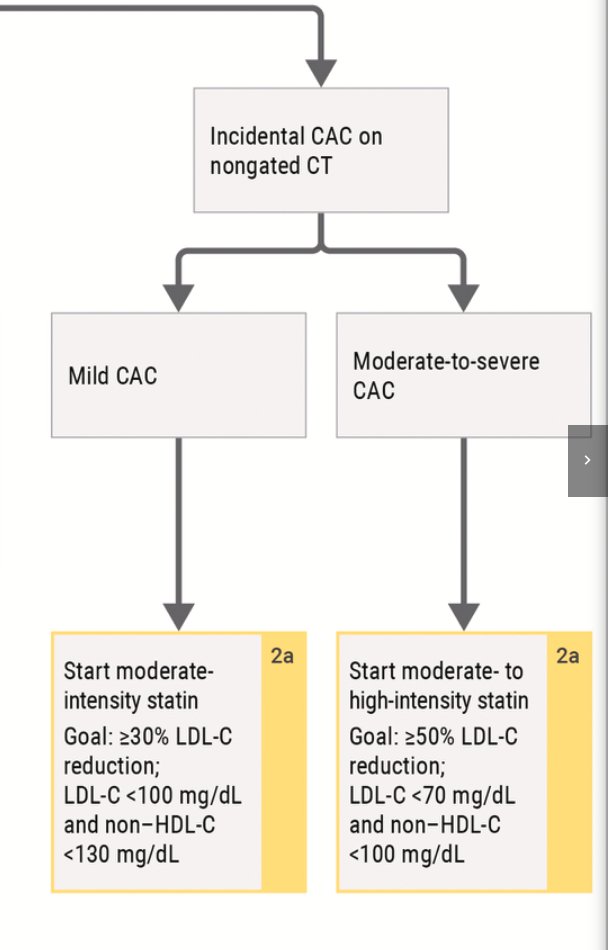
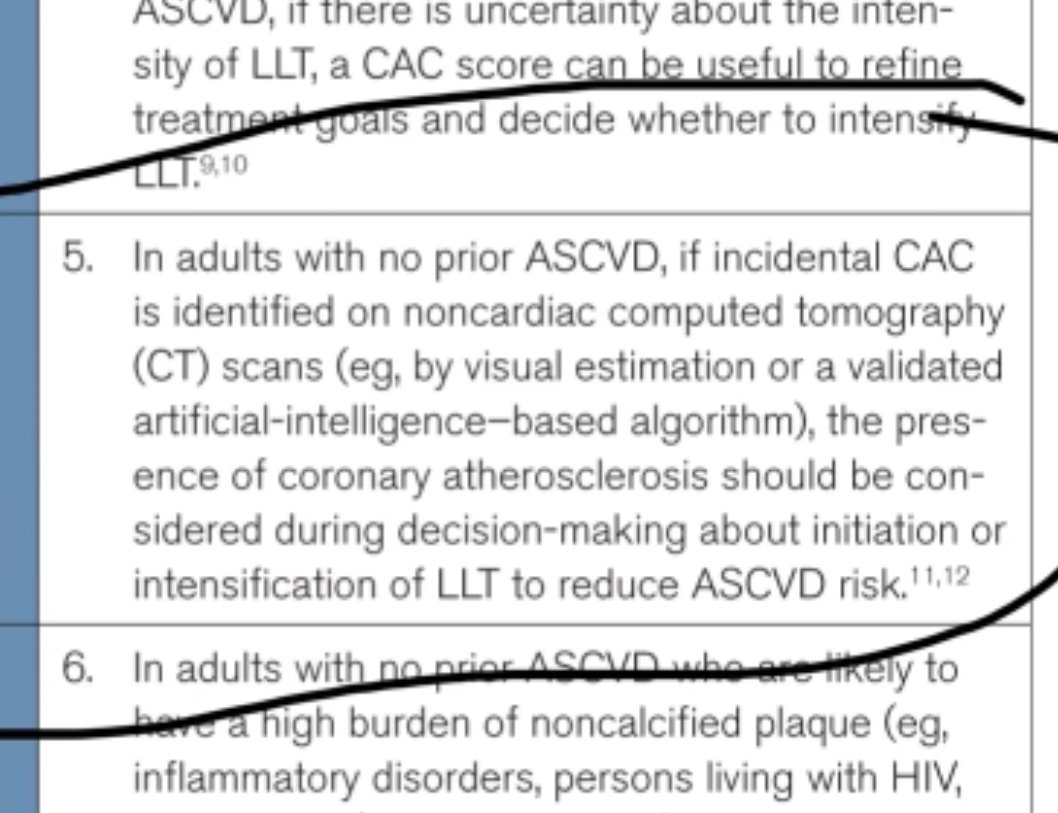
Don't understand the dichotomy on this issue in the cholesterol management guidelines. 1. CAC>100: Class 1 rec intensive LLT management, LDL target <70 (AGREE) 2. Moderate to severe incidental CAC on non gated , where almost exclusively you will have close to create than >100 on gated: Class II for same LDL goals <70 (DISAGREE WITH CLASS REC) Any thoughts on this?
Khurram Nasir tweet mediaKhurram Nasir tweet media
English
15
10
68
11K
Tom Hyde
Tom Hyde@CotsCardiology·
@pabeda1 @DrRyanPDaly @khurramn1 Yes, 💯, it's possible to post analyse Lung Cancer Scans with Coreline to score and make LLT recommendations in primary care it's on our to do list, we hope the UK NICE guidelines can embrace calcium soon.
English
0
0
1
23
Tom Hyde
Tom Hyde@CotsCardiology·
@FCademartiri Great study, thanks We have seen this anecdotally with plaque healing and intensive rx. This may explain the low event rates in the OMT only arms of recent revasc trials such as ISCHEMIA. Is there a way of being more precise, which plaques will still cause events despite Rx?
English
0
0
1
69
Dr. Filippo Cademartiri
Dr. Filippo Cademartiri@FCademartiri·
🫀📉 Can more intensive LDL-lowering improve CT-FFR in stable chest pain? This new JACC study evaluates whether intensive lipid-lowering therapy (statin + ezetimibe) alters CT-derived fractional flow reserve (FFR-CT) — a noninvasive marker of lesion-specific ischemia — in patients with stable chest pain and coronary atherosclerosis. 🔍 Study essentials Patients with stable angina and coronary plaque on CT angiography were managed with aggressive lipid-lowering using statins plus ezetimibe, targeting substantial LDL-C reduction. FFR-CT was measured at baseline and on follow-up to assess functional changes in coronary physiology attributable to therapy. 📈 Key message The core focus — integrating structural and functional imaging — points to a key concept: lipid-lowering can potentially improve lesion physiology, not just plaque burden. By using FFR-CT (a validated surrogate for invasive FFR), the authors are examining whether aggressive LDL-reduction actually shifts physiological indices toward less ischemia. 🧠 Why this matters Lipid-lowering benefits have traditionally been shown at the event level (MI, death). Structural plaque regression with statins/ezetimibe is documented in IVUS and CT studies. But fewer data exist on functional improvement in coronary blood flow with therapy. Linking lipid therapy to improved FFR-CT suggests that LDL-lowering may not only slow plaque progression but also improve coronary physiology — a potential mechanistic bridge to clinical benefit. 📌 Bottom line: Intensive lipid-lowering might influence not only plaque morphology but lesion-specific ischemia as assessed noninvasively, expanding our understanding of how therapies translate into physiological improvement.
Dr. Filippo Cademartiri tweet media
English
3
18
59
20.7K
Tom Hyde
Tom Hyde@CotsCardiology·
@mitcharj @CaristoHeart @ESC_Journals Interesting data, so 38% of patients with Normal CTCA had a high or very high CariHeart score, these would normally be reassured and scanned in 10 years, if at all. Do we know if this is a typical rate of elevation? Just curious.
English
0
0
0
43
Tom Hyde
Tom Hyde@CotsCardiology·
@drjohnm It's evidence of plaque, which is part of the human condition. Some would say when that plaque causes symptoms, or a heart attack then it is disease so not black and white. More calcium more risk.
English
1
0
1
1.3K
Tom Hyde
Tom Hyde@CotsCardiology·
@FCademartiri @vineetcardio Great article. We generally treat patients not plaques. In the asymptomatic patients. Optimal prevention, serial imaging and shared decision making. There's no rush to stent. Some will try expand the indication a for PCI to plaque sealing "just in case". We have more to learn
English
0
0
1
89
Dr. Filippo Cademartiri
Dr. Filippo Cademartiri@FCademartiri·
🫀⚖️ High-risk coronary plaques: intervene early—or hold the line? This 2026 EuroIntervention Viewpoint by Mintz & Collet delivers a sober, evidence-driven answer to one of interventional cardiology’s most debated questions: should we prophylactically stent “high-risk” plaques, or manage them medically and wait? 🔍 What defines a high-risk plaque? Across invasive and non-invasive imaging, features such as large plaque burden, small MLA, thin-cap fibroatheroma, large lipid core, low-attenuation plaque, positive remodelling, napkin-ring sign, and spotty calcification consistently associate with future events. Lesions with multiple features are riskier—but here’s the catch 👇 📉 Absolute risk is low Despite ominous imaging, annual hard event rates (death/MI) are ~1%, and most plaque ruptures are clinically silent, contributing to progression rather than ACS. This reframes the entire preventive-PCI debate. 🧪 What do randomized trials show? PROSPECT ABSORB and PREVENT tested preventive PCI vs optimal medical therapy (OMT). PCI improved lumen dimensions and reduced future revascularizations, but did not reduce death or MI at 2, 4, or 7 years. In PREVENT, 739 PCIs prevented only 20–36 later PCIs—a poor trade-off. Meta-analysis confirms: benefits are driven by fewer procedures, not fewer hard events. ⏳ What happens if we wait? Long-term follow-up (PROSPECT II, PREVENT) shows very low event rates with OMT and delayed PCI when symptoms arise, avoiding most upfront interventions without penalty. 🧠 Where the field is heading The authors advocate a “hold-the-line” strategy: Detecting high-risk plaque should trigger intensified medical therapy and surveillance, not automatic PCI. Future precision may come from integrating imaging + physiology + inflammation, to identify the rare plaques whose rupture truly matters. 🔮 Bottom line Until we can predict **which plaques will cause death or MI—not just progression—**the data favor medical therapy first, PCI later if needed. Seeing risk ≠ fixing it with a stent 🚀
Dr. Filippo Cademartiri tweet media
English
7
50
164
37.1K
INOCA INTERNATIONAL
INOCA INTERNATIONAL@InocaInternati1·
💥 SOMETHING BIG IS COMING...! 💥 Our next INOCA International newsletter will be launching very soon - and you won't want to miss this one as it includes ⭐ A MAJOR INOCA ANNOUNCEMENT ⭐ ⭐ A LANDMARK MOMENT FOR INOCA ⭐ ✅ Subscribe - contact@inocainternational.com #INOCA
INOCA INTERNATIONAL tweet media
English
2
6
13
650
Tom Hyde
Tom Hyde@CotsCardiology·
Great Ron, we 'got' this in the @NHSEngland in our language, we are in the process of getting this for all in the UK. @DrDerekConnolly @HarrisSital @DrScottMurray @Paddy_Barrett
Ronald P. Karlsberg MD FACP FAHA FACC MSCCT |@RonKarlsbergMD

The software used for this project was Coreline (@CorelineSoft), which also provides AI chest interpretation and adds AI chest findings to calcium scoring in one applications. Recommended by @CotsCardiology. #AI #Cardiology #CalciumScore #ChestCT #MedicalImaging #artificiallntelligence

English
0
0
2
410
Tom Hyde
Tom Hyde@CotsCardiology·
Cheers Ron.🍵
Ronald P. Karlsberg MD FACP FAHA FACC MSCCT |@RonKarlsbergMD

Regarding the VA AI calcium score study (ai.nejm.org/doi/full/10.10…): Our team at @CVRF_SoCal led one of the first FDA-cleared validation of AI coronary calcium scoring but not from chest CTs (pubmed.ncbi.nlm.nih.gov/37139562/). In 100 non-contrast CACs, AI matched 3 expert readers with R=0.996. Using CAC-DRS calcification system, AI showed 86% agreement; 14% were reclassified—mostly due to underestimating RCA calcium or overestimating RV density for CAC 0–1 which can be clinically relevant to treatment. Overall accuracy of our study: 89%, aligning with the VA study of 84% using chest CT - encouraging for wide-spread adoption. @khurramn1 @CotsCardiology #calciumscore @Heart_SCCT @DrMarthaGulati @EricTopol @RonBlankstein @CVMGBevHills @CAIALOfficial @BudoffMd #artificalintelligence @elonmusk @WHO @BhavikPatelMD @ACCinTouch

English
0
0
1
305
British Cardiovascular Society
British Cardiovascular Society@BritishCardioSo·
🚨🚨 Don't forget that our next BCS webinar takes place tonight from 6:30pm - 8pm! This time we'll be talking 'Hot Topics in Ischaemic Heart Disease Management' with our expert panel. You'll also be able to ask questions during the designated Q&A segment after the talks. Not booked your place yet? It's free, and registration is open until 4pm > tinyurl.com/IHDWebinar #CardioTwitter #Cardiology #CardioEd
English
2
3
9
921
Tom Hyde retweetledi