Daniel Hoces

785 posts

Daniel Hoces banner
Daniel Hoces

Daniel Hoces

@DanielHoces

Postdoc @Stanford. Engineering immune cells to fight cancer. Ph.D. @ETH_en | M.D. @CayetanoHeredia 🇵🇪 🇨🇭

Palo Alto Katılım Ocak 2013
580 Takip Edilen332 Takipçiler
Daniel Hoces retweetledi
Roth_Lab
Roth_Lab@Roth_Lab·
The size of new DNA sequences that can be integrated into the human genome is a foundational constraint for engineering and enhancing human cells. In a new collaborative study, we’ve now almost doubled the maximum size of DNA sequences that can be efficiently inserted into primary human cells. biorxiv.org/content/10.648…
English
5
37
126
31.9K
Daniel Hoces retweetledi
Jure Leskovec
Jure Leskovec@jure·
LLMs won because they were native to text. Treating tables as flattened tokens was always a hack. Structured data needs its own foundation models — ones that understand schemas, relationships, and numerical semantics from the ground up. That’s where the real enterprise value is. The next big AI wave won’t be prose — it’ll be rows, columns, and relations. forbes.com/sites/rociowu/…
English
10
19
157
18.7K
Daniel Hoces retweetledi
BowTiedBiotech 🧪🔬🧬
BowTiedBiotech 🧪🔬🧬@BowTiedBiotech·
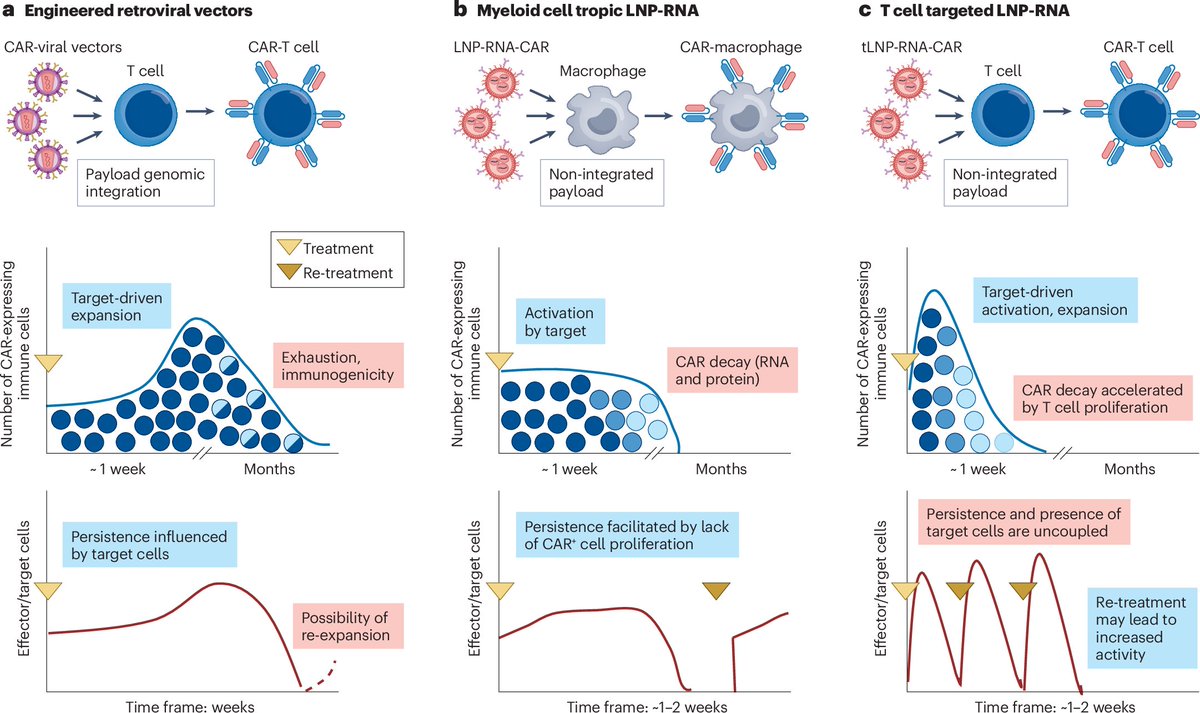
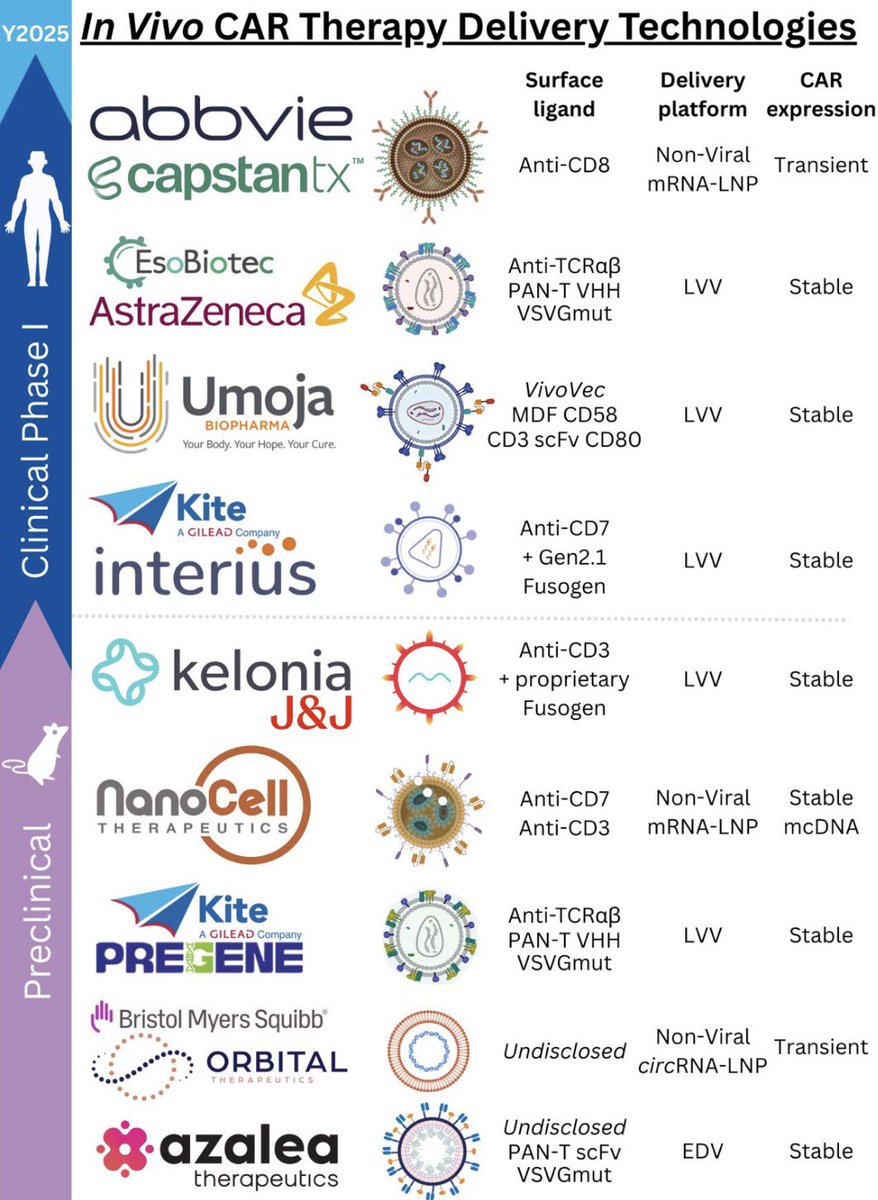
In-vivo CAR-T is getting hot, fast, and the “how” is now the whole game. This chart is a clean snapshot of where the field is clustering, and where it’s splitting. A few observations: 1️⃣Clinical activity is leaning heavily viral, LVV with stable CAR expression, multiple groups converging on T-cell targeting ligands. 2️⃣Non-viral is the wild card, mRNA-LNP for transient CAR, circRNA-LNP, mcDNA, EDV, all aiming for repeat dosing, cleaner CMC, and scalable supply, but the biology has to cooperate. 3️⃣“Stable vs transient” isn’t a footnote, it’s the product strategy, transient may fit autoimmunity and tunable dosing, stable may win where persistence is mandatory. Bottom line, we’re past “is in-vivo possible”, now it’s “which delivery vector hits the right cells, at the right % editing/transduction, with the least chaos.” Credit: Cesare Di Nitto on the HR app
BowTiedBiotech 🧪🔬🧬 tweet media
English
9
59
299
80K
Daniel Hoces retweetledi
David Usharauli
David Usharauli@3DiMMUNE·
Immune suppression in vivo is antigen specific and obligatorily mediated by antigen-specific Treg cells, not bystander effects. however, many Treg researchers still cling to early in vitro artifacts. #science #immunology cell.com/immunity/abstr…
English
2
7
62
5.1K
Daniel Hoces retweetledi
Dr. Patrick Hwu
Dr. Patrick Hwu@PatrickHwuMD·
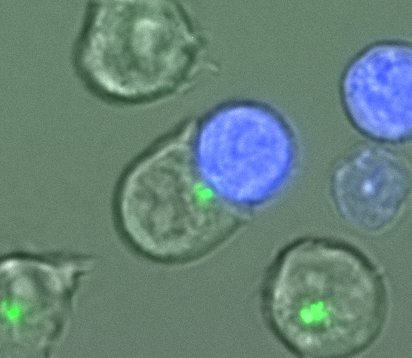
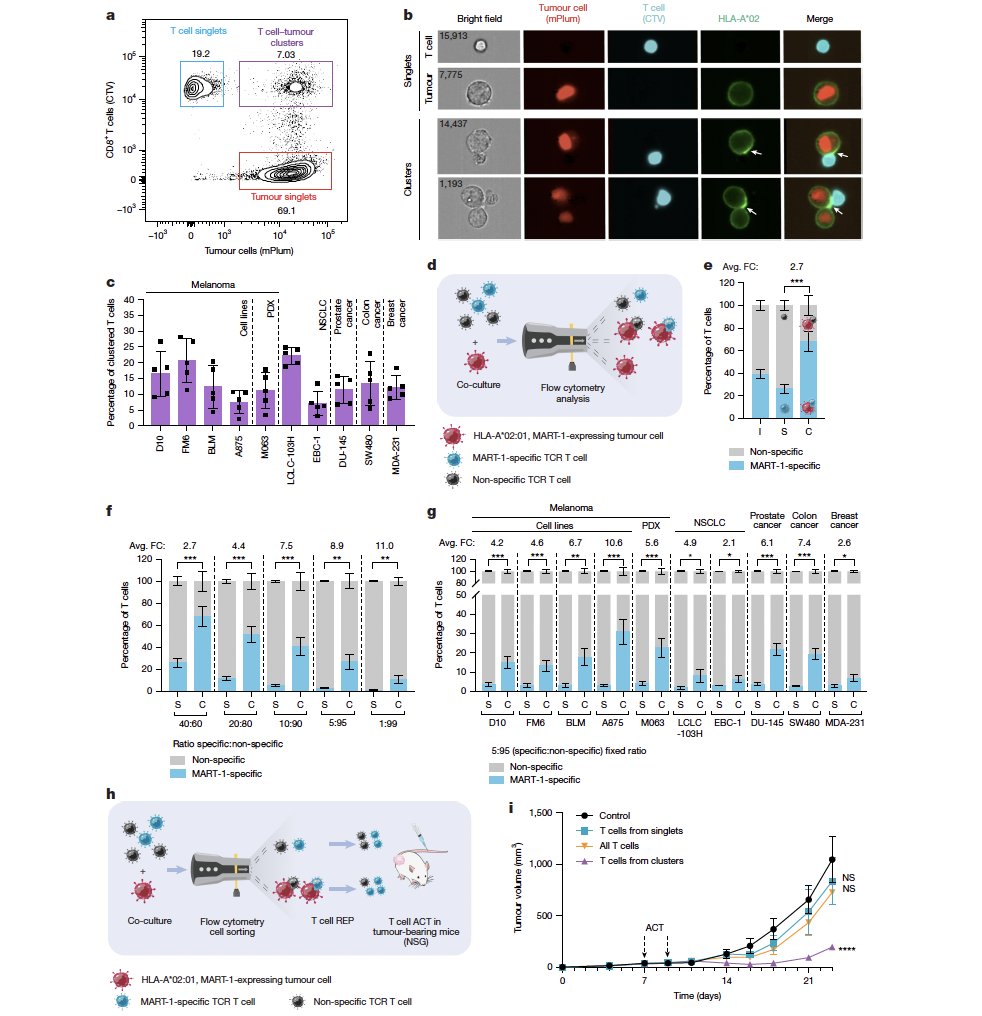
#ScienceSaturday ❓ How do scientists find the immune cells that are truly fighting a tumor? ➡️ A new @Nature study reveals that powerful tumor-killing T cells may be hiding in plain sight, not as single cells, but in clusters attached to tumor cells or antigen-presenting cells. These clusters, often filtered out during traditional cell-sorting, contain CD8 T cells that are more tumor-reactive, more activated and more effective than typical T cells found alone. ➡️ Using advanced flow cytometry and single-cell sequencing, researchers showed that these clustered T cells carry gene signatures linked to strong anti-tumor activity, high TCR clonality (a marker of targeted immune response), and increased ability to kill cancer cells. In fact, T cells taken from clusters were up to nine times more potent at destroying tumor cells compared to single T cells. ➡️ Even more exciting: when these cluster-derived T cells were expanded and tested in mice, they infiltrated tumors more efficiently and significantly slowed tumor growth, showing promise for improving adoptive T-cell therapies. 🌟 Congratulations to senior author Daniel S. Peeper and the collaborative teams at the Netherlands Cancer Institute, Oncode Institute, VIB Center for Cancer Biology, University of Gothenburg, Harry Perkins Institute and others for uncovering a new path to potentially strengthen TIL therapy and immunotherapy outcomes. @d_peeper @vib_ccb @oncodeinstitute @NKI_nl @uniofgothenburg @PerkinsComms Read more here: doi.org/10.1038/s41586…
Dr. Patrick Hwu tweet media
English
5
58
241
24.6K
Daniel Hoces retweetledi
Roth_Lab
Roth_Lab@Roth_Lab·
Excited to present the first major work after starting our lab at Stanford and the Arc this year: CRISPR-All, a unified genetic perturbation language for programming any major type of genetic perturbation simultaneously, in any combination, at genome scale, in human cells.
English
9
102
402
154.2K
Daniel Hoces retweetledi
Anusha Kalbasi
Anusha Kalbasi@xrtcell·
What if nature already has the optimal cytokine solution for T cell therapy, but we just haven’t found it yet? Check out our paper out today in Immunity on IL-9 as a naturally orthogonal cytokine ideally tuned for T cell therapy authors.elsevier.com/sd/article/S10… 1/9
English
5
15
34
4.5K
Daniel Hoces retweetledi
Majzner_Lab
Majzner_Lab@Majzner_Lab·
Congrats to @mcrotiroti on her recent paper published in Nature Cancer now with an accompanying Research Briefing published today: rdcu.be/eQLGF... Mari utilized insights into T cell proximal signaling to overcome antigen-low escape. I have been overdue to write a 🧵!
English
3
6
27
2.5K
Daniel Hoces retweetledi
Niko McCarty.
Niko McCarty.@NikoMcCarty·
While reading the new Crick biography from Matthew Cobb, I was struck by this fact: Watson & Crick offered Maurice Wilkins a co-author spot on their famous 1953 paper reporting DNA's structure, but Wilkins turned the offer because he hadn’t taken part in building the model. (This was a nice gesture from Wilkins, but apparently he later regretted it because it muddled how people viewed the history of solving DNA’s structure, and he felt like the contributions from his group were diminished as a result.) We often hear about stories where scientists are left OFF papers, but this example made me wonder: Are there other case studies where scientists explicitly REJECTED authorship on papers that turned out to be extremely famous or important? The answer I found, after just a bit of digging, is yes. 1. Frederick Banting and Charles Best are the guys who discovered insulin. They were working under a physiologist named John J.R. Macleod. Banting and Best offered Macleod authorship on their 1922 article in The Journal of Laboratory and Clinical Medicine, but Macleod rejected the offer because he didn’t want to take away fame from his students. Banting and Macleod were awarded the 1923 Nobel Prize in Physiology or Medicine (an EXTREMELY fast recognition; it usually takes decades to receive the prize after the work is carried out) while Best was left out. Banting was outraged by this and split his prize money with Best, while Macleod shared his award with James Collip, the guy who actually purified the insulin extracts. 2. Rich Roberts, who shared the 1993 Nobel Prize in Physiology or Medicine with Phillip Sharp for his co-discovery of introns, explicitly refuses authorship on papers that are not published open access. Roberts has turned down at least two authorship offers on papers published in Nature and Nature Microbiology for this reason. (There’s a nice article about this here: futamurayama-science.com/science-portra…) 3. John Hopfield deeply influenced work on synaptic plasticity in the brain. Some of his students at Princeton, Gayle Wittenberg and Samuel Wang, published an extremely important paper in The Journal of Neuroscience (2006) showing that biological synapses behave like on/off switches. They showed that a synapse’s response is not only determined by millisecond spike timings, but also things like firing rates and burst firing etc. When Hopfield won a Nobel Prize in 2024, Samuel Wang wrote up a piece for Princeton saying that Hopfield gave them the core ideas but “declined co-authorship, basically giving us credit.” There are many more such examples. It’d be nice to write these up at some point!
Niko McCarty. tweet mediaNiko McCarty. tweet media
English
13
57
281
29.8K
Daniel Hoces retweetledi
Delgoffe Lab
Delgoffe Lab@DelgoffeLab·
Hot take: in 2018-2020 immuno-oncology was bubble-level big. Companies and highly clinical talks diluted out SITC's science. The future of cancer immunotherapy is bright, but the next wave of IO will originate (again) from discovery science and dedicated industry partners. 5/5
English
1
1
8
850