Glen Calvert

2.4K posts

Glen Calvert banner
Glen Calvert

Glen Calvert

@GlenCalvert

Cofounder @ Kaizan. AI for Account Managers to redefine the future of client service 🤓✨
Earth Katılım Haziran 2009
1.4K Takip Edilen655 Takipçiler
Sabitlenmiş Tweet
Glen Calvert
Glen Calvert@GlenCalvert·
@Kaizan_ai is live! We've created the first AI product custom-built for Client Service teams! Book a demo now and start shaping what AI-first Client Service looks like in your organisation. kaizan.ai
English
1
2
2
150
Glen Calvert
Glen Calvert@GlenCalvert·
@jasonlk @dharmesh What makes a great API experience? Very keen to hear what needs to be considered
English
1
0
0
107
Jason ✨👾SaaStr.Ai✨ Lemkin
For sure One minor step I've noticed having vibe'd a lot of apps to real production last 5 months: Start with a great API. For real Best I've used: Elevenlabs, Openrouter Worst: happy to share offline :). Quite a few sadly MCP is great but can start with a truly agent friendly upgrade to your API
English
2
2
11
2K
dharmesh
dharmesh@dharmesh·
Every B2B software company is (or should be) building a "headless" version of their product. One that can be used by agents. But "headless" doesn't mean "brainless". You don't just wrap your existing APIs into an MCP server and call it a day. The companies that succeed in the agentic era are those that take a thoughtful approach to *designing* an agentic user experience (AUX). Yes, that will likely involve APIs, MCPs and CLIs. But the difference will be in the *ergonomics* of the interface. We need to figure out *how* agents actually want to use our products/platforms. Because if all they wanted to do was use them like humans do, we have "computer use" for that. I'm personally very excited about this new agentic world when it comes to B2B software. HubSpot is all-in on building the #1 agentic customer platform. Just posted this in a private Slack thread with the HubSpot exec team: Being agentic is not just about agents running *on* our platform, it's about agents *running* our platform (being able to operate it). That's how you take AI from being a simple tool to a savvy teammate.
English
105
82
982
95.6K
Tanay Kothari
Tanay Kothari@tankots·
i'm still processing this. marc andreessen just said he's "completely in love" with our product on lenny's podcast. the co-founder of andreessen horowitz. the guy who's backed stripe, twitter, airbnb, slack. said this about @WisprFlow. most people think wispr is just better dictation. but marc got what we've been building toward from day one: voice ai that understands intent, not just words. we've spent years in conversations where people couldn't see the difference. where the thing we were obsessed with felt impossible to explain. and here's someone who's seen thousands of startups articulating it perfectly in one sentence. grateful to have @pmarca as a customer.
English
46
32
823
74K
Glen Calvert
Glen Calvert@GlenCalvert·
@HarryStebbings One Thousand Percent. Multiple short stints is impossible if you're good at picking the right companies and then having impact over a prolonged period of time
English
0
0
0
289
Harry Stebbings
Harry Stebbings@HarryStebbings·
Single biggest red flag when hiring: Jumpers. Year here. Year there. When it happens 3 times or more for less than two years, I am out.
English
105
9
432
156.3K
Henry Winter
Henry Winter@henrywinter·
Decisions, decisions. Amad Diallo was a penalty. That gets given as a free-kick anywhere else on the pitch. It’s even more a penalty than the Matheus Cunha penalty (which was a pen, however “soft”). Amad was just less theatrical. Penalty not given. Wrong decision. Harry Maguire was a penalty and red card. DOGSO. Penalty and red card given. Correct decision.  Understandable debate over the decisions and inevitable frustration for Manchester United. But United have benefited from decisions that go their way this season. All clubs have these issues, examples, frustrations. The main issue here is … 1) General standard of officiating in the Premier League. Amad decision was poor. Even more investment required in grass-roots refereeing, in fast-tracking talent, in training up academy graduates who don’t make it as pros, and in continued work to improve further the Select Group refs. PL has some good officials. Just need more. 2) Football belongs to fans, not officials. Fans deserve to know what is going on in real time. When decision/incident being discussed by officials, audio should be played live. The authorities don’t want to, feel it places too much pressure on officials so content themselves with brief explanation when announcing decision and clarification on PL Match Centre. Fans in the stadium and tuning in pay a lot for tickets and subscriptions, respectively, and shouldn’t be kept in the dark. Audio works well in rugby union and cricket (and acknowledging those sports have more pauses in play). l went to a VAR demonstration (not PL) earlier this week given by an elite official. Hearing the audio between officials gave insight into the process - and respect for what they are dealing with at speed, especially with players trying to con them.  You are never going to get complete consistency over decisions. There’s always going to be an element of subjectivity with so many incidents. But fans deserve more transparency and accountability. It might restore some trust. #BOUMUN
English
328
153
1.4K
268.5K
Glen Calvert
Glen Calvert@GlenCalvert·
Power Point is unusable after you try AI deck creation
English
1
0
0
53
Glen Calvert
Glen Calvert@GlenCalvert·
@jasonlk Competitive tension too good for each other and the users though. Battle it out. That's the fun part
English
0
0
0
36
Jason ✨👾SaaStr.Ai✨ Lemkin
Ok I know this sounds crazy, but should Replit and Lovable ... merge? The founders and others might say NO WAY! Dumbest idea in the world. But it's an interesting dynamic -- both are on the way to $1B+ ARR this year. That alone is incredible. Now imagine they combine, keep their brands and customer bases, but now are at $2B+ ARR at the end of the year with double the market share. And some reduced competitive pressure. You run away with the market, and probably, are probably are worth more than 2x together. If together they were worth say $30B, it's accretive. Not at all saying they should. Definitely not saying they would or should. But when you have 2 players owning a market and both crushing it, both growing at top 1%+ rates or higher, it can make intellectual sense to combine them. Hard to do in practice. But one reason, if nothing else, to get to know your competitors. Hey, you never know.
English
21
1
46
14.7K
Aaron Levie
Aaron Levie@levie·
@tszzl A good 50% of my management style is “hey did you see this tweet, what are we doing about it”. My algorithm is *locked* in.
English
14
6
288
19.7K
roon
roon@tszzl·
not sure what happened but in between last year and now twitter is back and not unusable slop
English
163
52
2.5K
244.4K
Gokul Rajaram
Gokul Rajaram@gokulr·
ADDICTION TO THE R WORD The always-inspiring @ElenaVerna wrote a great article titled "Revenue addiction kills companies". She says: "If revenue is your North Star, your company is destined to die." I vehemently agree. In the age of AI, the focus on revenue has intensified to the extent that it's almost comical. Founders throw around the word "ARR" like a magic spell that will cure everything - but many times, it's not truly annual recurring revenue - it's sometimes annual run rate, sometimes gross merchandising value, and sometimes just a fake / made up number (as has come out with several high-prpfile AI companies). Most importantly, the focus on revenue takes away focus from what matters: building remarkable products that delight customers. I wrote an article called "The R Word" almost a decade ago, that makes a very similar point to Elena's article. It says: "a CEO who frames goals, performance or winning based on revenue than on customers, products or purpose, sets the wrong tone. It leads to everyone thinking too much about revenue, which takes focus away from doing the things that matter, the things that lead to revenue." Founders, chase revenue as your North Star Metric at your own peril.
English
13
14
165
26.5K
Chamath Palihapitiya
Chamath Palihapitiya@chamath·
What happened at Social Capital was several things: 1) Personally, I was going through a divorce. It was a very hard time. 2) My ostensible “cofounders” spent more time jostling for board seats and credit for deals with outsiders vs doing good work and mentoring a team. They made the place a political snake pit - something that I had unfortunately allowed to happen. So I killed the snake. 3) It was increasingly clear that my returns were sporadic but gargantuan and didn’t fit in a classic fund with LPs. I was a home run hitter in a business where raising new funds invariably led you to hitting singles and doubles. In other words, I was making suboptimal portfolio decisions so I would return capital in order to keep raising funds. This was important to stack the compensation of my team who had far less capital than I did. I’m in a much better place now personally and professionally. We invest only my capital and so far, so good. Long live Social Capital.
Evis Drenova@evisdrenova

Most tech podcasts are so fucking boring. The host is either some person who couldn't hack it in a operating role (VC, engineer, founder, etc.) or some VC who is just doing it to get deal flow. No one cares what Bill Gurley thinks about AI, they want to hear about why he fucked over TK at Uber. No one cares what Chamath thinks about politics, they want to hear about what happened at Social Capital and why he closed the fund. No one cares what Keith Rabois has to say about Miami, they want to hear about what happened at OpenDoor. No one cares what Sam Altman thinks about AGI, they want to hear about why he was fired from YC and (initially) OpenAI. But instead we get these boring, sanitized conversations about why SaaS companies are or are not dead. Topics no one gives us a shit about.

English
235
53
2.1K
1.1M
Akshay Kothari
Akshay Kothari@akothari·
To my fellow founders and CEOs, who keep saying “nobody is going to vibe code a CRM or ERP or ,” sharing a few thoughts: 1. You’re right that most companies will not vibe code their system of record. Some startups will experiment (remember Klarna?), but larger enterprises will continue to value secure, reliable systems of record. That’s not the real shift, though. 2. Businesses of every size increasingly want to operate in an AI-native world where their tech stack seamlessly works with agents. Why? The company that can spin up digital workers at scale will run circles around the one that cannot. 3. So the question is whether your software product can exist in this agentic ecosystem. Is it open and interoperable? Can it plug into the systems being built around it? If it’s closed, customers will eventually reconsider (see point above!). 4. Opening up will put pressure on seat-based pricing, especially when agents can query data and execute workflows without needing to buy seats for every human. This is both a crisis and an opportunity. 5. Instead of just being a place where data is stored, your product becomes a highly valuable data and context node for real work happening across humans and agents. In many cases, you may be able to deliver this work directly to your customers. Real opportunity to sell work, not software! In summary, if you do nothing, you risk drifting your company towards irrelevance. If you act, you're going to affect your own business model. In moments like this, the only path forward is to lean in and be willing to disrupt yourself. The agentic future is coming either way.
English
52
52
696
92.8K
Glen Calvert
Glen Calvert@GlenCalvert·
@stanine Yeah, Salesforce didn't do too well did they
English
0
0
0
50
Matt MacInnis
Matt MacInnis@stanine·
If you're at a tech company whose CEO is a sales-type and not a product- or engineering-type, you should bail.
English
57
18
525
95.3K
Glen Calvert
Glen Calvert@GlenCalvert·
@linuz90 We're paying 10x a month vs llms and have no credits available. They're not killing it with AI
English
0
0
0
47
Fabrizio Rinaldi
Fabrizio Rinaldi@linuz90·
Seeing a lot of hate quotes, like "no one is using Notion AI" or "it's just like ChatGPT but more expensive" and they couldn't be further from the truth If you have meeting notes and knowledge base in Notion, you should know they're absolutely killing it with AI It feels like suddenly you can get instant replies or summaries about anything that's ever happened or been said in your team And now with custom agents they're leveling it up even more For example, we now have a "Content Writer" agent, and we can ask to write about any release, and it just checks all the relevant pages, precious posts, and docs on its own and even drafts directly on Typefully Props to Notion for the execution here (just some rough UX but they're iterating), excited to see more
Notion@NotionHQ

Yep. Claude Opus 4.6, now in Notion.

English
33
3
112
21.2K
Des Traynor
Des Traynor@destraynor·
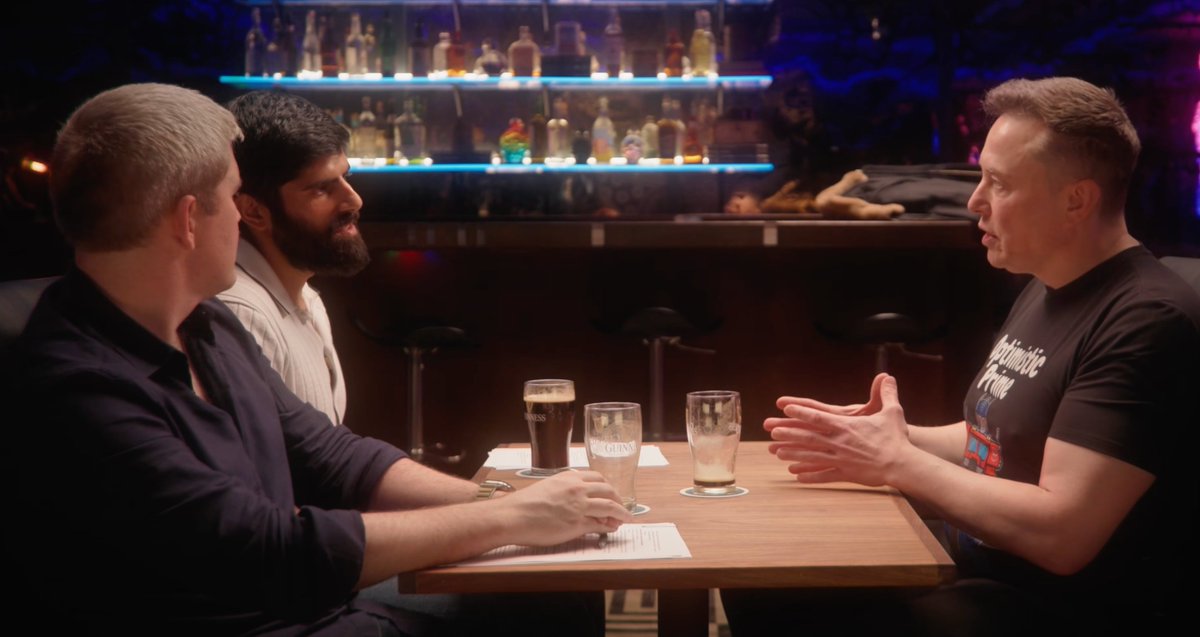
note to self, never get in a round of pints with dwarkesh...
Des Traynor tweet media
Dublin City, Ireland 🇮🇪 English
28
11
1.3K
385.7K
Glen Calvert
Glen Calvert@GlenCalvert·
@KieranO @gokulr Agree @KieranO I can't imagine not having someone synthesising and archetyping all of this noise/capability CTO controlling the agentic systems building. But combining strategy, analytics, research, priorities. Maybe CPaiO :)
English
0
0
2
24
Kieran O'Neill
Kieran O'Neill@KieranO·
I think that’s likely. What I’m not sure about, though, is do we really think that everyone will be equally good at building and equally good at knowing what to build? I think that’s unlikely, even if the tooling changes beyond recognition. If not, then we may still end up with similar shaped roles (just much, much blurrier).
English
2
0
7
663
Gokul Rajaram
Gokul Rajaram@gokulr·
PREDICTION: THE CPO ROLE, AS WE KNOW IT, WILL VANISH IN FIVE YEARS At young AI native companies, the traditional PM role is on the wane, replaced with a product builder archetype that’s a combination of Product, Design and Engineering. These companies will never hire a CPO. A separate product leader leads to too much cognitive dissonance when the IC roles doing the actual work are blending, extra overhead and imposes an unnecessary coordination tax on the product development organization. Five years from now, these companies will be the leaders and set the cultural tone for the next generation, so my prediction is that all tech companies will stop hiring for the CPO role in five years. There will be a singular product development leader at each org. Ironically, this new role might still be called the CPO, except they will run the entire product development org. CPTO is far too unwieldy of a title and only exists today to alleviate confusion. Career implication: early / mid career product leaders need to stop aspiring to become CPOs. instead, you need to develop a panoply of product development skills across all three disciplines (+ analytics), be able to fluidly navigate the roles, and become a product builder, period. Farewell, CPO! It was a good 15-20 year run for this role in tech. But like everything else, it’s time to evolve.
English
106
75
876
266.7K
Glen Calvert
Glen Calvert@GlenCalvert·
@henrywinter All of this is true. But please call out how condescending he is to the press in every interview. The disdain he brings to every question should be beneath him.
English
0
0
0
20
Henry Winter
Henry Winter@henrywinter·
Pep Guardiola is the most important manager in the country, the most influential. He sets the standards with the quality of his coaching and strength of his mindset. So many young coaches look up to him. Guardiola’s a mentor to some, giving them time and advice, encouraging them. He also trains and develops coltish playing talents into thoroughbreds; the England national team has certainly benefited from Guardiola’s skill at nurturing. Guardiola’s undeniably improved the game in this country. So that’s why it’s important that the Manchester City manager also helps improve refereeing standards. For Guardiola to lecture a promising young referee like Farai Hallam was beneath him. Hallam is exactly the type of official that managers should be encouraging. He comes from a playing background, was released by Stevenage Borough, played briefly in Spain and got into officiating via the FA and a League Football Education event (an EFL/PFA partnership). “Coming from a playing background gives you such an advantage,” Hallam told the LFE when starting out. “You know how to talk to players, you’re probably better at looking for things that some referees may not look for and your decision-making is automatically instinctive.” He rose up through the ranks and, at 32, had an assured Premier League debut at the Etihad. He didn’t give City a penalty when the ball brushed Yerson Mosquera’s arm as he challenged Omar Marmoush. Hallam was sent to the monitor by VAR but stuck with his decision. “After review, the ball hits the arm of the Wolves player, which is in a natural position, so the on-field decision will remain,” he announced. Good for Hallam. We want strong referees who don’t automatically dance to VAR’s tune. The "offence" was not clear-cut. It wasn’t a clear and obvious error (VAR should have shown similar understanding and nerve). As a former player, Hallam may have an inkling of how a jumping player balances and moves his arms (although this is also an issue for the Law-makers). His decision didn’t deserve Guardiola’s reaction, and accusation of attention-speaking ("now everyone will know him") which was also aimed at refs’ chief Howard Webb. Guardiola had every right to be angry about Anthony Taylor’s failure to send off Diogo Dalot for his bad challenge on Jeremy Doku in the Manchester Derby. He can call or call out Webb. Taylor and Webb are hardened to such criticism. But Hallam is starting out. What message does it send to kids considering taking up refereeing? That you’ll have a world-renowned manager questioning you, risking a pile-on (which, fortunately, hasn't occurred). Will parents dissuade their kids from taking up refereeing? The game has a problem with refereeing standards. It needs more Hallams not fewer. Guardiola’s reaction may have simply been stirring a siege mentality. But it distracted from what should have been the main focus, celebrating the impact of new signings Marc Guehi and, again, Antoine Semenyo. And wishing a new ref well. #MCIWOL
English
544
158
1.8K
394.6K
Glen Calvert
Glen Calvert@GlenCalvert·
100% AI = abundance of choice, and jobs, not an apocalypse.
Big Brain AI@realBigBrainAI

Jonathan Ross, Founder and CEO of AI chip company Groq, offers a contrarian view: AI won't destroy jobs, it will create a labour shortage. He outlines three things that will happen because of AI: First, massive deflationary pressure. "This cup of coffee is going to cost less. Your housing is going to cost less. Everything is going to cost less." He explains this will happen through robots farming coffee more efficiently and better supply chain management, meaning people will need less money. Second, people will opt out of the economy. "They're going to work fewer hours. They're going to work fewer days a week, and they're going to work fewer years. They're going to retire earlier because they're going to be able to support their lifestyle working less." Third, entirely new jobs and industries will emerge. Jonathan points to history as evidence: "Think about 100 years ago. 98% of the workforce in the United States was in agriculture. When we were able to reduce that to 2%, we found things for those other 98% of the population to do." He continues: "The jobs that are going to exist 100 years from now, we can't even contemplate." Software developers didn't exist a century ago. In another century, they won't exist either, "because everyone's going to be vibe coding." The same applies to influencers, a career that would have been unthinkable 100 years ago but now earns people millions. His conclusion: deflationary pressure, workforce opt-outs, and new industries we can't yet imagine will combine to create one outcome... "We're not going to have enough people."

English
0
0
0
40
Antti Karjalainen
Antti Karjalainen@aikarjal·
Someone needs to build a company around Customer Context Graph. Collect all the threads – emails, meeting transcripts, slack messages, contracts, deliverables, detail, info, and config – from your customers into context that can be explored and queried by agents. This info is scattered between CRMs, ticketing systems, note takers, product, landing pages – it's inherently cross platform information. You need a new solution. Kind of how Segment did it trad SaaS apps. With this context, you can fire up Claude Cowork or similar for ad-hoc work or build extremely powerful agent automation flows. Expose the context as skills, MCP, and file system. Even better if you build it as open-source with a hosted option so people can take it on-prem as needed. Create a connector ecosystem around it. This will power every single next-gen AI-native full-stack business. Sort of like the context graph (@ashugarg @JayaGup10 ) that has been discussed recently but I'm thinking something very concrete: "Get me all the context about this particular customer." A customer-level, cross-system context substrate that agents can explore and act on
English
142
22
405
116.7K
Glen Calvert
Glen Calvert@GlenCalvert·
@HarryStebbings Magic5 for goggles Don't bother with Bluetooth until you're sure you want it. I initially did. But in reality I preferred the focus that comes with the rhythm and repetition
English
0
0
0
13
Harry Stebbings
Harry Stebbings@HarryStebbings·
Niche request: I am ageing and my knees and hip are f******. So need to swim more. 1. What are the best goggles? 2. What are the best underwater headphones? Any other tips?
English
110
2
65
41.5K