John Rustad

7.1K posts

John Rustad banner
John Rustad

John Rustad

@JohnRustad4BC

MLA for Nechako-Lakes - Led BC Conservatives to Official Opposition. Standing up for British Columbians

Vanderhoof Katılım Ekim 2014
701 Takip Edilen25.4K Takipçiler
John Rustad
John Rustad@JohnRustad4BC·
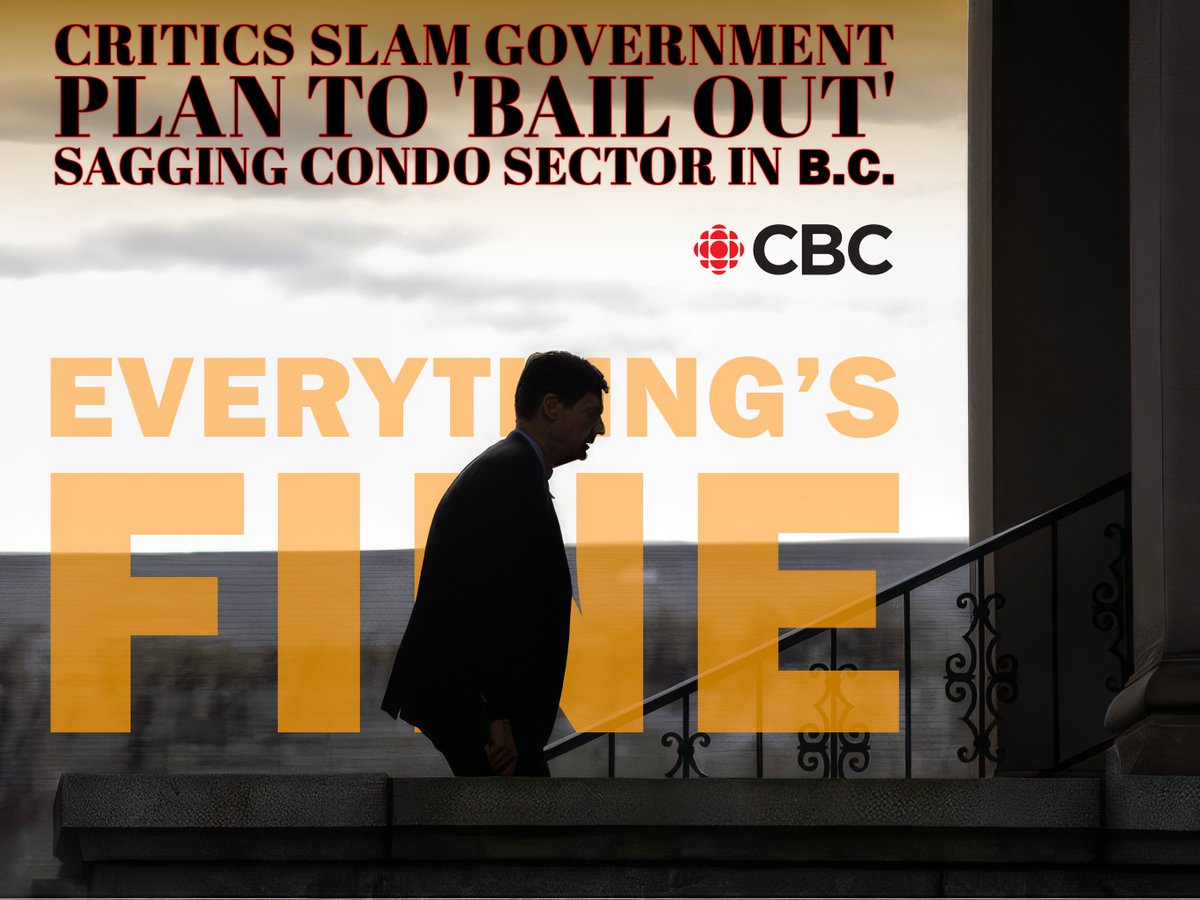
The latest Moody's downgrade, with a negative outlook, is yet another wake-up call that the NDP under David Eby is wrecking British Columbia's finances. You can't rack up record deficits like $13.3 billion this year, balloon debt from under $90 billion to over $155 billion in no time, and keep pretending everything's fine. Moody's is calling out the "entrenched" deficits and poor fiscal choices straight from Eby's playbook, reckless spending, no real plan to balance the books, and higher borrowing costs that hit every taxpayer. This is bad management under David Eby. British Columbians are paying more in taxes and interest while getting less value. We need real leadership that stops the borrowing binge and gets us back to responsible budgeting, not more NDP fantasy promises. Time for change before it's too late. #bcpoli
John Rustad tweet media
English
22
60
184
3K
John Rustad
John Rustad@JohnRustad4BC·
The latest Moody's downgrade of British Columbia's credit rating from Aa1 to Aa2, with a persistent negative outlook, is a damning indictment of the NDP government's fiscal recklessness under Premier David Eby. This isn't some external shock or unavoidable crisis it's the direct result of years of unchecked deficit spending, skyrocketing debt, and a refusal to prioritize responsible management over ideological priorities. Let's be clear: When the NDP took power, they inherited a balanced budget and relatively low debt levels (around $91-92 billion in 2022/23). In just a few short years, they've turned that into projected record deficits—$13.3 billion for 2026/27 alone, followed by $12.2 billion and $11.4 billion in the following years. That's nearly $37 billion in red ink over three years, with total provincial debt ballooning toward $235 billion by the end of the decade. Interest payments on that debt are now eating up a growing chunk of revenue (projected to hit 8.2 cents on every dollar spent by 2028), crowding out actual services and forcing future generations to pay the bill. Critics from think tanks like the Fraser Institute, business groups such as the Greater Vancouver Board of Trade (which gave the 2026 budget a dismal "D"), and opposition voices have hammered this point home: The NDP has a spending problem, not a revenue one. They've ramped up per-person program spending to near-record highs (inflation-adjusted), poured billions into healthcare, housing, and social programs without corresponding revenue growth or efficiency gains, and shown no credible path back to balance. Moody's explicitly cited "provincial policy choices" leading to "a continued weakening in governance and fiscal and debt management" and "entrenched" deficits, code for saying the government is choosing to spend beyond its means and lacks discipline. The fallout is already here: Higher borrowing costs for the province (which means taxpayers foot even more of the bill indirectly), eroded investor confidence, and a signal that BC is slipping from its historically strong position among Canadian provinces. This downgrade follows multiple prior ones from Moody's and S&P, each time pointing to the same root cause, reckless NDP fiscal policy. As one opposition figure put it bluntly on X, "The BC NDP MLAs couldn't pass an ECON 101 class." Meanwhile, everyday British Columbians face the consequences: New and hidden tax hikes (including bracket creep and broad-based increases), public sector job cuts (15,000 projected), delayed projects, and no real relief on affordability despite all the spending promises. The NDP talks about "protecting core services" and "investing in people," but when you're running structural deficits larger than many provinces' entire budgets and debt-servicing costs explode, that's not investment, it's unsustainable borrowing that will force tougher choices later. This is textbook bad governance: Spend wildly in good times (or pretend they're good), ignore warning signs from rating agencies, and leave taxpayers holding the bag. British Columbia deserves better fiscal stewardship something the current NDP leadership has repeatedly failed to deliver. If this pattern continues, expect more downgrades, higher costs, and even less room to maneuver when the next real economic challenge hits. #cdnpoli #bcpoli bloomberg.com/news/articles/…
English
8
27
97
2.1K
John Rustad
John Rustad@JohnRustad4BC·
This may be “advisory” today, but it sets the direction for tomorrow and the public deserves a clear say before it turns into binding decisions #cdnpoli #bcpoli
John Rustad tweet media
English
8
12
54
1.5K
John Rustad
John Rustad@JohnRustad4BC·
This is completely out of control The BC Teachers’ Federation is supposed to represent teachers and support education in British Columbia, not pass motions on foreign political movements and push activist campaigns that have nothing to do with our kids’ success in the classroom. Parents are watching this and asking: who exactly is running our schools? Because it’s clearly not families anymore #cdnpoli #bcpoli
John Rustad tweet media
English
111
230
1.1K
29K
John Rustad
John Rustad@JohnRustad4BC·
They’re not fixing transparency, they’re shutting it down. Bill 9 makes it easier for David Eby and the NDP to delay, deny, and bury requests, all while the government pauses disclosures entirely. If there’s nothing to hide, why change the rules? Because the receipts are getting too politically expensive to explain. #cdnpoli #bcpoli
John Rustad tweet media
Carson Binda@BindaCarson

🚨 BREAKING 🚨 The NDP is launching an all-out assault on transparency and accountable government. B.C. must immediately resume proactive disclosures and cancel the FOI rollback Bill 9.

English
5
39
100
2.4K
John Rustad
John Rustad@JohnRustad4BC·
The NDP didn’t fix transparency, they shut it off. Kill the disclosures, bury the calendars, hide the contracts. The NDP under David Eby is trying to label this as 'modernizations,' but back in the day we called this a cover up #cdnpoli #bcpoli
Bob Mackin@bobmackin

The @Dave_Eby @BCNDP government, already under fire for the latest effort to kill FOI, is withholding politicians' calendars and lists of no-bid contracts. #bcpoli #cdnfoi open.substack.com/pub/bobmackin/…

English
3
29
57
1.5K
John Rustad
John Rustad@JohnRustad4BC·
Bill 36 is about control, plain and simple. Under David Eby’s NDP, it creates a system where professionals risk investigation, discipline, or losing their licence for stepping outside the approved narrative. Whether it’s SOGI in schools, gender policies, safe supply, or any other ‘settled’ issue, the message is clear: question the orthodoxy, and the system comes for you. You don’t need an inquisition when you can regulate people into silence. #cdnpoli #bcpoli
John Rustad tweet media
English
12
70
180
2.6K
John Rustad
John Rustad@JohnRustad4BC·
Doug Ford just said what a lot of people in B.C. already know but this government won’t admit. When jurisdictions like the U.S. are rolling back EV mandates to stay competitive, with President Trump slashing subsidies and imposing tariffs that have already cut Canadian auto supplier sales by nearly 70% in some cases and forced layoffs, B.C. is still clinging to targets that push investment away and drive up costs. The province's legislated goal remains 26% zero-emission vehicle (ZEV) sales for new light-duty vehicles in 2026, even as the federal government scrapped its own 20% national mandate for 2026 amid trade pressures. You cannot build a competitive economy by forcing timelines the market can’t sustain. EV sales in B.C. dropped sharply in 2025, with zero-emission registrations falling to just 18.3% of new vehicles (down from 22.8% in 2024), one of the largest declines in Canada and that's after rebates were cut, leaving consumers facing higher costs without support. At the same time, B.C. is blocking resource development, slowing major projects, and layering on costs. The result is obvious: investment leaves, jobs disappear, and growth stalls. Billions in resource projects have been ditched or delayed across Canada in recent years (with estimates of $670 billion in lost investment federally since 2015), and in B.C., regulatory hurdles continue to stall mining, LNG expansions like Ksi Lisims, and transmission lines, even as the province fast-tracks a few while others languish amid uncertainty. Canada should be aligning with our biggest trading partner, not handicapping ourselves with policies that make us less competitive, especially when U.S. tariffs have already driven average duties on Canadian goods up sharply and revised growth forecasts downward (e.g., Bank of Canada projecting just 1.1% GDP growth for 2026). This is exactly why billions in opportunity are being left on the table in energy, manufacturing, and infrastructure, from untapped critical minerals to delayed LNG phases and auto sector ripple effects from fragmented rules. Enough with ideological targets that ignore economic reality. If we want jobs, investment, and growth in B.C., we need policies that attract capital, not chase it out of the province. Right now, tens of billions in projects are being delayed or blocked, representing roughly 15,000 direct jobs in B.C. and tens of thousands more across the supply chain that never materialize. Doug Ford is protecting nearly 100,000 auto jobs in Ontario and calling for a unified approach. Meanwhile, B.C. under David Eby is going in the opposite direction, layering mandates that make us less competitive and drive investment elsewhere. #bcpoli #cdnpoli
John Rustad tweet media
English
6
13
43
1.9K
John Rustad
John Rustad@JohnRustad4BC·
NDP BILL 36: if you’re a professional in B.C. and you don’t agree with the prevailing orthodoxy on issues like child transitioning, SOGI, or safer supply, you’re stepping into a system that now has far more power over you than it used to. Bill 36 doesn’t need to explicitly say “we will silence you.” It doesn’t have to. It puts your license, your livelihood, and your reputation inside a structure where complaints can trigger investigations, and where what counts as “unprofessional” can stretch beyond clinical practice into what you say publicly. And we’ve already seen how that plays out. Take Amy Hamm, a nurse who wasn’t accused of harming patients, but of making public statements about gender identity that her regulator deemed discriminatory. That led to a formal discipline ruling, a suspension of her licence, and tens of thousands in penalties. The message is clear: what you say outside the clinic can follow you directly into your profession. Or look at Barry Neufeld, hit with a massive financial penalty through the human rights system over his views. Different system, same signal: step outside the accepted line, and the consequences can be real. Bill 36 doesn’t create that environment, it reinforces it. It concentrates authority, reduces peer oversight, and expands the tools that can be used to enforce compliance. And once those tools exist, it doesn’t take much to change behavior. People don’t need to be punished en masse. They just need to see what happens to the few who are. And here’s the part people tend to overlook: there’s a leadership race underway in the B.C. Conservative Party right now. That means this is one of the few moments where political pressure actually matters. If you don’t want to see this become permanent, now is the time to make it an issue. Reach out to candidates, ask them directly where they stand, and make it clear you expect a commitment to repeal Bill 36. #cdnpoli #bcpoli
John Rustad tweet media
English
29
100
249
5.9K
John Rustad
John Rustad@JohnRustad4BC·
The NDP’s economic plan runs on slogans, burns through taxpayer cash, and stalls out the moment real-world math shows up February carved out 20,200 lost jobs across B.C
John Rustad tweet media
English
12
41
135
2.9K
John Rustad
John Rustad@JohnRustad4BC·
Ten years. A full decade since this province declared a public health emergency over toxic drugs. Ten years of speeches, press conferences, and policy experiments from this government. And today, after all that time, the coroner is still telling us nearly five British Columbians are dying every single day. British Columbians are entitled to ask the obvious question: what exactly has this government been doing? Because instead of focusing on treatment, this government spent years pushing safe supply and calling it compassion. They handed out more drugs and told the public that somehow this would stabilize the crisis. But addiction does not stabilize lives. It destroys them. And pretending that dependency is some kind of public health success is not compassion. Just look next door at Alberta. They chose a different path. They invested in treatment. Detox beds. Long-term recovery programs. Recovery communities designed to get people clean and give them their lives back. That’s the goal: recovery. Not permanent dependency. Because the truth... The truth that too many politicians in this province are afraid to say out loud, is that there is no dignity in addiction. There is no dignity in watching people deteriorate on the street while government programs quietly manage their decline. Real compassion is helping people get off drugs. Real compassion is treatment. After ten years and more than 16,000 lives lost in British Columbia, this government cannot keep pretending this strategy is working. British Columbians deserve leadership that is willing to admit the obvious: the experiment failed. And it’s time to change course. #cdnpoli #bcpoli
The Vancouver Sun@VancouverSun

Five people a day still dying from toxic drugs in B.C.: Coroner vancouversun.com/news/bc-many-s…

English
17
28
99
6.3K
John Rustad
John Rustad@JohnRustad4BC·
Twenty thousand jobs gone in a month here in B.C., and the NDP still wants to talk about how strong the economy is, apparently if you stop looking for work, Victoria counts that as progress. #bcpoli #cdnpoli
English
18
46
348
6.5K
John Rustad
John Rustad@JohnRustad4BC·
British Columbians watched their property system shift under their feet. The provincial government stood silent. That silence carries a name: David Eby. The BC Supreme Court ruling in Cowichan Tribes v. Canada declared Aboriginal title a prior and senior right over fee-simple land. The decision shook the basic foundation of property ownership across the province. Farmers, homeowners, developers, and lenders immediately saw the implications. Leadership requires action in moments like that. The government led by the BC New Democratic Party never stepped forward to defend the certainty of private property rights. The province left landowners staring at legal uncertainty while markets reacted. Ranch auctions stalled. Financing deals collapsed. Appraisers began attaching legal disclaimers to property valuations. The silence carried consequences. That silence followed years of policy choices that moved the province in exactly this direction. The NDP government passed the Declaration on the Rights of Indigenous Peoples Act and rewired how decisions about land and development unfold across the province. The legislation placed consultation and alignment requirements throughout provincial law. The policy shifted power away from elected government and toward negotiation frameworks that operate outside the traditional land title system. Then another change arrived quietly. During the chaos of the Abbotsford floods in 2021, the government amended the Interpretation Act. The amendment directed courts and decision-makers to interpret provincial statutes in a manner consistent with the Declaration on the Rights of Indigenous Peoples Act. The change passed while communities across the Fraser Valley fought rising water and evacuations. The amendment reshaped how provincial law is interpreted across the entire legal system. Courts now read statutes through the lens of DRIPA alignment. The result appears today across the property market. Appraisers attach limitation clauses to valuations. Developers warn investors about title uncertainty. Farmers and ranchers watch buyers hesitate. Leadership demands clarity in moments that affect the foundation of economic life. Property rights anchor the economy of British Columbia. Families build businesses and communities on the expectation that a registered title means secure ownership. The provincial government allowed that expectation to erode. British Columbians deserve a government that defends the certainty of property rights, respects the rule of law, and brings clarity back to the land title system. The current government chose another path. #cdnpoli #bcpoli
John Rustad tweet media
English
22
34
139
5.2K